
Common Nerve Injuries of the Upper Extremity: Diagnosis and Repair
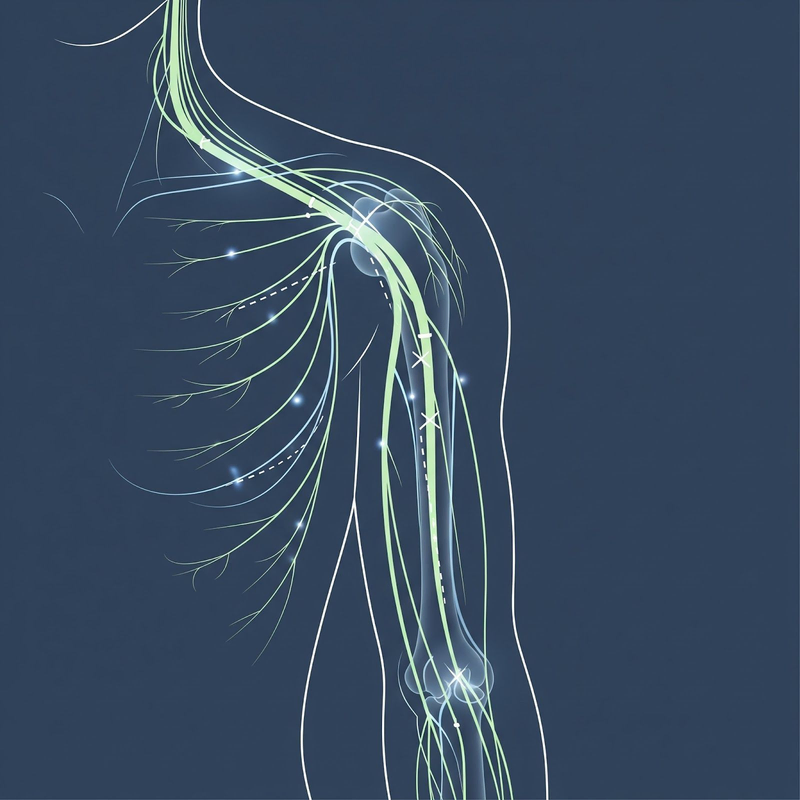
Peripheral nerve injuries of the upper extremity are common, often resulting from trauma or compression1. These injuries can cause significant pain, weakness, and functional impairment. To understand these injuries, it's important to first understand the brachial plexus, a complex network of nerves originating from the spinal cord in the neck. This network extends through the shoulder, arm, and hand, carrying movement and sensory signals2. Injury to any part of this plexus can disrupt these signals, leading to various symptoms and functional deficits. This article will discuss the diagnosis and repair of three common nerve injuries of the upper extremity: median nerve injury, ulnar nerve injury, and radial nerve injury. We will also briefly discuss other related nerve injuries, such as Erb's Palsy, Klumpke Palsy, and Saturday Night Palsy.
Diagnosis of Nerve Injuries
Diagnosing nerve injuries involves a comprehensive evaluation of the patient's medical history, a physical examination, and potentially, electrodiagnostic testing and imaging studies.
Medical History
The medical history should include information about the mechanism of injury, the location and nature of symptoms, and any pre-existing medical conditions. For example, a patient with a history of diabetes may be more susceptible to nerve compression3. It's also crucial to understand if the patient is an athlete, particularly one involved in throwing sports, as the repetitive overhead motions can place significant stress on the nerves in the arm4.
Physical Examination
The physical examination should include an assessment of sensation, motor function, and reflexes. Specific tests, such as the Phalen's test and Tinel's sign, can help to identify the location and severity of nerve compression5. Additionally, evaluating muscle strength and function can help pinpoint the specific nerve involved. For instance, the horn blower's test can assess the teres minor muscle, which can be affected by axillary nerve injury6.
Electrodiagnostic Testing
Electrodiagnostic testing, such as nerve conduction studies and electromyography (EMG), can help to confirm the diagnosis and assess the extent of nerve damage. These tests measure the electrical activity of nerves and muscles, providing information about the location and severity of the injury7. The results of these tests are crucial for treatment planning, as they can help determine whether conservative management or surgical intervention is necessary. For example, if nerve conduction studies show significant slowing or blockage of nerve signals, surgery may be recommended to decompress the nerve and restore function.
Imaging Studies
Imaging studies, such as X-rays, MRI, and ultrasound, may be used to visualize the nerve and surrounding structures. These studies can help to identify any anatomical abnormalities that may be contributing to the nerve injury8.
Categories of Nerve Injuries
Nerve injuries are classified into three categories based on the severity of damage:
- Neurapraxia: This is the least severe type of nerve injury, involving a temporary disruption of nerve conduction without any structural damage to the nerve fibers. Recovery is usually complete and occurs within days to weeks.
- Axonotmesis: This involves damage to the nerve fibers (axons) while the surrounding connective tissue remains intact. Recovery is possible but may take months, and complete recovery is not always guaranteed.
- Neurotmesis: This is the most severe type of nerve injury, involving a complete disruption of the nerve. Recovery is unlikely without surgical intervention9.
Understanding the category of nerve injury is essential for determining the appropriate treatment and prognosis.
Median Nerve Injury
The median nerve is one of the major nerves in the upper extremity, providing sensation to the thumb, index, middle, and part of the ring fingers, as well as motor function to muscles in the forearm and hand7.
Symptoms
Symptoms of median nerve injury can include:
- Numbness and tingling: This is often felt in the thumb, index, middle, and radial half of the ring fingers. It can be intermittent or constant and may worsen at night. This sensation can interfere with fine motor skills and daily activities, such as buttoning clothes or holding objects.
- Weakness in the hand: This can make it difficult to grasp objects, make a fist, or perform tasks that require fine motor control. In severe cases, muscle wasting in the thenar eminence (the fleshy area at the base of the thumb) may occur.
- Pain: Pain in the wrist or hand is common and may radiate up the arm. The pain can be sharp, burning, or aching and may be worse at night or with certain activities7.
Causes
Common causes of median nerve injury include:
- Carpal tunnel syndrome: This is the most common cause of median nerve injury, occurring when the nerve is compressed as it passes through the carpal tunnel in the wrist. This can be caused by repetitive hand motions, inflammation, or anatomical abnormalities.
- Trauma: A wrist fracture or laceration can directly injure the median nerve.
- Medical conditions: Certain medical conditions, such as diabetes and rheumatoid arthritis, can increase the risk of median nerve compression10.
- Throwing motion in athletes: The repetitive stress and extreme positions of the arm during throwing can lead to median nerve compression or injury, particularly in athletes involved in baseball, tennis, or other throwing sports4.
Diagnosis
Diagnosis of median nerve injury typically involves a combination of physical examination and electrodiagnostic testing7. The physical examination may include tests such as the Phalen's maneuver (holding the wrists flexed for a minute to see if it reproduces symptoms) and Tinel's sign (tapping over the carpal tunnel to elicit tingling). The "flick sign," where symptoms are worse at night and relieved by shaking the hand, is also suggestive of carpal tunnel syndrome10. Electrodiagnostic testing, such as nerve conduction studies, can confirm the diagnosis and assess the severity of nerve compression.
Repair
Treatment for median nerve injury depends on the severity of the injury.
Non-surgical options:
- Splinting: Wearing a splint, particularly at night, can help to keep the wrist in a neutral position and reduce pressure on the median nerve. Different types of splints are available, including wrist splints, thumb splints, and braces that cover the entire hand11.
| Splint Type | Description |
|---|---|
| Wrist splint | Covers the palm and extends up the forearm |
| Thumb splint | Immobilizes the thumb |
| Brace | Covers the entire hand |
- Medications: Non-steroidal anti-inflammatory drugs (NSAIDs) can help to reduce pain and inflammation. Corticosteroid injections into the carpal tunnel can provide temporary relief of symptoms12.
- Activity modification: Avoiding activities that worsen symptoms and making ergonomic adjustments to the workplace can help to reduce pressure on the nerve13.
- Alternative therapies: Some patients may find relief from alternative therapies, such as yoga and hand therapy12.
Surgical options:
- Nerve decompression: This involves surgically releasing the transverse carpal ligament to relieve pressure on the median nerve.
- Nerve repair: If the nerve is damaged, surgical repair may be necessary to reconnect the severed ends or remove damaged tissue.
- Nerve grafting: In cases of severe nerve damage, a nerve graft may be used to bridge a gap in the nerve1.
Nerve conduction studies are often performed during surgery to help determine the outcome and need for nerve repair or grafting14.
Recovery and Complications
The recovery process after median nerve injury varies depending on the severity of the injury and the individual patient15. Factors such as age and overall health can also influence the speed and completeness of recovery16. Nerve regeneration is a slow process, and it may take months or even years for full recovery to occur.
Potential complications of median nerve injury can include:
- Chronic pain: Some patients may experience persistent pain even after treatment.
- Muscle weakness: Weakness in the hand and thumb muscles can persist, affecting grip strength and fine motor skills.
- Loss of sensation: Numbness and tingling in the fingers may persist, affecting the ability to feel objects and perform delicate tasks.
- Complications from surgery: As with any surgery, there are potential complications, such as bleeding, infection, and nerve injury17.
Ulnar Nerve Injury
The ulnar nerve is another major nerve in the upper extremity, providing sensation to the little finger and part of the ring finger, as well as motor function to muscles in the forearm and hand. It also provides sensation to part of the palm and the underside of the forearm18.
Symptoms
Symptoms of ulnar nerve injury can include:
- Numbness and tingling: This is typically felt in the little finger and ulnar half of the ring finger, as well as in the palm and underside of the forearm18. It can interfere with activities that require grip strength and fine motor control.
- Weakness in the hand: This can affect grip strength and the ability to perform fine motor tasks.
- Claw-like deformity of the hand: In severe cases, the hand may develop a claw-like appearance due to weakness and wasting of the intrinsic hand muscles19.
Causes
Common causes of ulnar nerve injury include:
- Cubital tunnel syndrome: This occurs when the ulnar nerve is compressed as it passes through the cubital tunnel at the elbow. This can be caused by prolonged or repetitive elbow flexion, leaning on the elbow, or anatomical abnormalities.
- Trauma: An elbow fracture or dislocation can directly injure the ulnar nerve.
- Medical conditions: Certain medical conditions, such as arthritis and diabetes, can increase the risk of ulnar nerve compression19.
- Throwing motion in athletes: Repetitive throwing motions can also contribute to ulnar nerve compression or injury in athletes4.
Diagnosis
Diagnosis of ulnar nerve injury typically involves a combination of physical examination and electrodiagnostic testing. The physical examination may include tests such as Tinel's sign (tapping over the cubital tunnel to elicit tingling) and Wartenberg's sign (assessing the ability to adduct the little finger)20. Froment's test, which evaluates the strength of the thumb's pinch grip, can also be used to assess ulnar nerve function20.
Repair
Treatment for ulnar nerve injury depends on the severity of the injury.
Non-surgical options:
- Splinting: Wearing a splint to keep the elbow straight, particularly at night, can help to reduce pressure on the ulnar nerve.
- Medications: NSAIDs can help to reduce pain and inflammation. Corticosteroid injections may provide temporary relief.
- Activity modification: Avoiding activities that worsen symptoms and making ergonomic adjustments to the workplace can help to reduce pressure on the nerve.
- Occupational therapy: Occupational therapy can help to strengthen the ligaments and tendons in the hands and elbows, improving stability and function18.
Surgical options:
- Nerve decompression: This involves surgically releasing the cubital tunnel to relieve pressure on the ulnar nerve.
- Nerve transposition: In some cases, the ulnar nerve may be moved to a new location to prevent further compression18.
Nerve conduction studies are often performed during surgery to help determine the outcome and need for nerve repair or grafting14.
Recovery and Complications
Recovery after ulnar nerve surgery typically involves a period of immobilization followed by gradual mobilization and rehabilitation18. Most people can have their bandages removed within 24 hours and stitches removed in about 10 days. Full recovery may take four to six weeks18.
Potential complications of ulnar nerve injury and surgery can include:
- Infection: Infection at the surgical site is a potential risk.
- Nerve damage: There is a risk of further nerve damage during surgery.
- Elbow instability: In some cases, ulnar nerve surgery can lead to instability of the elbow joint.
- Pain and stiffness: Pain and stiffness in the elbow and hand are common after surgery.
- Failure to improve: In some cases, surgery may not completely relieve symptoms21.
Radial Nerve Injury
The radial nerve is the third major nerve in the upper extremity, providing sensation to the back of the hand and motor function to muscles that extend the wrist and fingers.
Symptoms
Symptoms of radial nerve injury can include:
- Weakness or paralysis: This affects the wrist and finger extensor muscles, resulting in "wrist drop" (an inability to extend the wrist) and difficulty extending the fingers. This can significantly impair hand function, making it difficult to grasp objects or perform tasks that require wrist and finger extension.
- Numbness and tingling: This is often felt on the back of the hand, thumb side, and the back of the first three fingers22.
Causes
Common causes of radial nerve injury include:
- Humerus fracture: Fractures of the humerus bone in the upper arm are a common cause of radial nerve injury, particularly spiral fractures of the distal humerus (Holstein-Lewis fracture)23.
- Trauma: A direct blow to the arm or a deep laceration can injure the radial nerve.
- Compression: Prolonged pressure on the nerve, such as from leaning on the arm or using crutches improperly, can cause radial nerve compression23.
- Throwing motion in athletes: Repetitive throwing motions can also contribute to radial nerve compression or injury in athletes4.
- Wartenberg syndrome: This is a type of radial nerve entrapment that occurs when the superficial sensory branch of the nerve is compressed at the wrist. It can cause pain, numbness, and tingling in the back of the hand and thumb24.
Diagnosis
Diagnosis of radial nerve injury typically involves a physical examination, which may include assessing the patient's ability to extend their wrist and fingers against resistance25. Sensory testing is also performed to evaluate numbness and tingling in the distribution of the radial nerve.
Repair
Treatment for radial nerve injury depends on the severity of the injury.
Non-surgical options:
- Many radial nerve injuries, particularly those associated with humerus fractures, heal on their own with conservative treatment26.
- Splinting: A splint can be used to support the wrist and prevent wrist drop while the nerve heals.
- Physical therapy: Physical therapy can help to maintain muscle strength and range of motion in the wrist and fingers.
Surgical options:
- Nerve repair: If the nerve is lacerated or torn, surgical repair may be necessary to reconnect the severed ends.
- Nerve grafting: In cases of severe nerve damage, a nerve graft may be used to bridge a gap in the nerve.
- Nerve decompression: If the nerve is compressed, surgery may be necessary to release the pressure25.
Nerve conduction studies are often performed during surgery to help determine the outcome and need for nerve repair or grafting14.
Recovery and Complications
The recovery process after radial nerve injury varies depending on the severity of the injury and the individual patient27. Factors such as age and overall health can also influence the speed and completeness of recovery16. Nerve regeneration is a slow process, and it may take months or even years for full recovery to occur.
Potential complications of radial nerve injury can include:
- Chronic pain: Some patients may experience persistent pain even after treatment.
- Muscle weakness: Weakness in the wrist and finger extensor muscles can persist, affecting hand function.
- Loss of sensation: Numbness and tingling in the hand may persist.
- Complications from surgery: As with any surgery, there are potential complications, such as bleeding, infection, and nerve injury23.
Recovery and Potential Complications (General)
The recovery process for nerve injuries varies depending on the severity of the injury and the individual patient. Nerve regeneration is a slow process, and it may take months or even years for full recovery to occur15. Younger patients and those in good overall health tend to recover more quickly16. Adherence to post-surgical care, including physical therapy and activity restrictions, is crucial for optimal recovery16.
Potential complications of nerve injuries can include:
- Chronic pain: Neuropathic pain, a type of chronic pain caused by nerve damage, can be a debilitating complication of nerve injuries.
- Muscle weakness: Weakness and atrophy of the muscles supplied by the injured nerve can occur.
- Loss of sensation: Numbness, tingling, and decreased sensation can persist, affecting the ability to feel objects and perform tasks.
- Contractures and deformities: If the joints are not moved regularly, contractures (shortening of muscles and tendons) and deformities can develop.
- Neuroma formation: A neuroma is a non-cancerous growth of nerve tissue that can form at the site of nerve injury. Neuromas can be painful and may require further treatment.
- Psychological stress: Nerve injuries can have a significant psychological impact, leading to anxiety, depression, and post-traumatic stress disorder28.
After nerve repair surgery, it's important to keep the surgical site clean and dry29. Scar massage with a basic, unperfumed moisturizing cream can help to prevent adhesions and improve scar mobility30.
Conclusion
Nerve injuries of the upper extremity are common and can cause significant disability. Early diagnosis and appropriate treatment are essential to maximize the chances of a successful recovery17. Treatment options vary depending on the specific nerve involved and the severity of the injury. Non-surgical options, such as splinting, medications, and physical therapy, are often the first line of treatment. In cases of severe nerve injury or when non-surgical treatment fails, surgical intervention may be necessary.
The information presented in this article provides a comprehensive overview of the diagnosis and repair of common nerve injuries of the upper extremity. However, further research is needed to better understand the factors that influence nerve regeneration and to develop more effective treatments for these debilitating injuries.
Works cited
1. Nerve Injuries of the Hand, Wrist and Elbow | University of Michigan ..., accessed February 17, 2025, https://www.uofmhealth.org/conditions-treatments/cmc/hand-elbow-wrist/nerve-injuries-hand-wrist-and-elbow
2. Common Nerve Injuries | Greater Chesapeake Hand Specialists, accessed February 17, 2025, https://www.chesapeakehand.com/2020/05/22/common-nerve-injuries/
3. Distal median nerve dysfunction: MedlinePlus Medical Encyclopedia, accessed February 17, 2025, https://medlineplus.gov/ency/article/000691.htm
4. A review of upper extremity peripheral nerve injuries in throwing athletes, accessed February 17, 2025, https://pmr.med.ufl.edu/wordpress/files/2022/02/PMR-2022_Zaremski_A-review-of-UE-peripheral-nerve-injuries-in-throwing-athletes.pdf
5. Median Nerve: What Is It, Location, Innervation, Damage | Osmosis, accessed February 17, 2025, https://www.osmosis.org/answers/median-nerve
6. Common nerve injuries in the upper extremity - YouTube, accessed February 17, 2025,
7. Median Nerve: What Is It, Anatomy, Function & Common Conditions - Cleveland Clinic, accessed February 17, 2025, https://my.clevelandclinic.org/health/body/21889-median-nerve
8. Median Nerve Injury - PubMed, accessed February 17, 2025, https://pubmed.ncbi.nlm.nih.gov/31971749/
9. Peripheral Nerve Entrapment and Injury in the Upper Extremity | AAFP, accessed February 17, 2025, https://www.aafp.org/pubs/afp/issues/2010/0115/p147.html
10. Median Nerve Injury - StatPearls - NCBI Bookshelf, accessed February 17, 2025, https://www.ncbi.nlm.nih.gov/books/NBK553109/
11. Non-Surgical Therapy for Carpal Tunnel Syndrome Treatment | GCHS, accessed February 17, 2025, https://www.chesapeakehand.com/2022/11/25/non-surgical-therapy-for-carpal-tunnel-syndrome-treatment/
12. Carpal tunnel syndrome - Diagnosis and treatment - Mayo Clinic, accessed February 17, 2025, https://www.mayoclinic.org/diseases-conditions/carpal-tunnel-syndrome/diagnosis-treatment/drc-20355608
13. Non-Surgical Options for Carpal Tunnel Syndrome - The Bone and Joint Clinic of Baton Rouge, accessed February 17, 2025, https://www.boneandjointclinicbr.com/blog/non-surgical-options-for-carpal-tunnel-syndrome
14. Peripheral Nerve Injury | Johns Hopkins Medicine, accessed February 17, 2025, https://www.hopkinsmedicine.org/health/conditions-and-diseases/peripheral-nerve-injury
15. Peripheral Nerve Trauma: Mechanisms of Injury and Recovery - PMC - PubMed Central, accessed February 17, 2025, https://pmc.ncbi.nlm.nih.gov/articles/PMC4408553/
16. What is the recovery time for ulnar nerve decompression? - Comprehensive MD, accessed February 17, 2025, https://comp-md.com/what-is-the-recovery-time-for-ulnar-nerve-decompression/
17. Carpal Tunnel Syndrome - OrthoInfo - AAOS, accessed February 17, 2025, https://orthoinfo.aaos.org/en/diseases--conditions/carpal-tunnel-syndrome/
18. Ulnar Nerve Entrapment | Johns Hopkins Medicine, accessed February 17, 2025, https://www.hopkinsmedicine.org/health/conditions-and-diseases/ulnar-nerve-entrapment
19. Ulnar nerve dysfunction Information | Mount Sinai - New York, accessed February 17, 2025, https://www.mountsinai.org/health-library/diseases-conditions/ulnar-nerve-dysfunction
20. Ulnar Nerve Entrapment: Causes, Symptoms & Treatment - Cleveland Clinic, accessed February 17, 2025, https://my.clevelandclinic.org/health/diseases/22272-ulnar-nerve-entrapment
21. Ulnar Nerve Decompression/Transposition - Top of Texas Orthopedics, accessed February 17, 2025, https://www.topoftexasortho.com/ulnar-nerve-decompression-orthopedic-surgeon-amarillo-tx.html
22. Radial nerve dysfunction Information | Mount Sinai - New York, accessed February 17, 2025, https://www.mountsinai.org/health-library/diseases-conditions/radial-nerve-dysfunction
23. Radial Nerve Injury - StatPearls - NCBI Bookshelf, accessed February 17, 2025, https://www.ncbi.nlm.nih.gov/books/NBK537304/
24. Radial Nerve: What It Is, Function, Anatomy & Conditions - Cleveland Clinic, accessed February 17, 2025, https://my.clevelandclinic.org/health/body/21617-radial-nerve
25. Radial Nerve Injury Diagnosis & Treatment - NYC | Columbia ..., accessed February 17, 2025, https://www.neurosurgery.columbia.edu/patient-care/conditions/radial-nerve-injury
26. Radial Nerve Damage: What is it -Anthony MacQuillan Surgeon, accessed February 17, 2025, https://anthonymacquillan.com/blogs/what-is-radial-nerve-damage/
27. Injury of Radial Nerve: Causes, Symptoms & Diagnosis - Healthline, accessed February 17, 2025, https://www.healthline.com/health/radial-nerve-dysfunction
28. Complications with Peripheral Nerve Injury - Physiopedia, accessed February 17, 2025, https://www.physio-pedia.com/Complications_with_Peripheral_Nerve_Injury
29. Ulnar Nerve Decompression: What to Expect at Home - MyHealth Alberta, accessed February 17, 2025, https://myhealth.alberta.ca/Health/aftercareinformation/pages/conditions.aspx?hwid=acl8037
30. Peripheral nerve injuries of the upper limb – surgical repair | CUH - Cambridge University Hospitals, accessed February 17, 2025, https://www.cuh.nhs.uk/patient-information/peripheral-nerve-injuries-of-the-upper-limb-surgical-repair/
