
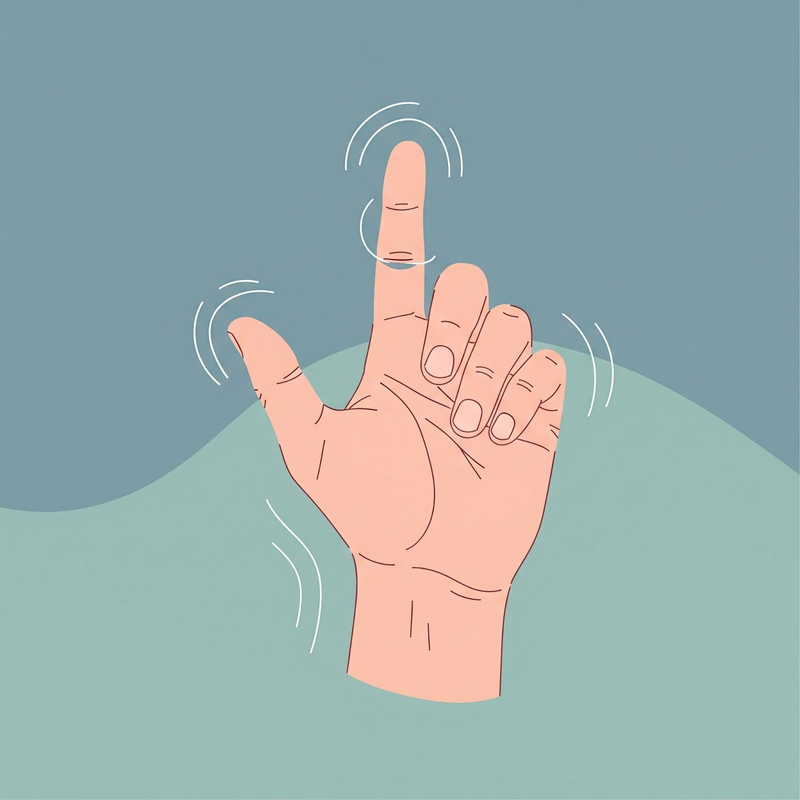
Trigger Finger: Diagnosis and Treatment
Trigger finger, also known as stenosing tenosynovitis, is a common condition affecting the tendons in the fingers and thumb. It causes the affected finger or thumb to get stuck in a bent position, sometimes with a snapping or popping sensation when it is straightened1. When the thumb is involved, the condition is called trigger thumb2. This can be painful and make it difficult to perform everyday tasks1. Trigger finger affects between 1% and 2% of the population3. It is more common in women and people with certain medical conditions such as diabetes and rheumatoid arthritis1.
Anatomy and Causes of Trigger Finger
Tendons are tough cords that attach muscles to bones. Each tendon is surrounded by a protective sheath1. In the fingers, the flexor tendons run from the forearm muscles through the palm and attach to the finger bones4. These tendons allow the fingers to bend. Along the tendon sheath, there are bands of tissue called pulleys that hold the flexor tendons close to the finger bones4. Trigger finger classically involves the A1 pulley sheath located at the metacarpophalangeal joint, which is the proximal section of the tendon sheath5. It can also occur at A2 (proximal interphalangeal joint) or A3 (distal interphalangeal joint)5. The pulley at the base of each finger, where the finger meets the palm, is called the A1 pulley4.
Trigger finger occurs when the affected finger's tendon sheath becomes irritated and swollen1. This makes it harder for the tendon to glide through the sheath1. The constant back-and-forth irritation can cause a small lump of tissue, called a nodule, to form on the tendon1. This nodule can make it even harder for the tendon to glide smoothly1. Trigger finger is often associated with other medical conditions, such as diabetes, amyloidosis, carpal tunnel syndrome, gout, thyroid disease, and rheumatoid arthritis5.
While the exact cause of trigger finger is often unknown, several factors can increase the risk of developing the condition:
- Repetitive gripping: Occupations and hobbies that involve repetitive hand use and prolonged gripping may increase the risk of trigger finger1.
- Certain health problems: People who have diabetes or rheumatoid arthritis are at higher risk of developing trigger finger1.
- Sex: Trigger finger is more common in women1.
Symptoms of Trigger Finger
Symptoms of trigger finger can range from mild to severe1.
| Mild Symptoms | Severe Symptoms |
|---|---|
| Finger stiffness, particularly in the morning | A popping or clicking sensation as the finger moves |
| Tenderness or a bump in the palm at the base of the affected finger | Finger catching or locking in a bent position, which suddenly pops straight |
| Finger locked in a bent position, requiring manual assistance to straighten |
Trigger finger can affect any finger, including the thumb. More than one finger may be affected at a time, and both hands might be involved1.
Diagnosis of Trigger Finger
The diagnosis of trigger finger is primarily clinical5. Doctors can usually diagnose trigger finger by discussing symptoms and examining the hand4. During the physical exam, your doctor will look for: 4
- Tenderness over the flexor tendon sheath in the palm of your hand
- Thickening or swelling of the tendon sheath at the base of your finger or thumb
- A clicking or catching sensation when you bend and straighten your finger
It is important to differentiate trigger finger from a similar condition called Dupuytren's contracture. While trigger finger involves thickening of a ligament and sometimes a tendon, Dupuytren's contracture involves the thickening and tightening of the fascia, the fibrous tissue under the skin on the palm side of the fingers3. Dupuytren's contracture makes it difficult to fully straighten the finger but does not cause problems making a fist, whereas trigger finger may cause difficulty both straightening and bending the finger3.
The Green classification system can be used to define and report clinical findings of trigger finger7. This classification ranges from grade I, or pretriggering, which is classified as pain over the A1 pulley, to grade IV, or contracture, which is a fixed flexion contracture at the proximal interphalangeal (PIP) joint7.
X-rays are usually not necessary to diagnose trigger finger4. However, in some cases, your doctor may order an ultrasound to get a better look at the tendon and surrounding tissues5.
Conservative Management of Trigger Finger
Conservative management is often the first line of treatment for trigger finger8. In some cases, trigger finger may even resolve spontaneously8. These non-invasive treatments may include: 9
- Rest: Avoiding activities that aggravate the condition, such as repetitive gripping or prolonged use of vibrating hand-held machinery, can help reduce inflammation and allow the tendon to heal9.
- Splinting: Wearing a splint can help rest the tendon by keeping the finger in an extended position9. This can be particularly helpful at night to prevent the finger from curling into a bent position during sleep10.
- Stretching exercises: Gentle stretching exercises can help maintain mobility in the finger and prevent stiffness9.
- Medications: Non-steroidal anti-inflammatory drugs (NSAIDs), such as ibuprofen, may be recommended to help relieve pain and inflammation11.
- Steroid injection: An injection of a corticosteroid into the tendon sheath can reduce inflammation and allow the tendon to glide freely again9. This is often effective for more than a year, but some people may need more than one injection9. If symptoms do not improve with one injection or improve but then come back after a period of time, a second injection may be given12. If two injections do not help the problem, surgery is often recommended12. Although corticosteroid injections into the palm are considered highly effective in treating trigger finger, the injection itself may be significantly painful8. There is also a small risk of tendon rupture with repeated steroid injections8.
- External shock wave therapy (ESWT): ESWT is a non-invasive treatment that uses sound waves to promote healing13. It has been shown to be effective in reducing pain and improving function in people with trigger finger13. ESWT may be a viable alternative to surgery for some patients13.
- Ultrasound therapy (UST): UST uses high-frequency sound waves to generate heat and promote healing13. It has been shown to be useful in preventing the recurrence of trigger finger symptoms13.
- Hand therapy: A hand therapist can provide treatments such as ultrasound, massage, and exercises to improve finger mobility and reduce inflammation14.
Surgical Release of Trigger Finger
If conservative treatments fail to provide relief, or if the finger is locked in a bent position, surgery may be recommended4. The surgical procedure for trigger finger is called trigger finger release4.
Surgical Procedure
The goal of trigger finger release surgery is to release the A1 pulley, which is the pulley responsible for blocking tendon movement4. This allows the flexor tendon to glide more easily through the tendon sheath4.
Trigger finger release is typically an outpatient procedure performed under local anesthesia with a shot to numb your hand and prevent pain4. You also may get medicine to help you relax15. There are two main surgical approaches:
- Open release surgery: A small incision is made in the palm to widen the tendon sheath16.
- Percutaneous trigger finger release surgery: A needle is used to open the tendon sheath16.
Open release surgery is generally preferred as it allows the surgeon to directly visualize the A1 pulley and minimize the risk of complications16. Percutaneous surgery may be an option for patients who cannot have open surgery, but it carries a slightly higher risk of complications16.
Post-operative Care
After surgery, patients are encouraged to move their finger immediately4. Elevating the hand above the heart can help reduce pain and swelling4. It may take several weeks for the incision to heal and 4 to 6 months for swelling and stiffness to completely subside4.
Your doctor may recommend seeing a hand therapist for rehabilitation exercises to help regain full range of motion and strength4.
Risks and Benefits of Conservative Management
Conservative management of trigger finger offers several benefits:
- Non-invasive: Conservative treatments avoid the risks and recovery time associated with surgery.
- Effective for many patients: Many cases of trigger finger can be successfully managed with conservative treatments, especially if addressed early14.
- Low risk: Conservative treatments have a low risk of complications11.
However, conservative management may not be suitable for all patients:
- May not be effective for severe cases: If the finger is locked in a bent position or conservative treatments have failed, surgery may be necessary.
- Steroid injections may have side effects: Although rare, steroid injections can cause side effects such as skin thinning or discoloration at the injection site11. There is also a small risk of tendon rupture with repeated steroid injections8.
Risks and Benefits of Surgical Release
Surgical release of trigger finger offers several benefits:
- High success rate: Surgery is highly effective in treating trigger finger, with most patients experiencing significant improvement in function and pain relief4.
- Low recurrence rate: It is rare for trigger finger to return in the treated finger after surgery11.
However, surgery also carries some risks:
- Complications: Although rare, complications such as infection, nerve damage, and stiffness can occur11. Nerve damage can result in numbness, tingling, or weakness in the finger17. Another potential complication is bowstringing, where the tendon bows away from the bone, resulting in reduced range of motion12. Treating multiple digits at the same time during surgery may increase the risk of complications18.
- Recovery time: Recovery from surgery takes time, and patients may need to take time off work and restrict activities11.
- Factors that can negatively affect healing: Risk factors that can negatively affect adequate healing after surgery include poor nutrition, smoking, alcoholism, chronic illness, steroid use, and age (over 60)19.
When is Surgery Recommended for Trigger Finger?
Surgery is typically recommended for trigger finger when: 4
- Conservative treatments have failed to provide relief
- The finger is locked in a bent position and cannot be straightened
- Symptoms are severe and significantly affect daily activities
The decision to have surgery is made based on the severity of symptoms, the impact on daily life, and the patient's overall health11.
Conclusion
Trigger finger is a common condition that can cause pain and difficulty with finger movement. Early diagnosis and treatment are important to prevent the condition from worsening and potentially becoming permanent11. Conservative management, including rest, splinting, and steroid injections, is often effective in treating trigger finger, especially in mild cases or when diagnosed early10. However, it's important to be aware of the potential for tendon rupture with repeated steroid injections8. If conservative treatments fail or the finger is locked in a bent position, surgery may be necessary. Trigger finger release surgery is a safe and effective procedure that can provide long-term relief from symptoms4. The decision-making process for trigger finger treatment should involve a thorough discussion with your doctor, considering factors such as symptom severity, patient preferences, and the potential risks and benefits of different approaches.
Works cited
1. Trigger finger - Symptoms and causes - Mayo Clinic, accessed February 17, 2025, https://www.mayoclinic.org/diseases-conditions/trigger-finger/symptoms-causes/syc-20365100
2. Trigger Finger: Symptoms, Causes & Treatments - Cleveland Clinic, accessed February 17, 2025, https://my.clevelandclinic.org/health/diseases/7080-trigger-finger
3. Treatment Options for Trigger Finger and Trigger Thumb | HSS, accessed February 17, 2025, https://www.hss.edu/condition-list_trigger-finger.asp
4. Trigger Finger - Trigger Thumb - OrthoInfo - AAOS, accessed February 17, 2025, https://orthoinfo.aaos.org/en/diseases--conditions/trigger-finger/
5. Trigger Finger - StatPearls - NCBI Bookshelf, accessed February 17, 2025, https://www.ncbi.nlm.nih.gov/books/NBK459310/
6. orthoinfo.aaos.org, accessed February 17, 2025, https://orthoinfo.aaos.org/en/diseases--conditions/trigger-finger/#:~:text=Typically%2C%20X%2Drays%20or%20other,of%20your%20finger%20or%20thumb
7. Trigger Finger: Evaluation, Management, and Outcomes | Published in SurgiColl, accessed February 17, 2025, https://surgicoll.scholasticahq.com/article/68065-trigger-finger-evaluation-management-and-outcomes
8. Trigger Finger Treatment & Management: Approach Considerations, Corticosteroid Injection Into Tendon Sheath, Splinting - Medscape Reference, accessed February 17, 2025, https://emedicine.medscape.com/article/1244693-treatment
9. Trigger finger - Diagnosis and treatment - Mayo Clinic, accessed February 17, 2025, https://www.mayoclinic.org/diseases-conditions/trigger-finger/diagnosis-treatment/drc-20365148
10. Does Trigger Finger Always Require Surgery? - Ortho 1 Medical Group, accessed February 17, 2025, https://www.ortho1.com/blog/does-trigger-finger-always-require-surgery
11. Trigger finger - Treatment - NHS, accessed February 17, 2025, https://www.nhs.uk/conditions/trigger-finger/treatment/
12. Trigger Finger/Thumb Release Surgery - Gateshead Health NHS Foundation Trust, accessed February 17, 2025, https://www.gatesheadhealth.nhs.uk/resources/trigger-finger-thumb-release-surgery/
13. Physical therapies for the conservative treatment of the trigger finger: a narrative review, accessed February 17, 2025, https://pmc.ncbi.nlm.nih.gov/articles/PMC7459363/
14. Conservative Management of Trigger Finger - Medbridge, accessed February 17, 2025, https://www.medbridge.com/blog/2023/01/conservative-management-of-trigger-finger/
15. Trigger Finger Release: Before Your Surgery - MyHealth Alberta, accessed February 17, 2025, https://myhealth.alberta.ca/Health/aftercareinformation/pages/conditions.aspx?hwid=ud1888
16. Trigger finger release - Orthopaedic Institute - Northwell Health, accessed February 17, 2025, https://www.northwell.edu/find-care/treatments/trigger-finger-release
17. Trigger Finger Release Surgery - Dr William Scully III, accessed February 17, 2025, https://www.williamscullymd.com/trigger-finger-release-surgery-orthopaedic-surgeon-hudson-solon-oh.html
18. Risk Factors for Postoperative Complications in Trigger Finger Release - PMC, accessed February 17, 2025, https://pmc.ncbi.nlm.nih.gov/articles/PMC6363328/
19. Trigger Finger Treatment New York - Dr Salil Gupta, accessed February 17, 2025, https://www.newyorkhandsurgery.com/trigger-finger-hand-surgeon-new-york.html
