
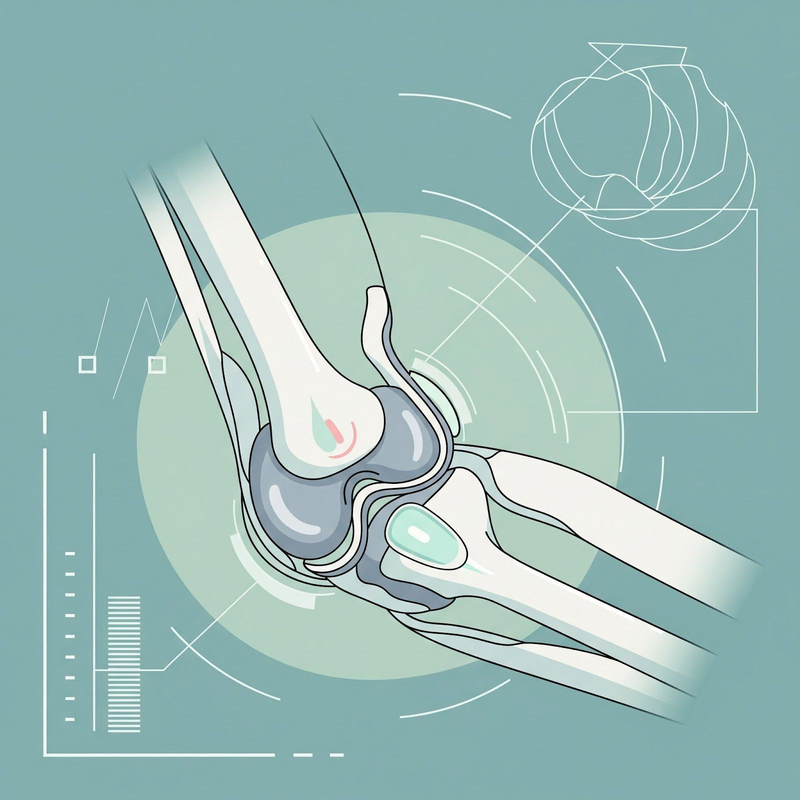
Total Elbow Arthroplasty: A Comprehensive Review
Total elbow arthroplasty (TEA) is a surgical procedure in which a surgeon replaces damaged portions of the elbow joint with an artificial joint. This procedure is a treatment option for patients with end-stage arthritis of the elbow joint1. When the cartilage in the joint is worn out, it can lead to pain and stiffness in the elbow, which can severely limit function1. TEA is also indicated for acute distal humerus fractures2. This comprehensive review will discuss the indications for TEA, different surgical approaches and implant designs, and analyze the long-term outcomes and potential complications.
Indications for Total Elbow Arthroplasty
Conditions that can damage the elbow joint include many types of arthritis, bone fractures, and bone tumors3. The most common indication for TEA is inflammatory arthritis, followed by acute fracture and osteoarthritis4.
Rheumatoid Arthritis
Rheumatoid arthritis (RA) is a chronic inflammatory disease that can affect many joints in the body, including the elbow5. In the past, RA was the most common indication for TEA6. However, with the advancement of antirheumatic drugs, the number of TEAs performed for inflammatory arthritis has decreased7. Despite this progress, TEA remains an important treatment option for patients with advanced RA who have failed medical treatment7. About 10-20% of patients with RA will have arthritic changes in the elbow5. TEA is considered for Larsen stages 3 to 5 with functional loss, pain, and instability5. Ideally, the patient should be older than 65 years old5. TEA has demonstrated excellent outcomes in patients with RA, with a mean patient satisfaction of 9.2 out of a possible 10 points7. A study by Mansat and colleagues demonstrated a 97% survival rate at 5 years and 85% at 10 years after TEA for RA with a minimum 2-year follow-up7.
Osteoarthritis
Osteoarthritis (OA) is a degenerative joint disease that results in the breakdown of cartilage in the joints7. In the elbow, OA can cause pain, stiffness, and limited range of motion7. TEA is an option for patients with severe OA who have not had success with conservative treatment options such as medications or steroid injections9. Patients with primary OA should be older than 65 years old and experience mid-arc pain with activity resulting from ulnotrochlear joint cartilage loss5. The 10-year implant survival for TEA for primary OA is about 80-85%5.
Post-traumatic Arthritis
Post-traumatic arthritis (PTA) is a form of arthritis that develops after an injury to the elbow joint5. This can occur after a fracture, dislocation, or other significant trauma5. PTA can cause pain, stiffness, and limited range of motion, similar to OA5. TEA is an option for patients with advanced PTA who have not responded to non-surgical treatments5. Acute complex, unreconstructable intra-articular distal humerus fractures in elderly patients with poor bony quality are an indication for TEA5.
Surgical Approaches
Several surgical approaches can be used for TEA, each with its own advantages and disadvantages. The choice of approach depends on factors such as the patient's anatomy, the type of implant being used, and the surgeon's preference10. Surgical techniques for TEA destabilize the elbow by removing the medial and lateral collateral ligaments and, frequently, the radiocapitellar articulation11. In general, triceps-sparing approaches are preferable to triceps-reflecting approaches for all types of arthroplasty in fractures as they allow immediate rehabilitation with no need to protect a triceps repair and provide a more robust extensor mechanism10. The most common approaches are:
- Triceps-reflecting approach: This involves reflecting the triceps muscle from medial to lateral in continuity with the anconeus5. It provides good exposure of the elbow joint but can be associated with triceps weakness or loss of elbow extension5.
- Triceps-splitting approach: This involves longitudinally dividing the triceps in continuity with forearm fascia over the dorsal ulna5. It allows for extensor mechanism lengthening if needed5.
- Triceps-sparing approach: This approach preserves the triceps intraoperatively, but exposure can be challenging5. It is often preferred for acute distal humerus fractures as it allows for earlier post-operative range of motion5. A study on dogs showed that a lateral approach for TER resulted in more elbow extension and less collateral ligament constraint compared to a medial approach12.
| Approach | Advantages | Disadvantages |
|---|---|---|
| Triceps-reflecting | Good exposure of the elbow joint | Can be associated with triceps weakness or loss of elbow extension |
| Triceps-splitting | Allows for extensor mechanism lengthening if needed | - |
| Triceps-sparing | Preserves the triceps intraoperatively, allows for earlier post-operative range of motion | Exposure can be challenging |
| Triceps-On | Less invasive, maintains triceps strength, allows for early active motion exercises | Does not provide the best exposure of the articular surfaces of the humerus |
| Triceps-Off | Provides the best exposure of the distal humerus for fracture fixation | Can cause triceps weakness and risk of triceps avulsion |
Implant Designs
Elbow replacement surgery was first described in the 1950s14. TEA implants have evolved significantly over the years. During the 1970s, designs of total knee replacement evolved from uniaxial hinges briefly into unlinked components that relied entirely upon the intrinsic and extrinsic ligaments for stability, and then into the more intrinsically stable condylar-shaped designs, which by the end of the 1970s had become entirely similar to those used today15. Early implants were constrained hinges that only allowed flexion and extension. These were associated with high failure rates due to loosening. Modern implants are typically semiconstrained, allowing for some degree of varus-valgus and rotational laxity. This reduces stress on the bone-cement interface and improves implant longevity. Normal elbow function requires slight side-to-side motion with a little rotation even as the joint is bending and straightening16. Reproducing all of that with a metal implant is a challenge16. Elbow kinematics are important6. Even optimal implant positioning can lead to 4-6mm of anterodistal translation in the axis of rotation without detrimental consequence6.
The most common types of TEA implant designs are:
- Unconstrained (unlinked): The concept and objective of unlinked TEA are to share the loading stress on the bone-implant interface with the surrounding tissues17. These implants rely on the surrounding soft tissues for stability. They may be associated with a lower risk of wear and loosening but can be prone to dislocation.
- Semiconstrained (linked): These implants have a "sloppy hinge" that allows for some varus-valgus and rotational laxity5. They offer good stability and have shown the best results among all designs5. With TEA, semiconstrained implants provide the best longevity and most optimal functional outcomes5. The component stems (ulna and humerus) have improved fixation and reduced loosening5. The humeral component extracortical anterior flange resists posteriorly directed and rotational forces5.
- Constrained: These implants have a rigid hinge design and are theoretically the most stable5. However, they have the highest loosening rates compared to other designs5. They were determined to have no indication for use in elbow arthroplasty due to their high failure rate11.
Comparison of Surgical Approaches and Implant Designs
Triceps-sparing approaches are preferable to triceps-reflecting approaches for TEA in fractures10. Triceps-on approaches are less invasive and maintain triceps strength, but they do not provide the best exposure of the articular surfaces of the humerus13. Triceps-off approaches provide the best exposure of the distal humerus for fracture fixation, but they can cause triceps weakness and risk of triceps avulsion13. Semiconstrained implants provide the best longevity and most optimal functional outcomes5.
Long-Term Outcomes
TEA generally provides good pain relief and functional improvement in appropriately selected patients18. A recent systematic review reported that approximately 60% of patients were pain-free at the latest follow-up (mean, 6.3 years)17. The weighted mean difference of the flexion angle was 129°, and the weighted mean extension lag was 30°17. The weighted mean supination was 66°, and the weighted mean pronation was 71°17. A study with a minimum of 10 years of follow-up showed a significant improvement in average range of motion from 120° to 140° for flexion and from 40° to 25° for extension19. Patients had an average Mayo Elbow Performance Score of 8519. Another study reported a five-year implant survival of 91% for TEA20. A systematic review of studies with long-term follow-up established that TEA offers patients satisfactory clinical outcomes, with relatively stable revision and complication rates21. Selective use of TEA to treat fractures of the distal part of the humerus for infirm, less active older patients and patients with inflammatory arthritis has acceptable longevity in surviving patients, but at the cost of several major complications22.
Potential Complications
Despite the advancements in implant design and surgical techniques, TEA is still associated with a relatively high complication rate compared to other joint replacements15. The TEA is at risk of loosening and failure with overuse and weight-bearing, and has a reported rate of need for revision surgery between 5-15%14. Potential complications include:
- Infection: Infection is a concern with any surgery, and TEA is no exception23. The risk of infection is higher in patients with RA or those who have had previous elbow surgery23.
- Loosening: Implant loosening can occur over time due to wear and tear or osteolysis23. This may require revision surgery23.
- Instability: Instability is more common with unlinked implants and can lead to dislocation23.
- Fracture: Fractures can occur during or after surgery, particularly in patients with osteoporosis23.
- Nerve injury: The ulnar nerve, which runs along the inside of the elbow, is at risk of injury during TEA23. Most nerve injuries recover over time23.
- Triceps insufficiency: This can occur if the triceps tendon is detached during surgery and fails to heal properly23. Triceps insufficiency can commonly occur after a failed surgical reattachment, particularly when tendon quality is poor or a traumatic rupture of the tendon is present17.
- Periprosthetic fracture: These are fractures that occur around the implant and can be caused by trauma, poor implant alignment, or the patient's activities16.
Postoperative Care
The postoperative management of TEA has not been widely discussed in the current literature, and no standardized post-TEA protocol exists24. It is hypothesized that this leads to variable and inconsistent postoperative care24.
Conclusion
Total elbow arthroplasty is an effective treatment option for patients with severe elbow joint damage caused by conditions such as RA, OA, and PTA18. Modern implant designs and surgical techniques have improved the long-term outcomes and reduced the complication rates associated with TEA21. However, it is essential to carefully select patients and counsel them about the potential risks and benefits of the procedure20. Despite the increasing use of TEA, long-term complications remain a challenge, partly due to the relative rarity of the procedure and the limited experience of many surgeons17. The changing patient population undergoing TER impacts implant selection and long-term outcomes15. Future research should focus on further improving implant designs, surgical techniques, and rehabilitation protocols to optimize the outcomes of TEA and minimize complications. More research is needed on the postoperative management of TEA. The development of standardized post-TEA protocols could help to improve outcomes and reduce variability in care.
Works cited
1. Total Elbow Replacement Seattle | Elbow Joint Pain Tacoma | Elbow Arthroplasty Bellevue, accessed February 17, 2025, https://www.kevinkomd.com/total-elbow-replacement-shoulder-elbow-specialist-seattle-bellevue-wa.html
2. Total Elbow Arthroplasty - PMC - PubMed Central, accessed February 17, 2025, https://pmc.ncbi.nlm.nih.gov/articles/PMC3093740/
3. Elbow replacement surgery - Mayo Clinic, accessed February 17, 2025, https://www.mayoclinic.org/tests-procedures/elbow-replacement-surgery/about/pac-20385126
4. Global trends in indications for total elbow arthroplasty: a systematic review of national registries in, accessed February 17, 2025, https://eor.bioscientifica.com/view/journals/eor/5/4/2058-5241.5.190036.xml
5. Total Elbow Arthroplasty - Shoulder & Elbow - Orthobullets, accessed February 17, 2025, https://www.orthobullets.com/shoulder-and-elbow/3089/total-elbow-arthroplasty
6. COMPLICATIONS OF TOTAL ELBOW ARTHROPLASTY SUBSPECIALTY, accessed February 17, 2025, https://orthojournalhms.org/volume12/manuscripts/PDF/20.pdf
7. Elbow Replacement, Elbow Arthroplasty, Orthopaedic Surgeons - Orthosports, accessed February 17, 2025, https://orthosports.com.au/elbow/total-elbow-replacement/
8. Global trends in indications for total elbow arthroplasty: a systematic review of national registries - PMC, accessed February 17, 2025, https://pmc.ncbi.nlm.nih.gov/articles/PMC7202040/
9. Total Elbow Replacement, Fort Worth TX | Donald Dolce, MD, accessed February 17, 2025, https://www.donalddolcemd.com/total-elbow-replacement-orthopedic-surgeon-fort-worth-texas.html
10. Total elbow arthroplasty - AO Surgery Reference, accessed February 17, 2025, https://surgeryreference.aofoundation.org/orthopedic-trauma/adult-trauma/distal-humerus/basic-technique/total-elbow-arthroplasty
11. www.arrchorthopaedics.com, accessed February 17, 2025, https://www.arrchorthopaedics.com/uploads/1/3/2/6/132641762/kaufmann_tea_biomech_failure.pdf
12. A lateral approach allows accurate and stable total elbow replacement in dogs in - AVMA Journals, accessed February 17, 2025, https://avmajournals.avma.org/view/journals/ajvr/85/9/ajvr.24.04.0100.xml
13. Comprehensive review of surgical approaches to the elbow - PMC, accessed February 17, 2025, https://pmc.ncbi.nlm.nih.gov/articles/PMC8254122/
14. Total Elbow Replacement - Dr Benjamin W Sears | Orthopaedic Specialist Denver, accessed February 17, 2025, https://www.denvershoulderandelbow.com/orthopaedic-specialist-denver-arvada-total-elbow-replacement.html
15. Total elbow replacement – patient selection and perspectives | ORR - Dove Medical Press, accessed February 17, 2025, https://www.dovepress.com/total-elbow-replacement-ndash-patient-selection-and-perspectives-peer-reviewed-fulltext-article-ORR
16. Six Disabling Complications of Elbow Replacement - South Mountain Physical Therapy, accessed February 17, 2025, https://www.southmountainpt.com/Injuries-Conditions/Elbow/Research-Articles/Six-Disabling-Complications-of-Elbow-Replacement/a~4413/article.html
17. Total Elbow Arthroplasty: Clinical Outcomes, Complications, and Revision Surgery - PMC, accessed February 17, 2025, https://pmc.ncbi.nlm.nih.gov/articles/PMC6867907/
18. Periprosthetic Infection Following Total Elbow Arthroplasty: A Case ..., accessed February 17, 2025, https://orthojournalhms.org/20/article46_51.html
19. Total elbow arthroplasty yielded high complication, revision rate among young patients, accessed February 17, 2025, https://www.healio.com/news/orthopedics/20200428/total-elbow-arthroplasty-yielded-high-complication-revision-rate-among-young-patients
20. Implant survival of total elbow arthroplasty: analysis of 514 cases from the Dutch Arthroplasty Registry | Bone & Joint, accessed February 17, 2025, https://boneandjoint.org.uk/Article/10.1302/2633-1462.42.BJO-2022-0152.R1
21. Long-term outcomes of total elbow arthroplasty: a systematic review of studies at 10-year follow-up - PubMed, accessed February 17, 2025, https://pubmed.ncbi.nlm.nih.gov/33418089/
22. Total Elbow Arthroplasty for Distal Humeral Fractures - Orthobullets, accessed February 17, 2025, https://upload.orthobullets.com/journalclub/free_pdf/28926381_Total%20Elbow%20Arthroplasty%20for%20Distal%20Humeral%20Fractures.pdf
23. Total Elbow Replacement - Arm Docs, accessed February 17, 2025, https://www.armdocs.com/treatment/total-elbow-replacement
24. Postoperative management of total elbow arthroplasty: Results of a European survey among orthopedic surgeons | PLOS ONE, accessed February 17, 2025, https://journals.plos.org/plosone/article?id=10.1371/journal.pone.0277662
