
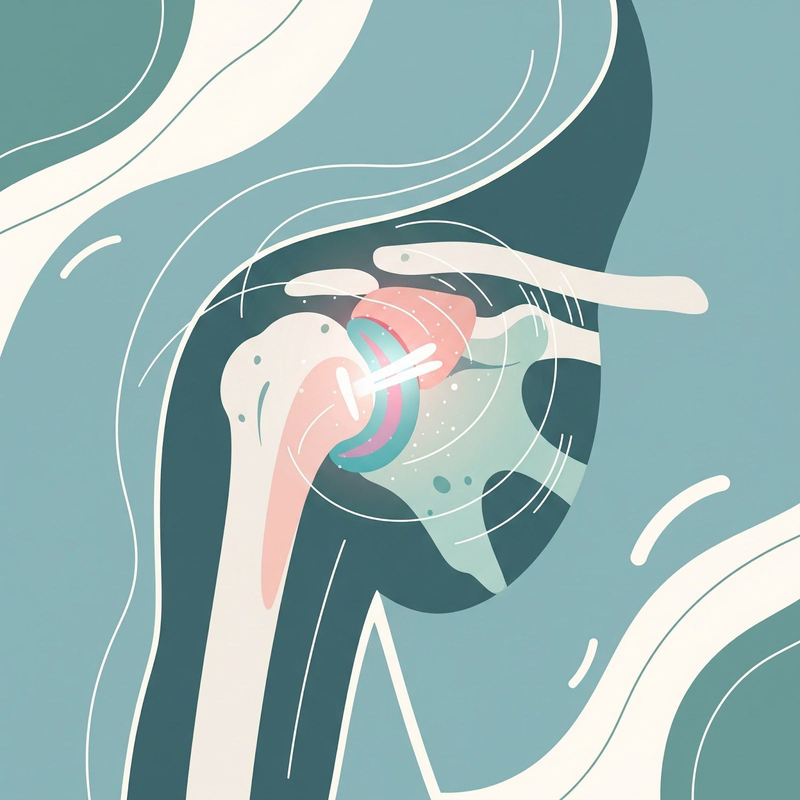
Rotator Cuff Tears: Diagnosis and Arthroscopic Repair
Rotator cuff tears are a common source of shoulder pain and disability, affecting individuals of all ages, though they are more frequent in those over 40 years of age and those engaging in repetitive overhead activities1. This comprehensive review explores the diagnosis and arthroscopic repair of rotator cuff tears, encompassing various repair techniques and rehabilitation protocols.
Diagnosis of Rotator Cuff Tears
Accurate diagnosis is crucial for the effective management of rotator cuff tears. The diagnostic process typically involves a combination of physical examination and imaging techniques.
Physical Examination
During a physical exam, the healthcare provider will:
- Obtain a detailed medical history, including any previous shoulder or muscle injuries2.
- Evaluate the range of motion and assess pain intensity during movement2.
- Palpate the tissues around the shoulder to identify tenderness3.
- Listen for grating or cracking sounds when the arm is moved4.
- Perform specific tests to assess rotator cuff strength and identify the presence of a tear5. For example, the Bear hug test can be used to assess for a subscapularis tear. In this test, the patient places the hand of the affected shoulder on the opposite shoulder and presses down while the doctor tries to pull the hand away. Pain or weakness suggests a subscapularis tear5.
Imaging Tests
Imaging tests are essential to confirm the diagnosis and determine the extent of the tear. Commonly used imaging modalities include:
- X-rays: Help rule out bone spurs, arthritis, or fractures as the cause of symptoms2.
- MRI: Provides detailed images of the soft tissues in the shoulder, allowing visualization of the tear, its size, and its location2.
- Ultrasound: Offers real-time imaging of the shoulder tendons and muscles, aiding in the assessment of dynamic movement and tendon integrity2.
Drawing from these various sources, it's important to emphasize that a comprehensive approach that combines physical examination findings with imaging results is crucial for accurate diagnosis. No single test is definitive, and clinical judgment plays a vital role in interpreting the findings and formulating a treatment plan2.
Types of Rotator Cuff Tears
Rotator cuff tears are classified based on several factors, including the extent of the tear, the number of tendons involved, and the underlying cause.
Tear Thickness
-
Partial-thickness tear: The tendon is damaged but remains partially attached to the bone1. Partial-thickness tears are further classified by the Ellman classification, based on the amount of tendon tissue torn:
-
Grade 1: Less than 3 mm (25% thickness)
- Grade 2: 3 to 6 mm (25% to 50% thickness)
- Grade 3: Larger than 6 mm (50% thickness) 5
-
Full-thickness tear: The tendon is completely detached from the bone1. Full-thickness tears are commonly classified using the Codman classification, based on the size of the tear:
-
Small: 0 to 1 cm
- Medium: 1 to 3 cm
- Large: 3 to 5 cm
- Massive: Greater than 5 cm 5
Tear Size and Tendon Involvement
| Tear Size Category | Description |
|---|---|
| Small | Less than 1 cm |
| Medium | 1 to 3 cm |
| Large | 3 to 5 cm |
| Massive | Greater than 5 cm, often involving multiple tendons |
Underlying Cause
There are two main causes of rotator cuff tears: injury and degeneration4.
- Acute tears: Result from a sudden injury, such as a fall or forceful lifting7.
- Degenerative tears: Develop gradually over time due to repetitive use, aging, or decreased blood supply7.
Understanding the cause of the rotator cuff tear can influence treatment decisions. For example, acute tears in younger individuals may be more amenable to surgical repair, while degenerative tears in older adults may be initially managed with conservative measures10.
Arthroscopic Repair Techniques
Arthroscopic repair is the most common surgical approach for rotator cuff tears. It involves small incisions and specialized instruments, minimizing tissue disruption and promoting faster recovery.
Arthroscopic Procedure
The general steps involved in arthroscopic rotator cuff repair include:
- Anesthesia: General or regional anesthesia is administered to ensure patient comfort11.
- Portal Placement: Small incisions are made to insert the arthroscope and surgical instruments11.
- Joint Evaluation: The surgeon examines the joint for any associated injuries, such as labral tears or biceps tendon injuries12.
- Subacromial Decompression: If necessary, bone spurs and inflamed tissue are removed to create more space for the rotator cuff tendons. This procedure is called an acromioplasty12.
- Burscetomy: The bursa, a fluid-filled sac that cushions the shoulder joint, may be removed if it is inflamed14.
- Tendon Debridement: The torn edges of the tendon are cleaned and any damaged tissue is removed14.
- Tendon Mobilization: The torn tendon is carefully mobilized and brought back to its anatomical position15.
- Tendon Repair: The tendon is reattached to the bone using suture anchors, which are small devices that secure the sutures in place12.
- Closure: The incisions are closed with sutures or surgical staples11.
Repair Techniques
Various techniques are employed for arthroscopic rotator cuff repair, including:
- Tendon-to-bone repair: Reattaching the torn tendon directly to the bone using suture anchors11.
- Margin convergence: Bringing the edges of the tear together to reduce tension on the repair15.
- Double-row repair: Placing two rows of suture anchors to provide stronger fixation14.
In addition to arthroscopic repair, other surgical options include:
- Open repair: This involves a larger incision and may be necessary for large or complex tears or when additional reconstruction is needed13.
- Mini-open repair: This technique combines a smaller open incision with arthroscopic visualization and may be used for certain types of tears13.
The choice of surgical technique depends on several factors, including the size and type of tear, the quality of the tendon tissue and bone, and the surgeon's experience and preference13. Arthroscopic repair is generally preferred due to its less invasive nature and faster recovery, but open or mini-open repair may be necessary in certain situations.
Post-Operative Rehabilitation 17
Rehabilitation is crucial for restoring shoulder function and optimizing outcomes after rotator cuff surgery. The rehabilitation protocol typically progresses through several phases:
Phase I: Maximum Protection (Weeks 1-6)
- Goals: Protect the repair, decrease inflammation, and improve passive range of motion17.
- Precautions: Immobilization in a sling, potentially with an abduction brace or pillow, no active shoulder movement, and no lifting17.
- Exercises: Pendulum exercises, elbow and wrist range of motion, and gentle passive shoulder exercises17.
Phase II: Moderate Protection (Weeks 6-12)
- Goals: Gradually increase active range of motion and begin strengthening exercises17.
- Precautions: No lifting or supporting body weight with the affected arm17.
- Exercises: Active-assisted range of motion, light resistance exercises, and scapular stabilization exercises17.
Phase III: Strengthening (Weeks 12-24)
- Goals: Restore full range of motion, improve strength and endurance, and optimize neuromuscular control17.
- Precautions: No heavy lifting or sudden movements17.
- Exercises: Progressive strengthening exercises with resistance bands and weights, and functional exercises17.
Phase IV: Advanced Strengthening (Weeks 24 and beyond)
- Goals: Maintain full range of motion, continue to improve strength and endurance, and return to full functional activities17.
- Exercises: Advanced strengthening exercises, plyometrics, and sport-specific training17.
The rehabilitation process is guided by the surgeon and a physical therapist, and the specific exercises and timelines are tailored to the individual patient's needs and progress19.
Potential Complications and Risks
While arthroscopic rotator cuff repair is generally safe, potential complications and risks include:
Nerve-related complications:
- Nerve injury: Damage to nerves surrounding the shoulder, potentially causing weakness or numbness13.
- Numbness: Temporary or persistent numbness in the arm or hand20.
Infection-related complications:
- Infection: Infection at the surgical site, requiring antibiotics or further surgery13.
- Wound complications: Redness, swelling, or drainage from the incision site20.
Other complications:
- Stiffness: Limited range of motion, often addressed with physical therapy13.
- Tendon re-tear: The repaired tendon may tear again, especially with larger tears or non-compliance with rehabilitation13.
- Persistent pain: Some patients may experience continued pain after surgery, which may require further treatment20.
- Blood clots: Formation of blood clots in the legs or lungs, a risk associated with any surgery21.
The incidence of these complications is generally low, but it's important for patients to be aware of the potential risks and to report any concerning symptoms to their healthcare provider20.
Long-Term Outcomes
Long-term outcomes of rotator cuff surgery are generally favorable, with most patients experiencing significant pain relief and improved shoulder function22. However, factors such as tear size, tendon quality, patient age, the presence of other shoulder conditions, and patient compliance with rehabilitation can influence outcomes23.
While many studies report positive long-term results, it's important to acknowledge that some patients may experience persistent pain, stiffness, or re-tears23. In some cases, particularly in younger patients with long-term issues, a reverse total shoulder replacement may be necessary to address ongoing pain and dysfunction25.
Outcome measures such as the Constant-Murley Score (CMS) and the Western Ontario Rotator Cuff (WORC) index are commonly used to assess shoulder function after rotator cuff repair8. These measures evaluate various aspects of shoulder function, including pain, range of motion, and strength, and can be used to track progress and evaluate treatment effectiveness.
Conclusion
Arthroscopic rotator cuff repair is an effective treatment for rotator cuff tears, offering a minimally invasive approach with good long-term outcomes for many patients. Accurate diagnosis, appropriate surgical technique, and diligent post-operative rehabilitation are essential for successful outcomes.
The information presented in this review highlights the importance of individualized treatment plans. Factors such as patient age, activity level, tear characteristics, and the presence of other shoulder conditions should be carefully considered when determining the optimal treatment strategy. Patient education and shared decision-making are crucial to ensure that patients understand the potential benefits and risks of surgery and are actively involved in their rehabilitation process.
Future directions in rotator cuff repair include the development of new surgical techniques, improved rehabilitation protocols, and a better understanding of the factors that influence long-term outcomes. Ongoing research and clinical advancements will continue to refine the management of rotator cuff tears and improve patient outcomes.
Works cited
1. Rotator Cuff Tear: Symptoms & Treatment - Cleveland Clinic, accessed February 17, 2025, https://my.clevelandclinic.org/health/diseases/8291-rotator-cuff-tear
2. Rotator Cuff Tear Causes, Symptoms, and Treatments - UPMC, accessed February 17, 2025, https://www.upmc.com/services/orthopaedics/conditions/rotator-cuff-tears
3. Diagnosing Torn Rotator Cuff | NYU Langone Health, accessed February 17, 2025, https://nyulangone.org/conditions/torn-rotator-cuff/diagnosis
4. Rotator Cuff Injury | Johns Hopkins Medicine, accessed February 17, 2025, https://www.hopkinsmedicine.org/health/conditions-and-diseases/rotator-cuff-injury
5. Rotator Cuff Tear: Causes, Symptoms, Treatments | HSS, accessed February 17, 2025, https://www.hss.edu/condition-list_rotator-cuff-tear-injury.asp
6. nyulangone.org, accessed February 17, 2025, https://nyulangone.org/conditions/torn-rotator-cuff/diagnosis#:~:text=Your%20doctor%20uses%20imaging%20tests,is%20partial%20or%20full%20thickness.
7. Rotator Cuff Tears - OrthoInfo - AAOS, accessed February 17, 2025, https://orthoinfo.aaos.org/en/diseases--conditions/rotator-cuff-tears/
8. Rotator Cuff Tears - Physiopedia, accessed February 17, 2025, https://www.physio-pedia.com/Rotator_Cuff_Tears
9. Rotator Cuff Tears - Shoulder & Elbow - Orthobullets, accessed February 17, 2025, https://www.orthobullets.com/shoulder-and-elbow/3043/rotator-cuff-tears
10. Acute Vs. Chronic Rotator Cuff Tears - Modern Orthopedics NJ, accessed February 17, 2025, https://modernorthonj.com/blog/acute-vs-chronic-rotator-cuff-tears/
11. What Happens During Rotator Cuff Repair Surgery: A Step-by-Step Guide, accessed February 17, 2025, https://www.brettraynormd.com/blog/2023/5/9/what-happens-during-rotator-cuff-repair-surgery-a-step-by-step-guide
12. Rotator Cuff Surgery Journey Guide - Washington University Orthopedics, accessed February 17, 2025, https://www.ortho.wustl.edu/mm/files/RotatorCuffSurgeryJourneyGuide.pdf
13. Rotator Cuff Tears: Surgical Treatment Options - OrthoInfo - AAOS, accessed February 17, 2025, https://orthoinfo.aaos.org/en/treatment/rotator-cuff-tears-surgical-treatment-options/
14. Small-to-medium full-thickness rotator cuff repair - Arthroscopic - Approaches - Orthobullets, accessed February 17, 2025, https://www.orthobullets.com/approaches/12008/small-to-medium-full-thickness-rotator-cuff-repair--arthroscopic
15. Arthroscopic shoulder surgery for the treatment of rotator cuff tears, accessed February 17, 2025, https://orthop.washington.edu/patient-care/articles/sports/arthroscopic-shoulder-surgery-for-the-treatment-of-rotator-cuff-tears
16. Rotator Cuff Tears: Surgical Treatment Options, accessed February 17, 2025, https://www.urmc.rochester.edu/MediaLibraries/URMCMedia/noyes/images/rotator-Cuff-Tears_Surgical-treatment-options_1.pdf
17. Arthroscopic Rotator Cuff Repair Rehabilitation Protocol - Ohio Shoulder Center, accessed February 17, 2025, https://ohioshouldercenter.com/forms_arcrrp/
18. PHYSICAL THERAPY PROTOCOL AFTER ROTATOR CUFF REPAIR - Boston Shoulder Institute, accessed February 17, 2025, /images/press/uploads/2020/04/PT-Rotator-Cuff-Reconstruction-Final.pdf
19. Rotator Cuff Repair Surgery | Rehab Protocol & Recovery Time - The Stone Clinic, accessed February 17, 2025, https://www.stoneclinic.com/rotator-cuff-repair-rehab-protocol
20. Rotator cuff repair - South Tees Hospitals NHS Foundation Trust, accessed February 17, 2025, https://www.southtees.nhs.uk/resources/rotator-cuff-repair/
21. Rotator Cuff Repair | Johns Hopkins Medicine, accessed February 17, 2025, https://www.hopkinsmedicine.org/health/treatment-tests-and-therapies/rotator-cuff-repair
22. Long-Term Outlook Good For Rotator Cuff Repairs - HSS, accessed February 17, 2025, https://www.hss.edu/newsroom_rotator-cuff-repair-study.asp
23. Failed Rotator Cuff Repairs | Johns Hopkins Medicine, accessed February 17, 2025, https://www.hopkinsmedicine.org/health/treatment-tests-and-therapies/failed-rotator-cuff-repairs
24. Long-term functional and structural outcome of rotator cuff repair in patients 60 years old or less, accessed February 17, 2025, https://pmc.ncbi.nlm.nih.gov/articles/PMC9937847/
25. Long-Term Outcomes of Massive Rotator Cuff Tear Repair: A Systematic Review - PMC, accessed February 17, 2025, https://pmc.ncbi.nlm.nih.gov/articles/PMC8753535/
