
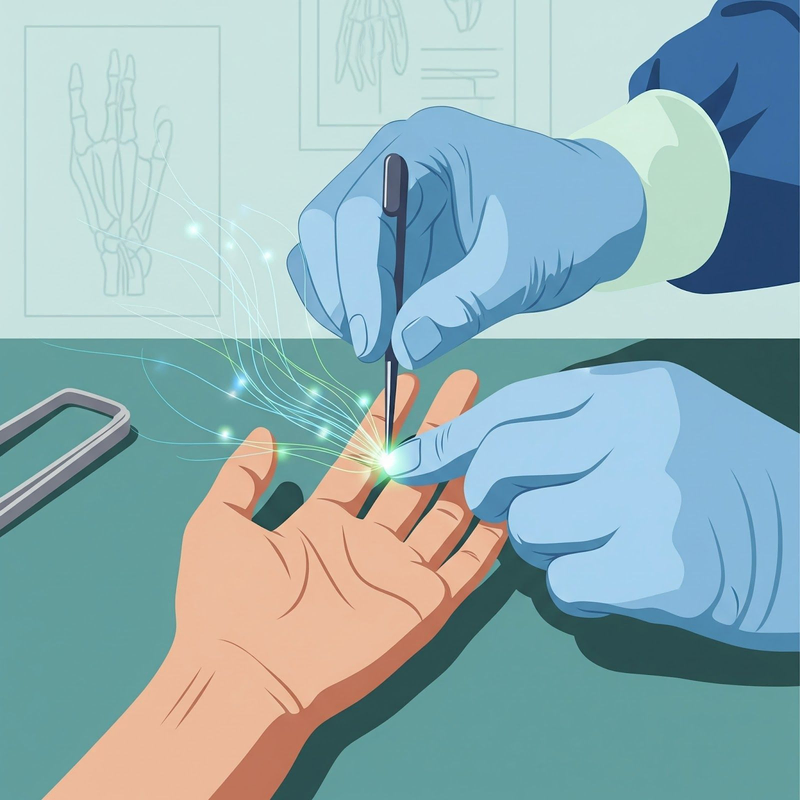
Microsurgery in Hand and Upper Extremity Surgery
Microsurgery has revolutionized the field of hand and upper extremity surgery, enabling surgeons to perform intricate procedures with improved precision and outcomes. This article explores the applications of microsurgery in this domain, focusing on nerve repair, vessel repair, and free tissue transfer. We will delve into specific techniques, discuss potential risks and complications, and highlight the latest advancements and innovations.
Microsurgical Instruments and Equipment
Microsurgery requires specialized instruments and equipment to operate on delicate structures. These include:
- Microscopes: High-powered microscopes with magnification capabilities ranging from 4 to 40 times are essential for visualizing small structures1. When using a microscope, surgeons should be mindful of the focal length, ensuring it is appropriate for their working position (250 mm for sitting, 300 mm for standing)2. The microscope should be initially set to the highest magnification and focused on the vessels, then zoomed out to lower power for initial dissection2. Minimizing glare by avoiding pools of fluid and using a dry background is also crucial for optimal visualization2.
- Microinstruments: Specialized instruments with fine tips and grasping ends are used for handling tissues, suturing, and manipulating small vessels and nerves2.
- Microsutures: Ultra-fine sutures, often finer than a human hair, are used to repair delicate tissues and vessels3.
- Microvascular clamps: These clamps are used to temporarily occlude blood vessels during repair2.
- Doppler probes: Sterile Doppler probes are used to identify and ensure the patency of blood vessels2.
- Bipolar cautery: Bipolar cautery is used to cauterize small blood vessels2.
- Microvascular couplers: These devices are used for anastomosis of veins and thin-walled arteries2.
- Background material: Background material is used to provide a platform for vessels during anastomosis2.
- Surgical arm and hand table: This specialized table provides stability and surgeon access during hand and upper extremity procedures1.
Proper hand positioning is crucial during microsurgery. Surgeons should stabilize their elbows and wrists, using their long, ring, and small fingers to create a stable platform for the index finger and thumb to work with precision2.
Introduction
Microsurgery involves the use of specialized instruments, high-powered microscopes, and fine sutures to operate on delicate structures such as nerves and blood vessels. This technique has significantly improved the treatment of complex upper limb injuries4. Microsurgery has made possible the replantation of amputated digits and hands, improved tissue survival through revascularization, and facilitated primary reconstruction with free flaps for soft tissue defects4. It's important to note that while microsurgery facilitates these procedures, other factors, such as the extent of the injury and the patient's overall health, also contribute to their success.
The Long Island Plastic Surgical Group (LIPSG) is renowned for its expertise in microsurgery and hand reconstruction. Their microsurgeons have decades of experience and are actively involved in research and presentations on the latest techniques5.
Microsurgery in Hand and Upper Extremity Surgery
Microsurgery has expanded the indications for replantation, both major and minor, leading to better functional outcomes4. The introduction of microsurgery into hand surgery practice has resulted in the salvage of many severely injured upper extremities and improved treatment outcomes4. It has also shifted the approach from simply covering wounds to primary reconstruction for preserving or regaining function6.
Hand and finger injuries account for 65% of all injuries, while hand-arm injuries make up approximately 18% of all body part injuries, representing the highest injury rates7. This highlights the importance of specialized hand and microsurgery centers like the one at LIPSG.
Microsurgery plays a crucial role in various hand and upper extremity surgeries, including:
Trauma:
- Cuts and puncture wounds: Microsurgery allows for precise repair of nerves, tendons, and blood vessels, minimizing scarring and maximizing functional recovery8.
- Soft tissue injuries and amputations: Microsurgery enables the replantation of amputated fingers and hands, as well as the transfer of tissue from other parts of the body to reconstruct damaged areas8. Replantation of the thumb should be attempted irrespective of the level or the mechanism of amputation4. In cases where the thumb is not replantable, heterotopic replantation, or transpositional microsurgery, can be used to replant the best available finger to the thumb position4.
- Degloving injuries: In degloving injuries, where the skin and underlying tissue are separated from the hand, microsurgery can help reattach the skin and restore blood flow7.
- High-energy injuries: Microsurgery is essential in treating complex injuries involving multiple structures in the hand and upper extremity7.
- Burns to the hand and forearm: Microsurgery can be used to reconstruct damaged tissue and improve function after severe burns7.
- Animal bites: Microsurgery can repair nerves, tendons, and blood vessels damaged by animal bites, minimizing infection risk and improving functional outcomes7.
Other Conditions:
- Fractures: Microsurgical techniques can be used to repair small bone fragments and restore blood supply to fractured bones, promoting healing and minimizing complications8.
- Infections: Microsurgical techniques can be used to debride infected tissue and reconstruct damaged structures, promoting healing and preventing further complications7.
- Congenital hand differences: Microsurgery can address various congenital hand conditions, such as amniotic band syndrome, arthrogryposis, and syndactyly8.
- Tumors of the upper extremity: Microsurgery can be used to remove tumors and reconstruct the affected area8.
- Trigger finger or trigger thumb: Microsurgery can be used to release the A1 pulley, which is a common cause of trigger finger or trigger thumb8.
One notable example of microsurgery's effectiveness is in distal digital replantations, which have shown a high overall success rate of 86% and good functional outcomes4.
Nerve Repair
Microsurgical techniques are crucial for nerve repair in hand and upper extremity surgery. Nerves are delicate structures that require precise handling and meticulous repair to restore function4. Microsurgery allows surgeons to visualize and repair even the smallest nerves, maximizing the chances of sensory and motor recovery9.
Techniques for Nerve Repair
Several microsurgical techniques are employed for nerve repair:
- External and internal decompression: This involves releasing pressure on the nerve by removing surrounding tissue or scar tissue10.
- Transposition: This involves moving the nerve to a new location to relieve pressure or tension10.
- Excision: This involves removing damaged segments of the nerve10.
- Repair with or without conduit: This involves suturing the nerve ends together, with or without the use of a conduit to guide nerve regeneration10. Nerve "glues" and wraps/conduits can be used to decrease initial gapping at the repair site and increase tensile load to failure11.
- Repair with autograft: This involves using a nerve graft from another part of the body to bridge a gap in the injured nerve10.
- Repair with allograft: This involves using a nerve graft from a cadaver10.
- Nerve transfers: This involves taking a healthy nerve from another part of the body and connecting it to the injured nerve to restore function10.
Factors that necessitate nerve reconstruction include gapping and poor soft tissue integrity, which can be related to the mechanism of injury11.
The choice of technique depends on the type and extent of nerve injury, the patient's individual needs, and the surgeon's expertise.
Outcomes of Nerve Repair
Microsurgical nerve repair can significantly improve functional outcomes, but complete recovery is not always guaranteed. Factors such as the severity of the injury, the age of the patient, and the timing of surgery can influence the results11. One study showed that microsurgery can achieve an 80% success rate in treating nerve-related pain across various conditions10.
Vessel Repair
Microsurgery is essential for repairing damaged blood vessels in the hand and upper extremity. These vessels are often very small, requiring specialized instruments and techniques for successful repair5. Microsurgical vessel repair helps restore blood flow to the affected area, promoting tissue survival and preventing complications such as ischemia and necrosis.
Techniques for Vessel Repair
Microsurgical vessel repair involves several techniques:
- End-to-end anastomosis: This involves connecting the two cut ends of the blood vessel13.
- End-to-side anastomosis: This involves connecting one cut end of the blood vessel to the wall of another vessel13.
- Vein grafting: This involves using a vein graft from another part of the body to bridge a gap in the injured vessel15.
Surgeons may use various techniques to perform anastomosis:
- Laser-assisted anastomosis: This involves using a laser to connect the blood vessels15.
- Stapling: This involves using a stapler to connect the blood vessels15.
- 3M Microvascular anastomotic coupling device: This device consists of two polyethylene rings with 12 stainless steel locking pins and is used for anastomosis15.
Before performing anastomosis, it is crucial to dilate the vessels using pharmacological agents like lidocaine16.
Challenges in Vessel Repair
Vessel repair can be challenging due to the small size of the vessels, the potential for spasm, and the risk of thrombosis. Surgeons must be meticulous in their technique to ensure successful vessel repair and restore blood flow13. Fingertip replantation, for example, presents unique challenges due to the small size (around 0.5 mm) and thinness of the vessel walls4. To address this, surgeons use continuous irrigation with a heparinized solution to prevent vessel collapse during repair4.
Another challenge in vessel repair is avoiding "working in a hole." 13 This can be addressed by extending incisions, further mobilizing recipient vessels proximally, and platforming vessels using sponges and cottonoids to bring them to the surface13.
Free Tissue Transfer
Free tissue transfer, also known as free flap surgery, involves transferring tissue from one part of the body to another to reconstruct a defect. This technique is often used in hand and upper extremity surgery to repair large wounds, restore function, and improve aesthetics17. Free tissue transfer brings healthy, living tissue to the wound or defect, allowing it to heal and preserve function17.
The decision to use free tissue transfer depends on several factors, including the size of the wound, the complexity of the wound or deformity, and the presence of exposed structures underneath17.
Types of Free Flaps
Free flaps can be categorized based on their location relative to the defect:
- Local flaps: These flaps are harvested from tissue surrounding the site of injury19.
- Regional flaps: These flaps are harvested from a non-injured part of the hand19.
- Distant flaps: These flaps are harvested from a distant site away from the injured hand19.
They can also be categorized based on the type of tissue they contain:
- Muscle flaps: These flaps provide well-vascularized, pliable tissue and are used for deep space obliteration20.
- Fasciocutaneous flaps: These flaps are used for flatter, more superficial wounds20.
- Bone flaps: These flaps include bone and are used to reconstruct bone defects17.
- Composite tissue flaps: These flaps contain more than one type of tissue, such as skin and muscle or muscle and bone18.
- Isolated tissue transplants: These include skin, fascia, muscle, nerve, or bone individually18.
- Functioning free muscle transfers: These involve transplanting muscles to restore function18.
- Vascularized bone grafts: These involve transplanting bone with its blood supply18.
- Toe transplantation: This involves transplanting a toe to replace a missing finger18.
Common Free Flaps
Some of the more common free flaps used for reconstruction in hand and upper extremity surgery include:
- Latissimus dorsi muscle flap: This flap is often used to cover large wounds17.
- Radial forearm flap: This flap is commonly used for hand reconstruction17.
- Rectus abdominis muscle flap: This flap is often used to obliterate dead space17.
- Fibula osteocutaneous flap: This flap is used for mandible reconstruction17.
- Parascapular osteocutaneous flap: This flap is used for infraorbital and maxillary defects18.
Considerations in Free Tissue Transfer
Free tissue transfer is a complex procedure that requires careful planning and execution. Surgeons must consider factors such as the size and location of the defect, the type of tissue needed, and the patient's overall health21. Proper debridement of the defect before reconstruction is mandatory, and the anastomosis must be performed without tension or twisting outside the zone of injury20.
Flap Reperfusion
After free tissue transfer, careful management of flap reperfusion is essential. This involves rapidly rewarming the flap with warm saline, topically applying papavarine, and addressing any spasm in the vessels13.
Vessel Injury and Regeneration
Vessel injury and regeneration occur through the following steps:
- Formation of a platelet plug: Platelets aggregate at the site of injury to stop bleeding18.
- Pseudointima formation: A layer of cells forms over the platelet plug18.
- Endothelial regeneration: New endothelial cells grow to cover the anastomotic site18.
Risks and Complications of Microsurgery
Microsurgery, while offering significant benefits, is associated with potential risks and complications. These include:
- Anesthetic complications: As with any surgery, there is a risk of complications related to anesthesia19.
- Bleeding: Microsurgery involves delicate blood vessels, and there is a risk of bleeding during or after the procedure22.
- Infection: Any surgical procedure carries a risk of infection19.
- Loss of sensation: Nerve repair may not always result in complete restoration of sensation19.
- Stiffness: Joint stiffness can occur after hand and upper extremity surgery19.
- Delayed healing or failure to heal: Some patients may experience delayed healing or failure of the transferred tissue to heal properly19.
- Asymmetrical healing: In some cases, healing may not be symmetrical, especially in limb replantation22.
- Tissue loss (necrosis): There is a risk of tissue loss due to inadequate blood supply22.
- The need for additional future surgeries: Some patients may require additional surgeries to achieve the desired outcome22.
Case Studies and Clinical Trials
With the latest developments in microsurgery, hand and upper extremity surgery have become more important, and the number of patients has increased23. This has led to a growing number of academic publications and research studies in this field.
One study examined the sterility of miniature C-arm (MCA) fluoroscopy in hand and upper extremity surgery24. The study found that a high rate of MCA intraoperative contamination occurs, and MCA placement below the hand-table may increase contamination risk24. This highlights the importance of regular sterilization of equipment and awareness of potential risk factors.
Advancements and Innovations in Microsurgery
The field of microsurgery is constantly evolving, with new advancements and innovations improving outcomes and expanding applications. Some of the latest developments include:
- Supermicrosurgery: This involves operating on even smaller structures, such as lymphatics and blood vessels with diameters below 0.5 mm25. This has led to significant advancements in lymphatic surgery, enabling more minimally invasive tissue transfer and improved treatment of lymphedema25.
- Robotic-assisted surgery: Robotic systems, such as the da Vinci and MUSA, enhance precision and reduce operative times25. Studies have shown that while robotic-assisted anastomosis may take longer initially, there is a steep learning curve, and operating times become comparable to hand-sewn anastomosis with experience25.
- Innovations in imaging: Magnetic resonance (MR) lymphography and near-infrared fluorescence improve surgical planning and outcomes25.
- New instruments and equipment: Thinner sutures, specialized clamps, and advanced microscopes enhance precision and facilitate complex procedures26. Advancements in microsurgery now allow submillimeter vessels to be repaired, preserving more of the hand and reducing the need for amputation26.
- Nerve transfers and nerve grafting: Advancements in nerve transfers and nerve grafting techniques improve functional outcomes in nerve repair25.
- Minimally invasive procedures: Many microsurgical procedures can now be performed with smaller incisions and under light sedation, leading to less pain and faster recovery27.
- Revision surgeries: Microsurgery is also used in revision surgeries to address complications or improve outcomes from previous surgeries27.
- Toe-to-thumb transplants: For patients who have lost their thumb, toe-to-thumb transplants are now possible with microsurgery27.
These innovations are contributing to better outcomes, shorter recovery times, and expanded applications of microsurgery in hand and upper extremity surgery.
Perhaps the most significant advancement in microsurgery is the implementation of AI-operated robots25. These robots have the potential to further enhance precision and reduce operating times, revolutionizing the field of microsurgery.
Conclusion
Microsurgery has become an indispensable tool in the treatment of hand and upper extremity conditions. Its applications in nerve repair, vessel repair, and free tissue transfer have significantly improved outcomes for patients with complex injuries and deformities. While potential risks and complications exist, ongoing advancements and innovations continue to refine techniques and expand the possibilities of microsurgery in this domain. Microsurgery is not just about technique but also involves a combination of surgical science and art, requiring years of training to become proficient28.
Synthesis
Microsurgery has significantly advanced the field of hand and upper extremity surgery, enabling surgeons to perform intricate procedures with improved precision and outcomes. This technique has revolutionized the treatment of complex injuries, increasing the salvage rate and enhancing functional outcomes. Microsurgery has made possible the replantation of amputated digits and hands, improved tissue survival through revascularization, and facilitated primary reconstruction with free flaps for soft tissue defects.
Microsurgical techniques are crucial for nerve repair, vessel repair, and free tissue transfer in hand and upper extremity surgery. These procedures involve the use of specialized instruments, high-powered microscopes, and fine sutures to operate on delicate structures such as nerves and blood vessels. While potential risks and complications exist, ongoing advancements and innovations, such as supermicrosurgery, robotic-assisted surgery, and new imaging techniques, continue to refine techniques and expand the possibilities of microsurgery in this domain.
Works cited
1. Micro-Surgical Arm and Hand Table - STERIS, accessed February 17, 2025, https://www.steris.com/healthcare/products/surgical-table-accessories/arm-supports/micro-surgical-arm-and-hand-table
2. Microsurgery Essentials: Preparation | Division of Plastic & Reconstructive Surgery, accessed February 17, 2025, https://plasticsurgery.stanford.edu/education/microsurgery/preparation.html
3. Microsurgery of the upper limb - Dr Philippe Roure, accessed February 17, 2025, https://docteurphilipperoure.com/en/technics/microsurgery/
4. Microsurgery in the urgent and emergent management of the hand - PMC - PubMed Central, accessed February 17, 2025, https://pmc.ncbi.nlm.nih.gov/articles/PMC4094114/
5. Microsurgery Hand Reconstruction NYC New York Long Island, accessed February 17, 2025, https://www.lipsg.com/microsurgery-hand-reconstruction/
6. Upper extremity microsurgery - PubMed, accessed February 17, 2025, https://pubmed.ncbi.nlm.nih.gov/11335829/
7. Hand and Microsurgery - Liv Hospital, accessed February 17, 2025, https://www.livhospital.com/en/hand-and-microsurgery
8. Hand and Microsurgery Program | Children's Hospital Los Angeles, accessed February 17, 2025, https://www.chla.org/plastic-and-maxillofacial-surgery/hand-and-microsurgery-program
9. Surgical Repair of a Nerve | Johns Hopkins Medicine, accessed February 17, 2025, https://www.hopkinsmedicine.org/health/treatment-tests-and-therapies/surgical-repair-nerve
10. Peripheral Nerve Microsurgery - Anastasia Medical Group, accessed February 17, 2025, https://anastasiamedicalgroup.com/peripheral-nerve-microsurgery/
11. Microsurgical Techniques for Digital Nerve Injuries and Vascular Injuries - PubMed, accessed February 17, 2025, https://pubmed.ncbi.nlm.nih.gov/39280963/
12. Nerve Surgery and Nerve Damage Repair - Penn Medicine, accessed February 17, 2025, https://www.pennmedicine.org/for-patients-and-visitors/find-a-program-or-service/neurosurgery/penn-nerve-center/treatments-and-procedures/surgical
13. Microsurgery Essentials: Intra-Operative Technique | Division of Plastic & Reconstructive Surgery | Stanford Medicine, accessed February 17, 2025, https://plasticsurgery.stanford.edu/education/microsurgery/intraoperative.html
14. Microvascular Surgery, accessed February 17, 2025, https://www.erickagelmd.com/microvascular-surgery/
15. Microvascular Surgery Miami, FL | Nerve Grafting Doral - Dr Eric Balaguer, accessed February 17, 2025, https://www.balaguerhand.com/microvascular-surgery-hand-upper-extremity-surgeon-miami-beach-doral/
16. Technique for Microanastomosis - Wheeless' Textbook of Orthopaedics, accessed February 17, 2025, https://www.wheelessonline.com/orthopaedics/technique-for-microanastomosis/
17. Microsurgery -Surgery Beyond the Abilities of Unaided Human Eyesight, accessed February 17, 2025, https://craniofacialteamtexas.com/virtual-surgery-and-technology/microsurgery/
18. Principles of Microsurgery: Background, Indications, Contraindications, accessed February 17, 2025, https://emedicine.medscape.com/article/1284724-overview
19. Microsurgery Atlantis | Traumatic Hand Injury Wellington, FL, accessed February 17, 2025, https://www.ocpbchandwristandelbow.com/microsurgery-upper-extremity-fracture-wrist-elbow-surgeon-atlantis-boynton-beach-boca-raton-fl/
20. Free tissue transfers and replantation - PubMed, accessed February 17, 2025, https://pubmed.ncbi.nlm.nih.gov/23190838/
21. Microvascular Free Flap Reconstruction | Golden State Plastic Surgery, accessed February 17, 2025, https://www.goldenstatedermatology.com/plasticsurgery/microvascular-free-flap-reconstruction/
22. Microsurgery: What It Is, Procedures & Instruments Used - Cleveland Clinic, accessed February 17, 2025, https://my.clevelandclinic.org/health/treatments/microsurgery
23. 2024, Vol: 13, Issue: 3, accessed February 17, 2025, https://handmicrosurgeryjournal.com/index.php?sec=gfa
24. Sterility of Miniature C-arm Fluoroscopy in Hand and Upper Extremity Surgery | Vanderbilt University Medical Center, accessed February 17, 2025, https://www.vumc.org/pediatric-trauma-service/sites/default/files/public_files/Trauma%20Peds/Sterility%20of%20Miniature%20C-arm%20Fluoroscopy%20in%20Hand%20and%20Upper%20Extremity%20Surgery.pdf
25. Advances in Modern Microsurgery - PMC, accessed February 17, 2025, https://pmc.ncbi.nlm.nih.gov/articles/PMC11396389/
26. Orthopaedic Oncology for Patients with Upper Extremity Tumors of the Hand, accessed February 17, 2025, https://www.hopkinsmedicine.org/news/articles/2019/04/orthopaedic-oncology-for-patients-with-upper-extremity-tumors-of-the-hand
27. Innovative Treatments - Hand & Microsurgery Associates - Columbus OH, accessed February 17, 2025, https://www.handandmicro.com/about/innovative-treatments/
28. Reconstructive microsurgery - Microsurgeon.Org, accessed February 17, 2025, https://www.microsurgeon.org/microsurgery.php
