
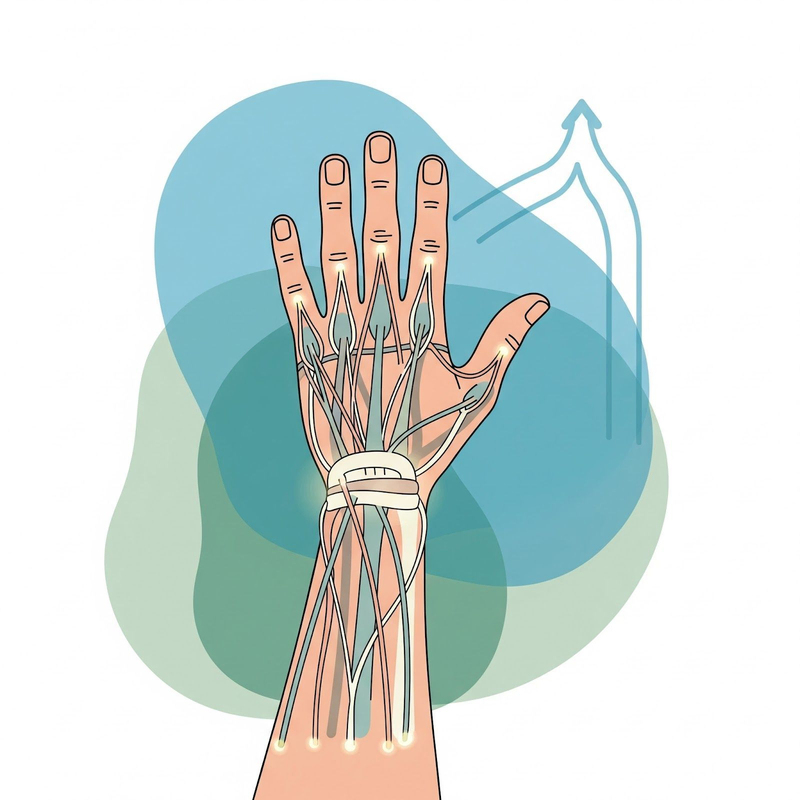
Tendon Injuries of the Hand and Upper Extremity: A Review of Repair and Rehabilitation
Tendon injuries in the hand and upper extremity are common, often resulting from lacerations or trauma. These injuries can significantly impact hand function and quality of life 1, making effective treatment and rehabilitation crucial. This article provides a comprehensive review of tendon injuries in the hand and upper extremity, focusing on flexor and extensor tendon injuries, their repair, and rehabilitation protocols.
Tendon Injury Overview
Tendons are fibrous cords of connective tissue that attach muscles to bones, enabling movement. Risk for rupture of the Achilles tendon, and other tendons increases with age2. In the hand, there are two main types of tendons:
- Flexor tendons: Located on the palm side, these tendons allow finger and thumb flexion (bending)3.
- Extensor tendons: Situated on the back of the hand, these tendons facilitate finger and thumb extension (straightening)4.
Tendon injuries can be classified as:
- Strains: Overstretching or tearing of a tendon5.
- Lacerations: Cuts or tears in the tendon, often caused by sharp objects6.
- Ruptures: Complete tendon tears, which may occur due to forceful pulling or underlying conditions like rheumatoid arthritis7.
Extensor tendon injuries occur more frequently than flexor tendon injuries8. To help diagnose and treat extensor tendon injuries, doctors have separated the hand into eight extensor tendon injury zones: 9
- Zone I: The area below the nail through the top finger joint, called the distal interphalangeal joint. This is where mallet finger injuries happen.
- Zone II: The middle phalanx, the area between the top and middle joint.
- Zone III: Covers the middle joint, called the... source
Types of Tendon Injuries in the Hand and Upper Extremity
Tendon injuries can occur in various locations within the hand and upper extremity. Some common types include: 10
- Flexor Tendon Injuries: These injuries can affect the tendons responsible for bending the fingers and thumb, leading to difficulty in making a fist or grasping objects10.
- Extensor Tendon Injuries: These injuries involve the tendons that straighten the fingers and thumb, potentially causing challenges in extending the fingers fully10.
- Distal Bicep Tendon Tear: This injury affects the tendon connecting the bicep muscle to the forearm, potentially weakening elbow flexion and forearm rotation. Surgical intervention might be necessary for severe cases10.
- Rotator Cuff Tear: This injury involves the group of tendons that support shoulder joint movement, causing pain and weakness, particularly during arm lifting or rotation. Rehabilitation exercises and, in some cases, surgery may be recommended for recovery10.
- De Quervain's Tenosynovitis: This condition affects the tendons around the base of the thumb, causing pain and swelling. Individuals may experience difficulty gripping or pinching10.
- Tennis Elbow (Lateral Epicondylitis): This overuse injury affects the forearm extensor tendons, causing pain and tenderness on the outer elbow10. Treatment methods include steroid injections and physical therapy to strengthen and balance the shoulder11.
Diagnosis of Tendon Injuries
Diagnosing a tendon injury typically involves a physical examination and a review of the patient's medical history3. During the examination, the doctor will assess the patient's ability to bend and straighten their fingers and will also examine the fingers for sensation, blood flow, and strength3.
Imaging techniques, such as X-rays and MRI, may be used to confirm the diagnosis and assess the extent of the injury1. X-rays can help identify any associated fractures, while MRI can provide detailed images of the tendons and surrounding tissues1.
Flexor Tendon Injuries
Flexor tendon injuries often result from deep cuts on the palm side of the hand, fingers, or wrist3. They can also occur during sports activities like football, wrestling, and rock climbing, or due to chronic illnesses like rheumatoid arthritis12. Occasionally, flexor tendons may be partially cut or torn. With a partial tendon injury, it may still be possible to bend your finger. However, partial tendon injuries may result in incomplete bending of the finger, excessive pain, or even catching or locking of the finger during movement7.
Common signs and symptoms of flexor tendon injuries include: 12
- Difficulty bending one or more fingers
- Numbness on one or both sides of the finger, indicating nerve damage
- Loss of blood flow to the finger, requiring immediate surgery
If you experience a flexor tendon injury, apply ice immediately to the injured finger. Wrap a sterile cloth or bandage around the injury and keep your finger elevated above your heart level to reduce bleeding if present3. Seek medical attention as soon as possible3.
Treatment and Rehabilitation of Flexor Tendon Injuries
Treatment for flexor tendon injuries typically involves surgical repair to restore tendon function12. Following surgery, a protective splint is used to immobilize the hand and allow the tendon to heal12.
Hand therapy plays a crucial role in the rehabilitation process, focusing on: 12
- Improving finger motion
- Maximizing functional recovery of the hand
- Preventing scar tissue formation
In some cases, additional surgery may be needed to remove scar tissue and improve finger motion12.
Complications of Flexor Tendon Injuries
Complications can occur with flexor tendon injuries and their treatment, including:
- Infection: Risk of infection is higher with open injuries or contaminated wounds13. Symptoms of infection may include redness, swelling, tenderness, pain, and fever13. Most infections can be treated with antibiotics13.
- Repair failure: The repaired tendon may rupture, especially if precautions are not followed13. This often happens soon after the operation when the tendon is at its weakest13.
- Tendon adhesion: The tendon may stick to surrounding tissue, causing stiffness and limited motion13. This can lead to a loss of movement13. More serious cases of tendon adhesion may require surgery to free the stuck tendon13. Hand therapy can play a crucial role in preventing tendon adhesion14.
Long-Term Outcomes of Flexor Tendon Injury Treatment
Over the last several decades, advanced research and experience in the treatment of flexor tendon injuries have resulted in improved patient outcomes7. Flexor tendon injuries, however, can be very challenging to treat7. Even in the best of hands, some patients develop stiffness and poor function of a digit after flexor tendon injury and repair7. For this reason, it is very important to be seen promptly if you are concerned you may have a flexor tendon injury7. It is also essential to work with therapy and follow all instructions after you undergo a flexor tendon repair to optimize your outcome7. Overall, despite its challenges, flexor tendon surgery results in good return of function and high patient satisfaction for many patients7.
Extensor Tendon Injuries
Extensor tendon injuries commonly occur due to jamming a finger, deep cuts on the back of the hand, or underlying conditions like rheumatoid arthritis1. Mallet finger, where the fingertip droops and cannot straighten, is a common type of extensor tendon injury9. The extensor tendons are strong smooth cords that straighten the fingers by connecting the muscles of the forearm and hand to the bones in the fingers and thumb. At the base of the finger, the long tendon from the forearm muscle is joined by the short tendons from the small muscles in the hand to form a complicated sheet of tendon fibres over the back of the finger15.
Symptoms of extensor tendon injuries may include: 16
- Inability to straighten the fingers or extend the wrist
- Pain and swelling in the fingertip
- Drooping of the end joint of the finger
Treatment and Rehabilitation of Extensor Tendon Injuries
Treatment for extensor tendon injuries varies depending on the severity and location of the injury. Splinting is often used to immobilize the affected finger and allow the tendon to heal16. Most cut tendons need surgical repair, although partly cut tendons can heal well with splintage15. In cases of complete tendon rupture or severe injuries, surgical repair may be necessary16.
Hand therapy is essential for rehabilitation after extensor tendon injury or surgery. It focuses on: 16
- Restoring wrist and finger function
- Improving motion and strength
- Regaining independence in hand use
Complications of Extensor Tendon Injuries
Extensor tendon injuries can have several complications, including:
- Tendon rupture: The tendon can rupture or break, especially if it is not properly protected during the healing process13.
- Stiffness: Stiffness in the affected finger or wrist can occur due to scar tissue formation or prolonged immobilization13.
- Infection: There is a risk of infection, particularly if the injury involves an open wound13.
Long-Term Outcomes of Extensor Tendon Injury Treatment
Over the last several decades, advanced research and experience in the treatment of extensor tendon injuries have resulted in improved patient outcomes1. Extensor tendon injuries, however, can be challenging to treat1. Despite extensive therapy, some patients have long-term stiffness after extensor tendon injuries1. Sometimes, a second surgery is required to free up scar tissue and to help the patient regain motion1. Unfortunately, stiffness, tendon rupture and impaired function may all accompany long term results of extensor tendon injury1.
Surgical Repair Techniques for Tendon Injuries
Surgical repair of tendon injuries aims to restore the normal function of the affected joint and surrounding tissues17. While it is generally true that tendons cannot heal unless the ends are touching 17, some partially torn tendons may heal with immobilization14. The specific surgical technique used depends on the type and extent of the injury.
Common surgical repair techniques include: 18
- Primary tendon reconstruction: Directly reattaching the torn ends of the tendon using sutures. This technique is typically used for acute injuries where the tendon ends are clean and well-aligned18.
- Tendon grafting: Using a graft to bridge the gap between the torn ends of the tendon. This is often necessary when there is not enough healthy tendon tissue to allow for direct repair18.
- Tendon transfer: Rerouting a healthy tendon to restore function. This technique may be used when the original tendon is severely damaged or cannot be repaired18.
- Arthroscopic tendon repair: Minimally invasive technique using an arthroscope to repair the tendon. This approach allows for smaller incisions and potentially faster recovery18.
- Open tendon surgery: Traditional approach involving a larger incision for direct access to the tendon. This may be necessary for complex injuries or when other procedures need to be performed at the same time18.
Specific suture techniques used in extensor tendon repair include the modified Kessler stitch and the modified Bunnell stitch19.
Rehabilitation Protocols for Tendon Injuries
Rehabilitation after tendon injury or surgery is crucial for restoring function and preventing complications. Rehabilitation protocols typically involve a phased approach, with specific goals and exercises tailored to the individual's needs and the stage of healing20. Hand therapy plays a crucial role in achieving optimal outcomes12.
General principles of tendon rehabilitation include: 21
- Progressive loading: Gradually increasing the load on the tendon to promote healing and strength.
- Pain management: Monitoring pain levels and adjusting activity accordingly.
- Range of motion exercises: Maintaining or restoring joint mobility.
- Strengthening exercises: Improving tendon and muscle strength.
- Functional exercises: Incorporating activities that mimic daily tasks or sport-specific movements.
Phases of Rehabilitation
Rehabilitation protocols for tendon injuries often involve five phases: 20
Phase I (Surgery to 2 weeks after):
- Focuses on protecting the repair and minimizing pain and swelling.
- Immobilization with a splint or boot may be necessary.
- Gentle range of motion exercises and upper body circuit training may be initiated.
Phase II (2-6 weeks after surgery):
- Gradual increase in range of motion exercises.
- Introduction of pain-free isometric exercises.
- Continued emphasis on protecting the repair.
Phase III (6-8 weeks after surgery):
- Progression to weight-bearing activities as tolerated.
- Focus on normalizing gait and improving balance.
- Introduction of gentle strengthening exercises.
Phase IV (8 weeks after surgery):
- Further progression of strengthening exercises.
- Introduction of functional exercises and agility drills.
- Gradual return to normal activities.
Phase V (Usually 4 months after surgery):
- Focus on sport-specific or work-specific activities.
- Progression to higher-level impact and agility exercises.
- Emphasis on restoring full function and preventing re-injury.
Isometric Exercises
Isometric exercises, where muscles contract without moving, are often prescribed in the early stages of rehabilitation to help control pain22. These exercises can be performed multiple times a day22.
The "Goldilocks Zone" for Tendon Stretch
Force through a tendon leads to a small degree of stretch. There is a "goldilocks zone" for the optimal amount of tendon stretch22. Too little stretch will not provide a sufficient stimulus for tendon adaptation, while too much stretch can compromise the healing process22.
Complications of Tendon Injuries and Their Treatment
Complications can occur with tendon injuries and their treatment, including: 13
- Infection: Risk of infection is higher with open injuries or contaminated wounds13. Symptoms of infection may include redness, swelling, tenderness, pain, and fever13. Most infections can be treated with antibiotics13.
- Repair failure: The repaired tendon may rupture, especially if precautions are not followed13. This often happens soon after the operation when the tendon is at its weakest13.
- Tendon adhesion: The tendon may stick to surrounding tissue, causing stiffness and limited motion13. This can lead to a loss of movement13. More serious cases of tendon adhesion may require surgery to free the stuck tendon13. Hand therapy can play a crucial role in preventing tendon adhesion14.
In addition to these complications, tendon injuries can also lead to other conditions, such as: 23
- Strains: Overstretching or tearing of a tendon.
- Tendonitis: Inflammation of a tendon, often caused by overuse or repetitive activities.
- Tenosynovitis: Inflammation of the tendon sheath, the lining that surrounds a tendon.
Long-Term Outcomes of Tendon Injury Treatment
Long-term outcomes of tendon injury treatment vary depending on factors such as the type and severity of the injury, the individual's overall health, and adherence to rehabilitation protocols2.
While many individuals achieve good functional outcomes after tendon repair and rehabilitation, some may experience long-term stiffness, weakness, or decreased range of motion1. Even with surgical intervention, the repaired tendon may still be compromised in the long term, and functional repair likely does not yield regeneration2.
Factors that can influence long-term outcomes include: 2
- Age
- Genetics
- Co-morbidities (e.g., diabetes)
- Expectations of future use (e.g., return to sport)
Overuse or degeneration of tendons can also occur not only with sport and physical activity, but may occur in everyday life24. This is sometimes known as tendinopathy or tendinosis24. Tendinopathy is notorious for being difficult to treat as the tendon has often been failing under a physical load for years24. It tends to be an ongoing problem, and even if it subsides, there is a high risk of recurrence24. The type of collagen in the tendon can also influence healing24.
Conclusion
Tendon injuries in the hand and upper extremity require prompt and appropriate treatment to ensure optimal outcomes. Early intervention is crucial, as injuries that are treated within the first seven to ten days have the most potential for good outcomes14. Surgical repair may be necessary for complete tendon ruptures or severe injuries, while partial tears may heal with immobilization and hand therapy14. A comprehensive rehabilitation program is essential for restoring hand function and preventing long-term complications17. Close collaboration between healthcare providers, surgeons, and therapists is crucial for successful management of these injuries.
Tendon healing often has variable outcomes, and it can be difficult for patients to return to their previous level of activity2. Factors such as age, genetics, and overall health can influence the healing process and long-term outcomes2. By understanding the different types of tendon injuries, their treatment options, and potential complications, healthcare professionals can provide effective care and support patients in achieving the best possible recovery.
Works cited
1. Extensor Tendon Injuries - Dr. Groh, accessed February 17, 2025, https://www.drgordongroh.com/orthopaedic-injuries-treatment/hand-wrist/extensor-tendon-injuries/
2. Optimizing tendon repair and regeneration: how does the ... - Frontiers, accessed February 17, 2025, https://www.frontiersin.org/journals/bioengineering-and-biotechnology/articles/10.3389/fbioe.2024.1357871/full
3. Flexor Tendon Injuries | Precision Surgery Center, Orthopedic, Spine & Pain Management, Macomb, MI, accessed February 17, 2025, https://www.precisionsurgerycenter.org/flexor-tendon-injuries-orthopedic-spine-surgeon-macomb-michigan/
4. Hand tendon repair - NHS, accessed February 17, 2025, https://www.nhs.uk/conditions/hand-tendon-repair/
5. childrenswi.org, accessed February 17, 2025, https://childrenswi.org/medical-care/orthopedics/programs/hand-and-upper-extremity-program/conditions/tendon-and-ligament-injuries#:~:text=About%20hand%20and%20upper%20extremity%20tendon%20and%20ligament%20injuries&text=Ligaments%20connect%20our%20bones%20to,tearing%20a%20muscle%20or%20tendon
6. Flexor Tendon Injury: Signs & Treatment | The Hand Society, accessed February 17, 2025, https://www.assh.org/handcare/condition/flexor-tendon-injury
7. Flexor Tendon Injuries - OrthoInfo - AAOS, accessed February 17, 2025, https://orthoinfo.aaos.org/en/diseases--conditions/flexor-tendon-injuries/
8. The Incidence of Acute Traumatic Tendon Injuries in the Hand and Wrist: A 10-Year Population-based Study, accessed February 17, 2025, https://pmc.ncbi.nlm.nih.gov/articles/PMC4040381/
9. What to Know About Hand Extensor Tendon Injuries - WebMD, accessed February 17, 2025, https://www.webmd.com/pain-management/what-to-know-about-hand-extensor-tendon-injuries
10. Tendon Lacerations: Causes, Symptoms, and Treatment, accessed February 17, 2025, https://www.advancedreconstruction.com/hand-upper-extremity/what-we-treat/tendon-injuries-lacerations/
11. Hand and Upper Extremity - MidAmerica Orthopaedics, accessed February 17, 2025, https://midamericaortho.com/hand-and-upper-extremity
12. Flexor Tendon Injuries | University of Michigan Health, accessed February 17, 2025, https://www.uofmhealth.org/conditions-treatments/hand-program/flexor-tendon-injuries
13. Hand tendon repair - Risks - NHS, accessed February 17, 2025, https://www.nhs.uk/conditions/hand-tendon-repair/risks/
14. Hand Tendon Injuries: Causes, Treatments, and Prevention | South ..., accessed February 17, 2025, https://www.southshorehealth.org/wellness/blog/hand-tendon-injuries-causes-treatments-and-prevention
15. Extensor tendon injury | The British Society for Surgery of the Hand, accessed February 17, 2025, https://www.bssh.ac.uk/patients/conditions/27/extensor_tendon_injury
16. Extensor Tendon and Mallet Finger Injuries - University of Michigan Health, accessed February 17, 2025, https://www.uofmhealth.org/conditions-treatments/hand-program/extensor-tendon-and-mallet-finger-injuries
17. Tendon repair: MedlinePlus Medical Encyclopedia, accessed February 17, 2025, https://medlineplus.gov/ency/article/002970.htm
18. Tendon Repair Surgery: Common Procedures and Recovery Tips, accessed February 17, 2025, https://panthercreeksurgerycenter.com/tendon-repair-surgery-common-procedures-and-recovery-tips/
19. Extensor Tendon Repair Technique - Medscape Reference, accessed February 17, 2025, https://emedicine.medscape.com/article/109111-technique
20. Achilles Tendon Repair Rehabilitation Protocol | Stony Brook Medicine, accessed February 17, 2025, https://www.stonybrookmedicine.edu/northforkorthopedics/achilles-tendon
21. The Do's And Don'ts Of Tendon Rehab — Physio Network, accessed February 17, 2025, https://www.physio-network.com/blog/tendon-rehab/
22. orthosports.com.au, accessed February 17, 2025, https://orthosports.com.au/pdf-download/Understanding-tendon-rehabilitation-Paul-Mason.pdf
23. Tendon: Function, Anatomy & Common Injuries - Cleveland Clinic, accessed February 17, 2025, https://my.clevelandclinic.org/health/body/21738-tendon
24. Chronic Tendon Injury, Orthosports Orthopaedic Surgeons, accessed February 17, 2025, https://orthosports.com.au/services-we-offer/sports-medicine/chronic-tendon-injury/
