
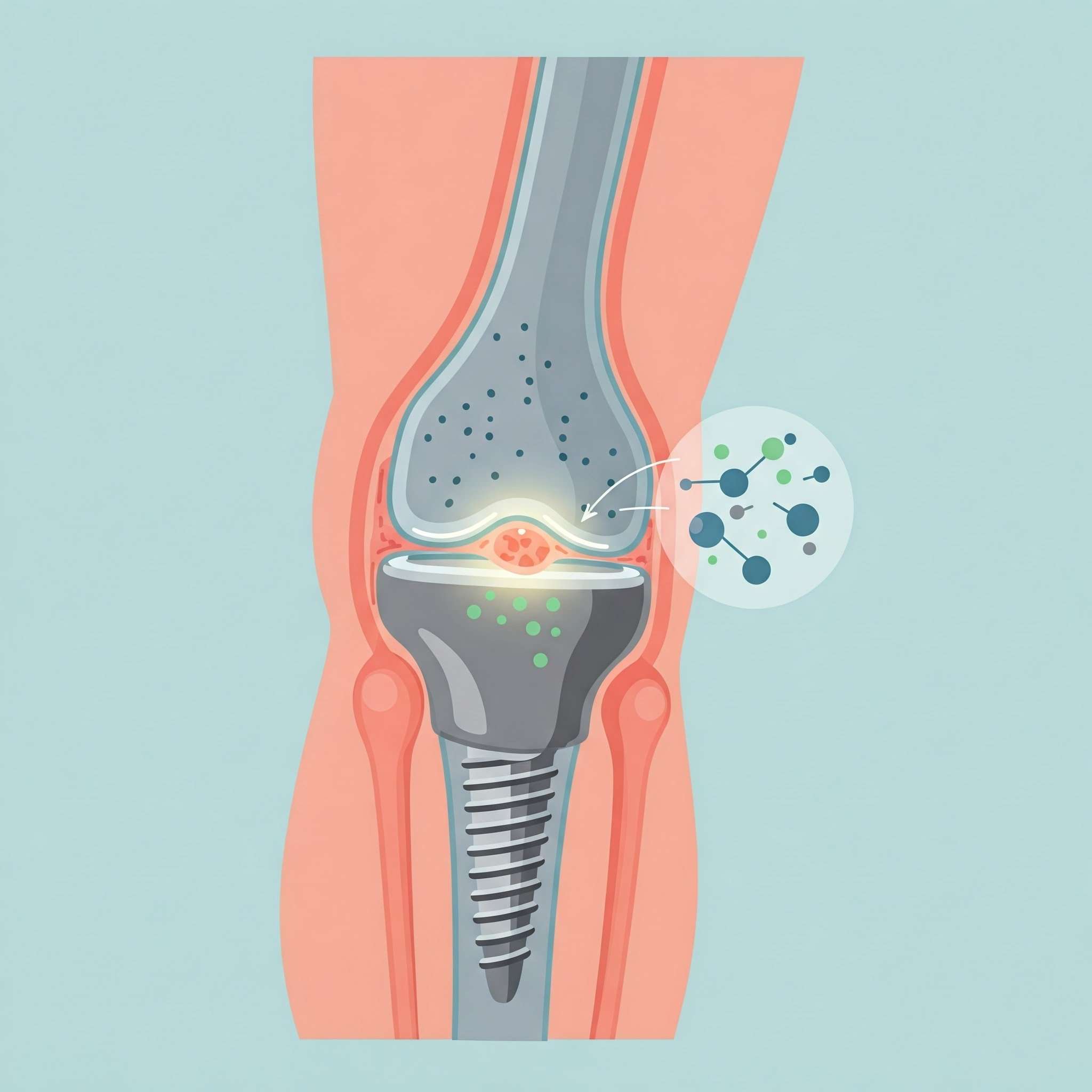
Metal Hypersensitivity Reactions Following Total Joint Arthroplasty
Total joint arthroplasty (TJA) is a widely performed surgical procedure that involves replacing a damaged joint with a prosthesis made of metal alloys, polymers, and ceramics. While TJA has significantly improved the quality of life for many patients with end-stage joint disease, metal hypersensitivity reactions have emerged as a potential complication. This comprehensive review aims to investigate the prevalence and clinical significance of metal hypersensitivity reactions following TJA, discuss diagnostic methods, and explore treatment options for affected patients.
Prevalence of Metal Hypersensitivity Reactions
Metal hypersensitivity in the context of TJA is a relatively rare complication. Studies have reported varying prevalence rates, ranging from 10% to 17% in the general population 1. However, it is estimated that 10,051 revision TKAs were performed due to unexplained pain, accounting for 0.56% of revisions at 15 years 2. This unexplained pain may be a consequence of metal hypersensitivity. The prevalence in patients with TJA is estimated to be higher, with some studies suggesting it could be as high as 25% 3. The most common allergens implicated in metal hypersensitivity reactions are nickel, cobalt, and chromium, which are commonly found in TJA implants 1.
A study conducted by Desai et al4. investigated the prevalence of metal hypersensitivity in patients who underwent total knee replacement (TKR). The study found that 15.87% of the patients had positive patch test results, with chromium being the most common allergen (11.58%), followed by nickel (8.58%) and cobalt (6.43%). Interestingly, the study did not find a correlation between positive patch tests and aseptic loosening in their cohort. However, it is important to note that other studies suggest a potential link between metal hypersensitivity and aseptic loosening 5. It is also important to note that the prevalence of metal hypersensitivity is higher in patients with failed implants or metal-on-metal articulations 3.
Clinical Significance of Metal Hypersensitivity Reactions
Metal hypersensitivity reactions following TJA can manifest as a variety of clinical symptoms. These symptoms can significantly impact a patient's quality of life and may lead to implant failure if left untreated 3. Two main clinical presentations of metal hypersensitivity may occur after TJA: dermatitis or a persistent painful synovitis of the knee 6.
Symptoms of Metal Hypersensitivity:
- Pain
- Swelling
- Stiffness
- Skin reactions, such as eczema or dermatitis
Challenges in Diagnosis:
One of the challenges in diagnosing metal hypersensitivity is that its symptoms can mimic other complications, such as infection, instability, and component loosening 7. Therefore, a thorough evaluation is crucial to rule out other potential causes before attributing the symptoms to metal hypersensitivity.
The synovial-like interface membrane (SLIM) classification system categorizes implant-associated pathologies 2. Metal hypersensitivity falls under SLIM type VI, which describes adverse local tissue reactions to implant materials, including allergy and hypersensitivity.
A case study reported in the literature 8 describes a patient who presented with right-sided knee pain, moderate local swelling, local hyperthermia, and distinct itchy eczema scattered across the right leg and involving the surgical scar 33 months after primary implantation. This case highlights the importance of considering metal hypersensitivity even when other factors, such as implant instability, are present.
Diagnostic Methods
Diagnosing metal hypersensitivity reactions following TJA can be challenging due to the lack of a gold standard diagnostic test. However, several methods can be used to assess metal hypersensitivity, including:
- Patch Testing: This is a commonly used method to identify contact allergies. It involves applying small patches containing different allergens to the patient's skin and observing for any reactions 9. Patch testing has been shown to have a sensitivity of 77% and a specificity of 71% in detecting metal allergies 9. However, it is important to note that a positive skin test for metal allergy does not necessarily mean that a patient will have complications with their joint replacement 10.
- Lymphocyte Transformation Test (LTT): This in vitro test measures the proliferation of lymphocytes in response to exposure to metal allergens 9. LTT can be helpful in identifying patients with systemic sensitization to metals. Blood tests for metal sensitivity are also available, but these tests are not reliable predictors of whether or not a joint replacement will have complications 10.
- Leukocyte Migration Inhibition Test (LMIT): This is another diagnostic test for metal hypersensitivity 11. It assesses the inhibition of leukocyte migration in the presence of a suspected allergen.
- Synovial Biopsy: In some cases, a synovial biopsy may be performed to analyze the tissue surrounding the implant for signs of inflammation and metal particles 2. Histopathological examination of the synovial tissue can provide valuable information about the underlying cause of the symptoms.
- Sensiband: This is a wearable device used for preoperative allergy testing 5. It is a band worn by the patient that contains different metals. If the patient develops a skin reaction like contact dermatitis while wearing the band, it suggests an allergy to the particular metal in contact with their skin.
- Orthopedic Analysis Testing Panels: These panels are designed to identify hypersensitivity reactions to the most commonly used metals in orthopedic devices 5. They help clinicians select appropriate implant materials for patients.
It is important to note that none of these diagnostic methods are definitive on their own. A combination of tests and a thorough clinical evaluation are often necessary to arrive at an accurate diagnosis. It has also been suggested that a combination of allergy diagnostics with histopathology and peri-prosthetic cytokine assessment can lead to better diagnostic strategies for metal hypersensitivity 12. It is important to rule out infection and aseptic loosening before diagnosing metal hypersensitivity 13.
Treatment Options
The treatment for metal hypersensitivity reactions following TJA depends on the severity of the symptoms and the patient's overall health. In some cases, conservative measures, such as topical steroids or non-steroidal anti-inflammatory drugs (NSAIDs), may be sufficient to manage the symptoms 10. However, in more severe cases, revision surgery to replace the implant with a hypoallergenic alternative may be necessary 6.
Hypoallergenic implants are typically made of materials that are less likely to elicit an immune response, such as titanium, ceramic, or titanium-nitride coated implants 2. However, it is important to note that even hypoallergenic implants may not completely eliminate the risk of metal hypersensitivity reactions 14. Ceramic implants seem to outperform titanium nitride-coated implants in terms of long-term outcomes for patients with metal hypersensitivity 2.
If a patient has a known hypersensitivity to metal and is scheduled to undergo TJA, it is important for them to inform their surgeon before surgery 10. This allows the surgeon to consider using special, non-allergenic implants if they are available. However, it is not clear if starting with a ceramic or titanium appliance is the best option for all patients with metal hypersensitivity concerns. It requires a case-by-case evaluation weighing the potential benefits and risks 15.
Clinical Guidelines and Recommendations
Several clinical guidelines and recommendations have been proposed for the management of metal hypersensitivity reactions following TJA. However, there is no consensus on how to screen or what changes in treatment plans need to be implemented when there is a reported sensitivity to metals 1.
Preoperative Considerations:
These guidelines emphasize the importance of a thorough preoperative assessment, including a detailed medical history and allergy testing for patients with a history of metal sensitivity 3. Women tend to have a higher rate of metal sensitization compared to men 3, so this should be taken into consideration during the preoperative assessment.
Postoperative Management:
For patients presenting with symptoms suggestive of metal hypersensitivity, the guidelines recommend a stepwise approach to diagnosis and treatment. This approach typically involves ruling out other potential causes, such as infection and aseptic loosening, before considering metal hypersensitivity as the diagnosis 2. It is essential to detect cases of acute DTH-derived inflammation of an artificial joint at early postoperative stages 8.
Patient Support and Resources
Patients experiencing metal hypersensitivity reactions following TJA may benefit from support groups and resources that provide information, guidance, and emotional support. These resources can help patients connect with others who have similar experiences and learn about coping strategies 16.
The reported prevalence of metal hypersensitivity in patients with total joint arthroplasties ranges from 15% to 54% 17.
Conclusion
Metal hypersensitivity reactions following TJA are a rare but potentially serious complication. Early diagnosis and appropriate management are crucial to minimize the impact on patients' quality of life and prevent implant failure. While diagnostic methods and treatment options are available, further research is needed to improve our understanding of metal hypersensitivity and develop more effective strategies for prevention and treatment.
Synthesis of Research Findings
This review has highlighted the following key findings regarding metal hypersensitivity reactions following TJA:
- Prevalence: Metal hypersensitivity is a relatively rare complication of TJA, with reported prevalence rates ranging from 10% to 25%.
- Clinical Significance: Metal hypersensitivity can cause a variety of symptoms, including pain, swelling, stiffness, and skin reactions, which can significantly impact a patient's quality of life.
- Diagnostic Methods: Diagnosing metal hypersensitivity can be challenging, and a combination of tests, including patch testing, LTT, and synovial biopsy, may be necessary.
- Treatment Options: Treatment options include conservative measures, such as topical steroids and NSAIDs, and revision surgery to replace the implant with a hypoallergenic alternative.
- Clinical Guidelines: Clinical guidelines recommend a thorough preoperative assessment and a stepwise approach to diagnosis and treatment.
There is ongoing debate about the clinical significance of positive patch test results in asymptomatic patients 10. Some argue that these tests may not be reliable predictors of future complications, while others suggest that they may indicate an increased risk of developing metal hypersensitivity.
When considering hypoallergenic implants, shared decision-making between patients and surgeons is crucial. Factors such as individual risk factors, preferences, and the long-term performance of different implant materials should be carefully considered.
Further research is needed to establish standardized diagnostic criteria, develop more reliable and predictive tests, and optimize treatment strategies for metal hypersensitivity reactions following TJA.
| SLIM Type Classification | Description/Type of Synovitis |
|---|---|
| I | Wear-induced synovitis |
| II | Infection-induced synovitis |
| III | Mixed synovitis |
| IV | Indifferent (not wear-induced, not infection-induced) synovitis |
| V | Prosthesis-associated arthrofibrosis |
| VI | Adverse local tissue reactions to implant materials (allergy/hypersensitivity) |
| VII | Local osseous pathologies |
Works cited
1. Does metal allergy have relevance in patients undergoing ..., accessed February 17, 2025, https://aoj.amegroups.org/article/view/5123/html
2. Metal allergy in primary and revision total knee arthroplasty | Bone ..., accessed February 17, 2025, https://boneandjoint.org.uk/Article/10.1302/2633-1462.210.BJO-2021-0098.R1
3. Metal Hypersensitivity in Joint Arthroplasty - PMC, accessed February 17, 2025, https://pmc.ncbi.nlm.nih.gov/articles/PMC7963506/
4. Prevalence of metal hypersensitivity in total knee replacement - PMC, accessed February 17, 2025, https://pmc.ncbi.nlm.nih.gov/articles/PMC6818373/
5. Is Metal Allergy A Concern In Hip And Knee Replacement Surgery? - Dr. Paul Morton, MD, accessed February 17, 2025, https://www.jointreplacementhawaii.com/metal-allergy-knee-hip-replacement/
6. Metal Hypersensitivity and Total Knee Arthroplasty - PMC, accessed February 17, 2025, https://pmc.ncbi.nlm.nih.gov/articles/PMC4726476/
7. Vanadium allergy after bilateral total knee arthroplasty: Case report ..., accessed February 17, 2025, https://www.ijcrior.com/archive/article-full-text/100025Z14MJ2021
8. Diagnosis of Metal Hypersensitivity in Total Knee Arthroplasty: A Case Report - Frontiers, accessed February 17, 2025, https://www.frontiersin.org/journals/immunology/articles/10.3389/fimmu.2019.02758/full
9. Metal hypersensitivity in total hip and knee arthroplasty: Current concepts - PMC, accessed February 17, 2025, https://pmc.ncbi.nlm.nih.gov/articles/PMC5884053/
10. Allergic or Sensitive to Metal - AAHKS - American Association of Hip and Knee Surgeons, accessed February 17, 2025, https://hipkneeinfo.org/knee-care/allergic-or-sensitive-to-metal/
11. pmc.ncbi.nlm.nih.gov, accessed February 17, 2025, https://pmc.ncbi.nlm.nih.gov/articles/PMC6160119/#:~:text=With%20respect%20to%20standard%20laboratory,diagnostic%20tests%20for%20metal%20hypersensitivity.
12. Metal allergy in total-joint arthroplasty: Case report and literature review - PMC, accessed February 17, 2025, https://pmc.ncbi.nlm.nih.gov/articles/PMC6160119/
13. TKA Metal Hypersensitivity - Recon - Orthobullets, accessed February 17, 2025, https://www.orthobullets.com/recon/12753/tka-metal-hypersensitivity
14. Allergic or Sensitive to Metal - AAHKS - American Association of Hip and Knee Surgeons, accessed February 17, 2025, https://hipkneeinfo.org/hip-care/allergic-or-sensitive-to-metal/
15. Knee Replacement and Metal Allergy - Verywell Health, accessed February 17, 2025, https://www.verywellhealth.com/sensitivity-and-allergy-to-metals-in-knee-replacement-4082730
16. Team Approach: Metal Hypersensitivity in Total Joint Arthroplasty - ResearchGate, accessed February 17, 2025, https://www.researchgate.net/publication/367962736_Team_Approach_Metal_Hypersensitivity_in_Total_Joint_Arthroplasty
17. Does Metal Allergy to Total Knee Arthroplasty Components Exist? Mortazavi SMJ, Hosseini-Monfared P, Gavrankapetanovic I, Antoci, accessed February 17, 2025, https://www.wem-a.org/assets/files/question/Question36.pdf?t=002
