
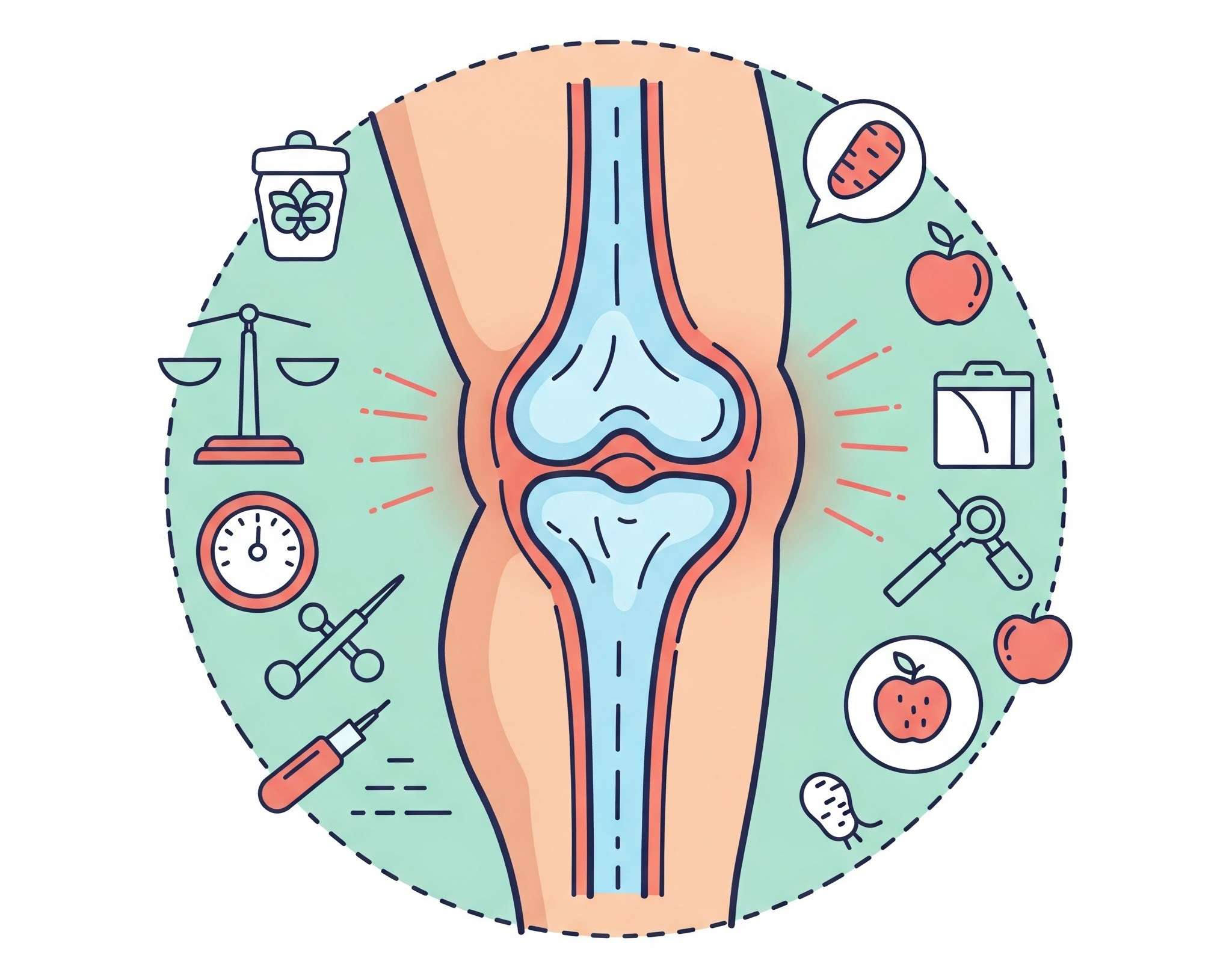
Obesity and Total Joint Arthroplasty
Obesity is a growing global health concern, and its impact on the outcomes of total hip arthroplasty (THA) and total knee arthroplasty (TKA) is an important area of investigation. This article provides a comprehensive review of the influence of obesity on complications, infection rates, and functional outcomes after THA and TKA. Additionally, it discusses strategies for managing obese patients undergoing joint replacement surgery, including weight loss programs, surgical techniques, and implant options.
Influence of Obesity on Complications after Total Hip and Knee Arthroplasty
Studies have shown a clear correlation between obesity and an increased risk of complications after THA and TKA1. This risk increases significantly with a body mass index (BMI) of 40 or greater1. As BMI increases, so does the risk of complications2. This is because obesity often coincides with other health issues that can increase the risk of complications2.
Potential risks and challenges for obese patients undergoing THA and TKA include: 2
- Soft tissue depth: This can make it more difficult for the surgeon to position the implant correctly.
- Wound complications: Obese patients have a higher risk of wound complications, such as delayed healing and infection.
- Infection risk: Obesity is associated with an elevated risk of infection after THA and TKA.
- THA dislocation: In THA, obesity increases the risk of dislocation due to soft tissue impingement or tissue levering the joint out of place.
Specific complications associated with obesity in TKA: 5
- Wound complications
- Surgical site infections
- Need for revision surgery
- Acute kidney injury
- Deep vein thrombosis
- Urinary tract infection
- Increased narcotic use
In a study comparing obese and non-obese patients undergoing THA, obese patients had significantly higher rates of surgical site infection (SSI) (OR=1.193, p=0.0001), deep vein thrombosis (DVT) (OR=1.275, p=0.001), wound complication (OR=1.736, p<0.0001), hematoma (OR=1.242, p=0.0001), pulmonary embolism (OR=1.141, p=0.0355), UTI (OR=1.065, p=0.0016), and opioid prescriptions (OR=1.15, p<0.0001)6. However, they also had significantly lower rates of cardiac issues, pneumonia, and transfusion6.
A review of studies on TKA in morbidly obese patients suggests an increased mid- to long-term revision rate7. However, these patients have a functional recovery comparable to non-obese individuals7. Interestingly, a study on simultaneous bilateral TKA found no significant difference in complication rates between obese and non-obese patients8.
Despite the increased risks, it's important to note that obese patients who do not experience complications after THA or TKA generally have good outcomes, including decreased pain and improved function2. However, it's important to acknowledge that obese patients may not achieve the same level of physical function as non-obese patients after THA9.
Influence of Obesity on Infection Rates after Total Hip and Knee Arthroplasty
Obesity is a major risk factor for prosthetic infection after primary hip arthroplasty10. One study found that obese patients had a higher risk of both deep and superficial infections compared to non-obese patients3. A meta-analysis of over 2 million patients showed that obese patients had a higher risk of deep infections (OR = 2.71, P < 0.001) and superficial infections (OR = 1.99, P < 0.001) compared to non-obese patients3. For morbidly obese patients undergoing THA, there is an increased resource expenditure in the acute postoperative period11. When determining acceptable risk levels for THA and TKA, shared decision-making between the surgeon and the patient is crucial2.
In TKA, obesity, particularly class III obesity (BMI ≥ 40 kg/m2), has been identified as a risk factor for surgical site infection12. One study found that obese class III patients had a higher odds ratio for both superficial and deep surgical site infections compared to other BMI cohorts12.
Influence of Obesity on Functional Outcomes after Total Hip and Knee Arthroplasty
While obesity can increase the risk of complications, studies have shown that obese patients generally experience significant improvements in pain and function after THA and TKA9. THA confers significant pain reduction and improvement in quality of life irrespective of BMI15. However, some studies suggest that obese patients may not achieve the same level of physical function as non-obese patients following THA9.
In a study of patients undergoing TKA, obese subjects reported inferior pre- and postoperative pain and knee joint function compared to non-obese subjects16. However, both obese and non-obese subjects experienced significant improvements in their Western Ontario and McMaster Universities Osteoarthritis Index (WOMAC) scores after surgery16.
Another study found that patients with higher BMI had greater improvement in function and pain at 90 days after TKA compared with patients with lower BMI17. However, at one year after TKA, there was no difference in outcomes between BMI categories17. In THA, although functional ability increased in all patients, it was significantly lower in Class 3 obese patients (with morbid obesity) one year after surgery18.
Strategies for Managing Obese Patients Undergoing Joint Replacement
Managing obese patients undergoing joint replacement requires a multidisciplinary approach that addresses the unique challenges and risks associated with obesity. Here are some key strategies:
Preoperative Management
- Weight loss: Weight loss before joint replacement surgery can help reduce the risk of complications and improve surgical outcomes19. Weight loss strategies include lifestyle modifications (nutritional counseling, weight loss programs, and exercise), weight loss medications, and bariatric surgery19. It's essential to discuss any new exercise program with a doctor before starting. If a patient has had or is planning to have bariatric surgery, they should inform their surgeon and allow 6 to 12 months between the bariatric surgery and joint replacement surgery19.
- Addressing malnutrition: Many obese patients are malnourished, which can negatively impact surgical outcomes21. Nutritional counseling and supplementation may be necessary.
- Reducing comorbidities: Obesity is often associated with other health conditions, such as diabetes and hypertension. Managing these comorbidities before surgery can help reduce the risk of complications21.
- Setting realistic weight loss goals: Focusing on a percentage of weight loss rather than an absolute number may be more achievable and beneficial for some patients21.
- Modifiable risk factor reduction: Modifiable risk factors, such as smoking and uncontrolled diabetes, should be reduced or eliminated before surgery22.
- Patient counseling: Obese patients should be counseled on the increased risks of anesthesia and surgery23. It is important to explain these risks to the patient during the consent process22.
Intraoperative Management
-
Surgical techniques:
-
Direct anterior approach (DAA): This muscle-sparing technique for hip replacement involves moving muscles rather than cutting through them, potentially leading to faster recovery and reduced pain4.
- Minimally invasive techniques: These techniques aim to reduce tissue trauma and may be beneficial for obese patients21.
- Proper patient positioning: Careful patient positioning during surgery is crucial to ensure adequate exposure and minimize complications23.
-
Implant options:
-
Larger implants: Using larger implants may provide greater stability and reduce the risk of loosening in obese patients24.
- Cementless fixation: Cementless implants may offer more durable long-term fixation in obese patients with good bone quality24.
- Antibiotic-impregnated cement: This can help reduce the risk of infection, particularly in obese patients who have a higher risk of periprosthetic joint infection (PJI)24.
Postoperative Management
- Extended antibiotic prophylaxis: This may be necessary to reduce the risk of infection3.
- Pain management: Obese patients may require higher doses of analgesia for pain relief23.
- Early mobilization: Despite potential challenges, early mobilization is important to prevent complications and promote recovery.
- Close monitoring: Obese patients may require closer monitoring for complications such as deep vein thrombosis and wound infections.
Conclusion
Obesity significantly influences the outcomes of THA and TKA, increasing the risk of complications and infections. However, obese patients can experience significant improvements in pain and function following joint replacement surgery with careful preoperative optimization, appropriate surgical techniques, and comprehensive postoperative care. A multidisciplinary approach that addresses the unique needs of obese patients is essential for achieving successful outcomes. This includes a focus on weight loss, management of comorbidities, and patient education. While the research generally indicates an increased risk of complications for obese patients, some studies suggest that this risk may be mitigated through proper management and that obesity does not necessarily preclude successful outcomes. Further research is needed to investigate the long-term effects of obesity on THA and TKA outcomes and to develop more targeted interventions for obese patients undergoing joint replacement surgery.
Works cited
1. Being Overweight And Having A Hip Replacement | Prof. J Queally, accessed February 17, 2025, https://josephqueally.com/hip-replacement-obesity-overweight-risks/
2. Obesity and total joint arthroplasty - Mayo Clinic, accessed February 17, 2025, https://www.mayoclinic.org/medical-professionals/orthopedic-surgery/news/obesity-and-total-joint-arthroplasty/mac-20537669
3. The Implications of Obesity on Total Hip Arthroplasties: A Literature Review of the Associated Complications, accessed February 17, 2025, https://www.orthojournal.org/articles/the-implications-of-obesity-on-total-hip-arthroplasties-a-literature-review-of-the-associated-complications.html
4. Total Hip Replacements in Obese Patients - Hughston Clinic, accessed February 17, 2025, https://hughston.com/wellness/total-hip-replacements-in-obese-patients/
5. The impact of obesity on total knee arthroplasty outcomes: A retrospective matched cohort study - PMC, accessed February 17, 2025, https://pmc.ncbi.nlm.nih.gov/articles/PMC9449637/
6. The Impact of Obesity on Total Hip Arthroplasty Outcomes: A Retrospective Matched Cohort Study - PMC, accessed February 17, 2025, https://pmc.ncbi.nlm.nih.gov/articles/PMC9420459/
7. The outcomes of total knee arthroplasty in morbidly obese patients: a systematic review of the literature - PMC - PubMed Central, accessed February 17, 2025, https://pmc.ncbi.nlm.nih.gov/articles/PMC6420900/
8. Is obesity a contraindication for simultaneous bilateral total knee arthroplasty? A prospective case–control study | SICOT-J, accessed February 17, 2025, https://www.sicot-j.org/articles/sicotj/full_html/2020/01/sicotj200064/sicotj200064.html
9. Obesity and long term functional outcomes following elective total hip replacement - PMC, accessed February 17, 2025, https://pmc.ncbi.nlm.nih.gov/articles/PMC3489615/
10. Obesity is a Major Risk Factor for Prosthetic Infection after Primary Hip Arthroplasty - PMC, accessed February 17, 2025, https://pmc.ncbi.nlm.nih.gov/articles/PMC2505299/
11. Total Hip Arthroplasty in Morbidly Obese: Does a Strict Body Mass Index Cutoff Yield Meaningful Change?, accessed February 17, 2025, https://www.hipandpelvis.or.kr/journal/view.html?doi=10.5371/hp.2022.34.3.161
12. Surgical site infection in overweight and obese Total Knee Arthroplasty patients - PMC, accessed February 17, 2025, https://pmc.ncbi.nlm.nih.gov/articles/PMC5990115/
13. Weighing in on Body Mass Index and Infection After Total Joint Arthroplasty, accessed February 17, 2025, https://pmc.ncbi.nlm.nih.gov/articles/PMC6259862/
14. Association between Obesity and Short-Term Patient-Reported Outcomes following Total Knee Arthroplasty: A Retrospective Cohort Study in Japan - MDPI, accessed February 17, 2025, https://www.mdpi.com/2077-0383/13/5/1291
15. Obesity and long term functional outcomes following elective total hip replacement, accessed February 17, 2025, https://www.researchgate.net/publication/224848679_Obesity_and_long_term_functional_outcomes_following_elective_total_hip_replacement
16. The influence of obesity on functional outcomes and patient satisfaction 8 weeks after total knee arthroplasty: results of the prospective FInGK study, accessed February 17, 2025, https://pmc.ncbi.nlm.nih.gov/articles/PMC9630069/
17. Patients With Obesity Report Faster Improvement After Knee Replacement - Consult QD, accessed February 17, 2025, https://consultqd.clevelandclinic.org/patients-with-obesity-report-faster-improvement-after-knee-replacement
18. Clinical Outcome of Primary Total Hip Arthroplasty in Patients with Morbid Obesity—Retrospective and Prospective Follow-Up Studies - MDPI, accessed February 17, 2025, https://www.mdpi.com/1648-9144/57/11/1247
19. Obesity, Weight Loss, and Joint Replacement - OrthoInfo - AAOS, accessed February 17, 2025, https://orthoinfo.aaos.org/en/treatment/weight-loss-and-joint-replacement-surgery/
20. “Lose 70 pounds and you get a new knee”: The current approach to obesity in patients awaiting total joint arthroplasty | British Columbia Medical Journal, accessed February 17, 2025, https://bcmj.org/articles/lose-70-pounds-and-you-get-new-knee-current-approach-obesity-patients-awaiting-total-joint
21. Operative Techniques to Reduce Hip and Knee Arthroplasty Complications in Morbidly Obese Patients - PubMed Central, accessed February 17, 2025, https://pmc.ncbi.nlm.nih.gov/articles/PMC9445224/
22. Joint Replacement in Adult Patients with Obesity, Orthopaedics - Right Decision Service, accessed February 17, 2025, https://rightdecisions.scot.nhs.uk/media/gianbtkq/joint-replacement-in-adult-obesity-933.pdf
23. Total Hip Arthroplasty in the Obese Patient: Tips and Tricks and Review of the Literature, accessed February 17, 2025, https://pmc.ncbi.nlm.nih.gov/articles/PMC7572957/
24. Should cemented or cementless knee implants be used in patients who are obese? - Healio, accessed February 17, 2025, https://www.healio.com/news/orthopedics/20230616/should-cemented-or-cementless-knee-implants-be-used-in-patients-who-are-obese
