

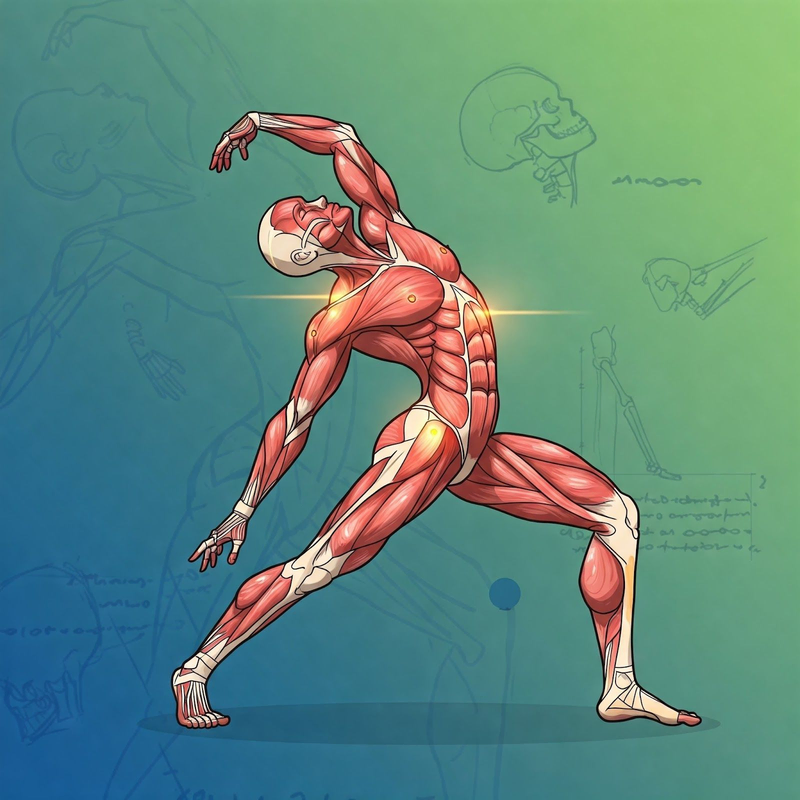
Shoulder and Arm
Bones and Joints
The shoulder comprises three bones (the clavicle, scapula, and humerus) and three joints (the glenohumeral, the acromioclavicular [AC], and the scapulothoracic) (Fig. 1).
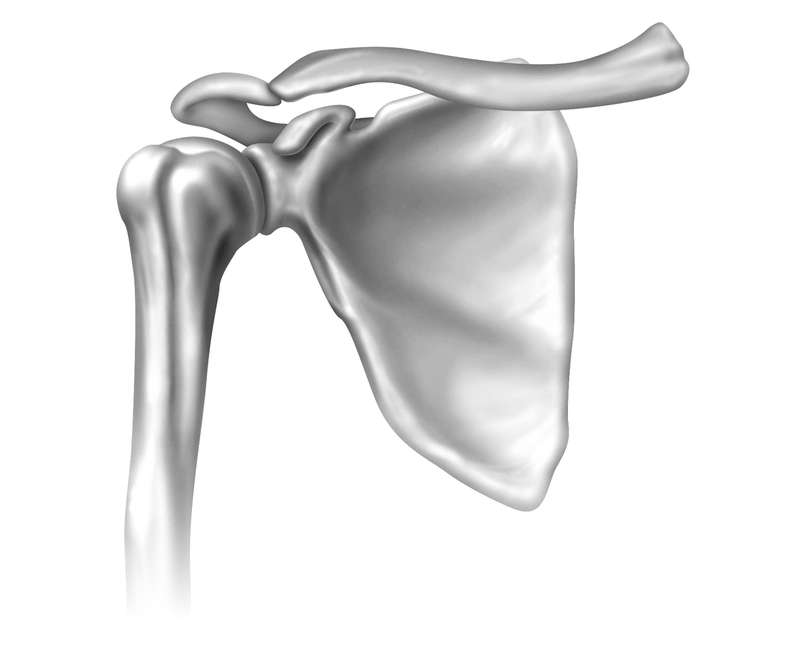
Figure 1 The bones of the shoulder: the clavicle, humerus, and scapula. The clavicle articulates with the scapula at the acromioclavicular joint. The humerus articulates with the scapula at the glenohumeral joint.
The glenohumeral joint is the primary articulation of the shoulder, the point where the head of the humerus meets the glenoid. The AC and scapulothoracic joints attach the trunk to the scapula, with the arm appended to it.
The clavicle (collarbone) is an S-shaped bone that serves primarily as a strut to which muscle is attached. It is directly under the skin and is thus prone to fracture. The scapula (shoulder blade) is a thin, flat bone with several named prominences, one of which, the coracoid process, projects anteriorly off of the scapula, anterior and medial to the glenohumeral joint. Just medial to the coracoid lies the brachial plexus and the subclavian artery and vein. The spine of the scapula, another important prominence, runs along the posterior surface of the bone. The spine terminates in the acromion process. The acromion lies approximately 1 cm above the humeral head, creating a space for the rotator cuff tendons. Laterally, the scapula widens to form the glenoid fossa (shoulder socket). The glenoid fossa is smaller than the humeral head, such that only about one third of the humeral head contacts the glenoid fossa. This joint accordingly lacks the static stability of the hip; however, the decreased stability permits far more motion.
The proximal portion of the humerus is the humeral head. It has an articular surface covered with hyaline cartilage and two tuberosities that serve as the attachment site of the rotator cuff. The greater tuberosity is on the superior lateral aspect of the humeral head and serves as the attachment site of three of the four rotator cuff tendons: the supraspinatus, the infraspinatus, and the teres minor. The lesser tuberosity is medial to the greater; the remaining rotator cuff tendon, the subscapularis, attaches to it. Between the tuberosities lies the bicipital groove, housing the long head of the biceps tendon as it makes its way from its scapular origin down the front of the arm.
The AC joint is the only articulation between the clavicle and the scapula. The arm and scapula are suspended from the clavicle and held in place by strong coracoclavicular ligaments, which prevent inferior displacement of the arm. When the AC joint is dislocated (shoulder separation), it appears that the clavicle has moved superiorly, but actually the arm sags inferiorly. The scapulothoracic joint is not a true (cartilage-lined) joint but simply the muscular attachment of the scapula to the thorax. Approximately 60° of elevation of the arm takes place at this “joint.” There are more than a dozen muscles thatattach to and move the scapula, each of which contributes to the scapula’s normal motion.
The glenohumeral joint is a variant of a ball-and-socket articulation. In fact, it is closer in shape to a golf ball sitting on a tee. This configuration allows for the remarkable range of motion of the shoulder but provides little inherent stability. The glenoid surface is deepened by the glenoid labrum, a fibrocartilage ring that surrounds the glenoid articular cartilage. At the top of the labrum, the long head of the biceps tendon attaches. Stability of the glenohumeral joint is provided by both static and dynamic means. Structures that provide static stability include the labrum, the capsule that runs from the glenoid to the humerus, and the thickened areas of the capsule known as the glenohumeral ligaments. The rotator cuff muscles and the biceps provide dynamic stability.
Ligaments and Soft Tissues
The glenohumeral ligaments, which are thickened portions of the capsule, limit excessive translation and rotation of the humeral head on the glenoid during motion of the arm (Fig. 2).
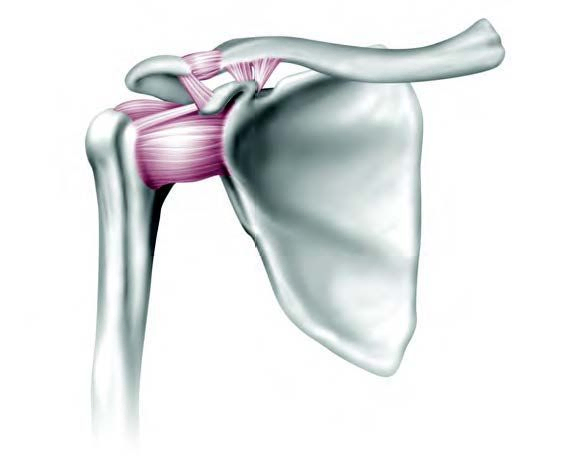
Figure 2 The ligaments of the shoulder: the capsule (and confluent glenohumeral ligaments) and the acromioclavicular, coracoclavicular, and coracoacromial ligaments.
The largest and most important glenohumeral ligament is the inferior glenohumeral ligament complex. This complex is shaped like a hammock in which the inferior humeral head rests. It attaches to the glenoid labrum around the lower half of the “clock face.” This structure is the primary stabilizer of the shoulder when the arm is abducted. It prevents excessive anterior, posterior, and inferior translation.
The middle and superior glenohumeral ligaments are less important than the inferior glenohumeral ligament and provide stability when the arm is not abducted. The tightness of the shoulder capsule and ligaments varies among individuals. In some people, generalized laxity of these structures leads to excessive translation of the shoulder during activities, with resultant shoulder pain.
The acromion is held in correct relation to the clavicle primarily by the coracoclavicular ligaments. The coracoid and the acromion are both connected to the scapula; thus, when the coracoid is held a fixed distance from the clavicle, the acromion will also be held in place. There are two coracoclavicular ligaments: the conoid and the trapezoid. There is also an acromioclavicular ligament, but this is a minor stabilizer. The coracoacromial ligament attaches the coracoid to the acromion. This clearly does not stabilize those two bones—as noted, they are both processes of the scapula. Rather, this ligament most likely serves to help contain the humeral head.
Muscles
Muscles of the shoulder can be divided into three groups: those that control scapulothoracic joint motion, those that produce motion at the glenohumeral joint, and those that cross more than one joint.
The trapezius muscle is the largest and most superficial of the muscles of the scapulothoracic joint. The primary function of the trapezius is to retract the scapula. The rhomboid muscles also function as scapular retractors. The serratus anterior protracts the scapula and is very important in stabilizing the scapula during forward elevation of the arm.
The deltoid muscle powers glenohumeral abduction and flexion and extension. It is divided into three parts: anterior, which originates from the clavicle; middle, which arises from the lateral acromion; and posterior, which attaches to the spine of the scapula. Intuitively, you can see that the anterior deltoid is a forward flexor of the arm, the middle deltoid is an abductor, and the posterior deltoid powers extension. Paralysis of the deltoid caused by an axillary nerve injury is a devastating injury. In many cases, function of the glenohumeral joint is nearly completely lost.
The rotator cuff is made up of four separate muscles that blend at their insertions and form a cuff that envelopes the humeral head (Figs. 3 and 4).
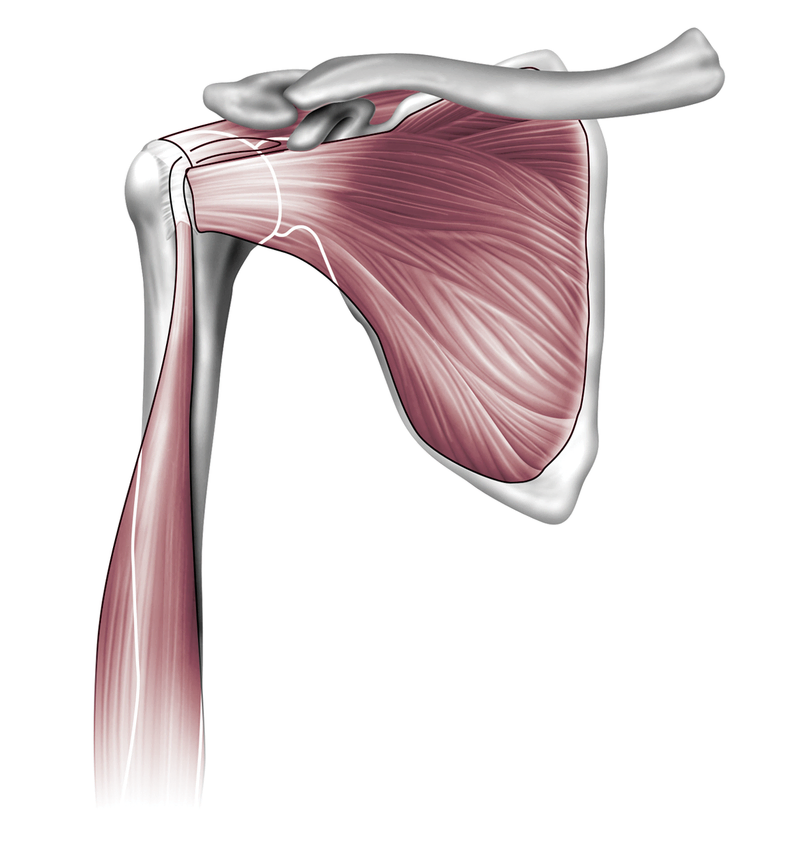
Figure 3 Anterior view of the rotator cuff, showing the subscapularis and supraspinatus. The long head of the biceps is also shown.
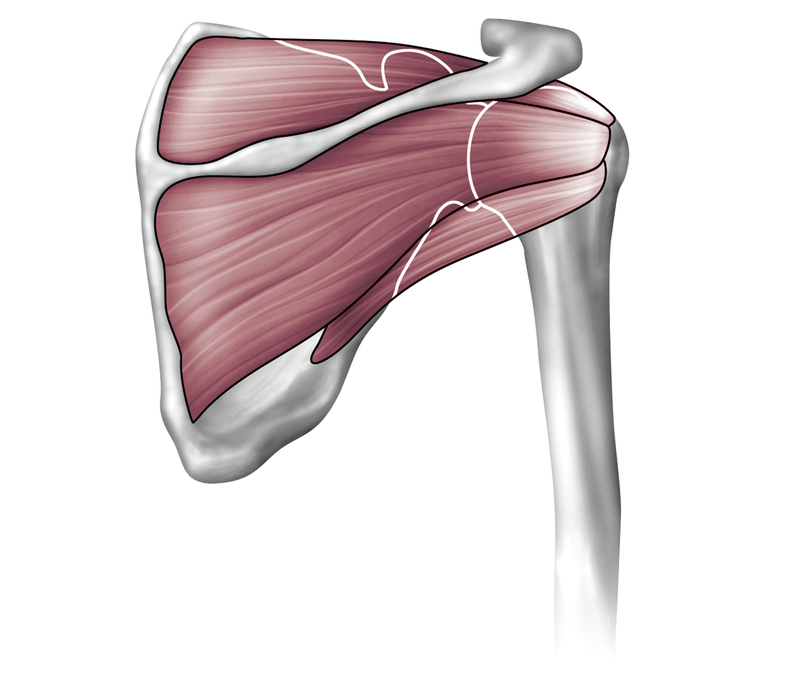
Figure 4 Posterior view of the rotator cuff, showing the supraspinatus, infraspinatus, and teres minor. The course of the infraspinatus and teres minor allows these muscles to serve as external rotators.
While these muscles provide some power for motion, their primary purpose is to stabilize the humeral head against the glenoid fossa. The supraspinatus muscle lies above the scapular spine and attaches along with the infraspinatus muscle on the greater tuberosity. The supraspinatus is active in any motion involving elevation of the humerus, working to stabilize the glenohumeral joint. The infraspinatus also stabilizes the humeral head; in addition, it accounts for up to 60% of external rotation strength at the shoulder, the remainder of which is provided by the teres minor below it. The subscapularis muscle is the only muscle attaching to the lesser tuberosity and as such serves as an internal rotator. It also helps stabilize the glenohumeral joint and prevents anterior subluxation of the shoulder.
The pectoralis major muscle, inserting on the lateral edge of the bicipital groove of the proximal humerus, serves as a powerful adductor and internal rotator of the glenohumeral joint. The latissimus dorsi muscle also provides adduction and internal rotation. The biceps brachii crosses both the shoulder and elbow joints, but its primary action is supination and flexion at the elbow (Fig. 5).
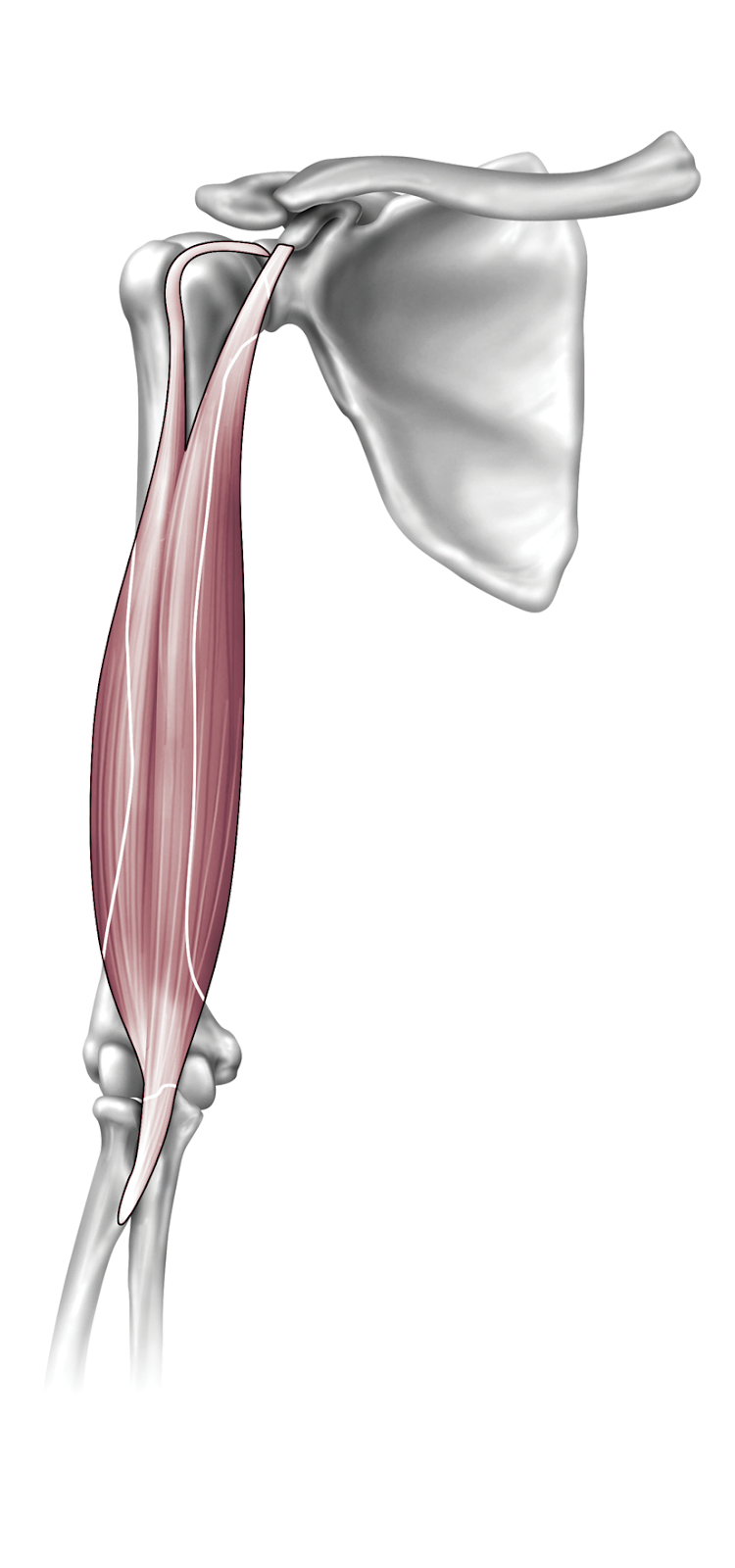
Figure 5 The biceps originates from the coracoid and above the glenoid and inserts across the elbow. It therefore flexes the elbow, supinates the forearm, and flexes the shoulder.
The triceps brachii inserts on the olecranon process of the ulna at the posterior elbow, and its predominant function is extension of the arm and forearm (Fig. 6).
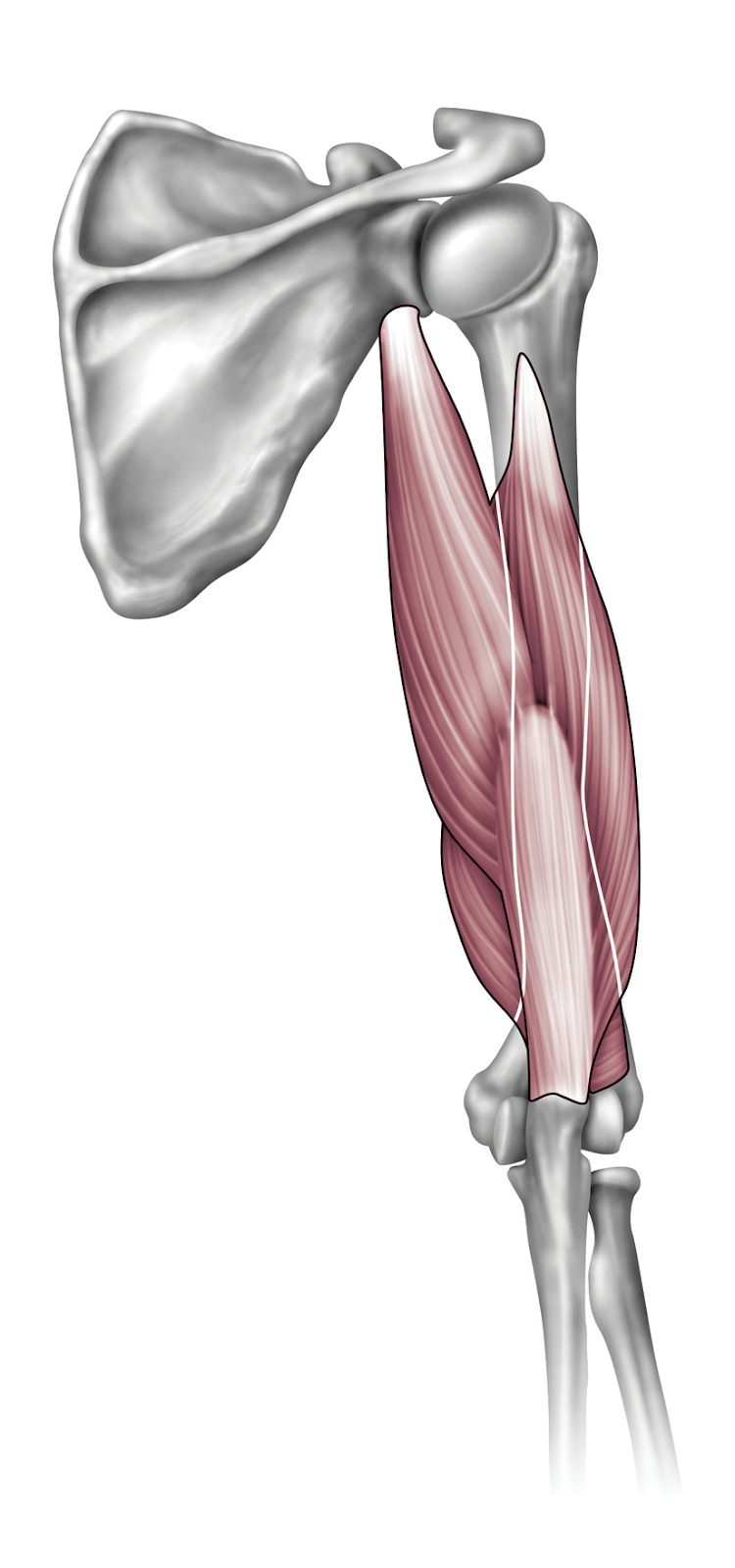
Figure 6 The triceps lies on the posterior aspect of the arm and inserts on the ulna. Its main function is to extend the elbow.
Nerves and Blood Vessels
All of the important nerves to the shoulder girdle are branches of the brachial plexus, with one exception: cranial nerve XI, also known as the spinal accessory nerve, which supplies the trapezius muscle. Paralysis of the trapezius results in protraction and downward rotation of the scapula, with significant destabilization of the scapulothoracic joint. The brachial plexus is formed from the nerve roots of C5-T1 and terminates in five main branches (Fig. 7).
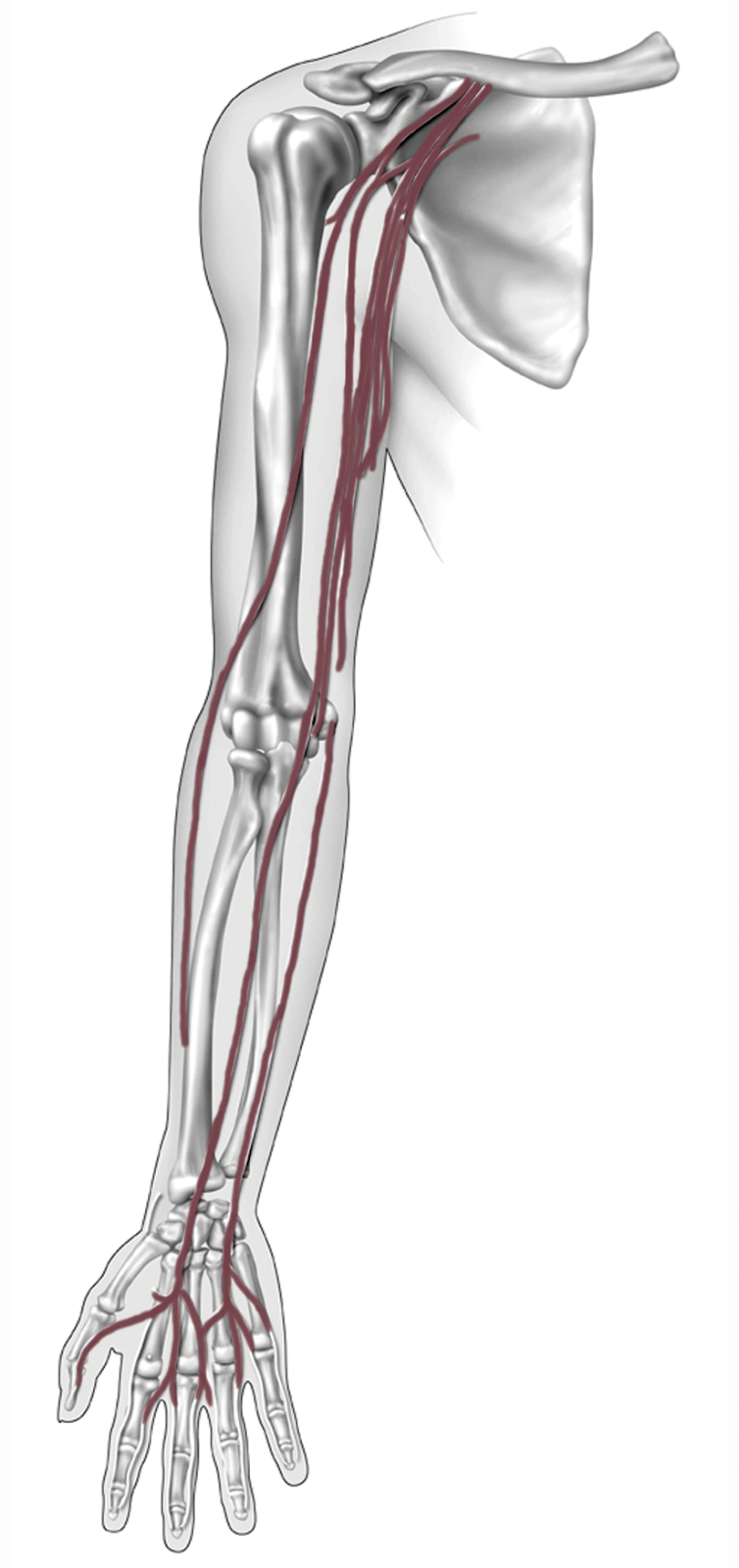
Figure 7 The brachial plexus. Note that this is a highly simplified view to show basic anatomic relationships. A precise wiring diagram can be found in many anatomy textbooks.
Two of the major terminal branches of the plexus, the median nerve and the ulnar nerve, supply muscles distal to the elbow. Another, the radial nerve, supplies both muscles of the shoulder and those originating below the elbow. The other two, the axillary nerve and the musculocutaneous nerve, supply muscles housed in the shoulder and arm. The axillary nerve branches from the brachial plexus and runs inferior to the glenohumeral capsule as it passes toward the back of the shoulder. The axillary nerve supplies the teres minor and the deltoid muscles. Given its proximity to the shoulder joint, this is the nerve most at risk for injury in fractures and dislocations. The musculocutaneous nerve also courses close to the shoulder and is at risk for iatrogenic injury during surgery. This nerve supplies the biceps muscle. The radial nerve innervates the triceps, a muscle that extends the humerus at the glenohumeral joint, but the main targets of this nerve are in the forearm. Although the radial nerve does not have much function in the upper arm, it is prone to injury there because it spirals around the humerus to emerge on the lateral side of the arm. As such, it may be stretched or torn with a humeral shaft fracture.
The suprascapular nerve innervates two muscles of the rotator cuff, the supraspinatus and infraspinatus. This nerve may become trapped as it enters the supraspinatus or as it courses around the spine of the scapula to reach the infraspinatus. This compression may result in a motor palsy that can mimic a rotator cuff tear. The long thoracic nerve innervates the serratus anterior muscle, which can be prone to stretch injury. This can cause winging of the scapula with elevation of the arm and is generally accompanied by significant pain and functional deficit.
The subclavian artery becomes the axillary artery at the outer border of the first rib. Six branches extend from the axillary artery, all of which provide rich collateral circulation to much of the shoulder. Unfortunately, the humeral head does not have extensive collateral circulation because it receives its blood supply predominantly from one vessel, the anterior humeral circumflex. If this supply is disrupted, as may happen with a displaced proximal humerus fracture, there is a high risk of development of osteonecrosis of the humeral head. The axillary artery is renamed the brachial artery as it runs behind the teres major. The brachial artery branches into the profunda brachii and then continues to the elbow (Fig. 8).
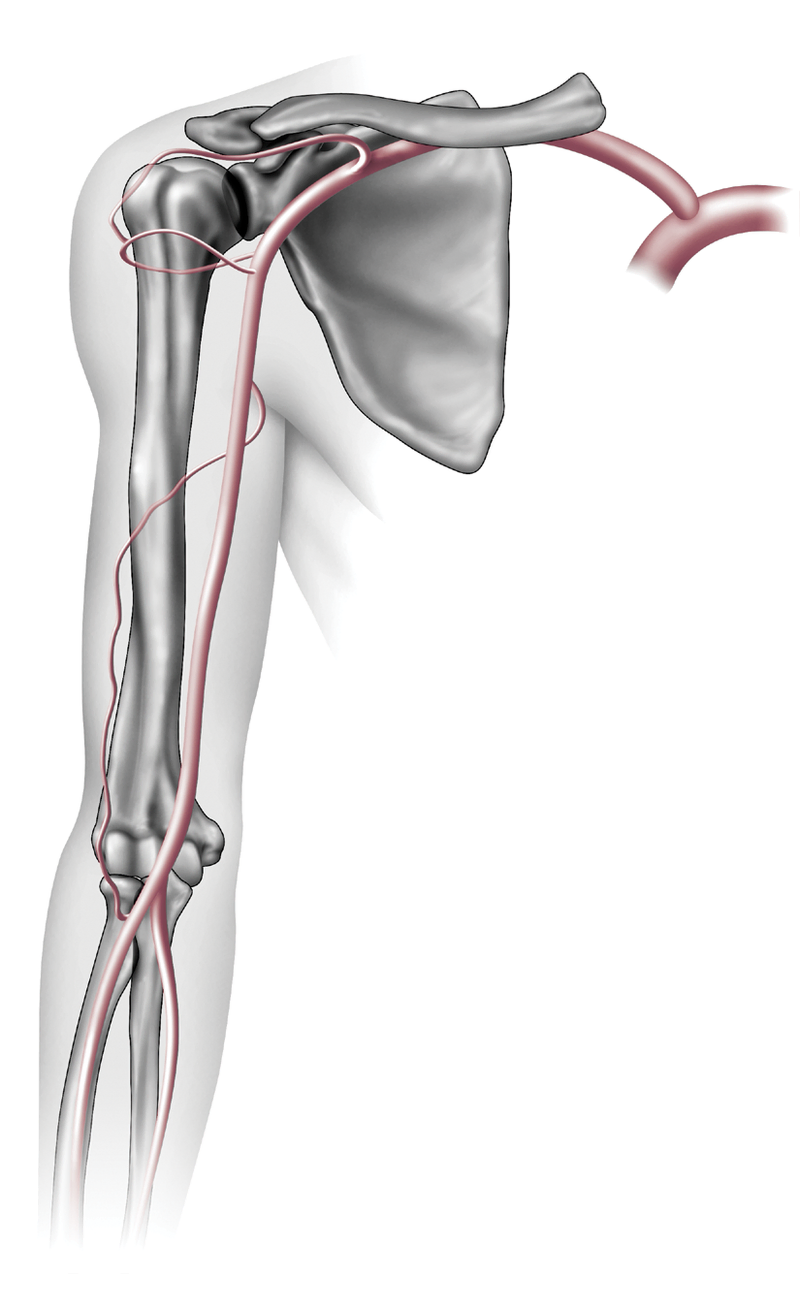
Figure 8 The arterial blood supply of the upper extremity.
Elbow and Forearm
Bones and Joints
The elbow is the junction of the distal humerus and the two bones of the forearm, the radius and ulna (Fig. 9).
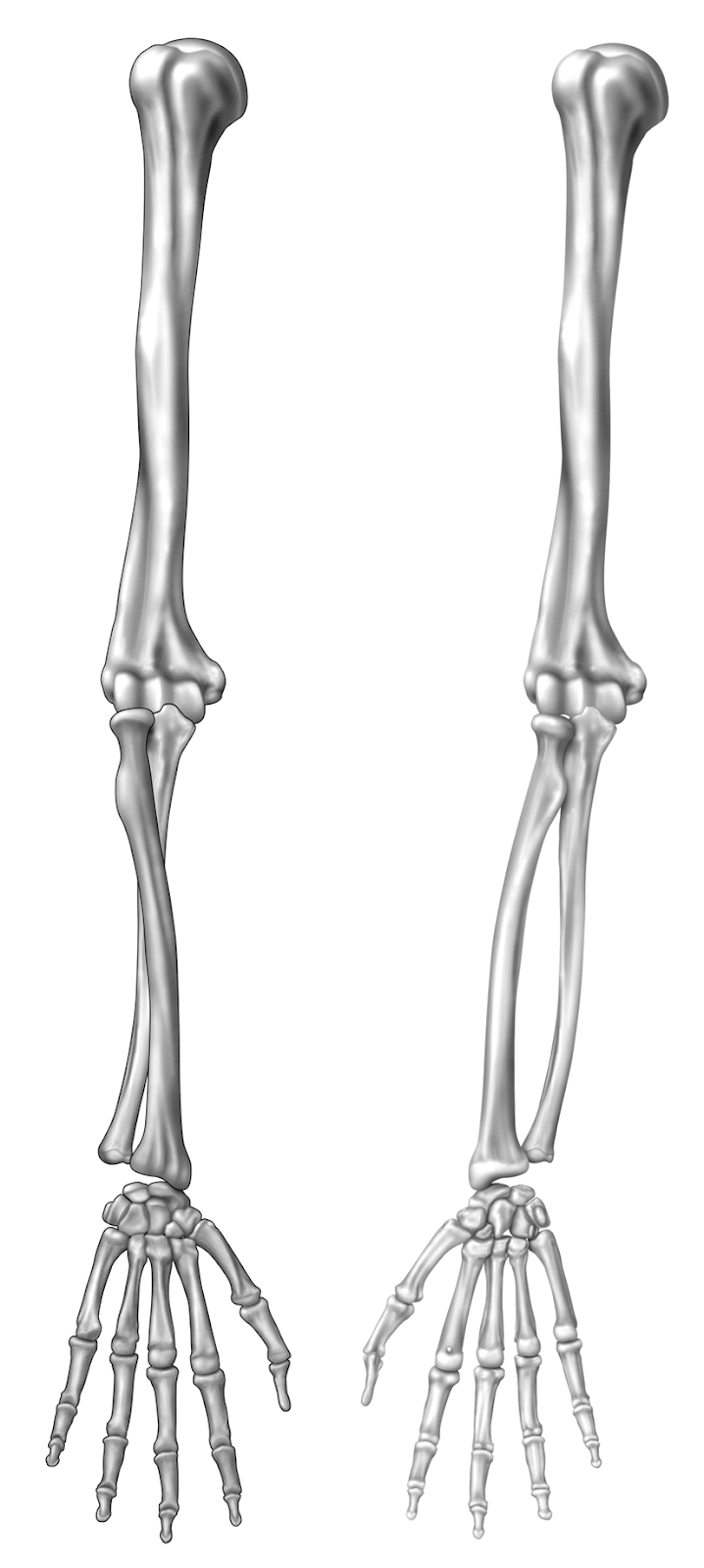
Figure 9 The elbow is a hinge joint but also allows for pronation (left) and supination (right).
Unlike the knee, at which the femur makes contact with only one of the two distal bones (the tibia but not the fibula), in the elbow joint, the humerus makes contact with bone at the ulna (a joint built for elbow flexion and extension) and the radius (a joint that allows forearm rotation).
The distal humerus flares medially and laterally, forming two condyles. The condyles
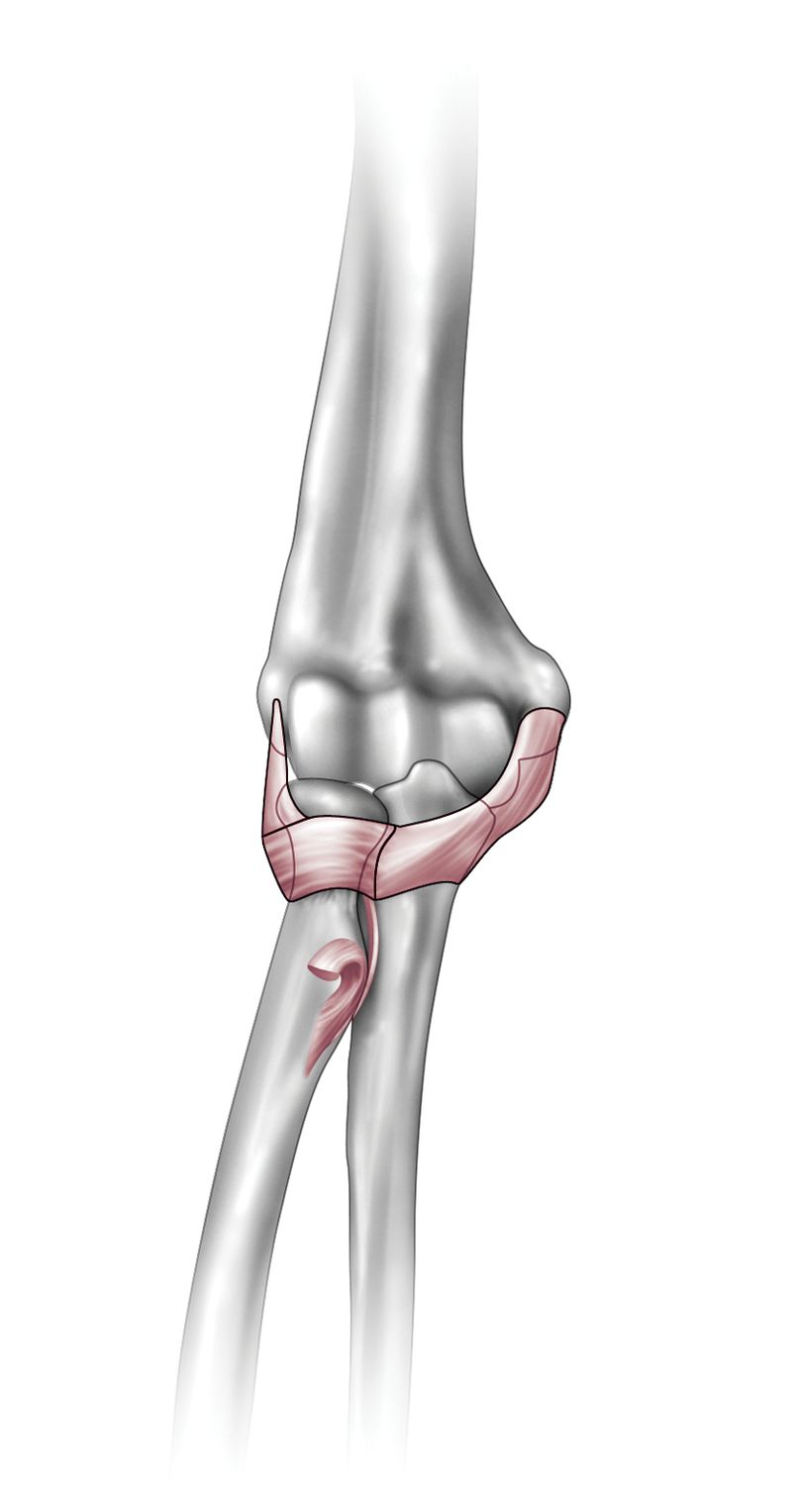
Figure 10 The ligaments of the elbow.
are covered with articular cartilage and serve as the contact points for the joint. The smaller prominences just proximal to the joint are the epicondyles. These are not covered with cartilage but rather serve as the points of origin for many forearm muscles. The medial epicondyle is the site of attachment of the flexor-pronator muscle group of the forearm as well as the ulnar collateral ligament. The lateral epicondyle is the origin of the extensor muscles of the forearm.
The elbow is made up of two joints. The first, the humeroulnar joint, is hinge-like and allows flexion and extension. This joint is formed by the trochlea on the medial surface of the distal humerus and the proximal ulna. The ulna has a coronoid process anteriorly and an olecranon process posteriorly; these grasp the humeral trochlea front and back. Lateral to the trochlea is the second joint in the elbow, mating the capitellum of the humerus to the radial head. The radial head is discoid and the capitellum is hemispherical, allowing pronation and supination of the forearm. Since the radius is intimately bound to the ulna, a so-called proximal radioulnar joint is formed.
Ligaments and Soft Tissues
The bony congruity between the trochlea and the ulna provides significant stability to the elbow. This joint is nonetheless supplemented by the ligaments and capsule (Fig. 10)
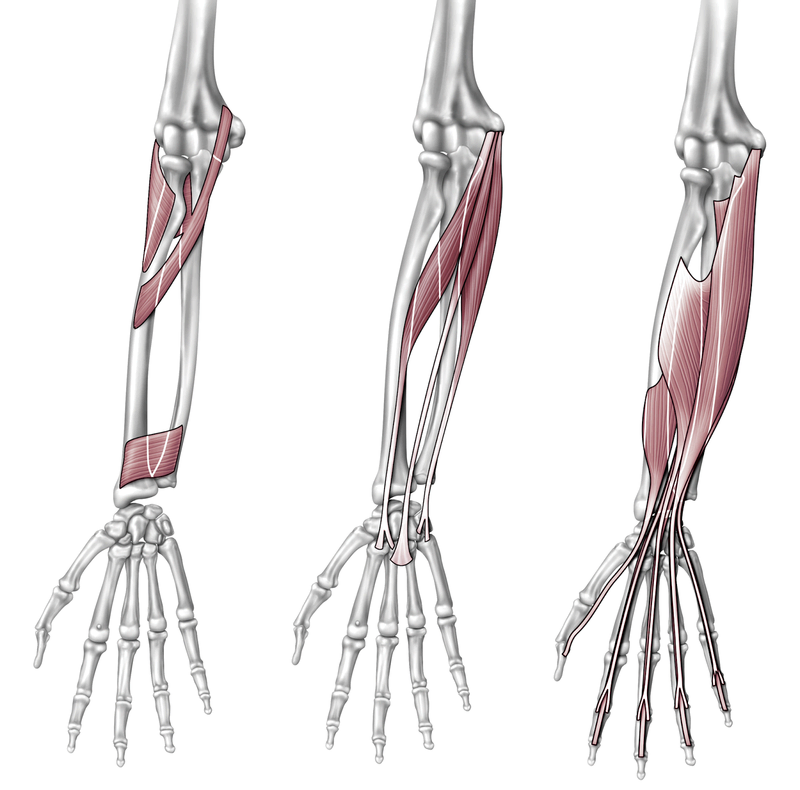
Figure 11Left, The rotators of the forearm: the pronator teres, pronator quadratus, and supinator. Because the bones here are shown in supination, the supinator is at its shortest length. Center, The flexors of the wrist: the flexor carpi radialis, flexor carpi ulnaris, and palmaris longus. Right, The flexors of the digits: the flexor pollicis longus and flexor digitorum superficialis. The flexor digitorum profundus lies under the superficialis and is obscured in this view until it inserts on the distal phalanx.
. The ulnar (or medial) collateral ligament is the primary stabilizer of the medial side of the elbow. This ligament is particularly important in the throwing athlete, who places significant forces on the elbow when cocking the arm. The radial (or lateral) collateral ligament supports the lateral side of the elbow.
The joint between the radial head and the capitellum lacks bony stability. This joint is therefore stabilized by the annular ligament. This structure, as its name implies, is a ring that surrounds the radial neck just distal to the radial head. It attaches the radius to the ulna—but since the ulna is firmly attached to the humerus, it also stabilizes the radius to the humerus.
Muscles
Most of the muscles that cross the elbow joint originate from one of the two epicondyles. Muscles on the dorsum of the forearm originate from the lateral epicondyle, whereas those on the volar surface originate from the medial epicondyle. The volar muscles are primarily flexors (Fig. 11) and the dorsal muscles are extensors (Fig. 12).
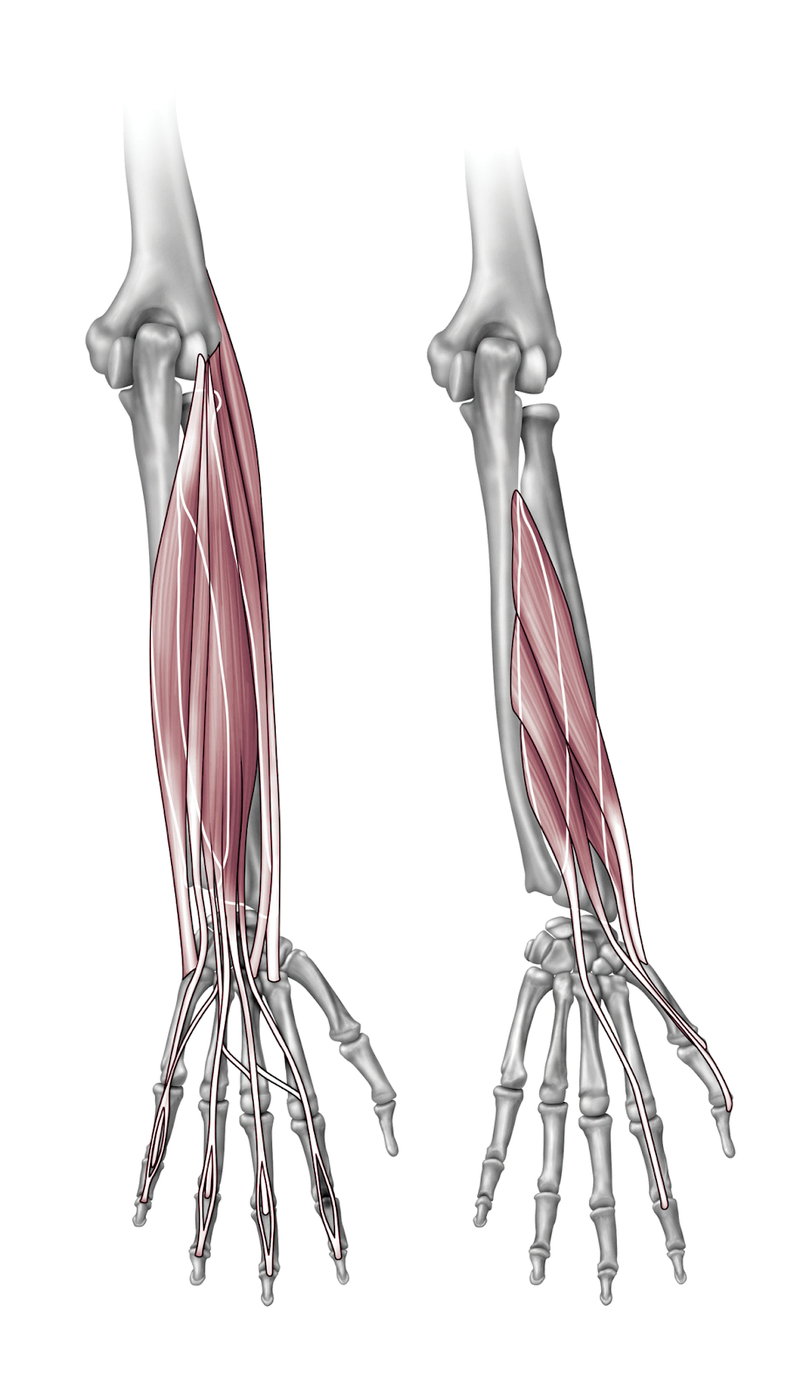
Figure 12Left, The extensor muscles of the forearm. This figure shows the extensor carpi radialis longus, extensor carpi radialis brevis, extensor carpi ulnaris, extensor digitorum, and extensor digiti minimi. The second extensor to the index finger and the muscles to the thumb are obscured on this view and shown on the right. Right, The extensor muscles of the forearm, deep layer. The abductor pollicis longus, extensor pollicis longus and brevis, and extensor indicis proprius.
There are three muscles that cross the elbow but originate proximal to the epicondyle. The biceps originates from two points on the scapula and proximal humerus and courses on the anterior surface of the arm. Its tendon crosses the anterior aspect of the elbow joint and inserts on the proximal radius. As such, it both flexes the elbow and supinates the forearm. The brachialis muscle originates from the anterior humerus and inserts on the proximal ulna, providing elbow flexion. The triceps brachii originates from both the scapula and the posterior humerus, courses posterior to the elbow joint, and inserts on the olecranon process of the ulna, providing elbow extension.
The medial epicondyle is the origin of the “superficial” flexor muscle group. This group includes the pronator teres, the flexor carpi radialis, the palmaris longus, the flexor carpi ulnaris, and the flexor digitorum superficialis, all of which provide some stability to the medial elbow. The pronator teres allows for forearm pronation and elbow flexion. The others flex the wrist, with the exception of the flexor digitorum superficialis, whose action is on the proximal interphalangeal (finger) joint. The median nerve innervates all of the superficial flexor muscles, except for the flexor carpi ulnaris, which is supplied by the ulnar nerve.
The “deep” flexors of the forearm originate in the medial forearm, most of them from the ulna. This group includes the flexor digitorum profundus, the flexor pollicis longus, and the pronator quadratus, all of which are supplied by the anterior interosseous branch of the median nerve, except for the ulnar half of the flexor digitorum profundus, which is supplied by the ulnar nerve.
From the lateral epicondyle arise the extensors of the wrist and hand. The superficial group includes the brachioradialis, the extensor carpi radialis longus, and the extensor carpi radialis brevis. These three muscles are known as the mobile wad of three—a name that makes sense if you pinch and shake them. The brachioradialis attaches to the distal radius and flexes the elbow; the extensor carpi radialis longus and the extensor carpi radialis brevis insert on the index and middle metacarpals, respectively, and extend the wrist. All receive innervation from the radial nerve. The lateral epicondyle is the point of origin for three other superficial extensors: the extensor digitorum, the extensor digiti minimi, and the extensor carpi ulnaris. The extensor carpi ulnaris attaches to the fifth metacarpal and extends the wrist. (The insertions of the finger extensors are somewhat complex and are discussed in the hand section below.) The posterior interosseous nerve, a branch of the radial nerve, innervates these three superficial extensor muscles as well as the deep extensors below them. The deep extensors include the supinator, three muscles to the thumb (the abductor pollicis longus, the extensor pollicis longus, and the extensor pollicis brevis), and the extensor indicis proprius.
Nerves and Blood Vessels
The median nerve crosses the anterior elbow, superficial to the brachialis muscle and medial to the brachial artery. The median nerve supplies the superficial flexors and travels through the carpal tunnel into the hand. In the forearm, the median nerve gives off the anterior interosseous nerve, which supplies all of the deep flexors, except the ulnar half of the flexor digitorum profundus. The ulnar nerve crosses the elbow joint just posterior to the medial epicondyle, a common site of nerve compression and irritation. When the medial elbow is hit, the superficial placement of the ulnar nerve causes it to absorb some of that energy, resulting in paresthesias (colloquially termed “hitting the funny bone”).
In the forearm, the ulnar nerve supplies the flexor carpi ulnaris and the ulnar half of the flexor digitorum profundus. Its main targets are in the hand, however. The ulnar nerve reaches the hand by way of Guyon’s canal at the wrist. It supplies the hypothenar muscles, most of the intrinsics, and the adductor pollicis. The radial nerve crosses the elbow anterior to the lateral epicondyle, where it gives off the posterior interosseous nerve. The radial nerve itself supplies the mobile wad of three. The posterior interosseous branch of the radial nerve feeds all extensor muscles distal to the mobile wad of three.
The brachial artery travels on the anterior surface of the humerus. It crosses the elbow anteriorly, where, at the level of the neck of the radius, it bifurcates into the ulnar and radial arteries. It also gives off recurrent branches that course back toward the arm both medially and laterally. The radial artery runs on the dorsum of the forearm under the brachioradialis muscle and terminates in the deep palmar arch in the hand. The ulnar artery runs on the volar surface under the superficial flexor muscles and terminates in the hand as the superficial palmar arch.
Hand and Wrist
Bone and Joints
The radius and ulna are the bones of the forearm; they connect the hand to the arm. Proximally, the main articulation is between the ulna and the distal humerus, forming the hinge of the elbow. The radius functions primarily to allow pronation and supination. At the wrist, the roles are reversed. Here, the distal radius provides the primary articulation with the carpal bones of the hand, with the ulna participating mainly in pronation and supination. The radius accepts approximately 80% of the weight transfer from the hand across the wrist. Distal to the radius and the ulna at the wrist are the carpal bones, which are organized into two rows. The proximal row consists of the scaphoid, the lunate, the triquetrum, and the pisiform. The distal row includes the trapezium, the trapezoid, the capitate, and the hamate.
The radial and the ulnar styloids are palpable subcutaneous landmarks at the wrist. The distal pole of the scaphoid is palpable on the palmar aspect of the wrist. The scaphoid is also palpable in the “anatomic snuff box,” the space between the extensor pollicis brevis and longus tendons to the thumb. The pisiform and the hook of the hamate are palpable on the volar ulnar surface of the palm.
Each finger of the hand is composed of a metacarpal bone and three phalanges, with the exception of the thumb (Fig. 13).
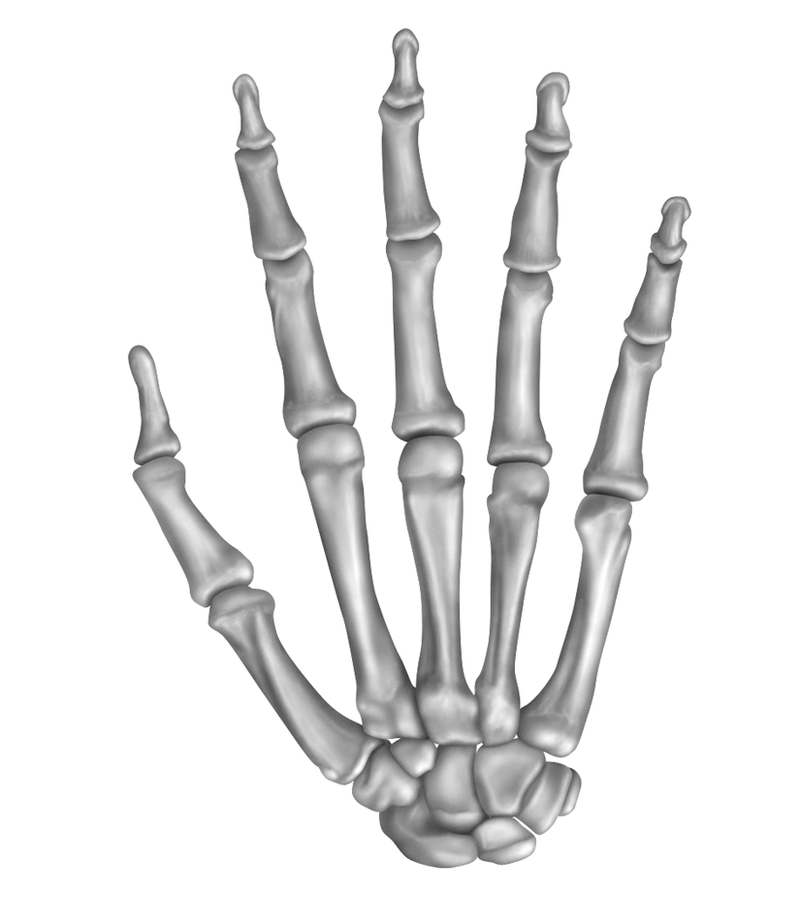
Figure 13 The bones of the wrist and hand. A more detailed description of the carpal bones can be found in many anatomy textbooks.
The thumb has a proximal and a distal phalanx articulating at a single interphalangeal joint, while the remaining fingers have proximal, middle, and distal phalanges that form a proximal interphalangeal (PIP) joint and a distal interphalangeal (DIP) joint.
Ligaments and Soft Tissues
The shaft of the radius is attached to the shaft of the ulna by an interosseous membrane. This membrane, technically a ligament, helps transfer forces from the radius (which supports the hand) to the ulna, which has the primary articulation with the humerus. Distally, the radius is attached to the proximal row of carpal bones by strong volar ligaments. The radius is attached to the ulna by the dorsal and volar radioulnar ligaments of the triangular fibrocartilage complex. The proximal and the distal rows of carpal bones are connected via a joint capsule that allows for both flexion/extension and radial/ulnar deviation of the hand. The metacarpophalangeal joints as well as the interphalangeal joints are stabilized by joint capsules and collateral ligaments. The ulnar collateral ligament of the thumb is especially susceptible to sprains (causing a skier’s or gamekeeper’s thumb).
There are two important transverse ligaments at the wrist. On the dorsal surface, there is an extensor retinaculum. This pulley-like structure tethers the extensor tendons close to the bones of the wrist, even as the muscle contracts. The extensor retinaculum houses six separate synovial sheaths, creating six extensor compartments. There is also a transverse covering to the volar surface, the main component of which is the transverse carpal ligament. This is functionally a “flexor retinaculum” and forms the roof of the carpal canal. This canal (or tunnel) houses nine flexor tendons and the median nerve as they pass into the hand from the forearm (Fig. 14).
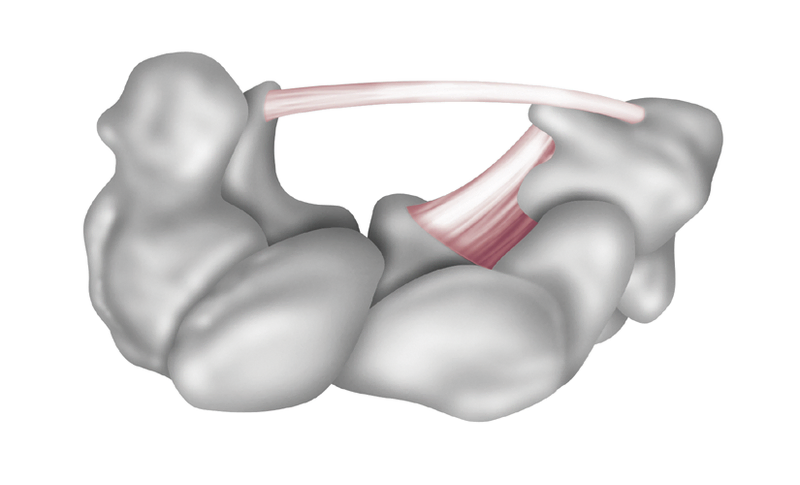
Figure 14 The carpal tunnel, shown here in cross section, is formed by the transverse carpal ligament above and the carpal bones below. The carpal tunnel contains the median nerve and nine flexor tendons.
Compression of the median nerve at the wrist causes carpal tunnel syndrome.
Muscles
The muscles of the hand can be categorized into two groups: intrinsics and extrinsics. Intrinsic muscles reside exclusively in the hand itself. The extrinsic muscles have tendons that attach in the hand but their muscle bellies reside in the forearm. The thenar group of intrinsics powers the thumb. This group includes the abductor pollicis brevis, the opponens pollicis, the flexor pollicis brevis, and the adductor pollicis. The first three are supplied by the median nerve in the hand after it passes under the transverse carpal ligament and are responsible for opposition. A similar (but functionally less important) group of muscles, the hypothenar muscles, attach to the little finger.
The final constituents of the intrinsic group are the lumbricals and the interosseous muscles. The dorsal and volar (palmar) interosseous muscles originate from the metacarpals and insert on the proximal phalanges. The dorsal interosseous muscles abduct the fingers; the volar group adducts the fingers. The intrinsics also have a key role in finger flexion and extension. To understand this role, the anatomy of the extrinsics, the flexor and extensor tendons of the long fingers, must first be understood (Fig. 15).
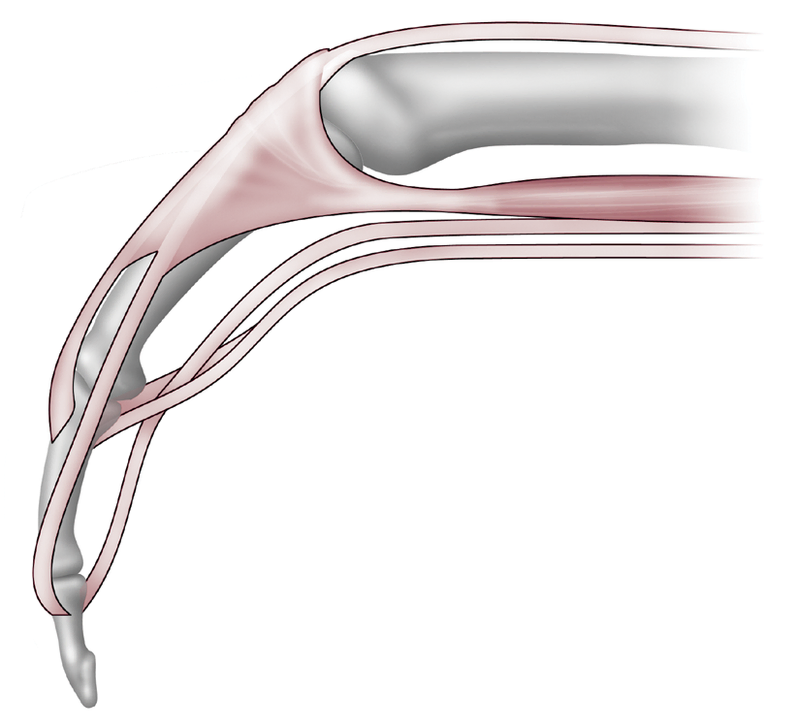
Figure 15 Insertion of the two flexor and common extensor tendons and the course of the lumbrical muscle. Note that the lumbrical originates on the volar surface and inserts onto the extensor tendon; it thus flexes the metacarpophalangeal joint and extends the interphalangeal joints. The interosseous muscles that abduct and adduct the digits are not shown in this view.
The tendons of the finger flexor muscles pass into the wrist via the carpal tunnel. They then travel to the fingers bound by fibrous digital sheaths, an intricate pulley system that both nourishes the tendons and prevents “bowstringing” when the muscles contract. The superficialis attaches to the middle phalanx, and the profundus attaches to the distal phalanx. The superficialis is, as its name implies, superficial; thus, to allow the profundus (ie, deep) flexor to reach the distal phalanx, it divides into two slips, and the profundus tendon passes between them (Fig 11, right). The superficialis attaches to the middle phalanx and flexes the PIP joint. The profundus, attaching to the distal phalanx, flexes the DIP joint.
Note that there is no extrinsic flexor tendon that attaches directly to the proximal phalanx. Flexion of the metacarpophalangeal joint, rather, is powered by the intrinsics: the interosseous muscles, which attach to the proximal phalanx; and the lumbricals, which blend into the common extensor tendon on the dorsal surface. The lumbricals originate from the flexor digitorum profundus tendon, cross the finger on its radial border, and attach dorsally into the common extensor tendon. The lumbricals, thus, power metacarpophalangeal flexion as well as extension of the interphalangeal joints—especially when the metacarpophalangeal joint is flexed. The combined function of the intrinsics and the extrinsic flexor-extensor tendons gives a smooth and coordinated composite motion to the digits.
Nerves and Blood Vessels
The three major nerves of the hand are the radial, median, and ulnar nerves. The radial nerve, through its posterior interosseus branch, provides innervation to extensors of the fingers. The radial nerve also provides sensation on the radial aspect of the dorsum of the hand. The median nerve provides sensation to the thumb and index and long fingers, as well as to the radial half of the ring finger. It provides the motor innervation of all of the forearm flexor muscles, with the exception of the flexor carpi ulnaris and the ulnar aspect of the flexor digitorum profundus (that part of the muscle going to the ring and little fingers), which are supplied by the ulnar nerve. The ulnar nerve most importantly provides all of the motor innervation of most of the intrinsic muscles of the hand. The ulnar nerve also provides sensation to the ulnar aspect of the palm, to the little finger, and to the ulnar aspect of the ring finger. The lumbricals to the index and long finger and the thenar muscles, with the exception of the adductor pollicis, are supplied by the median nerve.
The radial artery enters the hand dorsally (although the pulse is more easily palpated on the volar side) and terminates in the deep palmar arch. The ulnar artery enters the hand through Guyon’s canal, at which point it is very close to the ulnar nerve. It terminates in the superficial palmar arch farther distal in the hand. In most people, these two arches communicate. This allows a patient with an injury to one of the two main arteries to maintain viability of the hand and fingers. The palmar arches supply the common digital arteries that further bifurcate into proper digital arteries. Each finger has a radial and ulnar artery that run in the volar aspect of the finger adjacent to the flexor sheath with the digital nerves.
Hip and Thigh
Bones and Joints
The hip joint is the articulation of the femur within the acetabulum of the pelvis. The hip spans the pelvis and the proximal femur. The proximal femur contains the femoral head, which is covered with articular cartilage; the femoral neck, which connects the head to the shaft; and two bony prominences, the greater trochanter and the lesser trochanter (Fig. 16).
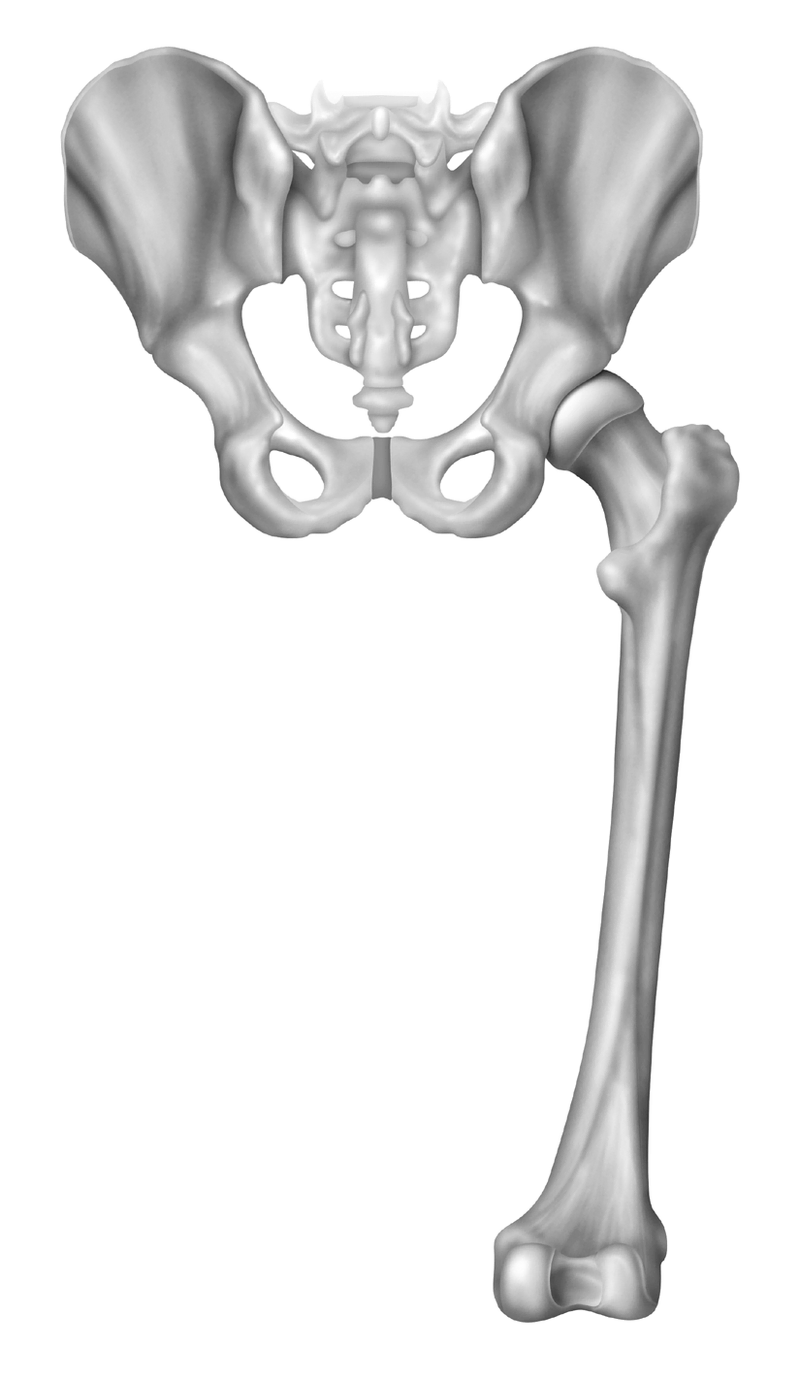
Figure 16 The bones of the hip: the pelvis and femur. Contrast the inherent bony stability of this ball-and-socket joint with that of the shoulder.
The greater and lesser trochanters serve as attachment points for the hip abductors and flexors, respectively. The ridge between the trochanters is called the intertrochanteric region. The intertrochanteric region and the femoral neck are the two most common sites of hip fracture in older people. Femoral neck fractures are especially troubling, not only because of their lower propensity to heal but also because the blood supply to the femoral head, which courses along the neck, is prone to disruption with such fractures. Disruption of the blood supply can cause ischemia, resulting in death of the femoral head.
The femoral neck is angulated approximately 135° with respect to the shaft of the femur. In addition, the femoral neck points anteriorly approximately 15°. As a result, when a femur rests on a flat surface, the femoral head is elevated off that surface as the femoral neck inclines up out of the true anteroposterior plane. Increased anteversion causes a compensatory internal rotation of the femur (which is needed to keep the head seated in the acetabulum) and therefore abnormal alignment of the feet or legs.
The pelvis contains a right and left hemipelvis, each of which is composed of three bones: the ilium above the hip joint, the ischium behind and below the hip joint, and the pubis medial to the hip joint. These bones unite at the center of the acetabulum. The pubis and ischium also meet to surround the obturator foramen. Congruity between the femoral head and the acetabular socket depends on contact as the fetus develops; accordingly, children who have developmental or congenital dislocation of the hip may have malformed femoral heads and acetabuli.
Each of the three bones of the pelvis is typically palpable. The ischial tuberosity is the bony prominence on which we sit. The iliac crest is normally felt right below the beltline laterally. The junction of the right and left pubic bones, the symphysis pubis, is palpable inferior to the umbilicus. The entire proximal femur is deeply enveloped within a sleeve of muscles; thus, with the exception of the greater trochanter laterally, it is often not directly palpable.
Ligaments
The hip joint is a true ball-and-socket joint and therefore inherently stable. Nonetheless, it is supplemented with ligamentous attachments. Three anterior ligaments, one from each of the pelvic bones to the femur, comprise the hip capsule. In addition, a ligamentum teres attaches from the deepest base of the acetabulum to the femoral head directly. The pelvic bones themselves are attached to the sacrum by anterior and posterior sacroiliac ligaments. The right and left sides of the pelvis are attached anteriorly at the symphysis pubis by strong ligaments.
The acetabular socket is deepened by the labrum, a lip of cartilage similar to the meniscus of the knee and the labrum of the shoulder. It is a dense fibrocartilagenous ring that surrounds the rim of the acetabulum. Because the labrum increases the depth of the acetabulum, it enhances the stability of the hip joint.
Muscles
Muscles of the hip are best considered in terms of functional groups, including the flexors, the extensors, the abductors, the adductors, and the external rotators. There are no true internal rotators of the hip joint.
The strongest hip flexor is the iliopsoas, a muscle formed by the fusion of the iliacus and psoas muscles (Fig. 17).
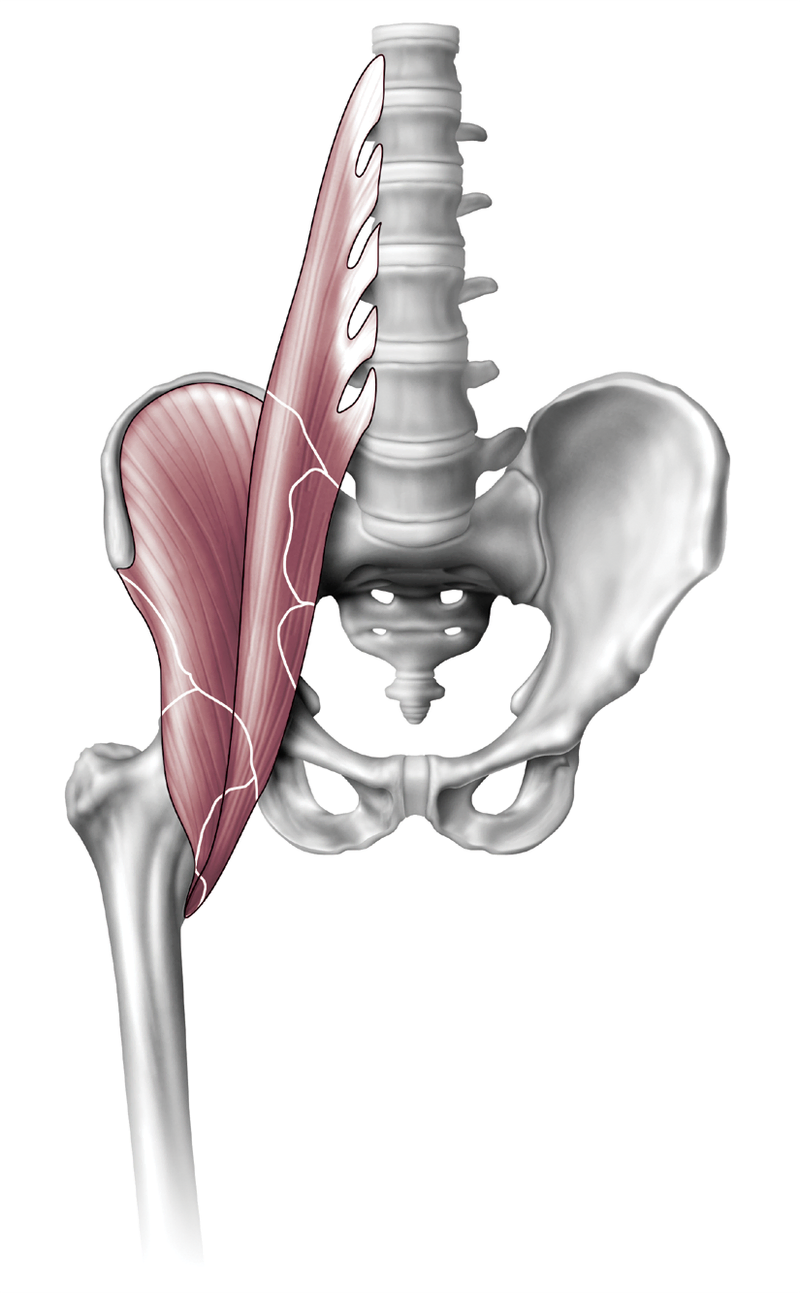
Figure 17 The iliopsoas muscle. The insertion on the lesser trochanter makes this a powerful flexor of the hip.
These muscles originate in the pelvis and unite to form a common tendon that inserts on the lesser trochanter. The rectus femoris, another flexor, originates on the anterior-inferior iliac spine of the pelvis and courses down the femur, uniting with the vastus muscles to form the quadriceps tendon. The quadriceps ultimately inserts on the tibia via the patellar tendon. It thus extends the knee as well. The final flexor is the sartorius, the longest muscle in the body. It originates from the anterosuperior iliac spine and inserts with the gracilis and semitendinosus on the anteromedial tibia to form the pes anserinus. Because it reaches the tibia behind the axis of the knee (in contrast to the rectus, which is located in front of the axis throughout), the sartorius is a flexor of the knee. The femoral nerve powers all of the hip flexors.
Hip extension is performed primarily by the gluteus maximus and the hamstring muscles. The gluteus maximus arises from the outer surface of the ilium and inserts on the posterior femur (Fig. 18).
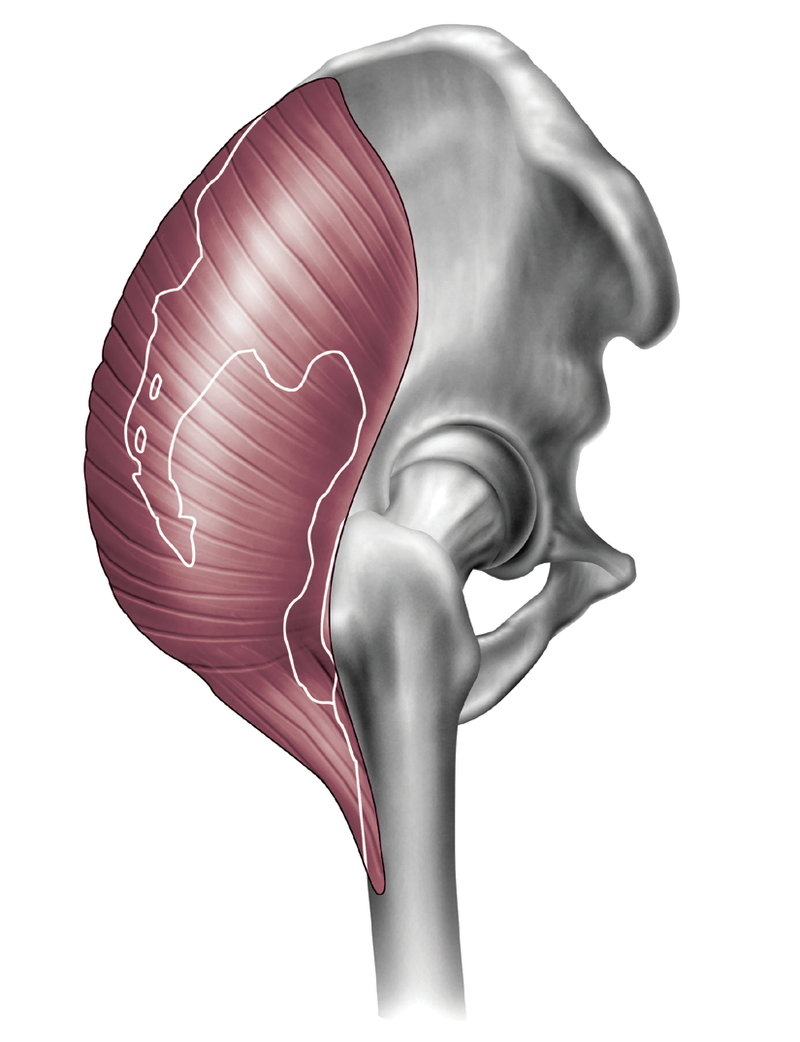
Figure 18 The gluteus maximus as seen on a profile view. This powerful muscle extends the hip joint.
It also has a common insertion with the tensor fascia lata muscle onto the iliotibial band. The hamstring muscles, namely, the biceps femoris, the semitendinosus, and the semimembranosus, all originate from the ischial tuberosity. They cross both the hip and knee joints, and insert on the tibia and fibular head (Fig. 19).
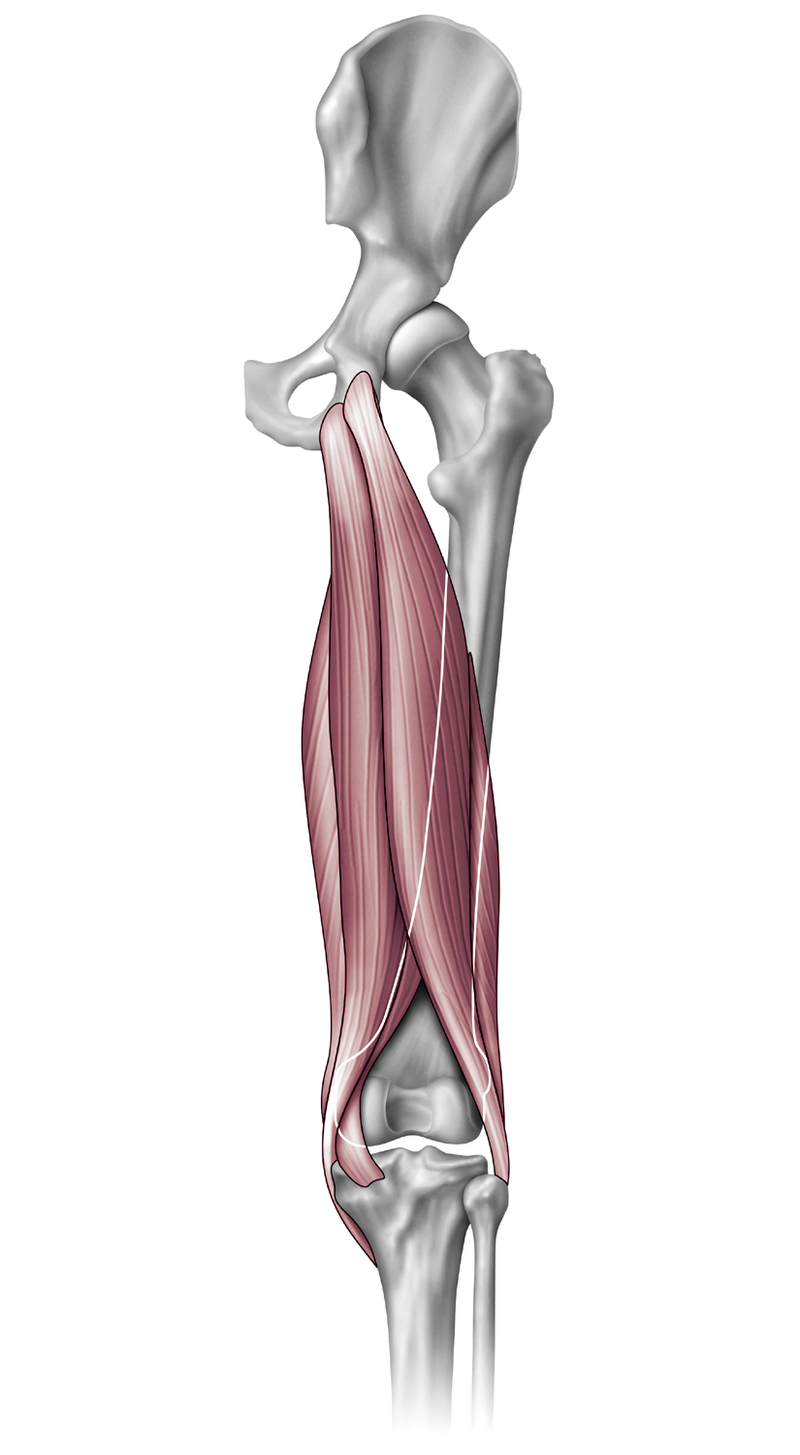
Figure 19 The hamstring muscles: the semimembranosus and semitendinosus on the medial side and the biceps femoris on the lateral side. Note that the biceps inserts on the fibula and the semitendinosus courses medially to insert on the anterior tibia.
The gluteus maximus receives innervation from the inferior gluteal nerve; the hamstrings are all powered by the tibial nerve, with the exception of the short head of the biceps femoris, which receives its innervation from the peroneal part of the sciatic nerve.
The abductors of the hip joint are the gluteus medius and the gluteus minimus (Fig. 20).
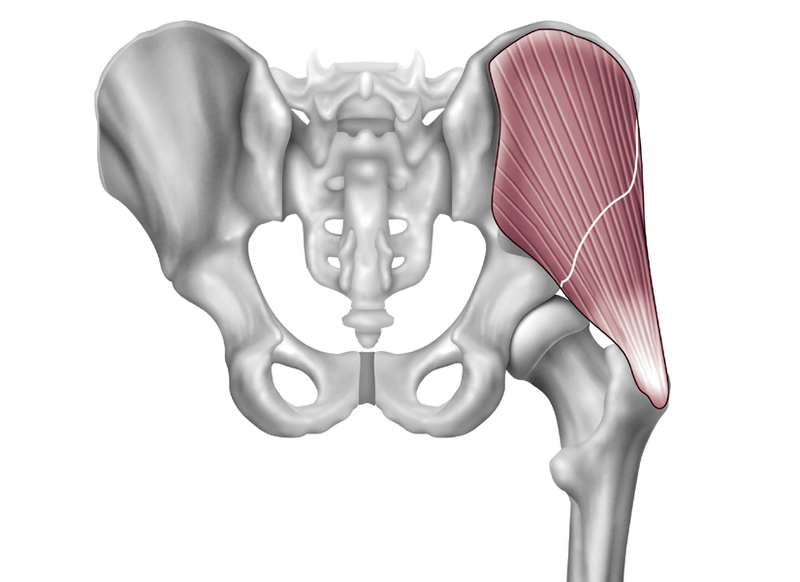
Figure 20 The hip abductors (in this view, the gluteus medius obscures the gluteus minimus underneath it). One essential function of the abductors (which can be inferred from this drawing showing only one femur) is to hold the pelvis level when the contralateral foot is off the ground.
Hip abduction refers to the motion of pulling the leg away from the plane of the body; but in day-to-day life, the more important function of the hip abductors is to isometrically resist adduction. That is, these muscles keep the pelvis horizontal when the contralateral leg is not touching the ground. The gluteus medius and minimus arise from the ilium and insert onto the greater trochanter; both are supplied by the superior gluteal nerve.
The hip adductors originate from the pelvis and insert on the femoral shaft (Fig. 21).
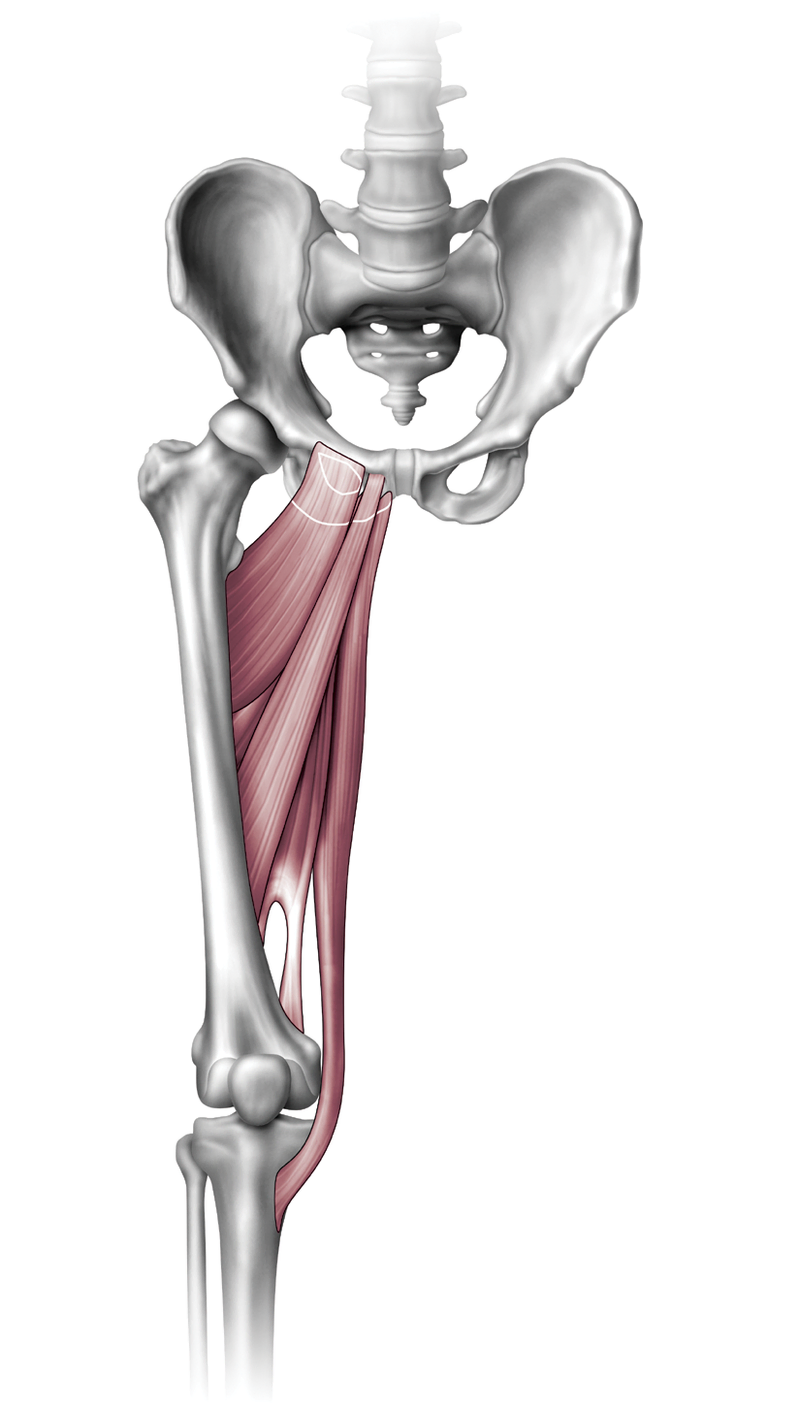
Figure 21 The hip adductors. The adductor magnus is the most powerful of these. Note the hiatus above the medial femoral condyle. The femoral artery passes through here on its course to the popliteal fossa.
They are powered by the obturator nerve. This group includes the adductor longus, the adductor brevis, the adductor magnus, and the gracilis. The gracilis, unlike the other muscles in this group, inserts on the anteromedial tibia near the sartorius and semitendinosus.
The external rotators are six short muscles that course behind the joint and insert on the medial aspect of the greater trochanter. One of these, the piriformis muscle, may irritate the sciatic nerve as it exits the sciatic foramen, causing “piriformis syndrome.” The piriformis muscle also serves as a surgical landmark in the sciatic foramen above which the superior gluteal nerve and vessels can be found.
Nerves and Blood Vessels
The major nerves of the hip region all come from the lumbosacral plexus. The femoral nerve is composed of branches from L2, L3, and L4. The sciatic nerve has both a tibial branch and a peroneal branch (Fig. 22).
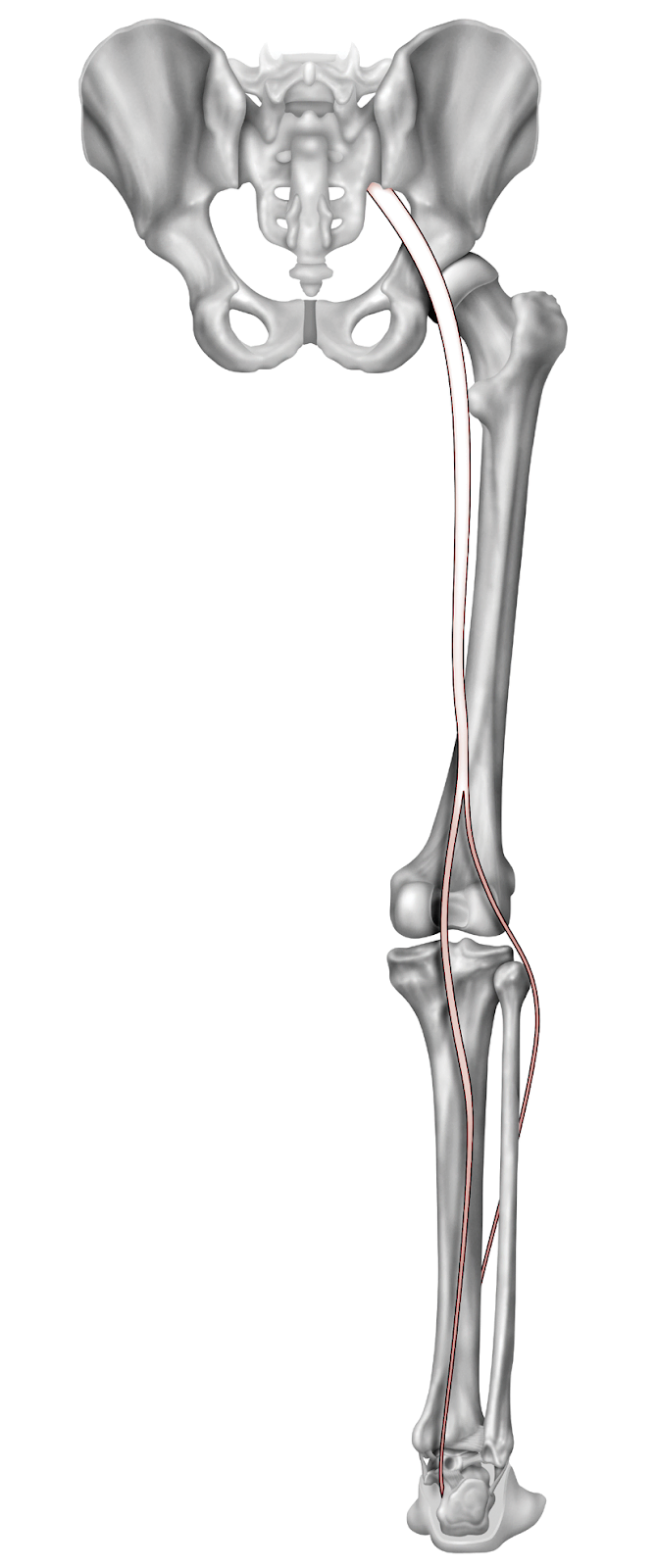
Figure 22 The sciatic nerve.
These travel through the hip region together but split at the popliteal fossa into distinct nerves. The superior and inferior gluteal nerves are also branches from the posterior division of the sacral plexus.
Blood vessels enter the pelvis as branches of the aorta. The aorta branches into left and right common iliac arteries at a point located approximately at the level of the L4 vertebral body. These in turn divide into the internal and external iliac arteries at the level of the sacrum.
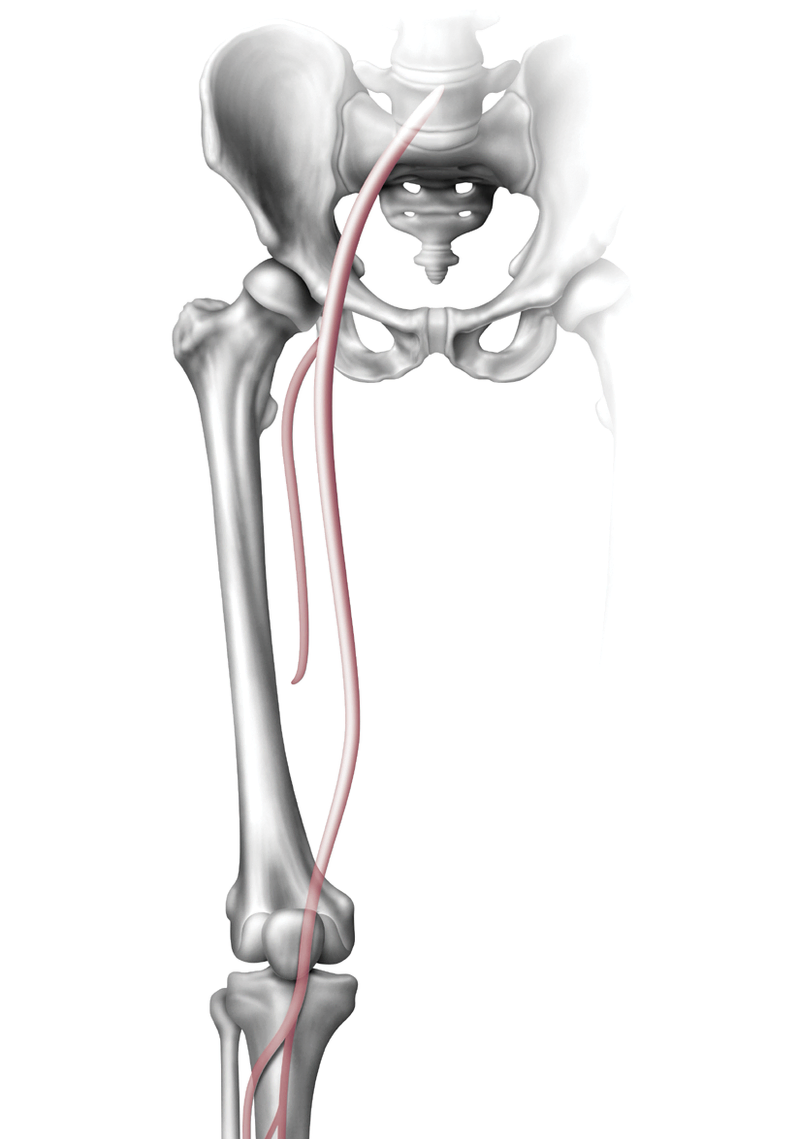
Figure 23 The blood supply to the lower extremity comes from the external iliac artery. The femoral artery moves to the posterior side through the adductor hiatus and is renamed the popliteal artery.
The internal iliac provides branches to supply both the superior and inferior gluteal arteries. The external iliac crosses under the inguinal ligament and is renamed the femoral artery (Fig. 23). The femoral artery gives off the profunda femoris and then continues on to the knee as the popliteal artery. Two other important branches of the femoral artery are the medial and lateral femoral circumflex arteries. The medial femoral circumflex artery provides the majority of blood to the femoral head. It travels up the femoral neck and is at risk for disruption with femoral neck fractures. The femoral artery pulse is readily palpable at the groin. The femoral nerve is lateral to the artery and the vein medial to it; thus, you can draw blood or obtain venous access via the groin by palpating the pulse and placing a needle or cannula medial to it.
Knee and Leg
Bones and Joints
There are four bones joined at the knee, although no one bone touches all three of the others. The femur from above and the tibia from below articulate to form a joint that approximates a hinge. The patella, a sesamoid bone within the quadriceps tendon, articulates with the femur to create a joint that is similar to a pulley mechanism. The tibia articulates with the second leg bone, the fibula, in a joint that allows a small degree of rotation (Figs. 24 and 25).
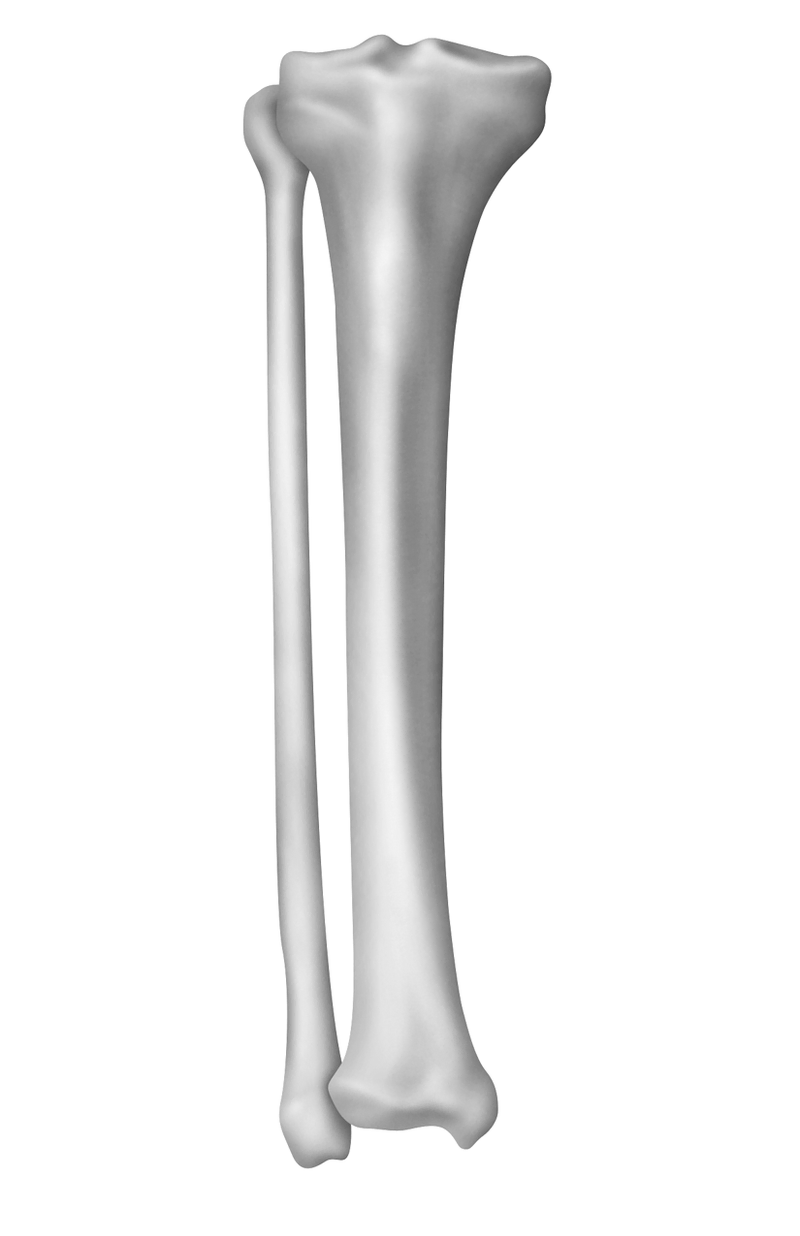
Figure 24 The bones of the leg: the tibia and fibula. The fibula does not contact the femur (as shown in Figure 25), but it is an important part of the ankle joint.
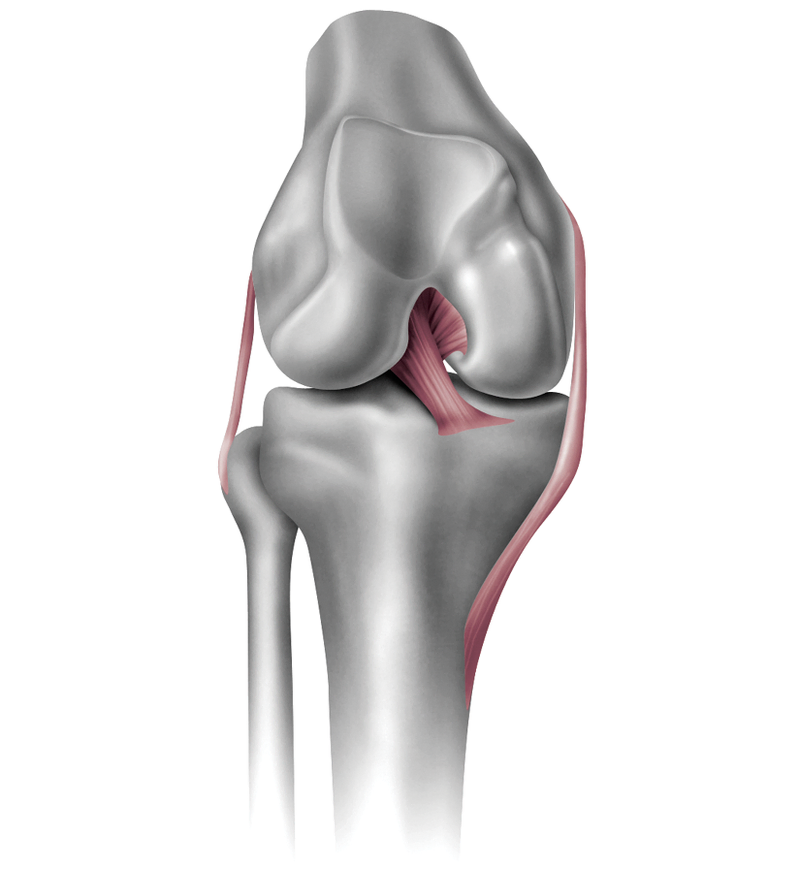
Figure 25 The collateral and cruciate ligaments of the knee. The cruciates reside within the notch between the femoral condyles: the posterior cruciate originates from the medial side and courses laterally toward its attachment on the tibia; the anterior cruciate originates on the lateral side and courses medially. These ligaments thus form a cross (hence the name “cruciate”) as they pass each other.
Unlike the knee, at which the femur makes contact with only one of the two distal bones (the tibia but not the fibula), in the elbow joint, the humerus makes contact with bone at the ulna (a joint built for elbow flexion and extension) and the radius (a joint that allows forearm rotation).
The distal ends of the femur, the condyles, can be thought of as two wheels that roll and glide along the relatively flat surface of the tibia. As the knee flexes, the femur rolls posteriorly. As the knee is straightened, the lateral plateau of the tibia reaches full extension before the medial side does; thus, at terminal extension the tibia rotates externally (with the medial plateau continuing to extend and the lateral plateau remaining motionless). These last few degrees of motion (“screw-home movement”) allow the knee to lock in full extension. As a result, the inability to fully extend the knee (a “flexion contracture”) can lead to an abnormal gait.
The function of the patella is to hold the quadriceps farther anterior to the central hinge of the knee, thus increasing the moment arm of extension. Knee extension can be considered a rotational motion around the center of the knee as seen on the lateral view. This torque can be increased by either pulling harder or increasing the distance between the line of pull and the axis of rotation. Increasing the distance between the line of pull of the quadriceps and the center of the knee is the goal of the patella. In fact, it is able to increase the torque by as much as 30%. The patella is consequently subject to high joint reactive forces—many times a person’s body weight, in fact.
Ligaments and Soft Tissues
The knee, unlike the hip, does not have much bony congruity to make it stable; and, unlike the shoulder, it relies less on muscles to hold it in place. Rather, it uses ligaments to secure the joint.
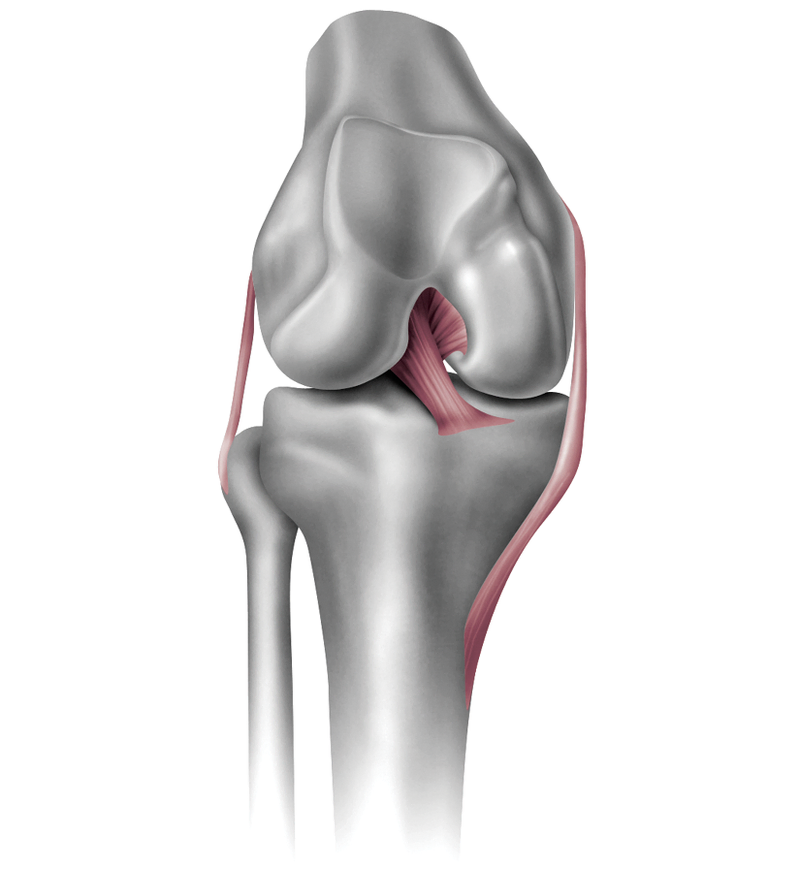
Figure 25 The collateral and cruciate ligaments of the knee. The cruciates reside within the notch between the femoral condyles: the posterior cruciate originates from the medial side and courses laterally toward its attachment on the tibia; the anterior cruciate originates on the lateral side and courses medially. These ligaments thus form a cross (hence the name “cruciate”) as they pass each other.
The main ligaments are the anterior cruciate ligament (ACL), the posterior cruciate ligament (PCL), the medial collateral ligament (MCL), and the lateral collateral ligament (LCL).
The MCL is long and broad, extending from the femur to the tibial metaphysis. It prevents the loss of contact between the femur and tibia when the knee is hit from the outside. Since most people have a slight knock-knee (valgus) alignment, the MCL also prevents the joint from gapping during simple weight bearing. The LCL is much smaller (reflecting, perhaps, the reduced likelihood of being hit from the inside) and attaches to the fibula. It is the fibular attachments to the tibia, in turn, that complete the link, stabilizing the lateral side of the knee.
The cruciate ligaments are found between the condyles in the intracondylar notch (Fig. 26).
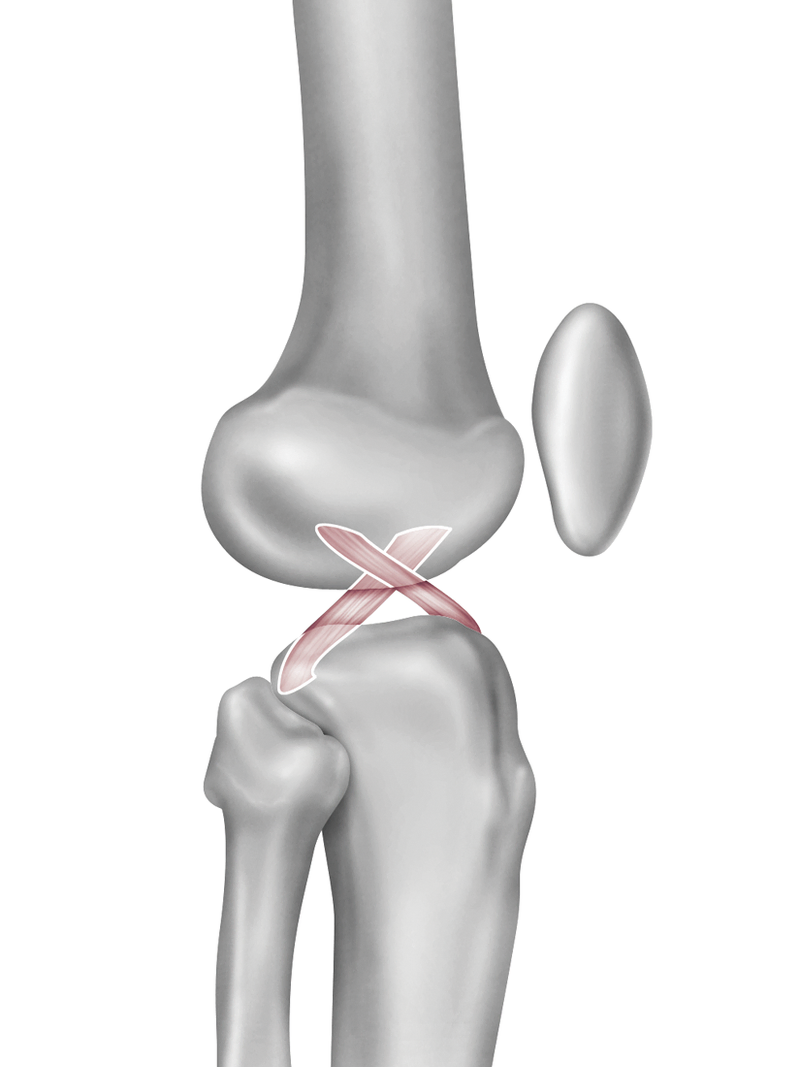
Figure 26 Sagittal view of a right knee with the femur rendered transparent to show the cruciates in the center of the knee.
The ACL resists anterior subluxation of the tibia, and the PCL resists posterior motion. The orientation of these ligaments is primarily vertical. This permits the knee to move through a wide arc of motion. In fact, you can think of the tibia as suspended from the femur by the cruciates and the hinge motion of the knee as the swinging that such suspension allows.
When the knee is flexed, the patella is stabilized by bone congruity: it sits firmly in the groove of the femoral trochlea. At full extension, there is no bony contact, and stability is achieved by the medial and lateral retinacula (ligaments that hold the patella to the femur) and the balanced tension of the muscles of the quadriceps. If the pull of the quadriceps is excessively lateral (as may be the case with a knock-knee deformity), the patella may be unstable. At the very least, this lateral pull can lead to imperfect tracking between the articular surfaces, with greater contact on the lateral facet of the patella. This increased focal contact will increase pressure and, in turn, can lead to cartilage breakdown and pain.
The intra-articular space of the knee is lined with synovium, which produces lubricating and nourishing fluid. This space is bounded by a thin capsule that holds this fluid around the knee and prevents it from dissipating into the soft tissues. The extent of the pouch is at least a few inches superior to the patella, allowing a large space for injecting or aspirating the knee, if needed.
There are also two menisci (singular “meniscus”; Greek for “little moon”) in each knee, crescent-shaped cartilages that rest on the tibial plateaus (Fig. 27).
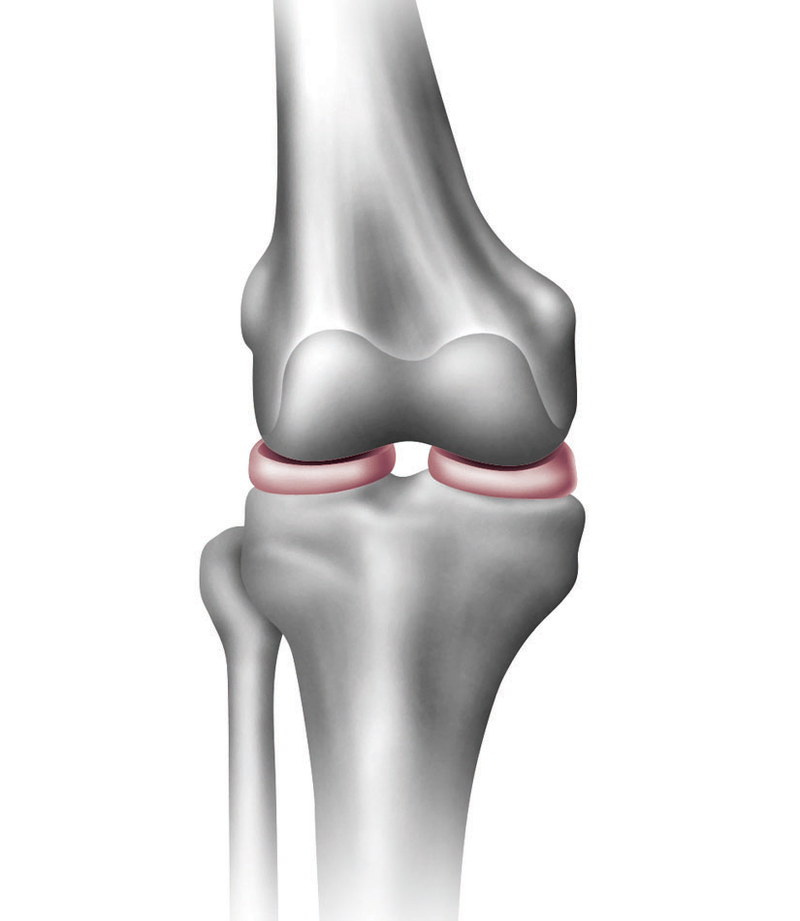
Figure 27 The medial and lateral menisci lie on the tibia and cushion the knee joint.
They are progressively thicker toward the periphery. Consequently, a sagittal or coronal slice (as seen in MRI, for example) looks like a wedge. The function of the meniscus is threefold: (1) it is a cushion that functions as a shock absorber; (2) it creates a greater contact area between the femur and tibia, allowing the force of weight bearing to be dissipated across a larger surface area; and (3) it helps stabilize the knee, much in the way a brick behind a back tire prevents a car from rolling while changing the front tire. Loss of the meniscus (as with an irreparable tear) may increase pressure in the knee along with a sense of instability.
Muscles
Extension is powered by the quadriceps (innervated, primarily, by the L4 nerve root contribution to the femoral nerve) (Fig. 28).
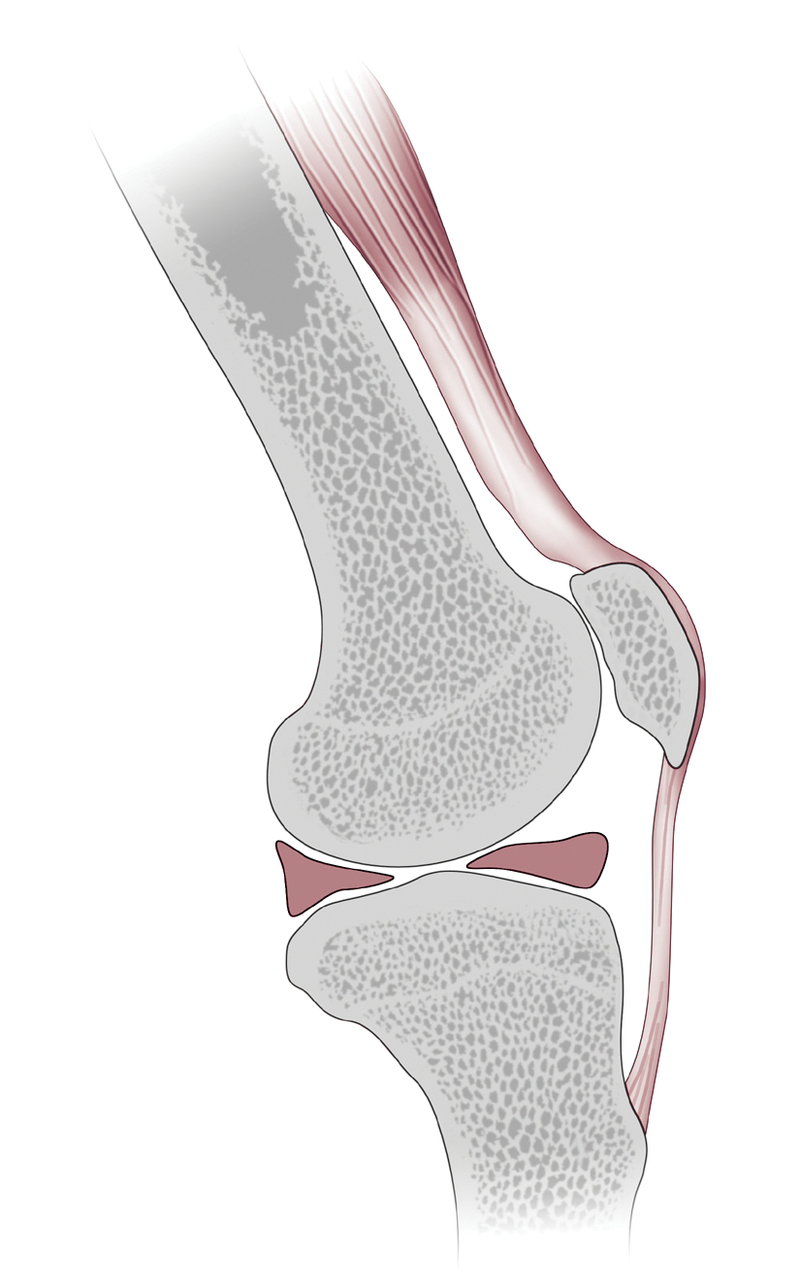
Figure 28 A profile view of the knee, illustrating how the patella increases the distance between the quadriceps and the center of the knee. This lengthens the moment arm of extension, thus adding leverage. The menisci are also shown.
The quadriceps, as the name implies, is composed of four muscles: three vastus muscles and the rectus femoris (Fig. 29).
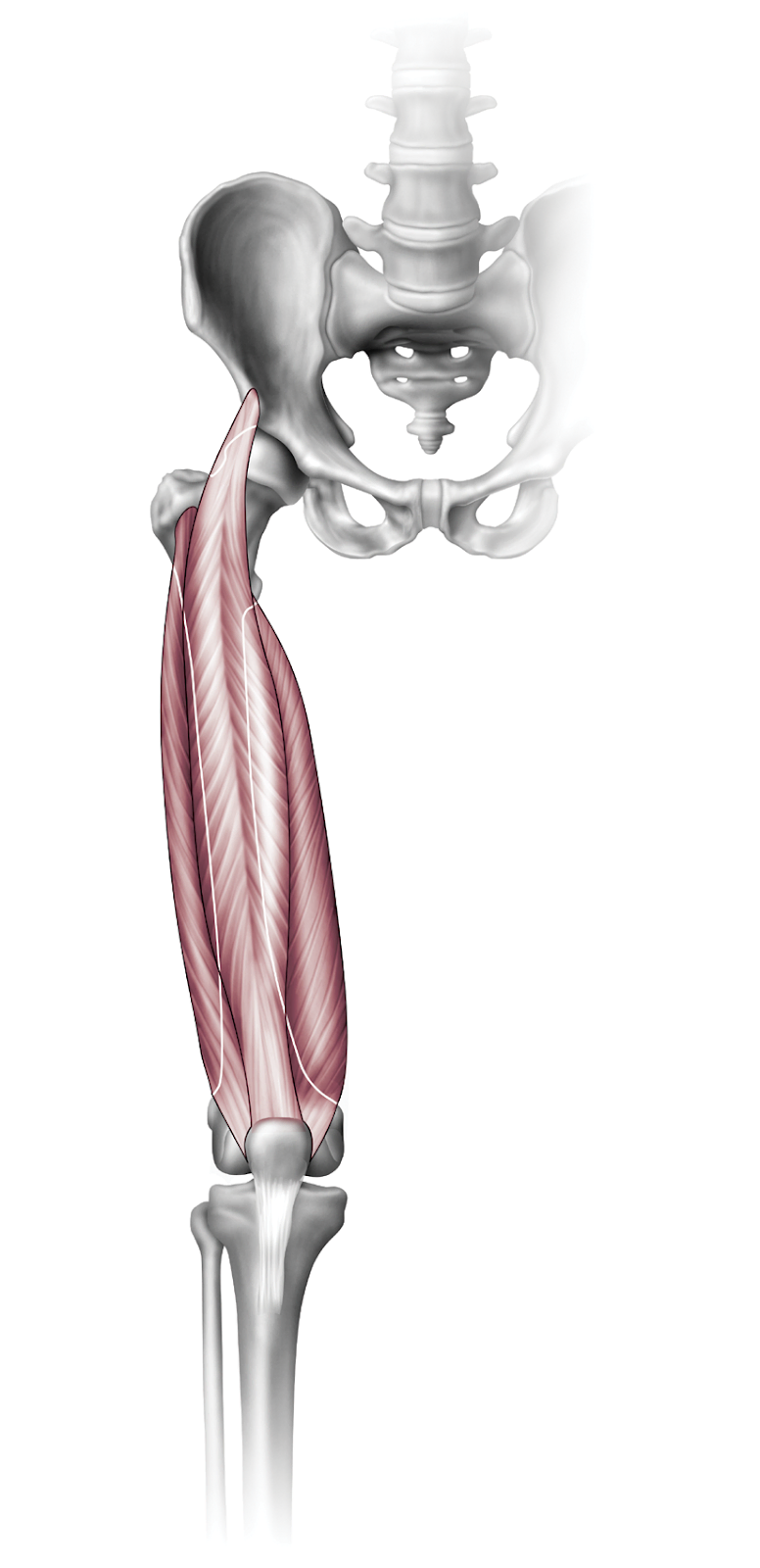
Figure 29 The quadriceps muscles attach to the patella, which in turn attaches to the proximal tibia.
The hamstrings, which power flexion, also have four parts: the two heads of the biceps, which attach laterally on the fibula; and the medial group, the semitendinosus and the semimembranosus, which attach on the tibia. The gastrocnemius, which spans the knee posteriorly, attaches to the femur and also powers knee flexion. The muscles of the knee can also help stabilize the joint, especially when the cruciates are injured: the quadriceps has a slight anterior pull and the hamstrings and gastrocnemius pull posteriorly.
Although the biceps attaches to the fibular head and the semitendinosus attaches to the anterior tibia, in terms of flexion function, the hamstrings behave as if all were attached to the posterior tibia. Understanding the actual attachments of the tendons becomes important when examining patients whose tendons are inflamed or injured.
The muscles of the leg are housed in four distinct fascial compartments: two posterior (one deep and one superficial), one lateral, and one anterior (Fig. 30).
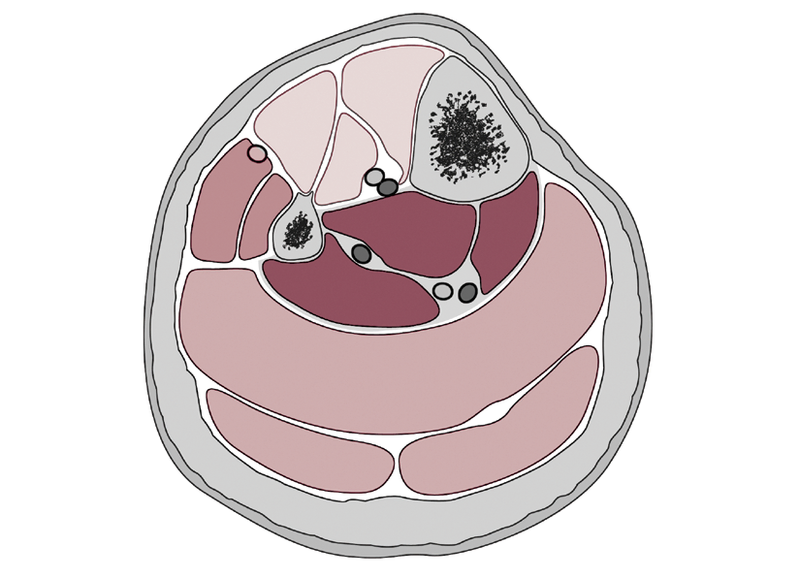
Figure 30 A cross-sectional view of the four compartments of the leg. Note that the lateral compartment holds the superficial peroneal nerve but no artery. The superficial posterior compartment, which contains the gastrocnemius and soleus muscles, has no major neurovascular structures.
The superficial posterior compartment of the leg contains the gastrocnemius, soleus, and plantaris muscles, all of which are innervated by branches of the tibial nerve.
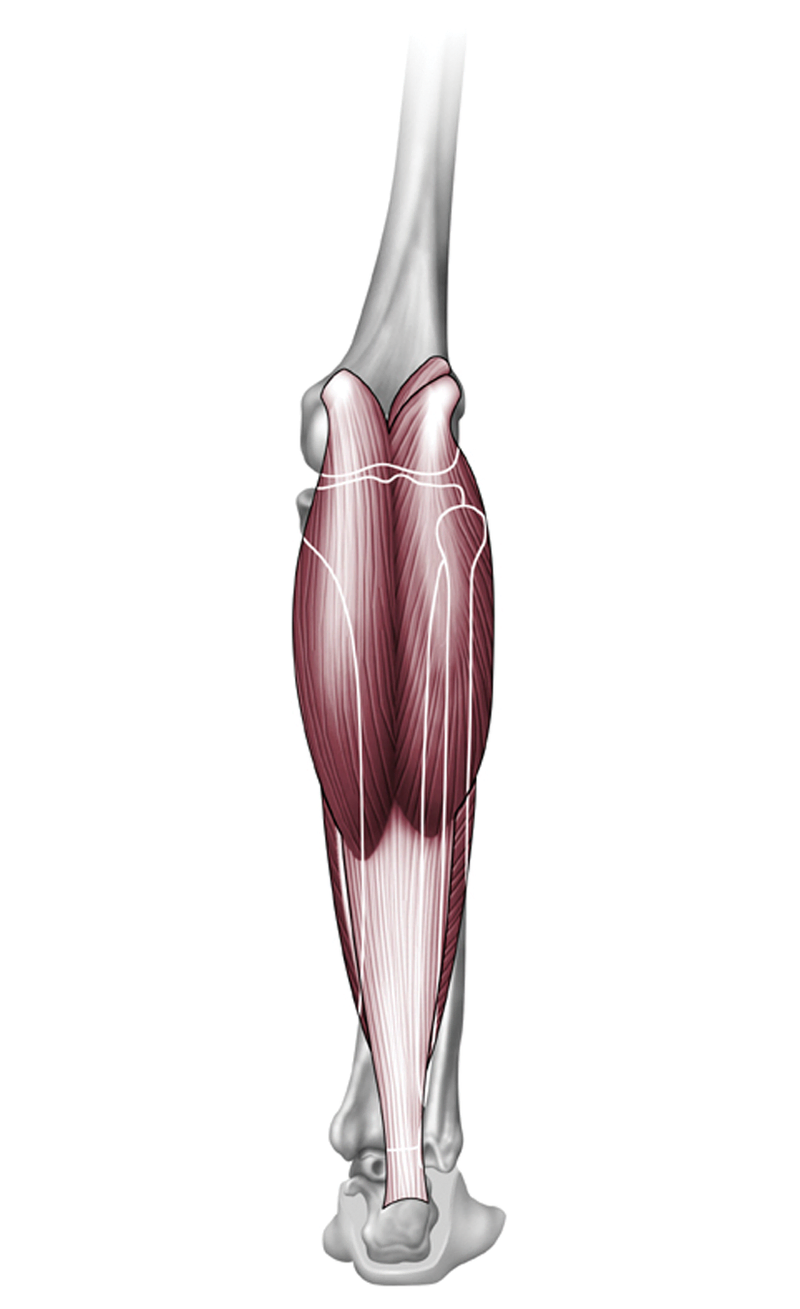
Figure 31 The gastrocnemius and soleus muscles combine to form the Achilles tendon. Both cross the ankle joint. In this view, the soleus is obscured by the gastrocnemius. Note that only the gastrocnemius flexes the knee joint; the soleus does not cross the knee and serves only as an ankle plantar flexor.
The gastrocnemius muscle is composed of medial and lateral heads that arise from the posterior distal femur (Fig. 31). Its fibers cross the knee joint (and thus flex it) and insert into the superior portion of the Achilles tendon. The soleus muscle arises from the proximal tibia and fibula and inserts more distally into the Achilles tendon. These two muscles provide the vast majority of plantar flexion strength to the ankle. The plantaris is a small vestigial muscle whose strength contribution is minimal.
The deep posterior compartment contains the posterior tibialis, flexor digitorum longus, and flexor hallucis longus muscles (Fig. 32).
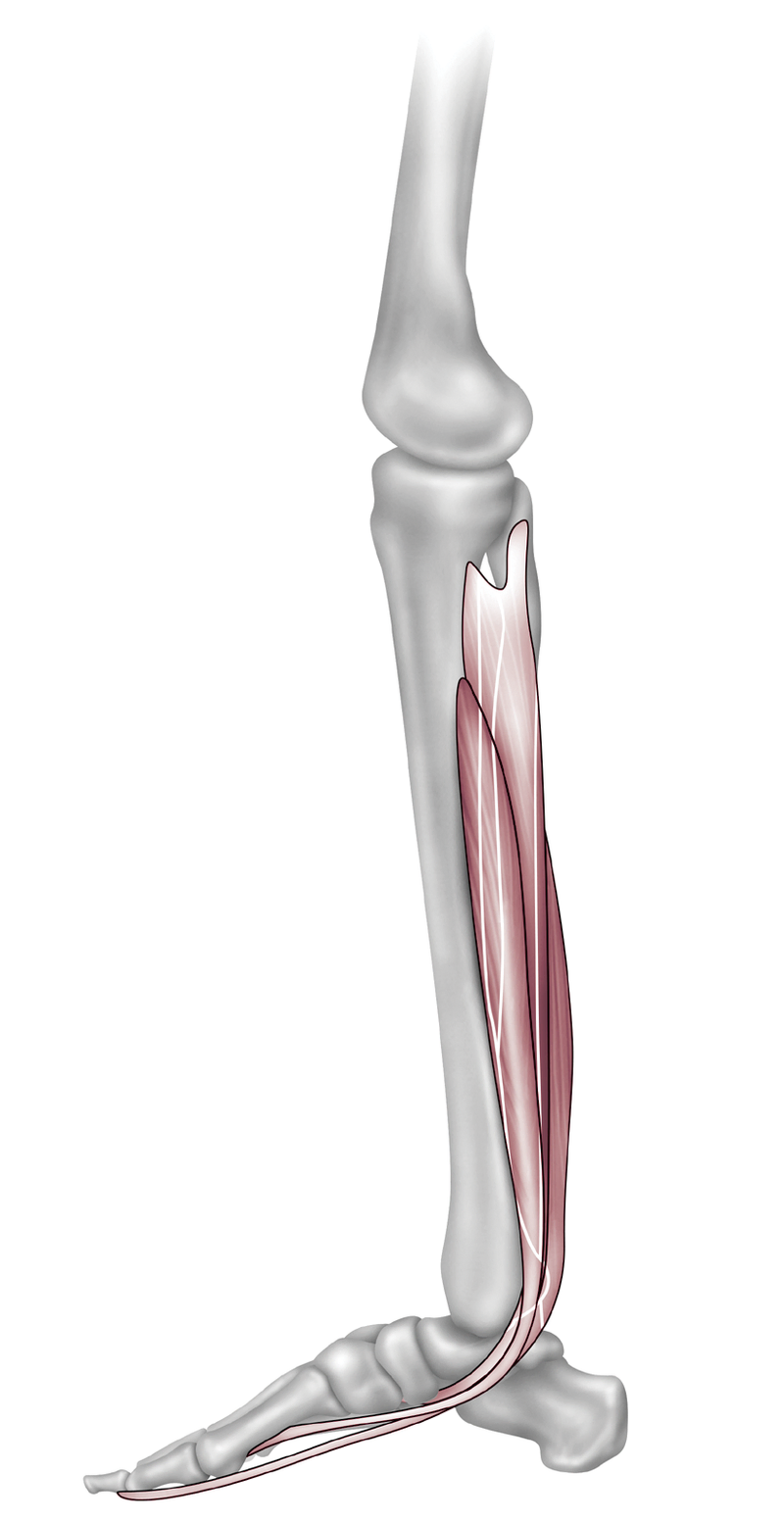
Figure 32 The flexor hallucis longus, flexor digitorum longus, and posterior tibialis. These muscles of the deep posterior compartment course behind the medial malleolus at the ankle.
These muscles arise from the posterior tibia, fibula, and interosseous membrane; are innervated by the tibial nerve; and course behind the medial malleolus. The posterior tibialis inserts on the navicular.
The anterior compartment contains the anterior tibialis, extensor hallucis longus, extensor digitorum longus, and peroneus tertius muscles (Fig. 33).
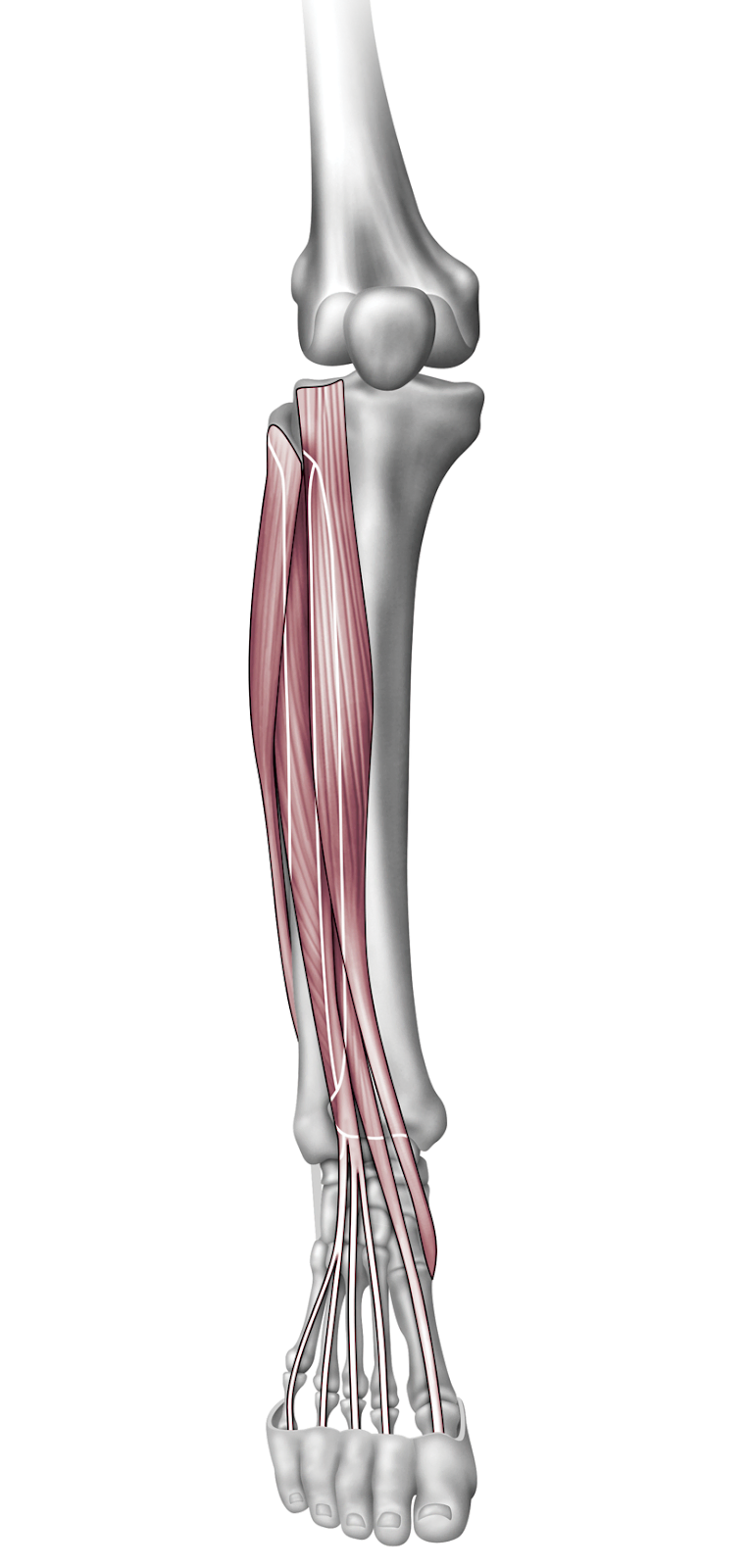
Figure 33 The anterior tibialis, extensor hallucis longus, and extensor digitorum longus are muscles of the anterior compartment and cross the ankle along its dorsal surface.
Innervated by the deep peroneal nerve, these muscles act as extensors of the ankle during the swing phase of gait. They arise from the anterior tibia and interosseous membrane of the leg and enter the ankle under the extensor retinaculum. Injuries to the peroneal nerve, therefore, result in a loss of active ankle dorsiflexion, a functional deficit known as a footdrop.
The lateral compartment of the leg contains the peroneus longus and peroneus brevis muscles (Fig. 34).
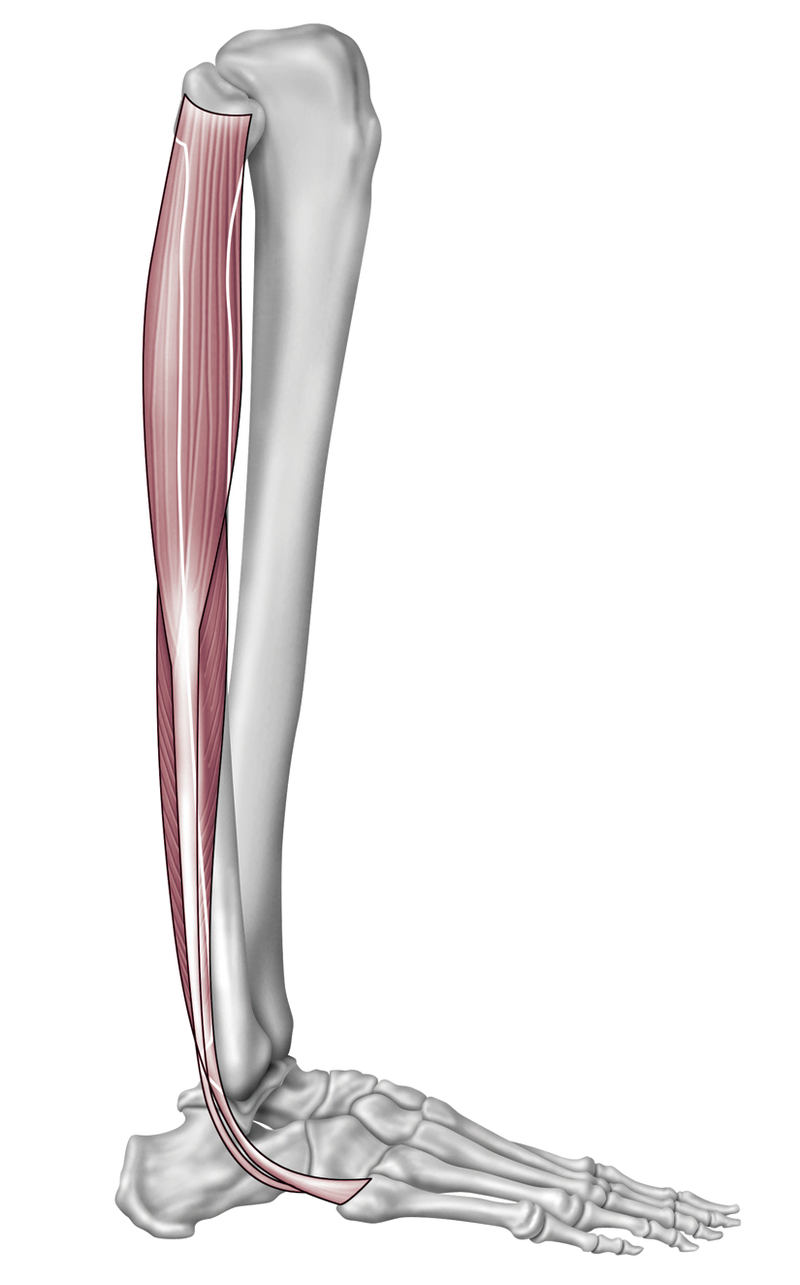
Figure 34 The peroneus longus and peroneus brevis muscles are muscles of the lateral compartment and cross the ankle behind the fibula. The brevis inserts on the fifth metatarsal but the longus courses under the foot to insert in the first metatarsal.
These muscles are innervated by the superficial peroneal nerve and act to evert the ankle and protect against inversion sprains. They arise from the fibula, and their tendons cross the ankle directly posterior to the lateral malleolus.
Nerves and Blood Vessels
Nerves and blood vessels are important components of the knee; however, for the most part, they are transient—on their way to perform important tasks in the leg and foot. The nerves and blood vessels are located in back of the knee in the diamond-shaped popliteal fossa. The popliteal artery is an extension of the femoral artery, which changes its name as it dives posteriorly through the adductor canal. The popliteal artery gives off the genicular arteries, which supply the knee, and continues to the leg as the anterior and posterior tibial arteries. The posterior tibial artery splits and gives off the peroneal artery. The popliteal artery is at risk for damage during a knee dislocation because it is fairly well tethered within the fossa.
The nerves also pass through the popliteal fossa. In the thigh, the sciatic nerve splits into separate tibial and peroneal branches. These enter the fossa distinctly, with the peroneal laterally placed. The tibial nerve remains posterior in the calf throughout. The peroneal wraps around the fibular neck where it is subject to injury during fracture or dislocation. This nerve then splits into the deep peroneal nerve, which supplies the anterior muscles of the leg, and the superficial peroneal nerve, which supplies the muscles of the lateral compartment (the peroneus longus and brevis).
The vessels and nerves continue into the leg in distinct fascial compartments. This arrangement is somewhat counterintuitive because there are four compartments but only three nerves and arteries (the superficial posterior compartment has neither a vessel nor an artery). In addition, the lateral compartment has its own nerve (the superficial peroneal) but no blood vessel. The vessel that feeds it, the peroneal artery, actually resides in the deep posterior compartment.
Foot and Ankle
Bone and Joints
The ankle joint is the articulation of the leg bones (the tibia and fibula) and the talus (the superior-most bone of the foot). This joint is formed as the tibial shaft flares out distally to form the medial malleolus. This malleolus serves as a medial buttress of the ankle and as the proximal point of origin of the deltoid ligament. The distal articular surface of the tibia (the plafond) is not perfectly flat but instead has a slight central ridge that corresponds to a central depression in the talar dome. This shape increases the congruity and stability of the joint. The fibula also flares out distally to form the lateral malleolus, the anchor point for the lateral ankle ligaments and a buttress preventing lateral displacement of the talus. The distal tibia and fibula thus form a “mortise,” an inverted U, which contains the dome of the talus. The talar dome accordingly comprises the floor of the ankle joint and articulates with the tibial plafond superiorly, the medial malleolus medially, and the lateral malleolus laterally.
The architecture of the foot can be divided into three parts: the hindfoot, the midfoot, and the forefoot (Figs. 35 and 36).
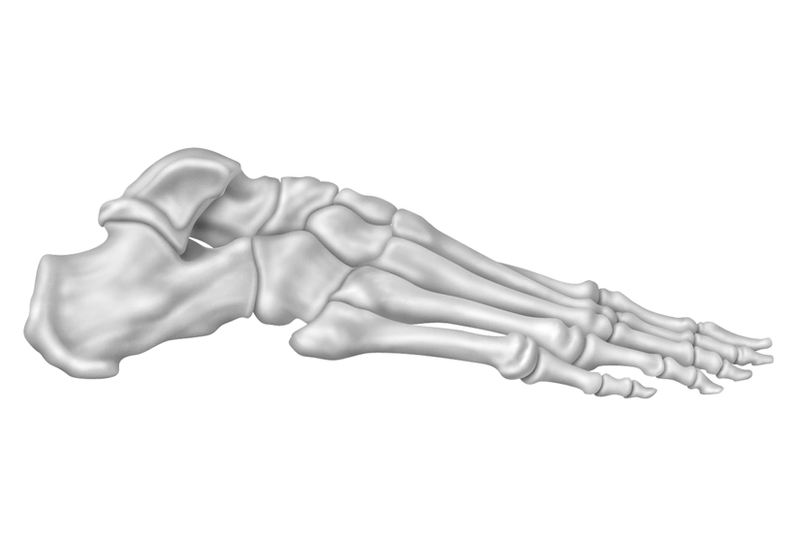
Figure 35 The bones of the foot as seen on a lateral view.
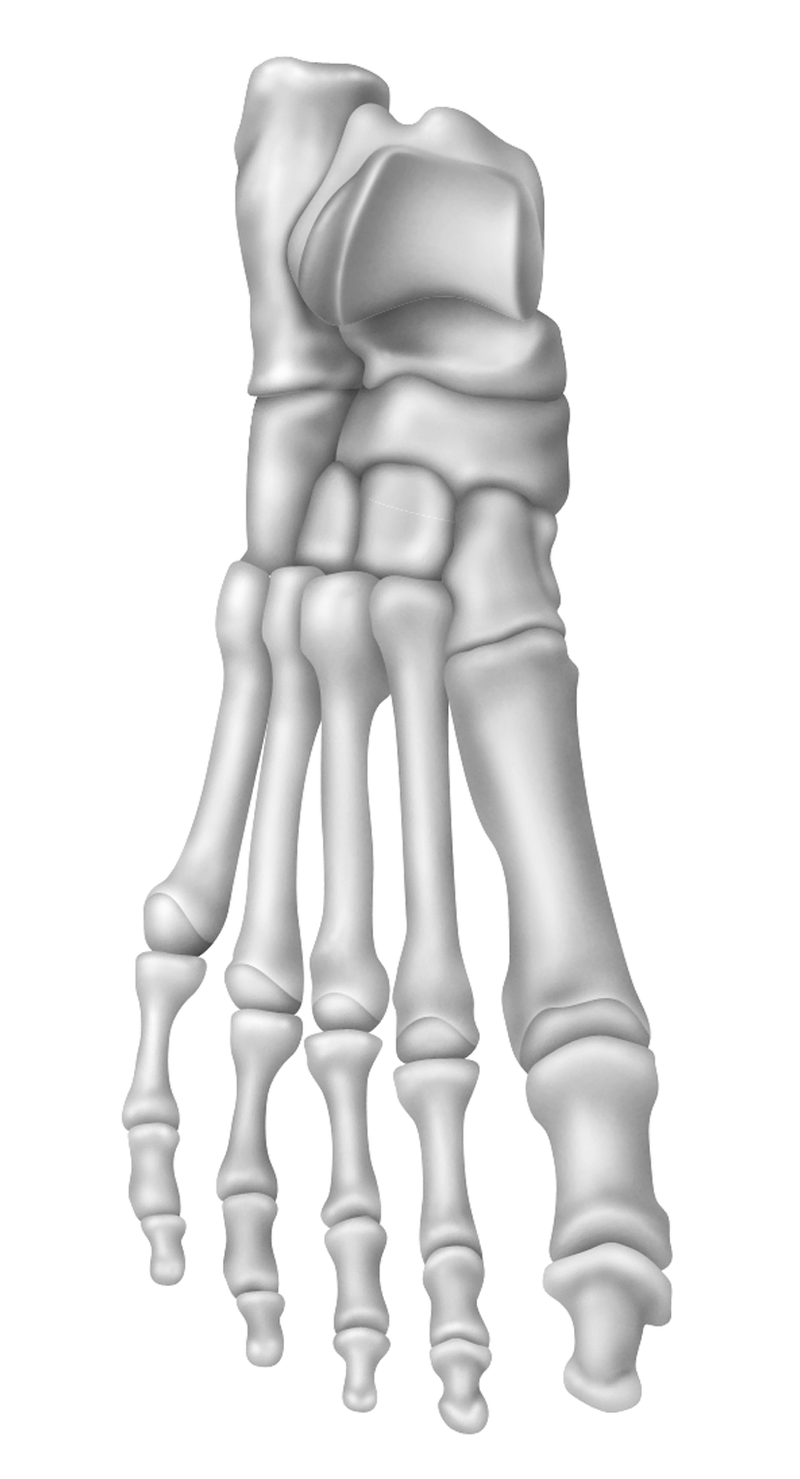
Figure 36 The bones of the foot as seen from above.
The hindfoot consists of the talus and calcaneus and serves as the link between the ankle and the remainder of the foot. The undersurface of the talar body consists of articular cartilage that contacts the calcaneus to form the subtalar joint. Much of the talus is covered by articular cartilage with no direct muscle attachments and few areas for the entry of blood vessels into the bone. In the presence of severe fractures or dislocations, this limited vascular supply predisposes the talus to osteonecrosis. The body of the calcaneus is its largest portion and bears large compressive loads during weight bearing. The sustentaculum tali, a dense bony projection off the medial side of the calcaneal body, helps support the talus.
The midfoot is made up of the tarsal bones, namely, the navicular; the cuboid; and the medial, middle, and lateral cuneiforms. The midfoot meets the hindfoot at the talonavicular and calcaneocuboid joints, which collectively are known as the transverse tarsal joint, or Chopart’s joint. The distal extent of the midfoot is the tarsometatarsal joint, or the Lisfranc joint. Medially, the navicular serves as the insertion for the posterior tibialis tendon. The cuboid, the most lateral bone, has a shallow groove on its lateral side in which the peroneus longus tendon is housed as it turns from the lateral side of the foot toward the plantar aspect.
The forefoot bones include the metatarsals, the phalanges, and two accessory bones beneath the hallux, the medial and lateral sesamoids. The metatarsal bones link the midfoot with the toes. The great toe, or hallux, has two phalanges (proximal and distal) and one interphalangeal joint. The four lesser toes each have three phalanges (proximal, middle, and distal), with two intervening joints, the proximal interphalangeal (PIP) joint and the distal interphalangeal (DIP) joint. The phalanges are short tubular bones. The concave proximal phalanx base articulates with the metatarsal head.
The sesamoid bones beneath the metatarsophalangeal joint of the great toe have a function similar to that of the patella and increase the mechanical advantage of the muscles that flex that metatarsophalangeal joint. Because of their position at the ball of the foot, the sesamoids undergo substantial mechanical force and are often the site of overuse conditions or injuries.
Ligaments
An extensive array of ligaments stabilize the ankle (Fig. 37).
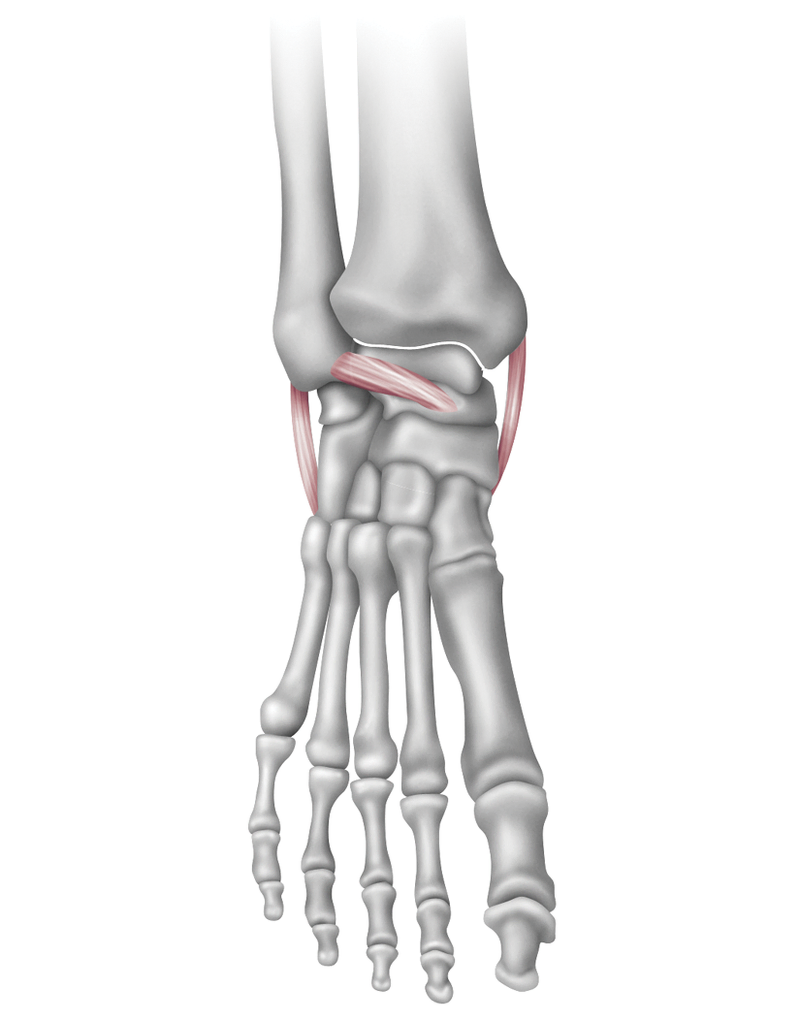
Figure 37 Frontal view of the ankle joint. The deltoid ligament lies medially and the talofibular and calcaneofibular ligaments are lateral. The syndesmosis is not shown.
Medially, the deltoid ligament resists eversion (tilting up of the lateral foot) as well as rotation of the talus within the mortise. The lateral ankle ligaments resist inversion of the ankle joint (tilting up of the medial foot). The lateral ligament complex consists of the anterior talofibular, calcaneofibular, and posterior talofibular ligaments (Fig. 38).
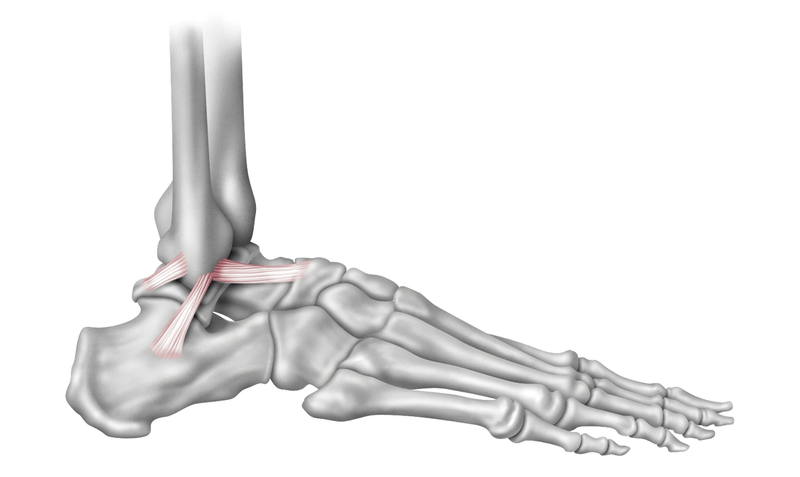
Figure 38 The talofibular and calcaneofibular ligaments.
The calcaneofibular ligament resists varus tilting of the joint when the ankle is in the neutral position (neither plantar flexed nor dorsiflexed). When the ankle is in the neutral position, the anterior talofibular ligament resists anterior subluxation of the talus. In plantar flexion, the anterior talofibular ligament resists inversion because in that position the ligament is oriented more vertically.
The syndesmotic ligaments (syndesmosis) stabilize the tibia to the fibula above the level of the ankle joint. This complex is composed of four major structures that resist separation (or diastasis) of the tibia from the fibula.
The subtalar joint is stabilized primarily by ligaments directly between the talus and calcaneus. The motions at the subtalar joint are inversion and eversion. The midfoot demonstrates a complex variety of motion, allowing the foot to accommodate uneven surfaces or terrain. These motions include dorsiflexion, plantar flexion, abduction, adduction, and rotation. The metatarsophalangeal joints in the forefoot are stabilized by medial and lateral collateral ligaments, a weak dorsal joint capsule, and a strong plantar ligament complex (the “plantar plate”). The PIP and DIP joints have a similar ligamentous structure that, along with the bony anatomy, provides stability.
Muscles
Muscles of the foot and ankle are divided into two groups: intrinsic muscles, which have their bellies in the foot; and extrinsic muscles, which are based in the compartments of calf, with only their tendons crossing the ankle. The muscles of the superficial posterior compartment (gastrocnemius and soleus) attach to the calcaneus and are powerful plantar flexors of the ankle. The muscles of the deep posterior compartment cross the ankle behind the medial malleolus deep to the flexor retinaculum. The posterior tibialis inverts the ankle and provides dynamic support of the arch of the foot. The flexor hallucis longus and flexor digitorum longus tendons insert into the distal phalanges of the great toe and lesser toes; flex the toes; and, to a small degree, contribute to ankle plantar flexion.
The anterior compartment muscles (tibialis anterior, extensor hallucis longus, and extensor digitorum longus) are extensors of the ankle. They cross the ankle anteriorly and pass deep to the extensor retinaculum to exit onto the dorsum of the foot. The tibialis anterior tendon inserts on the medial cuneiform and the base of the first metatarsal and is the primary extensor of the ankle. The extensor hallucis longus and extensor digitorum longus extend the toes.
The lateral compartment of the leg contains the peroneus longus and peroneus brevis muscles, which are important dynamic stabilizers of the lateral ankle and protect against inversion sprains. These two muscles cross the ankle behind the lateral malleolus in a shallow groove that is covered by the peroneal retinaculum. The peroneus brevis tendon inserts on the base of the fifth metatarsal, whereas the peroneus longus tendon curves around a groove in the cuboid and travels deep into the plantar aspect of the foot to insert on the base of the first metatarsal.
The intrinsic muscles are housed in the foot itself. The extensor hallucis brevis and extensor digitorum brevis muscles arise from the lateral hindfoot, and their tendons travel across the dorsum of the foot. The extensor hallucis brevis inserts on the proximal phalanx of the great toe and extends the metatarsophalangeal joint. The extensor digitorum brevis tendons extend the metatarsophalangeal joint and are innervated by a branch from the deep peroneal nerve.
On the plantar side, the plantar fascia originates from the calcaneus and inserts on the plantar plate of the metatarsophalangeal joint, which helps support the longitudinal arch of the foot. Branches of the tibial nerve innervate the plantar intrinsic foot muscles. These muscles, which abduct the toes and assist with flexion and extension, are similar in function to the intrinsic muscles of the hand.
Nerves and Blood Vessels
Five nerves supply the lower legs, ankles, and feet: the tibial, saphenous, sural, superficial peroneal, and deep peroneal nerves (Fig. 39).
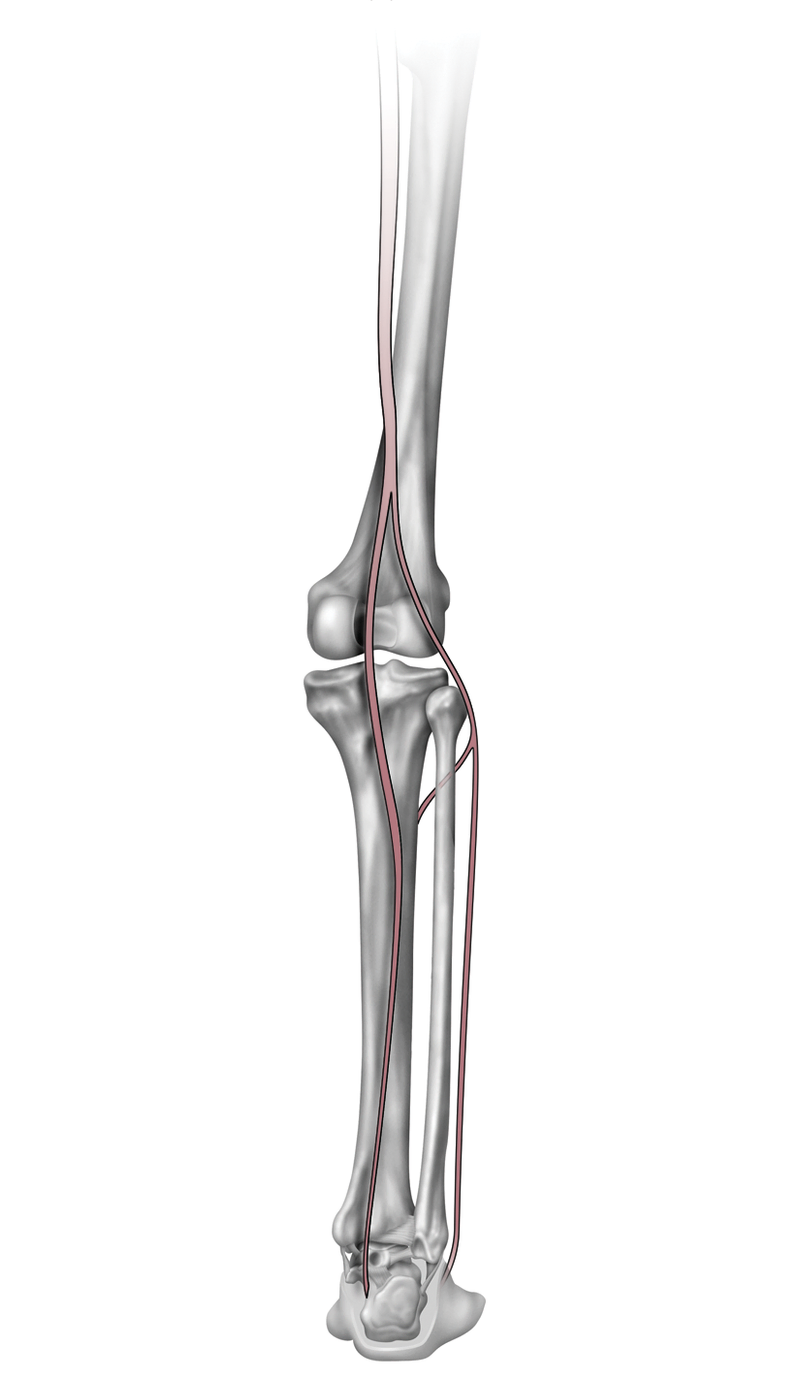
Figure 39 Nerve supply to the foot and ankle. Note the course of the peroneal nerve around the fibula. The tibial nerve enters the foot behind the medial malleolus. The sural and saphenous nerves are not shown.
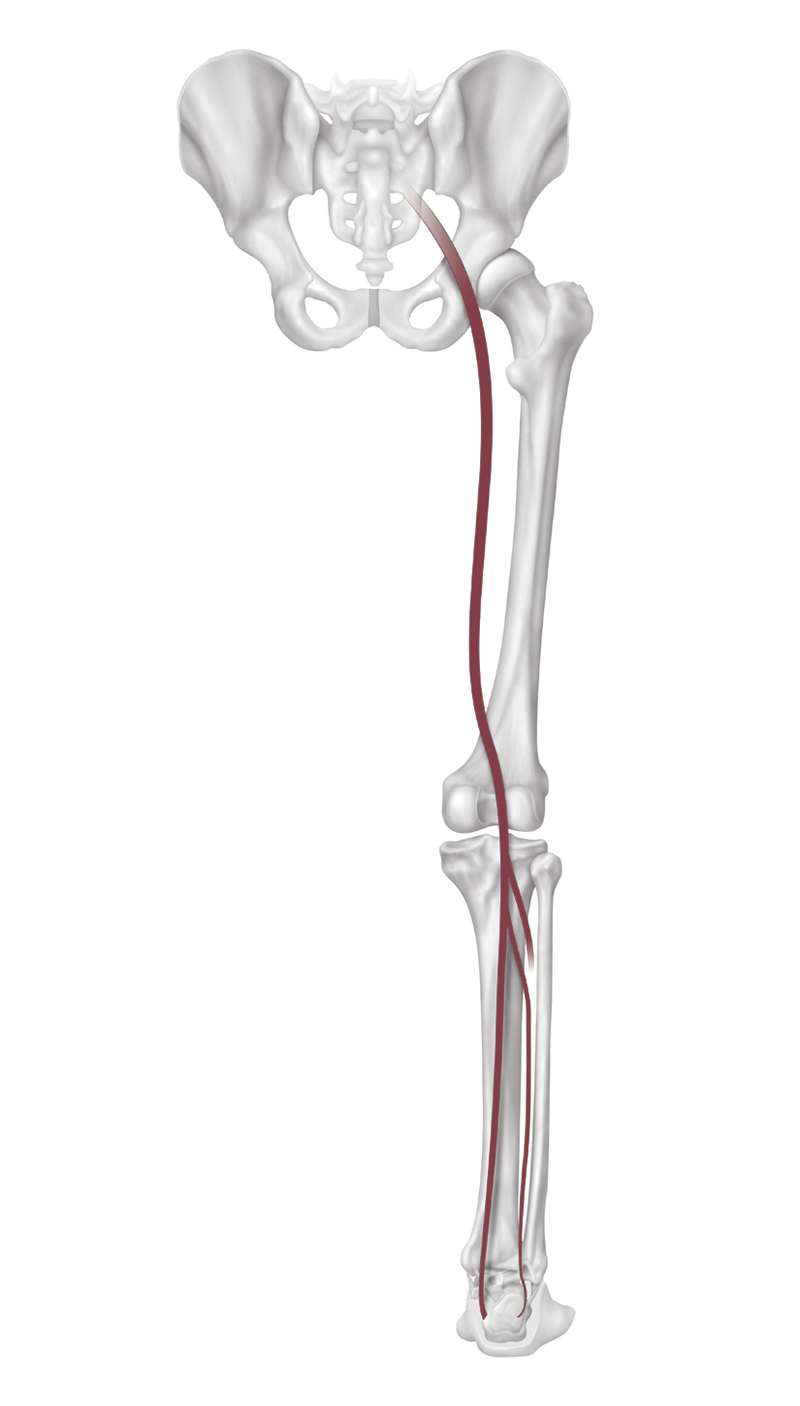
Figure 40 The blood supply to the foot. Note the trifurcation of the popliteal artery just distal to the knee joint.
The saphenous and sural nerves are purely sensory nerves, whereas the other three are mixed sensory and motor nerves. At the level of the ankle, the tibial nerve travels posterior to the medial malleolus and runs deep to the flexor retinaculum in the tarsal tunnel. It then trifurcates into the medial calcaneal, medial plantar, and lateral plantar nerve branches. High in the calf, the common peroneal nerve divides into two branches, the superficial and deep peroneal nerves. The deep peroneal nerve runs within the anterior compartment of the leg with the anterior tibial vessels and innervates the muscles there. It sends a sensory branch onto the dorsum of the foot with the dorsalis pedis artery, which terminates in the web space between the great toe and the second toe. The superficial peroneal nerve runs within the lateral muscle compartment of the leg, innervating the peroneus longus and brevis muscles. The nerve continues distally to supply sensation to most of the dorsum of the foot.
The ankle and foot have three major arteries providing vascular inflow: the posterior tibial, anterior tibial, and peroneal arteries (Fig. 40). These three branches arise in the proximal leg at the “trifurcation” of the popliteal artery. (This is not a true trifurcation as the anterior tibial splits off first.) The posterior tibial artery pulse is palpable posterior to the medial malleolus. The anterior tibial artery crosses the ankle and courses on the dorsum of the foot, at which point it is renamed the dorsalis pedis artery. The peroneal artery runs within the deep posterior compartment but supplies the peroneal muscles and the lateral foot and ankle. As in the hand, these vessels have extensive anastomoses; therefore, collateral flow is often sufficient when an isolated arterial injury occurs.
Spine
Bones and Joints
The spine is composed of 24 vertebrae that are organized into four regions: cervical, thoracic, lumbar, and sacral (Fig. 41).
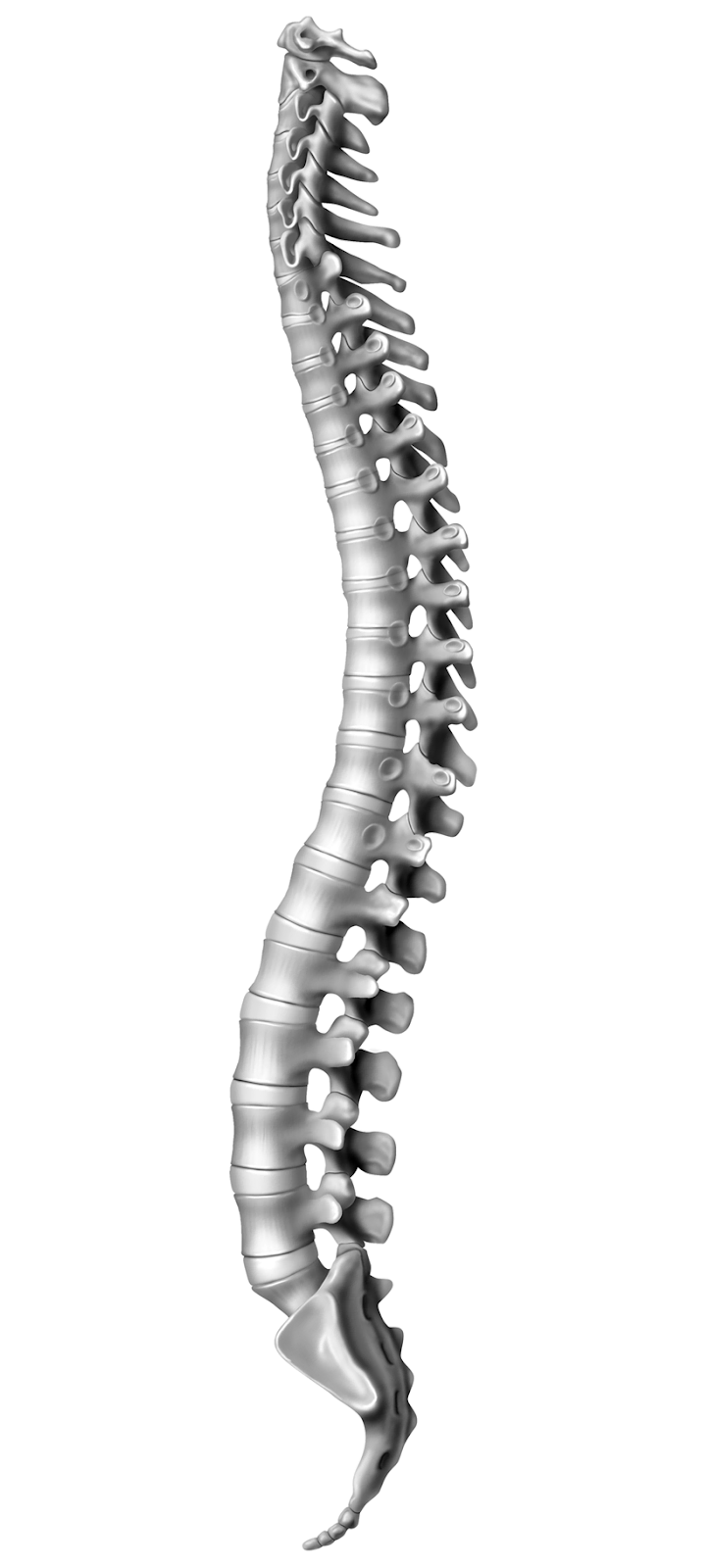
Figure 41 Sagittal view of the spine. Note the lordosis of the cervical and lumbar regions and kyphosis of the thoracic spine.
There are seven cervical vertebrae. Two of these are distinctly shaped: C1, the atlas (which holds up the globe of the head) and C2, the axis. C3 through C7 are more similar in shape to the remaining vertebrae below. The 12 thoracic vertebrae give off 12 pairs of ribs, each emanating from a single thoracic vertebral body. The first seven ribs articulate with the sternum. The eighth, ninth, and tenth ribs do not reach all the way around to the sternum directly but form a common cartilage bar that angles up toward the inferior border of the sternum. The eleventh and twelfth ribs are not attached to anything anteriorly; thus, they are called “floating ribs.” The five lumbar vertebrae attach the thoracic region to the sacrum. The sacrum itself represents the fusion of five spinal elements into one bone.
When viewed in profile, the overall configuration of the spine places C1 directly above the sacrum; however, each region is curved. The cervical and lumbar regions demonstrate lordosis (arching back), whereas the thoracic spine is kyphotic (hunched). The three curves offset one another, which balances the spine overall. When viewed in the coronal (anteroposterior) plane, the spine should appear perfectly straight. Deviations to either the right or left represent scoliosis (the clinical entity termed “scoliosis” is a three-dimensional deformity, with a rotational component as well.)
The morphology of the vertebrae varies by region. For example, the body of a lumbar vertebra viewed from above is anterior (Fig. 42).
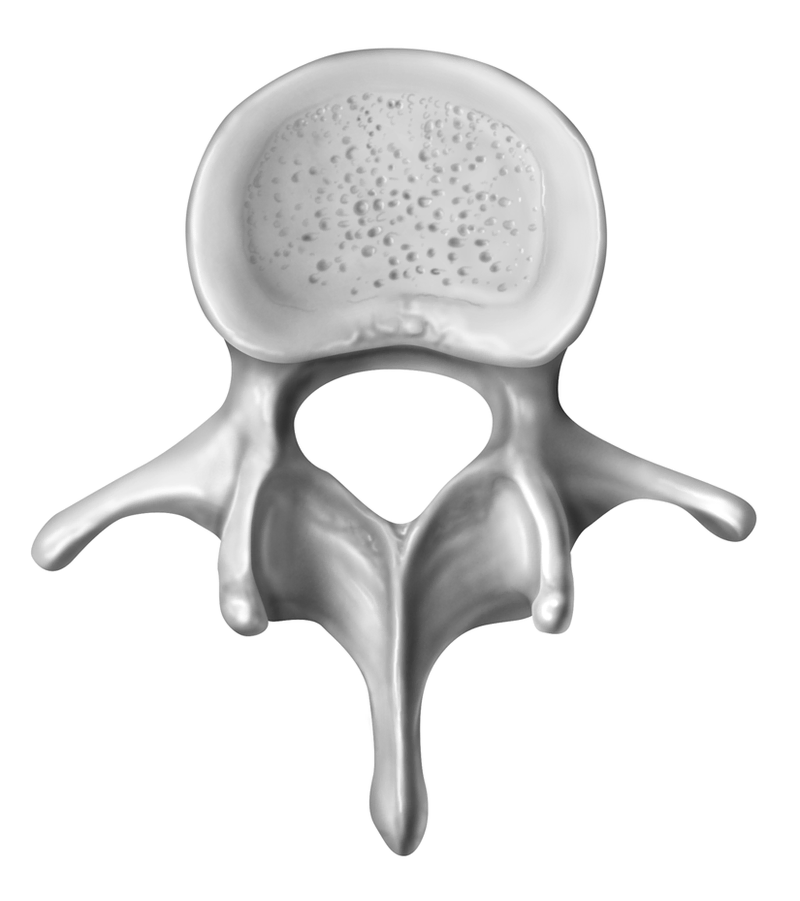
Figure 42 Axial view of a lumbar vertebral body. The space surrounded by the vertebral body, pedicles, and laminae houses the spinal cord and cauda equina.
Projecting posteriorly off the body are left and right pedicles. From there, the transverse processes emanate laterally and the articular processes aim in the inferior and superior directions. Posterior to the transverse processes are the right and left laminae, which come together at the spinous process. The vertebrae of the lumbar region are stacked one on top of the other, with disks cushioning the bodies (Fig. 43).
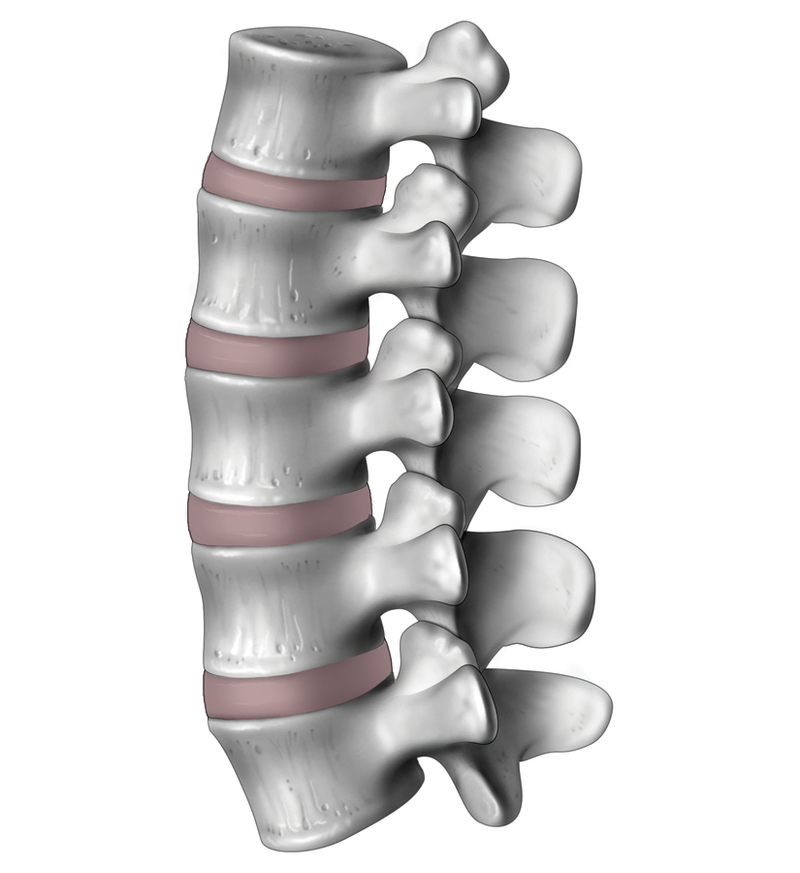
Figure 43 Lateral view of the lumbar spine showing the intervertebral disks, the neural foramina, and the posterior elements.
The inferior articular process of the vertebra above contacts the superior articular process of the one below, forming the facet joint. (Note that the articular processes are named not in reference to their position around the neural foramen but according to their location on their own vertebral body.) The superior and inferior articular processes of a single vertebra are connected by a piece of bone called the pars intra-articularis, which is commonly subject to stress fracture. When the articular processes contact each other, a space called the neural foramen is defined by the pedicles above and below it. It is through this space that the nerve roots exit.
The standard cervical vertebrae, C3-C7, differ somewhat from the organization of vertebrae in the lumbar region. Unlike the vertebrae of the lumbar region, there are holes (foramina) in the transverse processes of cervical vertebrae that allow passage of the vertebral artery. In addition, the bodies are smaller and more square. The atlas (C1) is even more unusual in that it does not have a body; it is more like a bony ring supporting the skull. The axis below (C2) can be considered to have taken this body, as it has a superior post-like process called the dens (also known as the odontoid) that projects into the ring of C1. The facet joints of the cervical spine are also more horizontally oriented than those of the lumbar spine, allowing slippage with trauma more easily than in the caudal (distal) segments.
The main distinction between the thoracic vertebrae and those above and below is that the thoracic region attaches to the rib cage and is less mobile. Therefore, it is at the junction of the thoracic and the (more flexible) lumbar region that traumatic hyperflexion (as caused by a motor vehicle accident, for example) inflicts the most damage.
The sacrum, a triangular bone that is the result of the fusion of five sacral vertebrae, is the link between the spine and the lower limbs. The sacrum forms three important articulations. The first is an oblique junction with the last lumbar vertebra, L5. Congenital or developmental defects of this articulation may cause instability between L5 and S1 and anterior translation of L5 relative to S1 (spondylolisthesis). The sacrum also forms two lateral articulations with the iliac bones of the pelvis. The sacroiliac joints are stabilized by strong anterior and posterior ligaments. The sacrum is also a site of attachment of the gluteal and pelvic floor muscles. Four pairs of anterior and posterior (dorsal) foramina allow the sacral nerve roots to exit. A central longitudinal canal houses the sacral nerve roots. The coccyx is a highly variable vestigial remnant of a tail that lies at the end of the sacrum. It becomes mobile in pregnancy to allow delivery and fuses to the sacrum in later adulthood. It also serves as a site of muscular and ligamentous attachments.
Ligaments and Soft Tissues
The front and back of the vertebral bodies are bound to those above and below by the anterior and posterior longitudinal ligaments, which prevent hyperextension and hyperflexion, respectively (Fig. 44).
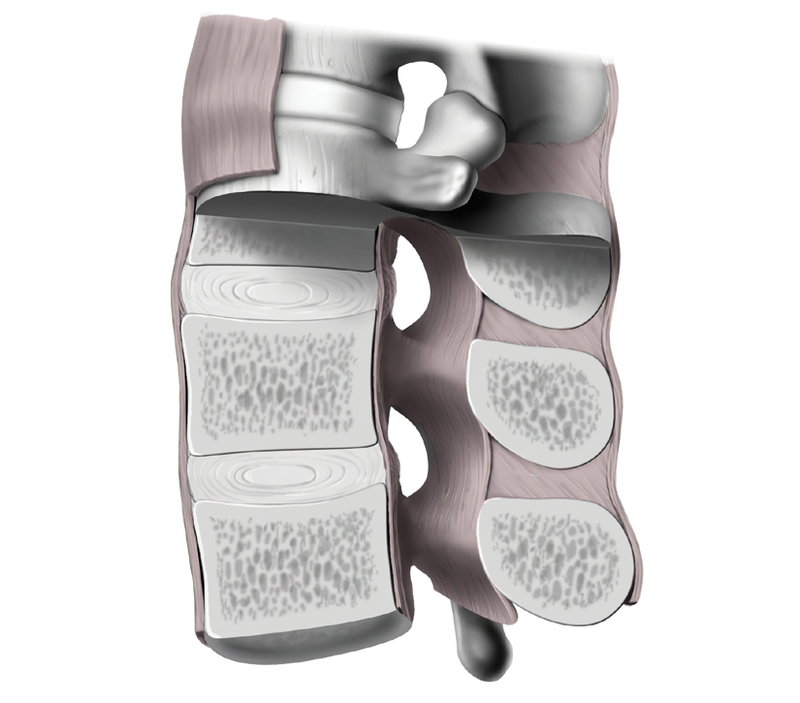
Figure 44 The ligaments of the lumbar spine. The anterior and posterior longitudinal ligaments lie on the ventral and dorsal surfaces of the body. The ligamentum flavum is adjacent to the laminae. The supraspinous ligament connects the spinous process.
The laminae are connected by the ligamentum flavum. There is also a supraspinous ligament that connects the posterior-most aspects of the spinous processes.
There are specialized ligaments at the junction of the skull and the upper cervical spine. The dens of C2 is held within C1 by a transverse ligament. There are also vertically oriented fibers, which join the transverse ligament to form the cruciform ligament. This extends to the skull and helps stabilize the C1 articulation. The alar ligaments, right and left, connect the dens to the occiput. Accordingly, the upper cervical spine depends on ligaments for stability to a greater extent than the rest of the spine below; conditions that destroy connective tissue at synovial joints (such as rheumatoid arthritis) can lead to instability in this region.
In between the vertebral bodies lie the intravertebral disks, which make up approximately 25% of the height of the spine. The disks are essentially shock absorbers that are composed of a fibrous outer ring (the anulus fibrosus) around a soft inner core (the nucleus pulposus). The nucleus pulposus is made of a gel with a high concentration of proteoglycans; this component attracts and binds water and thereby provides cushioning. The anulus, a ring of about 90 sheets of collagen fibers laminated together, holds the nucleus in place. The most superficial fibers of the outer anulus blend with the anterior and posterior longitudinal ligaments. The anulus is thicker on its anterior aspect, which may explain why the disk usually herniates posteriorly. There are also end plates above and below each disk composed of hyaline cartilage that separates the disk from the adjacent vertebral bodies.
Muscles
Muscles around the spine are essential for postural stability and movement of the trunk. Muscles that attach directly to the bony processes of the spine and those that attach remotely, such as the abdominal wall musculature, can stabilize or move the spinal column. If the spinal column were stripped of its musculature, it would easily collapse. (The names of all of the paraspinal muscles and their attachments can be found in most anatomy texts.) The primary purpose of the muscles around the cervical spine is to position the head, while those attaching to the thoracic and lumbar regions control trunk position. One muscle worth knowing by name is the sternocleidomastoid, which connects the head to the trunk. A contracture of this muscle may lead to lateral head tilt and rotation (torticollis). Muscles that do not directly attach to the spine, such as the rectus abdominis, can still play an important role in stabilizing the spine. For this reason, abdominal strengthening is a key feature of physical therapy for back pain.
Nerves and Blood Vessels
The spinal cord runs from the foramen magnum to the L1 vertebral level, where it terminates in the conus medullaris. The cauda equina (a collection of nerve roots that has not yet exited the canal) continues distally within the dural sac. Nerve roots emanate from the spinal cord at every level (Fig. 45).
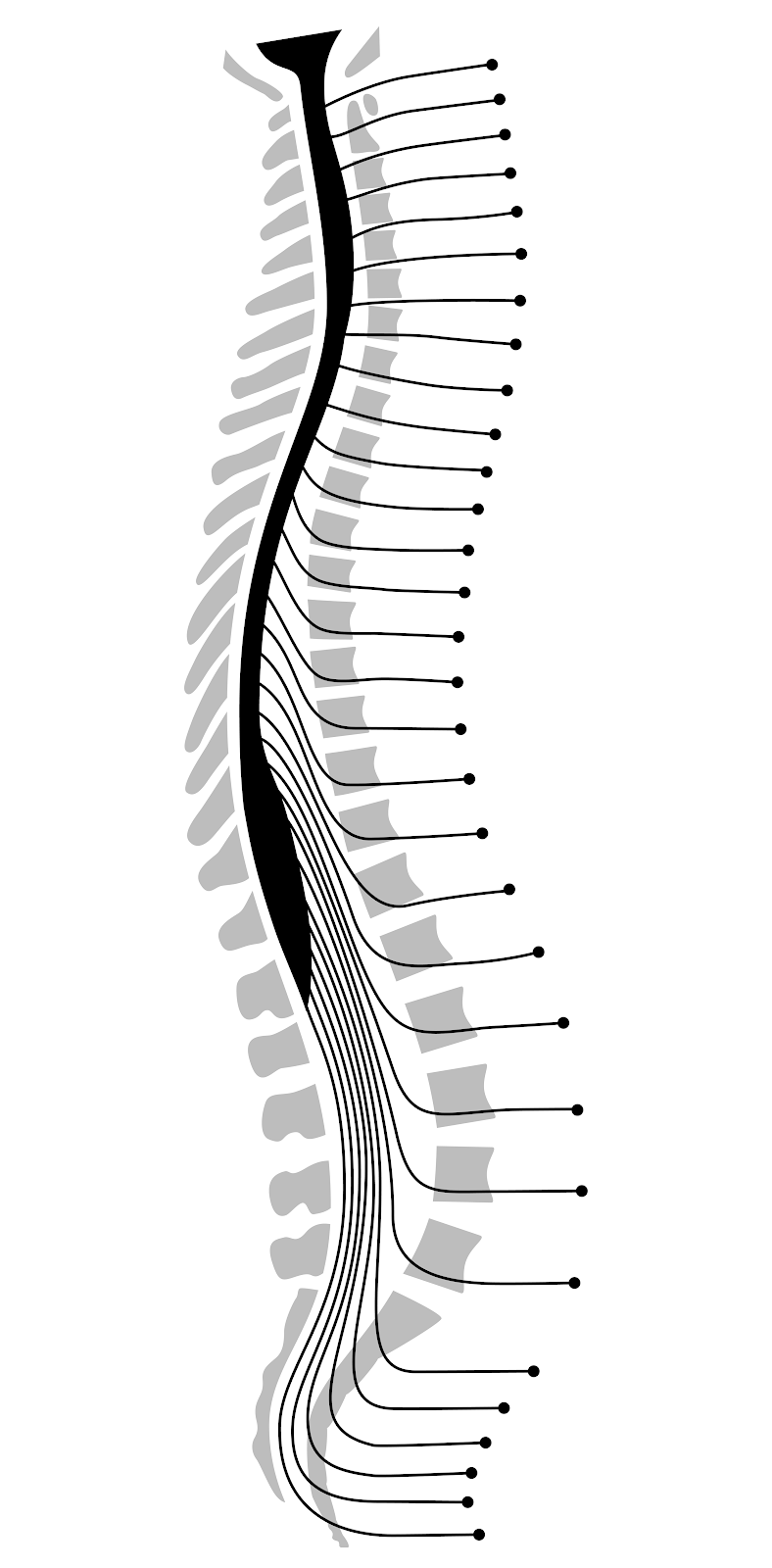
Figure 45 The spinal cord and segmental roots.
Within the cervical spine, roots are named by the body below their point of exit. Thus, the C7 root exits from the neural foramen above the body of C7. In the rest of the spine, the roots are named according to the body above. For example, the L5 root exits below the L5 vertebral body (Fig. 46).
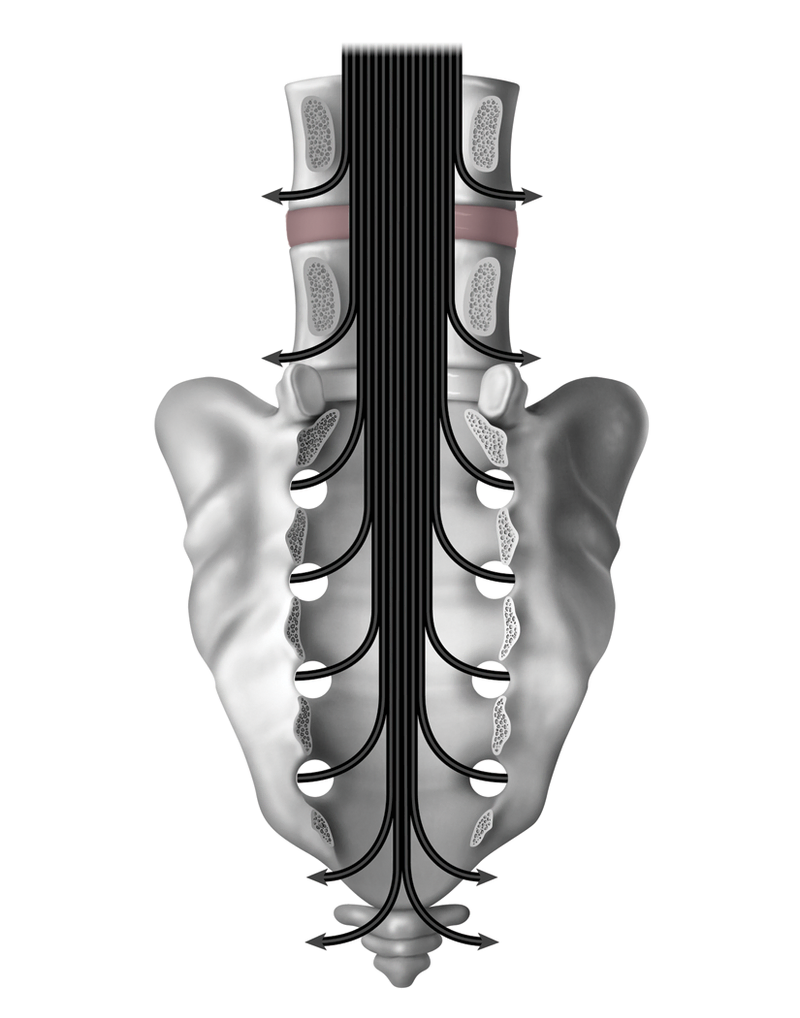
Figure 46 AP view of the nerve root exiting under the pedicles. Note that a herniated disk at L4-5 will contact the L5 nerve root unless it is a very lateral herniation, in which case it may compress the L4 nerve root.
The root that exits below C7 does not adhere to this nomenclature and is arbitrarily named C8, even though there is no C8 vertebral body.
Blood is supplied to the spinal column via a complex network of arteries and veins with countless variations and connections. In general, the arterial supply is provided by the cervical and vertebral arteries in the neck, the segmental branches of the aorta in the thoracic and lumbar regions, and the sacral arteries in the sacral region. The paraspinal soft tissues also receive their blood supply from branches of these vessels. The arterial blood supply for the pelvis and surrounding structures is provided by the iliac vessels and their branches. The venous drainage of the spine and pelvis roughly mirrors the arterial tree.
One anterior and two posterior spinal arteries provide vascular inflow to the spinal cord. The anterior spinal artery is formed superiorly by branches of the vertebral arteries. More distally, this vessel is supplied by radicular branches from segmental vessels along the length of the spinal cord. The anterior spinal artery supplies the anterior two thirds of the spinal cord. The posterior spinal arteries form in the cervical spine as branches of the vertebral system and are also fed by radicular vessels. The posterior vessels supply the posterior one third of the spinal cord. Although the anterior and posterior spinal vessels traverse the length of the spinal cord, the majority of the vascular supply below the cervical spine comes from the segmental radicular arteries. The area of the spinal cord with the least collateral circulation, the midthoracic region, is more susceptible to injury from insufficient blood flow. This “watershed area” may suffer permanent damage in situations in which the blood supply is disrupted or arterial blood pressure is diminished.
