

Acute low back pain will affect most adults at least once in their lives, yet nearly all will recover spontaneously, often without a precise diagnosis ever being made. Most back pain is idiopathic, meaning that its exact cause is unknown. Many patients with back pain have abnormalities that appear on imaging studies, such as osteoarthritis or disk disease; however, many asymptomatic patients demonstrate radiographic findings. Therefore, it is incorrect to always assume a clear cause-and-effect relationship between symptoms and findings on imaging studies.
Low back pain can occur with or without leg pain. Pain that radiates down the back of the legs is known as radiculopathy or sciatica because the pain is thought to be caused by irritation of the roots of the sciatic nerve. Moreover, patients with back pain may have disk disease. Over time, aging and cumulative trauma may rob intervertebral disks of much of their ability to absorb shock. Spinal stenosis, characterized by bony or soft-tissue overgrowth in the spinal canal, may be the source of pain, especially in patients older than 60 years. Other sources of back pain include degeneration of the facet joints between the vertebrae, inflammation of the surrounding soft tissues, or diseases of any of the nearby organs, such as the aorta or kidney. Although most back pain is benign and self-limiting, in some cases it is caused by diseases that require more aggressive treatment, such as tumors, infections, fractures, and instabilities.
Epidemiology
Back pain is an extremely common medical complaint, with a lifetime prevalence as high as 70%.1 It is estimated that at any given time 1% of the entire work force is disabled because of back pain. Given its multiple causes, back pain has many associated risk factors. Heavy lifting at work has been cited by many, although many people who do not lift routinely have both back pain and disk damage. Weakness of the abdominal musculature may also increase the risk of back pain. Obesity, smoking, and depression are all associated with an increased risk of back pain.1
Pathophysiology
Disk Disease
Disk herniation is thought to be a major cause of back pain and sciatica. Intervertebral disks consist of an outer ring and a central core. The outer ring, the anulus fibrosus (translated literally as a “fibrous ring”) can tear as a result of an acute event or attrition. This tear permits the central core of the disk, the nucleus pulposus, to bulge (herniate) from its normal location. The injured disk can compress the nerve roots (Figs. 1
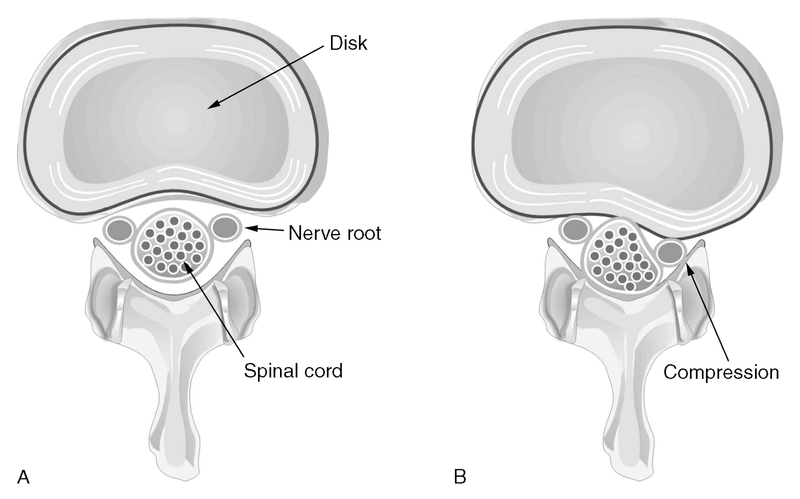
Figure 1 Simplified axial view of the lumbar spine at the level of the disk space. A, Normal anatomy. B, The same showing a left-sided, posterolateral herniated disk.
and 2).
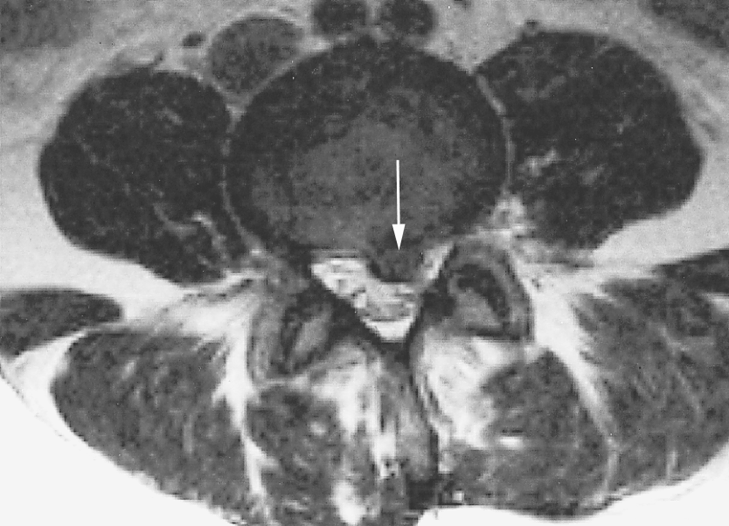
Figure 2 Preoperative axial MRI scan showing a herniated lumbar disk (arrow).
(Reproduced from Greene WE (ed): Essentials of Musculoskeletal Care, ed 2. Rosemont, IL, American Academy of Orthopaedic Surgeons, 2001, p 561.)
The nucleus pulposus consists of a gel that contains negatively charged proteins that are able to bind water. Normally, the water will be extruded with load bearing and then imbibed again when the load is lifted, allowing the disk to act as a cushion between adjacent vertebral bodies. The disk therefore acts as a hydraulic shock absorber. When there is a break in the anulus fibrosus, however, some of the nucleus pulposus may escape its central location, resulting in a bulge or herniation. Protruding pieces of nucleus pulposus can then compress a spinal nerve or cause local irritation.
The anulus fibrosus can tear at any point, but the direct anterior and posterior positions are reinforced by the longitudinal ligaments of the spine; thus, the path of least resistance is posterolaterally, toward the neural foramen. A large herniation in the lumbar region can compress the cauda equina, the terminal nerve roots of the spinal cord that have not yet left via their respective foramina. Bilateral sciatic pain or saddle anesthesia (decreased sensation around the perineum) and loss of bowel or bladder control suggests such compression. This presentation demands urgent MRI and possibly emergency surgery.
Degeneration of the disk without herniation can occur after trauma but is also a function of aging. As people age, the disk dehydrates and loses its resilience. Thus, even without overt trauma, it is likely that the disk space of an elderly patient will be radiographically abnormal, although not necessarily symptomatic.
Osteoarthritis and Spinal Stenosis
Osteoarthritis is often a continuation of lumbar disk disease. As the disk is no longer able to cushion the joint, abnormal forces and motions are applied to the posterior facet joints and will tend to erode the normal architecture (Fig. 3
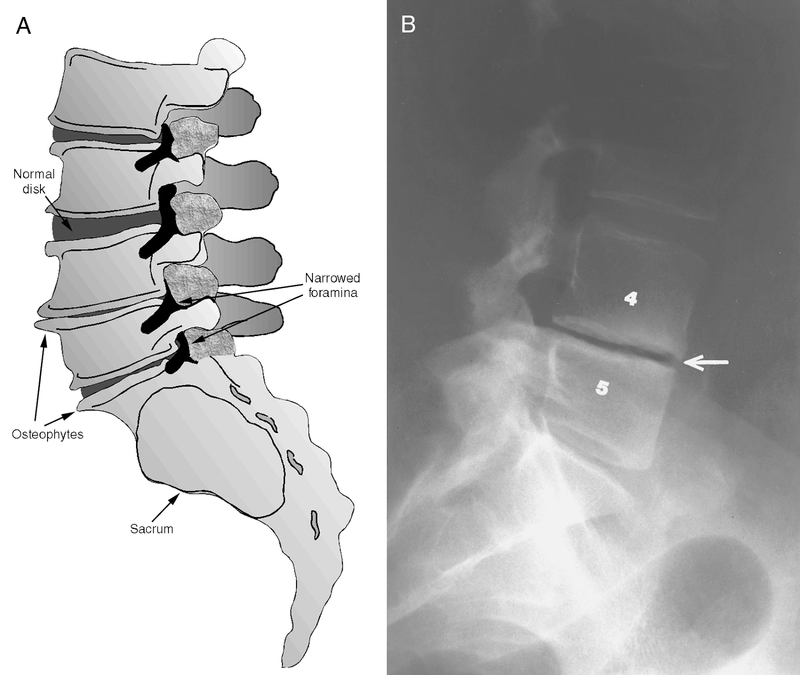
Figure 3 A, Schematic representation of degenerative changes of the spine. Notice the advanced degeneration of the L4-L5 and L5-S1 intervertebral disks, the formation of osteophytes, and the narrowing of the intervertebral foramina (seen here as black space).
(Reproduced from Buckwalter JA, Boden SD, Eyre DR, Mow VC, Weidenbaum M: Intervertebral disk aging, degeneration, and herniation, in Buckwalter JA, Einhorn TA, Simon SR (eds): Orthopaedic Basic Science: Biology and Biomechanics of the Musculoskeletal System, ed 2. Rosemont, IL, American Academy of Orthopaedic Surgeons, 2000, p 561.)
B, Lateral radiograph showing marked degenerative changes affecting the disk between L4 and L5.
(Reproduced from Greene WE (ed): Essentials of Musculoskeletal Care, ed 2. Rosemont, IL, American Academy of Orthopaedic Surgeons, 2001, p 557.)
). This process is similar to the changes in the knee joint seen after the meniscus is severely damaged or completely removed.
Degenerative disk disease and arthritis can cause spinal stenosis, a condition characterized by narrowing of the canal housing the spinal cord (Fig. 4
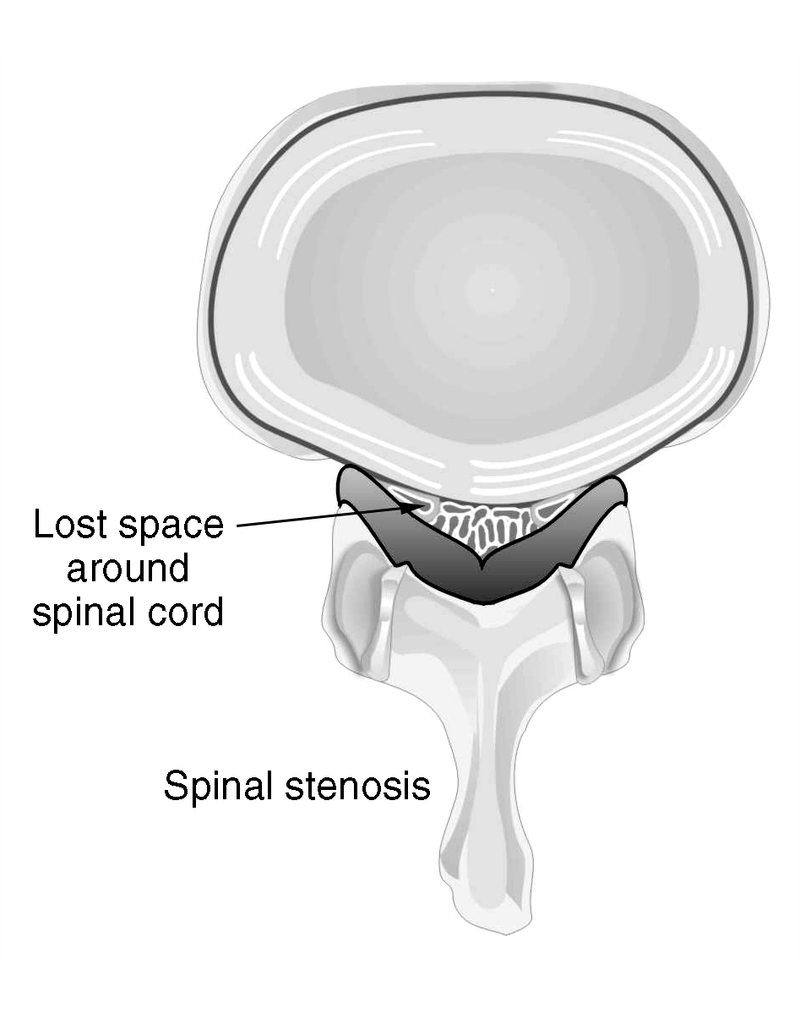
Figure 4 The lumbar spine at the level of the disk space showing spinal stenosis. The shaded region represents bone overgrowth and enlargement of the ligamentum flavum.
). Spinal stenosis is commonly caused by overgrowth of the bone osteophytes or by enlargement of the ligamentum flavum. Such overgrowth can put pressure on the neural elements and produce pain in the legs, especially after activity.
Rheumatologic Conditions
The facet joints of the spine are true synovial joints; thus, they are susceptible to any of the inflammatory conditions affecting the synovium. Rheumatoid arthritis can affect the low back, but it is more common in the cervical spine. Ankylosing spondylitis is an inflammatory disorder that affects the low back and pelvis, almost always involving the sacroiliac joint. After a period of years, it may lead to autofusion of vertebral bodies. The characteristic finding of most rheumatologic conditions is morning stiffness and discomfort that actually improve as the day progresses.
Spondylolysis and Spondylolisthesis
The term spondylolysis refers to a defect of the bone between the superior and inferior articular processes of the vertebra, or pars interarticularis (Fig. 5, A
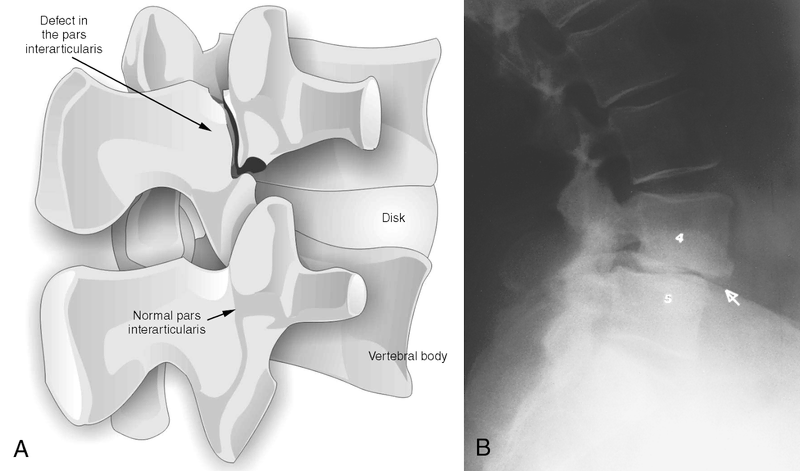
Figure 5 A, A lumbar spine segment showing a defect in the right pars interarticularis of the upper vertebra. B, Lateral radiograph of a patient with degenerative spondylolisthesis at L4 on L5 (arrow).
(Reproduced from Greene WE (ed): Essentials of Musculoskeletal Care, ed 2. Rosemont, IL, American Academy of Orthopaedic Surgeons, 2001, p 564.)
). This is a common condition, occurring in 5% of the population.2 It is also seen in athletes, such as gymnasts or football linemen, who routinely hyperextend their spines. This bony defect can progress to the point at which the vertebral body above can slip forward onto the one below, causing a condition called spondylolisthesis (Fig. 5, B). This progression can be avoided by early detection with bone scanning or MRI and activity modification.
Tumors and Infections
Tumors and infections can be described together because both are typically caused by hematogenous (bloodborne) seeding. Tumor masses and epidural abscesses can cause a cauda equina syndrome by direct impingement on the neural elements. They also can cause bone destruction and pathologic fractures (Fig. 6
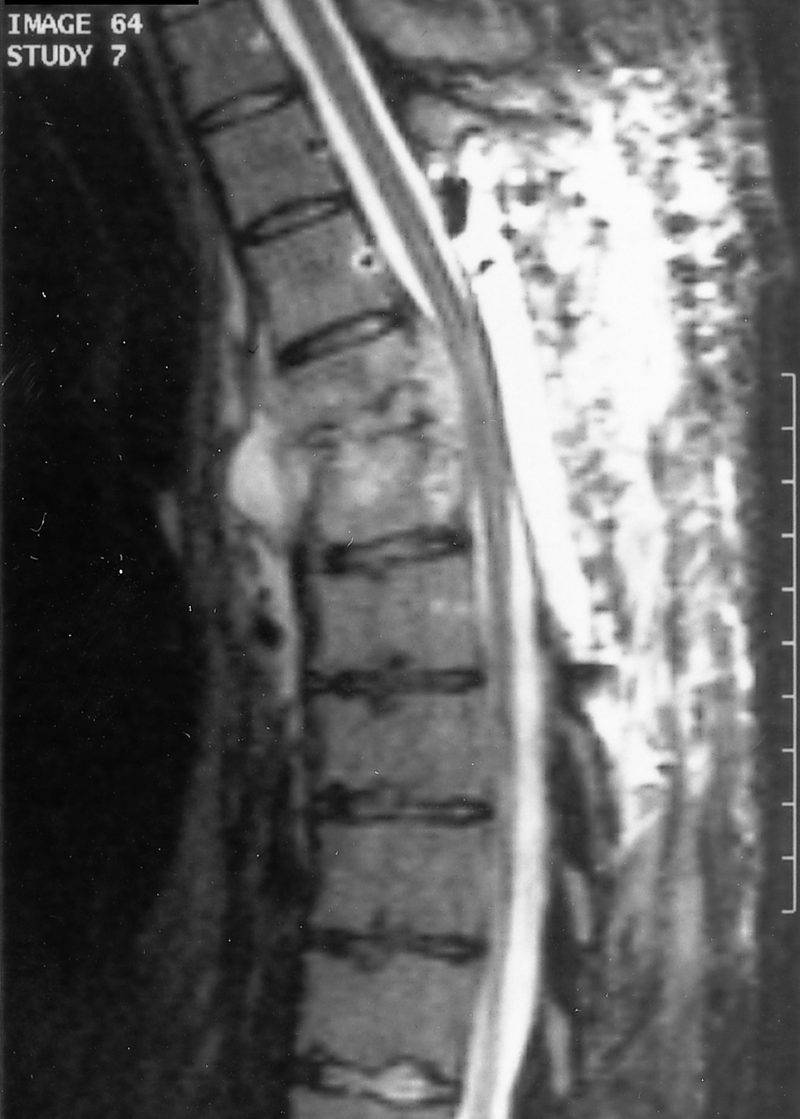
Figure 6 Sagittal T2-weighted MRI scan of a 35-year-old man in whom spinal osteomyelitis is causing bone destruction in the vertebral body.
(Reproduced from Orthopaedic In-Training Examination, 2000. Rosemont, IL, American Academy of Orthopaedic Surgeons, 2000, p 46.)
). Almost all spine tumors are either metastatic or blood-cell malignancies. One exception is the osteoid osteoma, a benign tumor found typically in teenagers. This tumor can cause back pain severe enough to warrant excision, but it may resolve without treatment.
Clinical Presentation
History and Physical Examination
Patients with back pain can be said to have either mechanical or nonmechanical pain. The key distinction is whether there is pain with activity. Many patients with sciatica report a sharp pain in the back and a burning pain that radiates down the back of the leg, sometimes as far as the toe, but often terminating behind the knee. Numbness and tingling (paresthesias) are also reported. Postural change may affect the quality of the pain; pain with movement implies disease at the joints of the spine, and pain worsened by sitting implicates the disks.The physical examination of a patient with low back pain should include observing gait, assessing spinal flexibility, testing motor strength (hip to toes), and assessing knee and ankle reflexes.
Patients with spinal stenosis may have neurogenic claudication, or leg pain during activity. This pain is superficially similar to that of vascular claudication. One key distinction between them is that forward bending, which distracts the spine and enlarges the spinal canal, improves the symptoms of neurogenic claudication only. Therefore, a patient with neurogenic claudication may have no pain while riding a bicycle, whereas a patient with vascular claudication will. Another distinction is that vascularclaudication appears invariably with activity and is relieved consistently and promptly with rest, neither of which occurs with neurogenic claudication.
Other signs associated with back pain and sciatica include decreased spinal mobility; a positive straight leg raising test; altered sensory, motor, or reflex examination findings; and increased pain with increasing intra-abdominal pressure (Valsalva maneuver). Acute pain to palpation suggests a nonorganic cause.
Imaging Studies
MRI is the diagnostic imaging modality of choice for disk disease, although the incidence of disk abnormalities in patients who have no pain is probably 30% or higher.3 MRI, therefore, is not clinically specific. However, it is sensitive. A sagittal view of the entire lumbar spine will clearly show bulges into the spinal canal. Axial views can show encroachment on the nerve root by highlighting disk material or osteophytes.
Plain radiographs may show degenerative joint disease of the spine, which is manifest as decreased space between the disks and osteophyte formation. Bone scanning is useful to exclude infection, occult fracture, or tumors; however, multiple myeloma, a blood cell malignancy commonly found in the spine, is not apparent on bone scans. The presence of vertebral compression fractures on radiographs suggests that an osteoporosis workup is indicated.
Laboratory Studies
Back pain is usually not associated with disease processes that can be identified with routine blood screening. If infection, tumor, or an inflammatory cause is suspected, a complete blood cell count and an erythrocyte sedimentation rate or C-reactive protein level can be obtained for general screening.
Differential Diagnosis
The first step of evaluation is to ensure that the back pain is not a harbinger of a serious medical condition. Thus tumor, infection, fracture, and instability should be excluded. A patient’s medical history often provides enough information to determine whether radiographs are needed on the first visit. When a patient has had back pain for 6 weeks or longer, imaging studies are usually required.
It is unlikely that an adult younger than 50 years with no history of a prior malignancy has a tumor; the odds are even lower when a patient has no constitutional complaints, such as fever, weight loss, or night pain. Infection, likewise, is rare in an otherwise healthy patient. The medical history should include questions about possible immune system compromise (eg, human immunodeficiency virus or use of immune-suppressing drugs, such as steroids) or intravenous drug use. Patients with diabetes mellitus or sickle cell anemia are also prone to bone infections.
Fractures and instabilities are rare unless there is a history of trauma. The exception is a patient with osteoporosis. Osteoporosis may be a typical postmenopausal condition, but it also should be considered as a secondary condition in patients with a history of long-term steroid use, a metabolic abnormality, or recent lactation.
Low back pain may originate from the many discrete anatomic structures in the spine itself, such as the disk, the vertebral body, the spinal nerve roots, the facet joints and their ligaments, and the paraspinal muscles. There also may be a visceral cause for the pain, such as an abdominal aortic aneurysm or kidney infection. The leg pain of sciatica may mimic peripheral nerve diseases or vascular insufficiency. Worrisome findings that should prompt diligent investigation include night pain, pain at rest, fever, unintentional weight loss, acute motor weakness, and unremitting pain of increased severity.
Treatment and Prevention
Back pain resolves spontaneously in most patients; therefore, the principal treatment for most mechanical back pain is to simply “do no harm” as natural recovery takes place. Should diagnostic imaging studies reveal disk degeneration without compression of the spinal nerves, physical therapy with an emphasis on lumbar strengthening and flexibility is indicated. Patients with sciatica and MRI evidence of nerve root compression caused by a disk herniation may benefit from epidural steroid injections to reduce the inflammation around the nerve roots.
Nonsurgical Treatment
The use of anti-inflammatory and mild analgesic medications may aid symptom relief, although some patients will require short courses of narcotic pain relievers. Bed rest is considered inappropriate because it induces atrophy and weakness, although activity modification, such as the avoidance of lifting, may be useful in hastening recovery and preventing recurrence. In the acute phase of low back pain, physical therapy modalities, such as heat, ice, and ultrasound may provide relief; however, there is no evidence-based literature to support these treatments.4 Therapy should also include “back school” to educate the patient about proper posture and lifting techniques.
Surgical Treatment
Surgery for sciatica is reserved for patients who do not improve after a few months and are willing to assume the risks of surgery. Diskectomy (surgical removal of the herniated disk material) offers patients the chance for a more rapid initial recovery, especially for radicular symptoms in the legs. However, after a period of years, patients who have had surgery are functionally indistinguishable from patients who have not had surgery.5 Surgical fusion for back pain remains a controversial topic.
Prevention
Preventing back pain is also an area of active investigation. Some believe that a program of spinal and abdominal muscle strengthening exercises may reduce the incidence of low back pain. Furthermore, patients are less debilitated by pain if they are fit and exercise regularly. Using education about spinal biomechanics as a preventive strategy has produced mixed results. Decreasing risk factors, such as smoking and obesity, has the force of logic, but there is no evidence that attempting to modulate these risk factors is effective in preventing back pain.
Key Terms
Ankylosing spondylitis An inflammatory disorder that affects the low back and pelvis and produces stiffness and pain
Anulus fibrosus The outer ring of fibrous material surrounding the nucleus pulposus of the intervertebral disks
Cauda equina The terminal nerve roots of the spinal cord located within the vertebral canal; so named because they resemble the tail of a horse
Neurogenic claudication Leg pain that occurs as a result of compression of nerves within the spinal canal; often associated with spinal stenosis
Nucleus pulposus The central core of gelatinous material within intervertebral disks
Osteophytes Overgrowth of bone, common in osteoarthritis and spinal stenosis
Saddle anesthesia Decreased sensation around the perineum
Spinal stenosis Narrowing of the canal housing the spinal cord; commonly caused by encroachment of bone
Spondylolysis A defect or fracture of the pars interarticularis, the portion of bone located between the superior and inferior articular processes of the vertebrae
Spondylolisthesis Anterior displacement of a vertebral body relative to the adjacent vertebral body below
Vascular claudication Leg pain that is caused by ischemia secondary to vascular disease; the pain uniformly occurs with activity and is relieved with rest
References
1. Andersson GBJ: The epidemiology of spinal disorders, in Frymoyer JW (ed): The Adult Spine: Principles and Practice, ed 2. New York, NY, Raven Press, 1997;pp 93-141.
2. Hensinger RN: Spondylolysis and spondylolisthesis in children. Instr Course Lect 1983;32:132-151.
3. Boden SD, Davis DO, Dina TS, et al: Abnormal magnetic-resonance scans of the lumbar spine in asymptomatic subjects: A prospective investigation. J Bone Joint Surg Am 1990;72:403-408.
4. van Tulder MW, Goossens M, Waddell G, et al: Chapter 12: Conservative treatment of chronic low back pain, in Nachemson AL, Jonsson E (eds): Neck and Back Pain: The Scientific Evidence of Causes, Diagnosis, and Treatment. Philadelphia, PA, Lippincott, Williams & Wilkins, 2000;pp 271-304.
5. Weber H: Lumbar disc herniation: A controlled, prospective study with ten years of observation. Spine 1983;8:131-140.
