

Disorders of musculoskeletal growth and development are relatively uncommon, with an incidence of approximately 1 in 5,000 births.1 Nonetheless, they provide critical insights into the normal physiology of growth and development. Historically, physicians have often been more concerned with clinical diagnosis and surgical treatment than the molecular biology and genetics of these rare diseases. A more complete understanding of the skeletal dysplasias has become increasingly important, however, because it enables health care providers to offer genetic counseling and education to patients, determine prognoses, and provide more effective treatment.
Because the general objective of this chapter is to provide a framework upon which to approach disorders of growth and development, the specific goals of this chapter are as follows: (1) to define the terms used to describe skeletal dysplasias; (2) to review certain aspects of musculoskeletal development; (3) to outline a general approach to patient evaluation; and (4) to provide a brief clinical description of several representative disorders of musculoskeletal development, emphasizing the basic science concepts underlying each disease.
Definitions
Dysplasia is a broad term that describes a condition affecting growth or development in which the primary defect is intrinsic to affected tissue. As such, nearly all musculoskeletal dysplasias arise from genetic abnormalities (Table 1).
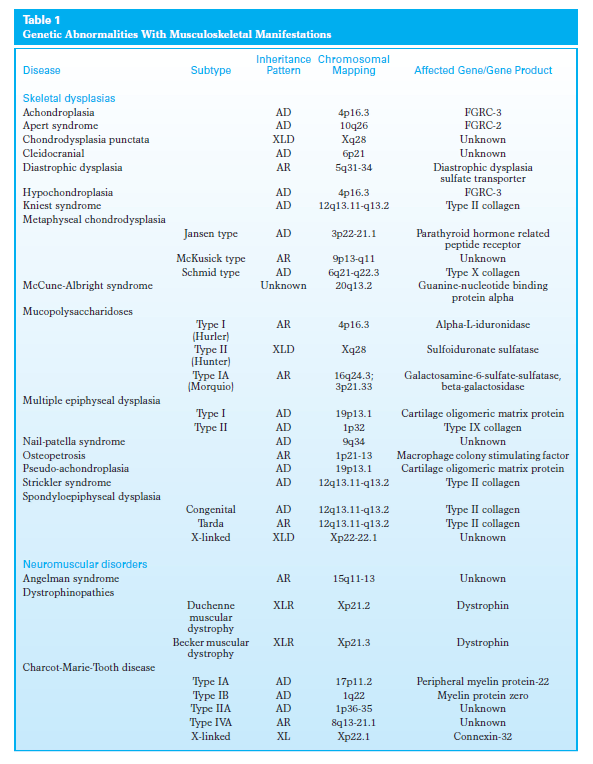
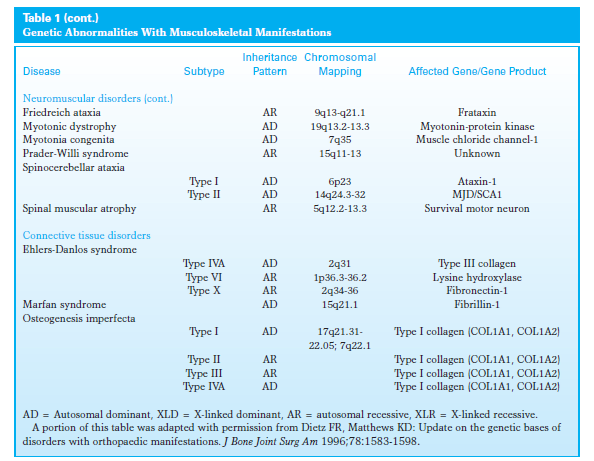
Dysostosis refers to conditions of abnormal cartilage ossification or bony remodeling. Often in these disorders, a single bone or group of bones is affected. Dystrophy is technically defined as a condition resulting from defective or faulty nutrition, although nutrition here broadly refers to nourishment of tissue by all essential substances, not simply dietary needs.1 In skeletal dystrophies, normal fetal cartilage is affected by extrinsic factors, such as hormonal abnormalities or metabolic disturbances, resulting in abnormal skeletal development. In cases of muscular dystrophies, a lack of an essential factor leads to progressive degeneration of initially normal muscle, often resulting in significant weakness and functional compromise.
Discussions of disorders of growth and development often include descriptive terms that express characteristic clinical or phenotypic manifestations (Table 2).
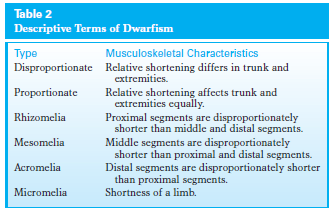
Most skeletal dysplasias result in short stature, commonly called dwarfism. Dwarfism is more specifically characterized by an adult height of less than 58 inches in males or a standing height below the third percentile for age. Dwarfism is typically divided into two general categories, based on the degree to which the trunk and limbs are affected. Proportionatedwarfism refers to short stature in which both the trunk and extremities are equally affected, whereas disproportionatedwarfism refers to the condition in which the extremities are relatively more (or less) affected than the trunk. Dysmorphisms are morphologic variations of musculoskeletal appearance. Often affecting the limbs, face, and cranium, dysmorphisms are usually characteristic of a specific disorder and may provide insight into diagnosis.
Normal Skeletal and Muscle Biology
The basic biology of musculoskeletal development is described elsewhere in this text. However, as these principles provide a critical foundation for the study and treatment of developmental disorders, a review of certain aspects of skeletal growth and muscle formation is warranted.
Endochondral ossification is the process by which longitudinal growth of long bones occurs, typically at the physis. In this type of bone formation, chondrocytes secrete a cartilaginous extracellular matrix (ECM), which is subsequently mineralized by osteoprogenitor cells. Osteoclasts then serve to resorb calcified cartilage, and osteoblasts concurrently form mature bone. In this model, therefore, bone replaces cartilage. Consequently, individuals with defects in endochondral ossification will have abnormalities in the growth of long bones.
The physis, or horizontal growth plate located at the ends of immature long bones, is a primary site of endochondral ossification. The physis is divided into several histologic zones, each with its own characteristic function. In the reserve zone, closest to the long bone epiphysis, cells synthesize and store proteoglycans, glycogen, lipids, and other matrix proteins to be used during bony growth. The juxtaposed proliferative zone is the site of cellular proliferation and histologic organization of chondrocytes into columns. The hypertrophic zone lies next to it and is subdivided into the zones of maturation, degeneration, and provisional calcification.
Intramembranous ossification is characterized by the aggregation of undifferentiated mesenchymal cells, which differentiate into osteoblasts. These cells form bone without a cartilage model. Sites of intramembranous ossification include the skull, clavicle, and pelvis. Defective intramembranous ossification is seen in patients with cleidocranial dysplasia, for example. Predictably, these patients typically have craniofacial abnormalities and often complete absence of the clavicles.
The functional unit of skeletal muscle is the myofibril, which is a collection of sarcomeres contained within a myocyte. Each sarcomere is made up of an arrangement of thin and thick filaments, primarily actin and myosin proteins, respectively. Muscle contraction is stimulated by the activation of acetylcholine receptors on the myocyte cell surface at the neuromuscular junction. The resulting cell membrane depolarization triggers a release of calcium contained within the sarcoplasmic reticulum. Intracellular calcium subsequently binds to troponin molecules along the thin filaments, exposing actin and allowing for the formation of cross-bridging between actin and myosin proteins. The thin and thick filaments then slide past one another, resulting in muscular contraction. Clearly, since contraction is mediated by ion flux, the integrity of the muscle cell membrane plays a critical role in skeletal muscle physiology. Disruption of muscle cell membrane physiology (eg, Duchenne muscular dystrophy) will result in abnormal muscle function.
Collagen synthesis is fundamental to the biology of all connective tissues, including bone, cartilage, and muscle. Type I collagen is the predominant organic ECM component of bone, tendon, and ligament and accounts for much of the mechanical properties of these tissues. At a molecular level, collagen is comprised of a triple helix. This molecule undergoes many modifications after the initial transcription and translation of the collagen gene(s), including hydroxylation, glycosylation, cross-linking, extracellular transport, and cleavage of the procollagen protein. Defects in this elaborate mechanism of collagen synthesis (eg, osteogenesis imperfecta) may result in significant disorders of bony, tendinous, and ligamentous structure and function.
Clinical Approach
Skeletal dysplasias cause abnormal growth and usually manifest as short stature; dysmorphic features of the face, hands, and feet; or characteristic deformities of the axial skeleton and extremities. Short stature is a common presentation, and in males an adult height of less than 58 inches should raise suspicion of an underlying disorder of musculoskeletal growth and development. Short stature may have a wide variety of etiologies, including malnutrition, endocrinopathy, skeletal dysplasia, and constitutional short stature. Therefore, a thorough history and physical examination is imperative.
Careful examination of proportionality is equally important because skeletal dysplasias typically produce disproportionate dwarfism. Furthermore, the relative lengths of the segments of the upper and lower extremities should be noted. These characteristics may be objectively recorded via the use of arm span-to-height, humerus-to-radius, or femur-to-tibia ratios.
Dysmorphisms, or morphologic variations of bony and soft-tissue structures, also provide helpful information and insight into skeletal dysplasias. Several conditions are characterized by very distinctive, almost pathognomonic, dysmorphisms; typically, these involve the face, hands, and feet.
Because many skeletal dysplasias are caused by genetic mutations transmitted by Mendelian patterns of inheritance, a complete family history should be obtained in the evaluation of any patient with a suspected disorder of growth and development. A family history of musculoskeletal, endocrine, and metabolic diseases should be obtained as should the height of the patient’s parents and siblings, if any. Many of these conditions develop de novo from spontaneous mutations despite no family history of skeletal dysplasias.
Plain radiographs provide additional diagnostic information and guide treatment. Lateral skull, AP pelvis and hip, lateral lumbosacral spine, AP and lateral hand and wrist, and AP and lateral knee radiographs often suffice. These are the anatomic locations that require orthopaedic care, and initial studies are useful to establish a baseline for future comparison. When assessing radiographs, not only should the joint or body part affected be identified but also the specific bony and/or cartilaginous abnormality. The epiphysis, physis, metaphysis, and diaphysis must be independently evaluated to make a precise and accurate diagnosis.
Genetic analysis has become increasingly important in the diagnosis and treatment of skeletal dysplasias because the molecular or genetic bases for many of the skeletal dysplasias have been characterized. In some disease entities, the specific mutation or gene product has not been identified, but gene mapping and chromosomal localization data exist that may aid in diagnosis, treatment, and genetic counseling.
Skeletal Dysplasias: Achondroplasia
Epidemiology
Achondroplasia is the most common form of dwarfism, occurring in approximately 1.5 per 10,000 live births. Although it can be transmitted via an autosomal dominant inheritance pattern with near complete penetrance, several population studies have demonstrated that most patients with achondroplasia have no family history of the disorder.2,3 New mutations are thought to account for most affected individuals. In these cases, advanced paternal age at the time of conception is thought to be a factor.4
Etiology
The etiology of achondroplasia has been well established.5,6 Although the term “achondroplasia,” first coined by Parrot in 1878, would suggest an absence of cartilage formation, a genetic defect has been identified—namely, a point mutation in the gene coding for fibroblast growth factor receptor-3 (FGFR-3).7 FGFR-3 is expressed in all cartilaginous tissue and functions to inhibit chondrocyte proliferation within the proliferative zone of the physis. It is thought that this function regulates bony growth by limiting endochondral ossification in growing bones. Patients with achondroplasia are thought to have constitutively activated FGFR-3 as a result of their genetic mutation. This excess activity of FGFR-3 results in profound inhibition of endochondral ossification and thus short stature.
Clinical Presentation
Classically, patients with achondroplasia are disproportionate rhizomelic dwarfs, with an average adult height of 48 inches (Fig. 1
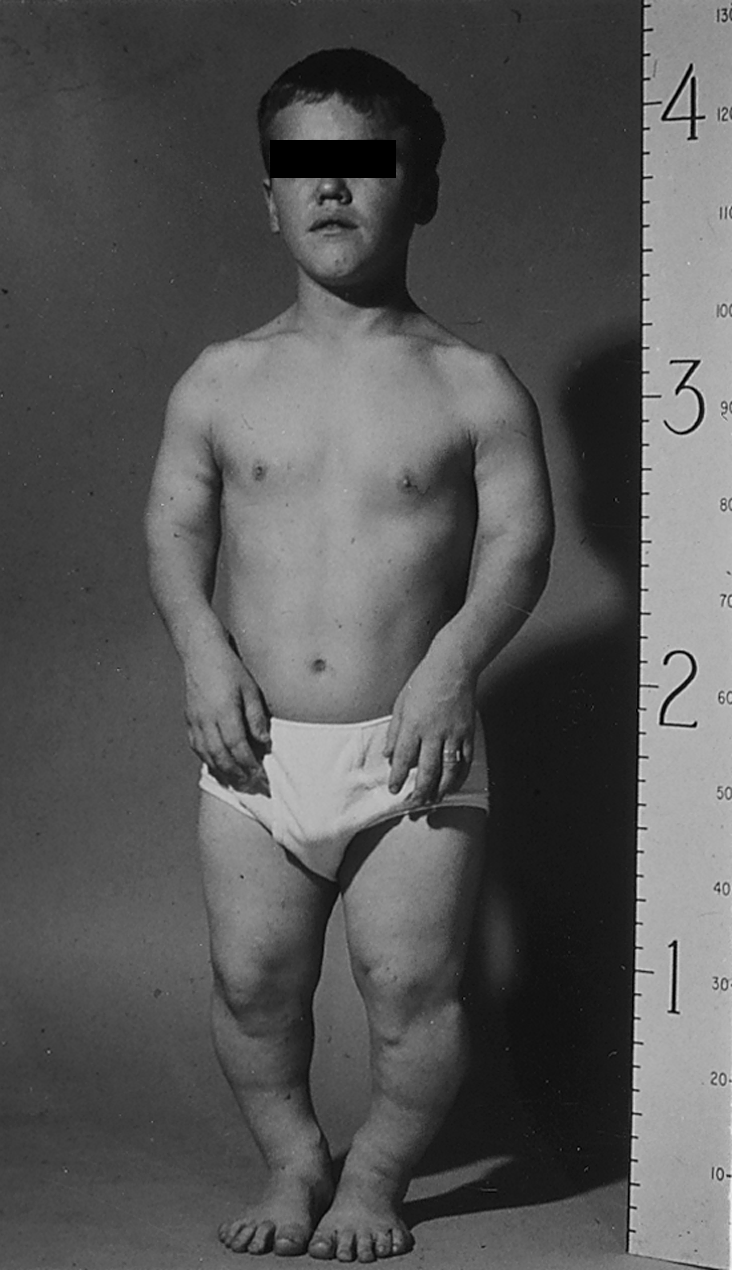
Figure 1 Achondroplasia is characterized by rhizomelic short-limbed short stature, abnormal facies, short iliac wings, horizontal acetabula without early hip arthritis, and an adult height of approximately 48 inches.
(Reproduced from Beals RK, Horton W: Skeletal dysplasias: An approach to diagnosis. J Am Acad Orthop Surg 1995;3:174-181.)
).As the defect in FGFR-3 affects endochondral and not intramembranous ossification, patients with achondroplasia have short extremities but normal trunk lengths. Furthermore, as appositional growth is similarly unaffected, affected patients will have normal growth of the iliac wings and clavicles.8
In addition to shortening of the upper limbs, the shoulders appear broad by virtue of normal clavicular growth. Typically, loss of full elbow extension as a result of developmental abnormalities of the joint is present, as are trident hands, which are so called because in full extension the bases of the digits can touch but the distal tips cannot (Fig. 2
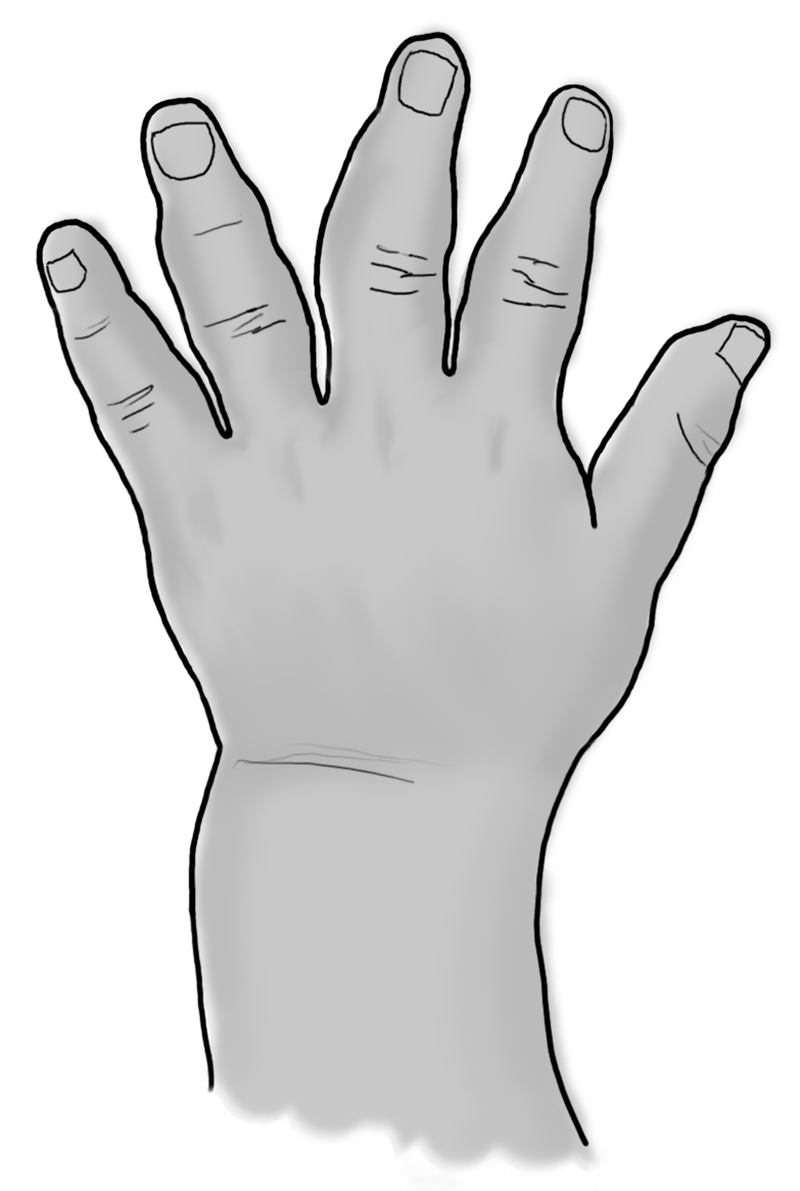
Figure 2 Trident hand characteristic of achondroplasia.
). These patients typically are unable to touch the top of their heads or reach below their hips, resulting in difficulties with personal hygiene. In the lower extremities, genu varum, or bowlegs, is common. Loss of full hip extension is also frequently seen. Consequently, most patients with achondroplasia have a circumducting (waddling) gait.
In addition to rhizomelic limbs, patients with achondroplasia demonstrate characteristic dysmorphic features, including a large head, midface hypoplasia and frontal bossing, a depressed nasal bridge, and a prominent lower jaw. Perhaps the most significant deformities in achondroplasia, however, occur in the cervical spine. The lower lumbar spinal canal is often developmentally narrowed, as a result of a shortened interpedicular distance and short, thickened pedicles. Spinal canal narrowing is often compounded by hyperlordosis. Spinal stenosis, when advanced, may result in low back pain, lower extremity paresthesias, weakness, and neurogenic claudication.
Radiographic Findings
Consistent with their clinical appearance, radiographs of the long bones in patients with achondroplasia appear short and thick with metaphyseal flaring. Sites of muscular insertions appear prominent, as appositional bone growth is unaffected. The distal femoral physis exhibits a characteristic inverted-V appearance during childhood. The fibula appears relatively long compared with the tibia.
The pelvis is broad, and the iliac wing takes on a short, square appearance. The acetabulum is horizontal. Lateral radiographs of the skull will exhibit shortening of the base of the skull (that part of the skull formed via endochondral ossification) and narrowing of the foramen magnum. Spine radiographs will demonstrate short pedicles with narrowing of the interpedicular distance. The thoracolumbar kyphosis of infancy will give way to lumbar lordosis with forward inclination of the pelvis.
Treatment
The spinal manifestations of achondroplasia are among the most common developmental deformities treated by orthopaedic surgeons. The spinal stenosis caused by shortened pedicles, narrowed interpedicular distances, lumbar hyperlordosis, and degenerative disk disease may result in low back pain, leg pain (neurogenic claudication), sensory deficits, and weakness. These symptoms affect approximately 50% of adults with achondroplasia.9 In addition to weight reduction and physical therapy, surgical spinal decompression with laminectomy with or without spinal fusion is often necessary for symptomatic relief. Care must be taken, however, during spinal fusion because the narrowed spine is more prone to neurologic complications during instrumentation of the spinal canal.
Genu varum is another skeletal manifestation of achondroplasia that commonly requires surgical treatment. Symptoms of knee pain accompanied by progressive varusdeformity are usually refractory to physical therapy or bracing. When the severity of symptoms warrants surgical treatment, either bony realignment procedures (osteotomies) or growth plate arrest (epiphyseodeses) may result in improved lower extremity alignment and relief of symptoms.
Limb lengthening is advocated by some for achondroplasia and other diseases resulting in short stature.10,11 While lengthenings in excess of 30 cm have been reported, these procedures have a high complication rate and therefore are not universally accepted.12
Muscular Dystrophies: Duchenne Muscular Dystrophy
Epidemiology
Duchenne muscular dystrophy is an X-linked recessive disease characterized by progressive loss of muscle function and replacement of normal muscle by fibrous and fatty tissue. The incidence of Duchenne muscular dystrophy is thought to be 2 in 10,000 live male births. Seventy percent to 80% of cases are inherited, while the remaining 20% to 30% of cases arise from spontaneous genetic mutations.13
Etiology
Duchenne muscular dystrophy is caused by an abnormality in the gene that encodes for dystrophin, which is located on the small arm of the X chromosome.14 Dystrophin is a cell membrane protein that stabilizes the muscle cell membrane and links the cytoskeleton to the ECM.15 In patients with Duchenne muscular dystrophy, there is a deletion of nucleotides within the dystrophin gene, resulting in a frame-shift mutation and a nonfunctional gene product. The absence of the dystrophin protein results in cell membrane fragility, leakage of intracellular contents into the ECM that is clinically manifest by elevated serum creatine kinase levels, and decreased synthesis of dystrophin-associated proteins, all of which result in functional deficits and muscle cell death.
Clinical Presentation
Muscular dystrophies are disorders of progressive muscle deterioration. Unlike myopathies, which are characterized by functional but nonprogressive abnormalities, patients with muscular dystrophies continue to deteriorate. Unfortunately, significant physical impairment and premature death, usually from respiratory failure, is the norm.
Patients with Duchenne muscular dystrophy have normal skeletal muscle at birth; however, over time, this tissue is replaced with fibrofatty tissue. As a result, patients will typically present well after birth. Parents will report delayed walking, abnormal gait, and clumsiness. Any boy who is unable to ambulate by the age of 18 months should be screened for Duchenne muscular dystrophy by measuring serum creatine kinase levels. At later ages, affected patients will walk with a wide-based gait, will be unable to run, and will not be able to maneuver stairs in a reciprocal fashion.
By the age of 3 to 4 years, patients with Duchenne muscular dystrophy will demonstrate the characteristic pseudohypertrophy of the calves, which is caused by the replacement of muscle with fibrofatty tissue. Lumbar lordosis can also be quite pronounced. Perhaps the most characteristic clinical feature is the way in which these patients arise from the floor to a standing position—the so-called Gowers’ maneuver (Fig. 3
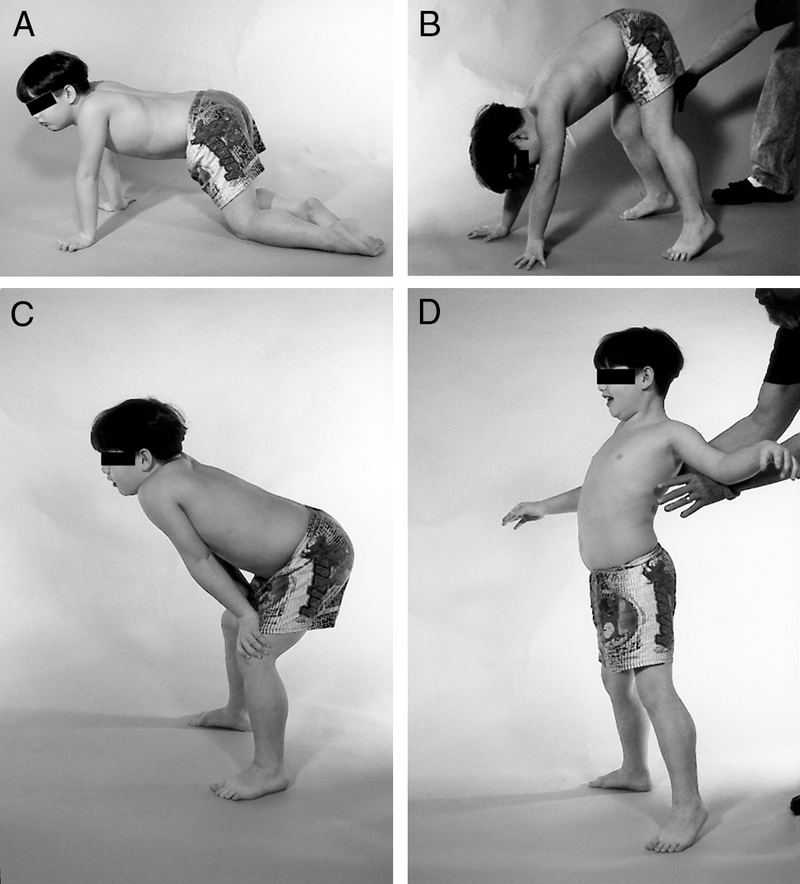
Figure 3 Patient with Duchenne muscular dystrophy demonstrating Gowers’ maneuver. A, The prone position. B, Walking the hands along the floor.C, Moving the hands up the thighs to help upright the trunk and augment knee extension. D, The upright position.
(Reproduced from Sussman M: Duchenne muscular dystrophy. J Am Acad Orthop Surg 2002;10:138-151.)
). As a result of decreased muscle capacity, these patients will roll prone, rise on all four limbs, extend the lower extremities, and walk their hands along the floor and up their legs until they are standing upright. Diagnosis is suggested by elevated serum creatine kinase levels and confirmed by genetic analysis and muscle biopsy, with absence of dystrophin on immunohistochemical analysis.14,16
Treatment
Corticosteroid treatment can improve muscle strength and reduce loss of strength over time.17 Although the mechanism of action is unclear, corticosteroid therapy may provide a beneficial effect by reducing the local inflammatory response to the leakage of intracellular contents into the ECM. Preliminary investigations have suggested that long-term corticosteroid treatment may prolong ambulatory potential, delay pulmonary failure, and reduce the need for surgical treatment.
Musculoskeletal care for patients with Duchenne muscular dystrophy focuses primarily on the prevention of deformity and preservation of function. During childhood, plantar contractures of the ankle develop,in part, to compensate for quadriceps weakness during gait.18 To prevent excessive contractures, heel cord stretching, ankle-foot orthoses, and even surgical lengthening of the Achilles tendon may be considered. Excessive lengthening should be avoided, however, as the equinus positioning is an adaptive response; overcorrection may compromise the ability to walk.
Over time, the proximal muscles of the lower extremity will progressively weaken. Quadriceps weakness resulting in a knee flexion contracture is particularly debilitating because patients with Duchenne muscular dystrophy usually lock their knees in extension to walk. A contracture will compromise their ability to ambulate. For this reason, an aggressive regimen of stretching, strengthening, and bracing therapy is often recommended. At present, however, there are no scientific data suggesting that these measures prolong the ability to ambulate.
Eventually, patients will become too weak to ambulate independently. At this stage of disease, typically in the second decade of life, a powered wheelchair and adaptive devices should be obtained in the hope of preserving as much independence as possible. Some have advocated surgical treatment of ankle contractures and/or hip and knee flexion contractures; however, because these surgical procedures do not prevent recurrence or improve function, they are of dubious value. Nearly all patients with Duchenne muscular dystrophy will eventually have progressive scoliosis from muscle imbalance, typically between the ages of 11 and 13 years. Significant scoliosis may affect posture, wheelchair fitting, personal hygiene, and ultimately pulmonary function. For this reason, spinal fusion is indicated for any patient with Duchenne muscular dystrophy and a spinal curvature of greater than 20°.19,20 Delaying surgery until the deformity is more severe may only result in higher complication rates, primarily as a result of diminished pulmonary function.21
Connective Tissue Disorders: Osteogenesis Imperfecta
Epidemiology
Osteogenesis imperfecta (OI) is a hereditary disorder of connective tissue caused by mutations in the gene for type I collagen. OI is actually a family of disorders with genetic phenotypic heterogeneity. The incidence of OI is 1 to 5 per 100,000 live births for the nonlethal forms of the disorder; the incidence may be as high as 1 per 50,000 births for the lethal forms.22 OI is transmitted via Mendelian patterns of inheritance, but new genetic mutations account for a significant number of cases. As would be expected, there is significant ethnogeographic distribution of cases.
Etiology
OI results from mutations in the genes encoding type I collagen, COL1A1 and COL1A2.23,24 Unlike achondroplasia, in which the genetic mutation is identical among affected individuals, OI is characterized by well over 100 different genetic mutations. In part, this phenomenon may be explained by the shear size of the collagen genes, which are made up of over 50 exons and thus may be affected by a multitude of base-pair substitution, deletion, or insertion mutations. This variation likely accounts for the phenotypic heterogeneity characteristic of OI.
The COL1A1 and COL1A2 genes encode for the pro-&agr;1(I) and pro-&agr;2(I) chains of the procollagen triple helix. Normally, this promolecule is transported to the extracellular environment, where it is enzymatically processed into the mature collagen molecule. In patients with OI, however, the quantity or quality of the procollagen molecules is severely diminished, resulting in insufficient or defective type I collagen. In general, mutations that affect the quantity of collagen production have milder phenotypic manifestations, whereas those that affect the quality of the collagen molecules have more severe clinical abnormalities.
Clinical Presentation
As might be expected in a disease affecting type I collagen, patients with OI demonstrate abnormalities in connective tissues, including bone (Fig. 4
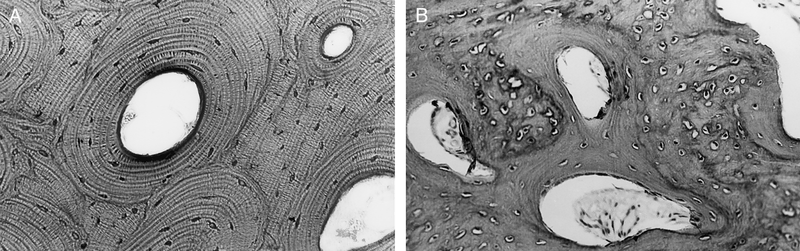
Figure 4 Histologic appearance of a femoral cortex biopsy specimen (hematoxylin-eosin; original magnification, x 65). A, Type I OI demonstrates a near-normal lamellar structure. B, Type III OI demonstrates a mixed pattern of woven and lamellar bone.
(Reproduced from Kocher MS, Shapiro F: Osteogenesis imperfecta. J Am Acad Orthop Surg 1998;6:225-236.)
), ligament, dentin, and sclerae. Skeletal manifestations include short stature, pectus excavatum, trefoil-shaped pelvis, and bowing of the long bones. The skull is often deformed, resulting in a broad forehead and triangular-shaped face. Most patients with OI will have spinal deformities, usually resulting from compression fractures and ligamentous laxity. Thoracic scoliosis is the most common deformity.25 The hallmark feature of OI, however, is bone fragility. Early and frequent fractures of the long bones are seen in many patients. Although these fractures heal, they do so with abnormal tissue, often resulting in malunion and subsequent deformity.
Sites of extraskeletal disease include ligaments, which may result in lax and often hypermobile joints. Frequent dislocations, flat feet, and tendon ruptures may occur. Abnormal collagenous tissue of the eye leads to the blue sclerae characteristic of OI as the uveal pigments and underlying vessels are seen. Teeth are often soft and brown, signifying abnormalities of dentinogenesis. As a result, dental caries are common, and the teeth are often short and weak. Finally, the skin is usually thin, translucent, and easily stretched because of the absence of normal collagen. The vascular and auditory systems may also be affected, manifest as aortic root dilation and hearing loss, respectively.
There is significant phenotypic heterogeneity of OI, depending on the nature of the genetic mutation. This has prompted a number of classification systems for OI, the most commonly used being that of Sillence.26 Sillence type I OI is the most common form and has the mildest clinical manifestations. Inheritance is autosomal dominant. This group is often subdivided into types A and B, denoting the absence or presence of dentin abnormalities, respectively. Patients with type I OI have blue sclerae, exhibit long bone fractures after walking age, and have normal stature and life expectancy.
Sillence type II OI is the lethal form. Affected individuals are stillborn or die within the first weeks of life, usually because of respiratory failure or intracranial hemorrhage. Multiple rib and long bone fractures are seen and sclerae are blue. This form of OI is autosomal recessive.
Sillence Type III OI is a severe, nonlethal form (Fig. 5). Sclerae are of normal color, but multiple fractures are seen at birth
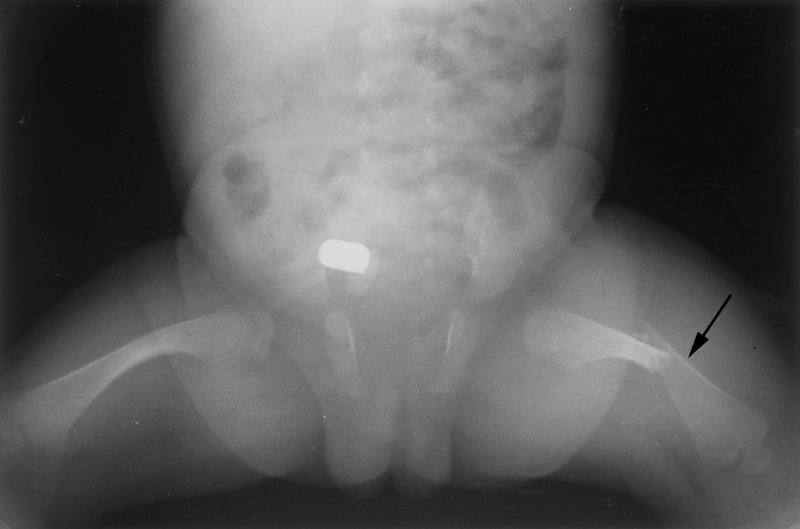
Figure 5 Radiograph of a newborn with type III OI. Note the osteopenia and a fracture of the left femur (arrow).
(Reproduced from Kocher MS, Shapiro F: Osteogenesis imperfecta. J Am Acad Orthop Surg 1998;6:225-236.)
. Stature is short and life expectancy is reduced, with respiratory failure, intracranial hemorrhage, and basilar invagination accounting for premature mortality. Most cases are autosomal dominant.
Sillence type IV OI, the intermediate form, is the most rare. Sclerae are normal, adult height is variably affected, and abnormal dentition and bony fractures are common. Life expectancy varies depending on the severity of disease.
Treatment
Ultimately, treatment of OI will involve correcting the underlying genetic defect via gene therapy. Currently, there have been no human studies of gene-based therapies for OI. Nonetheless, there have been promising in vitro and animal studies, the results of which may lead to successful strategies in the future. In one such study, transgenic mice were created that expressed an anti-sense RNA for the pro-&agr;1 (I) collagen molecule.24 When these mice were crossed with those that expressed a phenotype similar to OI, mortality was reduced and bony strength improved. Further investigation may eventually result in treatment modalities that correct the fundamental defect of OI.
Until such gene-based therapies are available, treatment will remain primarily supportive, with an emphasis on injury prevention and maximizing function. Fracture treatment should be as minimally debilitating as possible. Most fractures may be managed through nonsurgical means because patients with OI retain the capacity to heal bony injuries. However, prolonged immobilization and general deconditioning should be avoided as much as possible. The use of braces, supportive devices, and physical therapy is encouraged during recovery, both for bony healing and further injury prevention. Medical therapies, ranging from fluoride and calcitonin to bisphosphonates and growth hormones, have been proposed. To date, however, there are no data suggesting that such medical treatments are effective in patients with OI.
Surgical treatment of fractures in OI is typically reserved for patients older than 5 years with recurrent fractures or symptomatic bony deformity. Long-term use of orthoses is common to ensure bony healing and prevent recurrence of deformity. Scoliosis is common, and surgical treatment with arthrodesis should be considered for progressive spinal curves or curves greater than 40°.27
Key Terms
Achondroplasia The most common form of congenital dwarfism; characterized by misshapen epiphyses and deformed long bones
Disproportionate dwarfism Short stature in which the extremities are relatively more (or less) affected than the trunk
Duchenne muscular dystrophy An X-linked recessive disease characterized by progressive loss of muscle function and replacement of normal muscle by fibrous and fatty tissue
Dwarfism Short stature characterized by an adult height of less than 58 inches in males or a standing height below the third percentile for age
Dysmorphisms Morphologic variations of musculoskeletal appearance
Dysostosis Conditions of abnormal cartilage ossification or bony remodeling
Dysplasia A broad term that describes a condition affecting growth or development in which the primary defect is intrinsic to affected tissue
Dystrophy A condition resulting from defective or faulty nutrition, broadly construed to include nourishment of tissue by all essential substances, including those normally manufactured by the body itself
Intramembranous ossification Bone formation in the absence of a cartilage model characterized by the aggregation of undifferentiated mesenchymal cells, which differentiate into osteoblasts
Osteogenesis imperfecta A hereditary disorder of connective tissue caused by mutations in the gene for type I collagen
Physis The horizontal growth plate located at the ends of immature long bones; a site of endochondral ossification
Proportionate dwarfism Short stature in which both the trunk and extremities are equally affected
References
1. Andersen PE Jr, Hauge M: Congenital generalised bone dysplasias: A clinical, radiological, and epidemiological survey. J Med Genet 1989;26:37-44.
2. Murdoch JL, Walker BA, Hall JG, et al: Achondroplasia: A genetic and statistical survey. Ann Hum Genet 1970;33:227-244.
3. Oberklaid F, Danks DM, Jensen F, et al: Achondroplasia and hypochondroplasia: Comments on frequency, mutation rate, and radiological features in skull and spine. J Med Genet 1979;16:140-146.
4. Wynne-Davies R, Walsh WK, Gormley J: Achondroplasia and hypochondroplasia: Clinical variation and spinal stenosis. J Bone Joint Surg Br 1981;63:508-515.
5. Muenke M, Schell U: Fibroblast-growth-factor receptor mutations in human skeletal disorders. Trends Genet 1995;11:308-313.
6. Shiang R, Thompson LM, Zhu YZ, et al: Mutations in the transmembrane domain of FGFR3 cause the most common genetic form of dwarfism, achondroplasia. Cell 1994;78:335-342.
7. Parrot J: Sur la malformation achondroplasique et le Dieu Phtah. Bull Soc d’Antrop de Par 1878;1:296-308.
8. Ponseti IV: Skeletal growth in achondroplasia. J Bone Joint Surg Am 1970;52:701-716.
9. Kahanovitz N, Rimoin DL, Sillence DO: The clinical spectrum of lumbar spine disease in achondroplasia. Spine 1982;7:137-140.
10. Aldegheri R, Dall’Oca C: Limb lengthening in short stature patients. J Pediatr Orthop B 2001;10:238-247.
11. Saleh M, Burton M: Leg lengthening: Patient selection and management in achondroplasia. Orthop Clin North Am 1991;22:589-599.
12. Correll J: Surgical correction of short stature in skeletal dysplasias. Acta Paediatr Scand Suppl 1991;377:143-148.
13. Hoffman EP: Muscular dystrophy: Identification and use of genes for diagnostics and therapeutics. Arch Pathol Lab Med 1999;123:1050-1052.
14. Hoffman EP, Fischbeck KH, Brown RH, et al: Characterization of dystrophin in muscle-biopsy specimens from patients with Duchenne’s or Becker’s muscular dystrophy. N Engl J Med 1988;318:1363-1368.
15. Matsumura K, Lee CC, Caskey CT, et al: Restoration of dystrophin-associated proteins in skeletal muscle of mdx mice transgenic for dystrophin gene. FEBS Lett 1993;320:276-280.
16. Pasternak C, Wong S, Elson EL: Mechanical function of dystrophin in muscle cells. J Cell Biol 1995;128:355-361.
17. Griggs RC, Moxley RT III, Mendell JR, et al: Duchenne dystrophy: Randomized, controlled trial of prednisone (18 months) and azathioprine (12 months). Neurology 1993;43:520-527.
18. Khodadadeh S, McClelland MR, Patrick JH, et al: Knee moments in Duchenne muscular dystrophy. Lancet 1986;2:544-545.
19. Bridwell KH, Baldus C, Iffrig TM, et al: Lenke LG, Blanke K: Process measures and patient/parent evaluation of surgical management of spinal deformities in patients with progressive flaccid neuromuscular scoliosis (Duchenne’s muscular dystrophy and spinal muscular atrophy). Spine 1999;24:1300-1309.
20. Sussman MD: Advantage of early spinal stabilization and fusion in patients with Duchenne muscular dystrophy. J Pediatr Orthop 1984;4:532-537.
21. Miller F, Moseley CF, Koreska J, et al: Levison H: Pulmonary function and scoliosis in Duchenne dystrophy. J Pediatr Orthop 1988;8:133-137.
22. Byers PH, Steiner RD: Osteogenesis imperfecta. Annu Rev Med 1992;43:269-282.
23. Kivirikko KI: Collagens and their abnormalities in a wide spectrum of diseases. Ann Med 1993;25:113-126.
24. Prockop DJ, Kuivaniemi H, Tromp G: Molecular basis of osteogenesis imperfecta and related disorders of bone. Clin Plast Surg 1994;21:407-413.
25. Benson DR, Newman DC: The spine and surgical treatment in osteogenesis imperfecta. Clin Orthop 1981;159:147-153.
26. Sillence DO, Senn A, Danks DM: Genetic heterogeneity in osteogenesis imperfecta. J Med Genet 1979;16:101-116.
27. Hanscom DA, Bloom BA: The spine in osteogenesis imperfecta. Orthop Clin North Am 1988;19:449-458.
