

Compression neuropathies are clinical conditions in which pressure on a peripheral nerve produces dysfunction in the nerve. These may be manifest as sensory, motor, or autonomic changes in the involved nerve distribution. A peripheral nerve arises from the spinal root as it exits the neural foramen and terminates at the end organ. Irritation of the peripheral nerve causes a characteristic molecular response, resulting in typical symptoms and signs.
A basic understanding of the neuroanatomy and nerve function, placed in a context of a thorough history and physical examination, is often enough to allow accurate diagnosis of the various compression neuropathies. At times, however, special testing of the nerve by electrodiagnostic studies is necessary for further clarification.
Compression neuropathies in the upper extremity typically occur at or around the joints; for example, carpal tunnel syndrome (CTS) affects the median nerve at the wrist, and cubital tunnel syndrome affects the ulnar nerve at the elbow. Thus, the evaluation should focus on the anatomic path of the affected nerve and the structures that may compress it. The diagnosis of most upper extremity compression neuropathies is clinical, with confirmation provided by electrodiagnostic studies.
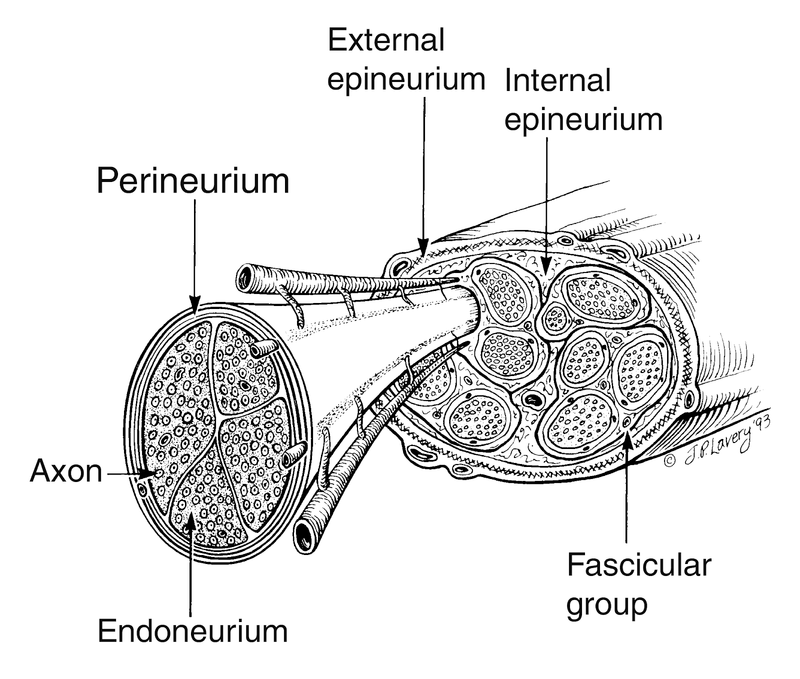
Figure 1 Functional anatomy of the peripheral nerve, including the epineurium around the nerve, perineurium around the fascicle, and endoneurium around the individual axons.
(Copyright ©1993 JP Lavery)
Each peripheral nerve is comprised of three distinct layers: the epineurium, perineurium, and endoneurium (Fig. 1). The epineurium, or outer covering, cushions the nerve against external pressure and contains concentric layers of dense collagenous connective tissue. The perineurium, or intermediate layer, surrounds the fascicle, each containing a group of axons. Each axon is surrounded by a collagen shell called the endoneurium. The perineurium is an analogue of the blood-brain barrier; it controls the intraneural environment by limiting diffusion, blocking the entry of foreign matter (especially bacteria), and by maintaining a slightly positive intrafascicular pressure. Segmental nutrient vessels supply longitudinally oriented vascular networks in the epineurium, which feed small plexi within the perineurium. From the perineurial plexi, vessels arise that penetrate the endoneurium to feed the axon.
The intricacy of the vascular system is responsible, in part, for the development of compression neuropathies. Compression of the nerve produces characteristic signs and symptoms, most likely on the basis of ischemia. This mechanism is inferred from the observation that there is a dramatic reversal of symptoms often seen following surgical decompression of a nerve that has not yet been permanently damaged. Compression of a peripheral nerve leads to impaired venous return, intraneural edema, and an altered ionic milieu. Diminished axoplasmic transportation and decreased efficiency of the sodium pump promote membrane instability. All of these factors impede signal conduction along the path of the nerve. Neurophysiologic changes with symptoms of paresthesia, for example, occur with 30 to 40 mm Hg of pressure on the median nerve.1,2 Complete intraneural ischemia occurs with pressures of 60 mm Hg or greater, resulting in total sensory block. Prolonged compression may lead to epineurial fibrosis, which exacerbates intraneural edema, decreases signal transmission, and leads to permanent nerve dysfunction.2
Compression causes damage not only by direct pressure but also by tethering nerves to the surrounding tissue. This limits the physiologic motion of the nerves, which would otherwise occur in response to normal joint motion. This tethering restricts mobility and places the nerve at risk for traction injuries in response to repetitive joint motion.
Carpal Tunnel Syndrome
Carpal tunnel syndrome, characterized by pain, numbness, and weakness in the median nerve distribution of the hand, is caused by pressure on the median nerve at the wrist. It is perhaps the most common compression neuropathy, and studying it as a paradigm offers insights that can be applied to all such neuropathies.
CTS is a collection of signs and symptoms arising from median nerve compression at the wrist. The median nerve exits the forearm and enters the wrist through the carpal canal. This rigid canal is formed by the transverse carpal ligament on the palmar surface and the carpal bones on the dorsal surface (Fig. 2). Joining the median nerve in this closed compartment are nine flexor tendons (two to each finger and one to the thumb). Within the carpal canal, the median nerve lies superficially, hugging the undersurface of the transverse carpal ligament. The carpal canal extends from approximately the area of the radial styloid to a point distal to the carpometacarpal joint in the palm. Upon exiting the canal, the median nerve divides into branches to supply the thumb, index, and long fingers and the radial half of the ring finger.
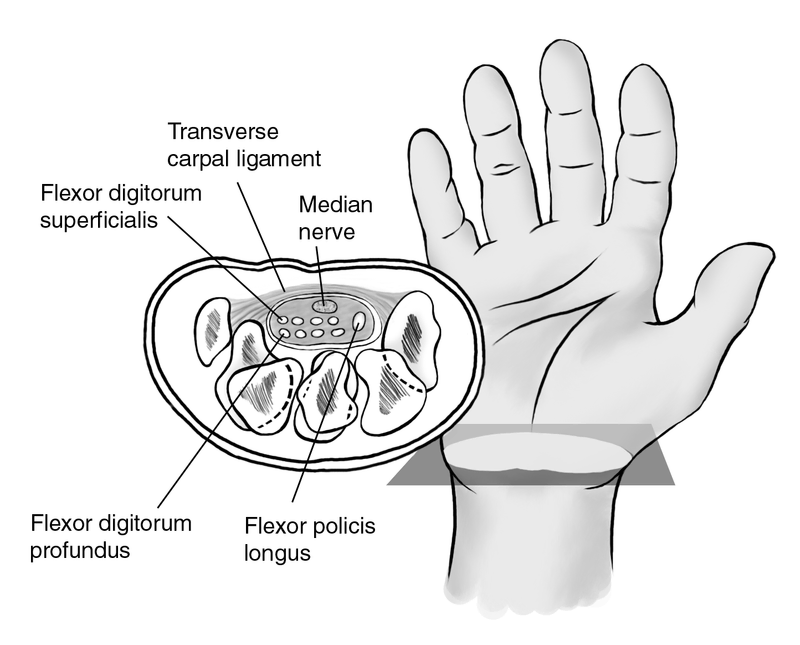
Figure 2 Cross-sectional schematic representation of the constraints and contents of the carpal canal.
Epidemiology
CTS is the most common of the compression neuropathies, and affects women more often than men. Its prevalence in the general population is approximately 2%.3,4 CTS was thought to affect individuals of about 50 years of age, but younger people, especially industrial workers, are now being diagnosed with CTS with increasing frequency. CTS may be closely related to both health status and industrial exposure. Risk factors for CTS beyond gender and occupation include rheumatoid arthritis (in which inflammation of the tendon sheath may compress the nerve); endocrine disorders, such as diabetes mellitus and hypothyroidism; trauma; hormonal changes, such as those that occur with pregnancy and menopause; and the presence of masses, such as lipomas and ganglions.
Clinical Presentation
Early symptoms include vague wrist pain, with numbness or tingling in the thumb, index and long fingers, and the radial half of the ring finger, all of which are innervated by the median nerve. With persistent compression, symptoms progress to include pain in the distal forearm or palm and in the hand and fingers at night. Discomfort or numbness may be provoked by activities that place the wrist in a prolonged flexed or extended position, such as typing or bicycling. With long-standing CTS, symptoms include a sense of grip weakness caused by denervation of the thenar muscles (abductor pollicis brevis and opponens pollicis) and difficulty with fine motor activities, such as buttoning a shirt. This loss of fine motor control probably occurs because of decreased proprioception. People with CTS often awake at night with pain because the wrist assumes a flexed position during sleep; this position increases pressure in the carpal tunnel.
The only objective physical signs associated with CTS are atrophy and loss of sweating in the fingers that are innervated by the median nerve. Two-point discrimination (ie, the ability to discern correctly between contact with one pin and contact with two pins on the fingertip placed a few millimeters apart) will be decreased in patients with CTS. This loss is quantified by identifying the minimum distance between pins that is recognized as two distinct points of contact. Weakness may be noted objectively but can reflect poor effort or inhibition caused by pain. Physical examination must always include evaluation for proximal sources of compression, especially in the cervical spine, and for masses in the carpal canal causing compression of the median nerve.
Clinical Tests
Tinel’s test, which is performed by percussing the median nerve at the wrist, demonstrates nerve irritability by reproducing symptoms of CTS. A median nerve compression test, performed by continued manual compression of the median nerve at the entrance to the carpal canal, is sensitive and specific for the diagnosis of CTS.5 In addition, Phalen’s test shows that patients with CTS are able to reproduce their symptoms fairly rapidly with sustained symmetric wrist flexion. Each of these provocative tests is considered positive if symptoms of CTS are reproduced. Finally, weakness of the thenar muscles, which are innervated by the median nerve, results in difficulty with pinching.6This finding represents advanced disease.
Diagnostic Imaging
Diagnostic imaging tests include studies of the cervical spine (to rule out a herniated disk and osteophytic compression of the neural foramina) and of the wrist itself. Radiographs of the wrist are especially important after fracture of the distal radius or in the presence of thumb carpometacarpal arthritis. Additional testing, such as ultrasound or MRI, may be indicated to identify a soft-tissue mass that is either involving the median nerve or compressing it.
Laboratory Tests
There are no laboratory tests for CTS, but tests can be used to assess whether CTS is caused by an underlying medical condition, such as diabetes mellitus, rheumatoid arthritis, or thyroid disease.
Nerve Conduction Testing
Although CTS is a clinical diagnosis, nerve conduction velocity studies are frequently used. Nerve conduction velocities and latencies can be measured in both the sensory and motor components of the median nerve.
Differential Diagnosis
Compression of the median nerve at the elbow (pronator syndrome) usually can be distinguished from CTS based on the involvement of muscles supplied by the median nerve proximal to the wrist. For example, involvement of the flexor digitorum superficialis to all fingers and the flexor digitorum profundus of the index and long fingers indicates more proximal compression. Cervical radiculopathy involving the C6 or C7 nerves may produce symptoms in regions overlapping with CTS. Radiculopathy commonly affects patients with cervical disk disease or arthritis. Cervical instability, as seen in patients with rheumatoid arthritis or trauma, may also produce a radiculopathy similar to CTS.
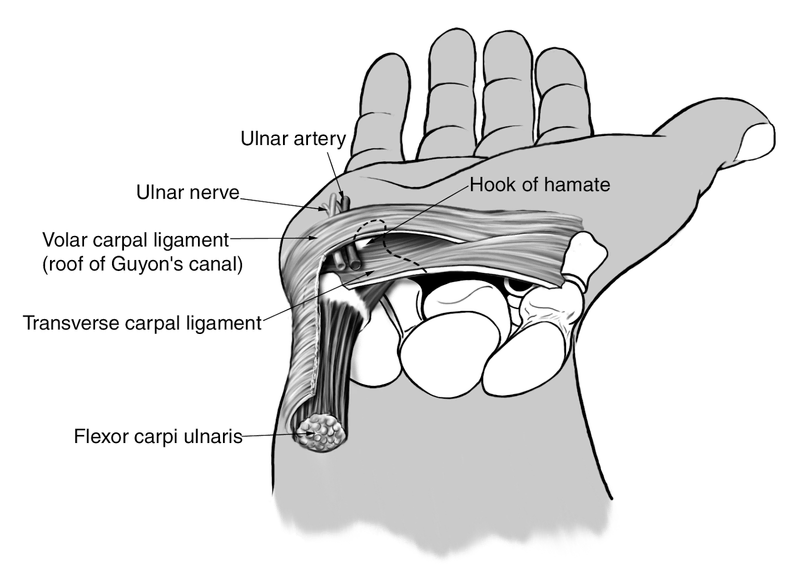
Figure 3 Guyon’s canal with the radial and ulnar constraints. Note that Guyon’s canal is superficial to the carpal canal.
Symptoms in the hand can also be produced by ulnar nerve compression at the wrist in Guyon’s canal (Fig. 3) or at the elbow in the cubital tunnel. Patients with ulnar nerve compromise at Guyon’s canal report numbness in the regions innervated by the ulnar nerve: the little finger and the ulnar half of the ring finger. Motor dysfunction is limited to the intrinsic muscles of the hand. Percussion over Guyon’s canal usually provokes symptoms.7 Because compression of the ulnar nerve at the wrist is fairly uncommon, nerve conduction velocity studies should be obtained to support the diagnosis. Ulnar nerve compression is more commonly found near the elbow where the nerve is superficial. Compression of the ulnar nerve at the elbow is called cubital tunnel syndrome (Fig. 4). Patients with cubital tunnel syndrome report numbness along the little finger and the ulnar half of the ring finger, and they often note grip weakness, especially when using tools. Patients also commonly report a dull ache along the medial forearm and admit to resting their elbows on hard surfaces during daily activities. The physical examination for cubital tunnel syndrome centers on percussion along the course of the ulnar nerve posterior to the medial epicondyle of the elbow, which can reproduce symptoms in the fingers innervated by the ulnar nerve. Weakness and atrophy may be present in the intrinsic muscles of the hand that are innervated by the ulnar nerve.
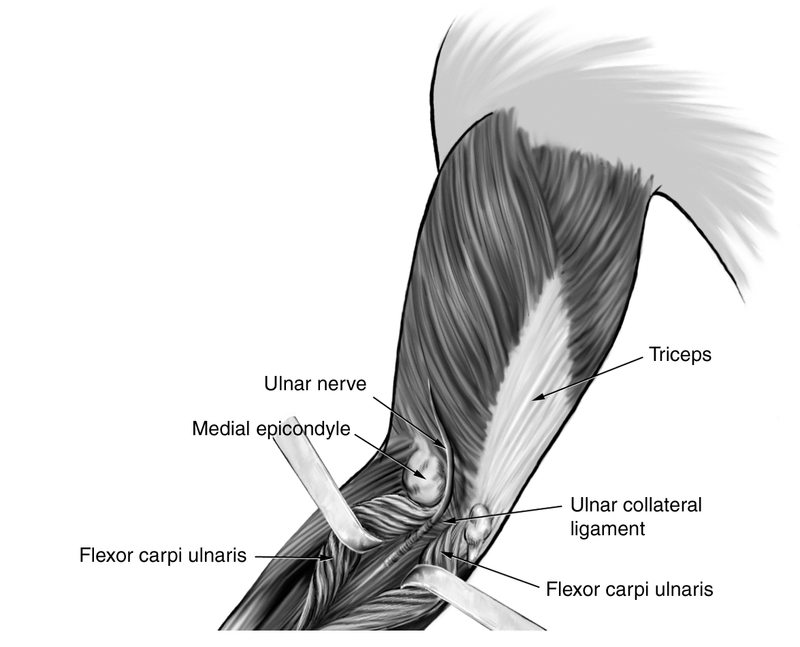
Figure 4 The path of the ulnar nerve in the cubital tunnel. Also depicted are the various structures that may compress or tether the ulnar nerve.
Whereas CTS affects the radial side of the hand, thoracic outlet syndrome (TOS) typically affects the ulnar side of the hand. TOS is a constellation of symptoms arising from compression of the vascular or neural components of the brachial plexus in the thoracic outlet (the space between the clavicle, the first rib, and the subclavius and anterior scalene muscles). The brachial plexus and the subclavian artery and vein cross this space; however, in almost all cases, there is no vascular compression. Symptoms usually begin promptly after starting an inciting activity (usually shoulder abduction and external rotation) and resolve within minutes after cessation of the activity. Numbness usually occurs along the ulnar half of the hand and forearm. A number of provocative tests have been used to help diagnose TOS. Unfortunately, these tests lack clinical specificity.
Treatment
The treatment of early-onset nontraumatic CTS is nonsurgical. Night splints that maintain the wrist in a neutral position and thereby decrease pressure on the median nerve are effective.1,8 Additionally, cortisone injected into the carpal canal may decrease edema in the nerve or tendon sheaths, thereby reducing the volume of the carpal canal. Injections are a helpful diagnostic tool as well as an effective therapeutic modality. The response to injection can confirm the diagnosis of CTS.8It is generally believed that nonsurgical treatment will be ineffective if symptoms have persisted for more than 1 year or if symptoms develop soon after a fracture of the radius.9,10 When this is the case, surgical decompression of the carpal tunnel is recommended.11 This treatment is extremely effective in decreasing symptoms and halting the progression of CTS. Treatment approaches for ulnar nerve compression are similar to those for CTS. The treatment of TOS is more controversial because surgical decompression of the thoracic outlet is major surgery and the diagnosis and prognosis are often less certain.
Key Terms
Carpal tunnel syndrome Median nerve compression at the wrist that is characterized by pain, numbness, and weakness in the median nerve distribution of the hand
Cubital tunnel syndrome Compression of the ulnar nerve at the elbow, producing symptoms in the forearm and hand
Endoneurium The sheath that surrounds each axon in the nerve
Epineurium The outer covering of the nerve that cushions the nerve against external pressure and contains concentric layers of dense collagenous connective tissue
Perineurium The intermediate layer of the nerve that surrounds each fascicle and contains a group of axons
Thoracic outlet syndrome A constellation of symptoms arising from compression of the vascular or neural components of the brachial plexus in the thoracic outlet
Tinel’s test Percussion of the median nerve at the wrist to demonstrate the degree of nerve irritability by reproducing symptoms of carpal tunnel syndrome
References
1. Gelberman RH, Hergenroeder PT, Hargens AR, et al: The carpal tunnel syndrome: A study of carpal canal pressures. J Bone Joint Surg Am 1981;63:380-383.
2. Gelberman RH, Szabo RM, Williamson RV, et al: Sensibility testing in peripheral-nerve compression syndromes: An experimental study in humans. J Bone Joint Surg Am 1983;65:632-638.
3. Papanicolaou GD, McCabe SJ, Firrell J: The prevalence and characteristics of nerve compression symptoms in the general population. J Hand Surg Am 2001;26:460-466.
4. Tanaka S, Wild DK, Seligman PJ, et al: The US prevalence of self-reported carpal tunnel syndrome: 1988 National Health Interview Survey Data. Am J Public Health 1994;84:1846-1848.
5. Durkan JA: A new diagnostic test for carpal tunnel syndrome. J Bone Joint Surg Am 1991;73:535-538.
6. Levine DW, Simmons BP, Koris MJ, et al: A self-administered questionnaire for the assessment of severity of symptoms and functional status in carpal tunnel syndrome. J Bone Joint Surg Am 1993;75:1585-1592.
7. Cobb TK, Carmichael SW, Cooney WP: Guyon’s canal revisited: An anatomic study of the carpal ulnar neurovascular space. J Hand Surg Am 1996;21:861-869.
8. Gelberman RH, Aronson D, Weisman MH: Carpal-tunnel syndrome: Results of a prospective trial of steroid injection and splinting. J Bone Joint Surg Am 1980;62:1181-1184.
9. DeStefano F, Nordstrom DL, Vierkant RA: Long-term symptom outcomes of carpal tunnel syndrome and its treatment. J Hand Surg Am 1997;22:200-210.
10. Rosen B, Lundborg G, Abrahamsson SO, et al: Sensory function after median nerve decompression in carpal tunnel syndrome: Preoperative vs. postoperative findings. J Hand Surg Am 1997;22:602-606.
11. Atroshi I, Breidenbach WC, McCabe SJ: Assessment of the carpal tunnel outcome instrument in patients with nerve-compression symptoms. J Hand Surg Am 1997;22:222-227.
