

Alternative medicine defies easy definition. Its broadest definition comprises that which is not taught in a traditional medical school curriculum. This definition, of course, makes it impossible for a conventional medium such as this text to address the topic because by simply including a discussion of a given remedy here, it might no longer be considered an alternative approach. Still, it is important that alternative medicine be given as precise a meaning as possible, especially if value judgments are assigned to various treatment modalities based on their designation—as is often the case.
Alternative medicine can be defined only in the context of cultural norms. Three hundred years ago, for example, an individual with heart failure was instructed by doctors to chew on the flowers, leaves, stems, and seeds of the foxglove plant. Today, by contrast, botanical medicine is considered an alternative remedy. Yet we now know that the foxglove plant contains digitalis. Should that knowledge compel us to reconsider the labels?
Alternative medicine includes a wide spectrum of treatments—many finding support from collective anecdotal evidence—that is not considered standard therapy because of a lack of a scientific rationale, clinical evidence, or a favorable historic tradition. A more rigorous distinction between alternative and traditional medicine would involve considering a functional classification of all treatments based on their modes of action, in which case the distinction between alternative medicine and its mainstream counterpart becomes less important.
Classification of Treatments
Regardless of their labeling, therapies may be effective or perceived to be effective for one of the following reasons: (1) direct homeostasis; (2) biologic effects by stimulation of physiologic homeostasis or interference with abnormal physiology; (3) analgesic effects, either direct or indirect; and (4) the placebo effect.
Direct Homeostasis
Some therapies directly help return the body to the normal healthy state—that is, they do not rely on the body’s response to achieve their ends. Direct homeostatic therapies include treatments such as the removal of a foreign body or the administration of antibiotics. Here, the end point of the treatment is reached without specifically invoking a biologic process; the treatment itself produces the result. Not all antibiotics have a purely direct effect: bacteriostatic drugs, which only inhibit bacterial growth, are clinically helpful to the extent that they control the infection as the body mounts its response.
Biologic Effects
Biologic therapies come in two types: those that stimulate the body to produce the desired physiologic effect and those that interfere with pathophysiologic processes. In both categories, the reaction of the living organism to the applied therapy produces the end product of therapy.
Stimulation of Physiologic Homeostasis
Therapies that stimulate the body’s homeostatic mechanisms are those that create the appropriate setting for the body to achieve the best result from its own healing process. A musculoskeletal example of this is fixation of a fracture. Although a surgically implanted rod helps align the bone, creates the right mechanical environment for healing, and brings together fragments that would otherwise not unite, placing a rod is not tantamount to “curing” the fracture. Rather, the rod implantation optimizes the body’s own processes, which eventually “cure” the fracture.
Blocking Pathophysiologic Processes
An often-quoted pharmacologic aphorism states that “all medicines are poisons.” Although this statement is not entirely true, neither is it totally false; rather, it is based on the notion that many medications are administered to interfere with biologic processes. Therapies that block biologic processes are often chosen because the process is either abnormal or excessive, such as with inflammation. In other instances, the process is entirely normal but not desirable. For example, the process that a beta-blocker blocks is entirely normal, yet the adrenergic effect of that response increases blood pressure and myocardial oxygen consumption. Thus, it may be desirable to block those end results.
Analgesic Effects
Analgesic therapies are used simply to decrease pain. Pain is certainly the primary reason that people seek medical attention for musculoskeletal complaints. Patients may be seeking a “cure,” but it is their pain that signals that something is wrong. Pain can be decreased by treating the underlying condition. In musculoskeletal medicine, for instance, immobilizing a fracture helps the body begin the process of repairing the damage, but it also immediately relieves pain. Pain relief for its own sake is often a necessary component of treating disease as well. This may be achieved via two mechanisms: direct and indirect analgesic effects.
Direct Analgesic Effect
Pain is a central nervous system response to noxious stimulants. Any intervention that decreases the signal to the brain or modulates its interpretation can decrease pain. This category runs the gamut from general anesthesia to acetaminophen.
Indirect Analgesic Effect
The body produces its own natural painkillers: endorphins. Any intervention that stimulates the production of these chemicals will have an analgesic effect. It is also known that the interpretation of pain can be modulated. For example, simply rubbing the skin over a bruised area may make it feel better, probably because the thalamus, which integrates pain signals in the brain, is “distracted.” Processes that modulate the interpretation of pain signals, without actually modifying them, are also analgesic.
Placebo Effect
The placebo effect is one of the most misunderstood concepts in medicine. Hrobjartsson and Gotzsche1 actually questioned the existence of this effect. These authors suggested that researchers who compare an active drug with a sugar pill may be fooled into thinking that the sugar pill “helped” when all that happened was a natural return to health (ie, both groups got well, but they would have done so anyway without any intervention). Alternatively, the process of observation may have produced the effect. This may be seen, for instance, in a study in which patients are given a placebo for weight loss but are monitored weekly by a physician. It is the monitoring that induces compliance with a diet that may be the cause of the observed weight loss. In order to demonstrate a true placebo effect, then, a study must have three arms: the active treatment, the placebo treatment, and no treatment at all.
For the purpose of this classification of therapies, a placebo effect will be defined as a therapy that, for unknown reasons, stimulates the mind to help affect either healing or analgesia that would not have occurred in its absence. Psychologicprocesses can produce biologic effects. For example, embarrassment leads to blushing because at some level the higher cognitive message of shame stimulates a histamine response in the cheeks.
Alternative Medicine in a Scientific Context
Given the previous discussion, there should be no distinction between alternative and traditional medicine. A treatment either works by one of the mechanisms listed above—or it does not work. For example, unless there is definitive proof that qi (vital energy, pronounced “chee”) or “water memory” are false concepts, there is the possibility that a therapy based on qi or “water memory” may be effective but not by its putative mechanism. Over time, traditional medicine assimilates those alternative therapies that have scientifically proven effectiveness—foxglove (and its digitalis), for instance. Thus, at any one time, alternative medicine will include those treatments that are ineffective (as many effective treatments will be co-opted by mainstream medicine), as well those that are unproven but may still be effective. It is easy to deride this latter category, especially if the theory underlying it sounds questionable to western ears. Still, any physician with an eye toward the past (and a historical appreciation of the quackery that once was conventional medicine) will approach alternative medicine with a healthy dose of humility. From the treatment of scurvy with lemons and oranges to the discovery that penicillins grow from molds, what was once considered absurd becomes an accepted principle of modern medicine through scientific experimentation and the accumulation of supporting evidence.
Understanding Scientific Investigation
Modern medical knowledge is almost always derived from a process of statistical sampling. The researcher does not study all possible subjects, but only a sample of an underlying population. Statistical tests are used to determine whether it is reasonable to draw inferences from that sampling. Thus, uncertainty enters the process, and statements are made in terms of probability. Sometimes probability is so close to 100% that it would be foolish to consider an inference to be false. In other instances, scientific studies report a P value. When the P value of a study is less than 0.05 (by convention), the results are considered statistically significant. That means that there is less than a 0.05 (1/20) chance that two samples that were previously seen as different are not from different underlying populations. An incorrect assumption that two similar groups are different constitutes a type I error.
The Importance of Correct Interpretation
The use of statistical testing has two important implications. First, even if the study is statistically significant, there is a measurable chance that its results are wrong—that a type I error has occurred. This risk is usually low, but it is not zero. Second, statistical significance says nothing about clinical significance—the magnitude of the effect may be nothing worthwhile, even if its existence is a statistical fact.
Readers of journal articles often do not need to worry about type I error; editors reject papers in which the results are not statistically significant. The problem posed to readers is that they are able to read only what is published, resulting in a publication bias, and only those studies that show a positive effect in statistically significant fashion are accepted for publication in the peer-reviewed literature.
For example, consider a perfectly executed, prospective, randomized controlled trial showing that chanting a mantra decreases the pain of arthritis (P = 0.04). What do these results mean? This may be hard for the reader to determine, as the reader does not have the full body of literature written on the subject at hand. The effectiveness of chanting is certainly called into question if there are 35 other perfectly executed, prospective, randomized controlled trials that show that chanting may not decrease pain; however, the reader does not have access to these studies if they were deemed either “not interesting” enough (to the author or the editor) or not statistically significant enough to be published. Alternatively, a researcher who believes that chanting is effective may simply repeat the experiment again and again until the desired results are found; all other runs are discarded because of “obvious flaws” in their execution.
The fact that studies with “negative” results were not published reflects a bias that may be impossible to detect. The reader cannot evaluate what may or may not exist. The possibility of publication bias means that a study or collection of studies with positive results does not necessarily prove a fact. Alternatively, when study results controvert what we know to be true, it is likely that these results are statistical quirks.
Analysis of Alternative Medicine
In the discussion that follows, an overview of some of the alternative medicines used in musculoskeletal medicine will be presented. These therapies are listed here as a means of introduction but they are not referenced in any other section of the book. There is certainly no disparagement intended by simply labeling a treatment as “alternative.” Claims that defy our concepts of biology will be explicitly noted. Also, no disparagement is directed at those therapies not selected for discussion.
Classically, the delivery of healthcare has been divided into medical and surgical domains: interventions that use pharmaceuticals and those that use a hands-on approach (note that the etymology of the word “surgery” is the Greek word meaning “hand”). Our initial discussion of specific alternative medicines follows that division, with two examples chosen from each category: acupuncture and chiropractic care (alternative hands-on interventions) and glucosamine and chondroitin therapy and homeopathy (alternative pharmaceutical interventions). A third category, patient-directed interventions or self-healing, then discusses meditation, yoga, qigong, and tai chi. And finally, answering to modern, high-tech sensibilities, a fourth category, alternative medical devices, discusses magnets and copper bracelets.
Hands-On Interventions
Acupuncture
Background and Theory
Acupuncture, one of the oldest forms of therapy, has been used as a medical modality for over 3,000 years in China. It was first developed as a naturalistic and human-centered therapeutic replacement for the supernatural shamanistic rituals of earlier periods. Developed in the same era as Confucianism and Taoism, the practice of acupuncture is deeply rooted in ordinary human sensory awareness. Even so, the conceptual underpinnings of acupuncture such as yin-yang (polar opposing forces, representing female/passive and male/active) and qi are difficult for westerners to immediately appreciate.
Traditional Chinese medicine theorizes that any manifestation of disease is a sign of imbalance between the yin and yang forces in the body. There are 12 main and eight secondary pathways called meridians that are connected by over 2,000 acupuncture points on the human body, and each has either yin or yang characteristics.These meridians conduct qi, which regulates a person’s mental and physical balance, and it can be affected by the imbalances of yin-yang. By inserting needles into precisely defined points on the body, acupuncture theoretically realigns imbalances of yin-yang and qi to bring about harmony to the “climate” of the individual. The resulting balance will maintain the normal flow of energy and maintain or restore health to the body and mind.2
Western scientists tend to think of meridians as a nebulous concept because they do not directly correspond to nerve or blood circulation pathways. Some researchers believe that meridians are located throughout the body’s connective tissue; others do not believe that qi exists at all.3,4 Such differences of opinion have made acupuncture an area of scientific controversy. Still, the effectiveness of acupuncture can be explained in the framework of western medicine as follows:
Gate control theory This theory maintains that the brain can process only so much information at one time. Thus, one type of sensory input, such as low back pain, can be temporarily inhibited in the central nervous system by another pain stimulus—acupuncture needling.
Activation of opioid systems Some evidence points to the possibility that acupuncture stimulates the production of endorphin, serotonin, and acetylcholine in the central nervous system, enhancing analgesia. Opioid antagonists, such as naloxone, reverse the analgesic effect, which further strengthens this hypothesis.5
Diffuse noxious inhibitory control (DNIC) Noxious stimulation of other areas of the body alters the pain sensation where an individual feels the original pain.
Vascular permeability Acupuncture may affect vascular permeability and, therefore, inflammation.
Indications and Use
In Eastern cultures, acupuncture has been used to treat a wide range of human ailments. As an adjunct to modern musculoskeletal medical care, acupuncture has been evaluated and used for the treatment of pain (eg, neck and back pain or pain associated with osteoarthritis) and for the control of postoperative nausea and vomiting. Although its mechanism of action remains unclear, acupuncture has gained considerable popularity in the United States and recognition by the US Food and Drug Administration (FDA). In 1996, the FDA reclassified acupuncture needles from a class III (experimental) to class II (nonexperimental but regulated) medical device.5
The National Institutes of Health (NIH) established a Consensus Development Panel (NIHCDP) in 1997 to evaluate the clinical efficacy of acupuncture. After reviewing the literature, the NIHCDP concluded in their report that there is definitive evidence of acupuncture’s efficacy in postoperative and chemotherapy-induced nausea and vomiting, as well as in treating postoperative dental pain. They also listed the following conditions in which acupuncture may be effective as an adjunctive treatment or an alternative therapy: fibromyalgia, low back pain, lateral epicondylitis, alcohol addiction, stroke rehabilitation, headache, menstrual cramps, myofascial pain, osteoarthritis, carpal tunnel syndrome, and asthma.6
The incidence of adverse events in the practice of acupuncture has been documented to be extremely low, although a life-threatening event such as pneumothorax has occurred on rare occasions. Therefore, it is important that appropriate safeguards for protecting patients be in place. Since acupuncture needles are under FDA regulation, they are expected to be sterile, single-use needles. If a patient is under the care of an acupuncturist and a physician, both practitioners should be informed so that important medical problems are not overlooked.
Chiropractic Therapy
Background and Theory
The practice of modern chiropractic care was founded by Daniel Palmer in 1895, but the general practice of spinal manipulation as a healing method dates as far back as Hippocrates and Galen. The foundation of Palmer’s therapeutic philosophy is based on the “innate intelligence” of the body to heal itself and the belief that medications and surgeries were unnatural invasions. Chiropractic care tenets are based on the assumption that many diseases are caused or exacerbated by disruption of the flow of vital force through the spinal cord by subluxation (that is, small malalignment) of the vertebrae, which causes impingement of the nerves as they exit the neural foramen. Chiropractic therapy focuses on identification of these subluxations and restoration of the proper vertebral alignment via spinal manipulation.
The practice consists of procedures involving the application of force to a specific tissue (usually associated with the spine) with therapeutic intent. The biologic rationale for chiropractic therapy maintains that spinal subluxation and manipulation cause, in addition to anatomic shifts, physiologic changes in neuronal activities, facet joint kinematics, proprioception, and endorphin elaboration.7
At least five mechanical and neurologic mechanisms have been proposed to explain the benefits of spinal manipulation.
- It releases entrapped facet joint inclusions that are heavily innervated.
- It repositions fragments of posterior annular material from the intervertebral disk.
- It relaxes hypertonic muscle by sudden stretching.
- It disrupts articular or periarticular adhesions from prior injury.
- It inhibits excess reflex activity in intrinsic spinal musculature.
Although each of these mechanisms of action are plausible, no clear evidence yet exists to support the anatomic or physiologic underpinnings of chiropractic manipulations.
Indications and Use
Patients who consult a chiropractor for musculoskeletal problems most often do so for low back pain (60%); other common complaints include head, neck, and extremity symptoms. Approximately half of these patients have chronic symptoms. Randomized clinical trials involving spinal manipulation abound in the current literature. While publication bias may be suspected, most published trials either reported equivocal findings or beneficial effects of manipulation.7 Currently, there are over 70 randomized clinical trials on this topic, and most were conducted on patients with low back, neck, and head pain, and a few have examined other conditions. The clinical trials include placebo-controlled comparisons, comparisons with other treatments, and pragmatic comparisons of chiropractic management with common medical management.
A majority of the randomized trials on treatment of low back pain showed beneficial effects of spinal manipulation over conventional therapy in at least one subgroup of patients. Although the positive effect appeared to be statistically significant from these trials, the improvement was not dramatic. Meta-analyses in the early 1990s made cautiously positive or equivocal statements regarding the effectiveness of spinal manipulations for low back pain.8,9 However, a systematic review in 1997 found sufficient evidence that manipulation is helpful for chronic but not acute back pain.10 The most recent systematic review found insufficient evidence to define the role of chiropractic manipulation in treating sciatica.11
A smaller number of trials were conducted for neck pain and headache. The trials examining chiropractic manipulations for neck pain compared it with both sham manipulations as well as conventional therapy. Chiropractic manipulations were shown to be superior in both settings.7 Likewise, the published reports of a few trials examining the efficacy of chiropractic therapy for headache showed a benefit for this approach. The efficacy of manipulation for other conditions, such as sciatica and carpal tunnel syndrome, has also been examined but results are inconclusive.
Spinal manipulation has been a controversial topic. Some rather minor adverse effects include transient, localized discomfort, headache, or fatigue. The more serious complications reported include cauda equina syndrome from lumbar manipulation and cerebrovascular artery dissection from cervical manipulation. Although the rate of serious complications is unknown, estimates vary from 1 per 400,000 to between 3 and 6 per 10 million.9 Needless to say, even “benign” western treatments for back pain (using nonsteroidal anti-inflammatory drugs (NSAIDs), for example) are not without their complications either.
Pharmaceutical Interventions
Glucosamine and Chondroitin
Background and Theory
The molecular constituents of the articular cartilage matrix are composed primarily of collagen and proteoglycans. These molecules are critical to conferring the structural integrity and compressive resistance characteristic of cartilage. The rationale for the use of glucosamine sulfate and chondroitin sulfate for joint pain, specifically that caused by osteoarthritis, is to promote cartilage repair and synthesis and to prevent enzymatic degradation of the building blocks of joint cartilage, respectively. Chondroitin is also believed to promote water retention and elasticity in cartilage.
Glucosamine is a fundamental component in the synthesis of both hyaluronic acid (the backbone molecule in proteoglycans) and chondroitin (an important class of glycosaminoglycans in articular proteoglycans). Thus, the rationale for using these compounds as a dietary supplement is to provide biosynthetic substrate for cartilage repair and synthesis. There is also limited evidence in animal and explant tissue culture systems that dietary supplementation may stimulate synthesis of glycosaminoglycans and proteoglycans and suppress cartilage degradation.12 However, a direct and compelling mechanism of action has not been elucidated nor have the histologic and biochemical results of these studies been substantiated in human studies.13
Indications and Use
The primary musculoskeletal indication for glucosamine and chondroitin is to prevent and treat osteoarthritis. A variety of studies (ranging from small, uncontrolled studies to moderately sized, controlled trials) have examined the effectiveness of glucosamine and chondroitin in the treatment of osteoarthritis and have reported conflicting results. A meta-analysis of placebo-controlled trials (most with industry financial support) involving osteoarthritis of the knee and hip revealed some improvement in short-term outcomes (including symptoms and function) with treatment, but many of the studies this analysis examined were flawed.14 More recently, a randomized, double-blind, placebo-controlled trial assessing the long-term effects (up to 3 years) of oral glucosamine on the progression of osteoarthritis of the knee suggested a cartilage protective effect and revealed small but significant improvements in symptoms and function.15
Both supplements also have some anti-inflammatory effects that may account for pain relief. If glucosamine or chondroitin prove to have significant anti-inflammatory effects without the gastrointestinal adverse effects of NSAIDs, then these supplements may become very useful in treating arthritis on that basis alone. Scientifically, further studies are necessary to construct a biochemical and physiologic or, as some have suggested, psychologic basis for the efficacy of glucosamine and chondroitin.
Clinically, the issue of industry support, which has been considerable in trials to date, as a potential cause of publication bias needs to be adequately addressed.16 In addition, the effectiveness of glucosamine and chondroitin, which currently appears small and variable, as an alternative to or as concurrent treatment with other modalities (eg, cyclooxygenase-2 inhibitors) should be further studied in randomized controlled trials. In March 2000, the NIH announced that it would initiate a large, multicenter study to provide definitive answers about the effectiveness of glucosamine and chondroitin in treating osteoarthritis. This study is to be a nine-center effort, enrolling more than 1,000 patients. The data from this study should be available in the middle of the decade.
The risk of using glucosamine and chondroitin is minimal, as excess intake is apparently filtered out in the urine. However, they may interact with certain medications (causing the need for higher doses of blood pressure medications among certain patients); therefore, patients should inform their physicians if they are taking glucosamine and chondroitin.
Homeopathy
Background and Theory
The term homeopathy is derived from the Greek homoios (similar) and pathos (suffering) and was initially conceived and developed by the German physician Samuel Hahnemann (1755-1843). Hahnemann, not burdened by the regulatory environment of the 21st century, assembled a library of “symptoms pictures” by administering various noxious substances to healthy individuals and recording the resultant effects. Homeopathy, then, is a system of therapeutics in which disorders characterized by a particular symptom are treated with a substance that causes that symptom in a healthy individual. In an attempt to minimize adverse effects of his medications, Hahnemann found that a stepwise dilution with vigorous shaking paradoxically improved the efficacy of his treatments—the greater the dilutions, the greater the efficacy.17
Dating back to the time of Hippocrates (fifth century bc), the idea of healing “like with like” was met and continues to be met with considerable skepticism from the established medical community. Note that the process of vaccination, though superficially similar, does not propose treatment with the agent, but rather immune stimulation. Vaccines are administered to healthy individuals as a preventive measure prior to exposure.
Given that homeopathy is based on the theory that decreasing the concentration increases the potency of the solution, it is no surprise that this is one of the least accepted alternative medical approaches. The notion of dilution increasing potency runs counter not only to conventional medicine but also to the basic science of chemistry. In some typical doses, a homeopathic medication may not have even a single molecule of the active pharmacologic substance. A number of theories that attempt to explain the mechanism of action in the absence of the original active ingredient (ie, the water “remembers” the encounter with the substance) remain controversial and unsubstantiated by scientific methods. Nonetheless, homeopathic practitioners and millions of consumers maintain that empiric results and observations validate the practice.
Indications and Use
A variety of musculoskeletal conditions are treated with homeopathic remedies, including acute sprains, hemarthosis, rheumatoid arthritis, osteoarthritis, muscle cramps, and myalgia. In addition to Hahnemann’s original studies and other observational reports, there has been a plethora of randomized placebo-controlled trials examining homeopathic treatments of musculoskeletal conditions. One large meta-analysis concluded that the overall clinical improvement with homeopathic treatment, although small in magnitude, is unlikely to be the result of placebo effects alone.18 However, the study also indicated that homeopathy was not clearly efficacious in the treatment of any particular clinical condition, including musculoskeletal conditions. Another meta-analysis offered similar conclusions but further noted poor methodology in many trials and that trials of high quality were more likely to show negative efficacy.19 To date, the effectiveness of homeopathy in treating musculoskeletal conditions has not been clearly proven scientifically.
In one large, randomized, double-blind, placebo-controlled, crossover study, 112 patients with stable rheumatoid arthritis who were taking NSAIDs but not steroids in the past 12 months were selected to receive either a placebo or a homeopathic arthritis medicine.20 At 3 months, the medications for patients in each group were switched. In this study, the homeopathic medicine did not provide pain relief for patients; in fact, the placebo resulted in better pain relief.
The best case to be made for homeopathy is that it is almost certainly benign. Homeopathic medicines, devoid of active ingredients, are unlikely to inflict harm. Arguably, if homeopathy were to assuage concerned patients to the extent that it helps them resist taking more toxic alternative medications, it may have some beneficial role after all.
Patient-Directed Interventions
Meditation
Background and Theory
Meditation is an ancient practice thought to promote relief for stress, headaches, anxiety, and emotional disorders. In addition, it is now being investigated as a means for patients to cope with pain associated with chronic illness. Meditation involves slow, rhythmic breathing while the mind is focused on a symbol, such as a candle, a mental image, or a mantra, which is a word or phrase that is rhythmically repeated. The practice of meditation, once a cultural phenomenon, is now an accepted therapy for many conditions. Rather than costly equipment, drugs, or surgery, meditation requires only a quiet environment, comfortable clothing, and a position in which the spine is vertical. Consequently, many insurance plans are allowing for reimbursement of meditation lessons as a treatment option.
Scientists believe that meditation influences how the brain functions and that thoughts can then influence the brain and body. Meditation may have the ability to lower stress hormone levels, improve circulation, lower blood pressure, and moderate the immune system.
Indications and Use
Several studies have been launched to investigate the impact of meditation programs on various illnesses. Because stress may cause flares in arthritis, systemic lupus erythematosus, rheumatoid arthritis, and fibromyalgia, it is believed that meditation, by lowering stress, can reduce the incidence of flares and thereby alleviate disease-associated pain. Singh and associates21 studied the effect of behavioral therapy in 28 patients with fibromyalgia over the course of 8 weeks. During weekly sessions of 2½ hours each, patients were given a lesson focusing on the mind-body connection, a portion focusing on relaxation response mechanisms, and a movement therapy session. Standard outcome measures reported significant reduction in pain, fatigue, and sleeplessness, along with improved function, mood state, and general health. The authors concluded that meditation techniques, patient education, and movement therapy appear to be an effective therapy for patients with fibromyalgia.
In a study by Kaplan and associates,22 77 patients meeting the criteria of the American College of Rheumatology for fibromyalgia took part in a 10-week group outpatient program to evaluate the effectiveness of a meditation-based, stress-reduction program to treat their illness. Patients were evaluated before and after the program. Outcome measures included visual analog scales to measure global well-being, pain, sleep, fatigue, and feeling refreshed in the morning. They also completed a medical symptom checklist and other standard questionnaires. The mean scores of all patients completing the program showed improvement, and 51% showed moderate to marked improvement. The authors concluded that a meditation-based, stress-reduction program is effective for patients with fibromyalgia.
Although these preliminary findings appear to be promising, controlled trials with a larger patient population are necessary to establish meditation as an effective treatment for chronic illnesses. Even though there are no evident adverse effects from the practice of meditation, it is important for patients to maintain their conventional treatments. Patients must be aware that meditation will not take away their pain but may allow them to better cope with their illness.
Yoga, Qigong, and Tai Chi
Background and Theory
Yoga, qigong, and tai chi belong to a family of movement therapies designed to reduce stress and anxiety, while improving circulation, range of motion, flexibility, and overall physical fitness.
The practice of yoga is rooted in Hindu religion and dates back 5,000 years. It refers to a variety of disciplines designed to bring practitioners into union with mankind and a higher God or life force. Deep breathing is important because the life force, or prana, is believed to enter the body through the breath. Some yoga postures have been developed as stretching and strengthening exercises to improve posture and the musculoskeletal system, relax nerves, and enhance the body. No special equipment is needed. Patients who have a back injury, recently had surgery, or are pregnant should avoid yoga; and those with arthritis, heart disease, or high blood pressure may need to avoid certain yoga postures as a precaution. Health advocates promote yoga as a method to lower blood pressure as well as a method to increase strength and flexibility. It has been used as a complementary therapy for cancer, arthritis, weight loss, anxiety, and diabetes.
Qigong (pronounced chee-gong) is a form of gentle exercises in which the flow of qi is stimulated along the meridians throughout the body. Its practice in Chinese medicine dates back more than 2,000 years. The philosophy of qigong considers illness to be the result of an imbalance of qi and suggests that regulating this flow of energy will restore balance within the body and return a diseased part of the body to health. There are thousands of variations of qigong exercises, ranging from simple to complex. Proponents believe the physical benefits of qigong include lowering the heart rate and blood pressure, increasing circulation, reducing pain, and increasing the flow within the lymphatic system, which in turn, improves the immune system. Although proponents credit it with curing AIDS, arthritis, asthma, cancer, diabetes, and heart disease and alleviating pain, there is no definitive proof that qigong has these curative powers.
Tai chi is a low-impact exercise program that is suitable for almost anyone to practice, including the sick, the young, and the elderly. It is derived from the martial arts in China and also founded in accordance with the belief that chi (chi and qi are transliterations of the same word) is a vital life force flowing through the body. All tai chi exercises are pairs of opposite movements, such as left and right, forward and backward. Exercises are correctly performed slowly and gracefully, with the knees slightly bent through each sequence and all movements originating from the waist, or tantien, the area of the body located beneath the navel and considered to be the center of the body’s qi. Practitioners believe that by breaking up blockages in the flow of qi, the balance of the life force within the body will be restored. Advocates report that tai chi improves health, promotes concentration, improves posture and balance, and increases energy, flexibility, and muscle tone. It is often recommended for older adults as a means to prevent osteoporosis.
Indications and Use
Creamer and associates23 conducted a pilot study to examine the practicality of delivering a package of nonpharmacologic, behavioral-based treatment to patients with fibromyalgia. For 8 weeks, 28 patients were given formal meditation-relaxation training and instruction in qigong. Outcome measurements included Fibromyalgia Impact Questionnaire scores and a range of other outcome measures, including tender points and pain thresholds. Improvement was sustained for 4 months after the end of the intervention. The authors concluded that nonpharmacologic, behavioral-based treatment appears to produce sustained benefit in a range of outcomes for patients with fibromyalgia.
In a 1999 nonrandomized, noncontrolled pilot study, Husted and associates24 conducted an 8-week tai chi program to explore the psychosocial and physical benefits for patients with multiple sclerosis. Nineteen patients participated, and outcome measures included walking speed (distance, 25 ft), hamstring flexibility, and Medical Outcomes Study 36-Item Short Form Health Survey scores. Results showed that walking speed increased by 21% and hamstring flexibility increased by 28%. Patients experienced improvements in vitality, social functioning, mental health, and the ability to carry out physical and emotional roles. The results of this pilot program led to the implementation of several tai chi classes for people with multiple sclerosis. Advocates cite this study for using tai chi as a means for improving the quality of life for people with chronic disabling conditions.
For rheumatic and musculoskeletal diseases, stress, pain, and mobility are closely related. Therefore, treatments that decrease stress may arguably reduce pain and alter the course of these diseases. However, there are no large-scale, scientifically organized clinical trials to prove the claims that these mind-body methods cure disease.
Devices
Magnets
Background and Theory
The use of magnets for pain relief can be traced back to the days of Cleopatra, who slept on a magnet stone to prevent aging. An Austrian physician, Franz Mesmer, popularized magnet therapy in the late 1800s by achieving “miracle cures” of many different illnesses—illnesses that were mainly self-limiting. This may have been a form of hypnosis: the word “mesmerize,” after all, is derived from Mesmer’s name.
Two major types of magnet therapy are currently in use: pulsating electromagnet field (PEMF) therapy and static magnet therapy. Although numerous studies have shown the efficacy of PEMF magnets in treating various conditions, such as enhancing bone and wound healing, similar evidence regarding the efficacy of static magnets is less abundant. Static magnets, however, have gained popularity as an alternative therapy for musculoskeletal complaints.
Static magnet therapy involves taping a small disk of magnet to the body over the painful area. The magnets used for this therapy should generate a magnetic field that is 10 times the strength of a typical refrigerator magnet, although without regulation, refrigerator magnets themselves may be sold as therapeutic devices. There are two types of static magnets that are commercially available: unipolar and bipolar. The unipolar magnet has only one pole on the surface that is applied to the skin. Most manufacturers designate it “N.” With the bipolar magnet, there is an alternating north and south pole generating a concentric magnetic pattern or a grid on the surface that is applied to the skin. Manufacturers of each type of magnet claim that their type of magnet is superior. Working from the assumption that increased blood flow is the mechanism by which magnets control pain, proponents of the bipolar magnet claim that their magnet promotes blood flow in skin, muscle, and tendon, despite the low surface intensity of the magnetic field. Proponents of the unipolar magnet believe that their magnet has a stronger magnetic field. Field strength and tissue penetration are presumably the most important properties that account for a magnet’s therapeutic effects.
The exact mechanism of the interaction between magnetic field and biologic tissue is unknown. Various hypotheses proposed by different researchers include the following:25
- Solid-state theory of cellular function According to this theory, small regions of tissue and molecules in the body are sensitive to the effects of external magnetic fields, regardless of strength. Consequently, such interactions lead to a cascade of cellular events, such as altered enzymatic activity and cellular potential.
- Theory of closed electric circuits In this theory, the endothelial lining of the cardiovascular system serves as a large conduit to conduct the electrical current that is generated by the magnetic field.
- Association-induction hypothesis This theory offers multiple explanations to account for the biologic effect of a magnetic field, one of which is similar to that of the solid-state theory and proposes that a magnetic field induces changes in the small foci of sensitive molecules, which triggers a cascading event that alters the physiologic function of adjacent tissues. Another possible explanation is that when a sensitive molecule within the bloodstream is exposed to a magnetic field, the affected molecule can have physiologic effects that are distant from the original site of magnet application.
- Ion parametric resonance theory In this model, it is thought that magnetic effects on an ion within a molecular complex (such as an enzyme binding site) can alter the conformation and in turn affect the biologic properties of the molecular complex.
Indications and Use
Unlike its counterpart, PEMF, for which there is an abundance of clinical trials evaluating its efficacy in various indications, only a handful of clinical trials evaluate the efficacy of static magnets, largely for pain reduction in various conditions. One of the first clinical trials was a randomized, double-blinded clinical trial of 50 patients with postpolio syndrome.26 Patients were asked to rate their pain on a scale of 0 to 10 after wearing either an active or inactive bipolar magnet at their pain trigger point for 45 minutes. The magnets had a field strength of between 300 and 500 gauss. Patients who wore active magnets reported more pain relief than their counterparts who wore the inactive magnets; however, one limitation of this study is that researchers did not compare efficacy of unipolar and bipolar magnets. And although there are no studies of the long-term effects of magnets on pain relief, this study became widely quoted by magnet manufacturers to demonstrate the efficacy of static magnets.
Another study of patients with diabetic polyneuropathy showed a statistically significant reduction of neuropathic pain in patients who wore magnetic foot pads for a total of 12 weeks.27 The effects of bipolar permanent magnets in treating chronic low back pain were also recently examined in a yearlong randomized, double-blinded, placebo-controlled, crossover study.28 All 24 patients alternated between 1 week of active bipolar magnet therapy (magnet strength, 300 gauss) and 1 week of wearing inactive magnets, with 1 week of washout in between. All patients wore the magnet for 6 hours a day, 3 days a week, and rated their pain at the end of each week. In this study, there was no statistically significant pain reduction in either group.
Because the strength of the commercially available static magnets is relatively low (between 300 and 500 gauss), the risks of use are thought to be low as well. There are no known contraindications to using small magnets on the extremities.
Copper
Background and Theory
The use of copper as a therapeutic agent dates back to 1550 bc. For thousands of years, people have worn copper bracelets and anklets to reduce pain and inflammation associated with joint and connective tissue problems. Although the anti-inflammatory property of copper has been long recognized, the exact mechanism is still under investigation. The proponents of copper therapy argue that most people currently do not consume enough trace minerals, including copper, from their regular diets. A copper bracelet or anklet, when worn next to the skin, allows for direct absorption of trace amounts of dissolved copper into the body on a daily basis. This absorption process, proponents argue, bypasses the digestive route, thus avoiding the potential gastrointestinal adverse effects produced by conventional NSAIDs. Currently, copper bracelets are promoted to be beneficial in the treatment of arthritis, tendinitis, bursitis, osteoporosis, sports injuries, and lateral epicondylitis.
Copper dissolves in human sweat. Over a 7-week period, a pair of copper bracelets worn around the wrist or ankles will lose about 80 to 90 mg of mass.29 Given the skin’s natural permeability for copper, it is possible that dissolved copper can penetrate through the dermis and reach the local tissues and the systemic circulation to offer some therapeutic effect.
It has been long known that patients with rheumatoid arthritis have elevated levels of serum copper. Initially thought to be a consequence of inflammation, it is now known that the increased serum level of copper in these patients is an acute-phase response. Moreover, copper seems to have both pro- and anti-inflammatory potentials, depending on the ligands to which it is bound.30 Although the exact anti-inflammatory mechanism is unknown, there is ample evidence suggesting that copper is involved in several different biologic pathways.
- Oxygen free radical metabolism Copper is known to be an essential cofactor for enzyme cytoplasmic superoxide dismutase, an important enzyme that protects cells from oxidative stress.
- Prostaglandin biosynthesis When a copper ion is bound to a nonsteroidal anti-inflammatory ligand, the new complex is more potent than the parent drug.
- Neutrophil adhesions A recent study evaluated copper’s effect on neutrophils during the inflammatory process using a rat model. It was shown that dietary copper seems to inhibit neutrophil adhesion, a crucial step in the development of inflammation. This may be one of the mechanisms by which copper induces its anti-inflammatory effect.
Indications and Use
There are scant references to studies assessing the effectiveness of copper bracelets for musculoskeletal complaints. In one study, using questionnaires and psychological parameters as outcome measures, a comparison was made among patients with self-diagnosed arthritis or rheumatism—hardly rigorous inclusion criteria—who wore copper bracelets, anodized aluminum bracelets resembling copper, or no bracelets at all.31 The study obtained a 93% response rate from 323 patients and noted that those who wore copper bracelets felt worse when not wearing them (P < 0.02). A significant number of patients also noted greater symptomatic improvement with the copper bracelets (copper versus aluminum, P < 0.01).
In another clinical trial, the pain-relieving effect of a copper-salicylate gel in osteoarthritis was studied.32 This randomized controlled trial recruited 116 patients with osteoarthritis of the hip and/or knee who were asked to apply copper-salicylate gel to their forearms. Patients had to apply either the active or placebo gel twice daily for 4 weeks and then complete a self-assessment questionnaire comparing pain before and after the trial. The result of the study showed no significant difference between the two groups in terms of pain reduction. However, significantly more patients in the treatment group reported adverse skin reactions than did the placebo group (83% versus 52%, respectively).
Although the physiologic effects of trace elements such as copper may be reasonably established, their therapeutic effectiveness remains less compelling. The only noted adverse effect of wearing copper bracelets is allergic skin reaction; therefore, they are relatively safe to wear.
Alternative Therapy Versus Traditional Medicine
Millions of Americans suffer from chronic illnesses. Unhappy, perhaps, with the results obtained from conventional medicine, an increasing number of patients are turning to alternative therapies to improve their quality of life. Because so many patients are using alternative therapies, it is important for physicians to be familiar with these remedies and to be able to answer questions from patients regarding their efficacy. The more popular alternative therapies include not only those discussed in this chapter, but others such as aromatherapy, music therapy, biofeedback, reflexology, imagery, naturopathy, and many more.
Much information regarding mainstream and alternative medicine is readily available on the Internet. How do physicians help the healthcare consumer make sense of it all? Patients should first and foremost be encouraged to always obtain a medical diagnosis from their physicians if they are concerned about a particular condition. Patients should also be cautioned to never discontinue a medication or treatment of conventional medicine in favor of an unproven complementary therapy without at least discussing this with their doctor. Regarding consumer healthcare information, there are numerous medical resources available; however, patients should be warned to be wary of information regarding products that result in miracle cures or contain secret formulas. When product information reports results based on research studies, it is important for the physician and the healthcare consumer to examine the study, look for valid citations and references, and verify that the study is based on human subjects rather than animals.
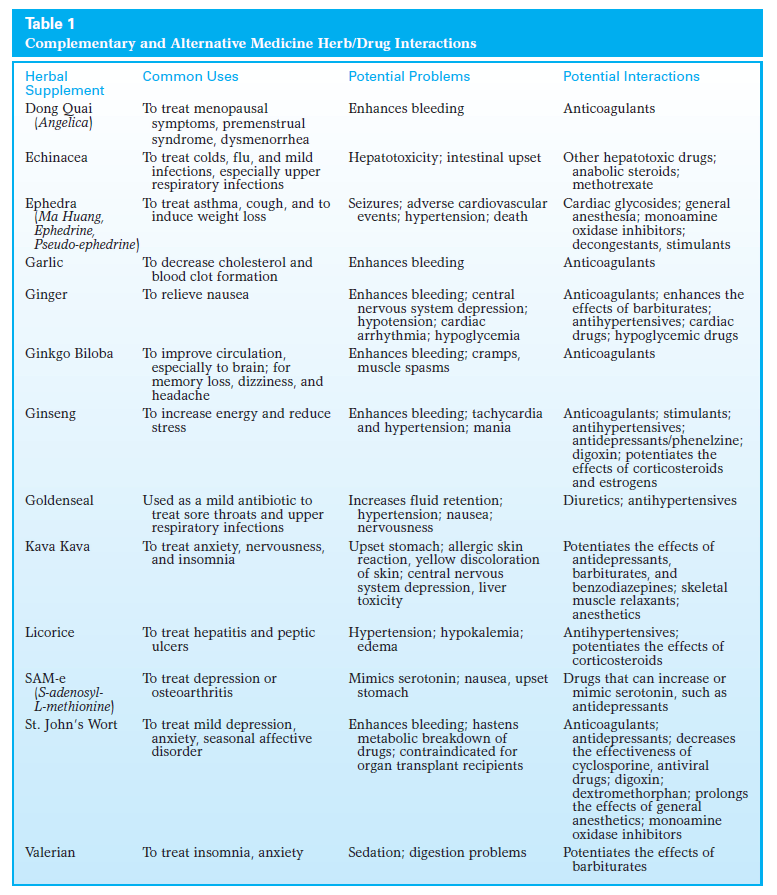
The NIH supports clinical trials of numerous therapies and treatments that are currently considered alternative or complementary. Information about these studies can be found on the NIH website at http://www.nccam.nih.gov. The American Academy of Orthopaedic Surgeons launched its own website for Complementary and Alternative Medicine at http://www3.aaos.org/courses/cam/camtoc.htm, where it offers useful links, information on herb-drug interactions (Table 1), and relevant articles on complementary and alternative medicine. Just because a therapy is labeled “alternative” does not mean it does not work—or works any less well than conventional treatments. Nonetheless, alternative medicine includes many untested (and therefore possibly dangerous) treatments. Thus, a cautious approach, such as asking “What is the evidence and what does it show?” is necessary to adhere to medicine’s golden rule: first do no harm. Once it is established that the risk of harm is not too high, alternative therapies may be fine choices, especially for those patients not helped by traditional approaches.
Key Terms
Acupuncture The insertion of needles into precisely defined points on the body; thought to realign imbalances of yin-yang and qi and thereby bring harmony to the “climate” of an individual
Alternative medicine A wide spectrum of treatments—many finding support from collective anecdotal evidence—that is not considered standard therapy because of the lack of a scientific rationale, clinical evidence, or a favorable historic tradition
Analgesic therapies Treatments used to decrease pain
Biologic therapies Treatments that make use of the body’s response to the applied therapy to either stimulate the body to produce the desired physiologic effect or interfere with the body’s pathophysiologic processes
Chiropractic therapy The identification and restoration of proper vertebral alignment via spinal manipulation
Chondroitin sulfate An important class of glycosaminoglycans in articular proteoglycans; the oral form is thought to prevent degradation of joint cartilage and relieve symptoms
Copper therapy The application of any of a number of copper devices to the body to reduce pain and inflammation associated with joint and connective tissue problems
Direct homeostatic therapies Treatments that help return the body to the normal healthy state without relying on the body’s response to achieve their ends
Glucosamine sulfate A fundamental component in the synthesis of both hyaluronic acid and chondroitin that is thought to promote cartilage repair and synthesis; the oral form is taken as a dietary supplement to treat arthritis
Homeopathy A system of therapeutics in which disorders characterized by a particular symptom are treated with a substance that causes that symptom in a healthy individual
Meditation Slow, rhythmic breathing while the mind is focused on a symbol, a mental image, or a mantra that is thought to promote relief for stress, headaches, anxiety, and emotional disorders
Placebo effect The beneficial effect of an inert therapy; thought to stimulate the mind to help produce either healing or analgesia that would not have occurred in its absence
Qigong A form of gentle exercises in which the flow of qi is stimulated along the meridians throughout the body
Static magnet therapy Application of a small disk of magnet to the body to relieve pain
Tai chi A low-impact exercise program that is derived from the martial arts in China and was founded in accordance with the belief that chi is a vital life force flowing through the body
Yoga A variety of disciplines designed to bring practitioners into union with mankind and a higher God or life force
References
1. Hrobjartsson A, Gotzsche PC: Is the placebo powerless? An analysis of clinical trials comparing placebo with no treatment. N Engl J Med 2001;344:1594-1602.
2. Kaptchuk TJ: Acupuncture: Theory, efficacy, and practice. Ann Intern Med 2002;136:374-383.
3. Brown D: Three Generations of Alternative Medicine: Behavioral Medicine, Integrated Medicine, and Energy Medicine. Boston University School of Medicine Alumni Report. Fall 1996.
4. Raso J, Barrett S: (eds): Alternative Health Care: A Comprehensive Guide: Natural Medicine, “Hands-On” Healing, Spiritualism, Occultism, and Much More. Amherst, NY, Prometheus Books, 1994.
5. Han JS: Acupuncture Activates Endogenous Systems of Analgesia. NIH Consensus Development Conference on Acupuncture: Program & Abstracts. Bethesda, MD, National Institutes of Health, 1997.
6 National Institutes of Health: NIH Consensus Development Conference on Acupuncture: Program and Abstracts. Bethesda, MD, National Institutes of Health (US), 1997, pp 1-38.
7. Meeker WC, Haldeman S: Chiropractic: A profession at the crossroads of mainstream and alternative medicine. Ann Intern Med 2002;136:216-227.
8. Koes BW, Assendelft WJ, van der Heijden GJ, et al: Spinal manipulation for low back pain: An updated systematic review of randomized clinical trials. Spine 1996;21:2860-2873.
9. Hurwitz EL, Aker PD, Adams AH, et al: Manipulation and mobilization of the cervical spine: A systematic review of the literature. Spine 1996;21:1746-1760.
10. van Tulder MW, Koes BW, Bouter LM: Conservative treatment of acute and chronic nonspecific low back pain: A systematic review of randomized controlled trials of the most common interventions. Spine 1997;22:2128-2156.
11. Bronfort G: Spinal manipulation: Current state of research and its indications. Neurol Clin 1999;17:91-111.
12. Lippiello L, Woodward J, Karpman R, et al: In vivo chondroprotection and metabolic synergy of glucosamine and chondroitin sulfate. Clin Orthop 2000;381:229-240.
13. Buckwalter JA, Callaghan JJ, Rosier RN: From oranges and lemons to glucosamine and chondroitin sulfate: Clinical observations stimulate basic research. J Bone Joint Surg Am 2001;83:1266-1268.
14. McAlindon TE, LaValley MP, Gulin JP, et al: Glucosamine and chondroitin for treatment of osteoarthritis: A systematic quality assessment and meta-analysis. JAMA 2000;283:1469-1475.
15. Reginster JY, Deroisy R, Rovati LC, et al: Long-term effects of glucosamine sulphate on osteoarthritis progression: A randomised, placebo-controlled clinical trial. Lancet 2001;357:251-256.
16. Thornton A, Lee P: Publication bias in meta-analysis: Its causes and consequences. J Clin Epidemiol 2000;53:207-216.
17. Haehl R, Clarke JH, Wheeler FJ: (eds): Samuel Hahnemann: His Life and Work: based on Recently Discovered State Papers, Documents, Letters, and etc. London, England, Homoeopathic Publishing, 1922.
18. Linde K, Clausius N, Ramirez G, et al: Are the clinical effects of homeopathy placebo effects? A meta-analysis of placebo-controlled trials. Lancet 1997;350:834-843.
19. Cucherat M, Haugh MC, Gooch M, et al: Evidence of clinical efficacy of homeopathy: A meta-analysis of clinical trials: HMRAG: Homeopathic Medicines Research Advisory Group. Eur J Clin Pharmacol 2000;56:27-33.
20. Fisher P, Scott DL: A randomized controlled trial of homeopathy in rheumatoid arthritis. Rheumatology 2001;40:1052-1055.
21. Singh BB, Berman BM, Hadhazy VA, et al: A pilot study of cognitive behavioral therapy in fibromyalgia. Altern Ther Health Med 1998;4:67-70.
22. Kaplan KH, Goldenberg DL, Galvin-Nadeau M: The impact of a meditation-based stress reduction program on fibromyalgia. Gen Hosp Psychiatry 1993;15:284-289.
23. Creamer P, Singh BB, Hochberg MC, et al: Sustained improvement produced by nonpharmacologic intervention in fibromyalgia: Results of a pilot study. Arthritis Care Res 2000;13:198-204.
24. Husted C, Pham L, Hekking A, et al: Improving quality of life for people with chronic conditions: The example of t’ai chi and multiple sclerosis. Altern Ther Health Med 1999;5:70-74.
25. Vallbona C, Richards T: Evolution of magnetic therapy from alternative to traditional medicine. Phys Med Rehabil Clin North Am 1999;10:729-754.
26. Vallbona C, Hazlewood CF, Jurida G: Response of pain to static magnetic fields in postpolio patients: A double-blind pilot study. Arch Phys Med Rehabil 1997;78:1200-1203.
27. Weinstraub M: Magnetic biostimulation in painful diabetic peripheral neuropathy: A novel intervention: A randomized, double-placebo crossover study. Am J Pain Manage 1999;9:8-17.
28. Collacott EA, Zimmerman JT, White DW, et al: Bipolar permanent magnets for the treatment of chronic low back pain: A pilot study. JAMA 2000;283:1322-1325.
29. Walker WR, Keats DM: An investigation of the therapeutic value of the “copper bracelet”: Dermal assimilation of copper in arthritic/rheumatoid conditions. Agents Actions 1976;6:454-459.
30. Berthon G: Is copper pro- or anti-inflammatory? A reconciling view and a novel approach for the use of copper in the control of inflammation. Agents Actions 1993;39:210-217.
31 Walker WR, Beveridge SJ, Whitehouse MW: Dermal copper drugs: The copper bracelet and Cu(II) salicylate complexes. Agents Actions 1981;(suppl 8):359-367.
32. Shackel NA, Day RO, Kellett B, et al: Copper-salicylate gel for pain relief in osteoarthritis: A randomised controlled trial. Med J Aust 1997;167:134-136.
