

Articular cartilage, the resilient durable tissue that forms the opposing articulating surfaces of synovial joints, provides these surfaces with the low friction, lubrication, and wear characteristics that make possible smooth painless movement.1 It also absorbs mechanical load and spreads these applied loads onto subchondral bone.2 No synthetic or reparative material performs as well as a natural joint surface. Injuries or diseases of articular cartilage cause pain and loss of mobility for more people than disorders of any other musculoskeletal tissue. This chapter reviews current understanding of how the unique structure and composition of articular cartilage give the tissue its remarkable mechanical properties and durability. It also introduces the subjects of articular cartilage injury and repair.
Physiologic Function
The articular cartilage of synovial joints is subject to high loads applied repetitively for many decades. Thus, the structural molecules, including collagens, proteoglycans, and other molecules of articular cartilage, must be organized into a strong, fatigue-resistant, and tough, solid matrix. This matrix must be capable of sustaining the high stresses and strains developed within the tissue from these loads. In terms of material behavior, this solid matrix is porous, permeable, and very soft.2,3 Water resides in the microscopic pores, and application of loads to the tissue forces the water through the porous-permeable solid matrix. Thus, articular cartilage is a biphasic material, composed of solid and fluid phases.2,3
Normal Histology and Composition
Unlike most tissues, articular cartilage does not have blood vessels, nerves, or lymphatics. It consists of a highly organized extracellular matrix(ECM) with a sparse population of highly specialized cells (chondrocytes) distributed throughout the tissue.1 The primary components of the ECM are water, proteoglycans, and collagens, with other proteins and glycoproteins present in smaller amounts.
The structure and composition of the articular cartilage vary throughout its depth (Fig. 1),
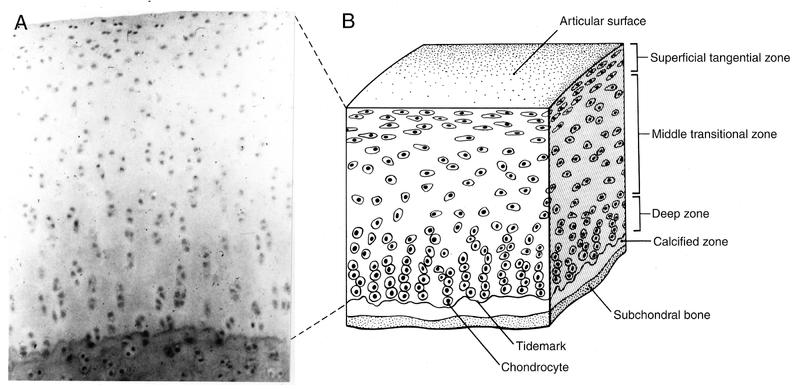
Figure 1 A, Histologic section of normal adult articular cartilage showing even Safranin 0 staining and distribution of chondrocytes. B, Schematic diagram of chondrocyte organization in the three major zones of the uncalcified cartilage, the tidemark, and the subchondral bone.
(Reproduced with permission from Mow VC, Proctor CS, Kelly MA: Biomechanics of articular cartilage, in Nordin M, Frankel VH (eds): Basic Biomechanics of the Musculoskeletal System, ed 2. Philadelphia, PA, Lea & Febiger, 1989, pp 31–57.)
from the articular surface to the subchondral bone. These differences include cell shape and volume, collagen fibril diameter and orientation, proteoglycan concentration and water content. The cartilage can be divided into four zones: the superficial tangential zone; the middle or transitional zone; the deep zone; and the calcified zone.
The superficial tangential zone forms the smooth, nearly frictionless gliding surface. The thin collagen fibrils there are arranged parallel to the surface, and the chondrocytes are elongated with the long axis parallel to the surface. Here the proteoglycan content is at its lowest concentration and the water content at its highest. The middle (transitional) zone contains collagen fibers with less apparent organization, and the chondrocytes have a more rounded appearance. The deep zone contains the highest concentration of proteoglycans and the lowest water content. The collagen fibers are organized vertical to the joint surface, and the chondrocytes are arranged in a columnar fashion. The deepest layer, the calcifiedzone, separates hyaline cartilage from the subchondral bone. Histologic staining with hematoxylin and eosin shows a wavy bluish line, called the tidemark, which separates the deep zone from the calcified zone.
In addition to these articular surface-to-bone zonal distinctions, the ECM is divided into pericellular, territorial, or interterritorial regions (Fig. 2).
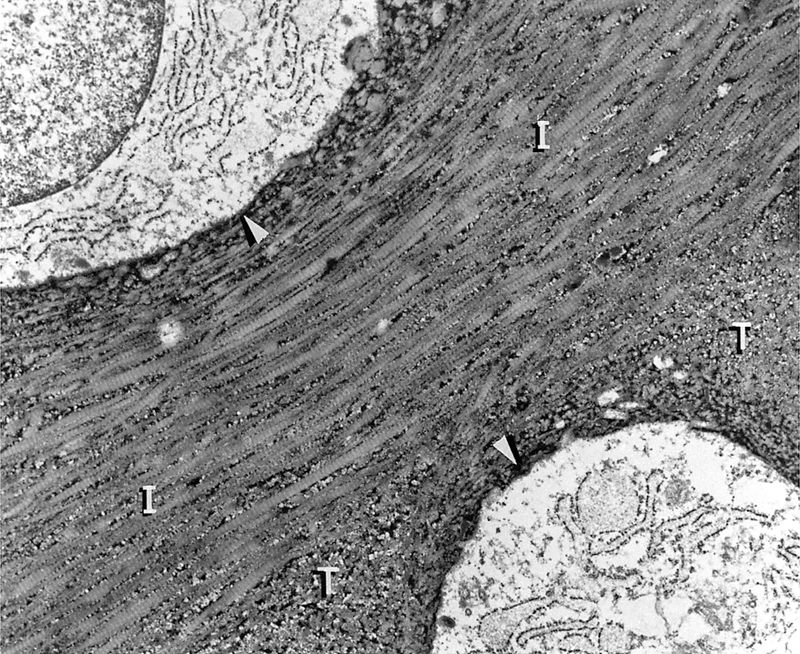
Figure 2 Electron microscopic view (×8700) of mature rabbit articular cartilage from the medial femoral condyle. Micrograph shows cytoskeletal elements, and pericellular matrix (arrowhead), territorial matrix (T), and interterritorial matrix (I). The pericellular matrix lacks cross-striated collagen fibrils, whereas the territorial matrix has a fine fibrillar collagen network. The collagen of the interterritorial matrix has coarser fibers, and they tend to lie parallel to each other.
(Reproduced with permission from Buckwalter JA, Hunziker EB: Articular cartilage biology and morphology, in Mow VC, Ratcliffe A (eds): Structure and Function of Articular Cartilage. Boca Raton, FL, CRC Press, 1993.)
The pericellular matrix is a thin layer that completely surrounds each chondrocyte. It contains proteoglycans and other noncollagenous matrix components. This pericellular matrix serves as an important biomechanical buffer between the territorial matrix and the cell. The territorial matrix surrounds the pericellular matrix, and it is characterized by thin collagen fibrils that form a fibrillar network that is distinct from the surrounding interterritorial matrix. The interterritorial matrix is the largest of the matrix regions and contributes most of the material properties of the articular cartilage. It encompasses all of the matrix between the territorial matrices of the individual cells or clusters of cells and contains large collagen fibers and most of the proteoglycans.
Chondrocytes
The formation and maintenance of articular cartilage depends on chondrocytes.1,4,5 These are derived from mesenchymal cells, which differentiate during skeletal morphogenesis. During skeletal growth, these cells generate a large amount of ECM, and in mature tissue, they maintain this matrix. They are metabolically active and respond to a variety of environmental stimuli, including growth factors, interleukins, and pharmaceutical agents; matrix molecules; mechanical loads; electrical potential and currents; and hydrostatic and osmotic pressure changes.
Extracellular Matrix
Because the chondrocytes of articular cartilage occupy only a small proportion of the total volume of the tissue, the material properties of cartilage are determined primarily by the ECM.6 Normal cartilage has water contents ranging from 65% to 80% of its total wet weight. The remaining wet weight of the tissue is accounted for principally by two major classes of structural macromolecular materials: collagens and proteoglycans. Several other classes of molecules, including lipids, phospholipids, proteins, and glycoproteins, make up the remaining portion of the ECM.
Water
Water is the most abundant component of normal articular cartilage, making up from 65% to 80% of the wet weight of the tissue.6,7 A small percentage of this water is contained in the intracellular space, about 30% is associated with the intrafibrillar space within the collagen, and the remainder is contained in the ECM. Water content varies throughout cartilage, decreasing in concentration from approximately 80% at the surface to 65% in the deep zone. Most of the water can be moved through the ECM by compressing the solid matrix. Frictional resistance against this flow through the ECM is very high, and this resistance to water flow within the ECM is the basis of articular cartilage’s ability to cushion very high joint loads.
Collagen
Collagen is a triple helix protein that is the major structural macromolecule of the ECM.8,9 There are at least 15 distinct collagen types composed of at least 29 genetically distinct chains. All members of the collagen family contain a characteristic triple-helical structure that may constitute most of the length of the molecule. Over 50% of the dry weight of articular cartilage consists of collagen. The major cartilage collagen, which represents 90% to 95% of the total, is known as type II. Articular cartilage collagens provide the tissue’s tensile properties and serve to immobilize the proteoglycans within the ECM. Collagen fibers in cartilage are generally thinner than those seen in tendon or bone, and this may be, in part, a function of their interaction with the relatively large amount of proteoglycan in this tissue.
Proteoglycans
Proteoglycans are complex macromolecules that consist of a protein core with covalently bound polysaccharide (glycosaminoglycan) chains (Fig. 3).
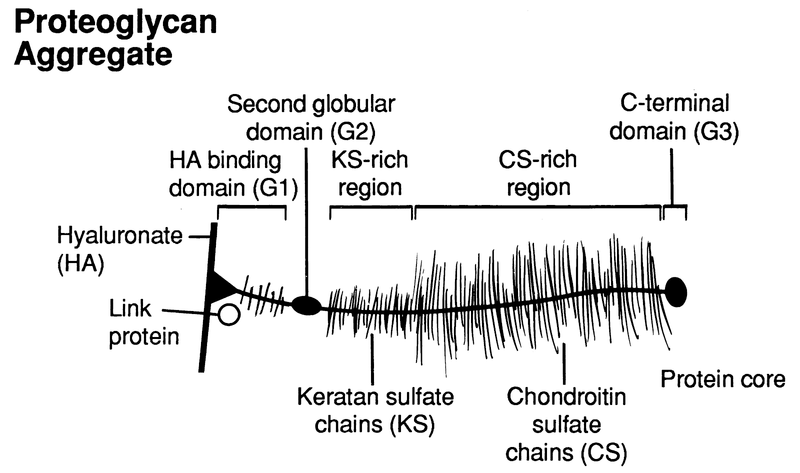
Figure 3 Schematic diagram of a proteoglycan. The protein core has several globular domains (G1, G2, and G3), with other regions containing the keratan sulfate and chondroitin sulfate glycosaminoglycan chains. The N-terminal G1 domain is able to bind specifically to hyaluronate. This binding is stabilized by link protein.
(Reproduced from Mankin HJ, Mow VC, Buckwalter JA, Iannotti JP, Ratcliffe A: Articular cartilage structure, composition, and function, in Buckwalter JA, Einhorn TA, Simon SR (eds): Orthopaedic Basic Science: Biology and Biomechanics of the Musculoskeletal System, ed 2. Rosemont, IL, American Academy of Orthopaedic Surgeons, 2000, pp 443-470.)<
Glycosaminoglycans consist of long-chain, unbranched, repeating disaccharide units. Three major types have been found in cartilage: (1) chondroitin sulfate (found in two isomeric forms, chondroitin 4-sulfate and chondroitin 6-sulfate); (2) keratan sulfate; and (3) dermatan sulfate. The chondroitin sulfates are the most prevalent glycosaminoglycans in cartilage. They account for 55% to 90% of the total population, depending principally on the age of the subject. Each chain is composed of 25 to 30 repeating disaccharide units. The keratan sulfate constituent of articular cartilage resides primarily within the large, aggregating proteoglycan. Hyaluronate is also a glycosaminoglycan, but unlike those described above, it is not sulfated. A further distinguishing feature of hyaluronate is that it is not bound to a protein core, and, therefore, is not part of a proteoglycan.
Approximately 80% to 90% of all proteoglycans in cartilage are of the large, aggregating type, called aggrecans (Fig. 4).
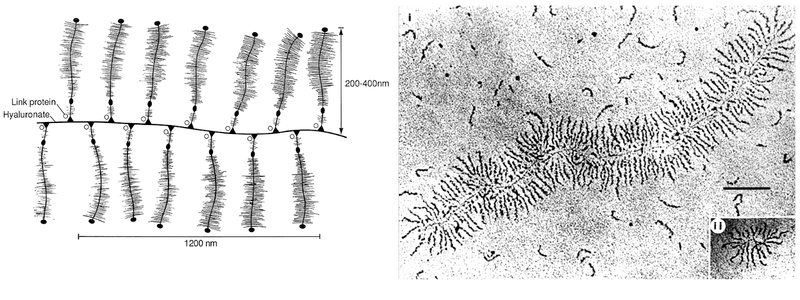
Figure 4 Electron micrograph of bovine articular cartilage proteoglycan aggregates from skeletally immature calf. The aggregates consist of a central hyaluronic acid filament and multiple attached monomers.
(Reproduced with permission from Buckwalter JA, Kuettner KE, Thonar EJ: Age-related changes in articular cartilage proteoglycans: Electron microscopic studies. J Orthop Res 1985;3:251–257.)
They consist of a long, extended protein core with up to 100 chondroitin sulfate and 50 keratan sulfate glycosaminoglycan chains covalently bound to the protein core. In young individuals, the concentration of keratan sulfate is relatively low, and chondroitin 4-sulfate is the predominant form of chondroitin sulfate. With increasing age, the concentration of keratan sulfate increases, and chondroitin 6-sulfate becomes the predominant isomeric form of chondroitin sulfate.
Metabolism
Despite the lack of a blood supply, articular cartilage chondrocytes have a high level of metabolic activity1 (Fig. 5).
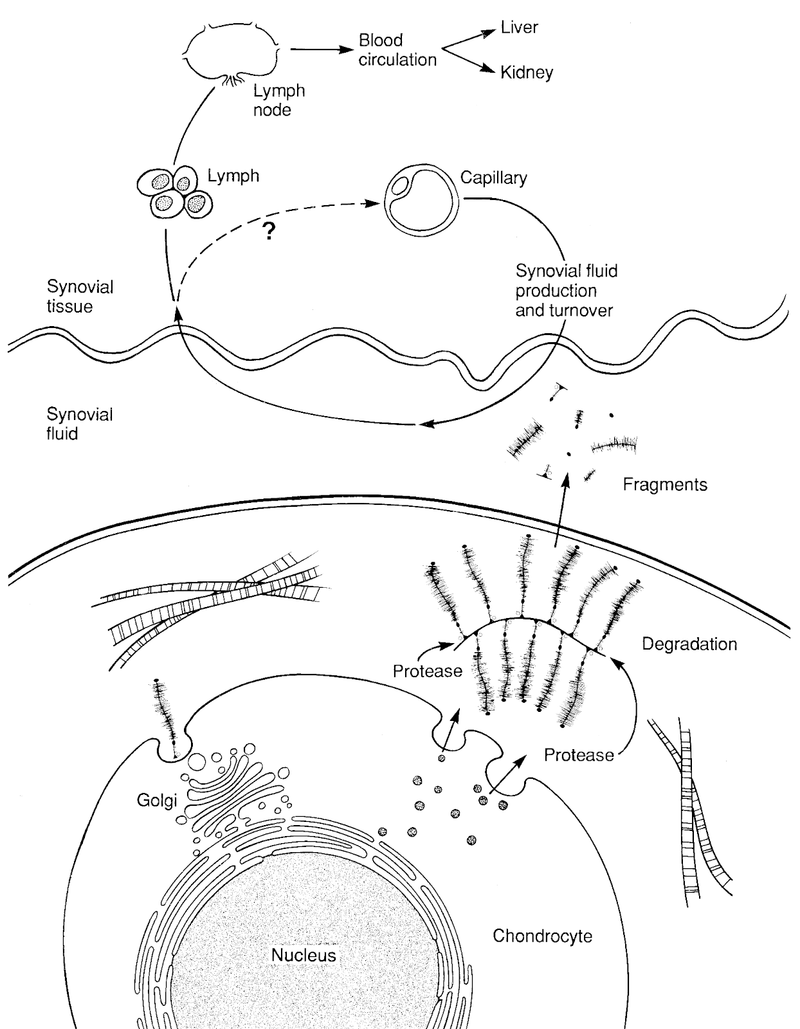
Figure 5 Schematic diagram of the metabolic events controlling the proteoglycans in cartilage. The chondrocytes synthesize and secrete aggrecan, link protein and hyaluronate, and they become incorporated into functional aggregates. Enzymes released by the cells break down the proteoglycan aggregates. The fragments are released from the matrix into the synovial fluid, and from there the fragments are taken up by the lymphatics and moved into the circulating blood.
(Reproduced from Mankin HJ, Mow VC, Buckwalter JA, Iannotti JP, Ratcliffe A: Articular cartilage structure, composition, and function, in Buckwalter JA, Einhorn TA, Simon SR (eds): Orthopaedic Basic Science: Biology and Biomechanics of the Musculoskeletal System, ed 2. Rosemont, IL, American Academy of Orthopaedic Surgeons, 2000, pp 443-470.)
Chondrocytes synthesize and assemble the cartilaginous matrix components and direct their distribution within the tissue. These synthetic and assembly processes involve synthesis of proteins, synthesis of glycosaminoglycan chains and their addition to the appropriate protein cores, and secretion of the completed molecules into the ECM. All of these actions take place under avascular and, at times, anaerobicconditions, with considerable variation in local mechanical, electrical and physicochemical states. In addition, the chondrocyte directs internal ECM remodeling by regulating an elaborate series of degradative enzymes.
The maintenance of a normal ECM depends on three factors: (1) the ability of the chondrocytes to balance the rates of synthesis of matrix components, (2) the component’s appropriate incorporation into the matrix, and (3) the component’s degradation and release rate from the cartilage. The cells do this by responding to mechanical, electrical, and chemical stimuli in the local environments. Soluble mediators (eg, growth factors and interleukins), and changes in matrix composition, mechanical loads, and electric fields all influence the metabolic activities of the chondrocytes. The response of the chondrocytes usually will maintain a stable matrix. However, in some cases, the response of the cells can lead to a change of matrix composition and ultrastructural organization, and eventually to cartilage degeneration.
Mechanical Signal Transduction
Because articular cartilage is an aneural tissue, the nerve impulses that regulate many body processes cannot provide information to chondrocytes. Cellular and humoral immune responses also are not likely to occur in cartilage, because both monocytes and immunoglobulins tend to be excluded from the tissue by virtue of their size. However, the cells derive considerable information from the mechanical stresses and strains that act on their membranes as a result of physical forces applied to the tissue.10-12 Joint motion and loading appear to serve as principal stimuli to the cartilage cells. How the chondrocytes sense their mechanical environment and convert the information received to changes in gene expression is unknown, although integrins (molecules that span the plasma membrane of the chondrocytes and are connected to the intracellular cytoplasm) are likely to be involved.
Effects of Joint Motion and Loading
Joint motion and loading are required to maintain the normal composition, structure, and mechanical properties of adult articular cartilage.1,13 When the intensity or frequency of loading exceeds or falls below these necessary levels, the balance between synthesis and degradation will be altered, and changes in the composition and microstructure of cartilage will follow.
Prolonged reduction of joint motion caused by rigid immobilization leads to degeneration of articular cartilage. These changes result, in part, because normal nutritive transport to cartilage from the synovial fluid by means of diffusion is diminished when the fluid does not move. In addition, the mechanical properties of articular cartilage will be compromised with immobilization. These biochemical and biomechanical changes are, at least in part, reversible if the joint is allowed to move. A better understanding of the deleterious effects of joint immobilization has led to treatments of joint injuries that allow patients at least some joint motion while the injuries are healing.
Excessive joint loading also may affect articular cartilage. Catabolic effects can be induced by a single-impact or repetitive trauma and may serve as the initiating factor for progressive degenerative changes. However, regular joint use, including running, has not been shown to cause joint damage in normal joints.14
The specific mechanisms by which joint loading influences chondrocyte function remain unknown, although various mechanical, physicochemical, and electrical transduction mechanisms have been proposed.10,12 Matrix deformation produces fluid and ion flow, which may facilitate chondrocyte nutrition. Deformation and fluid flow lead to changes in the local charge density within the matrix, resulting in an electric potential that may serve as cellular signals.
Development and Aging
Unlike many other tissues, immature articular cartilage differs considerably from adult articular cartilage. On gross inspection, the cartilage from skeletally immature individuals appears blue-white, presumably because of the presence of vascular structures in the underlying immature bone, and is relatively thick. The thickness reflects the two tasks of the cartilage mass: to serve as a cartilaginous articular surface for the joint and to be a source of endochondral ossification of the underlying bone. Immature articular cartilage is also considerably more cellular than the adult tissue.
With increasing age, the cartilage undergoes changes in matrix organization, mechanical properties, and cell function. All of these changes increase the risk of tissue degeneration.15,16 The tensile strength of the superficial cartilage layer decreases and perhaps most important, the ability of the chondrocytes to maintain and restore the tissue diminishes.17,18
Pathophysiology
Injury and Repair
Although articular cartilage can withstand many decades of joint use, excessive force can disrupt the tissue. Articular cartilage is metabolically active, yet it has a limited capacity to replace damaged or lost cells and matrix.19 Factors responsible for this limited response include a paucity of native cells and a lack of blood vessels to import more. Because of the unique characteristics of articular cartilage, the repair responses to superficial injuries and injuries that damage subchondral bone as well as articular cartilage differ considerably.19
Superficial Articular Cartilage Injuries
High-level force applied to articular surfaces can cause articular cartilage ruptures or tears that do not extend into the underlying bone (Fig. 6).
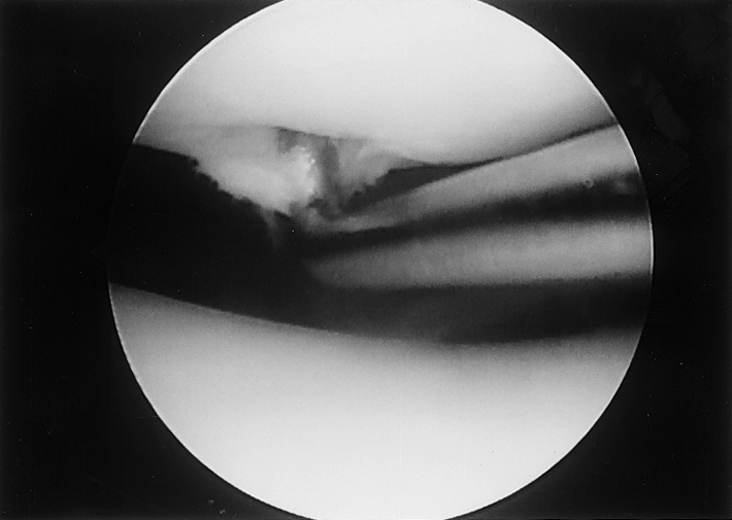
Figure 6 Arthroscopic image of a partial-thickness lesion of the articular cartilage of the patella.
(Reproduced from Boden BP, Pearsall AW, Garrett WE Jr, Feagin JA: Patellofemoral instability: Evaluation and management. J Am Acad Orthop Surg 1997;5:47-57.)
Articular cartilage injuries that do not cross the tidemark generally do not heal.19 Why do superficial injuries behave this way? First, these lesions do not cause hemorrhage or initiate an inflammatory response. Also, fibrin clots rarely form on exposed surfaces of normal cartilage. Chondrocytes near the injury may proliferate and synthesize new matrix, but they do not migrate into the lesion. The new matrix they produce remains in the immediate region of the chondrocytes, and their proliferative and synthetic activity fails to provide new tissue to repair the damage. By increasing the load on adjacent tissue, large articular surface defects may also cause degeneration of previously normal regions of the articular surface.
Deep Articular Cartilage and Subchondral Bone Injuries
Injuries that disrupt articular cartilage and the underlying subchondral bone are referred to as osteochondral fractures. Mechanical injury that disrupts bone as well as articular cartilage causes hemorrhage, fibrin clot formation, and inflammation.19 Soon after creation of the osteochondral defect, a fibrin clot fills the injury site and inflammatory cells migrate into the clot. Injury to bone and subsequent clot formation release growth factors and proteins that influence multiple cell functions, including migration, proliferation, and differentiation. Bone matrix contains a number of growth factors, and platelets release at least two important growth factors: platelet-derived growth factor and transforming growth factor-β.
Cells within the bony portion of the osteochondral defect form immature bone, fibrous tissue, and cartilage with a hyaline matrix. This bone formation restores the original volume of injured subchondral bone but rarely, if ever, progresses into the chondral portion of the defect. In general, by 6 months after injury, the subchondral bone defect has been repaired with a tissue that is primarily bone but also contains some regions of fibrous tissue and hyaline cartilage. In contrast, the chondral defect is not repaired completely and does not restore the normal structure, composition, or mechanical properties of an articular surface.
In most injuries, the chondral repair tissue begins to show evidence of fibrillation and loss of chondrocytes and hyaline matrix in less than 1 year. However, the fate of cartilage repair tissue is not always progressive deterioration. Occasionally, the repair tissue persists and appears to function satisfactorily as an articular surface for a prolonged period of time. The reasons why some repair tissue persists for a prolonged period of time while most repair tissue deteriorates remain unknown. Because repair tissue can provide a functional surface in some instances, many orthopaedic surgeons will drill, puncture, or abrade below the tidemark and stimulate bleeding of the bone in an attempt to restore the articular surface. Of course, the repair tissue is fibrocartilage, not hyaline cartilage. Fibrocartilage is a form of cartilage that is less resilient, less smooth, and less suited to load bearing.
Osteoarthritis
Osteoarthritis (OA), also referred to as degenerative joint disease, is characterized by a generally progressive loss of articular cartilage accompanied by attempted repair of articular cartilage, remodeling, and sclerosis of subchondral bone, and in many instances, the formation of subchondral bone cysts and osteophytes19-24 (Fig. 7).
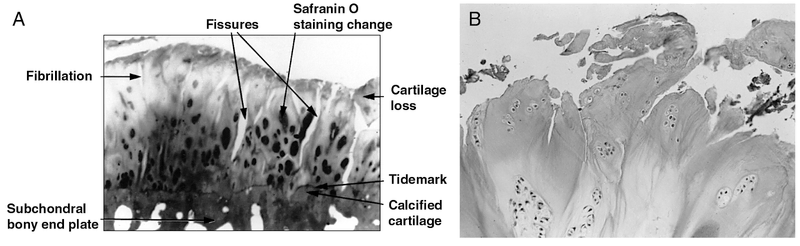
Figure 7 A, Histologic section of osteoarthritic cartilage from a humeral head removed at surgery for total shoulder arthroplasty. Note the significant fibrillation, vertical cleft formation, the tidemark, and the subchondral bony end plate. B, Another view of surface fibrillation showing vertical cleft formation and widespread large necrotic regions of the tissue devoid of cells. Clusters of cells, common in osteoarthritic tissues, are also seen.
(Reproduced from Mankin HJ, Mow VC, Buckwalter JA: Articular cartilage repair and osteoarthritis, in Buckwalter JA, Einhorn TA, Simon SR (eds): Orthopaedic Basic Science: Biology and Biomechanics of the Musculoskeletal System, ed 2. Rosemont, IL, American Academy of Orthopaedic Surgeons, 2000, pp 471-488.)
In addition to the histopathologic changes in the synovial joint, diagnosis of OA requires the presence of symptoms and signs that may include joint pain, restricted motion, crepitus with motion, joint effusions, and deformity. The structural changes characteristic of OA include fissuring and focal erosive cartilage lesions, cartilage loss and destruction, subchondral bone sclerosis, and cyst and large osteophyte formation at the joint margins.
Unlike the destruction seen in joint diseases with a major inflammatory component, OA consists of a sequence of cell and matrix changes that result in loss of articular cartilage structure and function, accompanied by cartilage repair and bone remodeling reactions. Because of the repair and remodeling reactions, the degeneration of the articular surface in OA is not uniformly progressive,24 and the rate of joint degeneration varies among individuals and among joints. Occasionally, it occurs rapidly, but in most joints it progresses slowly over many years. OA may stabilize or even improve spontaneously with at least partial restoration of the articular surface and a decrease in symptoms.
OA has no single cause, but by a variety of means reaches a common end stage. Despite many years of research, considerable speculation still exists concerning various factors that may contribute to the initiation and perpetuation of the disorder. OA develops most commonly in the absence of a specific known cause, a condition referred to as primary or idiopathic OA.19 Less frequently, it develops as a result of joint injuries, infections, or a variety of hereditary, developmental, metabolic, and neurologic disorders, a group of conditions referred to as secondary OA.19 The age of onset of secondary OA depends on the underlying cause; thus, it may develop in young adults and even children as well as the elderly. In contrast, a strong association exists between primary OA and age. Despite this strong association and the widespread view that OA results from wear-and-tear processes, the relationships among joint use, aging, and joint degeneration remain uncertain. Furthermore, the changes observed in articular cartilage from the normal joints of older individuals differ from those observed in OA, and normal lifelong joint use has not been shown to cause degeneration.14 Thus, OA is not simply the result of mechanical wear from joint use; the biologic processes of tissuemaintenance and remodeling certainly play important roles in the continued normal function of articular cartilage with age.
Research and New Directions
Role of ECM
An improved understanding of the biomechanics of articular cartilage has clarified how the components of the ECM provide a durable, resilient articular surface. Based on these advances and the understanding of articular cartilage biology, researchers are now exploring the complex relationships between chondrocytes and their ECM. In particular, they are learning how molecules in the ECM influence chondrocyte function and how the chondrocytes are continually remodeling and maintaining their ECM.
Mechanical Signs
Wolff’s law notes that bone forms in response to mechanical load. A similar law has not been articulated for cartilage, but new insights from studies of mechanical signal transduction in articular cartilage help explain how loading of joint surfaces influences chondrocyte function. Ultimately, the composition, molecular structure, and mechanical properties of the articular cartilage matrix may be shown to be dependent on the mechanical signals presented.
Growth Factors
Exciting new advances in the use of growth factors that stimulate chondrocyte function are leading to new strategies for facilitating maintenance and repair of articular cartilage. Although cartilage normally does not heal, it is hoped that the addition of various factors may help induce such repair.
Transplantation
Developments in transplantation and the ability to transplant articular chondrocytes have shown that this technique is clinically feasible and has great potential for promoting the resurfacing of damaged synovial joints. These techniques are still in their infancy and research to improve them is ongoing.
Medications
Although most medications for OA aim to provide symptomatic relief, new research into the mechanisms of articular cartilage degradation suggests that it may be possible to develop medications that will inhibit matrix degradation. Such medications would truly modify the disease and not simply palliate it.
Key Terms
Aggrecans An aggregating form of proteoglycan composed of many glycosaminoglycan chains bound to a protein core
Articular cartilage The tissue that forms the opposing surfaces of synovial joints
Calcified zone The fourth zone and deepest layer of articular cartilage; separates hyaline cartilage from the subchondral bone
Collagen A triple helix protein that is the major structural macromolecule of the ECM of articular cartilage; found also in bone, tendon, and ligament
Deep zone The third zone of articular cartilage in which the collagen fibers are organized vertical to the joint surface, and the chondrocytes are arranged in a columnar fashion
Extracellular matrix (ECM) A complex structural entity surrounding and supporting cells that are found within tissues; the primary components of ECM in cartilage are water, proteoglycans, and collagens, with other proteins and glycoproteins present in smaller amounts
Glycosaminoglycans Polysaccharides consisting of long-chain, unbranched, repeating disaccharide units, such as keratan sulfate and chondroitin sulfate
Middle (transitional) zone The middle zone of articular cartilage in which collagen fibers are less organized and the chondrocytes have a more rounded appearance
Osteochondral fractures Injuries that disrupt articular cartilage and the underlying subchondral bone
Proteoglycans Complex macromolecules that consist of a protein core with covalently bound polysaccharide (glycosaminoglycan) chains
Superficial tangential zone The smooth, nearly frictionless gliding surface of articular cartilage in which thin collagen fibrils are arranged parallel to the surface
Tidemark A wavy bluish line visible on histologic staining with hematoxylin and eosin that signifies the border between the deep zone and the zone of calcified cartilage
References
1. Buckwalter JA, Mankin HJ: Articular cartilage: Part I. Tissue design and chondrocyte-matrix interactions. J Bone Joint Surg Am 1997;79:600-611.
2. Mow VC, Ateshian GA: Lubrication and wear of diarthrodial joints, in Mow VC, Hayes WC (eds): Basic Orthopaedic Biomechanics, ed 2. Philadelphia, PA, Lippincott-Raven, 1997, pp 275-315.
3. Setton LA, Zhu W, Mow VC: The biphasic poroviscoelastic behavior of articular cartilage: Role of the surface zone in governing the compressive behavior.J Biomech 1993;26:581-592.
4. Aydelotte MB, Schumacher BL, Kuettner KE: Heterogeneity of articular chondrocytes, in Kuettner KE, Schleyerbach R, Peyron JG, Hascall VC (eds): Articular Cartilage and Osteoarthritis. New York, NY, Raven Press, 1992, pp 237-249.
5. Stockwell RA: (ed): Biology of Cartilage Cells. Cambridge, England, Cambridge University Press, 1979.
6. Mankin HJ, Thrasher AZ: Water content and binding in normal and osteoarthritic human cartilage. J Bone Joint Surg Am 1975;57:76-80.
7. Mankin HJ: The water of articular cartilage, in Simon WH (ed): The Human Joint in Health and Disease. Philadelphia, PA, University of Pennsylvania Press, 1978, pp 37-42.
8. Eyre DR: Collagen structure and function in articular cartilage: Metabolic changes in the development of osteoarthritis, in Kuettner KE, Goldberg VM (eds): Osteoarthritic Disorders. Rosemont, IL, American Academy of Orthopaedic Surgeons, 1995, pp 219-227.
9. Eyre DR, Wu JJ, Woods P: Cartilage-specific collagens: Structural studies, in Kuettner KE, Schleyerbach R, Peyron JG, Hascall VC (eds): Articular Cartilage and Osteoarthritis. New York, NY, Raven Press, 1992, pp 119-131.
10. Buschmann MD, Gluzband YA, Grodzinsky AJ, et al: Mechanical compression modulates matrix biosynthesis in chondrocyte/agarose culture. J Cell Sci 1995;108:1497-1508.
11. Gray ML, Pizzanelli AM, Grodzinsky AJ, et al: Mechanical and physiochemical determinants of chondrocyte biosynthetic response. J Orthop Res 1988;6:777-792.
12. Kim YJ, Sah RL, Grodzinsky AJ, et al: Mechanical regulation of cartilage biosynthetic behavior: Physical stimuli. Arch Biochem Biophys 1994;311:1-12.
13. Buckwalter JA: Activity vs. rest in the treatment of bone, soft tissue and joint injuries. Iowa Orthop J 1995;15:29-42.
14. Buckwalter JA, Lane NE: Athletics and osteoarthritis. Am J Sports Med 1997;25:873-881.
15. Buckwalter JA, Woo SL, Goldberg VM, et al: Soft-tissue aging and musculoskeletal function. J Bone Joint Surg Am 1993;75:1533-1548.
16. Roughley PJ: Articular cartilage: Matrix changes with aging, in Buckwalter JA, Goldberg VM, Woo SL-Y (eds): Musculoskeletal Soft-Tissue Aging: Impact on Mobility. Rosemont, IL, American Academy of Orthopaedic Surgeons, 1993, pp 151-164.
17. Martin JA, Ellerbroek SM, Buckwalter JA: Age-related decline in chondrocyte response to insulin-like growth factor-I: The role of growth factor binding proteins. J Orthop Res 1997;15:491-498.
18. Martin JA, Buckwalter JA: Telomere erosion and senescence in human articular cartilage chondrocytes. J Gerontol A Biol Sci Med Sci 2001;56:B172-B179.
19. Buckwalter JA, Mankin HJ: Articular cartilage: Part II. Degeneration and osteoarthrosis, repair, regeneration, and transplantation.J Bone Joint Surg Am 1997;79:612-632.
20. Dieppe P: The classification and diagnosis of osteoarthritis, in Kuettner KE, Goldberg VM (eds): Osteoarthritic Disorders. Rosemont, IL, American Academy of Orthopaedic Surgeons, 1995, pp 5-12.
21. Felson DT: The epidemiology of osteoarthritis: Prevalence and risk factors, in Kuettner KE, Goldberg VM (eds): Osteoarthritic Disorders. Rosemont, IL, American Academy of Orthopaedic Surgeons, 1995, pp 13-24.
22. Schiller AL: Pathology of osteoarthritis, in Kuettner KE, Goldberg VM (eds): Osteoarthritic Disorders. Rosemont, IL, American Academy of Orthopaedic Surgeons, 1995, pp 95-101.
23. Buckwalter JA, Martin J: Degenerative joint disease. Clin Symp 1995;47:2-32.
24. Buckwalter JA, Mow VC, Hunziker EB: Concepts of cartilage repair in osteoarthritis, in Moskowitz RW (ed): Osteoarthritis: Diagnosis and Medical/Surgical Management, ed 3. Philadelphia, PA, WB Saunders, 2001, pp 101-114.
