

Synovial tissue is found in joints, tendon sheaths, and bursae and allows smooth motion. Synovial tissue is organized in a membranous structure called the synovium. This chapter describes the gross anatomy, histology, and function of synovium, on which the joints, tendons, and bursae depend for motion and metabolism. Synovial fluid, which is produced by the synovium and functions as the conduit for the synovium’s complex role, will also be discussed.
Both inflammatory and noninflammatory conditions affect the synovium. The discussion of normal synovium and synovial fluid will lay the groundwork for understanding these conditions as well as synovial fluid collections, termed effusions, which occur in inflammatory and noninflammatory states. An understanding of normal synovium is also required to appreciate uncommon diseases, such as pigmented villonodular synovitis (PVNS) and synovial chondromatosis, that are unique to synovial tissue. The second half of this chapter focuses on the pathologic conditions that can affect the synovium.
Physiologic Function
Synovial joints have two opposing surfaces covered with articular cartilage that are attached at their periphery by the joint capsule. The synovium is the lining tissue of the capsule and originates at the periphery of the articular cartilage on both sides of the joint, coating the capsular structures. The capsule, along with its synovial lining, creates a pouch that contains synovial fluid secreted by the synovium. All intra-articular ligaments, such as the anterior cruciate ligament in the knee and ligamentum teres in the hip, are also surrounded by synovium. Intra-articular tendons, such as tendons of the long head of the biceps in the shoulder and the popliteus in the knee are also covered by synovial tissue. The unique structure of synovial joints permits the sliding of the articular surfaces with less friction than is created by ice rubbing on ice.
Synovium is also found lining bursae and tendon sheaths. Similar to its function in the synovial joint, the synovium secretes fluid and allows the smooth passage of tendons through their sheath and decreases friction between a bony prominence and overlying skin or tendon.
Normal Histology and Anatomy
Histology
Synovial cells are classically defined as type A or type B synoviocytes. Type A synoviocytes are macrophage-like and derived from the hematopoietic system. These cells contain multiple lysosomes and play a phagocytic role in removing particulate debris from the joint. Type B synoviocytes are fibroblastic in nature and derived from the mesenchyme. These cells also secrete the hyaluronic acid present in synovial fluid and in the matrix surrounding synovial cells.
Gross Anatomy
The number of cell layers that form the synovium varies but usually ranges between two and four cell layers thick (Fig. 1).
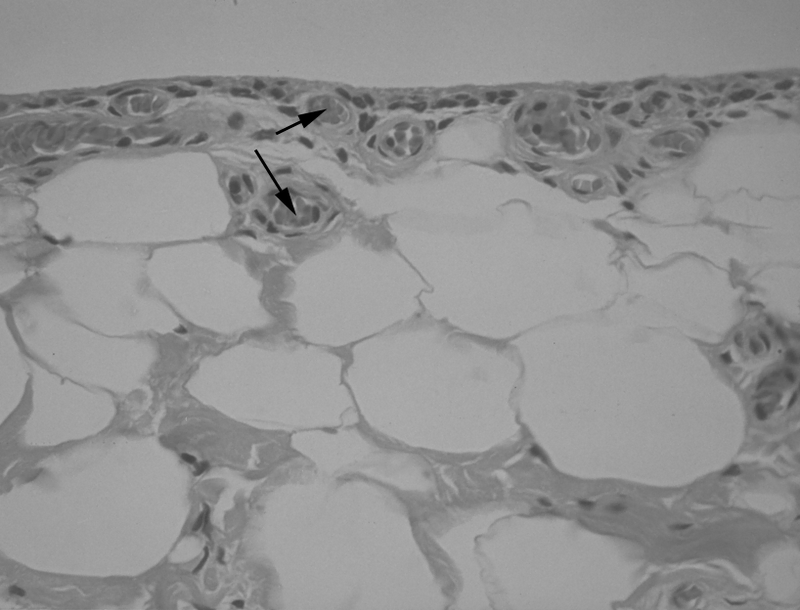
Figure 1 Normal synovium consisting of two cell layers of synoviocytes overlying fibrofatty supportive stroma. Note the presence of blood-filled capillaries (arrows) immediately beneath the synoviocytes.
(Reproduced with permission from Carpenter CA, Rosenberg AE, Freiberg AA: Synovial conditions of the knee, in JJ Callahan, AG Rosenberg, HE Rubash, PT Simonian, TA Wickiewicz (eds): The Adult Knee. Philadelphia, PA, Lippincott-Williams & Wilkins, in press.)
Synoviocytes that cover structures subject to pressure (such as tendons and ligaments) may be widely separated from one another. Loose cellular connections make the synovial lining semipermeable. The topography of the synovial lining consists of multiple villi and microvilli, which results in a huge surface area. The surface area of the synovial tissue in the knee alone is 100 m2.
A rich vascular network, adipose tissue, and cells such as fibroblasts, macrophages, and lymphocytes, support the synovium. This subsynovial layer becomes more fibrous with dense bands of collagen as it merges with the underlying joint capsule. Diffusion is essential to the synovium’s role in articular nutrition, lubrication, and the removal of debris.
The large surface area and semipermeable nature of the synovium are essential for efficient delivery of nutrients and removal of waste products from the articular chondrocytes. The synovial fluid provides a conduit for this exchange of materials. The articular surface does not have a blood supply or lymphatic system and thus depends on the synovial fluid to deliver and remove metabolites and to lubricate the articular interface to allow frictionless motion.
Synovial Fluid
Normal joints contain only a small amount of clear, straw-colored synovial fluid. For example, the adult knee normally contains only 2 mL. The fluid is formed by the filtration of capillary plasma through a sieve of hyaluronate molecules. Most small molecules pass from the subsynovial capillaries through the synovium by diffusion. The concentration of electrolytes and glucose in nondiseased synovial fluid is the same as in plasma.
Because synovial fluid is created by filtration, it contains proteins in concentrations that are inversely proportional to their molecular weight. Large molecules such as α-2-macroglobulin and immunoglobulins are virtually excluded. Fibrinogen is also excluded; therefore, synovial fluid will not clot. Normal synovial fluid also contains very few white blood cells and virtually no neutrophils. The viscosity of synovial fluid parallels the concentration of hyaluronic acid. Normal synovial fluid has a high concentration of hyaluronate and therefore high viscosity.
Development and Aging
In the embryo, joints develop from the primitive mesenchyme located between the moving components of the maturing skeleton. The synovium originates from a specialized area known as the interzonal mesenchyme.1 The synovium is not considered to be a true membrane because it lacks the tight intercellular junctions (desmosomes) and associated epithelial structures that separate cells from the vascular network. Instead, the synovium consists of modified connective tissue cells loosely arranged in a bed of hyaluronic acid and collagen. The synovium persists throughout life.
Pathophysiology
Synovitis
Synovitis is a nonspecific term that simply means inflammation of the synovial lining. Numerous conditions cause or are associated with synovitis. The pathologic characteristics of the synovitis vary depending on the condition. Most conditions that cause synovitis can be categorized as either inflammatory or noninflammatory joint disease (Table 1).
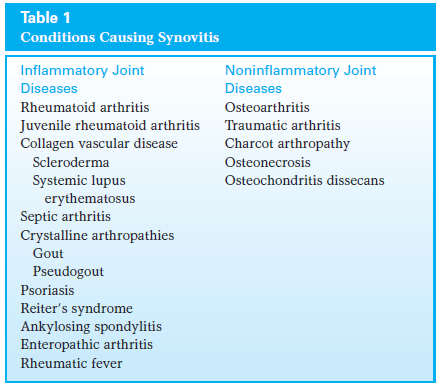
There are at least 10 conditions that cause inflammatory joint disease. An acute inflammatory reaction characterizes these diseases. Inflammatory arthritides can be further classified as monoarticular (single joint) or polyarticular (multiple joints).
Bacterial Septic Arthritis
This condition is the most commonly encountered type of monoarticular inflammatory arthritis. The hallmark on histologic examination of the synovium is many polymorphonuclear leukocytes (Fig. 2).
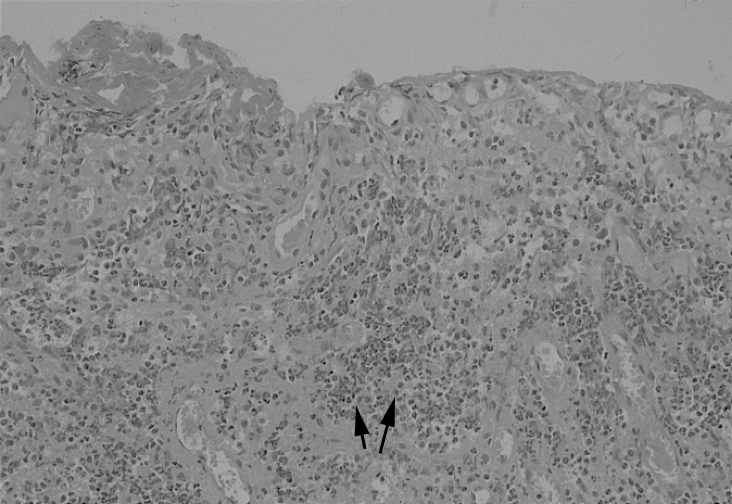
Figure 2 Synovium in septic arthritis. Note polymorphonuclear leukocyte (arrows) infiltration of the synovium and subsynovial tissue.
Many physicians employ a clinical-decision rule that holds that any effusion with a polymorphonuclear leukocyte concentration above 50,000/mm3 represents an infection until proven otherwise. The release of proteolytic enzymes by the inflammatory infiltrate will lead to rapid cartilage destruction if this condition is not identified early and treated.
Rheumatoid Arthritis
Representative of the polyarticular noninfectious inflammatory arthritides, rheumatoid arthritis (RA) is a systemic disease in which synovitis is the essential component involved in symptom development and joint destruction (Fig. 3).
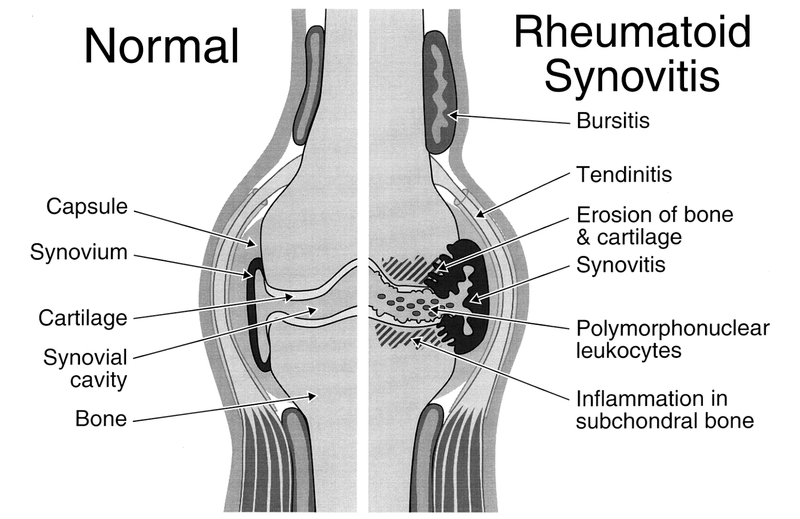
Figure 3 Schematic illustration of a diarthrodial joint and tissues affected by inflammatory processes, using the knee joint as an example. The left side shows structures in the healthy joint; the right side illustrates the widespread involvement of all joint tissues.
(Reproduced from Recklies AD, Poole AR, Banerjee S, et al: Pathophysiologic aspects of inflammation in diarthrodial joints, in Buckwalter JA, Einhorn TA, Simon SR (eds): Orthopaedic Basic Science: Biology and Biomechanics of the Musculoskeletal System, ed 2. Rosemont, IL, American Academy of Orthopaedic Surgeons, 2000, pp 489-530.)
The etiology of RA is not entirely understood, but infectious, autoimmune, and hereditary causes are suspected. Over time, the deposition of antigen-antibody complexes within the synovium causes an inflammatory reaction that perpetuates a vicious cycle that results in destruction of the joint. Although RA is a systemic disease, the principal symptoms affect the synovial joints in a symmetric fashion.2 The disease initially affects the small joints of the hand and wrist, followed by the larger joints as the disease progresses.
Histologically, the early stages of RA are manifest as edema and chronic inflammation in the synovium. Hypertrophy and hyperplasia of the synovial cells produce thickening of the synovial membrane. The subsynovial connective tissue is expanded by a proliferation of capillaries and venules and a cellular infiltrate composed of many lymphocytes, plasma cells, and macrophages. The lymphocytes frequently form cuffs around the blood vessels or become arranged into follicles with central germinal centers (Fig. 4). These changes cause the synovium to appear dense with a papillary architecture.
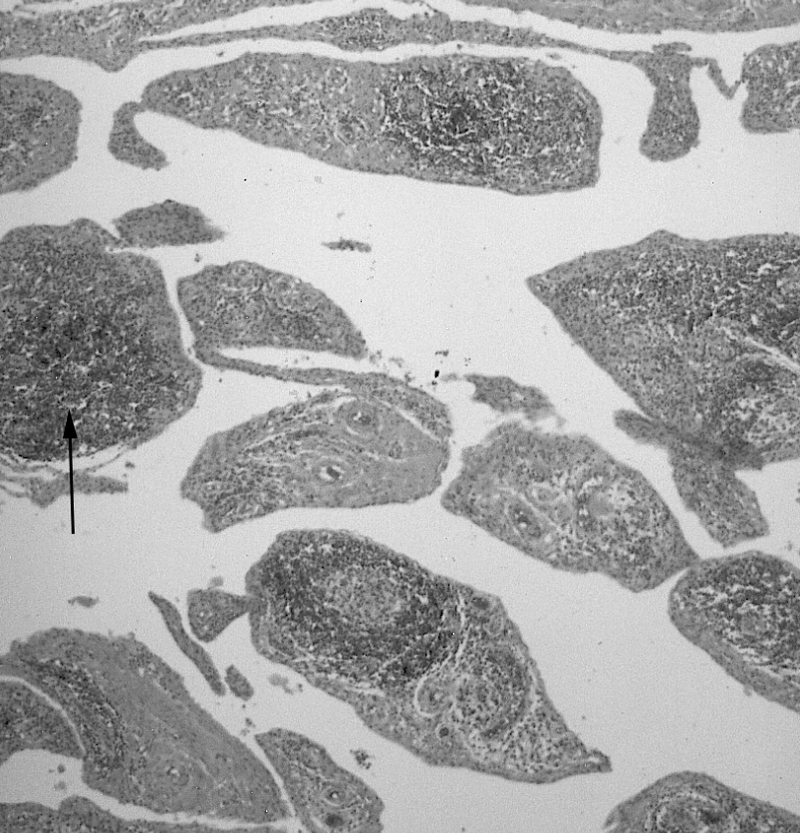
Figure 4 Rheumatoid synovium with papillary transformation of the synovium by inflammatory infiltrate(arrow).
(Reproduced with permission from Carpenter CA, Rosenberg AE, Freiberg AA: Synovial conditions of the knee, in Callahan, Rosenberg, Rubash, Simonian, Wickiewicz (eds): The Adult Knee. Philadelphia, PA, Lippincott-Williams & Wilkins, in press.)
Neutrophils are rarely seen within the synovium because they quickly exit the capillaries, traverse the subsynovium, and pass between the synoviocytes into the synovial fluid.
As RA progresses, subsynovial fibroblasts proliferate and deposit collagen fibers. Eventually, the synovial surface becomes focally coated by organizing fibrin. Some of the aggregates of fibrin float freely in the joint. The fibrin coat also makes the synovial surface sticky, allowing it to adhere to the periphery of the articular surface forming the pannus. The synovium continues to proliferate leading to villous fronds of inflamed tissue filling the joint. In the later stages of RA, there is complete destruction of the articular cartilage, creating the “burnt out” joint, which may be fused by either fibrous or bony ankylosis.3
Osteoarthritis
This condition (also called degenerative joint disease) is a common, slowly progressive noninflammatory disorder of the joints. Osteoarthritis (OA) is associated with aging, but no true etiology is known. Mechanical wear, trauma, and genetics play a role in cartilage loss. Single or multiple joints may be affected.
Unlike RA, in which the cartilage is destroyed by synovitis and proteolytic enzymes, OA appears to be limited (at least initially) to the cartilage. The subsequent synovitis is a response to articular cartilage injury and loss. The synovium develops a villous pattern with hyperplasia of the synovial membrane. The subsynovium typically lacks significant cell infiltrate, but a chronic inflammatory infiltrate may be seen in the synovium. As cartilage destruction occurs, small fragments will be shed into the synovial fluid, which may then be deposited in the synovium.
Effusions
Inflammatory and noninflammatory synovitis alters both the synovium and the composition of synovial fluid. In the synovial fluid of inflammatory joint diseases, the lysosomal enzymes released break down the hyaluronic acid “sieve” barrier. The loss of the hyaluronic sieve allows large proteins to enter the synovial fluid. This protein-rich fluid can form clots resulting from the presence of fibrinogen. A decreased concentration of hyaluronic acid within the synovial fluid also reduces its viscosity.
In inflammatory conditions, leukocytes pass freely across the synovium and into the synovial fluid. As the white blood cell count within the synovial fluid increases, its clarity decreases. Fluid that contains large numbers of crystals also appears cloudy on gross examination and can be confused with the fluid of infection. In cases of infection or severe inflammation, impaired glucose delivery and increased metabolism by synovial components combine to decrease the glucose level in the synovial fluid relative to plasma concentration; Table 2
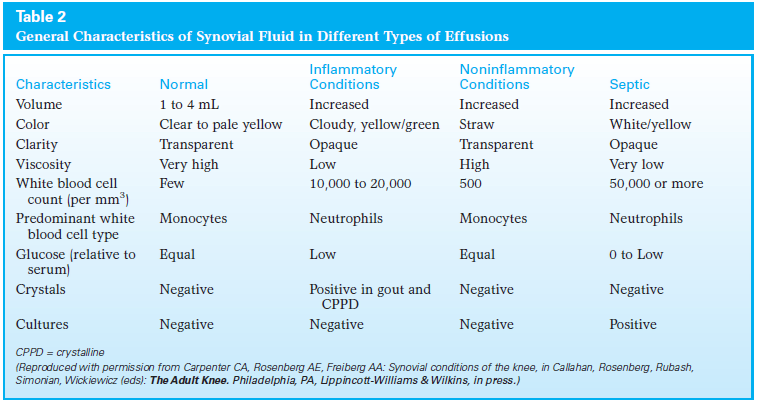
summarizes the characteristics of synovial fluid in different types of effusions. Note that parameters suggested in Table 2 are only rough guidelines, as the microscopic and macroscopic characteristics of synovial fluids vary widely depending on the condition. Host response, underlying disease states, and medications such as steroids can greatly alter the composition of synovial fluids.
Aspiration of the joint (arthrocentesis) hones the differential diagnosis. If there is a history of trauma, blood in the joint (hemarthrosis) suggests a ligament tear, fracture, retinacular tear (ie, patellar dislocation), or peripheral meniscal tear. If there is no history of trauma, a hemarthrosis suggests a clotting disease, hemangioma, or PVNS.
Benign Synovial Tumors
Neoplasms of the synovium are uncommon and can involve the synovial lining of joints, bursae, and tendons. Most tumors of the synovium are benign and mimic the cells and tissue types that compose the articular and periarticular tissues. Hemangiomas and lipomas are examples of benign tumors that can affect the synovium and mimic the native cell types.4-6 In addition, pigmented villonodular synovitis and synovial chondromatosis are two uncommon yet benign diseases that are unique to the synovium.
Pigmented villonodular synovitis is a proliferative process of the synovial membrane that most commonly affects the knee and tendon sheaths of the fingers. It is also found less commonly in the hip, ankle, toe, or wrist.7,8 The pathogenesis of PVNS remains unclear; inflammatory, metabolic, and neoplastic causes have been proposed.
The onset of PVNS typically is insidious with slow progression of symptoms, including pain, warmth, swelling, stiffness, and sometimes a palpable mass. Men may be slightly more affected than women, with most cases occurring in the third or fourth decade of life.
Plain radiographs can be normal or reveal a soft-tissue density mass with osseous erosions, cysts, and loss of joint space. PVNS has low-signal intensity on T1- and T2-weighted MRI scans because of hemosiderin deposition within the lesion. MRI scans show the lesion throughout the synovium, but the lesion may extend beyond the joint bursa.9
In the diffuse form of PVNS, most of the synovium is affected, yet some areas remain unaffected. This form of PVNS is characterized by many villi that coalesce and fuse into nodules that stud the synovial surface. These nodules range in size from less than a millimeter to several centimeters and are red-brown to yellow. The localized form of PVNS is characterized by a single, pedunculated or sessile red-brown or yellow nodule that is attached to the synovium. Microscopically, both forms have identical morphologic features. The subsynovium is expanded by a proliferation of medium-sized polyhedral cells with central nuclei and eosinophilic cytoplasm. Scattered throughout are hemosiderin-laden histiocytes, foamy macrophages, and multinucleated giant cells. The stroma is collagenous and frequently focally sclerotic. The lesion can also invade adjacent bones. Aspiration of the joint often reveals large effusions composed of a brownish, bloody fluid.
Primary synovial chondromatosis is characterized by growth of hyaline cartilage nodules within the synovial lining of a joint, bursa, or tendon sheath.10,11 It is unclear whether these nodules are a result of a metaplastic or neoplastic process.
Patients between the ages of 30 and 50 years are most commonly affected, with men affected twice as often as women. There is no known cause. The knee joint is most frequently involved, and it is usually unilateral in distribution. Common symptoms include pain, swelling, and mechanical symptoms such as locking or giving way. Physical examination may reveal an effusion, a palpable mass, tenderness, soft-tissue swelling, muscle atrophy, and crepitus.
Once the cartilaginous nodules form, they may detach and become loose bodies. These nodules differ from those that may develop secondary to trauma or degenerative joint disease. These conditions produce joint debris that sticks to the synovium, a process called secondary synovial chondromatosis. The nodules may be loose or attached to the synovial lining and range in size from a few millimeters to several centimeters. Primary and secondary forms of synovial chondromatosis are distinguished histologically. In the primary form of the disease, the nodules of cartilage form de novo. Histologic sections show nodules of hyaline cartilage, which are at most moderately cellular and contain plump chondrocytes (Fig. 5).
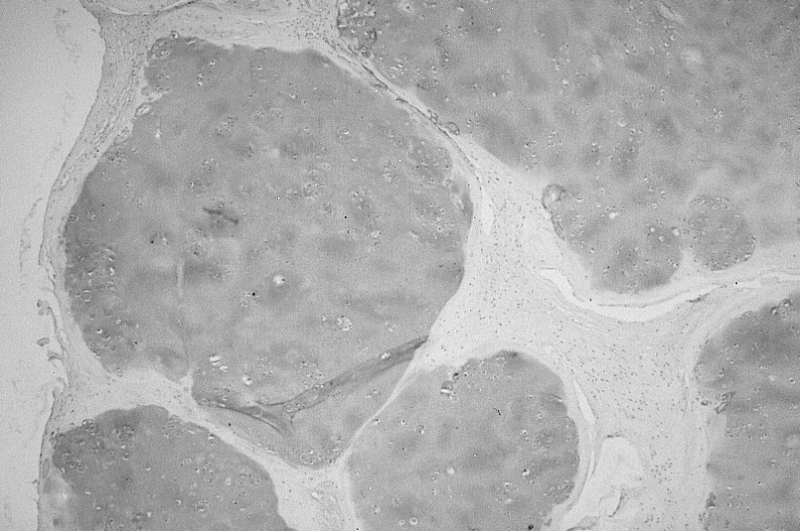
Figure 5 Synovial chondromatosis with multiple nodules of hyaline cartilage.
The chondrocytes may develop from resting fibroblasts, which undergo metaplasia and begin secreting chondroid matrix. The cartilage nodules may calcify or undergo enchondral ossification with the formation of mature lamellar bone.
Research and New Directions
Synovial Supplementation
One of the most active synovium research frontiers involves direct intra-articular supplementation of synovial products (hyaluronan or its derivative, hylan). It has been observed that synovial fluid viscosity is decreased in osteoarthritis. Injection of synovial fluid supplements (Synvisc [hylan G-F20] or Hyalgan [hyaluronan]) has been shown to be clinically effective. Research is ongoing to determine the mechanism of action of these products and to produce compounds that are both longer lasting and less likely to induce local inflammatory reactions with repeated treatments.12
Etiology of RA
RA continues to be a topic of intense investigation. The exact instigator of synovial inflammation is still under debate, although recent epidemiologic and laboratory data suggest a noninfectious etiology.13 Investigation of cellular activities and interactions now include those of chondrocytes, osteoclasts, fibroblasts, and the neuroendocrine system.14,15 The focus of such research is not only on elucidation of the basic biology of inflammatory joint diseases but on application of this knowledge to creating novel strategies for preventing and managing joint inflammation.
Key Terms
Key Terms
Arthrocentesis Aspiration of the joint
Capsule Part of the synovial joint that, along with the lining, creates a pouch in which synovial fluid is secreted
Desmosomes A small body that forms the site of attachment between cells
Hemarthrosis The presence of blood in the joint
Monoarticular Affecting a single joint
Pannus A proliferation of synovium beginning at the periphery of the joint surface as seen in rheumatoid arthritis
Pigmented villonodular synovitis A proliferative process of the synovial membrane of unknown etiology
Polyarticular Affecting multiple joints
Primary synovial chondromatosis A condition in which hyaline cartilage nodules grow within the synovial lining of a joint, bursa, or tendon sheath
Synovial fluid The straw-colored fluid in the joint that is formed by filtration of capillary plasma
Synovial joints Joints that have two opposing surfaces covered with articular cartilage and are attached at their periphery by the joint capsule
Synoviocytes Cells that form the synovial membrane, remove debris, and secrete hyaluronic acid
Synovitis A condition characterized by inflammation of the synovial lining
Synovium A membrane-like lining of the synovial joints, tendon sheaths, and bursae
Type A synoviocytes A type of synovial cell that plays a role in removing particulate debris from the joint
Type B synoviocytes A type of synovial cell that secretes hyaluronic acid
References
1. Sledge CB: Structure, development, and function of joints. Orthop Clin North Am 1975;6:619-628.
2. Arnett FC, Edworthy SM, Bloch DA, et al: The American Rheumatism Association 1987 revised criteria for the classification of rheumatoid arthritis. Arthritis Rheum 1988;31:315-324.
3. Robertsson O, Knutson K, Lewold S, et al: Knee arthroplasty in rheumatoid arthritis: A report from the Swedish Knee Arthroplasty Register on 4,381 primary operations 1985-1995. Acta Orthop Scand 1997;68:545-553.
4. Coventry MB, Harrison EG Jr., Martin JF: Benign synovial tumors of the knee: A diagnostic problem. J Bone Joint Surg Am 1966;48:1350-1358.
5. Jaffe HL: (ed): Tumors and Tumorous Conditions of the Bones and Joints. Philadelphia, PA, Lea & Febiger, 1958.
6. Moon NF: Synovial hemangioma of the knee joint: A review of previously reported cases and inclusion of two new cases. Clin Orthop 1973;90:183-190.
7. Jaffe HL, Lichtenstein L, Sutro CJ: Pigmented villonodular synovitis, bursitis, and tenosynovitis: A discussion of the synovial and bursal equivalents of the tenosynovial lesion commonly denoted as xanthoma, xanthogranuloma, giant cell tumor or myeloplaxoma of the tendon sheath, with some consideration of this tendon sheath lesion itself. Arch Pathol 1941;31:731-765.
8. Granowitz SP, D’Antonio J, Mankin H: The pathogenesis and long-term end results of pigmented villonodular synovitis. Clin Orthop 1976;114:335-351.
9. Giudici MA, Moser RP Jr., Kransdorf MJ: Cartilaginous bone tumors. Radiol Clin North Am 1993;31:237-259.
10. Jeffreys TE: Synovial chondromatosis. J Bone Joint Surg Br 1967;49:530-534.
11. McCarthy EF, Dorfman HD: Primary synovial chondromatosis: An ultrastructural study. Clin Orthop 1982;168:178-186.
12. Leopold SS, Warme WJ, Pettis PD, et al: Increased frequency of acute local reaction to intra-articular hylan GF-20 (Synvisc) in patients receiving more than one course of treatment. J Bone Joint Surg Am 2002;84:1619-1623.
13. Silman AJ, Pearson JE: Epidemiology and genetics of rheumatoid arthritis. Arthritis Res 2002;4(suppl 3):S265-S272.
14. Choy EH, Panayi GS: Cytokine pathways and joint inflammation in rheumatoid arthritis. N Engl J Med 2001;344:907-916.
15. Straub RH, Cutolo M: Involvement of the hypothalamic—pituitary—adrenal/gonadal axis and the peripheral nervous system in rheumatoid arthritis: Viewpoint based on a systemic pathogenetic role. Arthritis Rheum 2001;44:493-507.
