

Inflammation is characterized by erythema, warmth, pain, and edema. Acute inflammation generally occurs in response to an injury or introduction of foreign material at a specific site and is an important part of wound healing. Chronic inflammation is usually associated with a systemic disease process, such as rheumatoid arthritis (RA), and itself can be a major source of disability. When inflammation affects the joints of the musculoskeletal system, it most often affects the synovial membrane,resulting ina condition calledsynovitis. Inflammation may also affect tendons or tendon sheaths (tendinitis); it also can occur extra-articularly in bursae (bursitis).
While acute inflammation is often a healthful response and usually is self-limiting, chronic inflammation, as in arthritic disease, can be harmful. For example, inflammation can destroy the cartilage that cushions the bone. Progressive cartilage destruction leads to joint instability and loss of function. Because of these harmful effects, inflammation should be inhibited in certain circumstances. Knowing when and how to modulate inflammation demands an understanding of the cellular, biochemical, and molecular aspects of inflammatory processes and the regimens currently available to treat them.
This chapter describes the inflammatory process, how inflammation is triggered, how chronic inflammation affects the joints, and how it is ameliorated through endogenous and exogenous agents. In addition, the pathophysiology of several types of arthritis that are manifested through the inflammatory process are described, along with current trends in research aimed at targeting the molecular and immunologic pathways of inflammation.
The Inflammatory Process
In response to a trigger, such as an injury or an antigen, cells in affected tissue produce signals to initiate the infiltration of white blood cells (such as monocytes, granulocytes, and lymphocytes) to the site. Once these cells move from the blood vessels into the tissue, they attack microorganisms and bacteria and ingest senescent cells and cellular debris in a process called phagocytosis. Along with the resident tissue cells, these cells produce inflammatory mediators that result in vasodilation, edema, and cell proliferation.
This inflammatory response occurs through a sequence of metabolic events that involves five types of agents: (1) cytokines, such as the interleukins, which induce cellular production of chemokines and growth factors; (2) chemokines, which attract or recruit cells to the site; (3) arachidonic acid metabolites, such as prostaglandins and leukotrienes, which induce enzyme production and activation; (4) growth factors, which stimulate cell proliferation; and (5) catabolic enzymes, such as matrix metalloproteinase (MMP), which degrade the extracellular matrix (ECM). The cascade is perpetuated by the cellular response to the autocrine, paracrine, and endocrine effects of these same agents (Fig. 1).
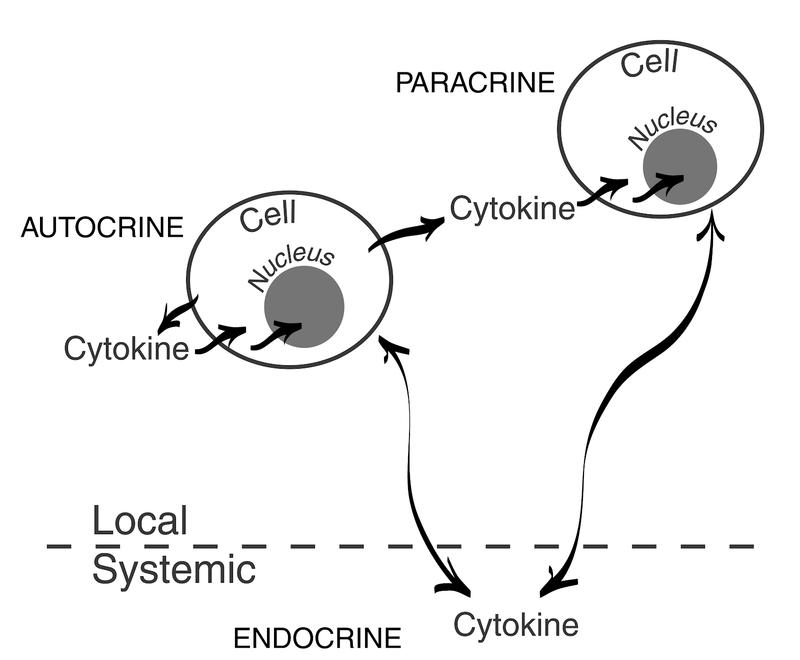
Figure 1 Schematic diagram of the types of cytokine interactions. Autocrine activity involves the cytokine-producing cell itself. Paracrine activity impacts neighboring cells, and endocrine activity involves the cellular release of cytokines into the vascular system, affecting cells remotely.
When a cytokine binds to its specific receptor on the cell membrane, the receptor mediates activation of protein kinase-C, which by intracellular phosphorylation produces transcription factors, such as activation protein-1 (AP-1) and nuclear factor &kgr;B (NF&kgr;B). Upon phosphorylation, the NF&kgr;B complex is cleaved and passes into the nucleus where it binds to the promoter region of genes responsible for expression of inflammatory proteins1 (Fig. 2).
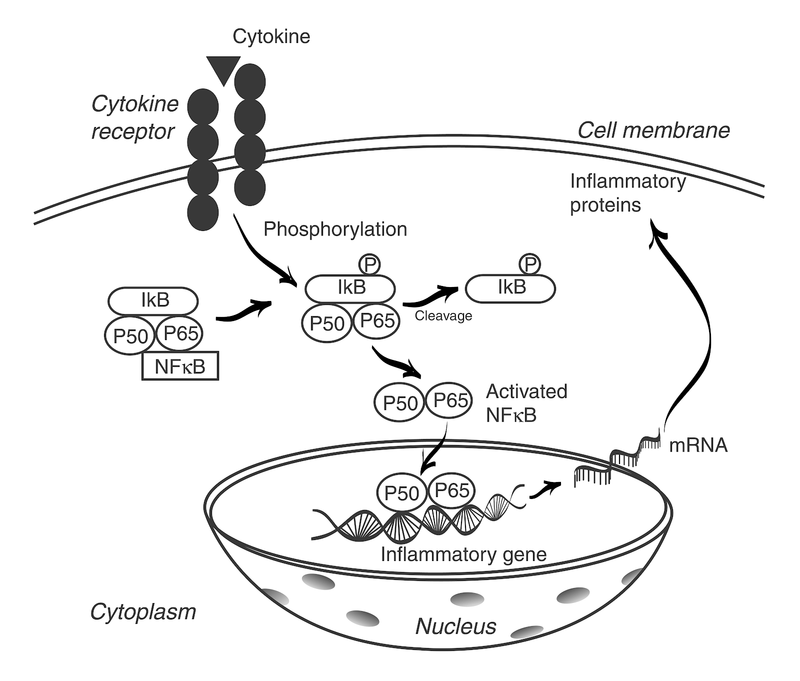
Figure 2 Schematic representation of a cytokine signal transduction pathway that results in release of inflammatory proteins. When a cytokine binds to its receptor, NF&kgr;B in the cell cytoplasm is activated by C-kinase phosphorylation and subsequent cleavage of I&kgr;B. The activated NF&kgr;B then translocates to the nucleus where it binds to an inflammatory gene and signals production of messenger RNA that codes for certain inflammatory proteins.
(Adapted with permission from Barnes PJ, Karin M: Nuclear factor-&kgr;B: A pivotal transcription factor in chronic inflammatory diseases. N Engl J Med 1997;336:1066-1071.)
An AP-1 binding site is located on the promoter for MMP genes. In conjunction with other sites on the promoter, binding of AP-1 to the AP-1 binding site leads to transcriptional activation of the MMP genes and subsequent production of MMP as proenzymes.2-4
Activation of AP-1 and NF&kgr;B stimulates the synthesis of chemokines and adhesion molecules that promote recruitment and infiltration of mononuclear cells. This activation also produces cytokines and growth factors that perpetuate the immune response and proenzymes such as MMPs that degrade matrix proteins. In addition, enzymes that initiate the arachidonic acid cascade and production of eicosanoids are produced. For example, tumor necrosis factor-&agr; (TNF-&agr;) and interleukin(IL)-6, both of which are cytokines associated with inflammation, have been shown to stimulate the messenger RNA responsible for production of inflammatory cytokines through activation of NF&kgr;B and AP-1. Thus, the presence of a cytokine can promote synthesis of itself and other cytokines.
Another cytokine, IL-1, also has been shown to activate MMP. When activated, MMP enzymes degrade the ECM in the vicinity of the cell. Degradative products of the ECM derived from MMP activity can stimulate chemokines, which then recruit phagocytic cells to the site. Infiltration of leukocytes produces additional cytokines, and the process continues until the inducing agent is eliminated.
Immune-Mediated Inflammation
The immune response to an antigen can be classified as humoral (antibody based) or cell mediated. Both processes require lymphocytes and antigen-presenting cells (APCs), which may be lymphocytes, macrophages, or dendritic cells. Lymphocytes are described as B cells or T cells, a naming convention based on the site of their original differentiation—bone marrow (B cells) or thymus (T cells).5
Humoral immunity occurs through B cells, which produce soluble, membrane-bound immunoglobulin (antibody) for a specific antigen. Cell-mediated immunity occurs through T cells that recognize an antigen when it is bound to a major histocompatibility complex(MHC) molecule, also termed a human leukocyte antigen (HLA). Thus, B cells are frequently the APCs to the T-cell receptors. Binding of the APCs with the T-cell receptors stimulates division of T cells into one of two types of helper cells (Th1 or Th2) and secretion of numerous cytokines that induce an inflammatory response (Fig. 3).
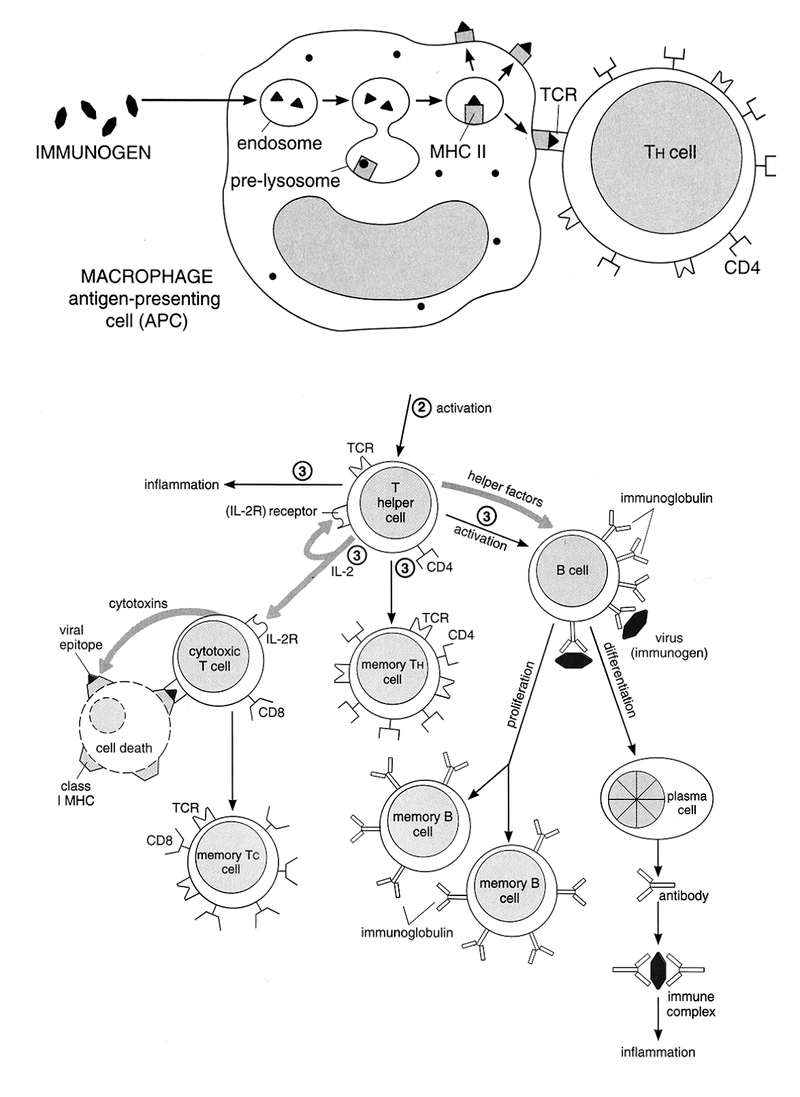
Figure 3 Stimulation of the immune response involves internalization of an antigen by macrophages. The antigen is then bound to a receptor (MHC II) and expressed on the cell surface. The CD4-expressing helper T cells are activated by receptor interaction with the antigen (2) if it is recognized as foreign. The activated CD4 cell (3) elaborates factors that stimulate B cells to express antibody and also inflammatory cytokines. B cells can differentiate into antibody- producing plasma cells or remain as memory cells. Similarly, the sensitized T cells can expand by proliferation and mediate cytotoxicity or be retained as memory cells.
(Reproduced with permission from Stites DP, Terr AI, Parslow TG: MedicalImmunology, ed 8. Norwalk, CT, Appleton & Lange, 1994, pp 43-44.)
There are two classes of MHC molecules (class I and II), both of which contain a large number of alleles (variable regions). Although MHC molecules bind antigens, they differ from B-cell receptors in that MHC molecules are expressed by a number of cell types. They also lack the specificity of the antibodies produced by B cells. Several chronic inflammatory diseases, such as RA, are associated with distinct alleles that may confer genetic predisposition to the disease. That the inflammation persists or recurs in these chronic diseases indicates that attempts to achieve homeostasis are impeded, possibly by a recurrent trigger.
Triggers of Inflammation
Inflammation may be initiated by either endogenous or exogenous factors. It can be an acute response to trauma (as in a ligament tear) or a chronic response (as in autoimmune diseases such as RA). Infection and crystalline deposits also can provoke an inflammatory response that will persist until the underlying cause is eliminated.
When trauma is the cause, inflammation promotes healing. As wounds heal, metabolic activity consumes oxygen, resulting in a hypoxic environment that stimulates proliferation of fibroblasts and production of blood vessels (angiogenesis) at the site. Anoxia leads to increased levels of enzymes such as cathepsin, which provide a means to remove dead tissue and debris.6 The process is reversed with angiogenesis and tissue reperfusion; thus begins the next stage of wound healing and a return to homeostasis.
Viral or bacterial infection is also a trigger for inflammation, as it promotes an immune response that recruits leukocytes to destroy the antigen. At the same time, this response increases cytokine production and vascular permeability. When the infection is controlled, the acute inflammation subsides. However, with chronic autoimmune disease, the infection may produce bacterial or viral compounds that alter T-cell recognition and the tissue response.
With diseases such as RA or systemic lupus erythematosus (SLE), the trigger may be a T-cell–mediated immune response to an autoantigen such as an epitope of type II collagen7 or a nucleoprotein, respectively.8,9 Because a specific antigen has not been identified as the initiator of either disease, both must be considered to be multifactorial processes of unknown etiology.
Crystal-induced arthritis, namely gout and pseudogout, is an acute process that may be treated with medication but may also develop into a chronic synovitis or recurrent acute inflammation. With gout, the trigger is deposition of the endogenously produced microcrystalline compound monosodium urate within the joint. With pseudogout, the agent typically is calcium pyrophosphate dihydrate. Hydroxyapatite and calcium oxalate can also initiate inflammation. These crystals form nodes or tophi that act as irritants, causing the adjacent tissue to become inflamed.10
Mediators of Inflammation
Inflammatory mediators often play important roles in the normal cell, regulating the synthesis and turnover of ECM, for example. Accordingly, blocking their production can have adverse effects on normal cell physiology. At best, inflammation can be controlled by modulating the production of these mediators.
Eicosanoids
Arachidonic acid is produced by cleavage of a membrane-bound phospholipid, which sets into motion the arachidonic acid cascade and synthesis of many different carbon fatty acid derivatives. The cascade includes two principal arms: (1) the cyclooxygenasepathway, which leads to production of prostaglandins and thromboxanes, and (2) the lipoxygenase pathway, which produces leukotrienes and lipoxins. These compounds have varying effects. Some, such as leukotriene B4 (LTB4) and prostaglandin E2 (PGE2), can stimulate cell infiltration (and thus be considered proinflammatory). Others such as lipoxin A4 can inhibit cell recruitment (and thus be considered anti-inflammatory).
While many prostaglandins are inflammatory mediators, the one that plays a pivotal role in inflammation, and consequently has been studied in greatest depth, is PGE2. This eicosanoid is found at elevated levels in the synovial fluid of inflamed joints and mediates the edema associated with joint inflammation. Results of recent studies describe both proinflammatory and anti-inflammatory roles for PGE2: it interacts with LTB4 to recruit cells, and it activates lipoxin A4 to resolve inflammation.
Cytokines
Interleukins
The interleukins are a class of low molecular weight proteins that modulate cell activity and regulate the immune system. Some interleukins are synthesized preferentially by certain cell types, while others appear to be produced by a wide variety of cells. For instance, IL-2 is released by T cells almost exclusively, whereas IL-1 is produced by macrophages, fibroblasts, and lymphocytes. Even tissue-specific cells, such as chondrocytes, can produce IL-1. At least 19 interleukins have been identified, and each has a specific role in cell and tissue maintenance.11-14 While the mechanisms of action of each of the interleukins are still being investigated, it is clear that they are the regulators of the immune system (Tables 1 and 2).
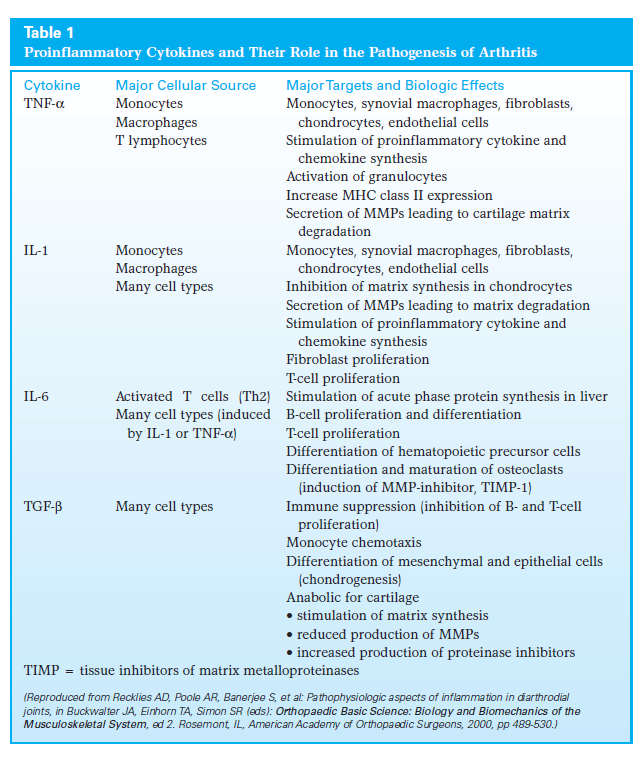
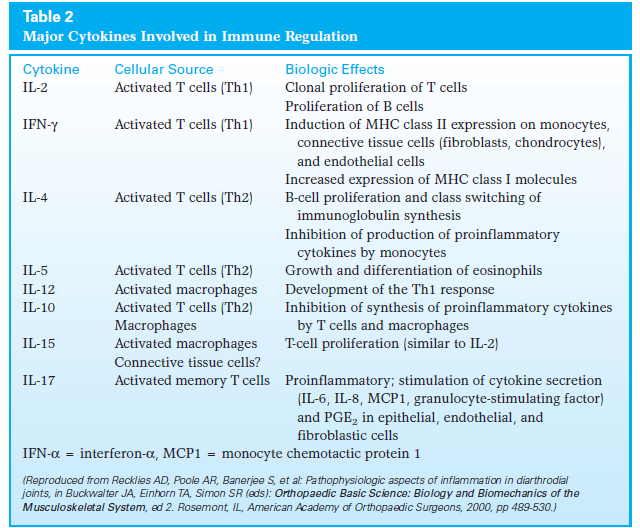
Because of their roles in cartilage and bone metabolism, IL-1 andIL-6 are of particular interest to musculoskeletal medicine. IL-1 has been shown to both decrease synthesis and increase degradation of cartilage ECM components, and IL-1 and IL-6 stimulate the differentiation and recruitment of osteoclasts, the cells responsible for bone resorption.
Tumor Necrosis Factor-&agr;
This cytokine derives its name from its ability to lyse tumors. Its name may be misleading because TNF-&agr; has been shown to have a much broader range of activity: it plays a major role in inflammation and in the immune response.12,13 As it appears early in the inflammation cascade, TNF-&agr; is considered a possible initiator of further cytokine activity. Increased TNF-&agr; induces and augments IL-1 activity; inhibitors of TNF-&agr; decrease IL-1 activity. For this reason, TNF-&agr; has become the target cytokine for treatment of chronic inflammatory diseases. Several approaches to decrease production of this cytokine are currently being investigated.
Growth Factors
Several growth factors participate in the inflammatory process and in the degradative stages of arthritis. Vascular endothelial growth factor and basic fibroblast growth factor are two important agents; both stimulate endothelial proliferation and increase vascular permeability and angiogenesis.15,16 Both factors are produced by fibroblasts and macrophages in the vicinity of blood vessels and capillaries within the inflamed tissue.
Modification of the Mediators of Inflammation
Endogenous Inhibitors
To regulate the inflammatory response, numerous endogenous agents have been employed. IL-4 and IL-10 inhibit cytokine production. PGE2 can either stimulate or inhibit inflammation indirectly. Several other agents are competitive inhibitors of inflammation.13 Soluble TNF-&agr; receptor proteins cleaved from the cell membrane, for example, can bind with cytokine in the extracellular fluid. This binding decreases the concentration of TNF-&agr; available for attachment to the cell membrane receptor. Similarly, interleukin-1 receptor antagonist (IL-1ra) protein prevents binding of IL-1 to its receptor by competing for the binding site.
Tissue inhibitors of metalloproteinases are a class of proteins that block activation of the MMPs and prevent enzymatic degradation of the ECM. Transforming growth factor-β (TGF-β) is an agent that plays an important role in decreasing the destructive enzymes of the inflammatory cascade. It also promotes collagen formation, increases MMP inhibitors, and modulates IL-1. With chronic inflammatory disease, however, some or all of these inhibitory agents are produced in low concentrations or are themselves inhibited. Augmenting their effectiveness offers a means by which medical intervention can decrease or slow the effects of chronic inflammation.
Anti-Inflammatory Medications
Joint inflammation has been treated successfully with nonsteroidal anti-inflammatory drugs (NSAIDs), including acetylsalicylic acid (aspirin), naproxen, flurbiprofen, diclofenac, and indomethacin. These compounds inhibit the arachidonic acid cascade at the cyclooxygenase pathway (Fig. 4).
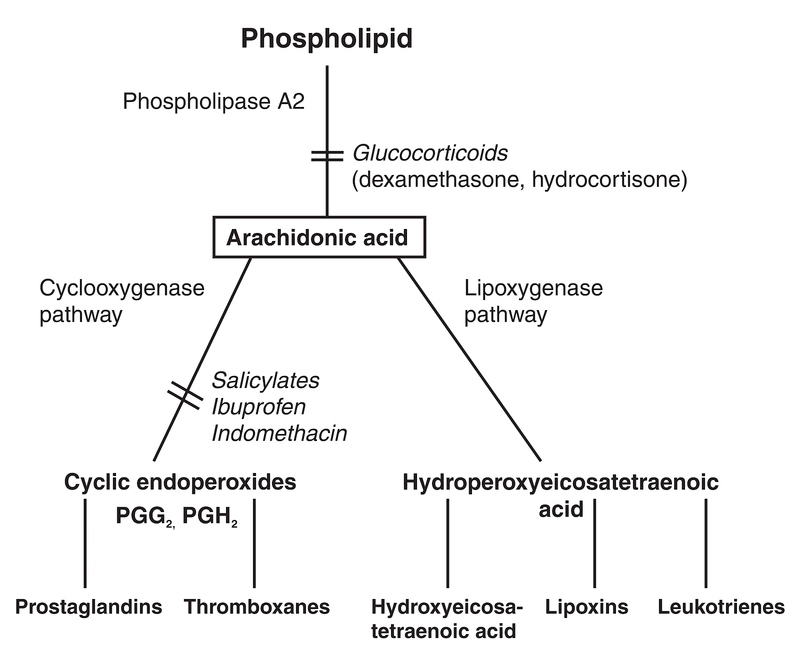
Figure 4 The arachidonic acid cascade and points of inhibition by NSAIDs (the cyclooxygenase pathway) and glucocorticoids (the conversion of phospholipid into arachidonic acid).
Currently, more than 20 NSAIDs are commonly used to treat acute and chronic inflammation; each varies in its biologic half-life and ability to inhibit the enzymes cyclooxygenase 1 (COX-1) and 2 (COX-2). COX-2 is thought to be an induced enzyme that catalyzes the production of prostaglandins in the inflammatory response. COX-1 is active (constitutive) in normal physiology and produces prostaglandins responsible for the homeostasis of many cells and tissues in the body. Therefore, the newer NSAIDs attempt to selectively inhibit COX-2 while preserving the activity of COX-1.
NSAIDs affect one arm of the arachidonic acid cascade: prostaglandin synthesis. Corticosteroids inhibit both prostaglandin synthesis and production of leukotrienes. They can be used locally, as an intra-articular injection, but they are also often administered orally for systemic management of chronic inflammatory diseases. Pharmaceutical steroids are synthetic analogs of cortisol, the body’s endogenous steroid. They mediate the inflammatory processes and inhibit the immune response through cellular actions at the transcriptional, translational, and posttranslational levels. As the steroid binds to the glucocorticoid receptor on the cell membrane, human heat shock protein is released and the receptor complex moves to the cell nucleus. There it inhibits transcription of enzymes and cytokines involved in the inflammatory process.1 Long-term use of corticosteroids can result in numerous adverse effects, including increased susceptibility to infection, osteoporosis, osteonecrosis, mood changes, depression, insomnia, cataracts, and glaucoma. Hypertension and a number of other endocrine and metabolic symptoms such as weight gain, glucose intolerance, and suppression of the hypothalamic-pituitary-adrenal axis are also seen with their long-term use. These endocrine effects can result in adrenal insufficiency and occasionally diabetes mellitus.17
Effects of Inflammation on Tissue
Chronic inflammation affects two principal areas in the joints—the synovium and the cartilage. In the early stages of disease, inflammation primarily affects the synovial lining. As disease progresses, changes in cartilage occur, culminating in chondrocyte death and complete cartilage destruction by disintegration of its ECM.
Synovium
Inflammation causes a large number of leukocytes to infiltrate the synovium, which dramatically increases the numbers of macrophages and B and T lymphocytes. The thickness of the synovial tissue increases as does that of the intimal layer, which may increase from one to four cells to several hundred.18 As the tissue volume increases, the synovial lining extends into the joint space and onto cartilaginous surfaces. To accommodate this increase in tissue volume, neovascularization occurs both below and within the thickened intimal layer. Because the synovium is the source of synovial fluid, an increase in volume with a concurrent increase in vascular permeability leads to increased fluid volume within the joint space (joint effusion).7
Cartilage
The effects of inflammation on cartilage appear to be secondary to the process itself and may even be independent of the initial inflammation. Several studies have demonstrated that in chronic arthritic diseases, cartilage degradation continues even when the inflammation has been suppressed.19 By decreasing proteoglycan synthesis by the chondrocytes and increasing synthesis and activation of the MMPs (collagenase, aggrecanase, and stromelysin), inflammation destroys the organization of the ECM in cartilage (Fig. 5).
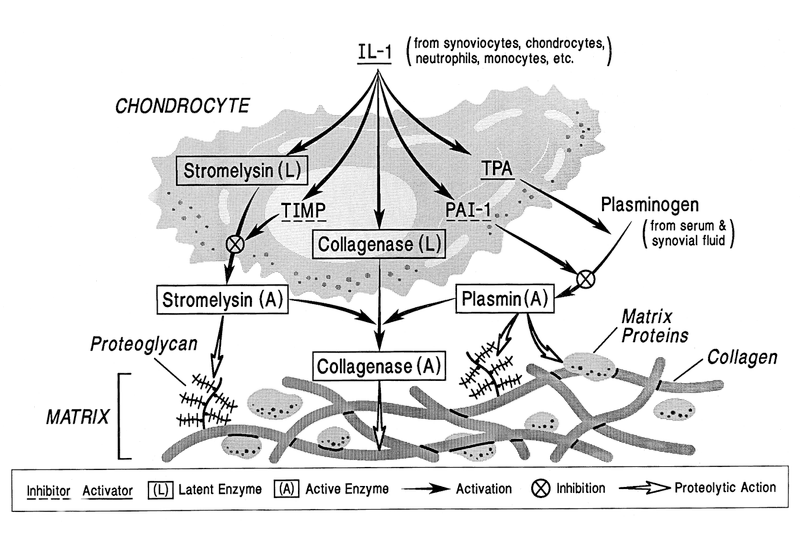
Figure 5 Cytokine-mediated cartilage matrix destruction.
TIMP = tissue inhibitor of metalloproteinases. TPA = tissue-type plasminogen activator. PAI-1 = plasminogen activator inhibitor-1.
(Reproduced from Mankin HJ, Mow VC, Buckwalter JA: Articular cartilage repair and osteoarthritis, in Buckwalter JA, Einhorn TA, Simon SR (eds): Orthopaedic Basic Science: Biology and Biomechanics of the Musculoskeletal System, ed 2. Rosemont, IL, American Academy of Orthopaedic Surgeons, 2000, pp 471-488.)
Formation of pannus on the cartilage surface establishes sites of synovial invasion into the ECM through enzymatic degradation by the MMPs. With continual release and activation of the MMPs, the cartilage completely disintegrates and the joint becomes unstable.
Key Terms
Arachidonic acid The substance that is a precursor of inflammatory mediators such as prostaglandins and leukotrienes
Chemokines An agent of the inflammatory process that attracts or recruits cells to the site
Cyclooxygenase pathway One arm of the arachidonic acid cascade that leads to production of prostaglandins and thromboxanes
Cytokines Proteins produced by a cell to modulate the actions of other cells; also known as messenger proteins
Growth factors The molecules that stimulate cell growth or activation
Lipoxygenase pathway One arm of the arachidonic acid cascade that leads to production of leukotrienes and lipoxins
Major histocompatibility complex (MHC) A cluster of genes important in immune recognition and signaling between cells of the immune system; also called human leukocyte antigen
Matrix metalloproteinases (MMP) Agents of the inflammatory process that degrade the extracellular matrix
Phagocytosis The process by which white blood cells ingest debris or micro- organisms
Research and New Directions
Anti-TNF and TNF-Receptor Proteins
Because TNF-&agr; seems to be a pivotal cytokine, several agents have been developed that can slow the inflammatory cascade by decreasing the available endogenous TNF. Three drugs—TNF-receptor (TNF-R) p55 Fc fusion protein (Lenercept), TNF-R p75 Fc fusion protein (Enbrel, Etanercept), and a chimeric monoclonal antibody to TNF-&agr; (Infliximab)—interfere with TNF-&agr; activity by competing with the endogenous TNF-&agr; receptor. In preliminary clinical trials, all three have resulted in decreased swelling and decreased serum C-reactive protein levels.20 Infliximab has been shown to decrease IL-6 and increase IL-10 serum levels up to 12 weeks after a single intravenous infusion.21 While these treatments appear promising, they have associated problems and adverse effects. In most cases, adverse reactions such as headaches, injection site irritation, and infections were minor. However, there were two reported incidences of drug-induced SLE, presumably from development of autoantibodies. Furthermore, multiple doses demonstrated a decrease in the length of benefit, which suggests immunogenicity.13
Interleukins
Several approaches to affect inflammation through the interleukins have been proposed.13 Since both IL-10 and IL-4 have been shown to slow the inflammatory response, a systemic increase in the levels of these cytokines should affect the cascade. However, clinical trials with recombinant IL-10 and IL-4 found these inhibitory agents to be ineffective, possibly because of their short biologic half-life. Another approach is to inhibit IL-6 by introduction of an antibody to the IL-6 receptor, similar to the use of TNF-&agr; receptor antibody. Although this agent has not yet been tested in human trials, it has shown promise in an animal model of RA. Third, the use of recombinant IL-1ra has shown some promise in the treatment of RA, especially in its ability to decrease the rate of disease progression. Unfortunately, the half-life of the agent is extremely short (6 hours), and the dose required is quite high. Studies have demonstrated that a 10- to 1,000-fold excess of IL-1ra is required to effectively block IL-1.13 In an attempt to provide high doses that are regularly dispensed at the site, gene therapy has been investigated.
Gene Therapy
Stimulation of endogenous inhibitors of the inflammatory cytokines by manipulation of the genes or genetic regulators in synovial fibroblasts may not only decrease inflammation but also may have protective effects on the cartilage. IL-1ra is currently being used in gene therapy. With this novel form of treatment, synovial cells from the patient are grown in culture and using a vector, the complementary DNA of the gene responsible for production of IL-1ra is transferred to the synoviocytes. The transfected cells are then injected into the joint in which the upregulated protein should be expressed. An initial study identified expression of the protein in injected joints 1 week after injection with transfected cells.22 Long-term trials are necessary to determine if the transfected cells continue to produce IL-1ra and demonstrate efficacy.Although further study is required to fully understand the mechanisms and to assess the long-term benefits of cytokine-targeted therapy, this approach may be the most promising strategy for treating chronic inflammatory disease. The use of autogenous transfected cells opens the field to the feasibility of targeting multiple inflammatory mediators in the local environment and possibly providing effective chondroprotection as well as decreasing the inflammatory response. Finally, by manipulating the abnormal or mutated gene(s) involved in the predisposition to these diseases, it may be possible to arrest the joint destruction and even to prevent the disease process itself.
References
1. Barnes PJ, Karin M: Nuclear factor-kappaB: A pivotal transcription factor in chronic inflammatory diseases. N Engl J Med 1997;336:1066-1071.
2. Benbow U, Brinckerhoff CE: The AP-1 site and MMP gene regulation: What is all the fuss about? Matrix Biol 1997;15:519-526.
3. Crawford HC, Matrisian LM: Mechanisms controlling the transcription of matrix metalloproteinase genes in normal and neoplastic cells. Enzyme Protein 1996;49:20-37.
4. He C: Molecular mechanism of transcriptional activation of human gelatinase B by proximal promoter.Cancer Lett 1996;106:185-191.
5. Delves PJ, Roitt IM: The immune system: First of two parts. N Engl J Med 2000;343:37-49.
6. Anderson GR, Volpe CM, Russo CA, et al: The anoxic fibroblast response is an early-stage wound healing program. J Surg Res 1995;59:666-674.
7. Andersson EC, Hansen BE, Jacobsen H, et al: Definition of MHC and T cell receptor contacts in the HLA-DR4 restricted immunodominant epitope in type II collagen and characterization of collagen-induced arthritis in HLA-DR4 and human CD4 transgenic mice.Proc Natl Acad Sci USA 1998;95:7574-7579.
8. Shoenfeld Y, Alarcon-Segovia D, Buskila M, et al: Frontiers of SLE: Review of the 5th International Congress of Systemic Lupus Erythematosus, Cancun, Mexico, April 20-25, 1998. Semin Arthritis Rheum 1999;29:112-130.
9. Maddison PJ: Autoantibodies in SLE: Disease associations. Adv Exp Med Biol 1999;455:141-145.
10. Agudelo CA, Wise CM: Gout: Diagnosis, pathogenesis, and clinical manifestations. Curr Opin Rheumatol 2001;13:234-239.
11. Delves PJ, Roitt IM: The immune system: Second of two parts. N Engl J Med 2000;343:108-117.
12. Burger D: Cell contact interactions in rheumatology, The Kennedy Institute for Rheumatology, London, UK, 1-2 June 2000. Arthritis Res 2000;2:472-476.
13. Choy EH, Panayi GS: Cytokine pathways and joint inflammation in rheumatoid arthritis. N Engl J Med 2001;344:907-916.
14. Gallagher G, Dickensheets H, Eskdale J, et al: Cloning, expression and initial characterization of interleukin-19 (IL- 19): A novel homologue of human interleukin-10 (IL-10). Genes Immun 2000;1:442-450.
15. Sunderkotter C, Steinbrink K, Goebeler M, et al: Macrophages and angiogenesis. J Leukoc Biol 1994;55:410-422.
16. Yanagisawa K, Hamada K, Gotoh M, et al: Vascular endothelial growth factor (VEGF) expression in the subacromial bursa is increased in patients with impingement syndrome. J Orthop Res 2001;19:448-455.
17. Stein CM, Pincus T: Glucocorticoids, in Kelley WN, Harris ED Jr, Ruddy S, Sledge CB (eds): Textbook of Rheumatology, ed 5. Philadelphia, PA, WB Saunders, 1997, pp 787-803.
18. Bresnihan B, Cunnane G, Youssef P, et al: Microscopic measurement of synovial membrane inflammation in rheumatoid arthritis: Proposals for the evaluation of tissue samples by quantitative analysis. Br J Rheumatol 1998;37:636-642.
19. Fassbender HG: What destroys the joint in rheumatoid arthritis? Arch Orthop Trauma Surg 1998;117:2-7.
20. Feldmann M, Charles P, Taylor P, et al: Biological insights from clinical trials with anti-TNF therapy. Springer Semin Immunopathol 1998;20:211-228.
21. Ohshima S, Saeki Y, Mima T, et al: Long-term follow-up of the changes in circulating cytokines, soluble cytokine receptors, and white blood cell subset counts in patients with rheumatoid arthritis (RA) after monoclonal anti-TNF alpha antibody therapy. J Clin Immunol 1999;19:305-313.
22. Evans CH, Robbins PD, Ghivizzani SC, et al: Abstract: Results from the first human clinical trial of gene therapy for arthritis. Arthritis Rheum 1999;42(suppl 9):S170.
