

Metabolic bone diseases are those in which abnormal formation or maintenance of bone leads to clinical manifestations such as fracture and deformity. Metabolic bone diseases are characterized by failed skeletal homeostasis. This failure may be caused by an abnormality in mineral homeostasis, such as calcium wasting in kidney disease; however, not all metabolic bone diseases are caused by defects in mineralization. The most common and perhaps most important metabolic bone disease, osteoporosis, is one in which mineralization is normal. Other significant metabolic bone diseases include osteomalacia (and its juvenile form, rickets) and Paget’s disease of bone. Metabolic bone diseases merit entire textbooks of their own. Therefore, this chapter serves only as an introduction to these complex conditions.
Osteoporosis
Osteoporosis is a systemic skeletal disease characterized by low bone mass, increased bone fragility, and susceptibility to fracture. Among patients with osteoporosis, fractures are most commonly seen in the wrist, vertebral column, and hip. Osteoporosis is a disease of abnormal bone remodeling. Specifically, bone resorption is uncoupled from bone formation, and over time, osteoclasts remove more bone than osteoblasts create. This net imbalance leads to decreased bone density and decreased mechanical strength. Because spicules of osteoporotic bone appear normal on microscopic examination, it has been suggested that osteoporotic bone is otherwise normal but merely less dense than healthy bone. However, the lack of sufficient normal tissue renders the gross structure of osteoporotic bone distinctly abnormal.
Osteoporosis is categorized as either primary or secondary. Primary osteoporosis is further divided into postmenopausal (type 1) or senile (type 2). In senile osteoporosis, an age-related decline in renal production of active vitamin D is the probable cause of bone loss. Secondary osteoporosis is characterized by conditions in which bone is lost because of the presence of another disease, such as hormonal imbalances, malignancies, or gastrointestinal disorders, or because of corticosteroid use. Although osteoporosis occurs primarily in women, senile and secondary osteoporosis are not uncommon in men.
Epidemiology and Risk Factors
The most prevalent form of primary osteoporosis is postmenopausal osteoporosis. This condition is a major threat to public health in the United States. It is estimated that 20% to 30% of postmenopausal Caucasian women in the United States have sustained an osteoporosis-related fracture and most of those without fractures nonetheless have low bone density measured in the spine, hip, or wrist. The National Osteoporosis Foundation estimates that more than 8 million women have osteoporosis and more than 14 million have low bone mass. It is further estimated that 40% to 50% of women age 50 years or older are at risk for an osteoporosis-related fracture during their lifetime.1 In 1995, there were 3.4 million outpatient and emergency department visits for fractures attributable to osteoporosis. Although the incidence of osteoporosis in men is about half that in women, the lifetime risk for future fractures in men age 60 years is nearly 30%.
Hip fracture from osteoporosis can be medically devastating. One of the most serious consequences of hip fractures is the loss of functional independence. Fewer than half of the patients with a hip fracture return to their preinjury level of mobility within 6 months after fracture, and further improvement is rare. About 25% return to their prefracture functional status, and 25% will require nursing home care for at least a limited period. Between 3% and 4% of patients older than 50 years with hip fractures die during the hospital admission for the fracture, and the risk of mortality in the year after hip fracture increases by 20% to 25%. Compression fractures of vertebrae have received less attention, but they are also medically devastating. Patients with compression fractures may have severe back pain for 2 to 3 months after the fracture and 70% continue to have chronic back pain that limits their activities. These seemingly innocuous fractures are also associated with a 15% increase in mortality for the first 5 years after fracture.1
Risk factors for osteoporosis include alcoholism, smoking, low body mass, sedentary lifestyle, low calcium and vitamin D intake, treatment with glucocorticoids, and illnesses that cause accelerated bone loss. Caucasians, particularly fair-skinned people from northern Europe, are at increased risk for acquiring osteoporosis as well.
Pathology
Bone is a metabolically active tissue; remodeling (resorption and formation) occurs throughout life (Fig. 1
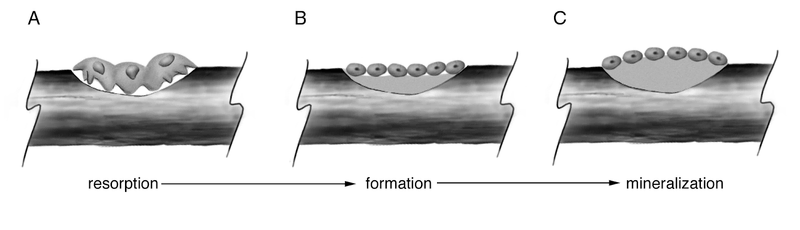
Figure 1 The bone remodeling cycle begins with osteoclastic bone resorption (A), which continues for approximately 3 weeks. This is followed by the recruitment of osteoblasts (B) that produce a collagen-rich protein matrix, osteoid, to fill the resorption cavity. This matrix must then become mineralized (C) to produce sturdy bone. The completion of this cycle requires 3 to 4 months.
). Because the rate of bone formation by osteoblasts exceeds the rate of bone resorption by osteoclasts in normal, young adults, bone mass accumulates until the late 20s or early 30s. At about age 30 years, bone resorption begins to exceed formation, and a subtle loss of bone occurs (Fig. 2
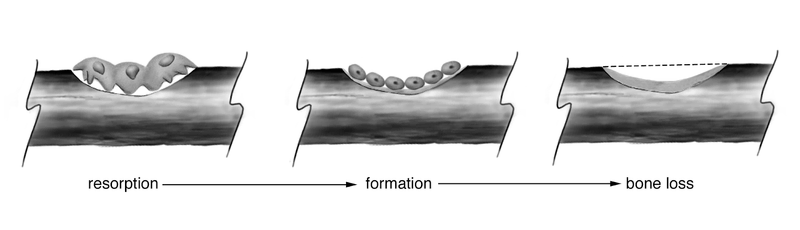
Figure 2 By about 30 years of age, bone formation is no longer able to keep up with resorption, and resorption cavities are left partially unfilled. This imbalance between resorption and formation leads to a gradual decrease in bone mass.
). With the onset of menopause and falling levels of estrogen, osteoclastic bone resorption increases without an equal increase in osteoblastic bone formation. As a result, bone loss accelerates (Fig. 3
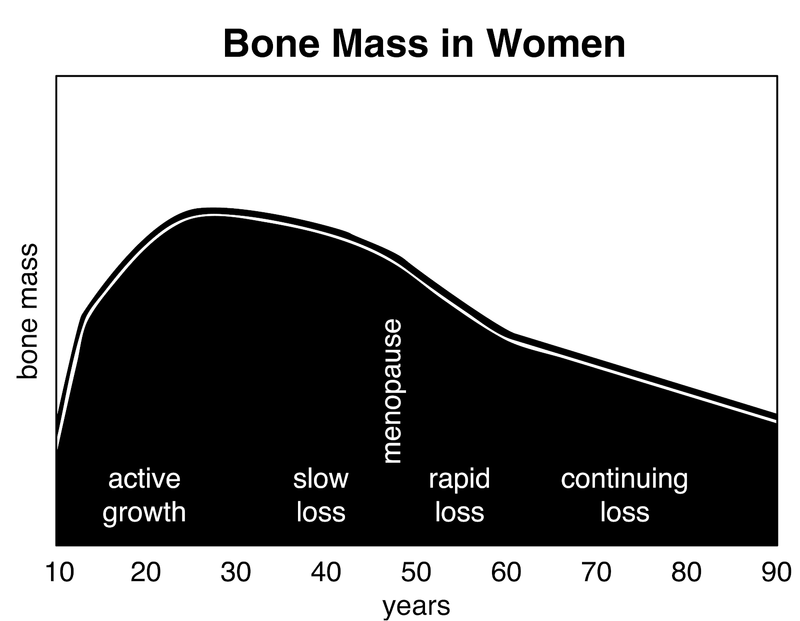
Figure 3 Bone mass as a function of age. Bone loss begins in young adulthood, but at menopause, the rate of bone loss accelerates as the result of an increase in osteoclastic bone resorption without a compensatory increase in formation.
). Trabecular bone, the principal type of bone in vertebrae and in the femoral neck, is particularly susceptible to osteoporosis because it has a higher surface-to-volume ratio than cortical bone: remodeling occurs strictly on the surface of bone. As a result of this bone loss and the deformation of the microscopic architecture, structural strength is lost (Fig. 4
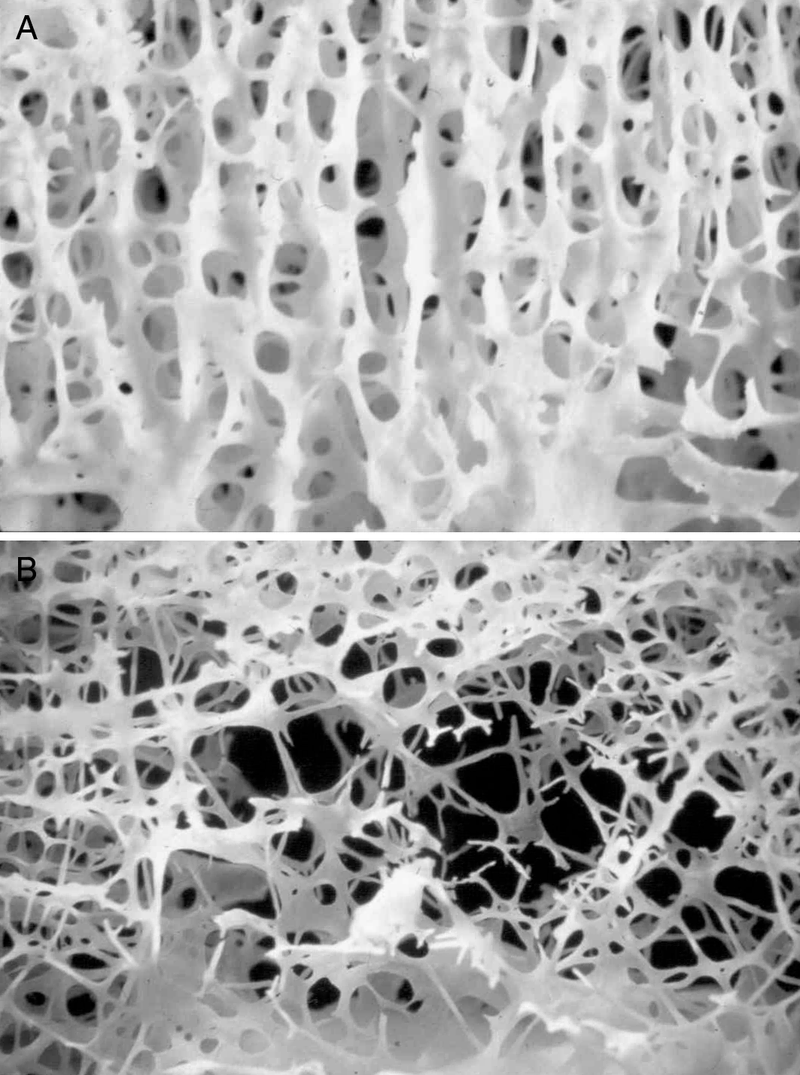
Figure 4A, Normal trabecular bone from a vertebral body. B, Osteoporotic trabecular bone from a vertebral body. As bone resorption continues, trabecular bone is lost, which leads to increased fragility.
(Reproduced from Einhorn TA: The structural properties of normal and osteoporotic bone. Instr Course Lect 2003;52:533-539.)
). Osteoporosis is called a “silent” disease because this progressive loss of bone goes on without signs or symptoms until a fracture occurs.
Presentation
The first sign of osteoporosis is often fracture, typically in the distal radius or the thoracic spine (compression fracture) among women in the first decade following menopause. Among older people, hip fractures are more common. Ordinarily, the mechanism of injury leading to an osteoporosis-related hip fracture is insufficient to fracture healthy bone.
A typical patient is an otherwise healthy, petite 58-year-old woman who experiences severe pain between her shoulder blades while lifting a turkey out of the oven. Because the pain is so severe, she goes to the emergency department, where physical examination reveals that she has acute pain, a heart rate of 92 beats/min, and blood pressure of 155/90 mm Hg. She is unable to move without pain and is exquisitely tender to percussion of the spine just below the shoulder blades. Radiographs show a compression fracture of the 10th thoracic vertebra.
Because this is the woman’s first fracture, her risk factors for osteoporosis must be assessed. Based on her height and weight, she has a low body mass index. She states that she never drinks milk and does not particularly like other dairy products. She has been relatively sedentary, and smoked one pack of cigarettes a day from age 18 to 45 years. She stopped menstruating at age 48 years and has never taken hormone replacement therapy. She drinks socially, her diet is erratic, and she frequently eats fast foods. Her mother is also petite and fractured her hip last year at the age of 78 years.
This patient demonstrates several of the risk factors for osteoporosis listed in Table 1.
Table 1 Risk Factors for Osteoporosis Female sex Caucasian or Hispanic race Estrogen deficiency Low calcium intake Alcoholism Inadequate physical activity Low body mass index History of smoking Family or personal history of fractures Use of medications associated with accelerated bone loss
She may have had a low peak bone mass because she is petite and is genetically predisposed to osteoporosis because her mother has the disease. She likely experienced accelerated bone loss at menopause when estrogen levels fell. This bone loss was probably accentuated by her low calcium intake and lack of exercise. As is usually the case, her bone loss was asymptomatic until she experienced a fracture. The fracture was typical in that it occurred without significant trauma and involved the spine, which is composed primarily of trabecular bone as opposed to the cortical bone comprising the long bones. For many patients, a fracture of the spine or distal radius is an event heralding a potentially lethal hip fracture.
Imaging Studies
Radiography
Plain radiographs can demonstrate osteoporosis, but to do so the bone loss must be severe: radiographs are not sensitive for the detection of bone loss of less than 30%. Accordingly, radiography is not a good screening modality for osteoporosis because there will be many false-negative results.
Dual-Energy X-ray Absorptiometry (DEXA)
Individuals at risk for osteoporosis-related fractures can be identified before their first fracture occurs with the use of dual-energy x-ray absorptiometry (DEXA). The bone density results are expressed as grams of mineral per square centimeter of bone. This test measures the density of the spine and hip with good precision and minimal radiation exposure. The guidelines of the National Osteoporosis Foundation for identifying those who should be tested are shown in Table 2.
Table 2 Indications for Bone Mineral Analysis All postmenopausal women All men older than 65 years Men with hypogonadism Women who have taken hormone replacement therapy for prolonged periods
The World Health Organization categorized bone density results based on a comparison of the subject’s bone density and the peak bone density of a healthy, young adult population. The difference is expressed as a T-score.2 A T-score is equivalent to one standard deviation above or below ideal bone mass. The definitions based on T-scores are as follows:
Normal 0 to –1 Osteopenia –1 to –2.5 Osteoporosis < –2.5
Peripheral Bone Densitometry
Measuring bone density in the forearm, hand, or heel rather than in the hip or spine requires less sophisticated equipment. With this method, however, interpretation may be incorrect because there is discordance of bone mineral density (BMD) at different sites; that is, the spine may be osteoporotic but the heel or forearm may be normal. This discordance is noted particularly in younger or perimenopausal women and produces false-negative results. As a result, the risk of fracture may be underestimated. Another disadvantage of screening for osteoporosis by measuring BMD at peripheral sites is that the technique is not precise enough to be used for long-term monitoring of response to therapy.
Laboratory Studies
There are no laboratory tests to diagnose primary osteoporosis; rather, the purpose of such testing is to determine if the bone loss that has already been identified (either by imaging studies or because of fractures) is caused by another process. Accordingly, it may be helpful to measure serum calcium, vitamin D, thyroid, and parathyroid hormone levels as well as concentrations of pituitary hormones. Markers of bone formation or resorption can be used to assess whether there is accelerated bone turnover. Alkaline phosphatase is an enzyme that becomes elevated with increased bone formation and mineralization. Total serum alkaline phosphatase, however, is an imperfect marker because it represents the total concentration of four isoenzymes of which the bone isoform contributes less than half. Osteocalcin is a small protein made by osteoblasts and is a sensitive marker of bone formation. Hydroxyproline and hydroxylysine, products of collagen breakdown, can be measured in the urine; however, because collagen is found in many tissues, they are not specific markers of bone turnover. Among young men with osteoporosis, the assessment of serum testosterone levels may help identify a cause.
Differential Diagnosis
Once the diagnosis of osteoporosis is made, the next step is to determine whether the osteoporosis is primary (postmenopausal or senile) or secondary. If the diagnosis is suggested on the basis of a low-energy fracture, other possible causes of pathologic fracture, such as malignancy or infection, must be excluded.
Treatment and Prevention
Prevention of osteoporosis must begin in young adulthood with lifestyle and dietary modifications. Recommendations include maintaining normal body weight; adequate intake of calcium and vitamin D (1,000 to 1,500 mg/day and 800 IU/day, respectively); avoiding smoking and excessive alcohol intake; and engaging in weight-bearing, impact exercises, such as walking, for 30 minutes three to five times per week. Among older people with established low bone mass, measures to prevent falls, such as “fall proofing” the home by providing adequate lighting and removing obstacles, having frequent vision examinations, and engaging in strength-training exercises, will decrease the risk of fractures independent of bone mass.
Osteoporosis can also be addressed with pharmacologic agents. Conjugated estrogens (0.625 mg) and estradiol (0.5 mg) given orally or transdermally have been shown to increase bone density. Although there are no prospective, placebo-controlled trials proving that drugs decrease the risks of vertebral and hip fractures, several retrospective studies have shown lower rates of fracture in women who have been taking estrogen for more than 5 years.3 The greatest risk reduction was observed in users of estrogen. If the patient has an intact uterus, a progestational agent must be given with the estrogen to prevent endometrial hyperplasia and endometrial carcinoma. A recent study demonstrated an increase in the risk for breast cancer, heart disease, and stroke in women taking conjugated estrogen and medroxyprogesterone for more than 5 years.4 Women with a history of thromboembolic events are not candidates for estrogen therapy. When deciding whether to prescribe estrogen, the risk-benefit ratio must be carefully weighed for each patient.
Selective Estrogen Receptor Modulators (SERMs)
Selective estrogen receptor modulators (SERMs) are drugs that behave either as an agonist or antagonist of estrogen depending on the site. They have been shown to prevent bone loss and lower serum cholesterol levels in postmenopausal women. One such drug, raloxifene, has been approved by the US Food and Drug Administration (FDA) for both the prevention and treatment of osteoporosis. It has estrogen-like effects on bone and inhibitory effects on the breast and endometrium. It is hoped that raloxifene may retain the beneficial effect of estrogen and eliminate the associated cancer risk to the endometrium and breasts. Raloxifene causes a modest increase in BMD and reduces fracture risk for the vertebrae but not for the hip.5 Adverse effects include hot flashes, peripheral edema, leg cramps, and venous thrombosis, but the incidence is low. Preliminary evidence suggests that the incidence of breast cancer may be reduced in women taking raloxifene, but additional studies are needed. Several other SERMs are under investigation for the treatment of osteoporosis.
Bisphosphonates
Bisphosphonates are structurally similar to naturally occurring pyrophosphates. Because they have a strong chemical affinity for hydroxyapatite, a major inorganic component of bone, they are potent inhibitors of bone resorption. They reduce the rate at which bone remodeling occurs and reduce the depth of resorption. Together this increases bone mass. Alendronate sodium and risedronate sodium are FDA-approved for the prevention and treatment of osteoporosis. Both agents increase bone density and reduce fracture risk for the hip and spine.6-8 Alendronate has also been shown to be equally effective in men, increasing bone density and reducing fracture risk.
Calcitonin
Calcitonin is a natural polypeptide hormone that regulates serum calcium and bone metabolism. Administration of calcitonin decreases the rate of bone resorption by decreasing the number and activity of osteoclasts. A nasal spray form of the drug is commonly used. Calcitonin causes a modest increase in bone density, but studies have not shown conclusive evidence for a reduction in fracture risk.9,10
Drugs for Steroid-Induced Osteoporosis
Estrogen and bisphosphonates are both effective in treating steroid-induced osteoporosis. Both classes of drugs can increase bone density when given to patients taking glucocorticoids.11,12 Calcitonin has also been reported to reduce bone loss, but whether it prevents fractures in these patients is less clear. A bisphosphonate should be given to all patients with osteopenia or osteoporosis who require treatment with glucocorticoids for more than 3 months.
Parathyroid Hormone
Parathyroid hormone (PTH) is a major regulator of calcium homeostasis. Although continuous administration stimulates bone resorption, intermittent, low doses of PTH stimulate bone formation. Such usage markedly increases bone density and reduces the incidence of vertebral and nonvertebral fractures in women with postmenopausal osteoporosis.13 Intermittent, low-dose PTH has also been shown to increase bone density significantly in patients with glucocorticoid-induced osteoporosis.14 It can be administered daily via subcutaneous injection. Its major adverse effects are hypercalciuria and hypercalcemia.
Other Anabolic Therapies Under Investigation
Bone morphogenic proteins, IGF-1 and IGFBP3 complex, IGF-binding protein, transforming growth factor-β, and PTH-related peptide analogs all have clinical potential as effective anabolic agents for bone.
Evaluating Response to Therapy
After instituting therapy for osteoporosis, it is important to assess the response and modify treatment accordingly. Response is monitored by measuring bone density and biochemical markers of bone remodeling. Bone density should be measured 1 to 2 years after patients begin taking an antiresorptive drug. A change in bone density is considered significant when the change is greater than twice the coefficient of variation of the method being used to measure bone density. For DEXA instruments, the coefficient of variation is usually < 2%; therefore, changes of 4% to 5% or greater are considered significant.
The markers of bone remodeling most frequently used are serum osteocalcin and bone-specific alkaline phosphatase to assess formation and the N-telopeptide of type I collagen (NTX) to assess resorption. NTX levels are the most helpful for assessing response to an antiresorptive agent. A decrease in serum or urine NTX levels of 50% or greater is considered a good response.14
Osteomalacia and Rickets
Osteomalacia is a metabolic bone disease characterized by abnormal mineralization of normal osteoid. The most common cause of osteomalacia is vitamin D deficiency, although rarer forms may be seen, such as resistance to adequate levels of vitamin D, renal disease, or excess aluminum intake. Osteomalacia in childhood is called rickets. This is typically caused by inadequate vitamin D intake, but gastrointestinal disease, renal disease, or inadequate exposure to sunlight may also be contributing factors.
Epidemiology and Risk Factors
Dietary osteomalacia is less common in the United States because nutritional awareness has increased and many foods are now fortified with vitamin D. Osteomalacia, however, is common among patients with renal disease and must be considered in the diagnostic evaluation of most patients with metabolic bone disorders.
Pathology
Patients with rickets demonstrate a failure of bone mineralization (deposition of calcium in the bones), specifically at the zone of provisional calcification in the growth plate. The key histopathologic findings, therefore, are a preponderance of unmineralized osteoid within the bone and a gross widening of the physis, which represents uncalcified cartilage. This lack of mineralization weakens the bone, and gross bowing deformities may occur. In the adult with osteomalacia, the gross contours of the bone are not deformed, but the weakened bones are subject to pathologic fracture.
Vitamin D deficiency leads to poor mineralization because low levels of vitamin D result in lowered levels of serum calcium. Since calcium is needed for the nervous system and other functions, the body responds to low calcium levels by increasing synthesis of PTH. This hormone mobilizes calcium from the skeleton and encourages the kidney to spill phosphorus in the urine, which produces low serum levels of phosphorus, or hypophosphatemia. The lack of phosphate and the mobilization of calcium out of the skeleton impairs mineralization and produces the characteristic osteopenia.
Presentation
The signs and symptoms of osteomalacia are nonspecific. Osteomalacia may be silent at first; it also may be associated with vague bone pain. In children with rickets, the presentation may range from failure to thrive to grossly visible deformity of the bone. Children with rickets are often breastfed exclusively (with no vitamin supplementation). Adult malnutrition also can lead to osteomalacia and, therefore, should be suspected in malnourished adults with bone pain, including those with anorexia nervosa, for example.
Imaging Studies
The radiographic diagnosis of rickets is made by the detection of widening of the physis, especially when the shaft of the bone is deformed and less radiographically dense. These findings suggest decreased mineralization (Fig. 5
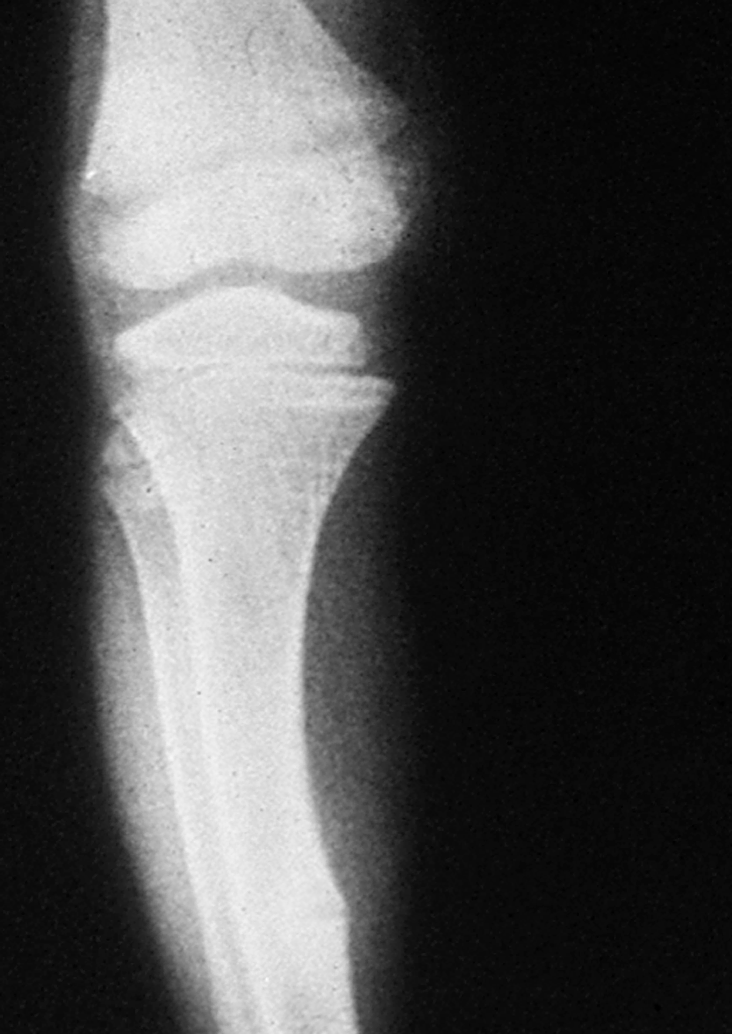
Figure 5 Radiograph showing deformed bone and widening of the physis in a patient with osteomalacia.
(Reproduced from Bostrom MPG, Boskey A, Kaufman JK, Einhorn TA: Form and function of bone, in Buckwalter JA, Einhorn TA, Simon SR (eds): Orthopaedic Basic Science, ed 2. Rosemont, IL, American Academy of Orthopaedic Surgeons, 2000, p 362.)
). Additional radiographic findings that suggest the presence of osteomalacia are Looser’s transformation zones, also known as pseudofractures. These zones are lines of radiolucency that represent stress fractures with unmineralized osteoid.
Laboratory Studies
Laboratory test findings, including increased alkaline phosphatase levels and low or normal serum calcium, phosphorus, and vitamin D levels, help define abnormal mineralization. Definitive diagnosis is made by bone biopsy when widened osteoid seams are found. Tetracycline can be given as a marker because it is deposited in the bone. Tetracycline lines can help measure the rate of mineralization. Since many cases of osteomalacia are associated with renal disease, laboratory assessment of serum creatinine levels is also performed.
Differential Diagnosis
The specific point of contrast between osteomalacia and osteoporosis is that mineralization in patients with osteoporosis is normal, whereas in those with osteomalacia it is abnormal. Therefore, in instances in which there may be confusion between the two diagnoses, a bone biopsy can provide definitive diagnosis.
Treatment and Prevention
When the cause of osteomalacia or rickets is decreased intake of vitamin D, the treatment naturally centers on administering vitamin D along with dietary calcium. Treatment of rickets associated with renal disease requires attention to that underlying disorder and to the hyperparathyroidism the renal disease produces. Specific attention to bone deformities caused by poor mineralization is often not required because when vitamin D levels are restored, the deformities can correct themselves. At times, however, splinting or even surgical realignment of the bone is needed.
Paget’s Disease
Paget’s disease (also called osteitis deformans) is a condition of abnormally increased and disorganized bone remodeling (Fig. 6
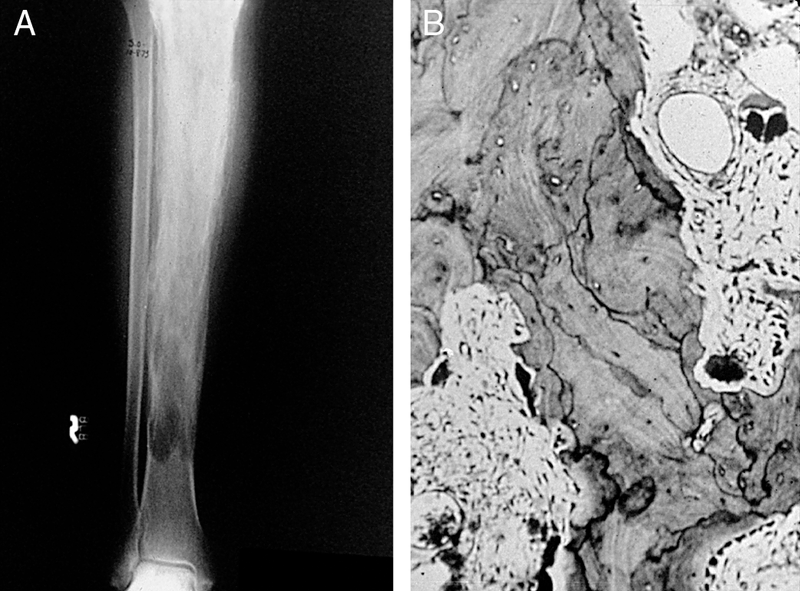
Figure 6 Paget’s disease. A, Radiographic features include areas of lucency and cortical thickening. B, Histologic features include osteoclasis and disorganized bone.
(Reproduced from Bostrom MPG, Boskey A, Kaufman JK, Einhorn TA: Form and function of bone, in Buckwalter JA, Einhorn TA, Simon SR (eds): Orthopaedic Basic Science, ed 2. Rosemont, IL, American Academy of Orthopaedic Surgeons, 2000, p 366.)
). It is not a systemic disorder; rather, Paget’s disease is localized within the bones, where foci of bone remodeling are formed for uncertain reasons. Current thinking holds that a viral infection of osteoclasts in genetically susceptible hosts may be responsible. Because of rapidly increased bone resorption, a rapid increase in bone formation also occurs, leading to a mosaic of disorganized, immature (woven) bone. This bone is at times grossly deformed and apt to fracture. It may be painful and, in rare instances, prone to malignant degeneration. Paget’s disease near the articular surfaces can deform them and lead to secondary osteoarthritis. Paget’s disease is found commonly in the femur, tibia, pelvis, and skull.
Epidemiology and Risk Factors
Paget’s disease is most common among people of European descent (excluding Scandinavia). Approximately 3% of Americans older than 45 years will have radiographic evidence of Paget’s disease. It affects men slightly more commonly than women.
Pathology
The first stage of Paget’s disease is increased bone resorption. Inclusion bodies seen in osteoclasts suggest that this may occur as the result of a viral infection. Osteoclast activity during this lytic phase recruits osteoblasts to synthesize bone to replace that which was lost. Because so much bone must be synthesized at once, the structure formed during this blastic phase is disorganized (Fig. 7
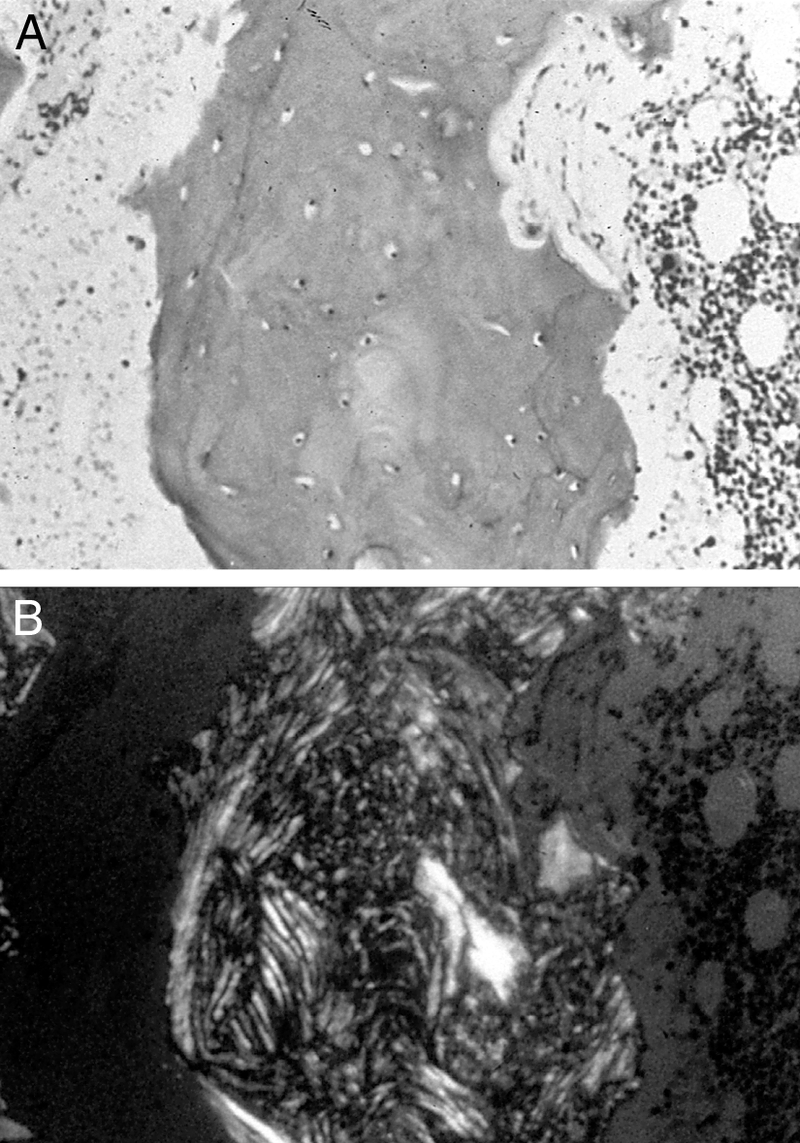
Figure 7 In Paget’s disease, the osteoid appears ordinary under normal light (A), but polarized light demonstrates the disorganization (B).
(Reproduced from Bostrom MPG, Boskey A, Kaufman JK, Einhorn TA: Form and function of bone, in Buckwalter JA, Einhorn TA, Simon SR (eds): Orthopaedic Basic Science, ed 2. Rosemont, IL, American Academy of Orthopaedic Surgeons, 2000, p 366.)
). Over time, the disease extinguishes itself, and the bone reaches a sclerotic phase in which neither bone formation nor resorption takes place. Within a given bone, there may at once be areas in which resorption, formation, or sclerosis dominate.
Presentation
Paget’s disease is often clinically silent. The most common presentation is an incidental finding on radiographs. Symptoms may include bone pain at the site of remodeling, pain from arthritis, warmth from increased vascularity in the area, or neurologic complaints from compression of nerves by deformed bone. Paget’s disease of the vertebral bodies can produce signs similar to those of spinal stenosis; Paget’s disease of the skull may induce hearing loss (from compression of the eighth cranial nerve).
Imaging Studies
In its early phases, Paget’s disease shows discrete areas of bone lysis. Thereafter, regions of cortical thickening can be found, along with gross deformity, such as bowing. Paget’s disease of the skull produces a thickening described as a “cotton wool” appearance.
Laboratory Studies
Elevated serum alkaline phosphatase levels reflect increased osteoblast activity, whereas high concentration of hydroxyproline and hydroxylysine in the urine reflect bone resorption. These findings are not specific to Paget’s disease. The utility of these markers is primarily to measure the response to treatment and to follow the course of the disease over time.
Differential Diagnosis
Paget’s disease, in its sclerotic phase, has a distinct radiographic appearance. In earlier phases, however, the radiographic appearance of Paget’s disease may suggest a tumor (primary or metastatic) or an infection. A key question is whether pain in a patient with known Paget’s disease has pain from the Paget’s disease or some other process. A bone scan can help make the distinction because only “active” Paget’s disease (ie, that which appears on a bone scan) is thought to cause pain. Sclerotic Paget’s disease may cause secondary symptoms from deformation or compression.
Treatment and Prevention
The lytic phase of Paget’s disease can be treated with a drug aimed to decrease osteoclast activity, such as calcitonin or a bisphosphonate. Because the disease is so prevalent, it is thought that only symptomatic patients require treatment. Bisphosphonates, drugs that inhibit bone resorption and also block bone mineralization, may be helpful during the lytic phase. Nevertheless, because patients with Paget’s disease often have areas of lytic and blastic activity occurring simultaneously, continuous use of bisphosphonates may be harmful: although they block increased osteoclast activity in areas of resorption, they impede needed mineralization elsewhere. As such, the cyclic use of bisphosphonates is suggested; this allows new bone to become mineralized, while decreasing osteoclast activity.
Arthritis caused by Paget’s disease is amenable to joint replacement, but this may be complicated by blood loss, heterotopic bone formation, or loosening of the implant.
Key Terms
Bisphosphonates Potent inhibitors of osteoclasts and bone resorption
Calcitonin A peptide produced by the thyroid parafollicular cells that inhibits bone resorption through a direct inhibition of osteoclasts
Dual-energy x-ray absorptiometry (DEXA) A diagnostic imaging technology that uses two different x-ray voltages to assess bone density
Osteomalacia A metabolic bone disease characterized by abnormal mineralization of normal osteoid
Paget’s disease A condition of abnormally increased and disorganized bone remodeling
Parathyroid hormone A major regulator of calcium homeostasis; promotes increased levels of serum calcium
Postmenopausal osteoporosis The most prevalent form of primary osteoporosis
Pseudofractures Lines of radiolucency that represent stress fractures with unmineralized osteoid
Rickets The childhood form of osteomalacia
Secondary osteoporosis Osteoporosis caused by the presence of another disease, such as hormonal imbalances, malignancies, or gastrointestinal disorders, or because of corticosteroid use
Senile osteoporosis Osteoporosis in which an age-related decline in renal production of active vitamin D is the probable cause of bone loss
T-score A score used to express the results of bone density tests derived from the difference between the bone density of the patient being tested and the peak bone density of a healthy, young adult population; a T-score is equivalent to one standard deviation above or below ideal bone mass
References
1. Osteoporosis: Review of the evidence for prevention, diagnosis, and treatment and cost-effectiveness analysis: Introduction. Osteoporos Int 1998;8(suppl 4):S7-S80.
2. WHO Study Group: Assessment of fracture risk and its application to screening for postmenopausal osteoporosis: Report of a WHO Study Group. World Health Organ Tech Rep Ser 1994;843:1-129.
3. Torgerson DJ, Bell-Syer SE: Hormone replacement therapy and prevention of nonvertebral fractures: A meta-analysis of randomized trials. JAMA 2001;285:2891-2897.
4. Rossouw JE, Anderson GL, Prentice RL, et al: Risks and benefits of estrogen plus progestin in healthy postmenopausal women: principal results from the Women’s Health Initiative randomized controlled trial. JAMA 2002;288:321-333.
5. Ettinger B, Black DM, Mitlak BH, et al: Reduction of vertebral fracture risk in postmenopausal women with osteoporosis treated with raloxifene: Results from a 3-year randomized clinical trial: Multiple Outcomes of Raloxifene Evalation (MORE) Investigators. JAMA 1999;282:637-645.
6. Black DM, Cummings SR, Karpf DB, et al: Randomised trial of effect of alendronate on risk of fracture in women with existing vertebral fractures: Fracture Intervention Trial Research Group. Lancet 1996;348:1535-1541.
7. Harris ST, Watts NB, Genant HK, et al: Effects of risendronate treatment on vertebral and nonvertebral fractures in women with postmenopausal osteoporosis: A randomized controlled trial: Vertebral Efficacy With Risedronate Therapy (VERT) Study Group. JAMA 1999;282:1344-1352.
8. McClung MR, Geusens P, Miller PD, et al: Effect of risedronate on the risk of hip fracture in elderly women: Hip Intervention Program Study Group. N Engl J Med 2001;344:333-340.
9. Overgaard K, Hansen MA, Jensen SB, et al: Effect of salcatonin given intranasally on bone mass and fracture rates in established osteoporosis: A dose-response study. BMJ 1992;305:556-561.
10. Downs RW Jr., Bell NH, Ettinger MP, et al: Comparison of alendronate and intranasal calcitonin for treatment of osteoporosis in postmenopausal women. J Clin Endrocrinol Metab 2000;85:1783-1788.
11. Lukert BP, Johnson BE, Robinson RG: Estrogen and progesterone therapy reduces glucocorticoid-induced bone loss. J Bone Miner Res 1992;7:1063-1069.
12. Saag KG, Emkey R, Schnitzer TJ, et al: Alendronate for the prevention and treatment of glucocorticoid-induced osteoporosis: Glucocorticoid-Induced Osteoporosis Intervention Study Group. N Engl J Med 1998;339:292-299.
13. Reid DM, Hughes RA, Laan RF, et al: Efficacy and safety of daily risedronate in the treatment of corticosteroid-induced osteoporosis in men and women: A randomized trial: European Corticosteroid-Induced Osteoporosis Treatment Study. J Bone Miner Res 2000;15:1006-1013.
14. Lane NE, Sanchez S, Modin GW, et al: Parathyroid hormone treatment can reverse corticosteroid-induced osteoporosis: Results of a randomized controlled clinical trial. J Clin Invest 1998;102:1627-1633.
