

Bones break when they are subjected to forces greater than their mechanical tolerance. Whether a bone will fracture under a given load depends on both the inherent strength of the bone and the magnitude of the force. The direction of the force and rate at which it is applied are also important considerations. Bone has a remarkable capacity to regenerate; it and the liver are the only two organs in the body that repair themselves without scar and form new, intact tissue.
Fractures are clinically important for a variety of reasons. They can be painful, debilitating, and in some settings even life threatening. They may cause (or be related to) medical complications, such as compartment syndrome or thrombosis. They also may reflect underlying medical diseases, such as endocrinopathies or malignancies. Above all, fractures are common.
Describing fractures entails mastering a common vocabulary. Although physicians may name a fracture by its eponym (a fracture of the distal radius, for instance, is known as a Colles’ fracture) or a classification number (a method perhaps limited to orthopaedic surgeons), this practice is not suggested for students or practitioners because it is easy to use the wrong eponym or classification number without realizing it or to confuse others who may not be familiar with these systems. Therefore, fractures should be described in such a way that the description matches the radiographic findings.1 To do this, the following questions must be answered: (1) Which bone is broken? (2) Which region or segment of the bone is broken? (3) What is the pattern of the break? and (4) Is the skin broken?
The first question is straightforward but requires some knowledge of skeletal anatomy. Although it may be difficult to recall all the names of the small bones of the hand and feet, the distinctions among them are critical. For example, a nondisplaced fracture of the scaphoid is a much more serious injury than a similar break of the metacarpal; the scaphoid fracture has a much higher risk of nonunion. (Thus, when you are confronted with a radiograph of a fracture but are uncertain of the name of the bone, look it up.)
The segment of bone that is broken also must be described. In the long bones, the diaphysis, metaphysis, and epiphysis are clearly separate (Fig. 1
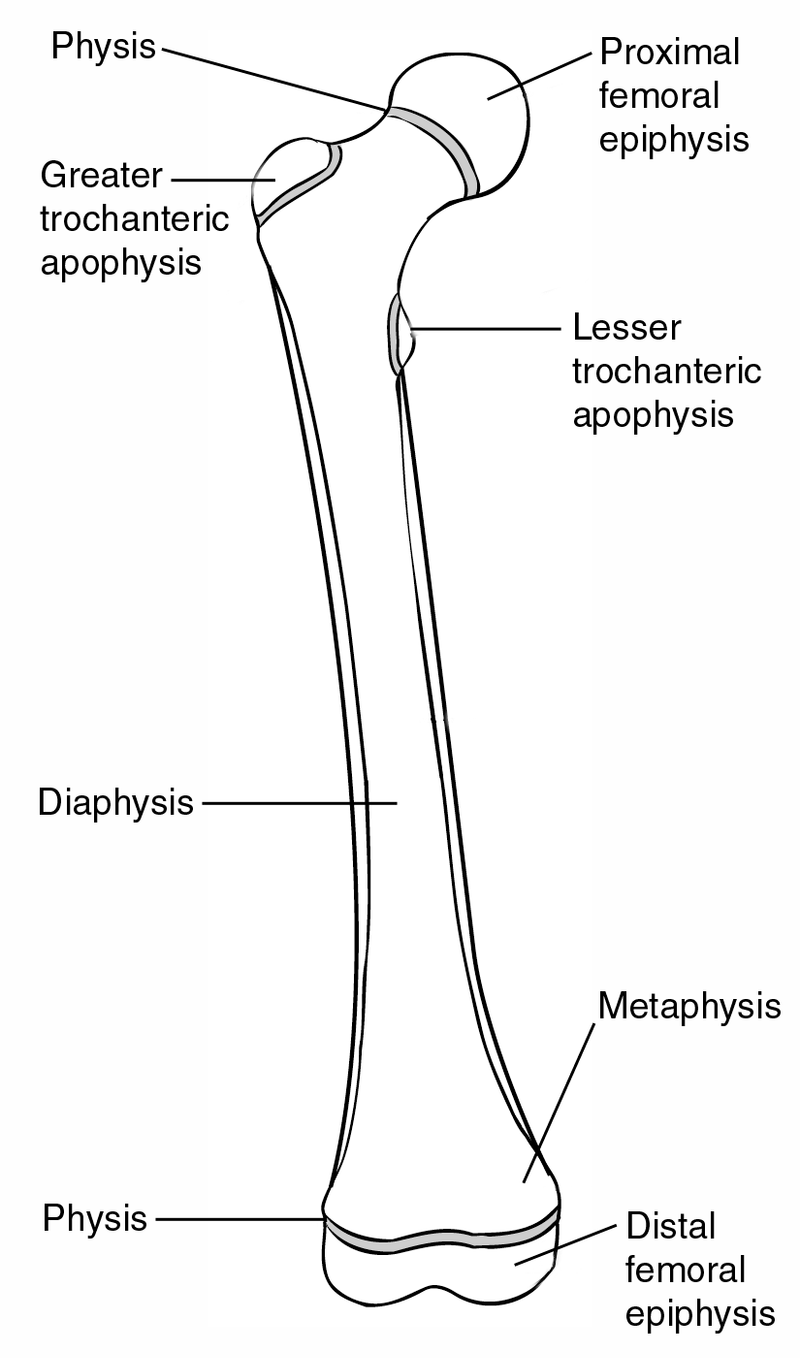
Figure 1 The regions of a long bone, shown here in the femur.
(Reproduced from Sullivan JA: Introduction to the musculoskeletal system, in Sullivan JA, Anderson SJ (eds): Care of the Young Athlete. Rosemont, IL, American Academy of Orthopaedic Surgeons, 2000, pp 243-258.)
). It is also important to note whether the fracture violates the articular surface. Slight displacement of the cartilage that lines the joint can impair the smooth mechanics of the joint. As such, displacement is less well tolerated (and more important to detect) in fractures near the joint compared with, for example, fractures in the midshaft of the bone. Angulation of fractures near the joint line also may interfere with joint function or dislocate the joint (Fig. 2
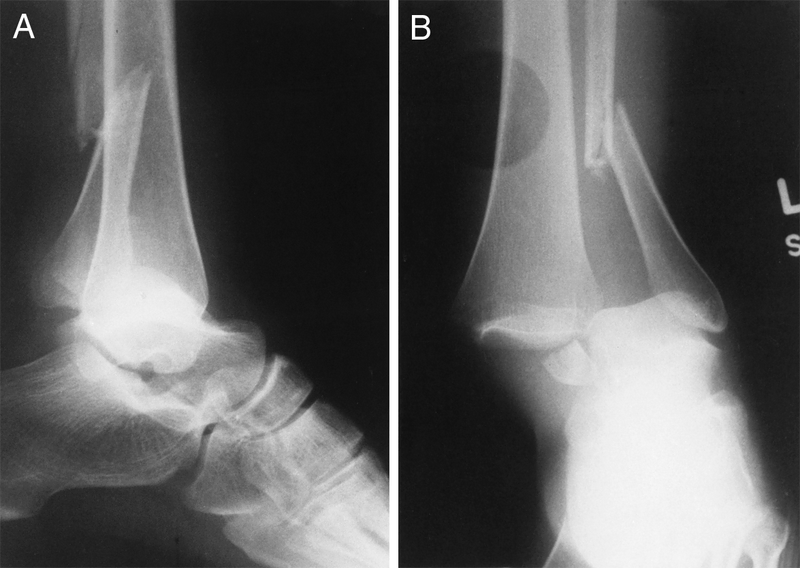
Figure 2A and B, In this ankle fracture, the joint between the tibia and talus, referred to as the mortise, is disrupted, producing a fracture-dislocation.
(Reproduced from Stephen DJG: Ankle and foot injuries, in Kellam JF, Fischer TJ, Tornetta P III, Bosse MJ, Harris MB (eds): Orthopaedic Knowledge Update: Trauma 2. Rosemont, IL, American Academy of Orthopaedic Surgeons, 2000, pp 203-225.)
); thus, an assessment of the alignment of the adjacent joint is required.
Certain bones have distinct areas that are subject to fracture, and breaks there are described with their own nomenclature. For example, an oblique fracture of the proximal femur between the greater and lesser trochanter is known as an intertrochanteric fracture. A diagonal fracture of the distal radius is called a radial styloid fracture. Also, the regions of the flat bones, such as the pelvis, are named distinctly because long- bone terminology (which uses the physis as a point of reference) does not apply to flat bones.
The pattern of the fracture is described in terms of the geometry of the fracture line or lines (Table 1
| Location in the bone | Description |
|---|---|
| Epiphyseal | The end of the bone, forming part of the adjacent joint |
| Metaphyseal | The flared portion of the bone at the ends of the shaft |
| Diaphyseal | The shaft of a long bone |
| Orientation/extent of the fracture line(s) | Description |
| Transverse | A fracture that is perpendicular to the shaft of the bone |
| Oblique | An angulated fracture line |
| Spiral | A multiplanar and complex fracture line |
| Comminuted | More than two fracture fragments |
| Segmental | A completely separate segment of bone bordered by fracture lines |
| Intra-articular | The fracture line crosses the articular cartilage and enters the joint |
| Torus | A buckle fracture of one cortex, often seen in children |
| Compression | Impaction of bone, such as in the vertebrae or proximal tibia |
| Greenstick | An incomplete fracture with angular deformity, seen in children |
| Pathologic | A fracture through bone weakened by disease or tumor |
| Amount of displacement of the fracture fragments | Description |
| Nondisplaced | A fracture in which the fragments are in anatomic alignment |
| Displaced | A fracture in which the fragments are no longer in their usual alignment |
| Angulated | A fracture in which the fragments are malaligned |
| Bayonetted | A fracture in which the distal fragment longitudinally overlaps the proximal fragment |
| Distracted | A fracture in which the distal fragment is separated from the proximal fragment by a gap |
| Integrity of the skin and soft- tissue envelope around the fracture | Description |
| Closed | The skin over and near the fracture is intact |
| Open | The skin over and near the fracture is lacerated or abraded by the injury |
| (Reproduced from Greene WB (ed): Essentials of Musculoskeletal Care, ed 2. Rosemont, IL, American Academy of Orthopaedic Surgeons, 2001, p 37.) |
and Fig. 3
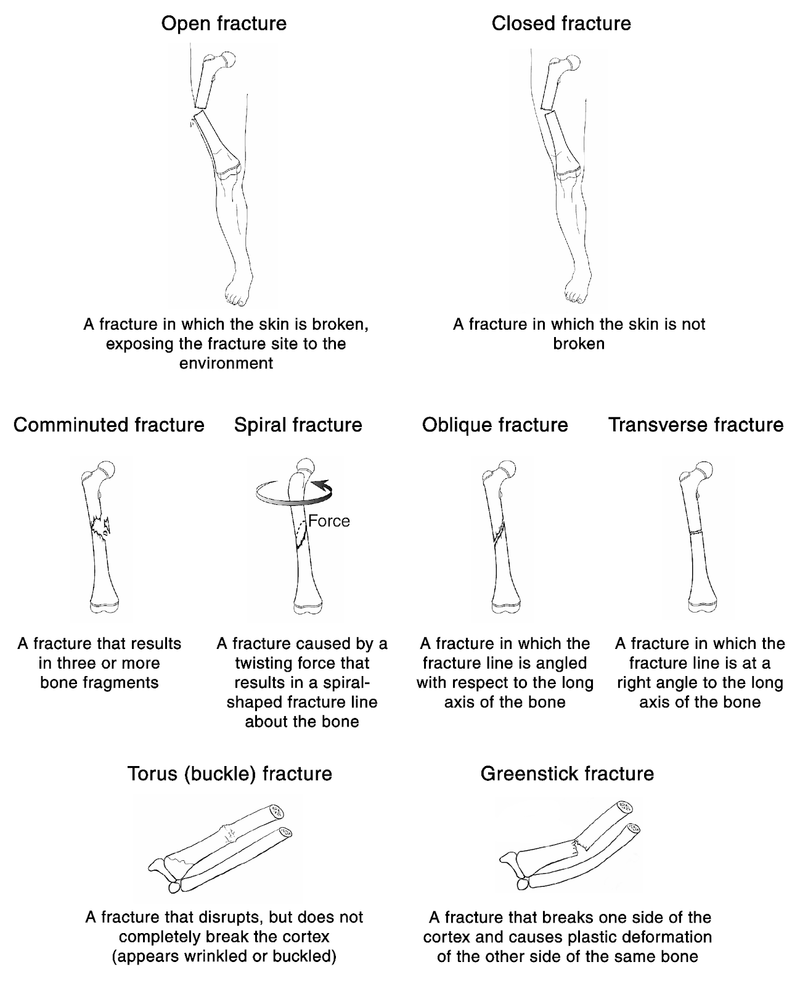
Figure 3 Patterns of fractures.
(Reproduced from Sullivan JA: Introduction to the musculoskeletal system, in Sullivan JA, Anderson SJ (eds): Care of the Young Athlete. Rosemont, IL, American Academy of Orthopaedic Surgeons, 2000, pp 243-258.)
First, is there one line or more than one? Breaks with more than one fracture line are called comminuted fractures. Comminution usually implies a high-energy mechanism of injury but also can result from a low-energy injury to a bone already weakened by disease. A transverse fracture is a fracture that occurs at an angle perpendicular to the shaft of the bone. An oblique fracture crosses the bone diagonally from one cortex to the other. A spiral fracture, as the name implies, wraps around the bone like a coil. The pattern of a fracture also often gives clues as to how the bone was broken and therefore may suggest the presence of other injuries. For instance, an oblique fracture of the medial portion of distal tibia at the ankle (the medial malleolus) implies that the injury was caused by inversion—the talus impacts the tibia and breaks it. This positioning increases the possibility that there is a tension injury on the lateral side, most likely a ligament rupture. Thinking mechanistically is important in this case because the ligament rupture will not appear on radiographs.
Finally, the condition of the soft tissues must be assessed. Fractures associated with breaks of the skin are called open fractures. These are true medical emergencies because if open fractures are not cleaned out surgically, there is an increased risk of bone infection. Therefore, it is critical to detect them. All fractures associated with blood on the skin, even without an obvious break in the skin, must be considered open unless and until another explanation for the blood is found. One method to determine whether a fracture is open is to probe the laceration for the presence of bone. Another indication that an open fracture may be present is when bleeding does not stop despite attempts at holding pressure over the skin laceration.
With these questions answered, almost all fractures can be described completely. Additional information including the age of the patient, the mechanism of injury, and the quality of the bone stock completes the picture and allows the physician to derive an appropriate treatment plan.
How Bones Break
The fact that bone is alive influences how it responds to injury and even how it prevents injury—active remodeling removes areas of small damage and prevents fatigue fractures.2 Nonetheless, these processes, typical of biologic responses, are slow and progress over days to weeks. Thus, when a force is applied to a bone instantaneously, the fate of the bone—whether it will break or not—depends not on its living biologic properties but on its inert mechanical properties.
A fracture represents the failure of a material (bone) to withstand a force. Failure occurs as a function of the inherent properties of the material as well as at least three additional factors: (1) the magnitude of the force applied to it, (2) the direction of that force, and (3) the rate at which force is applied. The importance of the inherent properties is intuitively clear: stronger material can withstand greater force. In clinical terms, the mechanism of injury (specifically, how much energy is imparted to the bone) will influence whether a fracture occurs. For example, a fall onto the buttocks from a standing height typically does not fracture the pelvis, whereas a similar landing after a fall from a three-story roof almost always does. The quality of bone and the ability of the individual to use his or her muscles to protect bone from absorbing energy are also key factors in determining whether a fracture will occur.
The duration and rate of the force application are critical factors in determining whether an injury to bone will occur. Materials such as bone whose mechanical properties are dependent on the loading rate of an applied force are said to be viscoelastic. The viscoelasticity of bone is important clinically because when force is applied at low speeds, bone is weaker than ligament; when applied at higher speeds bone is stronger. Accordingly, a rapidly applied anterior force to the tibia will rupture the anterior cruciate ligament. By contrast, if the force were applied at a lower rate, the ligament would remain intact, but the bone would break. This low-speed mechanism of injury would produce an avulsion fracture of the piece of bone to which the cruciate ligament is attached. Likewise, an inversion force to the ankle at lower speeds might produce a transverse fracture of the fibula, whereas that same force applied at a greater speed would lead to a rupture of the lateral ankle ligaments.
Even with a given amount of energy applied to the bone at a given rate of application, it is still not certain that the bone will fracture because the direction of the force is also critical. The forces applied to bone can be categorized by their direction as compressive (push), tensile (pull), or torsional (twist).
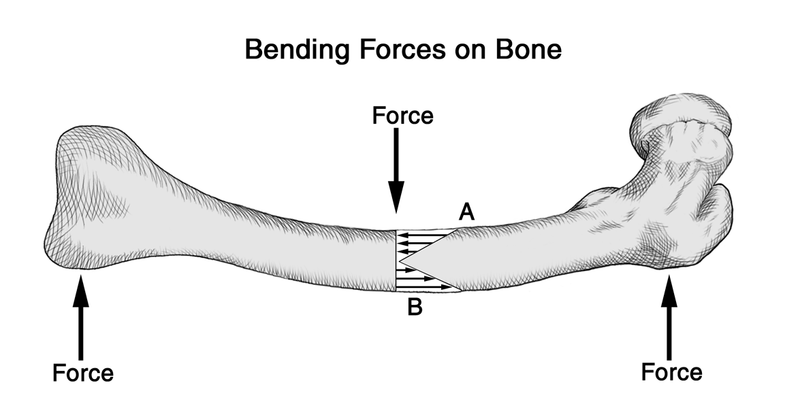
Figure 4 Bending the bone (with forces shown as arrows) stresses the shaft. The concave side (A) is compressed, whereas the convex side (B) is under tension. Thus, the fracture will begin on the convex side because bone fails under tension before compression.
Materials such as bone whose mechanical properties are dependent on the direction of loading are said to be anisotropic.3 (A material such as steel, which has the same mechanical properties regardless of direction, is isotropic.) The anisotropic properties of bone make sense from the perspective of engineering efficiency. Most of the forces applied to bone in ordinary use are compressive (ie, resulting from loading of the skeleton during walking or running); thus, the mineral component of bone is aligned along the axis of the bone to resist such forces. A greater force is required to fracture the bone in axial compression. If a bending force is applied, the bone experiences tension forces on one cortex and compression forces on the opposite cortex. The failure of the bone will begin on the side under tension and move across to the compression side (Fig. 4).
As a material, adult bone is brittle and tends to deform only slightly before it breaks. Comparatively, younger bone is able to deform a great deal more before it fails. The property of greater plastic deformation before failure is called ductility. Because of the ductile nature of pediatric bone, children can develop fracture patterns not seen in adults. A torus (buckle) fracture occurs when the bone under load bends but does not break. Another pattern unique to children is the greenstick fracture, which occurs when forces applied to young bone break it through only one cortex but not completely across. This fracture pattern gets its name from a similar fracture pattern that occurs when one bends a small, living tree branch.
Of course, the major difference between adult and pediatric bone is that young bone contains a physis (growth plate). This region of bone is not only mechanically weaker than bone and ligament, but it is also critically important for the growth of the bone. Injury to the physis may cause growth disturbance or arrest.
How Bones Heal
Bone healing is divided into two types: primary and secondary. Primary bone healing, requiring precise reapproximation of the fracture, is rare in nature. Primary healing requires rigid immobilization of the fracture, such as that which is seen with surgical plating and compression of the cortices of the bone together. Because rigidity is required, this form of healing almost never occurs without surgical intervention. Primary bone healing may be thought of as simply the deposition of new bone across the fracture by osteoblasts. This new bone integrates into the two opposing sides through tunnels created by osteoclasts called cutting cones.4 In the cutting cone, there is local bone resorption and eventual recreation of normal bone structure.
In secondary bone healing, bone first produces a mass of cartilage scar. This mass ossifies and then remodels to form normal bone. The secondary response of bone is best understood by recalling that the bone is a highly vascularized structure: breaking a bone tears some blood vessels, and a fracture always creates some degree of hematoma (blood collection). The hematoma is the source of much of the initial healing response—being both the mechanical scaffolding upon which healing takes place and a depot of biologic factors that initiate and sustain the development of new bone.
The process of secondary healing can be described as follows: the bone breaks, and a hematoma is formed. Through the process of inflammation and angiogenesis, the hematoma becomes organized. Cells proliferate, and granulation tissue (primitive scar) is formed. This cartilaginous tissue is then calcified. Blood vessels subsequently invade, bringing the cellular machinery of bone remodeling, and the calcified cartilage of the callus is thereby converted to normal bone (Fig. 5
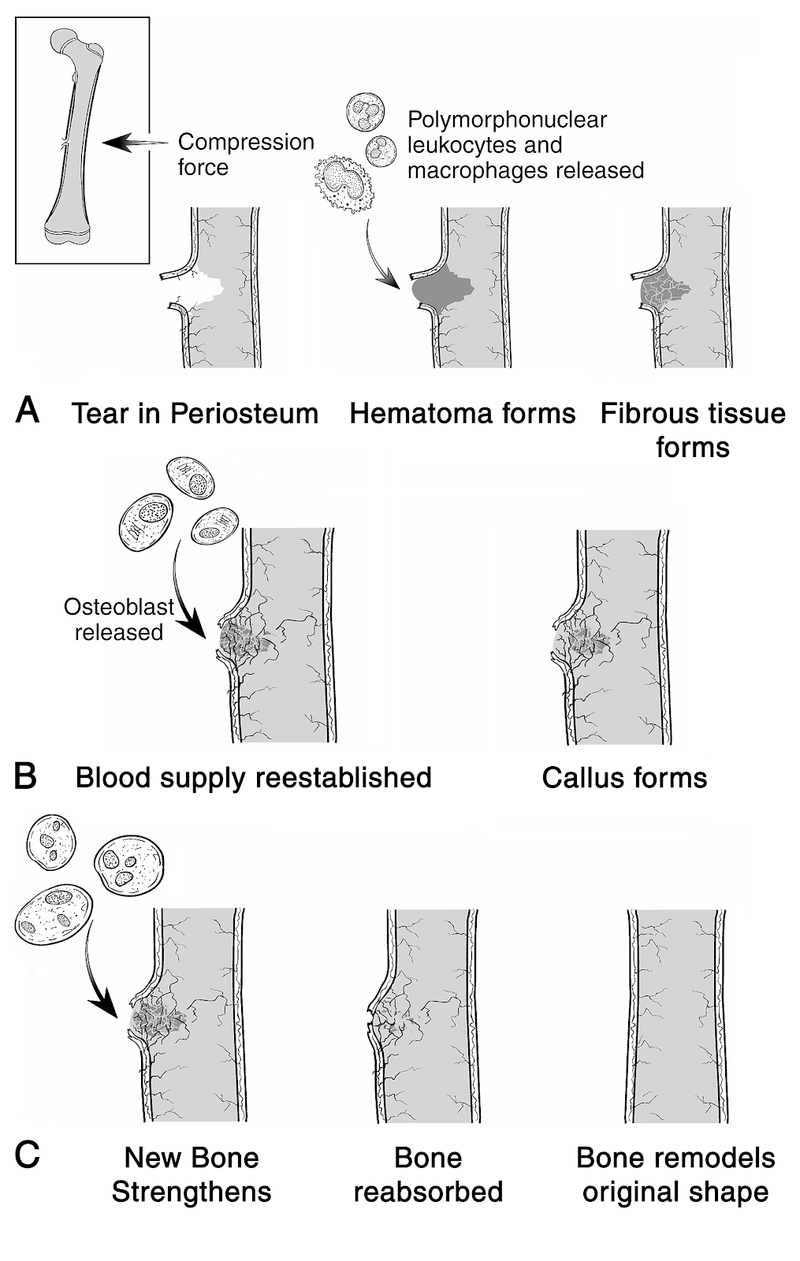
Figure 5 Phases of secondary fracture healing. A, Early inflammatory stage. B, Callus formation occurs in the second phase. C, In the third phase, new bone formation strengthens the bone, and the bone remodels to restore its normal shape.
(Reproduced from Sullivan JA: Introduction to the musculoskeletal system, in Sullivan JA, Anderson SJ (eds): Care of the Young Athlete. Rosemont, IL, American Academy of Orthopaedic Surgeons, 2000, pp 243-258.)
Secondary healing, in a sense, repeats the process of endochondral ossification and bone remodeling.
The periosteum is the main source of cells during the healing response. From the periosteum (and to some extent the surrounding soft tissues) progenitor mesenchymal stem cells are recruited to differentiate into a bone-producing lineage. Although the biochemistry and molecular biology of fracture healing is beyond the scope of this chapter, these processes will assume greater importance as new therapeutic methods are developed to manipulate them.5,6
Currently, there is great interest in studying growth factors that signal bone cells to proliferate or differentiate. Substances such as bone morphogenic proteins are being studied intensely and have been demonstrated to increase new bone formation.7-9 The challenge of using growth factors effectively will be controlling them so that the bone is formed only in the affected area to the extent desired. Using precursor cells such as bone marrow stromal cells on carriers may help to promote bone formation locally and holds promise.10
Other research directions in fracture healing involve studying the actual genetic expressions of bone healing and formation. The Human Genome Project has resulted in the formation of genetic libraries. A technique called microarrays on bone filters will allow researchers to identify which genes and proteins are recruited for fracture healing and which genes are downregulated. The idea is first to understand which individual genes are involved in fracture healing to develop techniques to manipulate gene expression in the future.
Clinical Evaluation of Fractures
Physical Examination
The single most important factor to consider when evaluating a patient with a suspected fracture is that attention to musculoskeletal injuries must be deferred to those that are more immediately life threatening.11 Thus, the ABCs (airway, breathing, circulation) of trauma must first be considered.
Once these critical factors are evaluated and stabilized, suspected fractures should be immobilized (Table 2).
| Technique | Advantages | Disadvantages | Common Example |
|---|---|---|---|
| Casting | Relatively noninvasive Easy to apply | Skin breakdown/maceration Loss of reduction if cast becomes loose Pressure on nerves and blood vessels | Minimally displaced distal radius fracture |
| Open reduction and internal fixation (ie, plates and screws) | Allows perfect alignment of bone ends at the fracture site Holds bone in compression (promotes primary healing) | Soft-tissue stripping inevitable and biologic environment disturbed Stress shielding at the site Possible infection from opening fracture | Tibial plateau fracture |
| Intramedullary rod | Smaller incisions than open reduction and internal fixation Early weight bearing | Disruption of endosteal blood supply Reaming the medullary canal may trigger fat embolism syndrome | Midshaft femur or tibia fracture |
| External fixation | Allows access to soft tissue if wound is open Easy to adjust angulation of bone during treatment | Pin tract infections Cumbersome Fracture through empty pin sites | Open tibia fracture |
| Traction | Minimal surgical time Does not violate fracture site or growth plates | Prolonged bed rest causes medical complications | While awaiting surgery for hip fracture Definitive treatment for pediatric femur fracture |
Although fractures typically hurt, not all injured patients can reliably report their symptoms. Examine any body part that is painful, deformed, swollen, or otherwise abnormal. The physical examination assesses skeletal integrity; this includes not only palpating the bones to identify deformity, tenderness, or crepitus but evaluating the surrounding joints for motion as well.12 The status of the nerves and blood vessels distal to the injury should also be assessed. Many physicians seek certification in Advanced Trauma Life Support (ATLS), and training manuals for certification are excellent primers on the evaluation of the injured patient.13 Nonetheless, the best way to learn these skills is with hands-on experience.
When evaluating fractures, particular attention must be given to the soft tissues because an acute fracture is almost always accompanied by soft-tissue trauma. The forces that fracture bone can also crush, tear, avulse, or otherwise damage the surrounding tissues. Thus, the skin should be inspected for abrasions, bruises, and swelling. If a fractured bone is stripped of its soft tissue, the potential for osseous healing is significantly impaired. Thus, careful treatment of the soft tissues is critical to a successful outcome in fracture management.
Open fractures are often high-energy injuries associated with extensive soft-tissue damage and therefore need special attention. A fractured bone exposed to the environment through a traumatic wound is frequently contaminated with bacteria. Open fractures require urgent surgery to excise necrotic tissue and irrigate the wound to reduce the risk of subsequent infection.14,15 Repeated débridement is needed in some cases to ensure that only viable, uninfected tissue remains in the wound. Because of the loss of the initial hematoma, bone healing occurs more slowly in open fractures. A system of classifying the soft-tissue injury associated with open fractures has been devised for clinical use (Table 3).
| Type | Description |
|---|---|
| I | <1 cm of skin laceration |
| II | >1 cm laceration |
| IIIA | Extensive soft-tissue damage but closure of skin without a flap is possible |
| IIIB | Open fracture that needs a muscle flap for closure |
| IIIC | Extensive soft-tissue damage with vascular injury needing repair |
| (Adapted with permission from Gustilo RB, Anderson JT: Prevention of infection in the treatment of 1025 open fractures of long bones. J Bone Joint Surg Am 1976;58:453-458.) |
Imaging Studies
The radiographic assessment of fractures begins with plain radiographs, typically AP and lateral views. The joints above and below a suspected fracture must also be included in the study because some of the energy of the injury may have been absorbed at a site distal from the injury. A classic example of this is a twisting injury to the ankle in which the tibia is fractured at the medial malleolus (ankle) but the fibula is fractured proximally at its neck near the knee.
Certain injuries are known to occur in patterns. For example, a history of fracture of both calcanei (heel bones) sustained when a patient jumps out of a window requires that radiographs of the spine be obtained because energy may have been transmitted up the skeleton.16 Patients who sustain high-energy trauma of any sort may benefit if radiographs of the cervical spine, chest, and pelvis are obtained routinely, even in the absence of specific signs or symptoms.
In some instances, plain radiographs will not conclusively exclude the possibility of fracture. When a prompt diagnosis is essential, CT or MRI can be used. CT is used to diagnose fractures of the spine and pelvis (Fig. 6
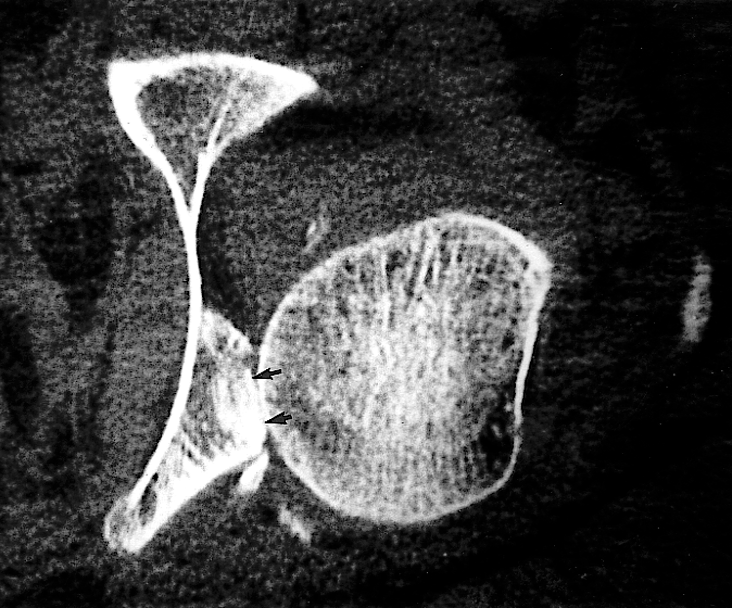
Figure 6 CT section of a nondisplaced transverse and posterior wall fracture of the acetabulum demonstrates that the femoral head is subluxated and identifies the area of impaction (arrows). No articular surface of the posterior wall remains intact.
(Reproduced from Tornetta P III: Displaced acetabular fractures: Indications for operative and nonoperative management. J Am Acad Orthop Surg 2001;9:18-28.)
MRI is particularly useful for detecting occult hip fractures17 (Fig. 7
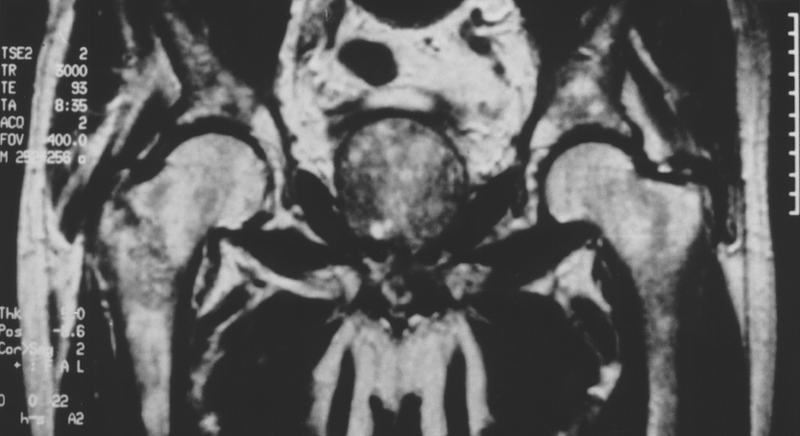
Figure 7 This fracture of the right hip was not apparent on radiographs but can be seen clearly on an MRI scan.
(Reproduced from Koval KJ, Zuckerman JD: Hip fractures: I. Overview and evaluation and treatment of femoral-neck fractures. J Am Acad Orthop Surg 1994;2:141-149.)
Radiographic assessment should include some qualitative analysis of the bone adjacent to the fracture. The term pathologic fracture is used to describe fractures that occur in the setting of abnormal bone. The presence of a malignancy or infection will weaken the bone and make it more susceptible to fracture, but detecting these conditions goes beyond academic interest: their presence obviously influences treatment.
Treatment
Soft-Tissue Care
The primary goal of treating soft-tissue injuries associated with fractures is to halt the continuing trauma to the tissues. This begins by realigning displaced fractures (fracture reduction) and dislocated joints and immobilizing the site of injury. The reduction of edema (and surgical release of fascial compartments under pressure, if needed) increases perfusion in the injured tissues and thus augments healing. Although diffuse cell death is common after trauma, the surviving tissue becomes highly active metabolically as it initiates repair. The delivery of oxygen and essential nutrients is impaired in swollentissue; therefore, soft-tissue care can be thought of as the first step in promoting bone healing.
Surgical Options
If the quality of the clinical outcome from treatment depended only on the quality of the fracture reduction, the ideal treatment plan would be to surgically repair all fractures directly using open reduction and internal fixation (ORIF). Yet surgery is not done in many cases because the quality of the reduction does not solely determine outcome. The main reason that ORIF is not used to treat every fracture is that it interferes with the biology of healing. Understanding the adverse effects of ORIF may better explain the biology of fracture healing and as such serve as a useful mnemonic. In this case, what seem to be details of treatment are actually cues for understanding the basic science.
ORIF has two adverse properties: (1) it strips the soft tissue (periosteum), and (2) it creates stress shielding. The fact that soft-tissue stripping occurs is fairly intuitive—to secure a plate along a fracture, a surgeon must surgically expose the bone. This process disrupts the soft-tissue envelope—specifically, the periosteum—and increases the risk that the bone will not heal and that infection will develop. Recall that the periosteum is the source of many of the cells needed in the healing response.
Rigid fixation of the bone also prevents the fracture line from experiencing and responding to loading stresses (stress shielding). Total rigidity, in this case, can be thought of as too much of a good thing. Immobilization is good, but too much immobilization may be bad. Wolff’s law states that bone grows in response to mechanical stress. Thus, some (but not too much) loading at the fracture site is optimal for bone regeneration.18 ORIF blocks that needed mechanical load.
Recognizing the limitations of ORIF helps in the understanding of the first principle of fracture treatment: it is essential to create the correct biologic and mechanical environment for repair and remodeling. From this first principle stem the following rules of fracture care:
- Ensure that the fracture is surrounded by a healthy soft-tissue envelope (ie, débride open wounds and maintain soft-tissue coverage, but do not cut the skin unnecessarily).
- Ensure that there is good perfusion (ie, release compartments with elevated pressure, loosen tight casts).
- Align the bone (which may also help with perfusion).
- Ensure that just the right amount of load is applied (ie, enough to stimulate bone growth but not so much that gross motion leading to nonunion is allowed).
- Be mindful of the growth plate, if present; it is weaker than the surrounding bone, and injuries to it may lead to growth disturbances.
Casting
Most fractures are treated with casting, although this treatment may result in adverse effects as well. A cast that is too tight may compromise blood supply or put pressure directly on the skin or the nerves. In some cases casting is obviously impractical; for example, casting a femur fracture requires a body cast, which would not allow an adult patient to get out of bed. Enforced bed rest subjects adults to risks associated with prolonged immobilization, such as clot formation and pneumonia.
Immobilization of the joint adjacent to the fracture site, which is typically required to fully immobilize it, can produce joint stiffness. Immobilization may also produce muscle atrophy, which is problematic itself but also because it can cause the cast to loosen. Unfortunately, a cast is apt to become loose at exactly the time when the callus is least stable. Continued monitoring of the fracture by physical examination and serial radiographs is essential. At times, new casts must be made to account for atrophy.
Once radiographs show evidence of bone healing, typically 6 weeks after injury in an adult, the clinical strategy changes. At this point, since the callus holds the reduction provisionally, a cast is used more for protection than for immobilization. The initial cast can be converted to something smaller. For instance, a long leg cast extending over the knee to prevent rotation of the tibia at the fracture site can be converted to a short leg cast or a short cast may be exchanged for a removable cast boot.
Traction
Traction was frequently used prior to the advent of modern surgical techniques and is still used in children who do not seem to be at comparable risk for the adverse effects of prolonged bed rest observed in adults.
Case Presentation
A typical example is a 49-year-old man who sustains a femur fracture as a result of a rollover motor vehicle accident. He is awake and alert at the scene and has an obvious deformity and swelling in the left thigh. He is transported to the emergency department in a splint. Following initial evaluation of the ABCs, examination in the hospital reveals that the skin on the leg appears intact, the leg is well perfused, and the nerves to the foot and ankle region are intact. After examining the injured leg, the remaining extremities and spine are examined for any evidence of injury.
AP and lateral radiographs of the left femur, including the hip joint and the knee joint, are ordered to fully assess angulation and displacement. The radiographs of the femur show two fracture lines located in the middle of the bone (Fig. 8
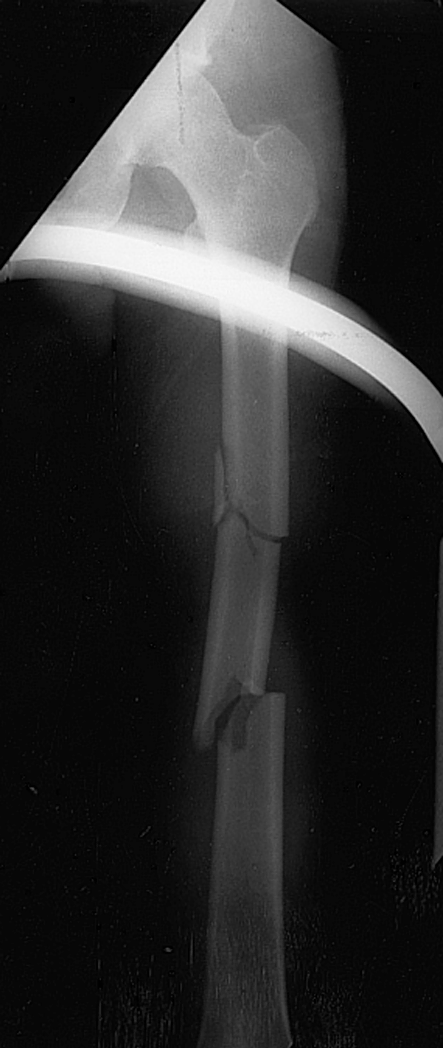
Figure 8 Radiograph of a segmental diaphyseal fracture.
(Reproduced with permission from Moed BR, Watson JT: Retrograde nailing of fractures of the femoral shaft. Orthop Traumatol 1998;6:193-204.)
thus, the fracture is classified as a closed, comminuted diaphyseal fracture. Because of the high-energy mechanism of injury, additional radiographs of the pelvis and the spine should be obtained as well.
Treatment consists of intramedullary fixation, an operation in which a rod is placed inside the bone (Fig 9
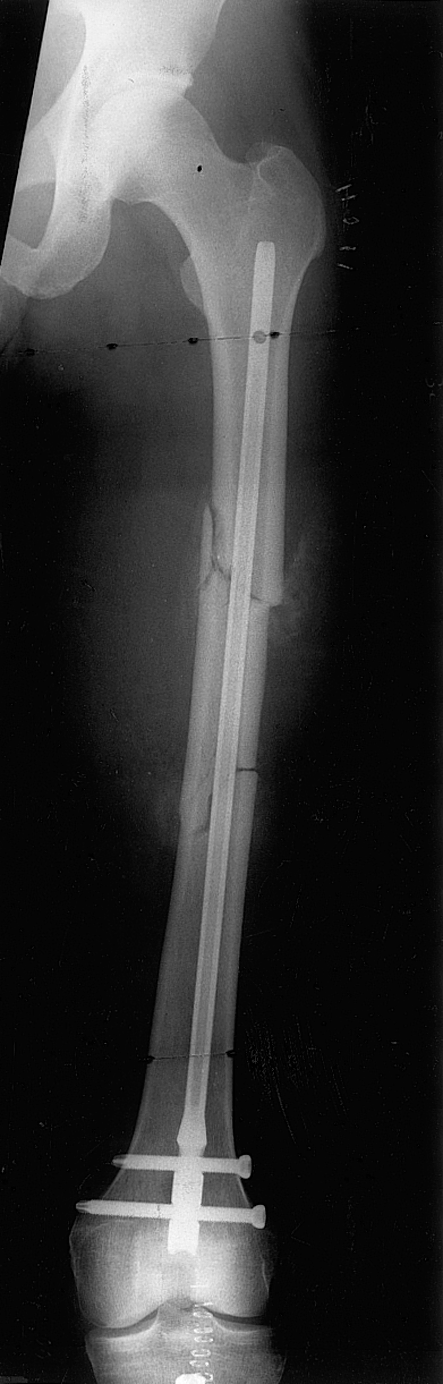
Figure 9 Radiograph of an intramedullary rod used to repair a fractured femur.
(Reproduced with permission from Moed BR, Watson JT: Retrograde nailing of fractures of the femoral shaft. Orthop Traumatol 1998;6:193-204.)
With this type of fixation, knee motion will be possible soon after surgery. Postoperatively, a second musculoskeletal survey is required because some injuries may be initially masked by the severe pain caused by the broken bone.
Complications
Complications can occur as a result of delays in treatment or sometimes as a result of the treatment itself. Any patient with a lower extremity fracture is at risk for venous blood clotting (thrombosis) as a consequence of either mediators released by the injury or decreased mobilization afterwards. These clots can be asymptomatic or produce a local phlebitis. Some clots (whether symptomatic or not) may travel to the lungs—a pulmonary embolism. For that reason, prophylaxis against thrombosis is offered to some patients with lower extremity fractures.
A fat embolism syndrome can develop as fatty marrow exposed at the fracture site is carried in the bloodstream and circulates to the lungs. The signs of fat embolism include respiratory compromise, change in mental status, and a petechial rash. The treatment is supportive ventilatory care. Delayed treatment of long bone fractures has been associated with a higher incidence of pulmonary complications.19
With femur fractures, compartment syndromes resulting from pressure on the nerves and blood vessels are rare but possible. A similar fracture of the tibia would be at significantly higher risk. Patients who report pain that is out of proportion to the injury or pain with passive stretching of the toes require close monitoring.20
Although the risk of compartment syndromes and thrombosis can be reduced with the tools of modern medicine, physicians cannot err on the side of too much caution. The methods of diagnosis and treatment are themselves not without risk. For example, the risk of thrombosis can be reduced with anticoagulant therapy, but this increases the risk of hemorrhage. It is therefore essential to consider the unique attributes of each clinical situation.
Finally, recall that a “simple” broken bone can have major psychosocial implications for the patient. Unlike elective surgery, fractures are obviously unplanned, and patients will find their lives are disrupted suddenly for a lengthy period. Returning to work may not be immediately possible, and the concerns regarding lost income and lost function can trigger a reactive depression. That fact (coupled with the reality that many injuries that occur as a result of motor vehicle accidents are associated with substance abuse) signals that complete care of the musculoskeletal injury may need to include psychological treatment as well.
Key Terms
Anisotropic Having unlike mechanical properties in different directions; that is, the mechanical properties depend on the orientation of the applied force
Comminuted fractures A fracture with more than two fracture fragments
Ductility The property of greater plastic deformation prior to material failure
Fat embolism syndrome Respiratory distress and cerebral dysfunction caused by droplets of marrow fat released at the fracture site and deposited in the lungs or brain
Fracture reduction The realignment of fracture fragments to restore normal anatomy of the bone
Greenstick fracture An incomplete fracture of one cortex only, seen typically in children whose bones are more flexible
Isotropic A material that has the same mechanical properties regardless of direction of loading
Mechanism of injury A representation of the patterns of energy that cause traumatic injuries
Oblique fracture A fracture in which the fracture line crosses the bone diagonally
Open fractures A fracture in which the skin is broken, exposing the fracture site to the external environment
Pathologic fracture A fracture caused by a normal load on abnormal bone, which is often weakened by tumor, infection, or metabolic bone disease
Physis The horizontal growth plate located at the ends of immature long bones; a site of endochondral ossification
Primary bone healing The end-to-end repair process that occurs when the bone ends are anatomically opposed and held together rigidly; no callus forms
Pulmonary embolism Migration of a thrombus from a large vein (often in the leg) to the lung, causing obstruction of blood flow, respiratory distress, or even death
Secondary bone healing The repair process that is characterized by the formation of fracture callus, which then remodels to form new bone
Spiral fracture A fracture caused by a twisting force that results in a helical fracture line
Torus (buckle) fracture A fracture that warps but does not completely break the cortex
Transverse fracture A fracture in which the fracture line is perpendicular to the shaft of the bone
Viscoelastic Having mechanical properties that depend on the loading rate of an applied force
References
1. Martin RE: Initial assessment and management of common fractures. Prim Care 1996;23:405-409.
2. Verborgt O, Gibson GJ, Schaffler MB: Loss of osteocyte integrity in association with microdamage and bone remodeling after fatigue in vivo. J Bone Miner Res 2000;15:60-67.
3. Cowin SC: Wolff’s law of trabecular architecture at remodeling equilibrium. J Biomech Eng 1986;108:83-88.
4. Greenbaum MA, Kanat IO: Current concepts in bone healing: Review of the literature. J Am Podiatr Med Assoc 1993;83:123-129.
5. Lieberman JR, Daluiski A, Einhorn TA: The role of growth factors in the repair of bone: Biology and clinical applications. J Bone Joint Surg Am 2002;84:1032-1044.
6. Hannouche D, Petite H, Sedel L: Current trends in the enhancement of fracture healing. J Bone Joint Surg Br 2001;83:157-164.
7. David SM, Gruber HE, Meyer RA Jr., et al: Lumbar spinal fusion using recombinant human bone morphogenetic protein in the canine: A comparison of three dosages and two carriers. Spine 1999;24:1973-1979.
8. Yasko AW, Lane JM, Fellinger EJ, et al: The healing of segmental bone defects, induced by recombinant human bone morphogenetic protein (rhBMP-2): A radiographic, histological, and biomechanical study in rats. J Bone Joint Surg Am 1992;74:659-670.
9. Sumner DR, Turner TM, Purchio AF, et al: Enhancement of bone ingrowth by transforming growth factor-beta. J Bone Joint Surg Am 1995;77:1135-1147.
10. Krebsbach PH, Kuznetsov SA, Bianco P, et al: Bone marrow stromal cells: Characterization and clinical application. Crit Rev Oral Biol Med 1999;10:165-181.
11. Melio FR: Priorities in the multiple trauma patient. Emerg Med Clin North Am 1998;16:29-43.
12. Rudman N, McIlmail D: Emergency department evaluation and treatment of hip and thigh injuries. Emerg Med Clin North Am 2000;18:29-66.
13. Browner BD, Jacobs LM, Pollak AN: (eds): American Academy of Orthopaedic Surgeons. Emergency Care and Transportation of the Sick and Injured, ed 7. Sudbury, MA, Jones and Bartlett Publishers, 1999.
14. Alonso JE, Lee J, Burgess AR, et al: The management of complex orthopedic injuries. Surg Clin North Am 1996;76:879-903.
15. Gustilo RB, Anderson JT: Prevention of infection in the treatment of one thousand and twenty-five open fractures of long bones: Retrospective and prospective analyses. J Bone Joint Surg Am 1976;58:453-458.
16. Barei DP, Bellabarba C, Sangeorzan BJ, et al: Fractures of the calcaneus. Orthop Clin North Am 2002;33:263-285.
17. Eustace S, Adams J, Assaf A: Emergency MR imaging of orthopedic trauma: Current and future directions. Radiol Clin North Am 1999;37:975-994.
18. O’Sullivan ME, Chao EY, Kelly PJ: The effects of fixation on fracture-healing. J Bone Joint Surg Am 1989;71:306-310.
19. Beck JP, Colins JA: Theoretical and clinical aspects of posttraumatic fat embolism syndrome. Instr Course Lect 1973;22:38-87.
20. Blick SS, Brumback RJ, Poka A, et al: Compartment syndrome in open tibial fractures. J Bone Joint Surg Am 1986;68:1348-1353.
