

Overuse injuries are caused by the repetitive application of forces, none of which individually is great enough to damage the tissue. Rather, it is the repeated application of force that results in an accumulation of microscopic damage and clinical evidence of injury. Overuse injuries can affect many tissue types including bone, cartilage, tendon, fascia, and bursa. Overuse injuries can be categorized broadly into the following three types: (1) excessive loads on normal tissue, (2) normal loads abnormally applied (because of poor mechanics or altered anatomic alignment, for example), and (3) normal loads on abnormal tissue.
The universal theme in all overuse injuries is relative overload: more force is applied than the tissue is able to bear. An example of an overuse injury caused by excessive loads on normal tissue would be the classic march fracture. A march fracture is a stress fracture of the foot initially described among military recruits who are required to march for long distances at the outset of their training.
An overuse injury from abnormal application of a normal force may be seen in patients who have altered alignment of the patella. With lateral tilt of the patella, there is focal concentration of the normal loads of the patellofemoral joint on the lateral side. Since these forces are not applied uniformly across the entire normal area of contact, the lateral side experiences overuse, even though the total load is normal. Because of this overuse, pain and cartilage breakdown may result.
Overuse injuries in the setting of abnormal tissue include Achilles tendon ruptures in middle-aged patients who have preexisting degenerative tendinopathy and stress fractures in the weakened bone of patients with poor bone remodeling (eg, women with the female athlete triad) or those who have been immobilized in casts. In these latter patients, the lack of weight bearing leads to a lack of bone deposition—a “use it or lose it” phenomenon.
One of the most thoroughly characterized overuse injuries in musculoskeletal medicine is the stress fracture, which is discussed as a representative example in this chapter. A stress fracture is, in engineering terms, an instance of fatigue failure—tissue damage from the cyclic application of a series of loads, all of which are below the threshold for breakage. Not every musculoskeletal overuse injury is necessarily a fatigue failure, but in biologic terms, many overuse syndromes involve the process of tissue breakdown overwhelming the process of tissue repair.
Stress Fractures
A stress fracture in bone appears after relativeoveruse, which implies that there is no predetermined amount of force or number of loading cycles that injures the bone; rather, what matters is the magnitude and frequency of load relative to the tolerance of the tissue. Bone, as Wolff’s law states, adapts to load. If the increase in load is introduced over a sufficiently long period, the bone will grow and make itself able to withstand this new demand. However, increasing the load too rapidly can lead to mechanical failure, even if the bone was initially healthy.
A stress fracture may seem, to lay people at least, like a misnomer because the bone is not overtly broken. The structural failure is present only at the microscopic level, but it is real: although the bone may look grossly normal, it is weakened and may break overtly with only slight additional force. Consequently, a stress fracture is similar to the damage that occurs when a paper clip is subjected to repetitive bending. No single bend is enough to break the paper clip, but the sum of the force applied cyclically weakens the structure such that one additional bend may break it.
Before that analogy is taken too far, there are two distinctions between bones and paper clips that must be recalled:
- Bones heal. Thus, a stress fracture is an injury in which the damage outpaces the healing.1 It is not simply a matter of wear and tear.
- Bones have responsibilities beyond skeletal homeostasis and therefore can be weakened for reasons other than overuse. For instance, in response to metabolic calcium demands, osteoclasts may resorb structurally significant bone tissue. Some use the term “insufficiency fracture” to describe a stress fracture in abnormal bone.
Epidemiology
No general population statistics are available, but the experience of military physicians and sports medicine doctors indicates that stress fractures represent perhaps 1% to 3% of all athletic injuries and 15% of runner’s injuries. The female-to-male ratio ranges from 2:1 to more than 10:1.2-4 African Americans have greater bone density and are therefore less prone to stress fractures.5 But these epidemiologic data do not yield hard and fast rules. For example, an African American man with focal anterior medial shin pain after doubling the distance he runs weekly overnight can have a stress fracture, even though he is in a low-risk group.
In one military study, stress fractures typically occurred during the third week of basic training, and simply allowing some rest to all soldiers at that time reduced the overall incidence. This latter finding implies that stress fractures are caused by not only increasing activity, but also by trying to play through the pain—ie, continuing to run despite the signal to stop.
Runners represent the majority of patients with stress fractures. These injuries can be traced to changes in gross mileage and also to changes in intensity, method of training (ie, more hill work), surface, and footwear. Changes in footwear can occur by simply doing nothing because with each mile run, the shock-absorbing capacity of footwear decreases. Thus, failure to replace running shoes frequently may cause a stress fracture.
Although the lower extremity is most commonly affected, stress fractures can be seen in non–weight-bearing bones, such as the ribs.6 Stress fractures of the ribs can develop in rowers as a result of repetitive muscle tension acting directly on bone.
Pathology
Grossly, bones with stress fractures appear normal until the bone actually breaks. Microscopically, a bone with a stress fracture may not appear to be different than normal bone because there is always some damage and some remodeling occurring in normal bone—a bone with a stress fracture just has more remodeling occurring. In a stress fracture, there is more osteoclastic activity, larger cavities in the osteons, and over time, more osteoblastic bone deposition. Of course, biopsy specimens of bones with stress fractures are not routinely obtained.
Stress fractures in bone can be categorized into three stages: (1) crack initiation, (2) crack propagation, and (3) gross failure of the bone. The crack initiation creates a stress riser—a point of weakness that makes it easy for the damage to spread. Think of a small tear in a piece of folded paper; that cut and crease is a stress riser that allows the paper to be torn more easily by simply pulling on the edges.
Pathophysiology
Bone is constantly being damaged and renewed—that is why our skeleton lasts longer than the average automobile. Stress fractures occur when damage outpaces the repair. This imbalance causes pain and increases the risk of overt fracture.
According to Wolff’s law, bone remodels in direct response to the forces applied. Mechanical loads (and the damage they cause) are actually stimulants for bone repair. But there is a question of balance. Under normal circumstances, bone is able to keep up with necessary repairs and thereby avoid injury. However, there appears to be a physiologic limit for bone remodeling. When the bone’s reparative capacity is overwhelmed, microscopic damage results.1
Abnormally weak bone can tolerate less loading. Thus, any condition that weakens the bone—and especially those conditions that weaken the bone by interfering with normal remodeling—is a risk for stress fracture. The classic example of this is a female athlete who exercises to the point of complete fat depletion. This depletion of fat decreases the stores of estrogen (which is made from fat). The low estrogen level subsequently tilts the balance of bone remodeling to favor resorption over formation, yielding osteopenia.7 Osteopenic bone has a lower tolerance for repetitive load and is vulnerable to stress fracture damage.
Differential Diagnosis
The presenting symptom of a stress fracture is bone pain in the setting of relative overuse. Typically, the shin is affected. In the shin, the differential diagnosis includes periostitis (inflammation in the periosteum) and chronic exertional compartment syndrome. A crescendo-like pain localized to the bone that becomes more severe with increased running distance and does not abate within minutes of stopping is highly suspicious for stress fracture. In time, there may even be pain at rest. Common characteristics of stress fracture are shown in Table 1.
Table 1 Characteristics of Stress Fracture FactorsFindings HistoryIncreased activity within 4 weeks prior to onset of symptoms Pain with activity that has become progres sively worse since onset and subsides hours or days after activity stops Physical examinationPain with pressure on affected area or percussion of bone distal to affected area Occasionally local swelling Normal range of motion, muscle strength, and tone NutritionalDecreased body fat (with possible amenorrhea and osteopenia) Calcium deficiency (with possible osteoporosis) Vitamin D deficiency (with possible osteomalacia)
Note that none of these findings is completely sensitive or specific. Therefore, diagnostic imaging studies are often required.
Imaging Studies
Plain radiographs appear normal early in the course of a stress fracture because the damage is too small and too subtle to be detected with this mode of diagnostic imaging.8 Except in bones with a high concentration of trabecular regions, such as the calcaneus, plain radiography is not sensitive in the early stages—precisely when the information would be clinically useful.
Endosteal or periosteal callus formation, representing healing, can be seen in established stress fractures. Occasionally, in an established stress fracture that is not given adequate rest to heal, radiographs will show evidence of a sclerotic line that is consistent with a stress fracture ( Figure 1 ).
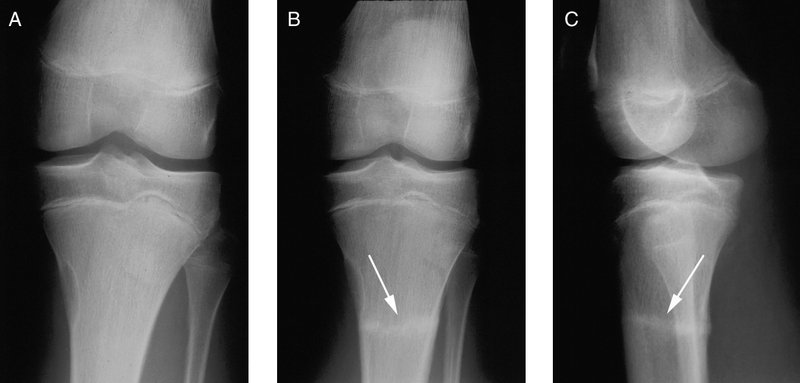
Figure 1 Stress fracture of the tibia. A, AP radiograph shows a fibrous cortical defect medially. Follow-up AP (B) and lateral (C) radiographs taken 3 weeks later show a sclerotic line across the tibia (arrows). (Reproduced from Sullivan JA, Anderson SJ (eds): Care of the Young Athlete. Rosemont, IL, American Academy of Orthopaedic Surgeons and the American Academy of Pediatrics, 2000, p 282.)
Bone scanning detects metabolic activity, and bone scans will be positive within 1 or 2 days after the onset of symptoms ( Figure 2 ).
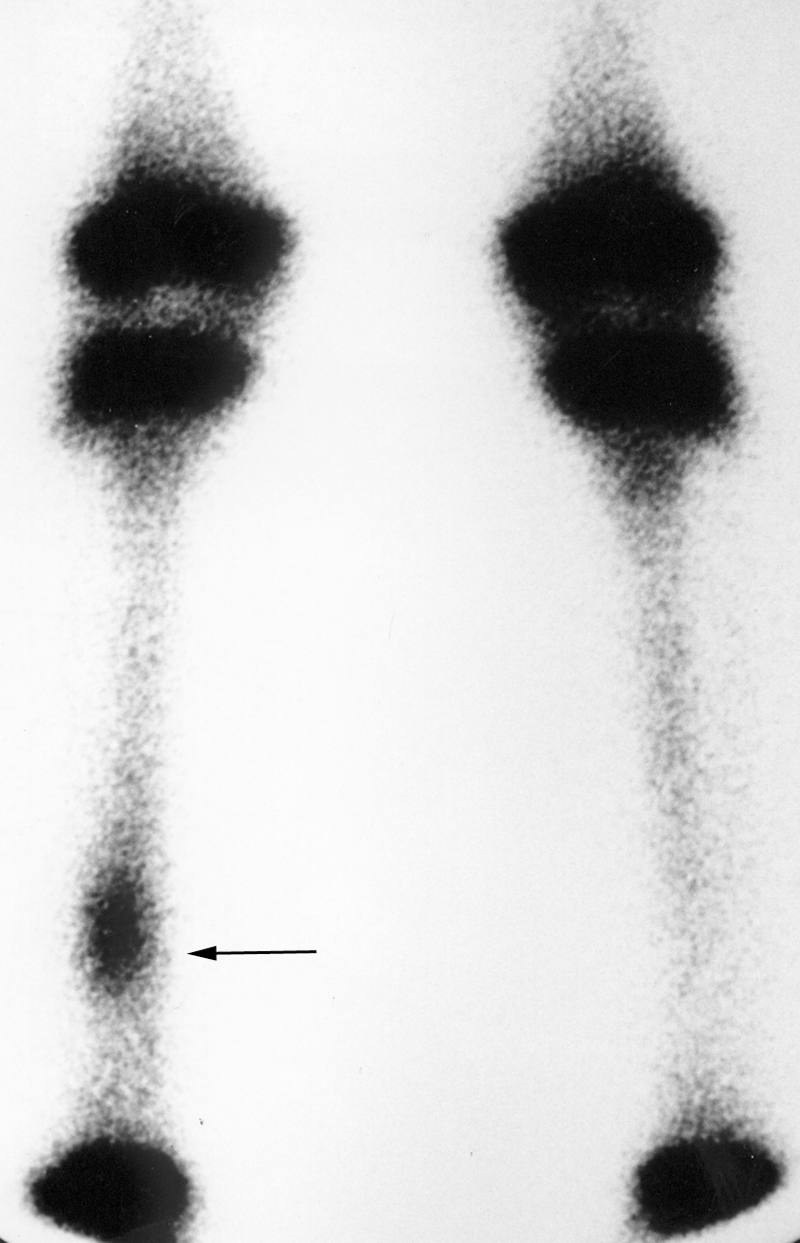
Figure 2 Bone scan of a stress fracture with focal uptake along the shaft of the tibia (arrow). The other regions of intense uptake, near the knee and ankle, represent growth plate activity. (Reproduced from Sullivan JA, Anderson SJ (eds): Care of the Young Athlete. Rosemont, IL, American Academy of Orthopaedic Surgeons and the American Academy of Pediatrics, 2000, p 408.)
Bone scanning is extremely sensitive. If the bone scan shows no evidence of focal uptake, the diagnosis of stress fracture is quite unlikely. Because bone scanning is very sensitive, the test occasionally remains positive (with focal tracer uptake at the site of fracture healing) for weeks to months after the patient becomes asymptomatic.9 Thus, this test is not clinically specific. Also, the nature of nuclear medicine scans are such that fine anatomic resolution is not achieved.
The temporal pattern of uptake during three-phase bone scanning often is useful in distinguishing between periostitis (in the soft tissue only) and acute tibial stress fractures. Both entities typically demonstrate uptake on the first and second phases; however, only a stress fracture results in focal uptake on the third phase.8 Note that other processes besides stress fracture, including osteomyelitis and tumor, can have a similar appearance on a three-phase bone scan. A positive scan indicates only that there is an area of heightened metabolic activity (as seen in the growth plates in Figure 2). The physician must be able to interpret the meaning of that activity.
MRI can also be used to diagnose stress fractures. It is likely to become the diagnostic method of choice because it spares the patient an injection of radioactive material, which is needed for bone scanning; it provides more anatomic detail; and its temporal response more closely matches the clinical situation10 ( Figure 3 ).
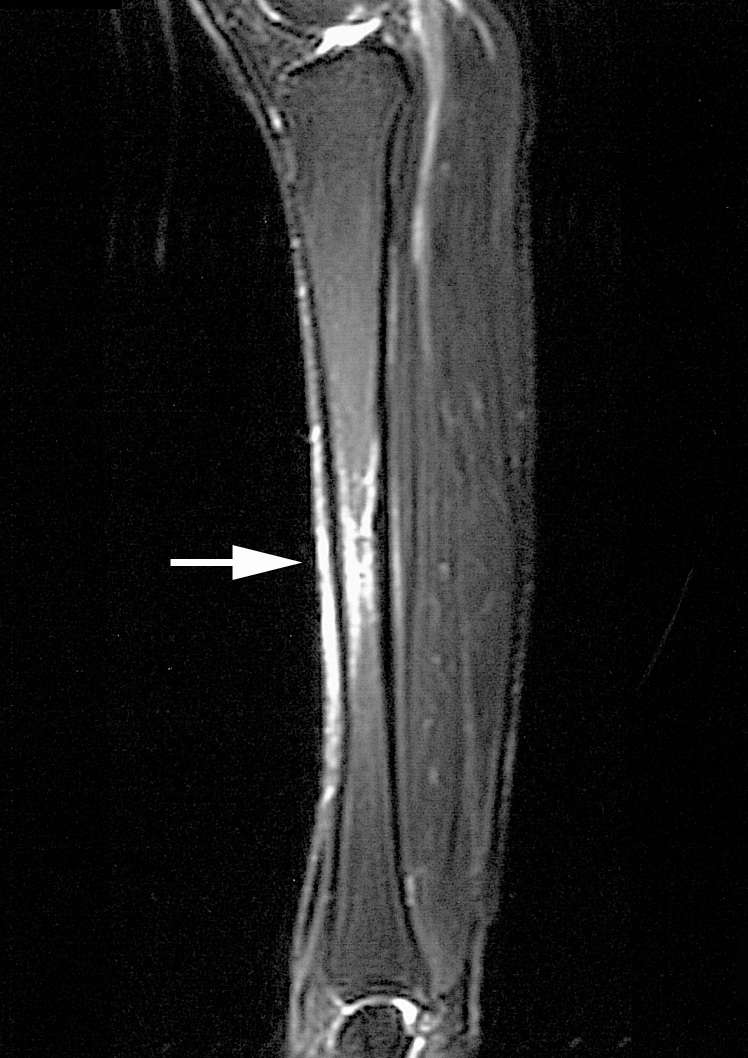
Figure 3 MRI scan of the tibia of a female high-school basketball player who reported tibial pain 2 weeks into the season. Note the edema and microfracture lines in the midportion of the tibia (arrow).
Treatment
The management of stress fractures centers on a basic principle: the treatment of an overuse injury is underuse—that is, relative rest is needed. It is not necessary, and in many cases not desirable, to recommend total rest because total rest can lead to atrophy. Rather, what is needed is sufficient abatement of the load to allow the healing process to catch up.
Patients should decrease or discontinue the inciting activities for 4 to 12 weeks and maintain other activities to prevent disuse osteoporosis. For athletes, cross-training (ie, engaging in a different activity, such as swimming to replace running) is helpful to maintain aerobic fitness. Ice and analgesics help relieve pain, but they do not speed healing.
Occasionally, crutches are used to unload affected areas completely for a short time; casting to immobilize affected areas is also used occasionally. Gradual reintroduction of activity is essential.
Surgical treatment for stress fractures includes fixation and/or bone grafting for fractures that will not heal. Surgeons recommend treating stress fractures of the superior femoral neck ( Figure 4 ) with screw fixation to prevent displacement. Displacement of a femoral neck fracture can lead to osteonecrosis of the femoral head.
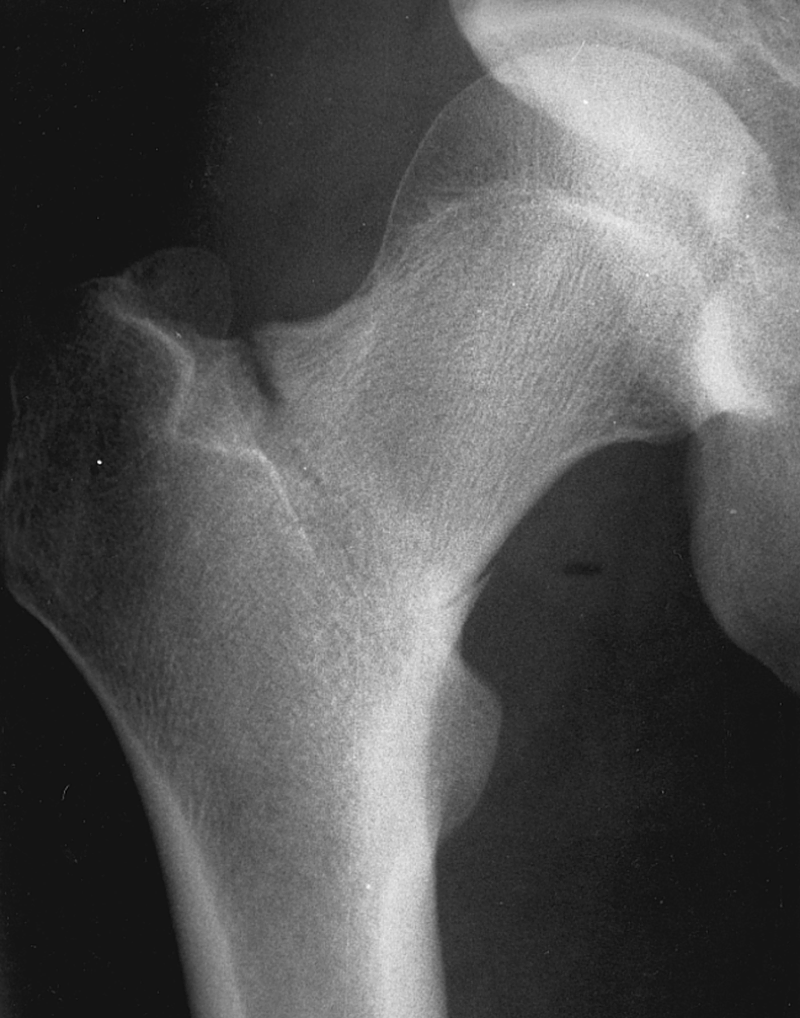
Figure 4 AP radiograph of the proximal femur revealing a femoral-neck fatigue fracture. There is cortical disruption on the superior surface with propagation of the fracture across the femoral neck. This fracture must be stabilized surgically to prevent displacement and subsequent disruption of the blood supply to the femoral head. (Reproduced from Shin AY, Gillingham BL: Fatigue fractures of the femoral neck in athletes. J Am Acad Orthop Surg 1997;5:293-302.)
Treatment should also include at least an assessment of the psychosocial impact of the condition. It has been observed that athletes who cannot play can get depressed; that young people who experience any medical condition for the first time, which introduces them to mortality, can get depressed; and that patients who begin vigorous exercise in an attempt to lose weight may lose motivation if they sustain an overuse injury.
Women and young female athletes who are diagnosed with a stress fracture should be evaluated for the presence of the female athlete triad.11This triadconsists of the following three components: (1) disordered eating, (2) abnormal or absent menses, and (3) osteoporosis. The evaluation of female athletes with stress fractures should include a complete medical history with information on nutritional status, menstrual cycle, age, height, weight, and orthopaedic history as well as screening for excessive exercise. The best treatment is awareness and prevention of the disease. In general, exercise should be encouraged in all women to promote general health and improve bone density.12
Women with irregular menstrual cycles or amenorrhea may benefit from hormone therapy to regulate their cycles. Women with eating disorders, nutritional deficiencies, or metabolic disturbances will need treatment.11
Patellofemoral Pain
Anterior knee pain is one of the most common complaints of active adolescents and adults, and often no clear cause is found. Occasionally, the pain is related to lateral tracking of the patella in the femoral trochlea (the femoral groove for the patella). Pressure on the lateral side may be caused by lateral tilt of the patella (Fig. 5) or by excessive lateral pull by the quadriceps. If the patella does not sit symmetrically in the trochlea, the lateral facet and corresponding surface of the femur will sustain overload. That is because the forces once distributed over a wide area are now borne on focal points, leading to stress concentration.13
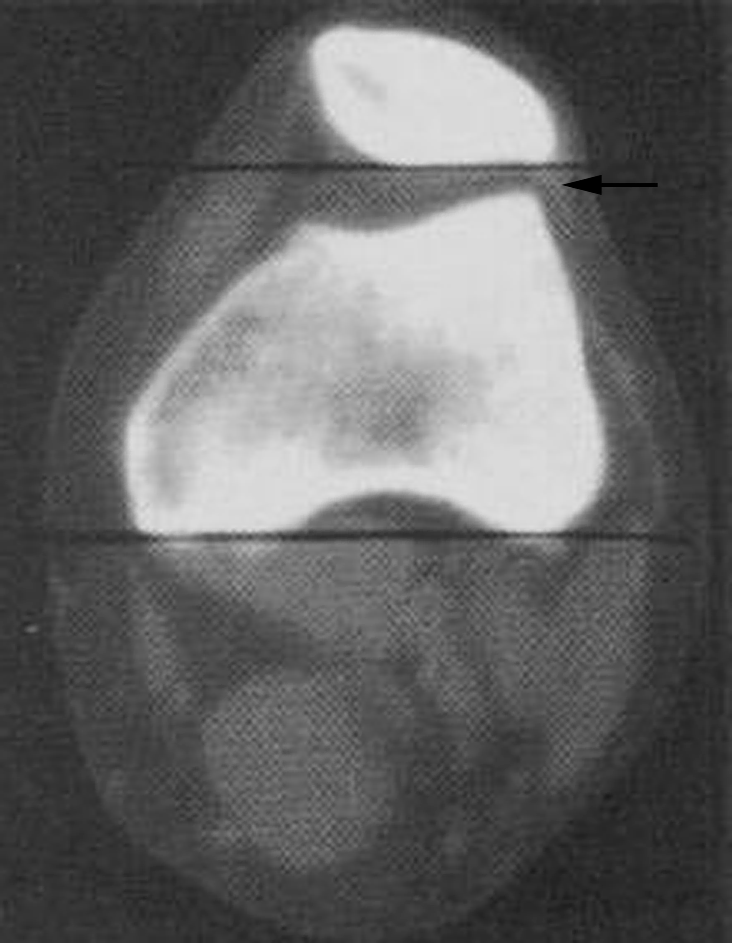
Figure 5 CT scan of a knee in 15° of flexion; the patella is tilted laterally, as seen by the asymmetric joint space (arrow). (Reproduced from Fulkerson JP, Kalenak A, Rosenberg TD, Cox JS: Patellofemoral pain. Inst Course Lect 1992;41:57-71.)
The term “chondromalacia patella” is often used to describe anterior knee pain, but it is best reserved for cases when it is literally applicable. The Greek word “chondromalacia” means “soft cartilage”; thus, it should be used only after arthroscopic confirmation of that finding.
A common case of anterior knee pain would be a young active woman who reports a chronic, dull, aching pain that is usually localized to the patella. The pain is often worse with squatting, climbing stairs, or sitting for long periods with the knee flexed. On physical examination, the lateral patellar facet may be tender to palpation, especially on its undersurface. The patient may also report pain with compression of the patella against the femur. Quadriceps weakness or atrophy can be seen in long-standing cases, as the pain reflex causes inhibition of the muscle. Of note, signs such as swelling or locking of the knee are not indicative of overuse and should prompt investigation for another explanation.
Tendon Injury
Applied mechanical loads of high intensity or high frequency can cause injury to tendons. This clinical condition goes by the name tendinitis, although a better name may be the more general tendinosis type> (a term denoting a condition of the tendon, not necessarily an inflammatory one). Patients are at risk for tendinosis if they use improper technique while performing repetitive tasks or simply from too much activity. (This is why baseball pitchers throw only every fourth or fifth day, for example.) There is also an issue of age-related degeneration of tendons and diminution of their blood supply, a process that makes older people more predisposed to injury.14 Tendinosis occurs most commonly in areas where tendons attach to bone, such as the rotator cuff in the shoulder, the patellar tendon in the knee, and the origin of the common wrist extensors in the elbow. The latter is the source of pain in lateral epicondylitis. The midsubstance of the tendon is often spared. In overuse injuries of the Achilles tendon, however, midsubstance failure is the norm.
A common example of tendinosis is seen in the shoulders of those who perform repetitive overhead activity—tennis players, for example. This excess can cause cumulative trauma to the rotator cuff tendon and overlying bursa, producing a condition known as impingementsyndrome. Impingement implies that there is abnormal contact between the rotator cuff and the overlying coracoacromial arch (made up of the acromion, the coracoacromial ligament, and the acromioclavicular joint). Because there is a putative association between the presence of a hooked acromion and rotator cuff pathology, some believe that the damage to the tendon is inflicted by pressure from the bone. It is also plausible that inherent damage in the tendon stimulates an inflammatory process that also induces changes on the acromial surface.15
Patients with impingement syndrome are typically in their 30s, 40s, or 50s. Patients who are younger than this but appear to have an overuse tendinosis are more likely to have instability; they have cuff impingement because their shoulder slides out of the joint and abuts the acromion. Patients with impingement syndrome initially report activity-related pain localized to the anterior and lateral shoulder. In time, they may report difficulty lying on the affected shoulder, pain with any overhead activity, and weakness lifting the arm above shoulder level. On physical examination, they note tenderness to palpation over the humeral head and demonstrate a mild loss of active elevation of the shoulder and pain with passive forced forward elevation or resisted active elevation.
Impingement is one form of overuse injury that is treated with active exercise. The goal of treatment is to strengthen the parts of the rotator cuff that are not injured (the internal and external rotators, typically), in the hope that added strength there can enable the irritated portion of the cuff to rest.
Osteochondritis Dissecans
Osteochondritis dissecans is a localized abnormality of a focal portion of the subchondral bone, which can result in loss of support for the overlying articular cartilage. This loss of support can cause breakdown and fragmentation of the cartilage and underlying bone. There is currently no single universally accepted cause for osteochondritis dissecans, but one theory is that it is the result of overuse. Cumulative microtrauma to the subchondral bone, it is thought, leads to stress fracture and ultimately to collapse.16 Another popular theory is that osteochondritis dissecans is a form of osteonecrosis of the subchondral bone caused by idiopathic ischemia. The acronym OCD should not be used to describe this condition, as this is the acronym for osteochondral defect, which is a far more general term for damage to the cartilage and underlying bone.
Osteochondritis dissecans of the elbow occurs in the capitellum of the distal humerus. It is seen in younger athletes who throw or bear weight on the arm, such as baseball players and gymnasts. Intense throwing activities apply abnormal forces on the otherwise normal elbow, resulting in compression and stress concentration between the radial head and the capitellum of the humerus. A similar process occurs in gymnastics, in which the elbow is often used as a weight-bearing joint.17
The typical patient with osteochondritis dissecans of the elbow is an adolescent baseball pitcher between the ages of 11 and 15 years.18,19 He will report insidious onset of elbow pain that is relieved by rest, mild swelling, inability to fully extend the elbow, and pain on palpation of the lateral elbow. Catching and locking of the elbow are late symptoms that are indicative of articular cartilage fragmentation and loose body formation. The diagnosis of osteochondritis dissecans is made radiographically with identification of focal changes in the subchondral bone of the capitellum ( Figure 6 ). Early detection and evaluation of lesion size and fragment detachment is made with MRI.
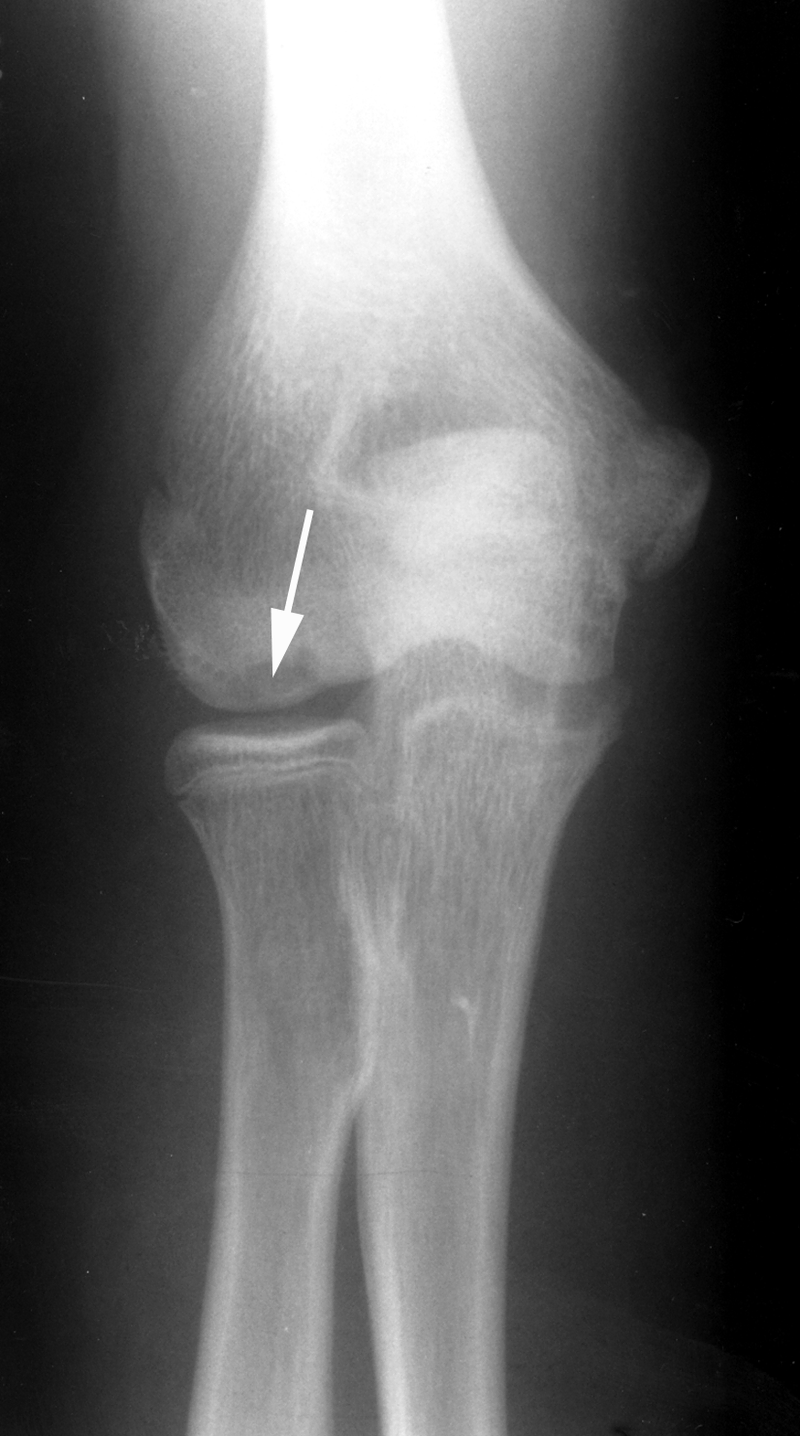
Figure 6 A lucent area in the capitellum of the humerus (arrow) associated with restriction of elbow motion and pain is characteristic of osteochondritis dissecans. (Reproduced from Sullivan JA, Anderson SJ (eds): Care of the Young Athlete. Rosemont, IL, American Academy of Orthopaedic Surgeons and the American Academy of Pediatrics, 2000, p 319.)
Treatment of the lesion is based on whether the lesion is intact, partially attached, or completely detached. Intact lesions are treated with complete cessation of the offending activity and occasional immobilization (no more than 3 weeks) to allow acute symptoms to resolve. Large, partially detached lesions can be reduced and fixed with or without bone grafting. Loose bodies are treated with excision and curettage of the base to stimulate a healing response. Significant fragmentation leads to bony arthritic changes and ongoing symptoms in about half of the patients. Most athletes are discouraged from continuing provocative activities, such as pitching and gymnastics.
Apophysitis
Overuse injuries in growing children or adolescents can cause injury to the growth centers, especially to the apophysis. An apophysis is a cartilaginous growth plate at the insertion of major muscle groups. This area, like the open growth plate between the metaphysis and epiphysis, has cartilage that is weaker than the surrounding bone and tendons. Apophysitis (injury to these growth centers) occurs when repetitive traction is applied to the muscle group attaching to the bone.20 Common sites of apophysitis include the tibial tubercle (where the patellar tendon inserts) and the medial epicondyle (where the wrist flexors originate). Apophysitis at the tibial tubercle is known as Osgood-Schlatter’s disease.
Osgood-Schlatter’s disease is often seen in adolescents during rapid growth (age 13 years, typically) who are active in sports. Osgood-Schlatter’s disease is frequently associated with sports that require repetitive jumping, such as basketball, track, and gymnastics. It is more common in boys than girls. Typical symptoms include pain and swelling over the tibial tubercle. Radiographs may show a discreet separate ossicle ( Figure 7 ).
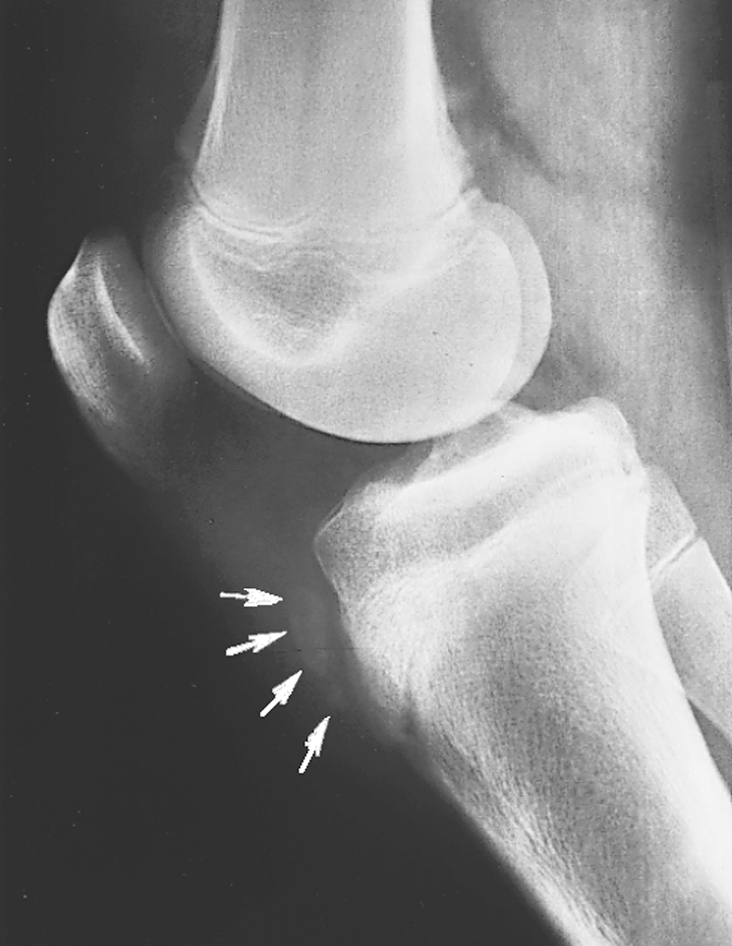
Figure 7 Osgood-Schlatter’s disease. An overuse injury to the growth center (apophysis) to which the patellar tendon attaches may lead to separation of the apophysis and formation of an ossicle (arrows). (Reproduced from Greene WB (ed): Essentials of Musculoskeletal Care, ed 2. Rosemont, IL, American Academy of Orthopaedic Surgeons, 2001, p 588.)
Medial epicondyle apophysitis is seen in adolescents involved in intense throwing activities, such as baseball pitching. Overhead throwing applies a valgus strain across the elbow with traction to the medial side. Clinical examination reveals pain, tenderness, and swelling over the medial epicondyle with a subtle flexion contracture of the elbow.
Apophysitis is generally a self-limiting problem that is treated with rest from the aggravating activity. Symptoms of Osgood-Schlatter’s disease resolve completely by skeletal maturity when the tibial tubercle fuses to the main body of the tibia, usually by age 16 years in boys and 15 years in girls. Medial epicondyle apophysitis is treated with rest from throwing, stretching of the anterior elbow capsule, strengthening (especially the triceps), and instructing the child in proper throwing technique.
Key Terms
Apophysitis Injury from repetitive traction to the cartilaginous growth plate near the origin or insertion of muscle
Impingement syndrome Shoulder pain caused by tendinosis of the rotator cuff tendon or irritation of the subacromial bursa
Osteochondritis dissecans A localized abnormality of a focal portion of the subchondral bone, which can result in loss of support for the overlying articular cartilage
Osgood-Schlatter’s disease Apophysitis of the tibial tubercle
Stress fracture An overuse injury in which the body cannot repair microscopic damage to the bone as quickly as it is induced, leading to painful, weakened bone
Tendinosis Injury to the tendon or musculotendinous unit caused by the application of mechanical loads of high intensity or high frequency; not truly an inflammatory condition; also called tendinitis
References
1. Sallis RE, Jones K: Stress fractures in athletes: How to spot this underdiagnosed injury. Postgrad Med 1991;89:185-192.
2. Bennell KL, Brukner PD: Epidemiology and site specificity of stress fractures. Clin Sports Med 1997;16:179-196.
3. Jones BH, Bovee MW, Harris JM III, et al: Intrinsic risk factors for exercise-related injuries among male and female army trainees. Am J Sports Med 1993;21:705-710.
4. Reinker KA, Ozburne S: A comparison of male and female orthopaedic pathology in basic training. Mil Med 1979;144:532-536.
5. Brudvig TJ, Gudger TD, Obermeyer L: Stress fractures in 295 trainees: A one-year study of incidence as related to age, sex, and race. Mil Med 1983;148:666-667.
6. Karlson KA: Rib stress fractures in elite rowers: A case series and proposed mechanism. Am J Sports Med 1998;26:516-519.
7. Lindberg JS, Fears WB, Hunt MM, et al: Exercise-induced amenorrhea and bone density. Ann Intern Med 1984;101:647-648.
8. Spitz DJ, Newberg AH: Imaging of stress fractures in the athlete. Radiol Clin North Am 2002;40:313-331.
9. Anderson MW, Greenspan A: Stress fractures. Radiology 1996;199:1-12.
10. Arendt EA, Griffiths HJ: The use of MR imaging in the assessment and clinical management of stress reactions of bone in high-performance athletes. Clin Sports Med 1997;16:291-306.
11. Callahan LR: Stress fractures in women. Clin Sports Med 2000;19:303-314.
12. Yeager KK, Agostini R, Nattiv A, et al: The female athlete triad: Disordered eating, amenorrhea, osteoporosis. Med Sci Sports Exerc 1993;25:775-777.
13. Koh TJ, Grabiner MD, De Swart RJ: In vivo tracking of the human patella. J Biomech 1992;25:637-643.
14. Fukuda H, Hamada K, Yamanaka K: Pathology and pathogenesis of bursal-side rotator cuff tears viewed from en bloc histologic sections. Clin Orthop 1990;254:75-80.
15. Almekinders LC: Impingement syndrome. Clin Sports Med 2001;20:491-504.
16. Singer KM, Roy SP: Osteochondrosis of the humeral capitellum. Am J Sports Med 1984;12:351-360.
17. Jackson DW, Silvino N, Reiman P: Osteochondritis in the female gymnast’s elbow. Arthroscopy 1989;5:129-136.
18. Stubbs MJ, Field LD, Savoie FH III: Osteochondritis dissecans of the elbow. Clin Sports Med 2001;20:1-9.
19. Baumgarten TE: Osteochondritis dissecans of the capitellum. Sports Med Arthros Rev 1995;3:219-223.
20. Micheli LJ, Fehlandt AF Jr: Overuse injuries to tendons and apophyses in children and adolescents. Clin Sports Med 1992;11:713-726.
