

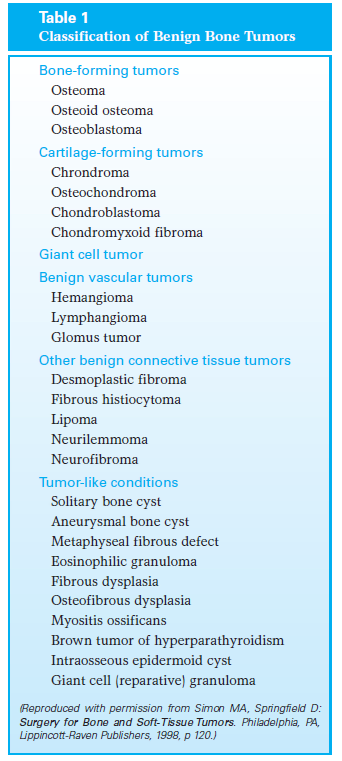
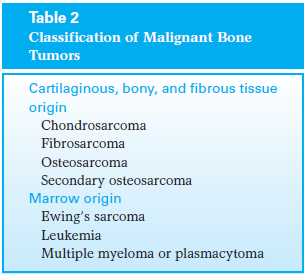
Bone and soft-tissue tumors arise from undifferentiated mesenchymal tissue. When these tumors develop, they express many tissue types, including fat, bone, cartilage, blood vessels, lymphatics, and fibrous tissue (Tables 1 and 2). Although specific chromosomal alterations have been noted in some tumors, the etiology of most bone and soft-tissue tumors is unknown.
As in other organ systems, a musculoskeletal tumor is considered malignant if it has the potential to spread to distant locations. The process of tumor spread, metastasis, is usually hematogenous (via the bloodstream). A malignant tumor of the musculoskeletal system is called a sarcoma, which is derived from a Greek word for “fleshy tumor.”
Musculoskeletal tumors that do not spread are considered benign. Although not life threatening, benign tumors can be clinically significant on the basis of damage incurred at the primary site. Benign tumors can be biologically aggressive, destroying bone and impinging on nearby structures, such as nerves and blood vessels. Consequently, some of these lesions demand aggressive treatment similar to treatment for malignant tumors.
Many lesions that appear to be primary bone tumors on radiographs are subsequently found to be caused by other disease processes. These lesions may be metastases from nonskeletal malignancies, sites of infection (osteomyelitis), or sites of secondary bone damage from adjacent arthritis. As such, the detection of a suspected tumor on radiographs is the beginning of the diagnostic process, not the end.
Epidemiology
The incidence of benign bone and soft-tissue tumors is not well defined because these tumors are frequently found only incidentally.1,2 The incidence of malignant tumors, however, is known more precisely. Approximately 2,000 primary sarcomas of bone and 5,000 primary sarcomas of soft tissue are diagnosed in the United States each year.3 The most common types of primary sarcomas of bone are chondrosarcoma, Ewing’s sarcoma, and osteosarcoma. These three tumor types account for approximately 75% of primary bone sarcomas. The incidence rates are shown in Table 3.
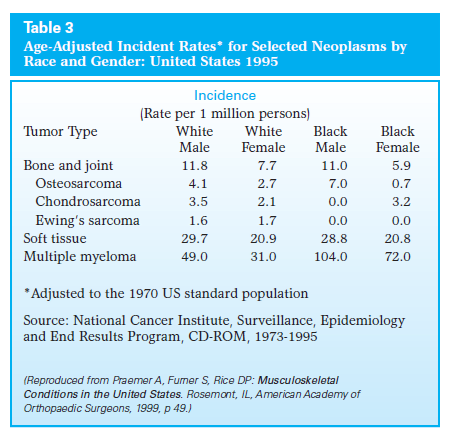
Chondrosarcoma is found primarily in adults, with increasing incidence noted during and after the sixth decade. In contrast, Ewing’s sarcoma is found primarily in children, with most patients between the ages of 5 and 25 years at the time of diagnosis. Osteosarcoma is also found primarily in children and adolescents between the ages of 10 and 25 years, with the peak age of incidence in the second and third decades. However, osteosarcoma also demonstrates a second incidence peak, with a significant number of patients diagnosed during the sixth and seventh decades of life. These secondary tumors arise within other lesions such as those associated with Paget’s disease of bone, osteonecrosis, or irradiated bone.
Most malignancies in bone are not bone tumors per se; they are the result of metastasis from somatic primary tumors located elsewhere in the body. Of the estimated 1.2 million people in the United States who are newly diagnosed with cancers of all types each year, about half will have a type of cancer that is known to readily metastasize to bone (ie, breast, lung, thyroid, kidney, or prostate cancer). Blood cells are another source of tumors in bone. Multiple myeloma, a malignancy of the B lymphocytes, is the most common type of cancer arising in bone itself. This bone-based malignancy, however, is much less common than metastatic disease. Accordingly, the tumors most commonly seen in bone, metastatic lesions, are those that do not form in the bone; and the most common tumor that does form within the bone is not a malignancy of bone cells but rather a blood-cell disease. Bone tumors arising from bone cells represent a minority of tumors found in bone.
Clinical Presentation
History and Physical Examination
The diagnosis of a musculoskeletal tumor may be delayed at the outset because the patient’s symptoms (eg, pain and swelling) may be attributed to more common bone or joint conditions, such as sprains or bursitis. For both bone and soft tissue, benign tumors are more frequent than sarcomas. Knowledge of the distinguishing clinical and radiographic findings can help identify aggressive lesions early in their course.
When examining a patient with a suspected or known musculoskeletal tumor, symptoms that are directly attributable to the lesion, such as pain or pressure at the site, should be identified first. This information may help identify the biologic characteristics of the lesion, such as rate of growth and aggressiveness. It is also important to identify whether the lesion was noted incidentally, whether the patient has localized symptoms, and the duration and circumstances (time of day, relationship to activity, position of the extremity, etc) of the symptoms.
A bone with a tumor may be painful because of edema and consequent stimulation of periosteal nerves. The bone can also be painful when the lesion compromises the strength of the remaining bone, resulting in a pathologic fracture (a fracture through abnormal bone under normal load). Soft-tissue tumors are frequently less painful than tumors in the bone. Pain is manifested with compression of surrounding nerves, erosion into adjacent bone, or when a hemorrhage into the lesion causes a rapid enlargement of the mass.
Functional causes of bone and joint pain, such as arthritis or muscle strains, are primarily present during periods of activity and improve with rest. However, pain caused by musculoskeletal tumors is typically present at rest as well as during activity. Patients with tumors (and infections) may also report night pain. Although patients may relate a history of injury to the involved extremity, the intensity and duration of pain is usually out of proportion to the injury.
Systemic symptoms such as fever, anorexia, weight loss, or fatigue should be documented, as should any medical and family history of musculoskeletal lesions or cancer.
Once the history is complete, the physical examination should include assessments for tenderness, swelling, or a firm mass. The skin should be examined closely. Skin changes (eg, café au lait spots), distant areas of tenderness or swelling, lymphadenopathy, and organomegaly can signal systemic involvement or provide other clues to etiology. The range of motion in adjacent joints should be tested carefully when the patient is in pain or when there is any question of impending pathologic fracture.
Imaging Studies
Imaging studies should begin with radiography for both suspected bone and soft-tissue lesions. Because there is a characteristic pattern to many types of tumors, a precise radiographic description coupled with the patient history and clinical presentation may be sufficient in many cases to make a diagnosis without a biopsy or additional imaging studies.
The first characteristic to describe is the precise area of bone involved. For example, a tumor of the knee should be described as a tumor of the distal femur or proximal tibia. Patellar tumors are far less common. The next characteristic is the region of the bone involved. Certain tumors have a propensity to develop in particular regions of the bone. Tumors are most frequently found in the metaphyses, but epiphyseal or diaphyseal lesions are also possible tumor sites. Tumors may also be found in the bodies of the vertebrae. It is important to identify the type of bone as well, specifically whether cancellous bone (eg, marrow space) is involved or whether the lesion has developed within or adjacent to the cortex. Cancellous bone is usually involved, but tumors may also be found within or on the surface of the cortex.
Once the location of the lesion is identified, three questions must be answered: (1)What is the tumor doing to the bone?(2) What is the bone doing to the tumor? (3) Is there any type of mineralization noted within the lesion?
What Is the Tumor Doing to the Bone?
Inactive tumors typically involve little of the surrounding bone whereas active tumors can erode into adjacent bone. Erosion caused by intramedullary lesions is called endosteal scalloping (Fig. 1).
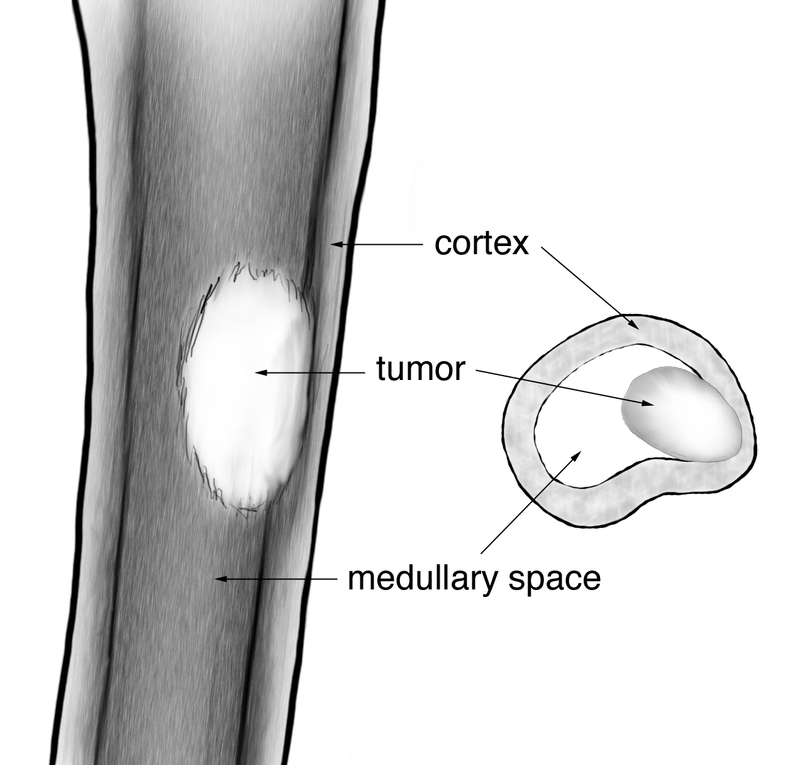
Figure 1 Longitudinal and axial views of endosteal scalloping, showing erosion of the cortex by intramedullary lesions.
The more aggressive the lesion, the greater the loss of adjacent bone. With aggressive lesions, an adjacent soft-tissue mass may also be noted.
What Is the Bone Doing to the Tumor?
The normal bone surrounding a tumor makes an attempt to wall it off with additional bone. Inactive or slow-growing tumors will have a sclerotic border
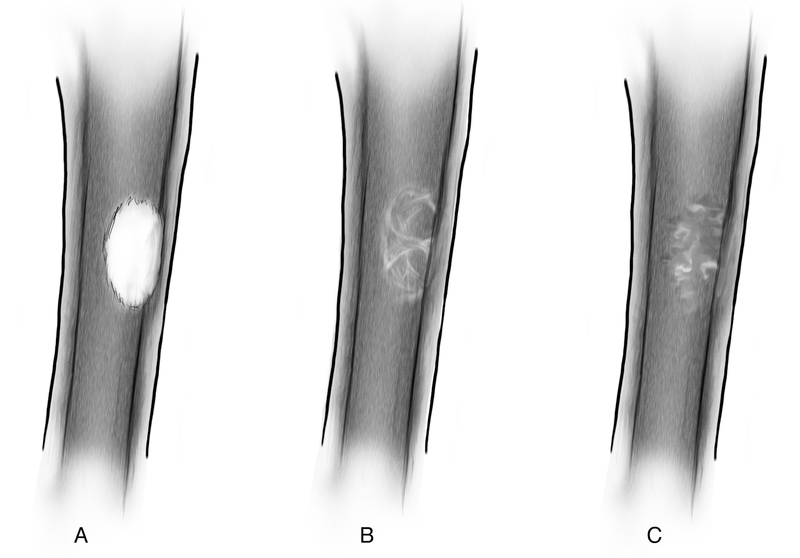
Figure 2 Tumor margins. A, Geographic. B, Permeative. C, Moth-eaten.
. In such tumors, the transition between tumor and normal bone is sharp, producing a geographic margin (Fig. 2). Tumors that grow faster afford less of an opportunity for the surrounding bone to produce this sclerotic border. Thus, as tumors become more active, the margin between tumor and normal bone becomes less distinct. Such tumors are said to have a permeative margin. On occasion, the tumor grows diffusely through large areas of bone, yielding a moth-eaten margin, with no border of the tumor being distinct.
Is There Any Type of Mineralization Noted Within the Lesion?
Aggressive tumors also can begin a reaction within the periosteum as they erode the bone surface. This reaction can appear in a variety of ways, all of which result from mineralization of periosteum as it is lifted from the bone surface by tumor extension. Tumors producing cartilage or bone have specific patterns of internal mineralization. Tumors producing fluid, such as a simple cyst, or fibrous tissue demonstrate no mineralization.
Advanced Imaging Studies
Additional imaging modalities include technetium 99m bone scanning, CT, and MRI. Bone scanning, performed by injecting the patient with a radioisotope prior to obtaining the scan, indicates areas of active bone formation because the isotope is incorporated into the bone as it is produced by osteoblasts. Bone scanning is used to evaluate the biologic activity of primary lesions and to assess other areas for potential metastatic involvement. CT is used primarily to evaluate the geometry of the lesion and to identify areas of cortical destruction. CT of the chest and abdomen is also used to locate visceral metastases. MRI allows for precise localization of the tumor in multiple planes and may, on occasion, suggest the type of tissue produced by the lesion. MRI is particularly useful for evaluating the soft tissues. An algorithm for the radiographic evaluation of bone tumors is presented in Figure 3 4
Laboratory Tests
The role of laboratory tests in the evaluation of musculoskeletal tumors is somewhat limited. Laboratory tests are used primarily to evaluate adult patients with lesions that appear to be aggressive. These lesions are most frequently either metastases from other, more common cancers (such as breast, lung, thyroid, kidney, or prostate cancer) or myelomas (tumors arising from lymphocytes in the bone marrow). Some of these cancers can be detected by specific blood tests. Although breast and prostate cancers can express specific markers that allow for early detection, no such markers for bone or soft-tissue malignancies have been identified.
When evaluating bone lesions that appear aggressive on radiographs, osteomyelitis should always be in the differential diagnosis. Blood tests that measure the erythrocyte sedimentation rate and C-reactive protein level may help in this evaluation because infection normally elevates these values. However, the results of these tests may be abnormal in some patients with malignant bone tumors.
Treatment
Benign Tumors
Not all tumors of bone and soft tissue need to be removed. If a tumor appears to be benign based on its history and radiographic presentation and is asymptomatic, usually it can be ignored. If a tumor is painful yet appears benign on radiographs, it can be removed, both to ensure a correct diagnosis as well as to relieve symptoms. Removing these tumors typically involves excising them from surrounding tissue, after which they rarely recur. Any tumor that grows rapidly must be suspected of harboring aggressive potential. Therefore, if the patient or family thinks that the tumor is growing or if the diagnosis remains unclear despite radiographs, the tumor should be biopsied or removed to confirm the diagnosis.
Tumors for which the history and radiographic appearance suggest malignancy warrant a biopsy, either with a needle or via an open biopsy. Histologic characteristics of malignancy include the presence of hyperchromatic nuclei and nuclear pleomorphism. Tumor grade is assigned to reflect the degree of activity seen histologically.5
Malignant Tumors
Malignant tumors differ from benign tumors in many ways, especially the propensity to spread to adjacent areas and, via the bloodstream, to distant areas such as the lungs and other bones. This characteristic gives malignant tumors a much higher rate of recurrence. Metastases are detected through the use of CT and bone scanning. The results of these imaging studies and the histologic grade of the tumor can be combined to yield the stage of the tumor. Identifying a tumor by its stage is a shorthand method of assessing prognosis. While the specifics of staging tumors is beyond the scope of this text, generally the higher the number the more serious the tumor. Bone tumors that are known to have a high risk of metastasis are also treated with chemotherapy. If chemotherapy is given after surgery, it is called adjuvant chemotherapy; if given before removing the tumor, it is called neoadjuvant chemotherapy. Neoadjuvant chemotherapy is often given because it allows the treating physician to assess the amount of necrosis in the biopsy specimen and assess the tumor’s response. In addition to helping determine the prognosis, neoadjuvant chemotherapy may also help shrink a lesion that is going to be removed.
Chemotherapy has been found to have substantial beneficial effects on the long-term control of primary cancers in bone, but this effect is less well substantiated in the treatment of soft-tissue malignancies. This may be the result of a relative insensitivity of these tumors to chemotherapy or because patients with soft-tissue malignancies tend to be older than those with primary bone tumors and may not tolerate the full dosage of chemotherapeutic agents.
The treatment of malignant tumors involves surgery to remove the main tumor mass and a cuff of normal tissue around it (called wide resection) to remove the satellite tumor cells. Before the advent of MRI, malignancies of the extremities were frequently treated with amputation to ensure the removal of the entire lesion. Because MRI now provides a more precise way to localize the margins of tumors in the extremities, less aggressive surgical treatment options are now available. Currently, malignant bone and soft-tissue tumors of the extremities are treated with limb salvage, which involves removing the tumor and maintaining theextremity. In the case of soft-tissue malignancies, radiation therapy may also be used to attack any residual tumor cells, which further decreases the chance of recurrence.
After resection of malignant tumors of bone, the area is reconstructed either with bone from organ donors (allograft) or with a prosthetic device. The decision regarding how to reconstruct the area depends on the amount and location of bone removed and the age and activity level of the patient.1,6 If a wide resection requires the removal of so much tissue that the extremity is not viable or functional, amputation is the preferred method of treatment. Adequate tumor removal should never be sacrificed in order to improve function. However, because a proximal amputation is so functionally debilitating, extensive surgical techniques, such as vascular bypass grafts, may be used to save the distal limb when the tumor is located in the pelvis or shoulder.
The role of surgery in the treatment of metastatic tumors in bone is more limited. Biopsies may be needed to confirm that the lesion has metastasized from a known visceral primary tumor. Surgery may also be required if the lesion has caused or is expected to cause a fracture. Surgery in this instance is intended to relieve pain and improve function but does not affect the course of the primary disease process.7
Benign Bone Tumors
The etiology of most benign bone tumors is unknown. In some syndromes, benign lesions occur in multiple bones. Based on their clinical and radiographic appearance, benign bone tumors are classified into the following stages of increasing severity: latent, active, and aggressive.
Latent benign tumors are frequently noted incidentally on radiographs. Symptoms, if present, are typically mild and long standing. The onset of pain attributable to these lesions either indicates that the lesion was more active than anticipated initially or that surrounding structures have been irritated. Patients with active benign tumors will report more consistent, progressive pain that is not related to activity. Occasionally, these lesions can produce a palpable soft-tissue mass. With aggressive but benign tumors, the difference between benign and malignant becomes less distinct, except that aggressive but benign tumors are not life threatening.
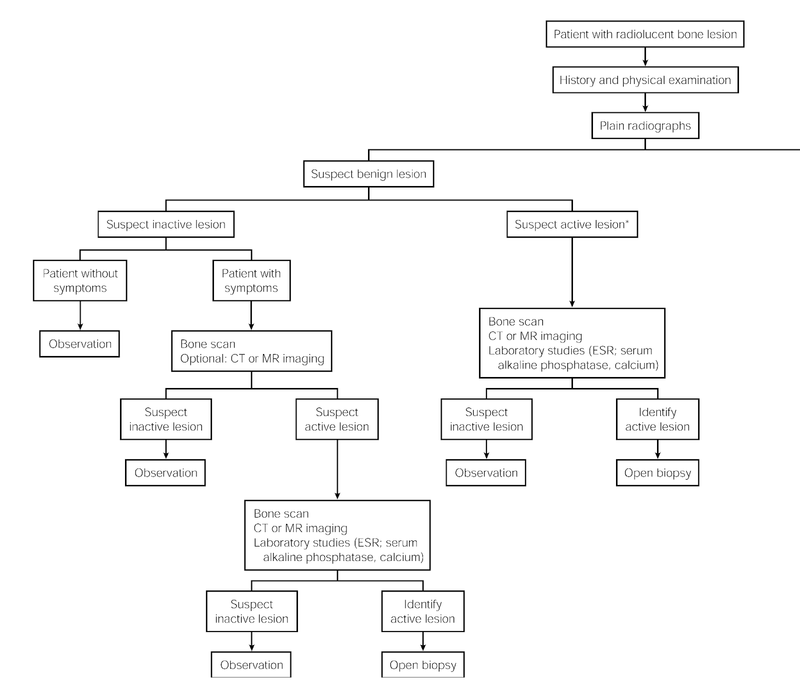
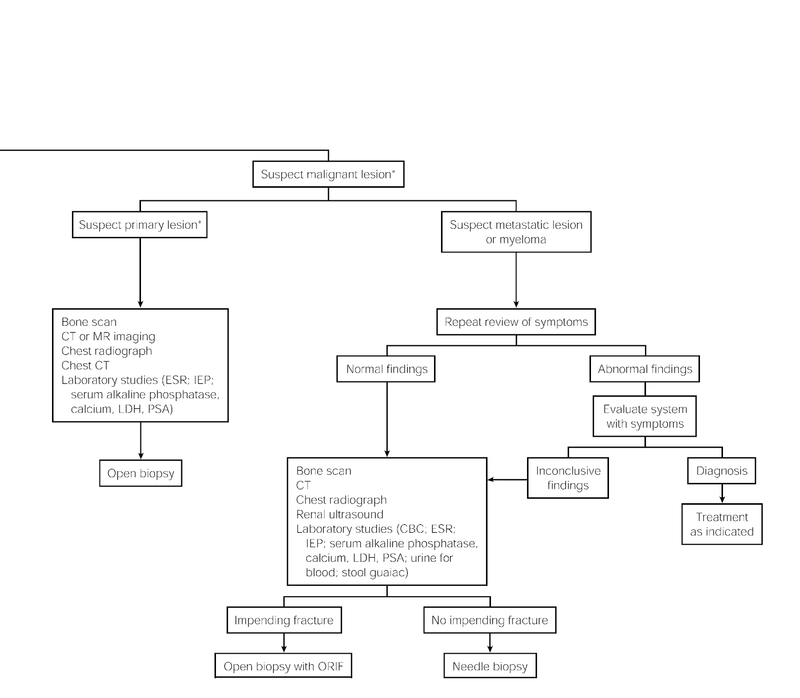
Figure 3 Algorithm for the evaluation of a patient with a radiolucent lesion of an extremity. Asterisk indicates a point at which referral is indicated if the evaluating physician is not prepared to treat the patient. ESR = erythrocyte sedimentation rate, IEP = individualized education plan, CBC = complete blood cell count, LDH = lactate dehydrogenase, ORIF = open reduction and internal fixation, PSA = prostate-specific antigen.
(Reproduced from Springfield DS: Radiolucent lesions of the extremities. J Am Acad Orthop Surg 1994;2:306-316.)
Nonossifying Fibroma
Nonossifying fibromas are benign asymptomatic tumors that commonly occur in children. Microscopically, a nonossifying fibroma is composed of spindle (fibrous) cells. Approximately 20% of all children have this lesion, most frequently in the posterior distal femur. As a child matures, the lesions tend to disappear. In rare instances, however, they enlarge and become more central in location, placing the bone at risk for pathologic fracture.
A typical case presentation would be a12-year-old boy who injured his ankle playing soccer a week ago, at which time radiographs were obtained in the emergency department. The patient and his mother report that he had no pain prior to the injury. He did not play soccer in the week following the accident, and his pain is now resolving. Physical examination demonstrates no area of palpable tenderness. In the history, the lack of antecedent pain and the rapid resolution of symptoms indicate that the tumor is not the source of the pain.
Radiographs show a distal tibia metaphyseal lesion with minimal endosteal scalloping, which is not uncommon in latent benign tumors (Fig. 4).
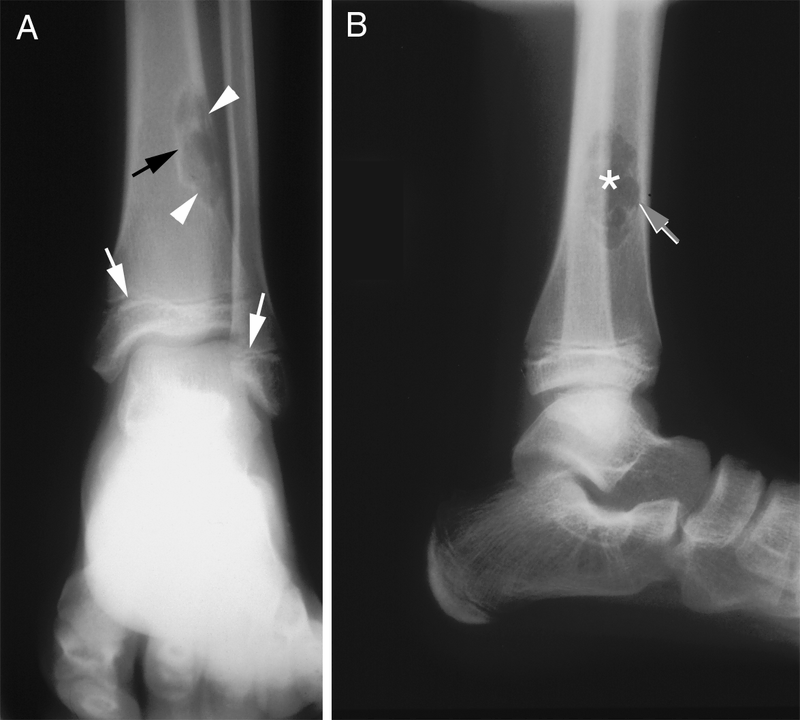
Figure 4 Nonossifying fibroma. A, AP view of the distal tibia and fibula. The open growth plates (white arrows) are seen in both bones. The tumor (arrowheads) is eccentric within the bone, involving both the cortex and medullary space. The bone has produced a sclerotic border (black arrow) around the lesion. B, Lateral view shows some endosteal scalloping of the cortex by the tumor (gray arrow). The interior of the lesion demonstrates no mineral formation (ie, it is osteolytic) (asterisk), indicating that it is composed of something other than bone or cartilage (eg, fluid or fibrous tissue). In this patient, it was benign fibrous tissue.
Rather, it reflects a previous episode of growth. The margin between the lesion and the surrounding bone is distinct. The well-defined sclerotic rim indicates that the tumor is now minimally active, if at all. The lack of internal mineralization indicates that the lesion is composed either of fluid or fibrous tissue. Therefore, this type of lesion does not require surgical intervention or further radiographic workup.8
Giant Cell Tumor of Bone
Unlike a nonossifying fibroma, a giant cell tumorof bone is an aggressive lesion. It typically affects adults in the third to fifth decades of life. Histologically, it is composed of multinucleated giant cells. It is one of the few tumors that involve the epiphysis.
A typical case presentation would be a 40-year-old woman who has a 6-month history of progressive knee pain without any previous injury. The pain was initially noted with walking but now is present at rest and at night. She limited her activities, but this modification did not resolve the pain, and she is no longer able to bear weight on the affected leg. Her distal femur is diffusely tender to palpation, and a soft-tissue mass is noted. The aggressive nature of the tumor is manifest in the severe pain at rest, even after an attempt at limiting activity.
Radiographs show a lesion of the distal femur, including the epiphysis, with a less distinct margin in the surrounding bone (Fig. 5).
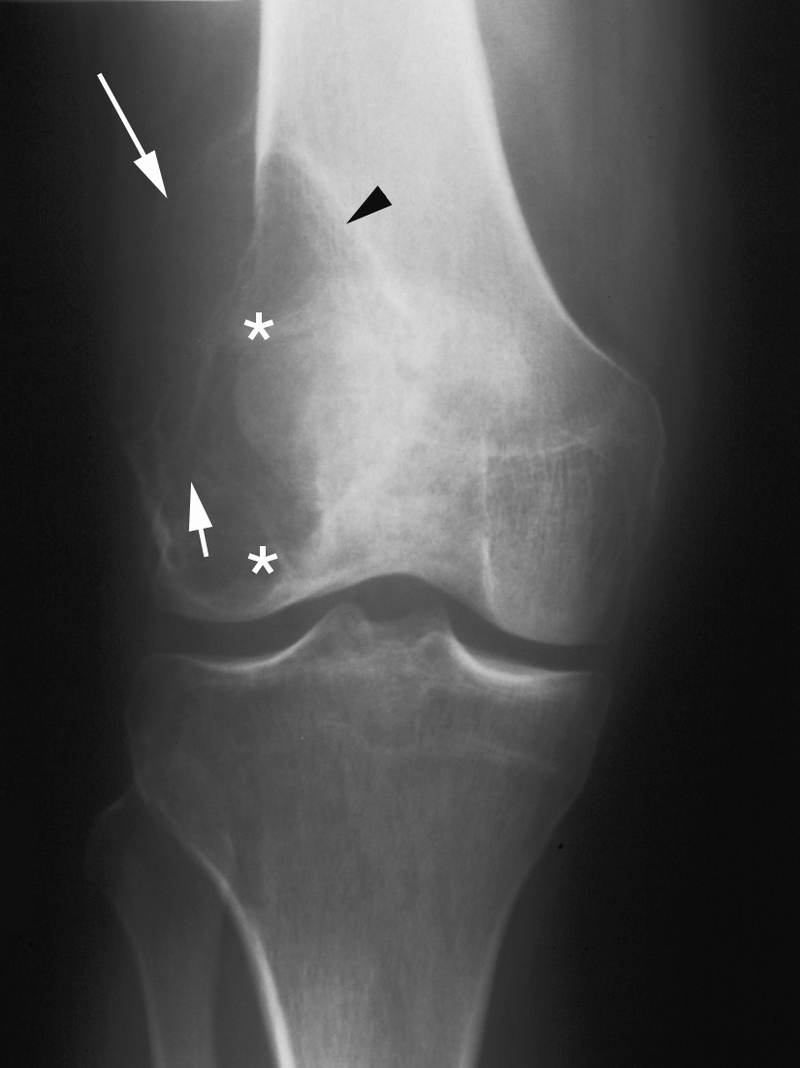
Figure 5 AP view of the knee in a patient with a giant cell tumor of bone. The growth plates are closed, indicating that this patient has reached skeletal maturity. The tumor has eroded through the lateral cortex of the distal femur (short arrow), suggesting an adjacent soft-tissue mass (long arrow). The bone is producing a sclerotic border around the remainder of the lesion (arrowhead). The lesion itself is not producing bone (ie, it is osteolytic). The small areas of mineralization within the tumor (asterisks) represent residual bone trapped by the tumor. This appearance indicates that the tumor is biologically active.
There is no evidence of bone production adjacent to the mass or mineralization produced by the tumor. The lateral cortex is eroded, and there is the suggestion of an adjacent soft-tissue mass. These findings also indicate that this tumor is extremely active. To better assess the amount of bone involved and size of the soft-tissue mass, MRI should be ordered.
Untreated giant cell tumors will continue to enlarge, resulting in further bone destruction and potential destruction of the adjacent joint. Therefore, this lesion requires surgical treatment, consisting of curettage (scraping the tumor out of the bone). The more aggressive the lesion, the more thorough the curettage needs to be to prevent local recurrence. On occasion, the segment of involved bone needs to be removed because of the extent of bone destruction.
Osteoid Osteoma
Osteoid osteoma is a benign tumor that typically occurs in patients younger than 25 years, with a male to female ratio of 2:1. The lesions are usually intracortical and found either in a long bone or in the posterior elements of the spine. Histologically, the interior of the lesion shows areas of fibrous and vascular tissue. The pain associated with osteoid osteoma comes from the lesion itself, not from any weakening of the surrounding bone. These lesions are believed to cause pain because they synthesize prostaglandins, a process that results in edema in the surrounding bone and bone marrow. Nonsteroidal anti-inflammatory drugs provide pain relief in this instance because they block prostaglandin production.
A typical case presentation would be a 5-year-old boy who has a 3-month history of thigh pain that occurs primarily at night but no history of significant trauma. His parents report that the night pain is relieved with ibuprofen. On examination, the pain occurs with attempts at hip motion, but there is no palpable mass.
Radiographs demonstrate a lesion within the cortex of the anterior proximal femur (Fig. 6).
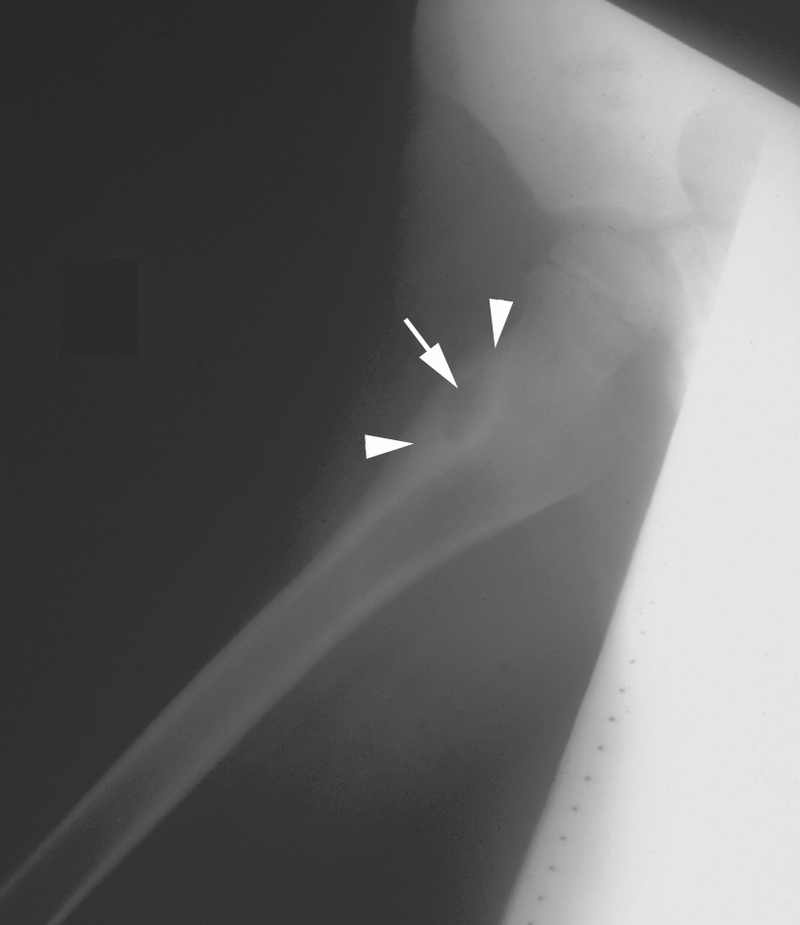
Figure 6 Frog-lateral view of a patient with an osteoid osteoma shows the tumor (the lytic area) arising within the anterior cortex of the femur (arrow). The arrowheads point to bone that is denser than that typically produced by bone surrounding a tumor and is a response to the prostaglandins produced by the osteoid osteoma.
The margin of the lesion is distinct, with an area of dense bone surrounding the lesion. The interior of the lesion demonstrates no evidence of mineralization. The lesion shows intense uptake on a bone scan (Fig. 7).
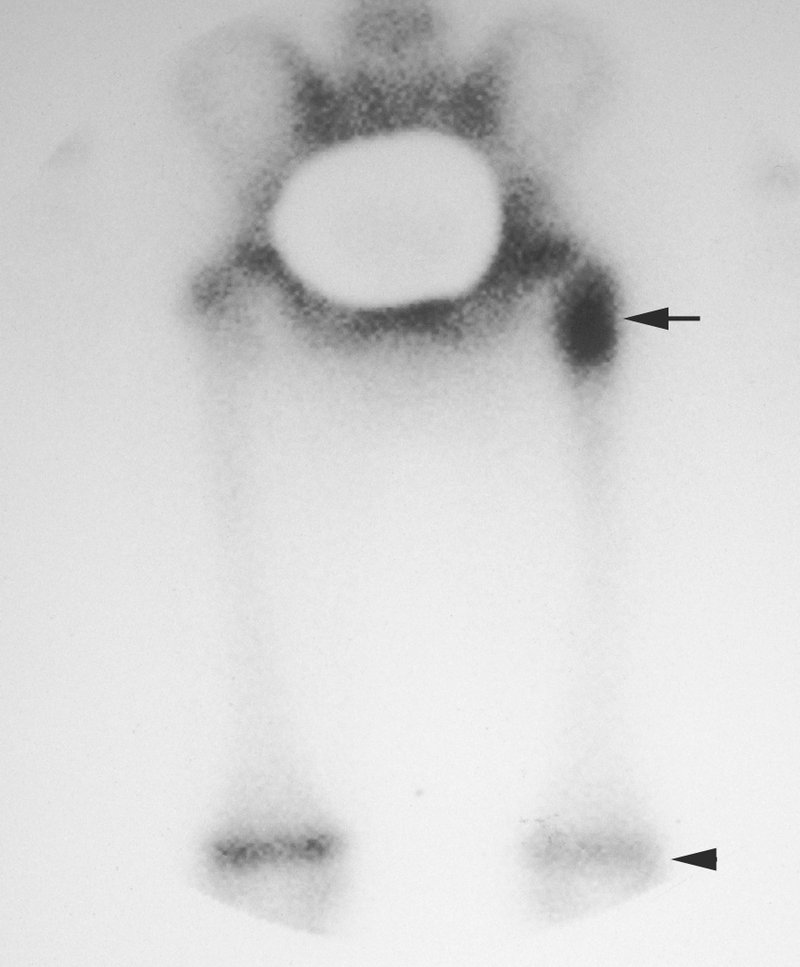
Figure 7 Bone scan of a patient with osteoid osteoma shows increased uptake (arrow), suggesting bone formation around the tumor. Note that the uptake is greater than that seen in the growth plates (arrowhead).
The bone surrounding this particular lesion did not originate from the lesion itself. The tumor stimulates the production of a significant amount of new bone at the periphery of the lesion, which accounts for the findings on the radiograph and bone scan.
Surgical intervention is reserved for patients in whom the diagnosis is in doubt or for those who cannot control their pain with medication. In addition to surgical resection, ablation with microwave radiation may be attempted.
Malignant Bone Tumors
Patients with malignant tumors in bone report pain and occasionally the presence of a soft-tissue mass. The duration of symptoms varies. Patients may also have systemic constitutional symptoms, such as malaise, anorexia, or weight loss. In children, bone tumors are usually sarcomas arising primarily from bone. In adults, most malignancies found in bone do not arise from bone cells but represent metastases from visceral neoplasms. In both children and adults, hematologic malignancies can be found in bone.
Osteosarcoma
Osteosarcoma is the most common malignant lesion to arise primarily from bone cells. It is found in the metaphyseal regions of long bones, especially around the knee. As in the case of most malignancies, pain at rest and night is indicative of an aggressive lesion. The diagnosis must be confirmed with a biopsy because the treatment is intensive. An osteosarcoma is composed of malignant cells that produce immature bone (osteoid). Because this tumor can spread hematogenously, the potential for metastases must be considered. Thus, CT of the chest should be ordered to identify pulmonary metastases, and bone scanning is needed to look for bone metastases. This additional testing is called a staging workup.
A typical case presentation would be a 17-year-old boy who has had pain and swelling in the shoulder for the past 8 months that was initially attributed to an injury sustained while playing basketball. However, concern arose when his symptoms progressed to pain at rest and at night, despite ceasing all athletic activities. Physical examination demonstrates pain in the shoulder and an adjacent soft-tissue mass.
Radiographs show a lesion in the metaphyseal region of the humerus with internal mineralization (Fig. 8).
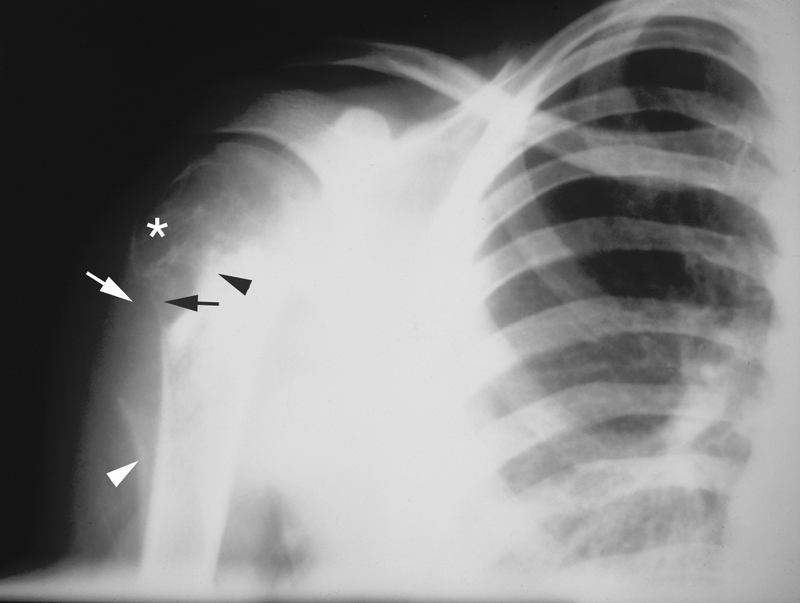
Figure 8 AP view of the shoulder in a patient with osteosarcoma shows that the tumor has eroded the lateral cortex of the humerus (black arrow) and extended into the soft tissues (white arrow). The tumor induces periosteal reaction, forming a Codman’s triangle (white arrowhead). The border with the medullary bone is indistinct (permeative), and there is no evidence of a surrounding sclerotic reaction. The interior of the tumor is mixed, with lytic areas (asterisk) and osteoblastic (bone-forming) areas (black arrowhead). These findings are diagnostic of an aggressive, bone-forming tumor (ie, osteosarcoma).
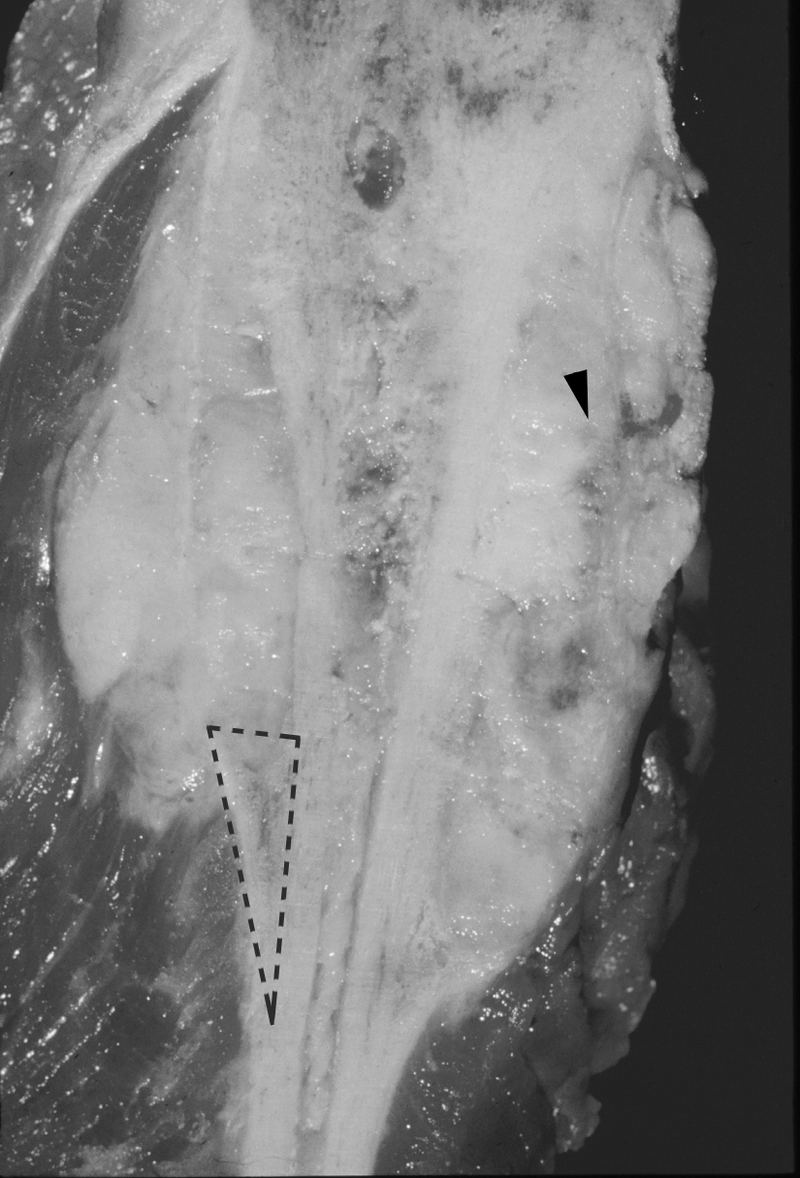
The border with the remainder of the humeral metaphysis is indistinct. The mineralized lesion extends outside of the bone. Adjacent periosteal reaction is noted, which produces an elevation of the periosteum that, along with the shaft of the bone, forms a Codman’s triangle (Fig. 9 ).This radiographic appearance, including indistinct margins, periosteal reaction, and appearance of mineralization intermingled with lytic areas confirms the diagnosis. In other cases, the mineralization may be more dominant, creating a “sunburst” appearance (Fig 10 ).
Treatment of the primary lesion has changed in recent years, primarily as a result of improvement in diagnostic imaging modalities. More precise identification of the borders of the tumor allows for removal of the tumor and limb salvage. The survival rate for limb salvage is the same as amputation, but the functional results are better.9
Survival rates associated with osteosarcoma have been poor in the past, even with amputation. Patients with osteosarcoma often succumb to metastatic disease. However, the use of both neoadjuvant and adjuvant chemotherapy has improved survival rates dramatically.
Metastatic Carcinoma
Although almost all somatic malignancies can spread to bone, those arising in the breast, lung, thyroid, kidney, and prostate represent a vast majority of cases. The reason these tumors have a predilection for skeletal metastasis is unclear. It may relate to the ease with which these tumors enter the bloodstream or the presence of receptors to allow attachment to bone. Because skeletal metastases are far more common than primary malignancies, an adult with a malignant tumor in bone should be evaluated concurrently for the presence of a primary malignancy elsewhere. This can be accomplished with CT and blood testing. Bone scanning is also indicated to detect distal bone lesions.
Figure 9 Photograph of a gross specimen after removal of an osteosarcoma. The tumor is seen within the bone, extending out into the soft tissues (arrowhead). The periosteal reaction, forming a Codman’s triangle, is also seen (dashed lines). In this type of periosteal reaction, the tumor erodes through the bone, elevating the periosteum. In turn, the periosteum lays down reactive bone.
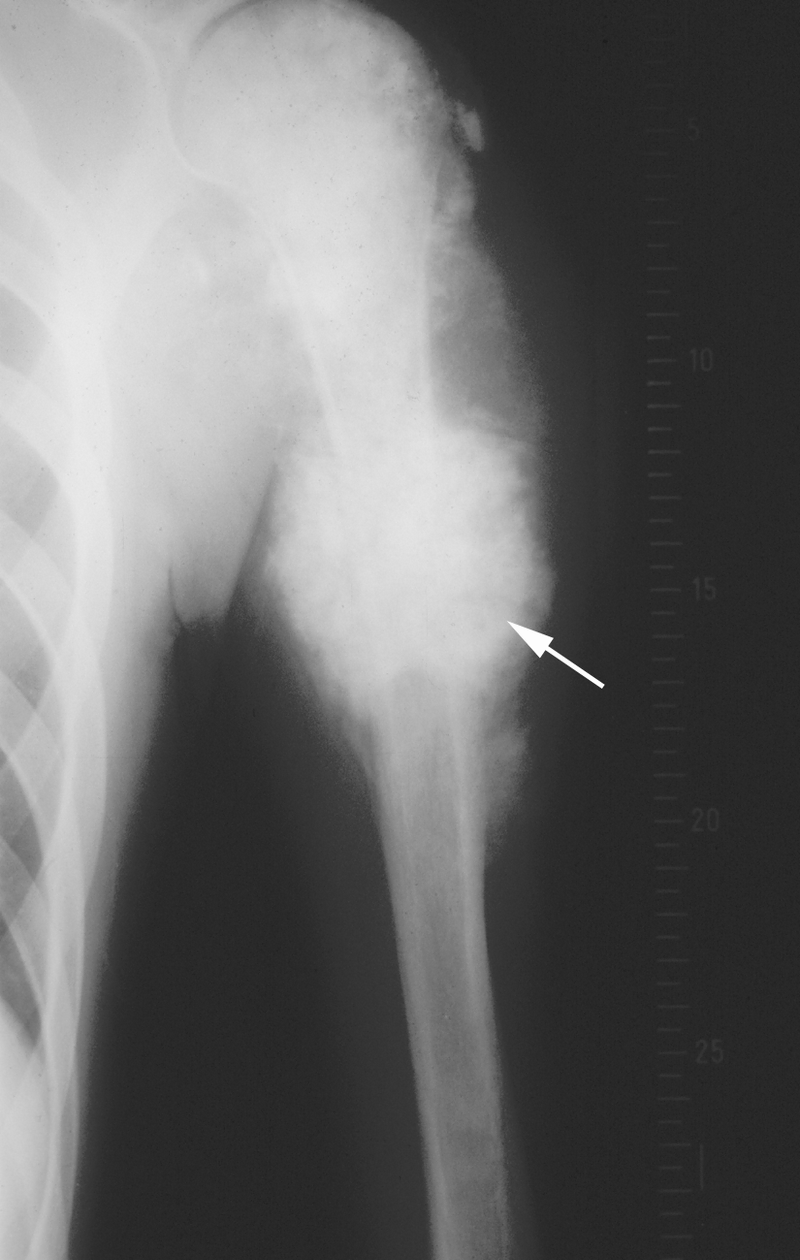
Figure 10 AP view of the humerus in a patient with osteosarcoma shows that the tumor is primarily osteoblastic and extends out into the soft tissues, with some areas appearing to arise perpendicular to the long axis of the bone, creating a “sunburst” appearance (arrow).
A typical case presentation would be a 60-year-old woman with a 6-week history of progressive thigh pain who reports increased fatigue, an unexplained 10-lb weight loss, and pain with any attempt to move the knee. Radiographs show a permeative lesion in the diaphysis of the femur with a surrounding periosteal reaction (Fig. 11).
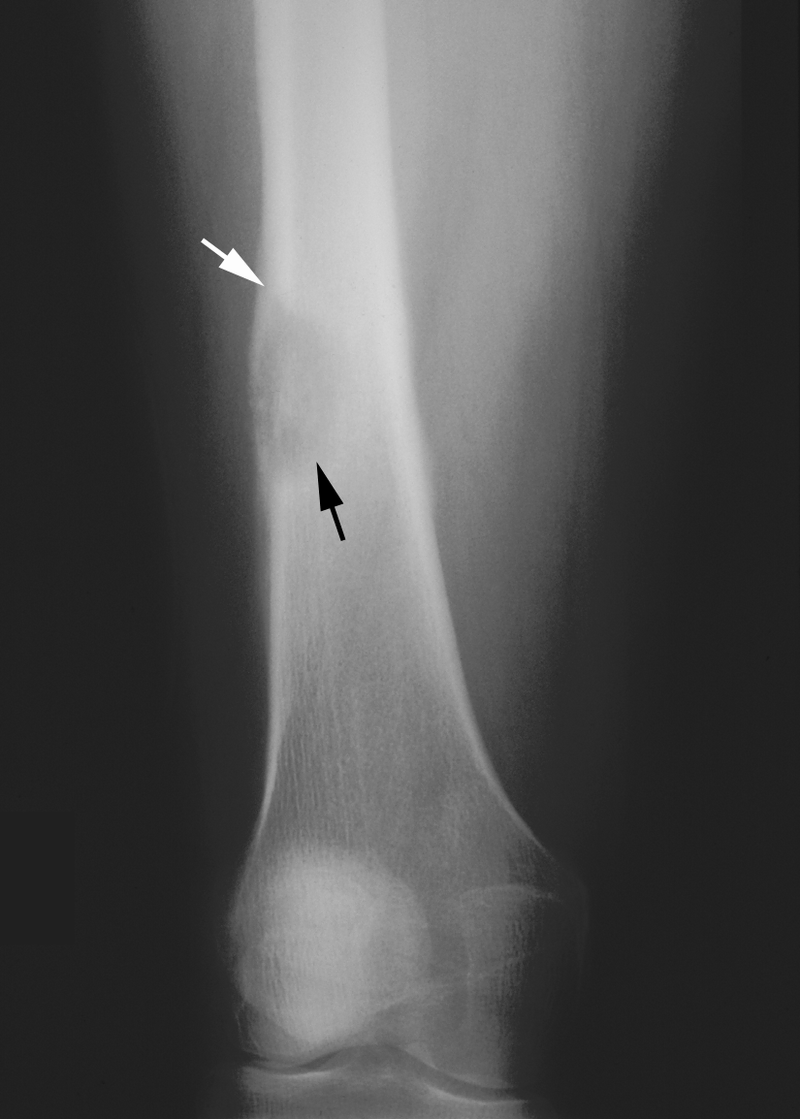
Figure 11 AP view of a femur in a patient with metastatic carcinoma shows a tumor in the diaphysis that involves both cortical and medullary bone. The tumor has an indistinct (permeative) border, with scant surrounding bone formation (black arrow). There is periosteal reaction (white arrow), indicating that the tumor has eroded through the outer portion of the cortex and into the periosteum. Both features indicate that the lesion is biologically active. Because there is no evidence of mineral formation within the lesion, osteosarcoma or chondrosarcoma is not considered in the differential diagnosis.
No mineralization is detected within the lesion. During a subsequent radiographic workup, a primary lesion was found in the lung. Metastatic lesions tend to enlarge quickly, which accounts for the rapid progression of the patient’s symptoms. The metabolic demands of this aggressive lesion are responsible for the fatigue and weight loss.
Metastatic disease in bone is usually treated with radiation to control pain and halt bone destruction by the tumor. However, if lesions are large enough at the time of presentation to create the risk of pathologic fracture, prophylactic fixation (that is, surgically stabilizing the bone before it breaks) should be performed. Prophylactic fixation is also indicated if pain does not improve despite radiation. Pain after radiation suggests that the remaining bone is under stress and that the structural integrity of the bone is at risk. It is often easier and medically safer to place a rod in a long bone before it breaks; it is also far more comfortable for the patient.
Benign Soft-Tissue Tumors
Benign soft-tissue tumors are common, especially in areas with a greater volume of soft tissue (eg, the thigh and upper arm). Even though these tumors are not tumors of the bone itself, they are frequently evaluated with radiographs because imaging studies can initially confirm that the lesion is in the soft tissue and not originating from the surface of the bone. Radiographs may also demonstrate mineralization within the lesion, which can help to narrow the differential diagnosis. If further evaluation of the tumor is necessary, MRI is the modality of choice because it can localize the lesion within the extremity and, in certain instances, indicate tissue type.10
Benign soft-tissue tumors are frequently found incidentally. They are usually asymptomatic or, at worst, produce a cosmetic deformity. If they enlarge at all, they typically do so slowly. However, enlargement is often difficult to detect as the surrounding soft tissue may obscure the tumor. Benign soft-tissue lesions tend to be smaller and more superficial than malignant lesions.
A lipoma is one of the most common types of soft-tissue tumor. Most frequently seen as a subcutaneous lesion in older patients, it affects both sexes equally and presents spontaneously without pain. Benign lipomas may appear in multiple locations (lipomatosis). They may grow fast at first but then stop growing and never turn malignant. Histologically, these tumors are almost identical to fat in the subcutaneous tissue (Fig. 12).
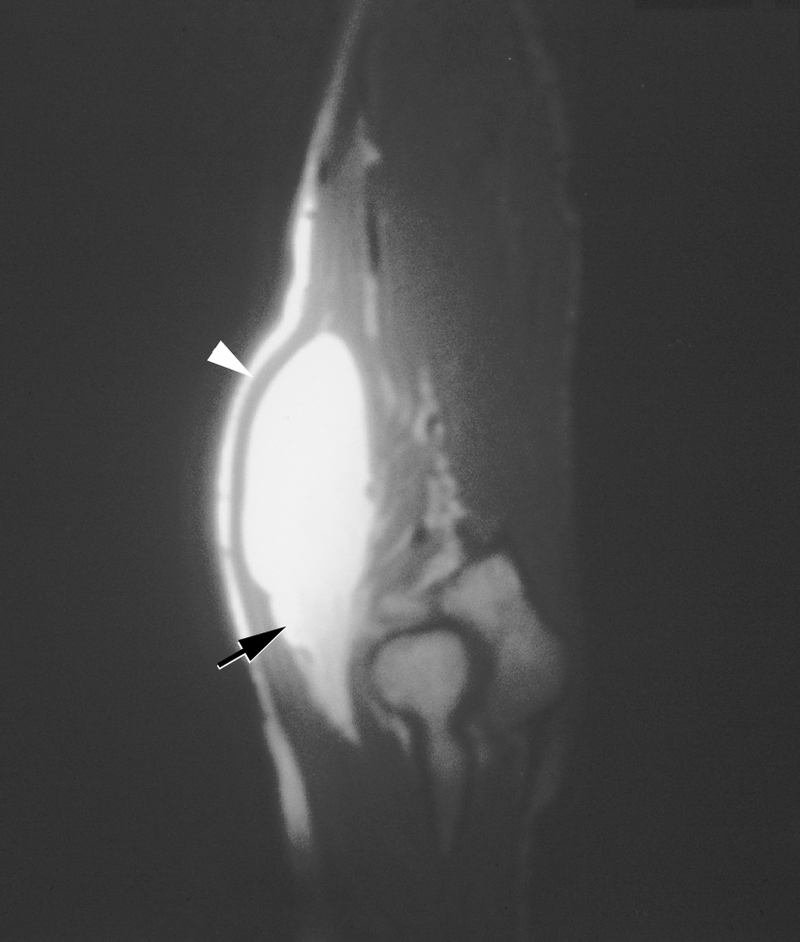
Figure 12 Sagittal T1-weighted MRI scan shows a lipoma of the elbow. The lesion located anterior to the elbow (arrow) has the same high signal (bright) intensity as subcutaneous fat (arrowhead).
A typical case presentation would be a 29-year-old man with a history of benign soft-tissue masses who now has a mass on his elbow. This lesion has not changed in several years and is not symptomatic. Physical examination demonstrates a 3-cm, soft, mobile, superficial lesion on the anterior aspect of the elbow. Similar lesions are noted on the opposite arm and back.
The mobility of a lipoma indicates that it is most likely superficial; such lesions do not demand radiographic studies. Characteristics that should prompt further evaluation include enlargement of the mass, large size at the time of presentation, and immobility of the mass when palpated.
Malignant Soft-Tissue Tumors
Malignant soft-tissue tumors usually develop in middle-aged and older adults. These lesions tend to enlarge more quickly than benign lesions. On occasion, a quiescent benign lesion may rapidly expand, indicating malignant degeneration. Patients with soft-tissue sarcomas may present with a history of minor trauma and resultant swelling, which calls attention to the mass. However, unlike typical posttraumatic swelling, it does not improve with time and rest and may actually worsen. Swelling may be caused by injury to the immature blood vessels at the periphery of the tumor, which tend to bleed readily.
The most common malignant soft-tissue tumor in adults is malignant fibrous histiocytoma, which is seen most often in men between the ages of 50 and 70 years. The tumor mass usually occurs deep within the larger muscles about the hip, shoulder, thigh, and retroperitoneum.
A typical case presentation would be a 70-year-old man with a 2-month history of an enlarging mass on his hip. He denies any weight loss but does note increased fatigue and limited hip motion. Physical examination reveals a firm, fixed mass adjacent to the greater trochanter but no other palpable masses. Radiographs suggest the presence of a soft-tissue mass, with no internal mineralization or underlying bone erosion. An MRI scan shows a 20-cm heterogeneous tumor within the soft tissue (Fig. 13).
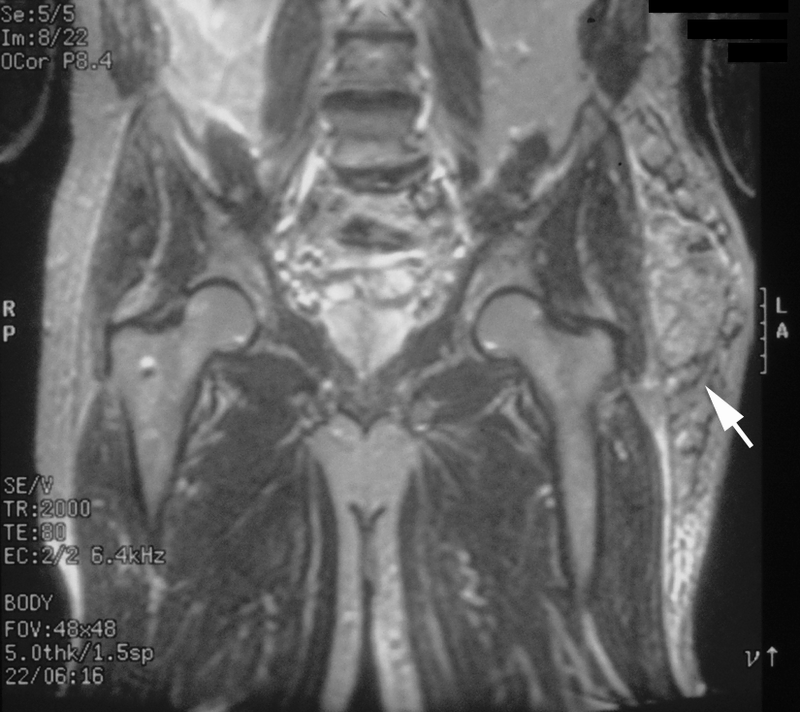
Figure 13 Coronal MRI scan of a patient with malignant fibrous histiocytoma shows a tumor arising within the subcutaneous tissue surrounding the left hip. Note that the interior of this lesion is heterogeneous (arrow), indicating that at least some of this tumor is necrotic. This typically reflects the rapid growth of the tumor.
The enlarging nature of this patient’s mass, as well as its deep-seated location, most likely indicates a malignancy. The overall size and appearance on the MRI scan support this diagnosis. Heterogeneity within a mass on MRI usually signals necrosis, an indicator that the tumor is growing so fast it outpaces its blood supply. The next step in the evaluation of this tumor is a biopsy. Histologically, malignant fibrous histiocytoma has both fibrous elements and histiocytes (large, multinucleated cells). Soft-tissue sarcomas may also spread hematogenously to the lungs. Therefore, the workup should also include a CT scan of the chest.
Historically, amputation has been the standard treatment for soft-tissue sarcomas. However, if the lesion can be removed and a useful extremity maintained, limb salvage surgery is performed, especially for more proximal lesions. MRI can delineate the extent of the tissue that needs to be removed. However, soft-tissue sarcomas can disperse satellite cells from their edges into adjacent tissue. If only the grossly involved tissue is removed, the risk of local recurrence is high. Therefore, adjuvant radiation therapy is used to eradicate these satellite cells, and it decreases the risk of local recurrence to below 10%. The role of chemotherapy in the treatment of soft-tissue sarcomas is less clear than it is for bone sarcomas. Currently, studies do not clearly indicate whether chemotherapy affects survival.
Key Terms
Café au lait spots Congenital pigmented skin marks; the color of coffee with milk
Chondrosarcoma A primary sarcoma formed from cartilage cells or their precursors but without direct osteoid formation
Codman’s triangle A radiographically visible triangular-shaped area formed by the elevation of the periosteum by a bone tumor and the adjacent cortex of normal bone
Curettage The removal of growths from within cavity walls; in the treatment of musculoskeletal tumors, the scraping of tumor out of bone
Endosteal scalloping The erosion of bone in the medullary canal caused by active tumors
Ewing’s sarcoma A primary sarcoma of the bone that usually arises in the diaphyses of long bones, ribs, and flat bones of children and adolescents.
Giant cell tumor of bone A tumor composed of multinucleated giant cells resembling osteoclasts
Limb salvage Surgical removal of a tumor without amputation of the affected extremity
Lipoma A benign, soft, rubbery tumor usually composed of mature fat cells
Malignant fibrous histiocytoma A soft-tissue sarcoma histologically characterized by the presence of fibrous elements and large, multinucleated histiocytes
Metastasis The transfer of disease from one part of the body to another; tumor metastasis usually occurs via the bloodstream
Multiple myeloma A disseminated malignancy of the B lymphocytes that can result in widespread osteolytic lesions
Nonossifying fibromas Osteolytic and sometimes painful proliferative lesions composed of spindle-shaped (fibrous) cells
Osteoid osteoma A small, benign but painful tumor usually found in the long bones or the posterior elements of the spine
Osteosarcoma A primary sarcoma of the bone that is characterized by the direct formation of bone or osteoid tissue by the tumor cells
Pathologic fracture A fracture caused by a normal load on abnormal bone (often weakened by tumor, infection, or metabolic bone disease)
Prophylactic fixation Surgical stabilization of a bone before it breaks; often performed to stabilize bones weakened by tumors
Staging workup Evaluation using CT of the chest and nuclear bone scanning to search for metastases
References
1. Simon MA, Springfield DS, Conrad EU: (eds): Surgery for Bone and Soft-Tissue Tumors. Philadelphia, PA, Lippincott-Raven, 1998.
2. Unni KK, Dahlin DC: (eds): Dahlin’s Bone Tumors: General Aspects and Data on 11,087 Cases, ed 5. Philadelphia, PA, Lippincott-Raven, 1996.
3. Praemer A, Furner S, Rice DP: (eds): Musculoskeletal Conditions in the United States. Rosemont, IL, American Academy of Orthopaedic Surgeons, 1999.
4. Springfield DS: Radiolucent lesions of the extremities. J Am Acad Orthop Surg 1994;2:306-316.
5. Huvos AG: (ed): Bone Tumors, Diagnosis, Treatment, and Prognosis, ed 2. Philadelphia, PA, WB Saunders, 1991.
6. Malawer MM, Sugarbaker PH: (eds): Musculoskeletal Cancer Surgery: Treatment of Sarcomas and Allied Diseases. Dordrect, Netherlands, Kluwer Academic Publishers, 2001.
7. Swanson KC, Pritchard DJ, Sim FH: Surgical treatment of metastatic disease of the femur. J Am Acad Orthop Surg 2000;8:56-65.
8. Aboulafia AJ, Kennon RE, Jelinek JS: Benign bone tumors of childhood. J Am Acad Orthop Surg 1999;7:377-388.
9. Heinrich SD, Scarborough MT: (eds): The Orthopedic Clinics of North America: Pediatric Orthopedic Oncology. Philadelphia, PA, WB Saunders, 1996, vol 27.
10. Sim FH, Frassica FJ, Frassica DA: Soft-tissue tumors: Diagnosis, evaluation, and management. J Am Acad Orthop Surg 1994;2:202-211.
