

Muscles and tendons move joints, and ligaments stabilize them. Skin and its surrounding connective tissue provide a durable cover to the skeleton and protect vital neurovascular structures. Unfortunately, injury to these soft tissues is common. The clinical implication of a soft-tissue injury depends on its unique characteristics, including its type, severity, and location. This chapter offers a broad overview of injury to soft tissues, including ligament, tendon, skin, and muscle.
Ligament Injuries
Sprains
Ligaments are elastic structures that stabilize the joints. A sprain occurs when a tensile (stretching) force elongates a ligament beyond its elastic limit.1,2 A ligament can be elongated a small percentage of its overall length without structural injury. When stretched within this limit, the ligament can recoil to its normal length. Stretched beyond its limit of deformation, however, a ligament will tear—either in its midsubstance or at the attachment to bone. When this latter injury pulls off a sliver of the bone, it is called an avulsion fracture, although this injury is conceptually equivalent to a sprain and is treated similarly.
A sprain can be described by the extent of the injury to the ligament.
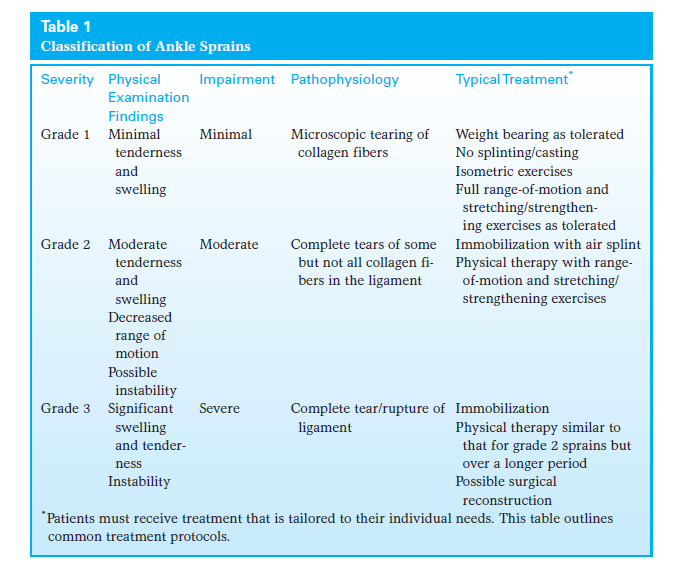
The terms “degree” and “grade” are often used interchangeably; a second-degree sprain may also be called a grade 2 sprain.
A first-degree sprain denotes only slight stretching of the ligament and microscopic damage limited to the collagen fibrils. A first-degree sprain is associated with no discernable instability to the joint. A second-degree sprain represents a partial tearing of the ligament. Although the gross continuity of the ligament is preserved, abnormal laxity of the joint is produced when the joint is stressed. A third-degree sprain represents a complete tear. This injury, paradoxically, may cause less discomfort than a second-degree sprain because there is no remaining intact ligament to be stretched, and it is the stretch that produces pain. At times, gross instability is initially absent in third-degree sprains because muscle spasm may temporarily hold the joint in place.
Pathophysiology
Sprains are extremely common. Literally thousands of ankle sprains occur each day in the United States.3 The joints of the fingers, knee, and shoulder are also frequently sprained. Although sprains may occur during adolescence, a growth plate fracture masquerading as a sprain must be considered.
With mild sprains, injury is limited to the ligament itself. With complete tears, however, the joint may become unstable, leading to damage to the joint surfaces. Instability of the joint is termed dislocation when the articular surfaces completely lose contact with each other. If the joint surfaces begin to dissociate but do not completely lose contact with each other, it is called subluxation. Instability and dislocations are described in terms of the direction of the pathologic motion. By convention, the abnormal motion is named according to the direction that the distal portion of the limb moved in relation to the proximal part. For example, in an anterior knee dislocation, the tibia and fibula are anterior to the femur.
The damage from sprains can be grouped into four categories: (1) injury of the ligament itself, causing local pain, swelling, and acute dysfunction of the joint; (2) residual instability of the joint; (3) disruption of the articular surface from impact at the time of injury (or from continued abnormal joint mechanics because of ligament laxity); and (4) injury to the surrounding arteries and nerves that were stretched at the time of the ligament injury.
Injury within the ligament producing swelling and compromised function of the joint is characteristic of mild ankle sprains. With such an injury, no instability may be detected. However, the patient may have significant disability. This may be because the proprioceptive nerve fibers in the ligament are damaged or because there is swelling that constrains normal motion.
Damage to the articular surface of the joint is frequently seen with anterior shoulder dislocations. When the humeral head is forced forward out of the glenoid socket, its posterior surface can collide with the front of the glenoid and cause an impaction injury. This injury is called a Hill-Sachs lesion and is definitive proof that a dislocation occurred, even if no instability is seen on examination.
Residual joint instability may be found with sprains of the anterior cruciate ligament (ACL) of the knee. A chronically torn ACL does not hurt, but without a functional ACL stabilizing the knee, the normal mechanics of the knee are impeded.
Trauma to the vascular bundle is characteristic of hip dislocations. When the hip is pulled out of joint, the blood vessels that are tightly bound to the femur may be stretched beyond their limit and tear. As a result, hip dislocation can produce osteonecrosis of the femoral head because of the disruption of the blood supply.
Ankle Sprain
The ankle ligaments stabilize the ankle primarily against twisting injuries (Fig.1). The deltoid ligament on the medial side resists eversion, and the lateral ankle ligaments resist inversion. The syndesmotic ligament complex between the tibia and the fibula resists separation (diastasis)
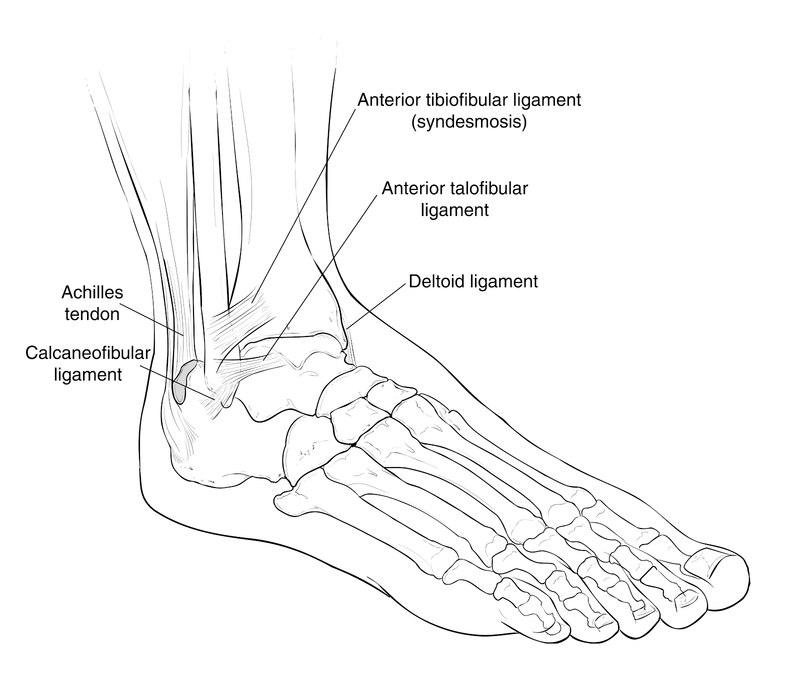
Figure 1 Ligaments of the ankle. The Achilles tendon in also shown.
(Adapted with permission from Briner WW Jr, Carr DE, Lavery KM: Anterior tibiofibular ligament injury: Not just another ankle sprain. Phys Sportsmed 1989;17:63-69.)
.
The ankle ligaments are commonly injured when a person turns or rolls the ankle. The severity of the sprain can vary widely (Table 1). After sustaining a sprain, a patient may or may not be able to bear weight on that ankle. Immediate pain and swelling are frequently noted. As swelling increases, the joint becomes stiff and painful to move. Physical examination will reveal tenderness to palpation over the injured ligaments. Manipulation of the injured joint may show excessive or abnormal motion. Palpation of the proximal fibula is also necessary because the energy of a twisting injury may be transmitted up the syndesmosis or leg, producing a fracture of the fibula near knee. Radiographs are usually normal; nonetheless, they are usually obtained because a bony injury may also be present. With severe sprains, abnormal alignment of a partially or completely dislocated joint may be seen.
Prompt treatment of ankle sprains improves outcome. The general treatment approach is referred to as RICE, which stands for rest, ice, compression, and elevation. The goal of treatment is to reduce the swelling that contributes to pain and loss of motion. When the acute symptoms subside, the patient may benefit from rehabilitation to restore strength and range of motion. The proper mechanics of gait may also need to be retaught. Because the tendons crossing the ankle provide stability, even complete ligament tears may not necessarily lead to functional instability. Surgical reconstruction is reserved for injuries that fail to respond to nonsurgical treatment.
Shoulder Dislocation and Instability
No single lesion is responsible for all cases of glenohumeral instability because the shoulder is stabilized by different anatomic structures, depending on the position of the shoulder in space and the direction of the distracting force. The shoulder is stabilized statically by capsular ligaments: the superior, middle, and inferior glenohumeral ligaments. The inferior glenohumeral ligament is the main stabilizer against anterior translation, especially with the arm abducted. The glenoid labrum, a fibrous structure attached to the circumference of the glenoid, deepens the saucer-like glenoid socket to lend additional stability. The rotator cuff, biceps, and scapular rotator muscles all provide dynamic stability to the shoulder as well.
In the late fifth century BC, Hippocrates classified shoulder dislocations as traumatic or atraumatic—a system that still applies today. Neer and Welsh4 added a third category —acquired— to describe shoulder dislocations that result from repeated minor injuries.
Atraumatic instability is characterized by subluxations and dislocations of the joint in the absence of specific trauma. Generalized joint laxity is almost always seen in these patients. For example, Marfan syndrome is a possible cause of atraumatic instability. This syndrome is characterized by excessive height, long fingers and toes, and laxity of connective tissue, including the connective tissue in the heart valves, aorta, and eyes. Many instances of atraumatic instability, however, have no identifiable cause.
Traumatic dislocation typically occurs as a result of a fall. Ninety-eight percent of shoulder dislocations are anterior, with the head of the humerus lying anterior to the glenoid5
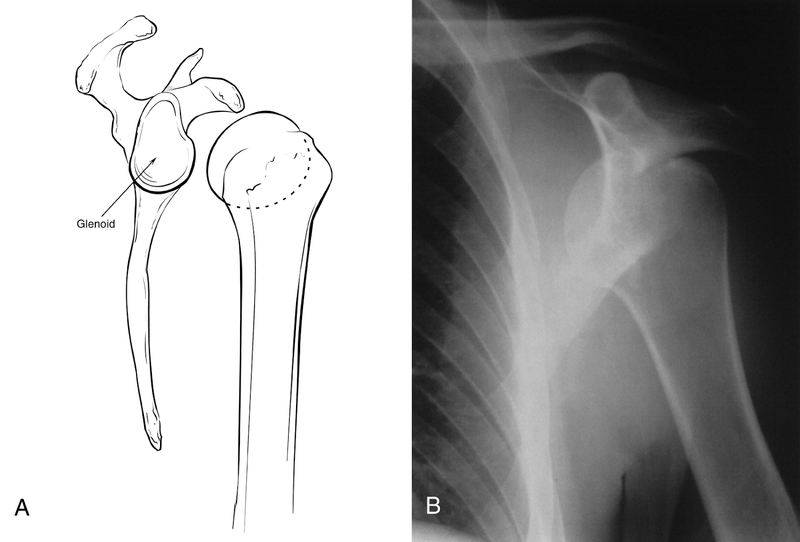
Figure 2 Anterior shoulder dislocation. A, Schematic representation of the humeral head dislocated anteriorly. B, AP radiograph of same.
(Figure 2A is reproduced from Greene WB (ed): Essentials of Musculoskeletal Care, ed 2. Rosemont, IL, American Academy of Orthopaedic Surgeons, 2001, p 147.)
). In most cases of an anterior dislocation, the anterior labrum and capsule are torn away from the glenoid; this tear is called a Bankart lesion6 (Fig. 3
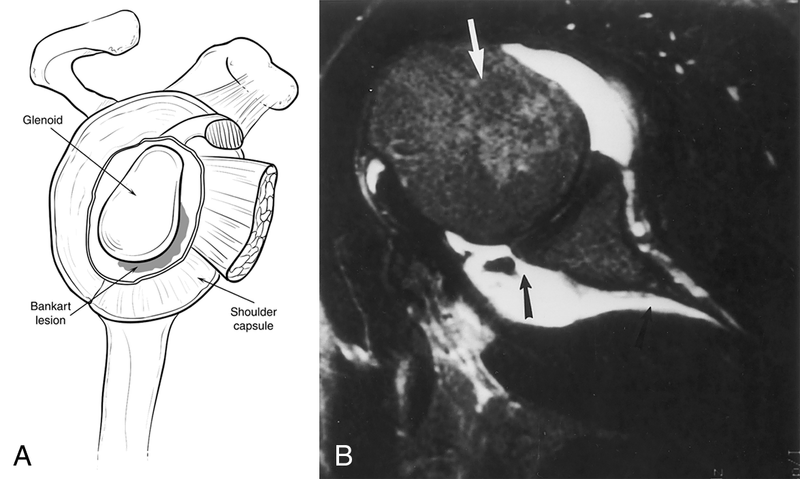
Figure 3 Bankart lesion. A, Schematic representation of a true lateral view with the humerus removed showing detachment of the labrum and capsule from the glenoid. B, An axial T2-weighted MRI obtained after an acute primary dislocation. Black arrows indicate an anterior labral tear with capsular stripping along the glenoid neck. White arrow indicates marrow edema (Hill-Sachs lesion).
(Figure 3A is reproduced from Greene WB (ed): Essentials of Musculoskeletal Care, ed 2. Rosemont, IL, American Academy of Orthopaedic Surgeons, 2001, p 148. Figure 3B is reproduced from Lintner SA, Speer KP: Traumatic anterior glenohumeral instability: The role of arthroscopy. J Am Acad Orthop Surg 1997;5:233-239.)
). Many shoulder dislocations are associated with an impression fracture of the humeral head on its posterolateral surface, the point where the head contacts the glenoid when it is out of place (Hill-Sachs lesion)7 (Fig. 4
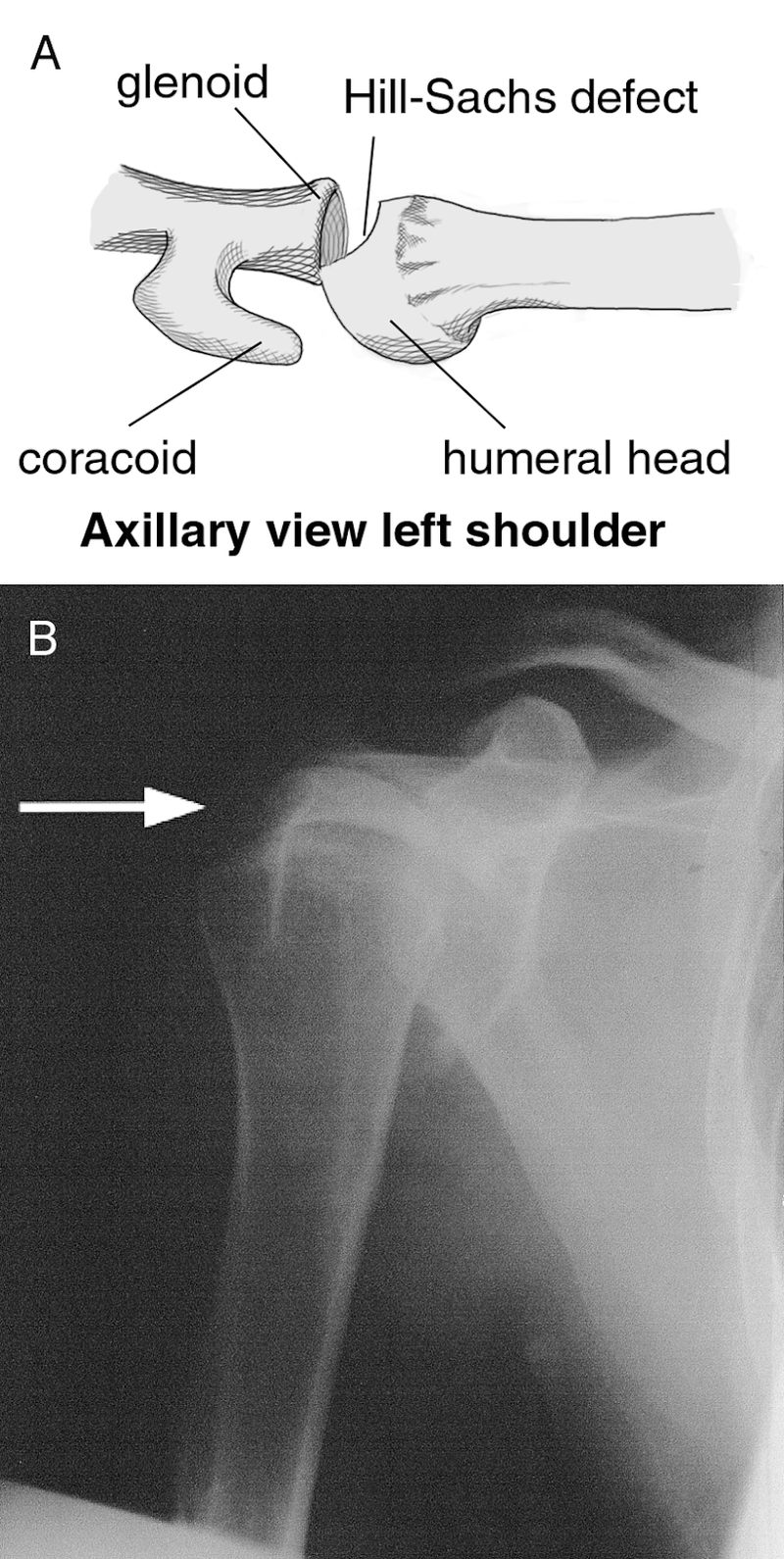
Figure 4 Hill-Sachs lesion. A, An impression fracture occurs on the humeral head posterolaterally when the humeral head impacts on the glenoid. B, Radiograph of a Hill-Sachs lesion (arrow).
).
The patient with a shoulder dislocation usually has an obvious deformity. It is important to consider the age of the patient at the time of the initial dislocation because the younger the patient is at the time of initial dislocation, the more likely that dislocation will recur.8,9 Older patients are less likely to have a recurrence, but dislocations in older patients are associated with rotator cuff tears. A neurovascular assessment with special attention to the axillary nerve is needed because a traction injury may occur during dislocation.
Radiographs should include AP transscapular lateral (Y view) and axillary views. The Hill-Sachs lesion is seen well on the axillary view. It is easy to miss a dislocation when only an AP view is obtained because a single two-dimensional representation cannot identify where the head lies in relation to the glenoid.
Traditionally, treatment for a first-time traumatic shoulder dislocation consists of closed reduction followed by a period of immobilization and then a program of rehabilitation. Recurrent dislocation is treated with surgery, preferably restoration of normal anatomy by repairing the detached labrum and tightening the capsule.
ACL Injuries
Stability of the knee joint depends on both the ligaments and the surrounding muscles. The ACL stabilizes the knee against anterior subluxation of the tibia, and its action is supplemented by the hamstrings and the gastrocnemius. When the tibia is forced forward, which typically occurs when an individual is attempting to change directions at a high rate of speed, the ACL may rupture (Fig. 5
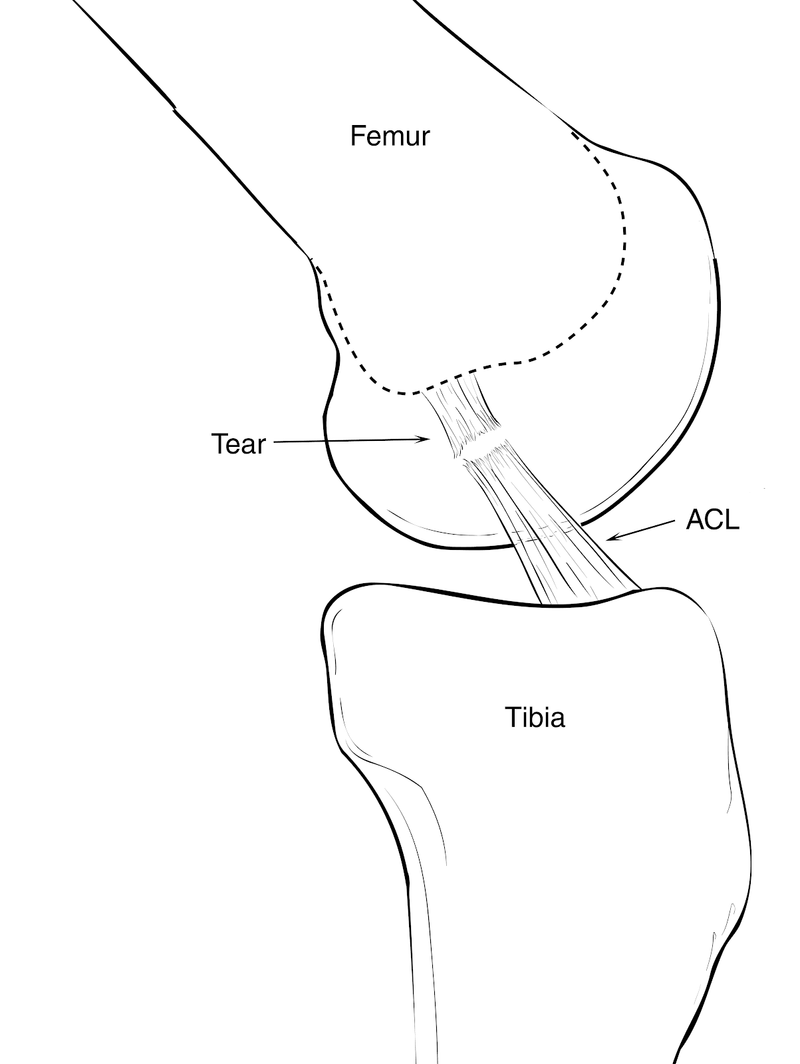
Figure 5 Complete ACL tear.
The deforming force is generated as the tibia moves anteriorly.
(Reproduced from Greene WB (ed): Essentials of Musculoskeletal Care, ed 2. Rosemont, IL, American Academy of Orthopaedic Surgeons, 2001, p 360.)
). This injury commonly occurs in skiing when the ski and boot tether the leg to the ground as the body begins to move in another direction.
Abnormal anterior translation of the tibia can also damage the articular surfaces (as the posterior tibia collides with the femur) or tear the meniscus. Both are serious injuries and may cause posttraumatic arthritis. Even without these secondary injuries, however, ACL tears can lead to functional instability. The patient simply does not “trust” his or her knee and feels unstable when pivoting. This instability may be subtle and perceived by only the patient, or it may be grossly apparent on examination. The development of symptomatic knee instability after an ACL injury is variable. A patient can usually stabilize the knee at low speeds and when moving in a straight direction but will experience instability when pivoting at high speeds. Given this variability, not all tears are surgically reconstructed; a reasonable therapeutic approach for some patients is to simply avoid activities that produce instability.
Treatment of the symptomatic knee instability is surgical replacement of the ruptured ACL; a torn ACL rarely heals. Those that do heal usually are only partially torn. The torn ACL is replaced with biologic tissue; either an autograft (from the patient) or allograft (from a cadaver) is used. Tissues used include the patellar tendon, hamstrings, and Achilles tendon (allograft only).
Hip Dislocation
Traumatic hip dislocations differ from developmental hip dislocations (discussed in chapter 24) in many ways. Chief among these differences is that traumatic dislocation is characterized by sudden and violent displacement of the femoral head from the acetabulum. This can damage the blood vessels that travel along the femoral neck to supply the head of the femur. In developmental dislocation, however, gradual displacement occurs over time, and the blood vessels can adapt and grow along with the deformity.
The hip joint is inherently stable because the pelvis has a deep socket (the acetabulum). This deep socket is further enhanced by a rim of surrounding connective tissue that includes the labrum, capsule, and iliofemoral ligament. Given the strength of the hip joint, dislocations require high forces applied in precisely the right direction. One common mechanism for a posterior dislocation is the knee striking the dashboard during a motor vehicle collision, transmitting forces along the femur to the flexed hip joint.
The typical presentation of a traumatic posterior hip dislocation includes a history of high-energy trauma, severe pain, and classic positioning of the hip: flexion, internal rotation, and adduction (Fig. 6
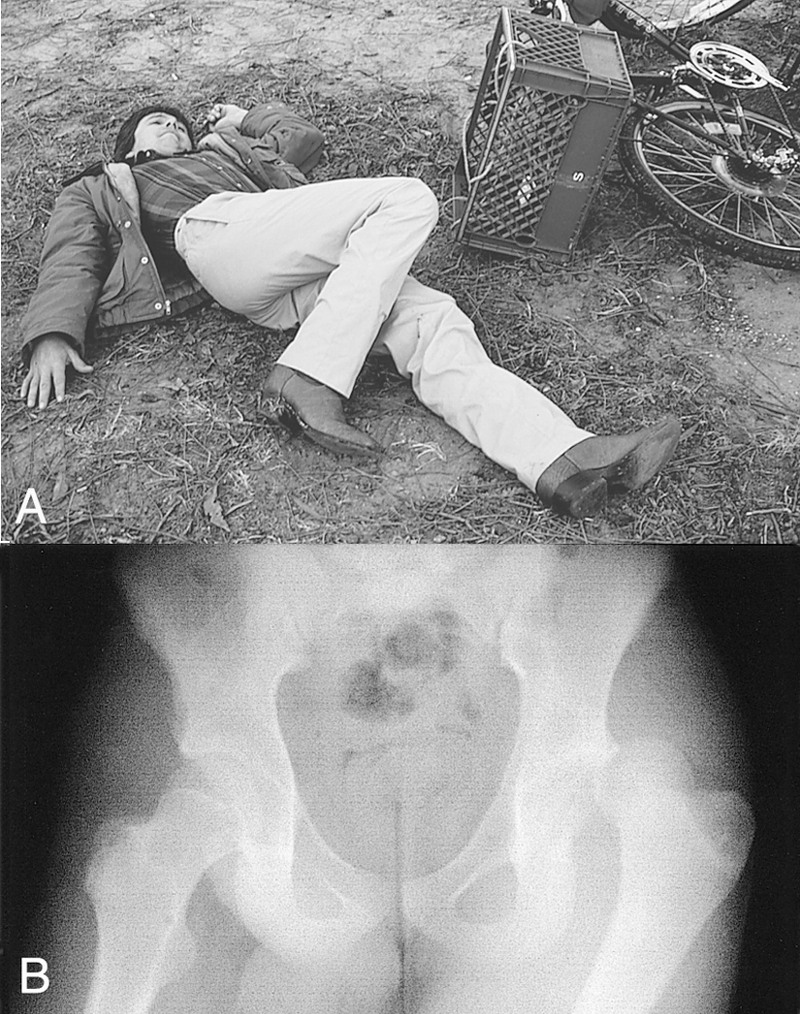
Figure 6A, Clinical appearance of a posterior dislocation of the right hip. B, AP radiograph of a posteriorly dislocated hip.
(Figure 6A is reproduced from Heckman JD (ed): Emergency Care and Transportation of the Sick and Injured, ed 4. Park Ridge, IL, American Academy of Orthopaedic Surgeons, 1987, p 208.)
). Radiographs may identify an acetabular fracture as well. Incongruence of the joint on radiographs following reduction suggests the interposition of fragments of bone or soft tissue, and CT evaluation is then needed.
Hip dislocation is an emergency; the longer the hip is out of place, the greater the risk to the blood vessels and the greater the risk of osteonecrosis. The damage from osteonecrosis results from a failure of bone remodeling and thus does not appear immediately. Even though hip dislocations require urgent treatment, attention to the trauma ABCs takes precedence. Many, if not all, hip dislocations occur in context of high-energy trauma; therefore, initial management must be directed toward life-saving measures.
Hip reduction requires in-line traction. Since the joint is inherently stable, it may be difficult to move the femoral head back in place; therefore, surgical reduction may be needed. Fortunately, the inherent stability provided by the bone anatomy results in a low recurrence rate.
Tendon Injuries
Direct, penetrating trauma from sharp objects can lacerate tendons.10,11 Lacerations commonly occur in the hand and foot, where the tendons lie near the surface of the skin. Tendons are also subject to rupture. The typical mechanism of injury in a tendon rupture is an eccentric contraction of the musculotendinous unit—that is, a contraction of the muscle as it is pulled in the opposite direction by an external force. An eccentric contraction of the quadriceps occurs, for example, when landing from a jump; the force of landing tends to flex the knee, and the muscle tightens in an attempt to decelerate that motion. Rupture of the quadriceps tendon will occur when the tensile forces within the tendon exceed its strength.
Flexor tendon lacerations in the hand will threaten essential features, such as power and precision grasp. Without intact flexor tendons, joints cannot be moved to place the hand, wrist, or fingers in the proper position for use. In contrast to lacerations, ruptures tend to occur in tendons that move the large joints of the lower extremity. The quadriceps tendon, the patellar tendon, and the Achilles tendon are all subject to rupture, especially in middle-aged individuals who participate in recreational sports. In some cases, a prodrome of pain and inflammation of the tendon precedes a rupture.
Lacerations and ruptures can result in either partial or complete disruption of the tendon. Lacerations tend to transect the tendon perpendicular to its long axis and leave two relatively clean edges for repair. The lacerating object can also cut nearby structures, such as nerves or blood vessels. Ruptures usually damage a segment of tendon adjacent to the bony insertion, although occasionally a piece of bone is avulsed. After rupture, the ends of the tendon are ragged and disorganized, giving them a “mop-end” appearance. With rupture, injury to surrounding nerves and blood vessels is rare.
The diagnosis of a tendon injury is not always obvious. When a laceration occurs, the depth and path of the penetrating object cannot always be surmised from the skin wound. Also, a partial laceration (or a complete injury to a tendon whose function can be subsumed by another—the superficial flexor of the finger, for example) may not produce deficits that are immediately obvious to the patient. A tendon rupture will usually produce enough pain that the patient will understand that he or she has been injured; however, the patient may not realize that a rupture has occurred if there are no apparent functional deficits. For example, a rupture of the Achilles tendon prevents powerful plantar flexion of the ankle, but some flexion is possible by action of the flexor digitorum longus.
Treatment of ruptured tendons focuses on positioning the torn ends to allow healing, which often requires surgery. However, in some cases surgery is not needed because appropriate positioning of the extremity may reapproximate the tendon ends well enough to allow healing. For example, plantar flexion of the ankle (and casting in that position) will bring the edges of the Achilles tendon close enough to allow healing. Even with surgical repair, suturing is needed only to bring the edges together because the ultimate tensile strength comes from healing.
Laceration of the flexor tendons of the hand represents a therapeutic challenge because these tendons pass through sheaths and pulleys to work effectively. Thus, the challenge is not only to get the tendon to heal but also to ensure that it is neither too bulky nor too sticky, lest it not slide within its soft-tissue sleeve. Bulk is minimized with the use of small sutures and meticulous surgical technique. Prevention of adhesion is attempted by a postoperative protocol that allows early motion, which itself can be a source of problems—not only because of the obvious risk of rupture from motion that is too vigorous but also because some of the healing comes from the surrounding sheath. Even in the best of cases, some loss of power and excursion of the tendon often results from these injuries.
Tendons may also rupture in a setting of chronic attrition, as commonly occurs with rheumatoid arthritis. With these ruptures, extensive degeneration may preclude repair, making a tendon graft or transfer necessary. Additionally, chronic tendon ruptures may be associated with deformation of the joint as well; thus, fusion may be required. For example, a chronic rupture of the posterior tibial tendon may produce a loss of the arch of the foot. Over time, this collapse changes the shape of the joint such that fusion, not tendon repair, is needed to restore normal geometry.
Skin Injuries
Approximately 45,000 burns severe enough to require hospitalization occur annually in the United States.12 Thermal burns resulting from contact with fire or hot objects are the most common; chemical burns and burns from ionizing radiation occur much less frequently. An electrical burn is essentially a thermal burn from the heat generated by current conducting through the body. These burns are especially harmful to the nerves because higher electrical resistance in other soft tissues promotes travel of the current within the neural tissue. Nevertheless, the deep soft tissue, such as muscle, can be injured by electrical burns because the skin has high resistance to conducting electricity and essentially traps the heat in the body.
Burns are classified by the depth of injury (Fig. 7
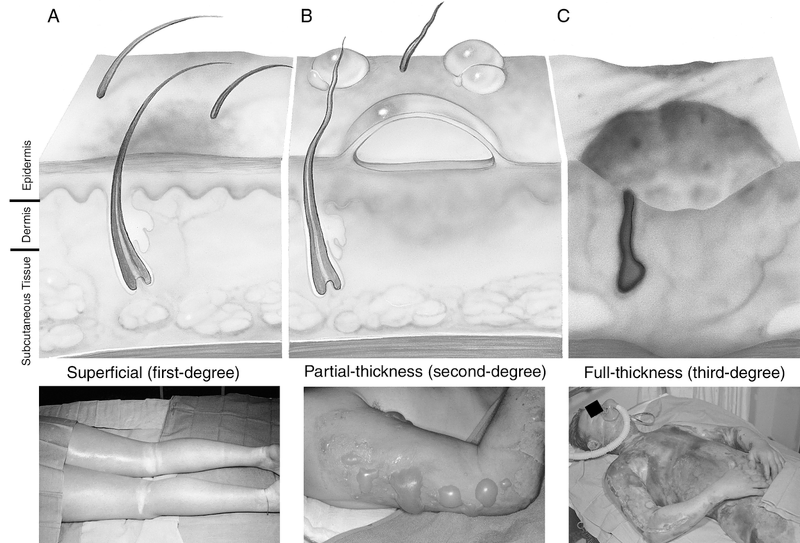
Figure 7 Classification of burns. A, Superficial or first-degree burns involve only the epidermis. The skin turns red but does not blister or actually burn through. B, Partial-thickness or second-degree burns involve some of the dermis, but they do not destroy the entire thickness of the skin. The skin is mottled, white to red, and is often blistered. C, Full-thickness or third-degree burns extend through all layers of the skin and may involve subcutaneous tissue and muscle. The skin is dry, leathery, and often either white or charred.
(Reproduced with permission from Browner BD, Pollak AN, Gupton CL (eds): American Academy of Orthopaedic SurgeonsEmergency: Care and Transportation of the Sick and Injured, ed 8. Sudbury, MA, Jones and Bartlett Publishers, 2002, p 576.)
). First-degree (superficial) burns involve the epidermis only. Patients with first-degree burns present with pain, edema, and erythema of the skin. Second-degree (partial-thickness) burns extend down to the dermis. The hallmark of this injury is painful blistering of the skin. Third-degree (full-thickness) burns appear waxy and dry. Full-thickness burns can also penetrate deep into muscle and bone. There is often charring of the involved tissue, and the associated nerve death results in injuries that are not particularly painful. Full-thickness injuries require vigilant and aggressive management, including multiple surgical débridements and tissue coverage procedures.
A large percentage of all burns involve the hand.13 The thin skin on the back of the hand is more susceptible to injury than the thicker skin on the palmar surface. Full-thickness burns to the dorsal skin can result in contractures that render the hand useless. With extensive burns, the hand assumes a “clawed” position. Once these contractures occur, they are difficult to correct; thus, prevention is paramount to preserving the function of the burned hand. Nonadherent dressings with topical antibiotic cream should be applied, and the hand should be splinted. Splinting the wrist in extension with the fingers slightly flexed allows the hand to remain functional, even if the joints eventually become stiff in that position. The hand must be kept elevated to overcome the significant edema that develops in burned tissue; the dressings must also be changed frequently to reduce the risk of infection. Range-of-motion exercises should begin early in the course of treatment to prevent joint contractures.
Burns can cause circulatory problems. In the extremity, a circumferential burn can create a constricting band of tissue (eschar) that impairs arterial blood flow and prevents the drainage of edema fluid. A circumferential eschar must be released surgically to eliminate this restriction to circulation. Full-thickness burns may cause the underlying muscles to swell within their fascial compartments. In severe cases, the swelling greatly increases the interstitial pressure and compromises blood flow to the muscle, creating a compartment syndrome that must be released surgically.
Muscle Injuries
Myositis ossificans is the abnormal production of bone within muscle.14Heterotopic ossification refers to the formation of bone in any nonosseous tissue. Although the exact etiology is unknown, both conditions can develop as a result of trauma or as a secondary manifestation of a systemic disease or a genetic disorder. A deep contusion of the quadriceps muscle, fracture of the leg or arm, or dislocation of the elbow is associated with heterotopic bone formation. Myositis ossificans is characterized by the formation of bone between muscle fibers. The patient often reports pain with motion of the involved muscle. Tenderness to palpation and swelling are noted on physical examination. A mass may become palpable as bone formation continues over time.
Heterotopic ossification arises from the proliferation of precursor cells and their maturation into osteoblasts. The cellular mechanisms that effect this transformation have not been identified, but the observation that heterotopic ossification at times develops in the extremities of patients with closed head injuries implicates a circulating mediator. Heterotopic ossification is also observed in patients with pelvic and elbow fractures, perhaps as a result of excessive bone healing.
Microscopically, heterotopic ossification and myositis ossificans are similar. Three distinct zones are seen. Each zone appears to represent a specific stage in the process of the disease. The central zone consists of mitotically active, undifferentiated mesenchymal cells. This is surrounded by a layer of osteoblasts within organic bone matrix (osteoid) and cartilage. The outer zone contains mature, calcified cancellous bone.
The formation of heterotopic ossification and myositis ossificans may be prevented by oral administration of bisphosphonates or nonsteroidal anti-inflammatory drugs. Radiation is another method used to prevent ectopic bone formation after fractures, but it may impede healing. All methods must be initiated soon after the injury to be effective.
Key Terms
Allograft Biologic tissue from a cadaver that is used to surgically replace damaged tissue
Autograft Biologic tissue from the patient’s own body that is used to surgically replace damaged tissue
Avulsion fracture A fracture that occurs when a ligament or tendon pulls off a sliver of the bone
Dislocation Complete displacement of a bone from its normal position in the joint, resulting in a complete loss of contact between articular surfaces
First-degree burns Superficial burns that involve the epidermis only; characterized by pain, edema, and erythema of the skin
Heterotopic ossification The formation of bone in any nonosseous tissue
Hill-Sachs lesion The indentation of the posterolateral humeral head that is formed when it collides with the front of the glenoid in an anterior shoulder dislocation
Myositis ossificans Abnormal production of bone within muscle
Second-degree burns Partial-thickness burns that extend down to the dermis; characterized by painful blistering of the skin
Sprain The injury that occurs when a tensile (stretching) force elongates a ligament beyond its elastic limit
Subluxation Partial or incomplete dissociation of joint surfaces
Third-degree burns Full-thickness burns that can penetrate deep into muscle and bone; often characterized by charring of the involved tissue and associated nerve death
References
1. Clanton TO: Athletic injuries to the soft tissues of the foot and ankle, in Coughlin MJ, Mann RA (eds): Surgery of the Foot and Ankle, ed 7. St. Louis, MO, Mosby, 1999;vol 2:1090-1209.
2. Toolan BC, Zapson DS: Ankle, in Spivak JM, Di Cesare PE, Feldman DS, Koval KJ, Rokito AS, Zuckerman JD (eds): Orthopaedics: A Study Guide. New York, NY, McGraw-Hill Health Professions Division, 1999;pp 633-636.
3. Praemer A, Furner S, Rice DP: (eds): Musculoskeletal Conditions in the United States, ed 2. Rosemont, IL, American Academy of Orthopaedic Surgeons, 1999;p 9.
4. Neer CS II, Welsh RP: The shoulder in sports. Orthop Clin North Am 1977;8:583-591.
5. Rowe CR: Prognosis in dislocations of the shoulder. J Bone Joint Surg Am 1956;38:957-977.
6. Lintner SA, Speer KP: Traumatic anterior glenohumeral instability: The role of arthroscopy.J Am Acad Orthop Surg 1997;5:233-239.
7. Hintermann B, Gachter A: Arthroscopic findings after shoulder dislocation. Am J Sports Med 1995;23:545-551.
8. Simonet WT, Cofield RH: Prognosis in anterior shoulder dislocation. Am J Sports Med 1984;12:19-24.
9. Hovelius L: Anterior dislocation of the shoulder in teen-agers and young adults: Five-year prognosis. J Bone Joint Surg Am 1987;69:393-399.
10. Strickland JW: Flexor tendons: Acute injuries, in Green DP, Hotchkiss RN, Pederson WC (eds): Green’s Operative Hand Surgery, ed 4. New York, NY, Churchill Livingstone, 1999;vol 2:1851-1897.
11. Coughlin MJ: Disorders of tendons, in Coughlin MJ, Mann RA (eds): Surgery of the Foot and Ankle, ed 7. St. Louis, MO, Mosby, 1999;vol 2:786-861.
12. American Burn Association: Burn Incidence and Treatment in the US: 2000 Fact Sheet. Available at: http://www.ameriburn.org/pub/Burn%20Incidence%20Fact%20Sheet.htm. Accessed October 30, 2002.
13. Achauer BM: The burned hand, in Green DP, Hotchkiss, RN, Pederson WC (eds): Green’s Operative Hand Surgery, ed 4. New York, NY, Churchill Livingstone, 1999;vol 2:2045-2060.
14. Albright JP: Musculotendinous problems about the knee, in Evarts CM (ed): Surgery of the Musculoskeletal System, ed 2. New York, NY, Churchill Livingstone, 1990;vol 4:3499-3537.
