

Older adults make up the most rapidly growing segment of the population in the United States. Although there is no clear definition for the term elderly, 65 years and older has generally been used to define this segment of the population, in large part because this is the traditional age of retirement and Medicare eligibility. The first baby boomers (those born in the population surge immediately following World War II) will be age 65 years and older in 2010; by 2030 this group is expected to grow from 13% to 20% of the US population.1 Because older people experience relatively more disease and disability, the growth of this population segment is expected to have a significant and growing impact on health care delivery and financing systems in the future.1 Therefore, a working knowledge of expected age-related physiologic changes and familiarity with common geriatric conditions is required of all physicians.2 This is particularly true in the practice of musculoskeletal medicine because the incidence of degenerative disorders of the skeleton increases with age.3
Functional limitations occur more commonly with advanced age. While only one out of ten adults aged 65 to 69 years report limitations in daily activities, more than half of those 85 years and older have functional limitations.1 These limitations are frequently related, at least in part, to musculoskeletal conditions. Osteoarthritis and osteoporosis are common examples of age-related musculoskeletal disorders, but other syndromes that affect older adults, including nutritional problems, polypharmacy, gait instability and falling, dementia, and elder abuse and neglect, can present as problems of the bones and joints. Arthritis, the most prevalent health condition among older adults, is a major source of functional impairment.4 Osteoporosis and disorders of mobility also challenge the elderly. It is hoped that advances in health care will help meet that challenge.
Among these advances is the establishment of Acute Care of the Elderly units in hospitals specially designed for the frail elderly. These multidisciplinary care teams tailor their processes to avoid the complications and deconditioning that so often leads to nursing home placement.1 Comprehensive programs of integrated outpatient and inpatient services for the elderly, who would otherwise qualify for nursing home placement, have also been piloted as Programs for All Inclusive Care of the Elderly.1 Another advance in health care for the elderly involves advocating the use of hip protectors in individuals at high risk for falls, such as nursing home residents. These undergarments add special padding over the trochanteric area and may reduce the rates of hip fracture in individuals who are wearing them when they fall.5 Further development is underway to make these undergarments easier to use in order to increase compliance.
Age-Related Changes
Physiologic Changes
Physiologic Changes
The response to the physiologic stress of severe illness or injury, changes in temperature, electrolyte and water imbalances, and other factors is more sluggish as people age.1 Physicians must recognize these physiologic limitations and the risk for a cascade of decline during illness in which one illness triggers a series of other problems with resulting loss of functional ability.6 For example, pneumonia may keep a patient in bed, and the extended bed rest may lead to muscle atrophy, which may never be restored.
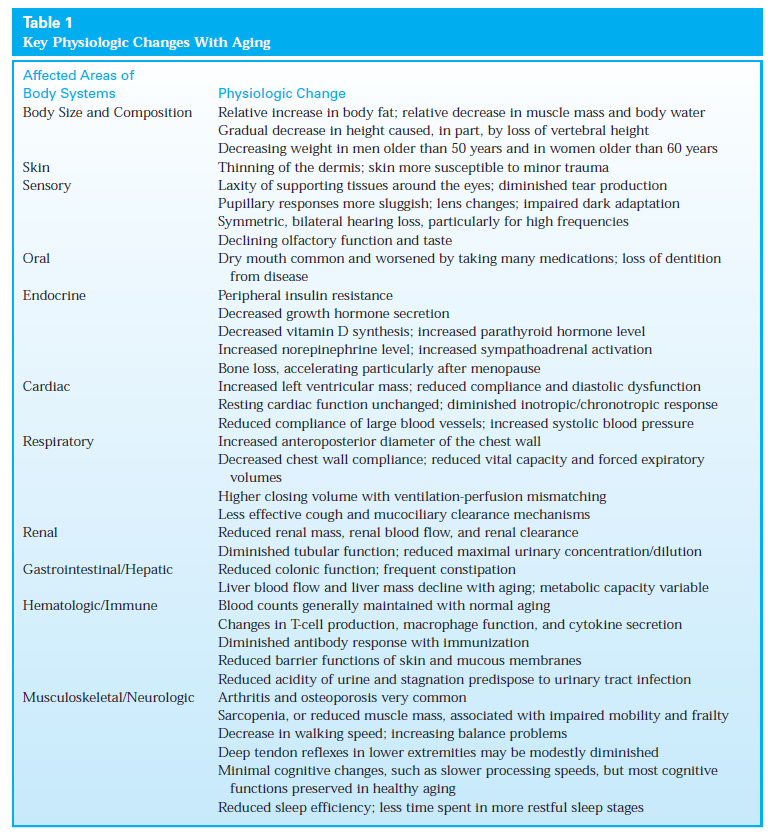
lists selected key physiologic changes that occur with aging.1 Of specific importance to surgical patients, wound healing is impaired by age-related reductions in the blood flow to the skin and the effectiveness of immune responses. Incontinence can lead to maceration of wet skin, and pressure and shear forces are common during periods of bed rest, thereby increasing the risk for skin breakdown. Poor nutrition, common among older persons who are ill, also impairs wound healing.
Pharmacologic Changes
Numerous pharmacokinetic and pharmacodynamic changes of aging have direct clinical relevance.7 In the absence of disease, normal aging does not significantly reduce drug absorption. In contrast, drug distribution and metabolism are significantly altered by the changing body composition that occurs with aging. Because total body water is relatively reduced and the fat compartment is relatively increased with age, lower doses of water-soluble drugs must be used to achieve the desired concentration. Fat-soluble medications remain in the body for relatively prolonged periods. When the serum albumin level is low, as it frequently is in older adults who are ill, the binding of protein-bound drugs decreases. This leads to increased concentration of the active unbound drug for a given dose. Therefore, measuring serum albumin levels in older patients can be extremely important for proper drug dosing.
Metabolic liver capacity varies among aging individuals. In general, oxidation, reduction, and hydrolysis of drugs declines as a result of decreasing hepatic blood flow. Primary conjugation is relatively less impacted by aging. Many older adults take numerous medications that use the cytochrome P450 system for breakdown, and drug interactions may inhibit the necessary metabolism of some agents.
Evaluating the Geriatric Patient
History and Physical Examination
The history and physical examination of older patients should be modified to account for their age.8-10 In healthy older adults, the usual history and physical examination routines may not need to be altered, but in frail older adults extra time and assistance may be required in reaching the examination room, gowning, and moving about on the examination table. Medical histories of older persons tend to be more complex because of many medical conditions for which they take multiple medications.4 History taking can be challenging with hearing-impaired patients but is greatly facilitated by the use of a voice amplifier. Communications should not be directed primarily to an accompanying family member or caregiver during an office visit.11 However, supplemental information from family members or other caregivers is critically important when the patient is cognitively impaired.
Numerous age-related changes are typically found on physical examination.8 For example, kyphosis resulting from osteoporosis of the spine is common and may be associated with atelectatic basilar lung crackles from impaired chest wall expansion. In severe cases of osteoporosis, the lower ribs may rest on the pelvic brim. The combination of osteoporosis and increasing laxity of abdominal musculature tends to result in flexedposture and a protuberant abdomen. Most neurologic functions remain essentially unchanged with healthy aging. However, deep tendon reflexes in the lower extremities may be more difficult to elicit in healthy older adults and gait speed slows somewhat.
Screening for Functional Impairment
Along with a thorough medical history and physical examination, assessment of the older patient should include screening for functional impairments typical of older adults.12Activities of daily living (ADLs) include mobility, bathing, dressing, grooming, eating, and toileting. Instrumentalactivities of daily living (IADLs) include activities such as getting out of the house, paying bills, answering the telephone, and preparing meals. Part of the screening should include determining whether these tasks are performed independently, with assistance, or not at all and identifying which factors contribute to any functional impairments. Special attention should be paid to review of all medication use, including prescription and over-the-counter medications and any vitamin and herbal supplements. Additional key elements of the screening assessment include evaluation for signs and symptoms of depression, confusion, weight loss, incontinence, instability and falling, sleep disturbances, constipation, dysphagia, dizziness, and sensory impairments.1 Multidisciplinary care teams, including social workers, pharmacists, and pharmacy technicians, can contribute enormously to this assessment.1,13
Nutrition
Poor nutrition in this patient population usually arises from combinations of age-related physiologic changes, disease states or medications that impair appetite, deteriorating oral and dental health, functional impairments related to meal preparation and eating, social isolation, and economic hardship. Poor nutrition is often not identified until an advanced stage, at which time it can severely decrease the body’s ability to withstand infection, heal fractures or wounds, and recover mobility and functioning after an illness. Older patients who are admitted to the hospital in a compromised nutritional state stay longer and have higher complications rates compared with well-nourished patients; additionally, malnourished older adults are at increased risk for morbidity and death in direct proportion to the severity of their nutritional deficits.13
Given the difficulties of reversing established nutritional deficits in the elderly, greater efforts should be made to prevent poor nutrition. The DETERMINE (an acronym for the following possible problems: disease, eating poorly, tooth loss/mouth pain, economic hardship, reduced social contact, multiple medications, involuntary weight loss/gain, needs assistance in self-care, elder years greater than 80) checklist, shown in Table 2,
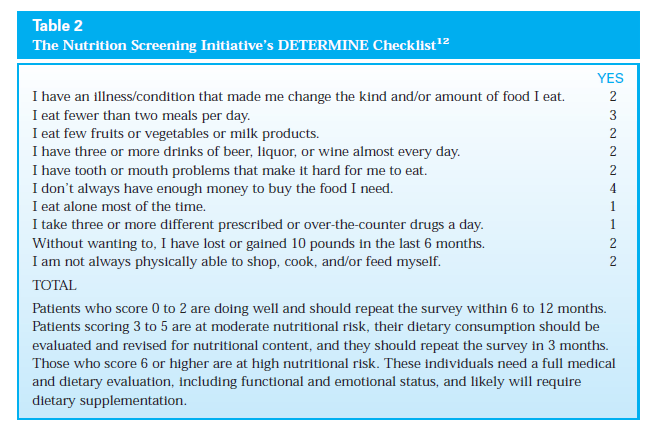
was developed by the Nutrition Screening Initiative as a screening tool for nutritional risk.13
Polypharmacy
Although the elderly currently constitute 12% of the US population, they receive 32% of all medication prescriptions.14Community-dwelling older adults use, on average, five prescription and over-the-counter medications daily.15 Recent pharmaceutical advances have led to new and better-tolerated products for symptom relief and disease modification or prevention. In the elderly, however, medication use must be carefully scrutinized because age-related physiologic and pharmacologic changes increase susceptibility to adverse effects, as well as drug-drug and drug-disease interactions.1
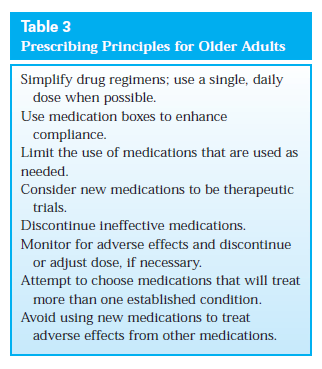
The term polypharmacy means that many drugs are used, but the implication is that more medications are in use than is clinically warranted. Use of five to seven or more drugs per day is associated with adverse drug reactions, decreased medication compliance, poorer quality of life, a high rate of symptomatic adverse reactions, and potentially unnecessary drug expense.15 Experts have identified medications that are generally inappropriate in most circumstances for use in older adults because of their adverse effects. General prescribing principles for older adults are shown in Table 3.
Gait Instability and Falling
Each year approximately 35% to 40% of community-dwelling adults 65 years and older experience a fall. Rates are higher with increasing age and among nursing home residents.1 Falling is associated with considerable mortality, morbidity, reduced functioning, and premature nursing home admission. There are many risk factors for falling, some of which are at least partially modifiable.1 Such risks include intrinsic factors, such as lower extremity weakness, disturbed balance, cognitive impairment, and visual deficits. Extrinsic risk factors include the use of sedatives and environmental hazards.1
Fall prevention combines medical management with preventive measures in the environment. Table 4
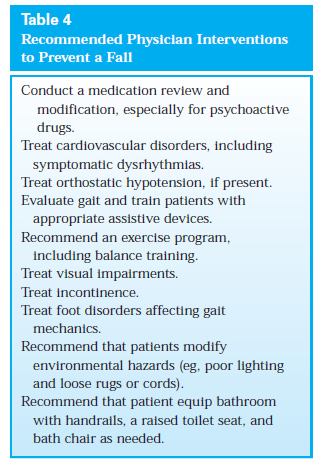
outlines the appropriate steps to prevent recurrent falls, many of which can be instituted before the first fall. Patients who have experienced a fall-related fracture should be counseled about preventing subsequent falls. Restraints do not reduce the rate of fall-related injuries among nursing home residents and can lead to other complications, including skin breakdown, agitation, aspiration, injury, and even death by strangulation. Restraint use is thus highly discouraged and tightly regulated in these institutional settings.16
Elder Neglect and Abuse
Neglect and abuse of older adults is an increasingly recognized public health problem in the United States. Nearly one in 25 people older than 65 years are victims of elder neglect and abuse each year.1 The most common perpetrators are spouses or adult children, but they may also be other family members or paid or informal caregivers.
Abuse can occur as physical or psychological mistreatment, neglect, or financial exploitation of the elderly.17 Physical abuse includes striking, shoving, restraining, and improper feeding, the results of which can be manifest as musculoskeletal injuries. Psychological abuse includes issuing threats (eg, threat of institutionalization), insults, harsh commands, or ignoring the older adult. Financial abuse is the exploitation or neglect of a person’s possessions or funds. Neglect centers on the failure to provide food, medicine, personal care, or other necessities.
Abuse in older adults can be difficult to detect. Many signs are subtle and include clinical conditions already common among geriatric patients, such as unintentional weight loss, injuries, isolation, and dehydration. If cognitive impairment is known or suspected, complaints of abuse may be dismissed as the result of paranoia and confusion. In addition, the social isolation of a frail elderly adult is often difficult to detect. It is important to note, however, that not all abuse is intentional. Caregivers for elderly persons with chronic medical, emotional, cognitive, or functional needs might not realize their behaviors constitute abuse. For example, a caregiver may restrain a demented older adult in a well-intentioned but misguided attempt to prevent wandering. Therefore, the well-being of caregivers should be assessed, and they should be encouraged to take advantage of available local resources, such as adult day care and respite programs.
Reporting suspected or confirmed abuse is mandatory in all states when the abuse occurs in an institution and in most states when it occurs in a home. All states have laws protecting and providing services for vulnerable, incapacitated, or disabled adults. Documentation is critical, and the medical record should contain a complete report of the actual or suspected abuse. If the victim is able to make decisions, he or she should help determine his or her own fate. If the victim does not have decision-making capacity, a guardian or objective conservator should guide decision making. Collaboration with health professionals from social work, psychiatry, nursing, and the legal field can provide a comprehensive approach to these complex situations.
Osteoarthritis
Osteoarthritis is the most common degenerative joint disease and a leading cause of disability in persons older than 65 years.1 Inthe elderly, osteoarthritis is characterized by constant joint pain that is usually accompanied by limited range of motion and joint deformity.
Comprehensive management of osteoarthritis involves cognitive, physical, pharmaceutical, and surgical measures. The goals of treatment are to minimize pain and to maximize function. The patient’s functional deficits and preferences for treatment must be considered. Asymptomatic osteoarthritis, diagnosed by radiographic findings, does not require treatment.
Nonpharmacologic measures are important components of therapy and should be included in all management plans. Cognitive or behavioral therapy directed toward enhancing coping skills or increasing confidence in performing activities safely has been shown to improve function. A regimen of range-of-motion, strengthening, and endurance exercises is useful for pain relief and restoration of function.18 Assistive aids (eg, braces, canes, and devices to increase hand function) may be indicated to restore function and improve independence. Weight loss is important for patients who are obese, and even modest weight loss can provide symptomatic relief.
Pharmacologic therapy should be used when nonpharmacologic measures provide insufficient pain relief and restoration of function. In the elderly, the most commonly used medications are acetaminophen and nonsteroidal anti-inflammatory drugs. Acetaminophen is the first choice for pain relief because it is much safer than nonsteroidal anti-inflammatory use and equally effective.18 Total joint arthroplasty is highly effective for treating osteoarthritis of the hip and knee, and age alone is not a contraindication. However, treatment goals (pain relief and improved physical function) and the needs and rehabilitative capabilities of the patient must be clearly defined.19
Osteoporosis
Osteoporosis is a systemic skeletal disease characterized by low bone mineral density, bone fragility, and increased risk of fracture. The incidence of osteoporosis increases with age and most frequently affects postmenopausal women. The primary clinical manifestation of osteoporosis is fracture, which can also be the first indicator of the disease. Typical fracture sites include the vertebrae, hip, proximal humerus, wrist, and ribs. Insufficiency fractures can occur in the pelvis and the tibial plateau.1
The diagnosis of osteoporosis is often suggested by the medical history and physical examination. Patients with a history of fractures at the hip, wrist, or vertebral bodies; those with kyphosis on examination; and those in whom evidence of possible osteopenia is detected on radiographs should be presumed to have a metabolic bone disease and should be evaluated further. The World Health Organization has established diagnostic criteria for osteoporosis based on the measurement of bone mass and the optimal peak bone mass for adults. A T-score of –2.5 or lower on bone density testing confirms the presence of osteoporosis. Sequential bone mineral density tests may be helpful in assessing the rate of bone loss as well as a patient’s response to pharmacologic therapy. Available therapies include calcium and hormone replacement therapy; bisphosphonates; and the calcitonin analogue, miacalcin, which is delivered as a nasal spray. Selective estrogen receptor modulators may also have a role in preventive therapy in women in whom hormone replacement therapy would not be advisable.
Key Terms
Activities of daily living (ADLs) The functions that are fundamental to maintaining independence and mobility, including ambulation, bathing, dressing, grooming, eating, and toileting; the assessment of the ability to perform these functions helps screen for functional impairments and other common syndromes that can affect older adults
Community-dwelling older adults Older adults who live independently within their communities
Instrumental activities of daily living (IADLs) The functionsthat require a higher level of function than ADLs, such as getting out of the house, paying bills, answering the telephone, and preparing meals; the assessment of the ability to perform these functions helps screen for functional impairments and other common syndromes that can affect older adults
Polypharmacy Literally “many drugs,” but common usage of the term carries the implication that more medications are in use than is clinically warranted
References
1. Cobbs EL, Duthie EH, Murphy JB: (eds): Geriatrics Review Syllabus: A Core Curriculum in Geriatric Medicine, ed 4. Dubuque, IA, Kendall/Hunt Publishing Company, 1999;
2. Cassel CK: Why physicians need to know more about aging. Hosp Pract 2000;35:11-15.
3. Goldstein J, Zuckerman JD: Selected orthopedic problems in the elderly. Rheum Dis Clin North Am 2000;26:593-616.
4. Fried LP: Epidemiology of aging. Epidemiol Rev 2000;22:95-106.
5. Kannus P, Parkkari J, Niemi S, et al: Prevention of hip fracture in elderly people with use of a hip protector. N Engl J Med 2000;343:1506-1513.
6. Creditor MC: Hazards of hospitalization of the elderly. Ann Intern Med 1993;118:219-223.
7. Ugalino JA: Understanding the pharmacology of aging, in Dreger D, Krumm B (eds): Hospital Physician Geriatric Medicine Board Review Manual. Wayne, PA, Turner White Communications, 2001, pp 1-12.
8. Schneiderman H: Physical examination of the aged patient. Conn Med 1993;57:317-324.
9. Fields SD: History-taking in the elderly: Obtaining useful information. Geriatrics 1991;46:26-35.
10. Fields SD: Special considerations in the physical exam of older patients. Geriatrics 1991;46:39-44.
11. Adelman RD, Greene MG, Ory MG: Communication between older patients and their physicians. Clin Geriatr Med 2000;16:1-24.
12. Lachs MS, Feinstein AR, Cooney LM Jr., et al: A simple procedure for general screening for functional disability in elderly patients. Ann Intern Med 1990;112:699-706.
13. The Nutrition Screening Initiative: Incorporating Nutrition Screening and Interventions into Medical Practice. Washington, DC, The Nutrition Screening Initiative, 1994, p 73.
14. Stuck AE, Beers MH, Steiner A, et al: Inappropriate medication use in community-residing older persons. Arch Intern Med 1994;154:2195-2200.
15. Prince BS, Goetz CM, Rihn TL, et al: Drug-related emergency department visits and hospital admissions. Am J Hosp Pharm 1992;49:1696-1700.
16. Guttman R, Altman RD, Karlan MS: Report of the Council on Scientific Affairs: Use of restraints for patients in nursing homes: Council on Scientific Affairs, American Medical Association. Arch Fam Med 1999;8:101-105.
17. Swagerty DL Jr., Takahashi PY, Evans JM: Elder mistreatment. Am Fam Physician 1999;59:2804-2808.
18. American College of Rheumatology Subcommittee on Osteoarthritis Guidelines: Recommendations for the medical management of osteoarthritis of the hip and knee: 2000 update. Arthritis Rheum 2000;43:1905-1915.
19. Bagge E, Brooks P: Osteoarthritis in older patients: Optimum treatment. Drugs Aging 1995;7:176-183.
