

This chapter provides a clinically based introduction to the pharmacologic therapies most commonly used in musculoskeletal medicine. The types of medicine discussed include anti-inflammatory pain medications, viscosupplements for arthritis, disease-modifying drugs for rheumatoid arthritis, medications for increasing bone density and preventing blood clots, and antibiotics.
Analgesia
The appropriate and skillful management of pain is one of the most important interventions physicians can perform. Although physicians should rarely want to obliterate pain, as pain itself is a persuasive indication to change behavior, there is convincing evidence that pain is inadequately treated by physicians of all disciplines.1 Although most disciplines within medicine address analgesia (the relief of pain), orthopaedic surgeons are required to treat pain more frequently than most doctors because, for a majority of musculoskeletal conditions, pain is the chief complaint. Many musculoskeletal complaints,however, can be treated successfully with one or more pharmacologic modalities without the need for surgery. Given the large assortment of analgesics in numerous classes that are available and the great variation of patient responses to pain and pain therapy, providing effective analgesia is often challenging. But if time is taken to learn about the broad spectrum of options and to individually tailor management to each patient, effective pain control can be achieved in nearly all cases. Acute, severe pain—such as postoperative pain—may be effectively managed with opioids (ie, narcotic analgesics). For less severe pain, the use of nonopioid analgesics, such as acetaminophen and tramadol, or nonsteroidal anti-inflammatory drugs (NSAIDs) may be indicated.
Opioids
The oldest class of medicines used to control postoperative pain is the opioids. Opioids are frequently used to provide postoperative analgesia and analgesia for painful emergency department procedures, such as fracture reduction.
Morphine was the first opioid analgesic used in medicine and remains the most commonly prescribed. It is the standard against which all other opioids are compared. Although a number of other opioids are commonly used today, the primary difference between these opioids and morphine is one of dose potency. In addition, patients may experience adverse effects from one opioid but not another. Among the more commonly used opioid analgesics are codeine, hydrocodone, oxycodone, meperidine, and fentanyl. Combination analgesics, which may include acetaminophen or an NSAID in addition to an opioid, also are available in a variety of generic and brand-name formulations.
Opioid analgesics can be delivered by several routes—orally, rectally, intramuscularly, or intravenously. Their pharmacokinetics vary by the route of administration. More recently, transcutaneous patches and sublingual “lollipops†have been made available. The latter is useful when a young child requires analgesia.
On-demand intramuscular opioid delivery (in which a patient must report pain and request medication) has been the traditional approach to postoperative pain control. More recently, however, patient-controlled analgesia (PCA) has become popular. It can deliver any of several intravenous or epidural opioids via a pump that is controlled by the patient. The pump can be regulated to minimize the likelihood of overdose or respiratory depression. More importantly, this method of management provides patients with a sense of control over their pain management. Allowing patients to provide themselves with appropriate doses of opioid analgesics when needed helps minimize anxiety and improves pain control. PCA is most appropriate for patients who are able to understand and use the device correctly.2 The very young, the very old, or those with difficulty comprehending or physically performing what is required of them cannot use PCA. Consultation with a pain management specialist is typically indicated for epidural PCA; for patients with complex, severe, or atypical pain patterns; and for patients in whom drug interactions are of particular concern.
Once severe postoperative pain has diminished (typically in 2 or 3 days) patients can be switched to orally administered opioids. Often, combinations of opioids and acetaminophen or an NSAID can be used for synergy. This permits the use of lower opioid doses. Patients sometimes will require parenteral dosing of opioids given on an as-needed basis to control “breakthrough†pain. If a patient is expected to have significant pain at a continuous level for several days, a longer-acting oral opioid can be administered to permit once- or twice-daily dosing. This may minimize the likelihood of analgesics reaching subtherapeutic concentrations as a result of missed or delayed doses and improve overall pain control.
The most severe potential adverse effect of opioids is respiratory depression, which is dose related. Other undesirable effects of these medications include nausea, urinary retention, pruritus, and constipation. When opioids are appropriately used for control of acute or postoperative pain, the likelihood of addiction is very low.3
Nonopioid Analgesics
Acetaminophen has been used for its analgesic properties for more than 100 years. It became a favored choice for reducing fever and pain in children in the 1980s when the use of aspirin was linked to the onset of Reye’s syndrome, an encephalitic disorder associated with seizures. While acetaminophen has analgesic and antipyretic properties, it has no proven anti-inflammatory effects and does not reduce platelet aggregation as do NSAIDs. It has a favorable safety profile and is a good first-line analgesic for mild to moderate pain. The mechanism by which it works as an analgesic is poorly understood; its antipyretic properties act directly on the hypothalamic heat-regulating center. Acetaminophen is metabolized by the liver. In therapeutic doses, serious adverse effects are rare; however, overdoses can cause permanent liver damage. Patients should be advised not to take additional acetaminophen if they are already taking a combination drug containing acetaminophen.
Tramadol is a synthetic opioid agonist. It also inhibits the re-uptake of norepinephrine and serotonin. Tramadol appears to have a lower propensity to cause physical dependence than opioids. Tramadol appears to effectively control pain resulting from postoperative surgical trauma and is roughly equivalent to acetaminophen-codeine combination agents. It also has been used for many chronic malignant and nonmalignant disease states. Tramadol can be administered concomitantly with other analgesics, particularly those with peripheral action. Drugs that depress central nervous system function may enhance the sedative effect of tramadol and should be combined with caution. Common dose-related adverse effects of tramadol include dizziness, nausea, vomiting, dry mouth, and/or drowsiness. Other adverse effects of tramadol are generally similar to those of opioids, although they are usually less severe and can include respiratory depression, dysphoria, and constipation. Tramadol should not be administered to patients receiving monoamine oxidase inhibitors or tricyclic antidepressant drugs.4
Nonsteroidal Anti-inflammatory Drugs
Salicylates were the first widely used class of NSAIDs. In 1763, Reverend Edmond Stone described the analgesic and anti-inflammatory effects of willow bark, which had been used for centuries to relieve pain. In 1860, salicylic acid was synthesized from this natural product. Nearly 40 years later, the compound acetylsalicylic acid (aspirin) was produced. Since then, aspirin has been a mainstay in the treatment of the arthritides, other inflammatory conditions, and numerous noninflammatory but painful conditions. Despite its long history, new therapeutic uses for acetylsalicylic acid continue to be found, including the prevention and treatment of myocardial infarction and noncoronary vascular disease and the prevention of thromboembolic disease in high-risk surgical patients.
Dozens of nonaspirin NSAIDs are commercially available, and NSAIDs are thought to be the most widely prescribed class of drugs in the world (Table 1).
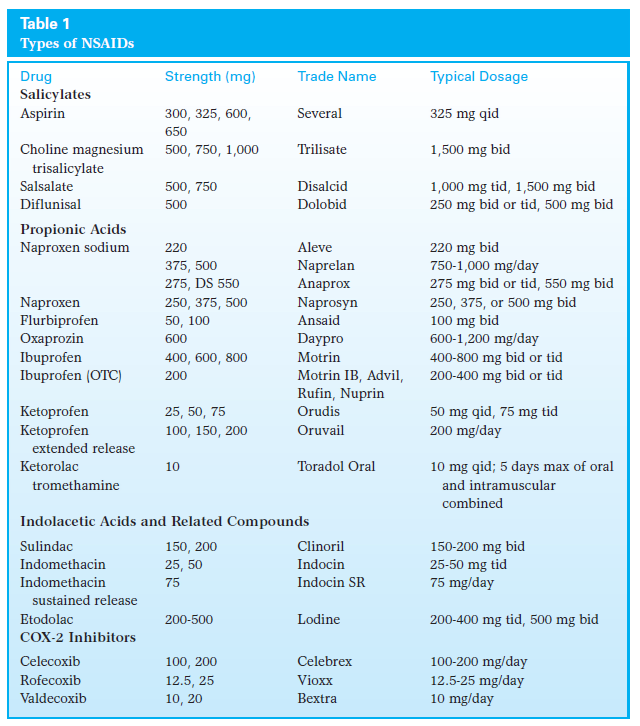
In addition to providing analgesia, NSAIDs have both antipyretic and anti-inflammatory effects. All medications in this class inhibit prostaglandin formation by blocking cyclooxygenase. There are two forms of the cyclooxygenase (COX) enzyme, COX-1 and COX-2. COX-1 is present in most bodily tissues (including platelets and gastrointestinal mucosal tissues) and serves as a “housekeeping†enzyme to form protective prostaglandins. COX-2, on the other hand, is not present in most tissues unless induced in response to inflammation. It is responsible for the formation of prostaglandins that contribute to pain and inflammation. Unselective cyclooxygenase inhibition (of both COX-1 and COX-2) is the mechanism of most older NSAIDs and is responsible both for the beneficial and most of the harmful effects of salicylates and other NSAIDs.5 COX-2–selective NSAIDs (including rofecoxib, valdecoxib, and celecoxib) irreversibly inhibit COX-2 in peripheral tissues and thereby interfere only with prostaglandin formation in inflamed joints and other body tissues.
Early studies have shown that COX-2 inhibitors are as effective as nonselective NSAIDs and have an improved safety profile because they seem to spare the COX-1 enzyme in the gastrointestinal tract. Specifically, the reported frequency of gastrointestinal ulcers caused by use of these medications has been similar to that of placebo in early studies.6,7 However, as with all new medications, caution is warranted until our experience with these medications grows and follow-up studies can be performed.
The most common severe adverse effect of salicylates and NSAIDs is gastrointestinal irritation, leading sometimes to ulceration and hemorrhage. Because some of the prescribers of these medications (orthopaedic surgeons, for example) do not themselves treat the medical complications that arise from the use of NSAIDs, they may have an overly optimistic perception of the safety profile of these drugs. It is estimated that the incidence of gastric or duodenal ulcers among users of nonselective NSAIDs is between 14.0% and 44.0% and that the risk for hospitalization from serious complications is between 0.2% and 4.0%. Because these drugs are so frequently prescribed, even infrequent complications can lead to significant morbidity and mortality.8
Nonselective NSAIDs also disrupt platelet function and hemostasis and thereby prolong bleeding time. This effect is sometimes used therapeutically for prophylaxis against thromboembolic disease. Other adverse effects include hypersensitivity reactions; nasal polyps; and renal, hepatic, and central nervous system toxicity. Hepatic and renal toxicity resulting from the use of these medications initially can be silent, and it is prudent to screen patients who are going to take NSAIDs for prolonged periods with regularly scheduled kidney and liver function tests. NSAIDs also can adversely affect blood pressure, sometimes through fluid retention, or can be a primary cause of hypertension because of adverse effects on the kidneys.9 COX-2 inhibitors do not offer increased protection against renal adverse effects. Some patients are at particular risk for NSAID-related complications and should therefore be observed closely while taking these medications. Well-defined risk factors include the following: being older than 65 years, a history of gastrointestinal symptoms with NSAID use, taking high doses of NSAIDs, and concomitant use of oral corticosteroids or oral anticoagulants.
Other Medications Used to Control Pain
In addition to pure analgesics or anti-inflammatories, a large number of medications are also used to control pain. These are generally used for atypical pain patterns, neuropathic pain, or painful refractory conditions, such as complex regional pain syndrome. These medications are most often prescribed by health care providers with a subspecialty interest in the management of chronic pain. Antidepressants—including tricyclics and monoamine oxidase inhibitors—are sometimes used and seem to have analgesic effects in addition to their function as antidepressants. Several anticonvulsants have also been found to be helpful in treating pain that is neurogenic in nature, presumably through a mechanism that is similar to their anticonvulsant properties. Anticonvulsants may be more effective for treating intermittent lancinating neuropathic dysesthesias than for continuous pain. Numerous anxiolytics are used alongside analgesics to alleviate the anxiety often associated with painful conditions or surgery.
Viscosupplementation
In osteoarthritic joints, the concentration of hyaluronic acid, the major component of synovial fluid, is decreased. This change may have a detrimental mechanical effect on the already weakened articular cartilage. Injected hyaluronic acid was first used as treatment for arthritic knees of racehorses in the 1970s, and studies examining its use in humans were conducted later that decade in Europe. In the United States, intra-articular hyaluronic acid products, sometimes called viscosupplements, have been used to treat pain associated with osteoarthritis of the knee for only a short time.
The mechanism of action of intra-articular viscosupplementation is not completely understood. A direct mechanical action was first postulated—hence the term viscosupplementation—but the observed benefits cannot be attributed solely to the mechanical effects of hyaluronic acid injections. In one study, patients with osteoarthritis of the knee who were treated with viscosupplements (high-molecular-weight sodium hyaluronate [hyalectin]) experienced decreased symptoms for 6 to 12 months.10 However, another study found the half-life of the injected hyaluronic acid molecule, which may have anti-inflammatory properties, to be only 20 hours in normal joints and less than 12 hours in inflamed joints.11 The overall role of this relatively expensive treatment in the routine management of knee arthritis is not clear at this time, and not every study has confirmed a beneficial effect of treatment.12,13 Adverse reactions from intra-articular hyaluronic acid injections are uncommon and generally of limited severity. However, an acute inflammatory reaction that mimics septic arthritis can occur in people who receive injections. Hyaluronic acid injections have not yet been approved by the US Food and Drug Administration (FDA) for use in joints other than the knee at this time.
Corticosteroid Injections
Corticosteroids have been used for decades to decrease inflammation in arthritic joints. Despite over 50 years of clinical use, the literature on intra-articular and periarticular corticosteroid injections is remarkably scant, and few studies are of high quality. Every diarthrodial joint, however, is a potential injection site for either diagnostic or therapeutic purposes. From a diagnostic standpoint, pain relief from an intra-articular injection—even if only temporary—strongly suggests that the painful pathology is intra-articular rather than peri- or extra-articular. The therapeutic effect of these injections is variable, depending on the joint, the etiology of disease, and associated rehabilitative interventions. Most corticosteroid injections are given in conjunction with short- and long-acting local anesthetics. These adjuvants provide immediate relief and minimize the burning sensation associated with pure corticosteroid injections. They also can inform the physician that the mixture was delivered to the correct location.
Among the large joints, arthritis develops most commonly in the knee. As a subcutaneous joint, the knee is also the most common joint to be treated with intra-articular injections. Most studies on the effect of intra-articular injections for the treatment of arthritis reveal short-term benefits in terms of decreased pain. Pain relief can last from days to months, and there is no reliable way to predict which patients will benefit most from this intervention.
Periarticular injections for the treatment of bursitis also are performed commonly. The subacromial bursa (above the rotator cuff), the greater trochanteric bursa at the hip, and the medial epicondyle of the elbow often are injected for symptomatic pain relief and for diagnostic purposes. These interventions should be combined with physical therapy or similar rehabilitative interventions to maximize their effects.
Tendon sheath and paratenon injections are performed most commonly in the hand and wrist. Such injections are widely considered risky when done in the analogous, weight-bearing tendons of the foot. Achilles tendon and anterior tibial tendon ruptures have been reported after corticosteroid injections to those structures.14 Apart from tendon rupture, the most worrisome complication of intra-articular and periarticular injections is infection. When careful aseptic technique is used, the risk of causing joint sepsis is very low, estimated to be 1 in 14,000 to 50,000.15Skin depigmentation in darkly pigmented patients and fat necrosis, especially in the heel, can occur as well. Although animal studies have raised questions about the possibility of injury to cartilage from intra-articular corticosteroids, there are no satisfactory data demonstrating this problem in humans. Although infections from single injections certainly occur, most complications result from frequent injections, technical errors, or errors in judgment. As with any medical or surgical procedure, the patient should always be advised about the risks prior to the intervention, and informed consent should always be obtained.
Corticosteroids are also used in the emergency setting to decrease the swelling associated with spinal cord trauma. If given within 8 hours of a spinal cord injury, high-dose intravenous steroids have been shown to help lessen the severity of injury. They are even more effective if given within 3 hours of injury. Even then, however, the benefit obtained is not universal, nor is it miraculous. A reasonable goal of treatment is an improvement in the sensory or motor function of one or two nerve root levels. Even injury to one nerve root level, however, can significantly impair function; therefore, these medications are an essential component in the treatment of acute spinal cord trauma.16
Management
Rheumatoid Arthritis
The management of patients with rheumatoid arthritis (RA) and other inflammatory arthritides is complex and changes frequently. Broadly speaking, the medications used to treat RA are divided into two classes, symptom-modifying antirheumatic drugs (SMARDs) and disease-modifying antirheumatic drugs (DMARDs). Which type of therapy is most appropriate is an individual decision, but most patients with RA take, or have taken, at least one medication from each class. Therapy for RA is the topic of literally thousands of peer-reviewed journal articles each year. This section will provide only a brief introduction to that ever-growing body of work.
SMARDs consist primarily of NSAIDs and oral steroids. This class of drugs is used to decrease pain and inflammation quickly and to suppress chronic inflammation. Oral corticosteroids decrease inflammation through a variety of pathways, including inhibiting prostaglandin and leukotriene production, opsonizing antigens, blocking cytokines, and impairing adhesion and migration of inflammatory cells through vascular endothelium. They have a host of adverse effects, including interference with insulin function and lipogenesis, which can result in hyperglycemia, centripetal fat deposition, and hyperlipidemia; impairment of bone metabolism and promotion of osteoporosis; edema; fluid retention; hypertension; and hypokalemia. Skin problems include poor wound healing from decreased collagen production and fragile capillaries, which causes easy bruising, acne, hirsuitism, and striae. Additional adverse effects can include cataracts, glaucoma, gastrointestinal ulcers with bleeding and perforation, pancreatitis, myopathies, osteonecrosis, and premature atherosclerosis. Finally, because oral corticosteroids blunt the immune response, patients taking these medications over the long term are more susceptible to bacterial and other opportunistic infections. Nonetheless, in many cases the cost-benefit ratio favors their use.
SMARDs, as the name implies, do not affect disease progression or avert the long-term destructive sequelae of RA. Because patients with extra-articular manifestations of RA have a life expectancy that is 10 to 15 years shorter than age-matched controls, the use of DMARDs is often indicated.17 DMARDs comprise a class of drugs that includes a number of agents with dissimilar mechanisms of action and includes many of the drugs formerly classified as “slow-acting,†“second-line,†or “remittive agents†for the treatment of RA. DMARDs work to blunt immune response and slow or halt the destructive effects of inflammatory arthritis. In the past, drugs now classified as DMARDs were typically thought of as fairly toxic. As a group, they vary greatly in their relative efficacy and adverse effect profiles.18
Many DMARDs have a safety profile comparable to NSAIDs and are preferable to prednisone for the treatment of RA.19 The older DMARDs include minocycline, chloroquine, hydroxychloroquine, gold compounds, methotrexate, D-penicillamine, azathioprine, cyclophosphamide, and cyclosporine. The latter three are still considered to be quite toxic and should be used only when safer agents have not been effective. Newer agents include leflunomide (a dihydroorotate dehydrogenase inhibitor) and etanercept (a tumor-necrosis factor inhibitor); long-term efficacy and safety profiles of these medications remain in question, but they appear promising. Methotrexate remains a mainstay of therapy because of its rapid onset (3 to 4 weeks), its ability to provide long-term therapeutic benefit to individual patients, its long track record, and its intermediate-to-low toxicity at doses commonly used to treat RA.
Osteoporosis and Fracture Prevention
Common areas of osteoporotic fracture include the spine, hip, and wrist. Because the 1-year mortality rate after a hip fracture in elderly patients can be 20% or higher, pathologic fractures arising from osteoporosis represent a significant public health risk and result in enormous costs to society. Preventing this disease, however, is easier and safer than treating fractures. Osteoporosis prevention is thus the responsibility of all physicians who treat musculoskeletal conditions.
Primary prevention of osteoporosis is nonpharmacologic and includes weight-bearing exercise, smoking cessation, good nutrition (especially sufficient nutritional intake of calcium and vitamin D), and avoidance of excessive alcohol intake. However, in many individuals—especially postmenopausal women—these measures are insufficient to prevent osteoporosis. Moreover, calcium supplementation, although essential, is probably not enough on its own to prevent fractures in patients at risk for osteoporosis (Table 2).
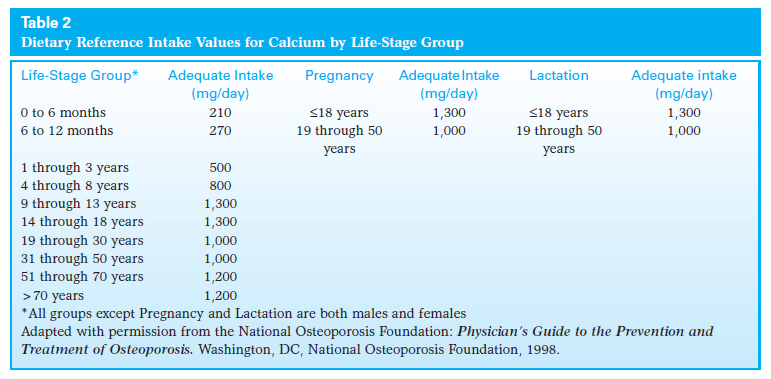
Therefore, other therapies have been advocated to help prevent osteoporosis, including hormone replacement therapy (HRT), raloxifene, calcitonin, and bisphosphonates.
Hormone Replacement Therapy and Selective Estrogen Receptor Modulators
In women who are within 5 years of menopause, estrogen deficiency is primarily responsible for bone loss. In postmenopausal women, HRT improves bone density in the spine and hip and may decrease the risk of fracture by up to 50%, provided that treatment is initiated within 5 years of menopause. It is thought to act by directly binding estrogen receptors on osteoblasts or by limiting the action of cytokines that promote bone resorption. Estrogen is often given with progesterone to offset the higher risk for endometrial cancer, breast cancer, and thromboembolic disease that was observed in women taking estrogen alone. The decision to use estrogen to help prevent bone loss must be made on an individual basis after considering a woman’s personal and family history of cancer and thromboembolic disease. However, a well-designed, prospective, randomized trial has called into question the widespread use of HRT for prophylaxis against osteoporosis.20
Raloxifene hydrochloride is a selective estrogen receptor modulator (SERM). Its action is not well understood, but it decreases bone resorption without apparent increased risk of endometrial or breast cancer. Recent studies have shown a modest improvement in bone density in the hip and spine and a 30% to 50% decrease in the incidence of vertebral fractures. The effect of raloxifene on hip fracture incidence is not known. Its adverse effects include primarily vasomotor symptoms, hot flashes, and leg cramping. Tamoxifen, another SERM, is sometimes used to treat breast cancer and is being investigated for potential use in the prevention of osteoporosis.
Calcitonin
Calcitonin is a peptide produced by the thyroid parafollicular cells. It inhibits bone resorption through a direct inhibition of osteoclasts, which have a high affinity for calcitonin. It was approved by the FDA in 1984 for use in an injectable form and in 1995 for use as a nasal spray. It has been shown to prevent bone loss in the spine and forearm in postmenopausal women with osteoporosis, and a recent study demonstrated a decrease in vertebral fractures in women using intranasal calcitonin.21 Adverse effects of intranasal calcitonin generally are minor and include occasional rhinitis, nausea, and flushing.
Bisphosphonates
Bisphosphonates are drugs that are adsorbed onto bone hydroxyapatite and inhibit bone resorption by interfering with osteoclast-ruffled border membranes; however, the mechanism of action of this class of drugs is not entirely known. Etidronate was the first medicine in this class to be used to treat osteoporosis. It has been shown to increase bone density and decrease fractures of the spine in older women with osteoporosis. Alendronate appears to be more effective in the prevention and treatment of osteoporosis and also has been proven to reduce the risk of hip and spine fractures. Risedronate is the most recent drug in this class to be promoted for fracture prevention. A recent study showed that patients treated with risedronate had a 40% reduction in fracture risk.22 Adverse effects of bisphosphonates are most commonly related to gastrointestinal irritation and include erosive gastritis and esophagitis. Patients are told not to lie supine for at least 30 minutes after taking alendronate to help minimize the likelihood of these problems occurring.
Prevention of Deep Venous Thrombosis and Pulmonary Embolism
Patients undergoing major orthopaedic surgery on the lower extremities have a higher risk for the development of deep venous thrombosis (DVT) or pulmonary embolism (PE) than any other group of surgical patients, and those undergoing joint replacement or surgery for pelvic trauma are at greatest risk. Nonpharmacologic approaches to thromboprophylaxis include early mobilization; surgical techniques minimizing the time the limb is positioned in flexion; mechanical interventions, such as compressive stockings and sequential compression devices placed on the feet or legs; and possibly alterations in anesthesia technique (ie, using hypotensive epidural anesthesia) and preoperative collection of autologous blood.23
Controversy exists, however, regarding whether and how pharmacologic thromboprophylaxis should be used. A recent meta-analysis of the English-language literature concluded that pharmacologic thromboprophylaxis does not decrease the risk of fatal PE after total hip replacement.24 On the other hand, there is ample evidence that the DVT rate can be significantly decreased with thromboprophylactic agents. Nevertheless, it has not been shown whether the prevention of DVT justifies the assumption of risk for complications. Since many DVTs are benign, the treatment may be worse than the disease. All thromboprophylactic agents that have been approved by the FDA are anticoagulants. As such, they all share the potential risk of bleeding complications, ranging from minor wound complications to fatal hemorrhages. The consensus in the United States is to use routine pharmacologic thromboprophylaxis during routine joint replacement surgery. The norm in Great Britain and much of Europe, however, is not to use these agents at all.
Warfarin
Warfarin is commonly used as a thromboprophylactic agent during joint replacement surgery and is the only oral anticoagulant currently approved by the FDA for this indication. It works by reducing the synthesis of vitamin K–dependent clotting factors II, VII, IX, and X in the liver. As such, it does not have an immediate effect on clotting (as does heparin); the body’s supply of these factors are not depleted for at least 8 hours. Its effects can be monitored by testing the prothrombin time or international normalized ratio (INR). A large number of warfarin regimens have been advocated, including mini-dose therapy (ie, fixed doses of 2 mg or less, which are not designed to elevate prothrombin time or INR) to adjusted-dose treatments (ie, doses designed to more than double the INR). There is no consensus regarding duration of effectiveness of warfarin therapy, which may range from several days to several months. The variation in practice stems from the absence of well-designed, evidence-based clinical trials.
Unfractionated Heparin
Unfractionated heparin, usually given as 5,000 U subcutaneously either twice or three times daily, has not been shown to be effective in patients undergoing joint replacement and therefore is no longer preferred for that procedure. It is sometimes used to treat musculoskeletal trauma patients because it presents a relatively low risk of causing serious bleeding and has a short half-life.
Low-Molecular-Weight Heparins
Fractionated, low-molecular-weight heparins (LMWHs) are effective anticoagulants that have been commonly used as thromboprophylactic agents for the last decade. They work by a mechanism similar to that of other heparin products, namely, by binding to antithrombin-III and catalyzing its inactivation of factor Xa. Unlike unfractionated heparins, LMWHs cause less inhibition of thrombin and platelet aggregation; are less bound to plasma proteins and, therefore, are more bioavailable; and do not require that patients undergo routine blood testing for management of coagulation parameters. They have also been shown to be more effective thromboprophylactic agents than unfractionated heparin for most types of orthopaedic surgery. When the efficacy of warfarin and LMWHs were compared, most studies found LMWHs to be more effective in preventing DVT. With respect to PE and fatal PE, however, the data are not conclusive. In general, bleeding complications and transfusion requirements have been more common in patients treated with LMWHs than in those treated with warfarin, although this has not been the case in all series.LMWHs are more expensive than warfarin, although this difference in cost may be offset by a lower incidence of DVT and by the cost of routine blood testing required of patients managed with warfarin.
Aspirin
Aspirin was used frequently in the past to decrease the incidence of perioperative DVT. Aspirin works as a platelet inhibitor, by irreversibly inactivating cyclooxygenase. It has a fairly good safety profile, and it poses minimal risk of wound or remote-site bleeding complications. Subsequently, as physicians realized that thromboembolic disease causes significant morbidity, more aggressive agents—such as warfarin and LMWHs—have become more popular choices for perioperative use. However, aspirin remains a useful agent, and recent research has shown it to be effective, particularly when combined with hypotensive epidural anesthesia.25 A recent meta-analysis also found aspirin to be an effective thromboprophylaxis for patients with hip fractures.26
Other Agents
Dextran, a polysaccharide solution, decreases platelet adhesion and aggregation. However, it is inconvenient to use, and it has an unacceptable adverse effect profile, including increased bleeding, allergic reaction in 1% of patients, and pulmonary edema from volume overload in patients with cardiac problems. Recombinant hirudin, an agent that has been newly developed for DVT prophylaxis, inactivates both free and clot-bound thrombin in a highly potent and specific manner. Preliminary data have shown it to be effective and safe, but more studies are necessary.
Antibiotics
A large proportion of the antibiotics used in hospitals are for routine prophylaxis to prevent infection—not to treat illness. Many surgeons insist on prophylaxis for every surgical case, and most use antibiotics whenever hardware is implanted. Some have argued that prophylaxis is unnecessary, costly, and contributes to the proliferation of drug-resistant organisms. However, infected implants, especially infected artificial joint prostheses, result in such severe morbidity that even small decreases in the rate of infection provide a very meaningful advantage.
Early studies examining the effectiveness of perioperative antibiotic prophylaxis failed to show a decrease in infection rates. This was because the drugs were only given postoperatively. In the last 2 decades, numerous studies have made it clear that prophylactic antibiotics significantly decrease the rate of infection during surgery in which hardware is implanted and especially during joint replacement surgery.27 More recently, it has been shown that prophylactic antibiotics given to patients more than 2 hours before surgery or intraoperatively do not decrease the infection rate compared with those patients to whom no antibiotic was administered.28 The 2-hour period before surgery is the critical window. When administered too early, the concentration of antibiotics in the blood will be too low when the surgery begins. When administered intraoperatively, the blood supply to the surgical field may be compromised by incision and dissection; when a tourniquet is used, no antibiotics will reach the site after it is inflated.
For “clean†cases (ie, those without prior infection or skin breakdown), most surgeons choose first-generation cephalosporins for prophylaxis. These drugs are particularly effective against staphylococci, which most commonly cause infection during surgery. Among the first-generation cephalosporins, cefazolin sodium is known to reach high therapeutic levels in muscle and hematoma. It also has a long half-life and is relatively inexpensive.29 Its action blocks the transpeptidation of peptidoglycan and thereby inhibits bacterial cell-wall synthesis. It also activates autolytic cell-wall enzymes, resulting in bacterial death. Because cephalosporins are structurally related to penicillin, there is a small chance of an allergic reaction occurring among patients known to be allergic to penicillin.
The appropriate duration of perioperative antibiotic prophylaxis remains somewhat controversial, but the consensus at present is that for joint replacements and procedures in which bone or joint is exposed, antibiotics should be started preoperatively and continued for 24 to 48 hours. Longer durations of treatment have not been shown to be more effective and probably increase the likelihood of promoting drug resistance among bacteria or cause adverse drug reactions. Colitis caused by Clostridium difficile, for example, is more likely to occur when more protracted courses of antibiotics are used because the antibiotics kill some of the normal gastrointestinal flora and allow this organism, which is not normally found in great amounts, to grow without competition and upset the ecologic balance of the colon.
Key Terms
Acetaminophen A nonprescription pain medication comparable in potency to NSAIDs but with absent or weak anti-inflammatory effects
Analgesia The relief of pain
Aspirin A nonprescription NSAID that is used for its pain-relieving and antiplatelet effects
Bisphosphonates Drugs that are absorbed into bone hydroxyapatite and inhibit bone resorption by interfering with osteoclast-ruffled border membranes
Calcitonin A peptide produced by the thyroid parafollicular cells that inhibits bone resorption through a direct inhibition of osteoclasts
Corticosteroids Hormones that affect carbohydrate, fat, and protein metabolism or affect the regulation of water and electrolyte balance; used to decrease inflammation but has significant adverse effects
COX-1 Cyclooxygenase-1 enzyme; an enzyme that is present in most bodily tissues (including platelets and gastrointestinal mucosal tissues) and serves as a “housekeeping†enzyme to form prostaglandins
COX-2 Cyclooxygenase-2 enzyme; an enzyme that is thought to be present in the body only when induced in response to injury and is responsible for the formation of prostaglandins that mediate pain and inflammation
Dextran A polysaccharide solution that decreases platelet adhesiveness and aggregation
Disease-modifying antirheumatic drugs (DMARDs) A class of drugs used to blunt immune response and slow or halt the destructive effects of inflammatory arthritis
Hormone replacement therapy (HRT) Medications that are administered to treat estrogen deficiency and improve bone density
Low-molecular-weight heparins (LMWHs) Anticoagulants that work by binding to antithrombin-III and catalyze its inactivation of factor Xa
Morphine A commonly prescribed opioid analgesic
Nonsteroidal anti-inflammatory drugs (NSAIDs) Inhibitors of cyclooxygenase and therefore prostaglandin synthesis
Patient-controlled analgesia The intravenous or epidural delivery of opioids via a pump that is controlled by the patient
Selective estrogen receptor modulator (SERM) A class of drugs that is thought to provide the beneficial effects of hormone replacement therapy without some of its adverse effects
Symptom-modifying antirheumatic drugs (SMARDs) A class of drugs that decreases pain and inflammation in rheumatic disease but does not prevent disease progression
Tramadol A synthetic opioid agonist
Viscosupplements Intra-articular hyaluronic acid preparations commonly used to treat osteoarthritis; thought to increase joint lubrication
Warfarin A drug that reduces the synthesis of vitamin K–dependent clotting factors II, VII, IX, and X in the liver
References
1. Starck PL, Sherwood GD, Adams-McNeill J, et al: Identifying and addressing medical errors in pain mismanagement. Jt Comm J Qual Improv 2001;27:191-199.
2. Ballantyne JC, Carr DB, Chalmers TC, et al: Postoperative patient-controlled analgesia: Meta-analyses of initial randomized control trials. J Clin Anesth 1993;5:182-193.
3. Porter J, Jick H: Letter: Addiction rare in patients treated with narcotics. N Engl J Med 1980;302:123.
4. Dayer P, Desmeules J, Collart L: Pharmacology of tramadol. Drugs 1997;53(suppl 2):18-24.
5. Fries JF, Williams CA, Bloch DA: The relative toxicity of nonsteroidal anti-inflammatory drugs. Arthritis Rheum 1991;34:1353-1360.
6. Silverstein FE, Faich G, Goldstein JL, et al: Gastrointestinal toxicity with celecoxib vs nonsteroidal antiinflammatory drugs for osteoarthritis and rheumatoid arthritis: The CLASS study: A randomized controlled trial: Celecoxib Long-Term Arthritis Safety Study. JAMA 2000;284:1247-1255.
7. Bombardier C, Laine L, Reicin A, et al: Comparison of upper gastrointestinal toxicity of rofecoxib and naproxen in patients with rheumatoid arthritis: VIGOR Study Group. N Engl J Med 2000;343:1520-1528.
8. Gabriel SE, Jaakkimainen L, Bombardier C: Risk for serious gastrointestinal complications related to use of nonsteroidal anti-inflammatory drugs: A meta-analysis. Ann Intern Med 1991;115:787-796.
9. Pope JE, Anderson JJ, Felson DT: A meta-analysis of the effects of nonsteroidal anti-inflammatory drugs on blood pressure. Arch Intern Med 1993;153:477-484.
10. Dougados M, Nguyen M, Listrat V, et al: High molecular weight sodium hyaluronate (hyalectin) in osteoarthritis of the knee: A 1 year placebo-controlled trial. Osteoarthritis Cartilage 1993;1:97-103.
11. Fraser JR, Kimpton WG, Pierscionek BK, Cahill RN: The kinetics of hyaluronan in normal and acutely inflamed synovial joints: Observations with experimental arthritis in sheep. Semin Arthritis Rheum 1993;22(suppl 1):9-17.
12. Lohmander LS, Dalen N, Englund G, et al: Intra-articular hyaluronan injections in the treatment of osteoarthritis of the knee: A randomised, double blind, placebo controlled multicentre trial: Hyaluronan Multicentre Trial Group. Ann Rheum Dis 1996;55:424-431.
13. Altman RD, Moskowitz R: Intraarticular sodium hyaluronate (Hyalgan) in the treatment of patients with osteoarthritis of the knee: A randomized clinical trial: Hyalgan Study Group. J Rheumatol 1998;25:2203-2212.
14. Ford LT, DeBender J: Tendon rupture after local steroid injection. South Med J 1979;72:827-830.
15. Gray RG, Gottlieb NL: Intra-articular corticosteroids: An updated assessment. Clin Orthop 1983;177:235-263.
16. Bracken MB, Shepard MJ, Collins WF, et al: A randomized controlled trial of methylprednisolone or naloxone in the treatment of acute spinal-cord injury: Results of the Second National Acute Spinal Cord Injury Study. N Engl J Med 1990;322:1405-1411.
17. Wolfe F, Mitchell DM, Sibley JT, et al: The mortality of rheumatoid arthritis. Arthritis Rheum 1994;37:481-494.
18. Felson DT, Anderson JJ, Meenan RF: The comparative efficacy and toxicity of second-line drugs in rheumatoid arthritis: Results of two meta-analyses. Arthritis Rheum 1990;33:1449-1461.
19. Fries JF, Williams CA, Bloch DA: The relative toxicity of nonsteroidal anti-inflammatory drugs. Arthritis Rheum 1991;34:1353-1360.
20. Nelson HD, Humphrey LL, Nygren P, et al: Postmenopausal hormone replacement therapy: Scientific review. JAMA 2002;288:872-881.
21. Chesnut CH III, Silverman S, Andriano K, et al: A randomized trial of nasal spray salmon calcitonin in postmenopausal women with established osteoporosis: The prevent recurrence of osteoporotic fractures study: PROOF Study Group. Am J Med 2000;109:267-276.
22. Harris ST, Watts NB, Genant HK, et al: Effects of risedronate treatment on vertebral and nonvertebral fractures in women with postmenopausal osteoporosis: A randomized controlled trial: Vertebral Efficacy With Risedronate Therapy (VERT) Study Group. JAMA 1999;282:1344-1352.
23. Salvati EA, Pellegrini VD Jr., Sharrock NE, et al: Recent advances in venous thromboembolic prophylaxis during and after total hip replacement. J Bone Joint Surg Am 2000;82:252-270.
24. Murray DW, Britton AR, Bulstrode CJ: Thromboprophylaxis and death after total hip replacement. J Bone Joint Surg Br 1996;78:863-870.
25. Westrich GH, Farrell C, Bono JV, et al: The incidence of venous thromboembolism after total hip arthroplasty: A specific hypotensive epidural anesthesia protocol. J Arthroplasty 1999;14:456-463.
26. Rodgers A: Letter: Low-dose aspirin prevented deep venous thrombosis and pulmonary embolism after surgery for hip fracture: Pulmonary Embolism Prevention (PEP) Trial Collaborative Group. J Bone Joint Surg Am 2000;82:1807.
27. Bodoky A, Neff U, Heberer M, et al: Antibiotic prophylaxis with two doses of cephalosporin in patients managed with internal fixation for a fracture of the hip. J Bone Joint Surg Am 1993;75:61-65.
28. Classen DC, Evans RS, Pestotnik SL, et al: The timing of prophylactic administration of antibiotics and the risk of surgical-wound infection. N Engl J Med 1992;326:281-286.
29. Jones S, DiPiro JT, Nix DE, et al: Cephalosporins for prophylaxis in operative repair of femoral fractures: Levels in serum, muscle, and hematoma. J Bone Joint Surg Am 1985;67:921-924.
