
ACL Reconstruction Graft Options: A Comprehensive Review
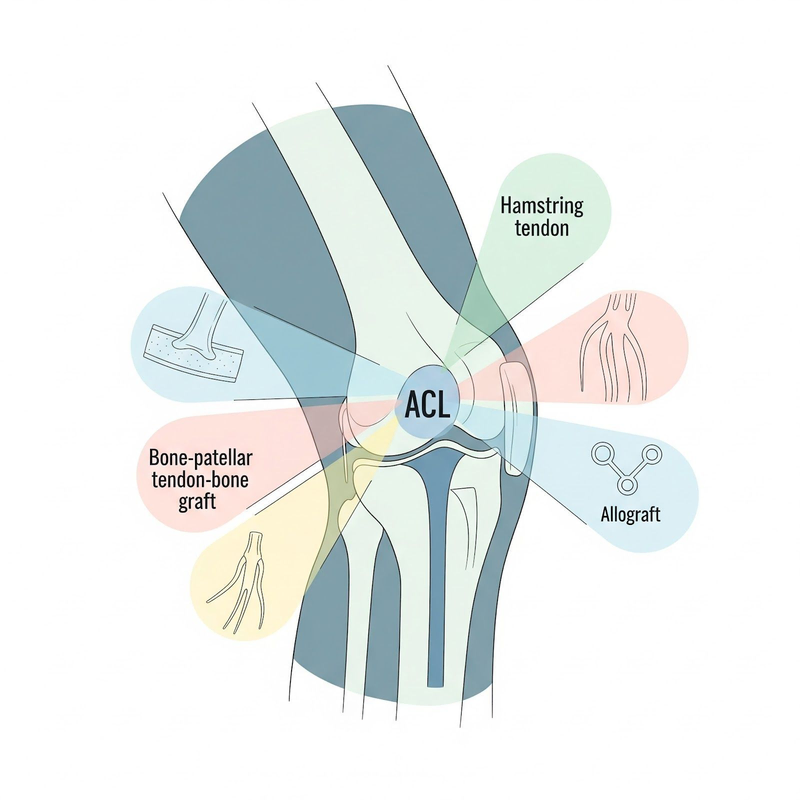
Anterior cruciate ligament (ACL) reconstruction is a common surgical procedure for individuals who have experienced an ACL tear, often during sports or other physical activities. The ACL is a crucial ligament in the knee that provides stability and controls the back and forth movement of the knee joint. When torn, it can cause pain, instability, and difficulty with activities that involve pivoting or jumping. ACL reconstruction surgery aims to replace the torn ACL with a graft to restore knee stability and function. This article provides a comprehensive review of different graft options for ACL reconstruction, including autografts, allografts, hamstring tendons, and bone-patellar tendon-bone grafts, analyzing their advantages, disadvantages, and clinical outcomes.
Preoperative Considerations
Prior to ACL reconstruction surgery, preoperative rehabilitation is crucial to optimize surgical outcomes. This typically involves a focused program to improve quadriceps function and reduce any swelling or effusion in the knee joint1. By strengthening the quadriceps muscles and minimizing inflammation, patients can enhance their recovery and improve the long-term success of the surgery.
Autograft vs. Allograft
The first major decision in ACL reconstruction is choosing between an autograft and an allograft. An autograft uses tissue taken from the patient's own body, while an allograft uses tissue from a cadaver donor. Both options have their own set of advantages and disadvantages. Autograft tissue generally incorporates faster, meaning it heals and integrates with the surrounding bone more quickly, compared to allograft tissue2.
Autograft
Autografts are the most common choice for ACL reconstruction, particularly in younger and more active individuals3. The main advantage of an autograft is that it uses the patient's own tissue, which eliminates the risk of disease transmission or rejection2. Autografts also tend to have a faster incorporation rate, meaning they heal and integrate with the surrounding bone more quickly5. This can lead to a faster return to full activity6. Additionally, autografts are generally less expensive than allografts6.
However, autografts also have some disadvantages. Harvesting the graft requires an additional incision and can result in increased postoperative pain and potential weakness at the donor site2. There is also a risk of complications at the donor site, such as patellar fracture or tendonitis when using a bone-patellar tendon-bone graft7.
Allograft
Allografts offer several advantages, including less postoperative pain, smaller scars, and no need for graft harvesting from the patient's body6. This can make rehabilitation easier in the initial stages of recovery8. Allograft tendons are also a good option to consider for revision ACL reconstructive surgery and for augmenting hamstring tendon autografts that are too small (hybrid graft)9.
However, allografts have a higher risk of re-rupture, especially in younger, active patients1. There is also a small risk of disease transmission, although this is rare with modern sterilization techniques1. Allografts are also more expensive than autografts6.
Allograft processing and sterilization are critical steps in ensuring the safety and efficacy of the graft. Sterilization methods, such as gamma irradiation, are used to eliminate the risk of disease transmission10. However, it's important to note that some sterilization techniques can affect the biomechanical properties of the graft, potentially increasing the risk of failure11. Surgeons should carefully consider the type of allograft processing and sterilization used when selecting an allograft for ACL reconstruction.
Another important consideration with allografts is the potential for graft-construct mismatch. This refers to a discrepancy in size between the allograft and the patient's anatomy10. For example, using a graft from a tall donor in a shorter patient can lead to problems with graft fit and function. Surgeons should carefully assess the patient's anatomy and select an appropriately sized allograft to minimize the risk of mismatch.
Autograft Options: A Detailed Comparison
When opting for an autograft, there are three primary options to consider: hamstring tendon, bone-patellar tendon-bone, and quadriceps tendon. Each option has its own set of advantages and disadvantages, and the choice often depends on the surgeon's preference and the patient's individual needs.
Hamstring Tendon Graft
The hamstring tendon graft is a commonly used autograft option for ACL reconstruction. It involves harvesting one or two of the hamstring tendons from the back of the thigh4.
Advantages
- Less anterior knee pain: Hamstring tendon grafts are associated with less anterior knee pain compared to bone-patellar tendon-bone grafts13.
- Smaller incision: Harvesting the hamstring tendon requires a smaller incision, resulting in a better cosmetic appearance13.
- Reduced risk of patellar fracture: Unlike bone-patellar tendon-bone grafts, hamstring tendon grafts do not involve taking a bone plug from the patella, eliminating the risk of patellar fracture3.
- Easier initial rehabilitation: Patients with hamstring tendon grafts often experience less pain and swelling in the early postoperative period, leading to an easier initial rehabilitation3.
Disadvantages
- Graft size variability: The size of the hamstring tendon can vary from person to person, and smaller grafts may have a higher risk of re-tear3. To minimize this risk, a graft diameter of at least 8 mm is generally recommended15. In cases where the hamstring tendons are too small, surgeons may consider hybrid grafting, where the hamstring autograft is augmented with allograft tissue3.
- Potential hamstring weakness: Harvesting the hamstring tendon can lead to some weakness in knee flexion and hip extension16.
- Slower healing: Hamstring tendon grafts may take longer to heal and incorporate into the bone tunnels compared to bone-patellar tendon-bone grafts17.
- Tunnel widening: There is a potential for tunnel widening with hamstring tendon grafts, which can affect the long-term stability of the reconstruction18.
- Saphenous nerve injury: During hamstring tendon harvest, there is a risk of injury to the saphenous nerve, which can cause numbness or pain in the leg18.
Bone-Patellar Tendon-Bone Graft
The bone-patellar tendon-bone (BPTB) graft is another commonly used autograft option for ACL reconstruction. It involves harvesting the middle third of the patellar tendon along with small bone plugs from the patella (kneecap) and tibia (shinbone)12.
Advantages
- Strong initial fixation: The bone plugs on either end of the graft allow for strong bone-to-bone healing, providing excellent initial fixation14.
- Faster healing: BPTB grafts tend to heal faster than hamstring tendon grafts due to the bone-to-bone healing process3.
- Proven track record: BPTB grafts have a long history of successful outcomes in ACL reconstruction20.
Disadvantages
- Anterior knee pain: BPTB grafts are associated with a higher incidence of anterior knee pain, particularly with kneeling3.
- Risk of patellar fracture: Harvesting a bone plug from the patella can weaken the bone and increase the risk of patellar fracture20.
- Larger incision: BPTB grafts require a larger incision compared to hamstring tendon grafts17.
Quadriceps Tendon Graft
The quadriceps tendon graft is a relatively newer autograft option for ACL reconstruction. It involves harvesting the central portion of the quadriceps tendon, which is located above the kneecap21.
Advantages
- Thickness and strength: The quadriceps tendon is a thick and strong tendon, making it a durable graft option21.
- Lower re-tear rates: Studies suggest that quadriceps tendon grafts have low re-tear rates, comparable to bone-patellar tendon-bone grafts21.
- Reduced anterior knee pain: Compared to BPTB grafts, quadriceps tendon grafts may be associated with less anterior knee pain21.
Disadvantages
- Potential quadriceps weakness: Harvesting the quadriceps tendon can lead to some weakness in the quadriceps muscles21.
- Limited long-term data: Compared to hamstring and BPTB grafts, there is less long-term data available on the outcomes of quadriceps tendon grafts14.
Clinical Outcomes and Rehabilitation
Clinical outcomes after ACL reconstruction can vary depending on several factors, including graft choice, surgical technique, and rehabilitation. However, some general observations can be made based on the research material.
Re-injury Rates
- Autografts: Autografts generally have lower re-tear rates compared to allografts, especially in younger, active patients22.
- Allografts: Allografts have higher re-tear rates compared to autografts, particularly in younger patients24.
- Hamstring tendon grafts: Re-tear rates for hamstring tendon grafts can be higher compared to bone-patellar tendon-bone grafts, especially in female athletes26.
- Bone-patellar tendon-bone grafts: BPTB grafts have low re-tear rates, comparable to quadriceps tendon grafts4.
Return to Sports
- Autografts: Most patients who undergo ACL reconstruction with autografts are able to return to their previous level of sports participation28.
- Allografts: While many patients with allografts can return to sports, they may have a longer recovery time compared to those with autografts8.
Long-Term Impact
- Autografts: Autografts have been shown to provide good long-term outcomes in terms of knee stability and function30. However, there is a potential for long-term effects on the nervous system, particularly the disruption of the gamma loop, which can affect knee proprioception and stability32.
- Allografts: Allografts can provide acceptable long-term outcomes in older, less active patients33.
- Hamstring tendon grafts: Hamstring tendon grafts can provide satisfactory long-term outcomes, but there may be some residual hamstring weakness21.
- Bone-patellar tendon-bone grafts: BPTB grafts can provide good long-term outcomes, but there is a risk of anterior knee pain and potential for osteoarthritis34.
Rehabilitation
Rehabilitation after ACL reconstruction is essential for restoring knee function and preventing re-injury. The rehabilitation process typically involves several phases, with specific exercises and activities tailored to the individual patient's needs and graft type1.
Phase 1 (0-6 weeks): This phase focuses on protecting the graft, minimizing the effects of immobilization, controlling inflammation, and regaining full knee extension1. Exercises may include quadriceps sets, heel slides, and range of motion exercises.
Phase 2 (6-8 weeks): This phase emphasizes restoring normal gait and initiating closed kinetic chain exercises, such as mini-squats and lunges35.
Phase 3 (2-6 months): This phase focuses on improving strength, endurance, and proprioception1. Exercises may include leg presses, step-ups, and balance exercises.
Phase 4 (6-9 months): This phase involves gradually returning to more demanding activities, such as running and jumping1.
Phase 5 (after 9 months): This phase focuses on returning to sports and other high-level activities1.
The specific rehabilitation program and timeline will vary depending on the graft type and the patient's individual progress.
Cost and Availability
The cost of ACL reconstruction can vary depending on several factors, including the type of graft used, the surgical facility, and the geographic location. In general, autografts tend to be less expensive than allografts36.
- Autografts: The cost of ACL reconstruction with an autograft and insurance can range from $2,000 to $5,000 out-of-pocket38. For those without insurance, the cost can be significantly higher, ranging from $20,000 to $50,00039.
- Allografts: Allografts are generally more expensive than autografts due to the costs associated with tissue banking and processing36.
The availability of different graft options can also vary1. Autografts are readily available as they are harvested from the patient's own body. Allografts, on the other hand, may have limited availability depending on the tissue bank and the specific type of allograft needed.
Surgical Procedure
The surgical procedure for ACL reconstruction generally involves the following steps:
- Arthroscopy: The surgeon inserts an arthroscope, a small camera, into the knee joint to visualize the ACL tear and any other damage.
- Graft harvesting: If an autograft is used, the surgeon harvests the graft from the patient's own body. For a BPTB graft, this involves making an incision over the patellar tendon and carefully removing the middle third of the tendon along with small bone plugs from the patella and tibia40. The bone plugs are prepared to fit into tunnels drilled in the femur and tibia.
- Tunnel preparation: The surgeon drills tunnels in the femur and tibia to create a pathway for the graft.
- Graft placement: The graft is passed through the tunnels and fixed in place using screws or other fixation devices.
- Closure: The incisions are closed with sutures, and a dressing is applied.
The specific surgical technique may vary depending on the graft choice and the surgeon's preference.
Factors Influencing Graft Choice
The choice of graft for ACL reconstruction depends on various factors, including:
- Patient age: Younger patients, particularly those with open growth plates, may be better suited for hamstring tendon grafts to minimize the risk of growth plate damage3. Allografts may be considered for older patients who are less active1.
- Activity level: Highly active individuals and athletes may benefit from autografts due to their lower re-tear rates6.
- Patient expectations: Some patients may have preferences regarding the size of incisions or the potential for donor site morbidity, which can influence graft choice41.
- Surgeon experience and expertise: Surgeons often have preferences for certain graft types based on their experience and training1.
Cost-Effectiveness Analysis
In addition to the direct costs of the graft itself, it's important to consider the cost-effectiveness of different graft options. This involves evaluating the overall costs associated with the surgery, including operative time, rehabilitation, and the potential for complications42. While autografts may have lower initial costs, they can be associated with longer operative times and potentially higher rehabilitation costs due to donor site morbidity43. Allografts, while more expensive initially, may have shorter operative times and potentially lower rehabilitation costs. Ultimately, a comprehensive cost-effectiveness analysis should be conducted to determine the most economically favorable option for each patient.
Future Directions
While ACL reconstruction with autografts and allografts remains the standard of care, there are emerging techniques in ACL reconstruction that show promise for the future. These include primary repair of the ACL and augmented repair with BEAR (Bridge-enhanced ACL repair)33. These techniques aim to preserve the native ACL and promote healing, potentially leading to better long-term outcomes and a faster return to activity. However, more research is needed to fully evaluate the efficacy and long-term impact of these newer approaches.
Conclusion
ACL reconstruction is a complex surgical procedure with various graft options available. The choice of graft depends on several factors, including the patient's age, activity level, preferences, and the surgeon's experience and expertise. Autografts are generally preferred for younger, active individuals due to their lower re-tear rates and faster healing. Allografts may be considered for older, less active patients or those with multiple ligament injuries. Hamstring tendon grafts and bone-patellar tendon-bone grafts are both viable autograft options with their own advantages and disadvantages. Quadriceps tendon grafts are a newer option with promising outcomes. Ultimately, the decision should be made in consultation with a qualified orthopedic surgeon to determine the best graft option for each individual patient. Unfortunately, the research material did not provide sufficient patient testimonials to include in this review.
Summary Table of Graft Options
| Graft Type | Advantages | Disadvantages |
|---|---|---|
| Autograft | Lower re-rupture rate, faster incorporation, lower cost | Increased postoperative pain, potential donor site morbidity |
| Allograft | Less postoperative pain, smaller scars, no graft harvest | Higher re-rupture rate, risk of disease transmission, higher cost |
| Hamstring Tendon | Less anterior knee pain, smaller incision, no risk of patellar fracture | Graft size variability, potential hamstring weakness, slower healing, tunnel widening, saphenous nerve injury |
| Bone-Patellar Tendon-Bone | Strong initial fixation, faster healing, proven track record | Anterior knee pain, risk of patellar fracture, larger incision |
Works cited
1. Allograft Anterior Cruciate Ligament Reconstruction: Indications, Techniques, and Outcomes | Journal of Orthopaedic & Sports Physical Therapy, accessed February 17, 2025, https://www.jospt.org/doi/10.2519/jospt.2012.4083
2. Advantages and Disadvantages between Allograft versus Autograft in Anterior Cruciate Ligament Replacement - SOAR, accessed February 17, 2025, https://soar.wichita.edu/bitstream/handle/10057/811/grasp0638.pdf
3. GRAFT CHOICES IN ACL SURGERY - Ortho Rhode Island, accessed February 17, 2025, https://www.orthopedicsri.com/blog-items/graft-choices-acl-surgery/
4. ACL Graft Choice | MOON Knee ACL Research, accessed February 17, 2025, https://acltear.info/acl-graft-choice/
5. What's the Difference Between an Autograft and Allograft for ACL Reconstruction Surgery?, accessed February 17, 2025, https://www.drronakpatel.com/blog-munster-hinsdale-westmont-elmhurst-il/whats-the-difference-between-an-autograft-and-allograft-for-acl-reconstruction-surgery-28707/
6. Choosing an ACL Graft - what is your best option? - Dr. Frank Petrigliano, accessed February 17, 2025, https://www.drpetrigliano.com/orthopaedic-surgery-blog/choosing-an-acl-graft-what-is-your-best-option/
7. Graft Options in Anterior Cruciate Ligament Reconstruction: A Patient's Guide - Dr. Daniel Myer, accessed February 17, 2025, https://www.danielmyermd.com/pdf/patients-guide-acl-surgery.pdf
8. Ask Dr. Pepin: When Do You Use an Allograft ACL Repair? | Summit Orthopedics, accessed February 17, 2025, https://www.summitortho.com/2019/07/24/ask-dr-pepin-when-do-you-use-an-allograft-acl-repair/
9. Allograft choice for ACL reconstruction - BSM Foundation, accessed February 17, 2025, https://bsmfoundation.ca/allograft-choice-for-acl-reconstruction/
10. Allografts in Anterior Cruciate Ligament Reconstruction - PMC - PubMed Central, accessed February 17, 2025, https://pmc.ncbi.nlm.nih.gov/articles/PMC7123455/
11. Allograft ACL Reconstruction - Arthrex, accessed February 17, 2025, https://www.arthrex.com/knee/allograft-acl-reconstruction
12. TYPES OF ACL RECONSTRUCTION GRAFTS - Commons Clinic, accessed February 17, 2025, https://www.millsteinorthopedics.com/blog/types-of-acl-reconstruction-grafts
13. Anterior Cruciate Ligament (ACL) Graft Options - Orthopaedic Knee Surgeon in Athens and Nicosia | Dr A Theodorides, accessed February 17, 2025, https://www.theodorideskneesurgeon.com/acl-graft-options
14. ACL Reconstruction: Which Graft Type is Right for Me? - OMG Tampa Bay, accessed February 17, 2025, https://www.omgtb.com/acl-graft/
15. Hamstring autograft size importance in anterior cruciate ligament repair surgery in - EFORT Open Reviews, accessed February 17, 2025, https://eor.bioscientifica.com/view/journals/eor/3/3/2058-5241.3.170038.xml
16. hamstring ACL surgery complications - Regenexx, accessed February 17, 2025, https://regenexx.com/blog/hamstrings-acl-surgery-complications/
17. ACL Reconstruction: The Pros And Cons Of Graft Choice | Bend + Mend: Physiotherapy and Pilates in Sydney's CBD, accessed February 17, 2025, https://bendandmend.com.au/news/physiotherapy/acl-reconstruction-the-pros-and-cons-of-graft-choice/
18. Advantages and Disadvantages of Different Types of Available Autogenous Grafts in ACL Reconstruction - ResearchGate, accessed February 17, 2025, https://www.researchgate.net/figure/Advantages-and-Disadvantages-of-Different-Types-of-Available-Autogenous-Grafts-in-ACL_tbl2_318975545
19. Which graft is better the patellar tendon graft or the hamstring tendon graft for ACL surgery?, accessed February 17, 2025, https://curovate.com/blog/which-graft-is-better-the-patellar-tendon-graft-or-the-hamstring-tendon-graft-for-acl-surgery/
20. Patellar Tendon Graft Reconstruction of the ACL - Paul Kiritsis, MD - Richmond, VA Premier Orthopedic Surgeon, accessed February 17, 2025, https://kneeandshouldersurgery.com/acl-reconstruction-with-patellar-tendon-autograft/
21. Quad Tendon Graft vs. Hamstring Graft | Best Way to Fix ACL | ACL Surgeon - ACL Doctor, accessed February 17, 2025, https://theacldoctor.com/quad-tendon-graft-vs-hamstring-graft-best-way-to-fix-acl/
22. ACL Retear Risk Calculators | MOON Knee ACL Research, accessed February 17, 2025, https://acltear.info/acl-reinjury-risk/
23. Risk of Secondary Injury in Younger Athletes After Anterior Cruciate Ligament Reconstruction: A Systematic Review and Meta-analysis - PMC, accessed February 17, 2025, https://pmc.ncbi.nlm.nih.gov/articles/PMC5501245/
24. Allograft Anterior Cruciate Ligament Reconstruction Fails at a Greater Rate in Patients Younger Than 34 Years - PMC, accessed February 17, 2025, https://pmc.ncbi.nlm.nih.gov/articles/PMC10461143/
25. ACL Autograft Retear Risk Calculator - MOON Knee Group, accessed February 17, 2025, https://acltear.info/acl-reinjury-risk/acl-autograft-retear-risk/
26. Minimizing Your ACL Re-Tear Risk - Thomas Obermeyer, MD, accessed February 17, 2025, https://www.obermeyermd.com/knee/minimizing-your-acl-re-tear-risk/
27. Patellar vs. Hamstring Tendon Graft and other ACL Reconstruction Considerations, accessed February 17, 2025, https://www.performancehealthacademy.com/patellar-vs-hamstring-tendon-graft-and-other-acl-reconstruction-considerations.html
28. Evaluating the Efficacy of Reconstruction: Systematic Review of Six-Strand Hamstring Autografts for Anterior Cruciate Ligament Reconstruction: Biomechanical and Clinical Outcomes - MDPI, accessed February 17, 2025, https://www.mdpi.com/2673-4095/5/2/37
29. Long term results of bone-patella-tendon-bone ACL reconstruction - PMC - PubMed Central, accessed February 17, 2025, https://pmc.ncbi.nlm.nih.gov/articles/PMC5094599/
30. Long-term results of anterior cruciate ligament reconstruction: a comparison with non-operative treatment with a follow-up of 17–20 years - PubMed Central, accessed February 17, 2025, https://pmc.ncbi.nlm.nih.gov/articles/PMC3167409/
31. Risks of ACL Surgery and Ligament Reconstruction - Verywell Health, accessed February 17, 2025, https://www.verywellhealth.com/risks-of-acl-surgery-2549225
32. The Serious Long-Term Effects of ACL Reconstruction Surgery - Regenexx, accessed February 17, 2025, https://regenexx.com/blog/long-term-effects-of-acl-reconstruction-surgery/
33. Anterior Cruciate Ligament Grafts - Ortho Rhode Island, accessed February 17, 2025, https://www.orthopedicsri.com/blog-items/anterior-cruciate-ligament-grafts/
34. Is it true that people who have a patellar graft for a destroyed ACL will get worse arthritis than if we had gotten the hamstring graft? - Sports Rehab Unlimited, accessed February 17, 2025, https://www.sportsrehabu.com/Injuries-Conditions/Knee/FAQs/Is-it-true-that-people-who-have-a-patellar-graft-for-a-destroyed-ACL-will-get-worse-arthritis-than-if-we-had-gotten-the-hamstring-graft/a~5464/article.html
35. ACL Hamstring Tendon Autograft Reconstruction Protocol - Brigham and Women's Hospital, accessed February 17, 2025, https://www.brighamandwomens.org/assets/BWH/patients-and-families/pdfs/knee---acl-hamstring-tendon-autograft--protocol.pdf
36. Cost Analysis of Outpatient Anterior Cruciate Ligament Reconstruction: Autograft versus Allograft - PMC, accessed February 17, 2025, https://pmc.ncbi.nlm.nih.gov/articles/PMC2853669/
37. Comparison of the hospital cost of autograft versus allograft soft-tissue anterior cruciate ligament reconstructions - PubMed, accessed February 17, 2025, https://pubmed.ncbi.nlm.nih.gov/20884165/
38. What Does ACL Replacement Surgery Cost? | Jeremy Burnham, MD, accessed February 17, 2025, https://www.jeremyburnhammd.com/what-does-acl-replacement-surgery-cost/
39. Evaluating Costs for Your ACL Surgery: What You Need to Know | Treasure Valley Hospital, accessed February 17, 2025, https://treasurevalleyhospital.com/newsroom/posts/evaluating-costs-for-your-acl-surgery-what-you-need-to-know/
40. Anterior Cruciate Ligament Reconstruction Basics: Bone–Patellar Tendon–Bone Autograft Harvest - PMC - PubMed Central, accessed February 17, 2025, https://pmc.ncbi.nlm.nih.gov/articles/PMC5621981/
41. Anterior Cruciate Ligament Graft Choices - PMC, accessed February 17, 2025, https://pmc.ncbi.nlm.nih.gov/articles/PMC3435898/
42. Cost-effectiveness of hamstring autograft versus patella tendon autograft in ACL reconstruction of adolescents - Pediatric Research in Sports Medicine Society (PRiSM), accessed February 17, 2025, https://www.prismsports.org/UserFiles/file/SMITH.CostEffectivenessHamstringAutograft.pdf
43. Autograft or allograft for reconstruction of anterior cruciate ligament: a health economics perspective - PMC, accessed February 17, 2025, https://pmc.ncbi.nlm.nih.gov/articles/PMC6541574/
