
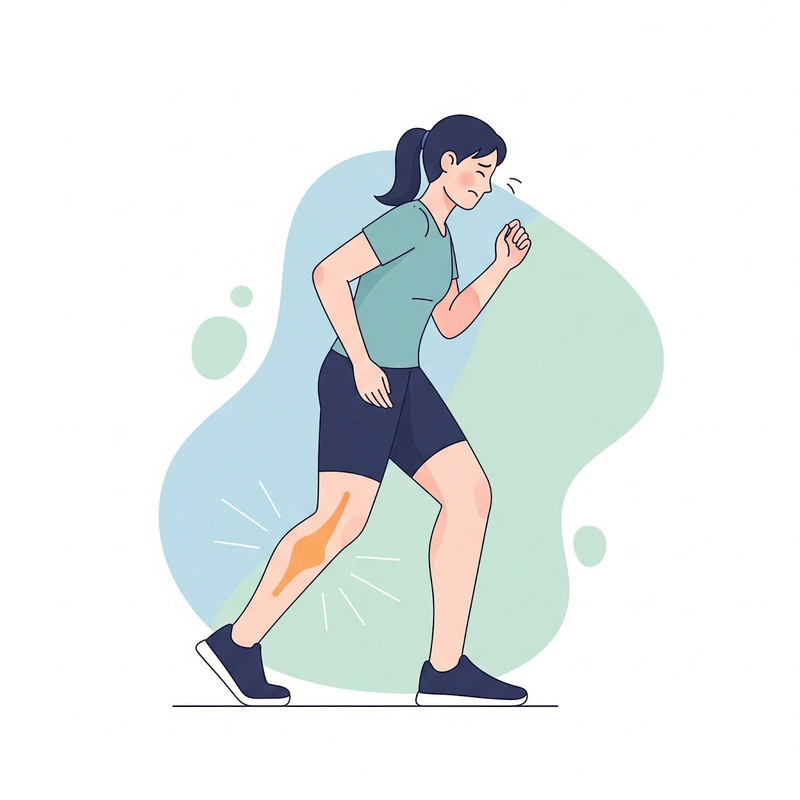
Exercise-Induced Compartment Syndrome
Exercise-induced compartment syndrome (EICS), also known as chronic exertional compartment syndrome (CECS), is a condition characterized by elevated intramuscular pressure (IMP) within the fascial compartments of the limbs, primarily during exercise 1. This pressure buildup leads to a variety of symptoms, including pain, tightness, cramping, and muscle weakness, which typically resolve with rest 1. While EICS can occur in the upper extremities, particularly in individuals involved in activities like rowing or motorcycle riding 3, it most commonly affects the lower leg 4.
It's important to differentiate EICS from acute compartment syndrome (ACS), a serious medical condition that develops rapidly following a severe injury, such as a fracture 6. Unlike EICS, ACS requires immediate surgical intervention to prevent permanent muscle damage 1.
Pathophysiology of EICS in the Lower Leg
The lower leg comprises four distinct compartments: anterior, lateral, superficial posterior, and deep posterior 1. Each compartment contains a specific group of muscles, nerves, and blood vessels encased within fascial sheaths 1. The anterior compartment houses the anterior tibial artery and vein, while the deep posterior compartment contains the posterior tibial artery and vein 1.
While the exact cause of EICS remains elusive, it is likely multifactorial, with several contributing factors 7. Muscle hypertrophy, decreased venous return, microtrauma, myopathies, and noncompliant fascia all play a role in the development of EICS 7. During intense physical activity, muscle volume can increase by up to 20%, leading to elevated pressure within the compartments 8. This pressure increase can restrict blood flow, causing ischemia and triggering the characteristic symptoms of EICS 1.
Risk Factors for EICS in the Lower Leg
EICS predominantly affects young athletes, with a median age of onset of 20 years 1. Although previously thought to be more common in males, recent research suggests an equal prevalence in both sexes 1. Bilateral lower extremity involvement is observed in 85-95% of cases, with a predilection for the anterior and deep posterior compartments 1. Unilateral symptoms are often associated with a history of trauma or vasculopathy 1.
Several factors increase the risk of developing EICS, including:
- Age: EICS is most prevalent in athletes under 30 years old 4.
- Type of exercise: Repetitive, high-impact activities, such as running, significantly increase the risk 4.
- Overtraining: Excessive exercise intensity or frequency can contribute to EICS 4.
- Poor exercise mechanics: Incorrect form or technique can increase the risk of developing EICS 9.
- Creatine supplements: These supplements may exacerbate muscle swelling, potentially contributing to EICS 9.
- Anabolic steroid use: Steroid use can lead to fluid retention and rapid muscle growth, increasing the risk of EICS 1.
- Aberrant gait mechanics: Biomechanical abnormalities, such as rearfoot landing and overpronation, can place excessive strain on specific muscle groups, increasing the risk of EICS 1.
- Certain medical conditions: While primarily an athletic injury, EICS can also occur in sedentary individuals, particularly those with diabetes mellitus 1.
- Prolonged immobility: In some cases, compartment syndrome can occur during sleep after prolonged immobility in a position that restricts blood flow to a limb 6.
- Upper extremity activities: Rowing and motorcycle riding are risk factors for upper extremity EICS 3.
Based on military studies, the incidence of EICS is estimated to be 1 in 2000 persons per year 7.
Diagnosis of EICS
EICS is often underdiagnosed, as its symptoms can mimic other common causes of exertional leg pain 3. Therefore, a comprehensive evaluation is essential to establish an accurate diagnosis. This evaluation typically includes a detailed history, physical examination, and diagnostic testing.
History
A thorough history should focus on the following aspects:
- Symptom onset: Determine when the symptoms begin during exercise and their relationship to exercise intensity and duration.
- Pain characteristics: Characterize the pain in terms of type, location, and intensity.
- Aggravating and relieving factors: Identify activities or positions that worsen or alleviate the symptoms.
- Exercise history: Inquire about the frequency, intensity, and type of exercise the individual engages in.
- Previous injuries: Assess any history of trauma or injury to the lower leg.
Physical Exam
Physical examination may reveal the following:
- Tenderness to palpation: Localized tenderness over the affected compartment(s) is a common finding.
- Pain with passive stretch: Pain elicited by passively stretching the muscles within the involved compartment is a key diagnostic feature.
- Swelling or bulging: Visible swelling or a palpable bulge in the affected area may be present.
- Neurological deficits: Assess for any sensory disturbances, such as numbness or tingling, or motor weakness in the distribution of the affected nerve(s).
Diagnostic Tests
Several diagnostic tests can aid in confirming the diagnosis of EICS:
- Compartment pressure testing: This is considered the gold standard for diagnosing EICS 5. It involves directly measuring the pressure within the muscle compartments before, during, and after exercise using a needle or catheter 5. Elevated pressures, particularly after exercise, are indicative of EICS 10. Normal compartment pressure is typically between 12-18 mmHg, and any pressure exceeding this range is considered abnormal 11.
- Magnetic resonance imaging (MRI): MRI can be helpful in evaluating the structure of the muscles and ruling out other conditions that may mimic EICS, such as stress fractures 5. Advanced MRI techniques can assess compartment fluid volumes at rest, during symptom provocation, and after exercise 5.
- Near-infrared spectroscopy (NIRS): NIRS is a non-invasive technique that measures blood oxygen levels in the affected tissue at rest and after activity 5. This can help determine if there is impaired blood flow to the muscle compartment.
It's important to note that there can be a significant delay in the diagnosis of EICS, with studies showing an average delay of approximately 22 months 12. This delay highlights the need for clinicians to maintain a high index of suspicion for EICS, especially in athletes presenting with exertional leg pain.
Differential Diagnosis
When evaluating a patient with suspected EICS, it's crucial to consider other conditions that may present with similar symptoms. These include:
- Medial tibial stress syndrome (shin splints): This is a common overuse injury that causes pain along the inner edge of the shinbone.
- Stress fractures: Small cracks in the bone can occur due to repetitive stress, leading to localized pain and tenderness.
- Nerve entrapment syndromes: Compression or irritation of nerves in the lower leg can cause pain, numbness, and tingling.
- Popliteal artery entrapment syndrome: This rare condition involves compression of the popliteal artery, which supplies blood to the lower leg.
- Celiac disease: While primarily a gastrointestinal disorder, celiac disease can also manifest with musculoskeletal symptoms, including leg pain. The diagnosis of celiac disease involves serologic testing for specific antibodies and duodenal biopsies to assess for intestinal damage 13.
Management of EICS
The management of EICS typically follows a stepwise approach, starting with conservative measures and progressing to surgical intervention if necessary.
Non-Surgical Treatment
Non-surgical treatment options are often the first line of management for EICS and may include:
- Activity modification: This involves avoiding activities that provoke symptoms and modifying training regimens to reduce stress on the affected limb 5. Patients may be advised to switch to low-impact exercises, such as cycling or swimming, or to modify their running technique to reduce impact forces 5. Avoiding exercise on hard surfaces, such as concrete, may also be beneficial 14.
- Orthotics: Custom-made or over-the-counter shoe inserts can help correct biomechanical abnormalities, improve foot and ankle alignment, and reduce strain on the lower leg 5.
- Physical therapy: Physical therapy plays a crucial role in managing EICS. It may include exercises to improve flexibility, strength, and neuromuscular coordination, as well as gait retraining and myofascial release techniques to address muscle imbalances and soft tissue restrictions 2.
- Anti-inflammatory medications: Non-steroidal anti-inflammatory drugs (NSAIDs) can help reduce pain and inflammation 6.
- Rest, ice, and heat: These modalities can be helpful in managing pain and inflammation in the early stages of EICS 15.
- Lifestyle modifications: In some cases, lifestyle modifications, such as weight loss, may be recommended to reduce stress on the lower extremities 15.
- Botulinum toxin A (Botox) injections: Injecting Botox into the affected muscles can provide temporary relief by reducing muscle activity and compartment pressure 5.
The AHA/ASA classification system provides a framework for understanding the strength of recommendations for different treatment options 16:
- Class I: Conditions for which there is evidence and/or general agreement that the procedure or treatment is useful and effective.
- Class IIa: Conditions for which there is conflicting evidence and/or a divergence of opinion about the usefulness/efficacy of a procedure or treatment, but the weight of evidence or opinion is in favor of the procedure or treatment.
- Class IIb: Conditions for which usefulness/efficacy is less well established by evidence or opinion.
Surgical Treatment
When conservative measures fail to provide adequate relief or for individuals with severe, activity-limiting symptoms, surgical intervention may be necessary. Fasciotomy, a surgical procedure that involves incising the fascia to release pressure within the affected compartment, is the definitive treatment for EICS in these cases 3.
Indications for Fasciotomy
The decision to perform a fasciotomy is based on a combination of clinical findings and compartment pressure measurements. Fasciotomy is generally indicated in the following situations:
- Persistent symptoms despite conservative treatment: When non-surgical measures fail to provide adequate relief, fasciotomy may be considered 1.
- Severe, activity-limiting symptoms: For individuals whose symptoms significantly impair their ability to participate in desired activities, fasciotomy may be necessary to restore function 1.
- Elevated compartment pressures: Persistently high compartment pressures after exercise, as measured by compartment pressure testing, are a strong indication for fasciotomy 5.
- Neurological deficits: The presence of numbness, tingling, or weakness suggests nerve compression and may warrant surgical intervention 3.
- Delta-p less than 30 mm Hg: Fasciotomy is often indicated when the difference between diastolic pressure and compartment pressure (delta-p) is less than 30 mm Hg 18.
It's important to note that there is no consensus on the exact pressure threshold for fasciotomy, and clinical judgment should guide decision-making in conjunction with pressure measurements 17. The ideal timeframe for fasciotomy is within 6 hours of the onset of symptoms, and it is generally not recommended after 36 hours, as irreversible muscle damage may have occurred by that time 19.
Fasciotomy Techniques
Various fasciotomy techniques are available, each with its own advantages and disadvantages:
| Technique | Description | Advantages | Disadvantages |
|---|---|---|---|
| Open fasciotomy | Involves a larger incision to provide direct visualization of the affected compartment 12 | Allows for complete decompression and direct visualization of the compartment | Larger incision, increased risk of wound complications, longer recovery time |
| Subcutaneous endoscopic fasciotomy | Utilizes smaller incisions and endoscopic tools for less invasive decompression 12 | Smaller incisions, less scarring | Incomplete visualization of the compartment, potential for increased complications |
| Minimally invasive fasciotomy | Employs smaller incisions and specialized instruments to minimize tissue disruption 12 | Reduced tissue trauma, faster recovery | May not be suitable for all cases |
| Ultrasound-guided percutaneous fasciotomy | Uses ultrasound imaging to guide the fasciotomy needle, allowing for precise fascial release 1 | Minimally invasive, precise fascial release | Requires specialized equipment and expertise |
Outcomes of Fasciotomy
Surgical fasciotomy generally has a high success rate in relieving pain and improving function in individuals with EICS 12. Studies have shown significant pain reduction and higher patient satisfaction following fasciotomy compared to conservative management 2. However, the evidence for return-to-activity rates remains inconsistent 20.
Several factors can influence the outcomes of fasciotomy, including:
- Age: Younger patients tend to have better outcomes following fasciotomy 3.
- Fascial thickness: Individuals with stiffer fascia may experience improved outcomes 3.
- Duration of symptoms: Earlier surgical intervention may lead to better results 3.
- Compartment(s) released: Isolated anterior compartment release has been associated with better outcomes compared to combined anterior and lateral releases 21. Avoiding lateral compartment release unless symptoms or pressures clearly indicate involvement may improve outcomes 21.
- Fascial herniations or defects: The presence of fascial herniations or defects, which occur in 39-46% of individuals with EICS 22, may influence surgical planning and outcomes.
- Postoperative complications: Complications, such as infections, nerve damage, and hematoma formation, can negatively impact outcomes 22.
It's important to note that prior fasciotomy does not guarantee protection against recurrent acute compartment syndrome 24.
Complications of Fasciotomy
While generally safe and effective, fasciotomy is associated with potential complications, including:
- Wound infection: 22
- Bleeding: 23
- Nerve damage: 22
- Tendon damage: 23
- Muscle herniation: 25
- Kidney failure: In severe cases, the release of chemicals from dead muscle tissue can lead to kidney damage 23.
- Amputation: Amputation may be necessary in cases of severe muscle damage or complications 23.
- Recurrence of compartment syndrome: 26
The overall complication rate of fasciotomy for lower extremity EICS is reported to be 13% 27. It's crucial for patients to be aware of these potential complications and to inform their healthcare provider of any signs of infection, such as increased pain or fever, following the procedure 28.
Clinical Practice Guidelines
Clinical practice guidelines provide evidence-based recommendations for the diagnosis and management of various medical conditions. The European AIDS Clinical Society (EACS) Guidelines, for example, offer comprehensive recommendations for the management of HIV and related co-infections 29. These guidelines are available in multiple languages, making them accessible to a wider audience 29.
Conclusion
EICS is a prevalent overuse injury among athletes, particularly those engaged in repetitive, high-impact activities 1. Early diagnosis and appropriate management are essential to minimize the risk of long-term complications and enable individuals to return to their desired activity levels 1.
Conservative treatment options, such as activity modification, orthotics, and physical therapy, are typically the initial approach to managing EICS. When non-operative measures prove ineffective, surgical fasciotomy offers an effective solution for relieving symptoms and improving functional outcomes. However, it's crucial to carefully select patients for surgery and to discuss the potential risks and benefits of the procedure.
The diagnosis of EICS can be challenging, as its symptoms may overlap with other conditions. A comprehensive evaluation, including a detailed history, physical examination, and appropriate diagnostic testing, is necessary to differentiate EICS from other causes of exertional leg pain.
While fasciotomy generally yields positive results, it's important to recognize the potential for complications. Patients should be closely monitored following surgery, and any signs of complications should be promptly addressed.
Further research is needed to optimize surgical techniques, refine rehabilitation protocols, and improve long-term outcomes following fasciotomy for EICS. This research should focus on identifying factors that predict treatment success and developing strategies to minimize the risk of complications.
Works cited
1. Lower Limb Exertional Compartment Syndrome | PM&R ..., accessed February 17, 2025, https://now.aapmr.org/lower-limb-exertional-compartment-syndrome/
2. Outcomes of Fasciotomy Versus Conservative Management for Chronic Exertional Compartment Syndrome: A Systematic Review and Meta-Analysis | Cureus, accessed February 17, 2025, https://www.cureus.com/articles/326100-outcomes-of-fasciotomy-versus-conservative-management-for-chronic-exertional-compartment-syndrome-a-systematic-review-and-meta-analysis
3. Chronic exertional compartment syndrome: current management ..., accessed February 17, 2025, https://pmc.ncbi.nlm.nih.gov/articles/PMC6537460/
4. Chronic exertional compartment syndrome - Symptoms & causes ..., accessed February 17, 2025, https://www.mayoclinic.org/diseases-conditions/chronic-exertional-compartment-syndrome/symptoms-causes/syc-20350830
5. Chronic exertional compartment syndrome | UM Health-Sparrow, accessed February 17, 2025, https://www.uofmhealthsparrow.org/departments-conditions/conditions/chronic-exertional-compartment-syndrome
6. Compartment Syndrome - OrthoInfo - AAOS, accessed February 17, 2025, https://orthoinfo.aaos.org/en/diseases--conditions/compartment-syndrome/
7. Chronic Exertional Compartment Syndrome in Athletes: An Overview of the Current Literature - PMC, accessed February 17, 2025, https://pmc.ncbi.nlm.nih.gov/articles/PMC10676709/
8. Compartment Syndrome of the Lower Leg - Physiopedia, accessed February 17, 2025, https://www.physio-pedia.com/index.php/Compartment_Syndrome_of_the_Lower_Leg
9. Chronic Exertional Compartment Syndrome | Foot and Ankle | Orthopedic Services | University Hospitals | Cleveland, OH, accessed February 17, 2025, https://www.uhhospitals.org/services/orthopedic-services/conditions-and-treatments/foot-and-ankle-services/chronic-exertional-compartment-syndrome
10. Exertional compartment syndrome - Overview - Mayo Clinic Orthopedics & Sports Medicine, accessed February 17, 2025, https://sportsmedicine.mayoclinic.org/condition/exertional-compartment-syndrome/
11. Compartment syndrome - Wikipedia, accessed February 17, 2025, https://en.wikipedia.org/wiki/Compartment_syndrome
12. Everything You Need To Know About Exercise Induced Compartment Syndrome, accessed February 17, 2025, https://certifiedfoot.com/everything-you-need-to-know-about-exercise-induced-compartment-syndrome/
13. ACG clinical guidelines: diagnosis and management of celiac disease - PubMed, accessed February 17, 2025, https://pubmed.ncbi.nlm.nih.gov/23609613/
14. Compartment Syndrome: What It Is, Symptoms & Treatments - Cleveland Clinic, accessed February 17, 2025, https://my.clevelandclinic.org/health/diseases/15315-compartment-syndrome
15. Non-Surgical Options - UnityPoint Health, accessed February 17, 2025, https://www.unitypoint.org/find-a-service/orthopedics/non-surgical-options
16. Scientific Rationale for the Inclusion and Exclusion Criteria for Intravenous Alteplase in Acute Ischemic Stroke - AHA Journals, accessed February 17, 2025, https://www.ahajournals.org/doi/10.1161/str.0000000000000086
17. Acute Compartment Syndrome Treatment & Management - Medscape Reference, accessed February 17, 2025, https://emedicine.medscape.com/article/307668-treatment
18. Fasciotomy: Overview, Preparation, Technique - Medscape Reference, accessed February 17, 2025, https://emedicine.medscape.com/article/1894895-overview
19. Acute Compartment Syndrome - StatPearls - NCBI Bookshelf, accessed February 17, 2025, https://www.ncbi.nlm.nih.gov/books/NBK448124/
20. Outcomes of Fasciotomy Versus Conservative Management for Chronic Exertional Compartment Syndrome: A Systematic Review and Meta-Analysis - PubMed, accessed February 17, 2025, https://pubmed.ncbi.nlm.nih.gov/39759644/
21. Functional outcomes and patient satisfaction after fasciotomy for chronic exertional compartment syndrome - PubMed, accessed February 17, 2025, https://pubmed.ncbi.nlm.nih.gov/23371941/
22. Exercise-Induced Compartment Syndrome - The Podiatry Institute, accessed February 17, 2025, http://www.podiatryinstitute.com/pdfs/Update_2018/Chapter_21.pdf
23. What to expect with a fasciotomy: Recovery and risks - MedicalNewsToday, accessed February 17, 2025, https://www.medicalnewstoday.com/articles/fasciotomy
24. Recurrent Compartment Syndrome: 2 Cases and a Review of the Literature, accessed February 17, 2025, https://cdn.mdedge.com/files/s3fs-public/Document/September-2017/039030141.pdf
25. Fasciotomy Purpose, Procedure, Effectiveness, and Side Effects - Healthline, accessed February 17, 2025, https://www.healthline.com/health/fasciotomy
26. Fasciotomy: What It Is, Procedure, Risks & Recovery - Cleveland Clinic, accessed February 17, 2025, https://my.clevelandclinic.org/health/procedures/fasciotomy
27. Surgical Management for Chronic Exertional Compartment Syndrome of the Leg: A Systematic Review of the Literature - Brian Waterman, MD, accessed February 17, 2025, /images/press/uploads/2024/05/Surgical-Management-for-Chronic-Exertional-Compartment-Syndrome-of-the-Leg-A-Systematic-Review-of-the-Literature.pdf
28. Fasciotomy - surgery for compartment syndrome - Overview, accessed February 17, 2025, https://www.guysandstthomas.nhs.uk/health-information/fasciotomy-surgery-compartment-syndrome
29. EACS Guidelines | EACSociety, accessed February 17, 2025, https://www.eacsociety.org/guidelines/eacs-guidelines/
