
Femoroacetabular Impingement (FAI): Diagnosis, Arthroscopic Treatment, Indications for Surgery, and Outcomes
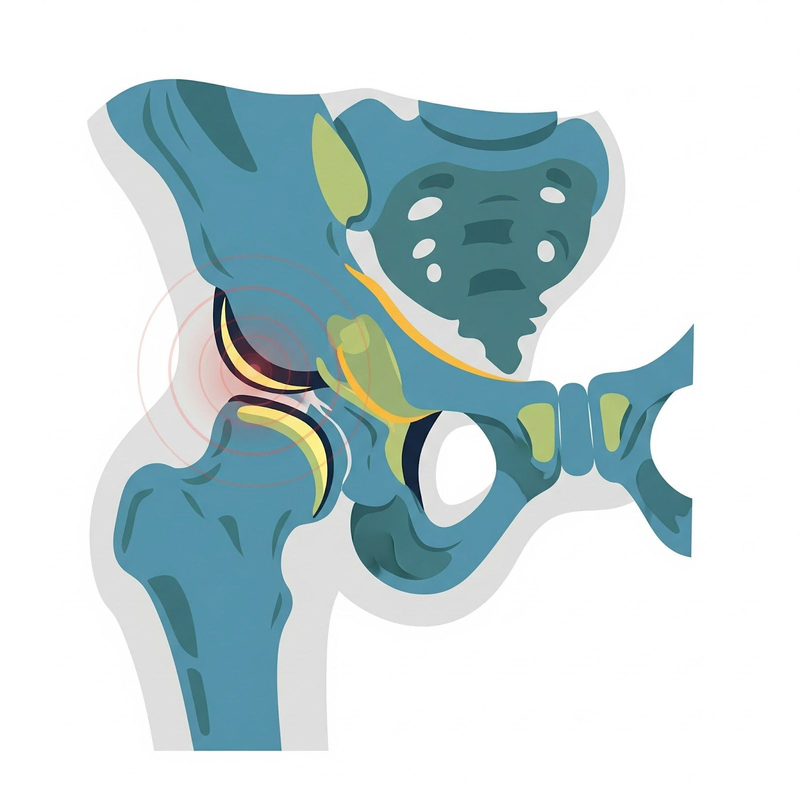
Femoroacetabular impingement (FAI) is a condition where the ball and socket of the hip joint do not move smoothly together due to abnormal bone shapes, leading to premature contact and potential damage. This can cause pain, stiffness, and limited range of motion in the hip. If left untreated, FAI can lead to labral tears, cartilage damage, and eventually, osteoarthritis 1. This article provides a comprehensive overview of FAI, including its diagnosis, arthroscopic treatment, indications for surgery, and outcomes.
Diagnosis of Femoroacetabular Impingement (FAI)
Diagnosing FAI involves a thorough evaluation of the patient's medical history, a physical examination, and imaging studies 3. It is important to differentiate FAI from other conditions that may cause hip pain, such as those originating from within the joint (intra-articular), outside the joint (extra-articular), or referred pain from the back or sacroiliac joints 4. These may include tumor-like conditions, stress fractures, osteitis pubis (inflammation of the pubic bone), adductor tendon injuries, iliopsoas tendon problems, piriformis syndrome, gluteus medius or minimus injuries or tendonitis, greater trochanteric bursitis, and radiculopathy (nerve root compression) 4.
Medical History
The doctor will inquire about the patient's symptoms, including the location, duration, and intensity of pain, as well as any limitations in activities of daily living 4. They will also ask about any previous hip injuries or conditions. Individuals may experience pain in the groin, hip, buttock, lower back, thigh, or knee, particularly during or after intense physical activity 5. It is important to note that lying on your side or sitting for prolonged periods can worsen FAI pain 6.
Types of FAI
There are three types of FAI, each with distinct characteristics 1:
- Pincer: This type occurs when extra bone extends out over the normal rim of the acetabulum (hip socket). The labrum (cartilage ring) can be crushed under the prominent rim of the acetabulum.
- Cam: In cam impingement, the femoral head (ball of the thigh bone) is not round and cannot rotate smoothly inside the acetabulum. A bump forms on the edge of the femoral head that grinds the cartilage inside the acetabulum. The alpha angle, a measurement of the hip ball (femoral head and neck junction), is used to determine the extent of cam impingement 7.
- Combined: Combined impingement means that both the pincer and cam types are present.
Physical Examination
The physical exam includes an assessment of the patient's gait, range of motion, and palpation of the hip joint 4. Specific tests, such as the impingement test (flexion, adduction, and internal rotation - FADIR), may be performed to reproduce the patient's pain and assess for impingement 1. The impingement test involves a series of movements and positions, such as lifting the leg towards the chest and rotating it inward, to assess for pain and impingement in the hip 6. Restricted hip movement, particularly internal rotation with the hip flexed, is a common finding 8.
Imaging Studies
Imaging tests are crucial for confirming the diagnosis of FAI and evaluating the extent of joint damage. X-rays, CT scans, and MRI scans are commonly used to assess the bony anatomy and soft tissues of the hip joint 1. X-rays provide a general overview of the bones and can reveal abnormal shapes associated with FAI, such as a pistol-grip deformity, cam bump, or pincer lesion 1. CT scans offer more detailed images of the bones, helping to determine the exact abnormal shape of the hip joint 1. MRI scans provide detailed images of soft tissues, such as the labrum and articular cartilage, and can identify any damage 1. Injecting dye into the joint during the MRI can enhance the visualization of damage.
Diagnostic Injection
In some cases, the doctor may inject a local anesthetic into the hip joint. If this provides temporary pain relief, it supports the diagnosis of FAI 1.
Arthroscopic Treatment of Femoroacetabular Impingement (FAI)
Hip arthroscopy is a minimally invasive surgical procedure used to treat FAI 10. It involves making small incisions around the hip joint and inserting an arthroscope, a thin instrument with a camera and light, to visualize and repair the damaged tissues.
Procedure
During hip arthroscopy, the surgeon can perform the following:
- Osteochondroplasty: Removing excess bone on the femoral head or acetabulum to restore normal shape and prevent impingement 10.
- Labral repair: Repairing a torn labrum, which is a ring of cartilage that helps stabilize the hip joint 10.
- Cartilage repair: Addressing damaged articular cartilage, which is the smooth tissue that covers the ends of the bones in the joint 11. Techniques such as microfracture may be used to stimulate new cartilage growth.
Advantages of Hip Arthroscopy
Compared to open surgery, hip arthroscopy offers several advantages 13:
- Smaller incisions
- Minimal soft tissue trauma
- Less pain
- Faster healing time
- Lower infection rate
- Less scarring
- Earlier mobilization
- Usually performed as outpatient day surgery
Importantly, arthroscopic FAI surgery can reduce the incidence of arthritis and the subsequent need for replacement surgery 10.
Indications for Surgery
Surgery for FAI is typically recommended when non-surgical treatments, such as rest, physical therapy, and pain medication, including over-the-counter anti-inflammatory medicines like ibuprofen and naproxen 1, have failed to provide adequate relief 13. The decision for surgery is made on a case-by-case basis, considering factors such as the severity of symptoms, degree of joint damage, patient's age and activity level, and presence of other hip conditions.
Specific indications for surgery may include 7:
- Moderate to severe hip pain that limits daily activities
- Pain that persists despite conservative treatment for at least 3 months, including at least 12 weeks of treatment in the past year with at least 6 weeks being formal in-person physiotherapy 7
- Positive impingement sign on physical examination
- Imaging findings that confirm FAI and show labral or cartilage damage
- Absence of advanced osteoarthritis
The objective of surgical treatment of FAI is to provide symptom relief and reduce further damage to the joint 9.
Outcomes of Hip Arthroscopy
Hip arthroscopy generally has good to excellent outcomes, with most patients experiencing significant pain relief and improved hip function 11. Studies have shown that 85% to 90% of patients can return to sports and other physical activities at their pre-injury level 11. However, it's important to note that outcomes can vary depending on several factors, including the patient's age and overall health, severity of FAI and associated joint damage, surgical technique and experience of the surgeon, and postoperative rehabilitation.
Long-term Outcomes
A study with an average follow-up period of nearly 12 years reported a 72.6% survivorship rate at 10 years, with 91.3% of patients expressing satisfaction with their hip function 14. Another study with a mean 12-year follow-up showed significant clinical improvement, with 55% of patients achieving the Non-arthroplasty Hip Score (NAHS) PASS threshold 15. However, 31% of patients were below the PASS threshold, 5% had revision arthroscopy, and 9% had conversion to total hip arthroplasty, indicating a 45% global failure rate 15. In this study, labral ossification was observed in 78.3% of all patients, and its lateral projection length was statistically associated with failure 15.
Factors Affecting Outcomes
Several factors have been identified as potential predictors of outcomes after hip arthroscopy for FAI 15:
| Factor | Association with Outcome | Example/Data |
|---|---|---|
| Younger age | Better outcomes | Patients under 40 years old had significantly higher satisfaction rates after hip arthroscopy 15 |
| Higher body mass index (BMI) | Poorer outcomes | Patients with a BMI over 30 had an increased risk of complications and lower functional scores after surgery 16 |
| Presence of osteoarthritis | Negative impact | Patients with pre-existing osteoarthritis were more likely to require total hip replacement within 10 years of arthroscopy 15 |
| Extent of cartilage damage | Impacts longevity due to the risk of developing arthritis 16. Patients with Outerbridge grade III and IV lesions had significantly less improvement in PROMs and a significantly increased rate of conversion to THA than those with Outerbridge grade I and II 17. | N/A |
| Labral repair (vs. debridement) | Superior outcomes | Patients who undergo labral repair have demonstrated superior outcomes compared with those who undergo debridement 15. |
| Effective postoperative rehabilitation | Crucial for successful recovery | N/A |
| Chronic pain | Inferior outcomes | Patients with chronic pain predict inferior outcomes from hip arthroscopy for FAI 16. |
It is important to note that the presence of FAI on imaging does not always correlate with symptoms. Studies have shown radiographic evidence of FAI in individuals who do not experience any hip problems 4. This highlights the importance of a comprehensive evaluation, including a thorough medical history and physical examination, in addition to imaging findings.
Patient Testimonials
Many patients who have undergone hip arthroscopy for FAI report significant improvements in their pain levels and quality of life. Madysen Bailey, a 22-year-old student, shared her experience of undergoing bilateral hip arthroscopy 18. After recovery, she was able to return to an active lifestyle and even began a couch to 5K program. John H. Ostrout, Jr., a 57-year-old avid fisherman, described how hip arthroscopy relieved his debilitating hip pain and allowed him to enjoy his favorite activities again 19.
One patient who underwent hip arthroscopy for FAI shared their detailed experience, including their recovery process and the assistive devices they found helpful 20. They emphasized the importance of preoperative training, early mobilization, and consistent physical therapy in achieving a successful outcome. Another patient highlighted the importance of being in good physical condition before surgery and described their relatively pain-free recovery in the first few days after the procedure 21. In another case, a patient discussed their experience with labral repair and the challenges they faced during recovery 22. They emphasized the importance of rest and following postoperative guidelines to allow for proper healing.
Conclusion
Femoroacetabular impingement (FAI) is a common cause of hip pain that can significantly affect a person's quality of life. Early diagnosis through a detailed medical history, physical examination, and imaging studies is essential to differentiate FAI from other hip conditions and guide appropriate treatment. Hip arthroscopy has emerged as a successful treatment option for FAI 11, offering a minimally invasive approach to address the underlying structural abnormalities and repair damaged tissues. While the majority of patients experience positive outcomes, including pain relief and improved hip function, it's crucial to consider factors that may influence individual results, such as age, BMI, the extent of cartilage damage, and the presence of osteoarthritis. Postoperative rehabilitation plays a crucial role in achieving optimal outcomes and returning to desired activity levels. Future research may focus on refining surgical techniques, improving cartilage repair strategies, and identifying personalized treatment approaches to further enhance outcomes for patients with FAI.
Works cited
1. Femoroacetabular Impingement - OrthoInfo - AAOS, accessed February 17, 2025, https://orthoinfo.aaos.org/en/diseases--conditions/femoroacetabular-impingement/
2. Femoroacetabular impingement (FAI) - UCSF Health, accessed February 17, 2025, https://www.ucsfhealth.org/conditions/femoroacetabular-impingement
3. pubmed.ncbi.nlm.nih.gov, accessed February 17, 2025, https://pubmed.ncbi.nlm.nih.gov/23818186/#:~:text=The%20diagnosis%20of%20femoroacetabular%20impingement,and%20extra%2Darticular%20hip%20disorders.
4. Hip arthroscopy for femoroacetabular impingement - PMC - PubMed Central, accessed February 17, 2025, https://pmc.ncbi.nlm.nih.gov/articles/PMC5941972/
5. Femoroacetabular Impingement Syndrome - Yale Medicine, accessed February 17, 2025, https://www.yalemedicine.org/conditions/femoroacetabular-impingement-syndrome
6. Hip (Femoroacetabular) Impingement: Symptoms & Treatment - Cleveland Clinic, accessed February 17, 2025, https://my.clevelandclinic.org/health/diseases/hip-impingement-femoroacetabular-impingement
7. Femoro-Acetabular Surgery for Hip Impingement Syndrome - Medical Clinical Policy Bulletins | Aetna, accessed February 17, 2025, https://www.aetna.com/cpb/medical/data/700_799/0736.html
8. Femoroacetabular Impingement - Physiopedia, accessed February 17, 2025, https://www.physio-pedia.com/Femoroacetabular_Impingement
9. Surgical Treatment of Femoroacetabular Impingement - CAM 701118, accessed February 17, 2025, https://www.southcarolinablues.com/web/public/brands/medicalpolicy/external-policies/surgical-treatment-of-femoroacetabular-impingement/
10. Case Study: Arthroscopic Hip Surgery for Femoroacetabular Impingement (FAI), accessed February 17, 2025, https://www.uvaphysicianresource.com/case-study-arthroscopic-hip-surgery-for-femoroacetabular-impingement-fai/
11. Femoroacetabular Impingement (FAI) Causes and Treatment Options - HSS, accessed February 17, 2025, https://www.hss.edu/conditions_femoroacetabular-impingement-causes-treatment-options.asp
12. Femoroacetabular Impingement (FAI) - University of Michigan Health, accessed February 17, 2025, https://www.uofmhealth.org/conditions-treatments/cmc/hip/fai
13. Femoroacetabular Impingement Treatment New York | FAI Symptoms New York, accessed February 17, 2025, https://www.anteriorapproachhipreplacementnyc.com/femoroacetabular-impingement.html
14. Long-Term Outcomes of Hip Arthroscopy for Femoroacetabular Impingement Syndrome: A Decade of Data - Dr Kelechi Okoroha, accessed February 17, 2025, https://www.kelechiokorohamd.com/blog/long-term-outcomes-of-hip-arthroscopy-for-femoroacetabular-impingement-syndrome-a-decade-of-data-43577.html
15. Patient Factors Influencing Outcomes at 12-Year Follow-up of Hip Arthroscopy for Femoroacetabular Impingement, accessed February 17, 2025, https://pmc.ncbi.nlm.nih.gov/articles/PMC11344956/
16. Predictors of Outcomes After Hip Arthroscopic Surgery for Femoroacetabular Impingement, accessed February 17, 2025, https://www.lallorthopedics.com/hip/predictors-of-outcomes-after-hip-arthroscopic-surgery-for-femoroacetabular-impingement/
17. Outcomes of arthroscopy of the hip for femoroacetabular impingement based on intraoperative assessment using the Outerbridge classification - PubMed, accessed February 17, 2025, https://pubmed.ncbi.nlm.nih.gov/37399116/
18. Bilateral Hip Arthroscopy for Femoroacetabular Impingement (FAI) - Patient Story - St. Louis, MO - Washington University Orthopedics, accessed February 17, 2025, https://www.ortho.wustl.edu/content/Patient-Stories/8213/Femoroacetabular-Impingement---Madysen-Bailey.aspx
19. John H. Ostrout, Jr.: Hip Arthroscopy Patient Story | Cleveland Clinic, accessed February 17, 2025, https://my.clevelandclinic.org/patient-stories/674-hip-arthroscopy-patient-gets-pain-relief-and-enjoys-fishing-again
20. FAI & Hip Impingement Surgery-Full Experience weeks 0-14 : r/HipImpingement - Reddit, accessed February 17, 2025,
https://www.reddit.com/r/HipImpingement/comments/1b0ui5p/fai_hip_impingement_surgeryfull_experience_weeks/
byu/comments inHipImpingement
21. 5 Days After Hip Arthroscopy for FAI, Positive Experience So Far : r/HipImpingement - Reddit, accessed February 17, 2025,
https://www.reddit.com/r/HipImpingement/comments/14y2dr7/5_days_after_hip_arthroscopy_for_fai_positive/
byu/comments inHipImpingement
22. Hip Arthroscopy for FAI Recovery Pain | Joint Replacement Patient Forum - Bonesmart, accessed February 17, 2025, https://bonesmart.org/forum/threads/hip-arthroscopy-for-fai-recovery-pain.75847/
