
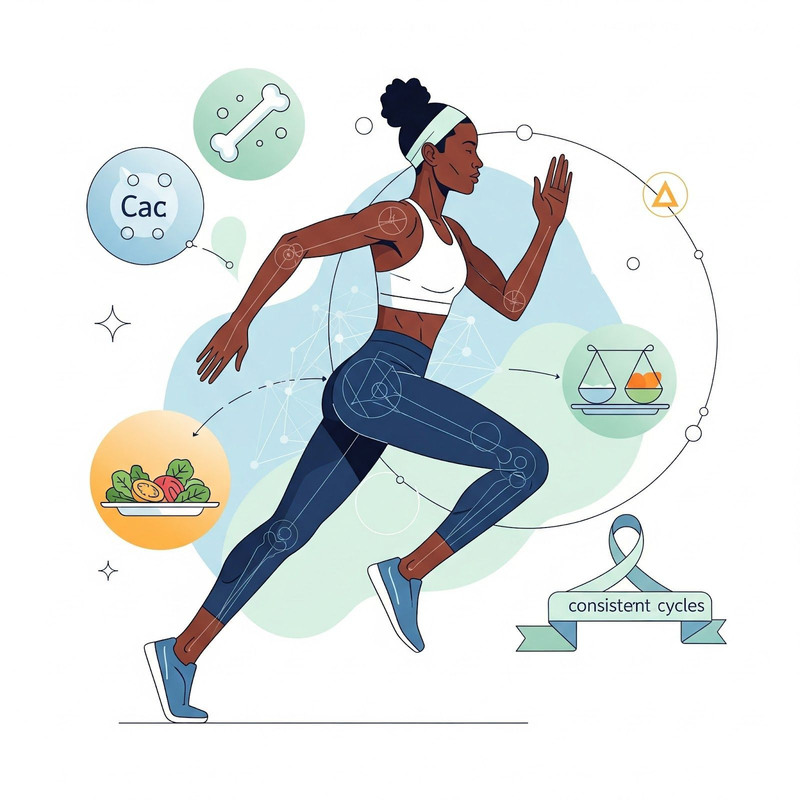
The Female Athlete Triad: Optimizing Bone Health and Athletic Performance in the Context of RED-S
The Female Athlete Triad, a syndrome characterized by the interplay of low energy availability (with or without disordered eating), menstrual dysfunction, and low bone mineral density, significantly impacts the health and well-being of female athletes1. While it can affect female athletes of all ages and levels, young women participating in sports that emphasize leanness or aesthetics, such as gymnastics, dance, and long-distance running, are particularly vulnerable2. However, it's crucial to recognize that athletes in any sport can be affected3. The Triad can have significant short- and long-term health consequences, including an increased risk of stress fractures, osteoporosis, impaired athletic performance, and decreased quality of life4.
The International Olympic Committee has broadened the understanding of this condition with the introduction of the term "Relative Energy Deficiency in Sport" (RED-S)5. RED-S acknowledges that energy deficiency can have a detrimental impact on a wide range of physiological systems beyond the reproductive and skeletal systems, including metabolic rate, immunity, protein synthesis, and cardiovascular health5. This article will provide a comprehensive overview of the Female Athlete Triad within the context of RED-S, analyze the latest research on prevention, diagnosis, and multidisciplinary management strategies, and identify areas for future research.
Understanding the Interplay of Energy Availability, Menstrual Function, and Bone Health
Energy Availability
Energy availability (EA) is the amount of dietary energy remaining for the body to perform all other functions after subtracting the energy expended during exercise1. It is calculated as: (Energy intake - Exercise energy expenditure) / Fat-free mass1. While a general guideline suggests an optimal EA value of at least 45 kcal/kg/day, it's important to note that this value can vary based on individual factors such as age, training intensity, and the specific sport3. Physiological changes may begin to occur at less than 30 kcal/kg/day1. When EA is low, the body enters a state of energy conservation, leading to hormonal and metabolic changes that affect various physiological systems, including the reproductive and skeletal systems4. These changes include a decrease in estrogen and progesterone, an increase in cortisol, and a decrease in T34.
Low EA can have a direct impact on bone health by altering the levels of hormones such as insulin-like growth factor 1, leptin, and peptide YY, leading to deficiencies in vitamin D and calcium, which are essential for bone health1. It can also affect postural stability due to changes in body composition and weight fluctuations8. Even brief periods of low EA can alter hormone concentrations and bone metabolic markers, potentially leading to long-term bone mineral loss5.
Menstrual Function
Low EA can disrupt the normal menstrual cycle or delay the onset of menarche9. This disruption can manifest as primary amenorrhea (delayed menarche), where menstrual periods do not start by age 15, or as secondary amenorrhea, where established periods cease for three months or more5. It can also lead to oligomenorrhea, with menstrual cycles occurring at intervals greater than 35 days9. Menstrual dysfunction, in turn, leads to lower estrogen levels, which are essential for maintaining bone health9.
Bone Health
Estrogen plays a crucial role in bone formation and maintenance by promoting calcium absorption and inhibiting bone resorption6. Low EA and estrogen deficiency have independent and combined effects on bone health, leading to decreased bone mineral density, impaired bone geometry and microarchitecture, and reduced bone strength5. This increases the risk of stress fractures, which are tiny cracks in the bones, and other bone stress injuries, particularly in weight-bearing bones like the tibia5. Female athletes with low EA have up to a 4-fold increased risk of bone stress injuries5.
Complications
Beyond the immediate effects on bone health and menstrual function, the Female Athlete Triad can have several long-term consequences:
- Infertility: Menstrual dysfunction can lead to infertility12.
- Cardiovascular disease: Low levels of estrogen can increase the risk of cardiovascular disease12.
- Impaired immune function: Women with the Triad have decreased immune function, making them more susceptible to infections and illnesses12.
- Nutritional deficits: Low energy availability can cause nutritional deficits that negatively impact the body's ability to build bone, maintain muscle mass, and recover from injury12.
- Gastrointestinal problems: The Triad can also affect gastrointestinal function8.
- Impaired growth and development: In adolescents, the Triad can negatively impact growth and development12.
- Psychological effects: The Triad can increase the risk of anxiety, depression, and other mental health issues14.
- Cognitive impairment: Energy deficiency can also have a negative impact on cognitive function and eating behaviors4.
Prevention Strategies
Prevention of the Female Athlete Triad requires a multi-pronged approach that involves education, promoting healthy behaviors, and fostering a supportive athletic environment13. Early intervention is crucial to prevent the progression of the Triad to more severe conditions14.
Education and Awareness
Educating athletes, coaches, parents, and healthcare providers about the Triad is crucial13. This education should include information on the signs and symptoms, long-term consequences, and risk factors associated with the Triad13. Athletes should be taught about the importance of adequate energy intake, maintaining a healthy weight, and the role of regular menstrual cycles in overall health and athletic performance13. It's also important to emphasize the need for open communication about the menstrual cycle8.
Promoting a Positive Sports Culture
Creating a sports environment that prioritizes health and well-being over aesthetics and winning at all costs is essential13. Coaches and sports organizations should focus on promoting healthy eating habits, realistic body image perceptions, and sustainable training practices13. They should emphasize goal setting that focuses on effort, improvement, and personal bests rather than solely on weight or appearance13.
Nutritional Support
Providing access to registered dietitians or sports nutritionists who can offer personalized nutrition plans is crucial13. These professionals can help athletes understand their energy needs, develop balanced diets that support optimal health and performance, and address any nutritional deficiencies13. They can also provide education on the importance of calcium and vitamin D intake for bone health, with adolescents needing 1300 milligrams of calcium and 600 international units of vitamin D daily2.
Training Modifications
Training programs should be designed to minimize the risk of energy deficiency and promote a healthy balance between training load and recovery15. Coaches should monitor athletes' training volume and intensity, incorporate rest and recovery periods, and avoid overtraining15. They should also be sensitive to the individual needs of athletes and adjust training plans accordingly15. Specific examples of training modifications include reducing exercise intensity or volume and incorporating more rest periods into training schedules13.
Diagnostic Tools and Criteria
Diagnosing the Female Athlete Triad involves a comprehensive assessment of the athlete's energy availability, menstrual function, and bone health1. It's also important to rule out other medical conditions that could mimic the Triad16.
Assessing Energy Availability
Accurately measuring EA can be challenging11. Methods for determining energy expenditure, dietary intake, and fat-free mass are often imprecise11. For example, athletes may have difficulty accurately recalling their dietary intake, which can affect the assessment of EA11. However, several tools can be used to assess EA, including:
- Dietary logs or food recalls: These tools can help estimate an athlete's daily caloric intake1. For instance, an athlete might be asked to keep a detailed record of everything they eat and drink for three days.
- Heart rate monitors and accelerometers: These devices can provide objective measures of energy expenditure during exercise1.
- Bioelectric impedance scales and skinfold caliper measurements: These methods can be used to estimate fat-free mass1.
- Resting metabolic rate measurements: Measuring RMR can help assess the body's energy expenditure at rest11.
- LEAF-Q (Low Energy Availability in Females Questionnaire): This questionnaire helps assess risk factors for low EA by considering factors such as training, gastrointestinal function, injuries, and menstrual function8.
Evaluating Menstrual Function
When evaluating menstrual function, it is important to rule out other potential causes of menstrual irregularities, such as pregnancy and thyroid disease9. A thorough menstrual history should be taken, including age at menarche, frequency and duration of menstrual cycles, and any history of amenorrhea or oligomenorrhea11.
Assessing Bone Health
Bone mineral density (BMD) is a key indicator of bone health11. Dual-energy X-ray absorptiometry (DXA) scans are the gold standard for measuring BMD17. DXA scans should be considered for athletes with risk factors for low BMD, such as a history of stress fractures, amenorrhea or oligomenorrhea for six months or more, low body mass index, or disordered eating11. When interpreting DXA results, it's important to consider the athlete's age and training history, as these factors can influence BMD11.
Screening Tools
In addition to the tools mentioned above, questionnaires can be used to screen athletes for the Triad14. These questionnaires typically ask about menstrual history, eating habits, and exercise patterns. Here's an example of a screening questionnaire: 14
- "Have you ever had a menstrual period?"
- "How old were you when you had your first menstrual period?"
- "When was your most recent menstrual period?"
- "How many periods have you had in the past 12 months?"
- "Are you presently taking any female hormones (estrogen, progesterone, birth control pills)?"
- "Do you... source
Blood Tests
Blood tests can also be used to assess nutrient and hormone levels, which can provide valuable information about an athlete's overall health and risk for the Triad16.
Multidisciplinary Management Strategies
Managing the Female Athlete Triad requires a multidisciplinary approach involving a team of healthcare professionals, including physicians, nutritionists, mental health professionals, and athletic trainers16. This collaborative approach requires open communication between the athlete, coaches, parents, and healthcare providers13. It's crucial to address the underlying causes of low energy availability, such as disordered eating or pressure to lose weight19.
Role of Physicians
Physicians play a central role in overseeing the care of athletes with the Triad18. They are responsible for conducting a thorough medical evaluation, ordering appropriate diagnostic tests, and coordinating care with other members of the multidisciplinary team18. Physicians may also prescribe medications or supplements to address specific deficiencies or conditions18. This may include involving gynecologists and endocrinologists to address menstrual dysfunction and hormonal imbalances18. It's important to note that while hormonal replacement therapies can be helpful in managing some symptoms, they are not a substitute for addressing the underlying energy deficiency6. Additionally, oral contraceptives may have potential negative effects on bone health1. Physicians should also monitor the athlete's body weight throughout the treatment process1.
Role of Nutritionists
Nutritionists or registered dietitians are essential for developing and implementing individualized nutrition plans18. They work with athletes to increase energy intake, adjust eating patterns, and ensure that dietary needs are met to support recovery and health13. They also provide education on healthy eating habits and the importance of balanced nutrition for athletic performance18. When treating low energy availability, it's important to increase caloric intake gradually19. Nutritionists can also help athletes optimize their performance and recovery by implementing nutrition timing strategies, which involve consuming the right nutrients at the right times before, during, and after exercise20.
Role of Mental Health Professionals
Mental health professionals play a crucial role in addressing the psychological aspects of the Triad, particularly in cases involving disordered eating or eating disorders18. They provide counseling or therapy to help athletes address body image concerns, develop coping strategies for stress management, and modify unhealthy behaviors related to food and exercise13. In cases of clinical eating disorders, psychological treatment is essential for reversing low energy availability19.
Role of Athletic Trainers
Athletic trainers are involved in managing injuries and developing rehabilitation programs for athletes with the Triad18. They work with athletes to modify training regimens, prevent further injury, and ensure a safe return to sport18. They also provide education on proper warm-up and cool-down techniques, injury prevention strategies, and the importance of listening to their bodies18.
Role of Physiotherapists
Physiotherapists play a vital role in the prevention and management of the Female Athlete Triad14. They can screen athletes for risk factors, provide education on healthy training practices, and modify training programs to reduce the risk of injury and energy deficiency14. They can also help athletes address any musculoskeletal imbalances or weaknesses that may contribute to the Triad14.
Role of the Family
The family plays a crucial role in supporting the athlete throughout the management of the Triad17. They can provide a supportive environment, encourage healthy eating behaviors, and help the athlete adhere to the treatment plan17.
Methodology
This article is based on a comprehensive review of peer-reviewed research articles published in the last 5 years on the Female Athlete Triad21. The research process involved the following steps:
- Identifying relevant articles: A search for peer-reviewed articles on the Female Athlete Triad published in the last 5 years was conducted using relevant databases.
- Selecting articles for analysis: From the initial pool of articles, a subset was selected based on their relevance to the topic and the research questions.
- Extracting and synthesizing information: Key information related to the Female Athlete Triad, including its prevalence, causes, consequences, prevention, diagnosis, and management, was extracted from the selected articles and synthesized to create a comprehensive overview of the topic.
Conclusion
The Female Athlete Triad is a complex syndrome with significant implications for the health and well-being of female athletes. By understanding the interplay of energy availability, menstrual function, and bone health within the broader context of RED-S, healthcare professionals, coaches, and athletes can work together to prevent, diagnose, and manage this condition effectively. A multidisciplinary approach that addresses the physical, nutritional, and psychological aspects of the Triad is crucial for optimizing bone health, restoring menstrual function, and ensuring that female athletes can achieve their full athletic potential without compromising their long-term health. Early intervention is essential to prevent the progression of the Triad to more severe conditions. A collaborative approach, involving open communication between the athlete, coaches, parents, and healthcare providers, is key to successful management. Future research should focus on developing more accurate and practical methods for assessing energy availability, investigating the long-term effects of RED-S on various physiological systems, and evaluating the effectiveness of different interventions in preventing and managing the Triad.
Knowledge Gaps and Areas for Future Research
Despite significant advancements in understanding the Female Athlete Triad, several knowledge gaps remain. Some areas for future research include:
- Developing more accurate and practical methods for assessing energy availability in athletes. 1
- Investigating the long-term effects of low energy availability and menstrual dysfunction on cardiovascular health and other physiological systems. 22
- Evaluating the effectiveness of different interventions, including nutritional counseling, psychological therapy, and training modifications, in preventing and managing the Triad. 19
- Exploring the role of genetics and other individual factors in the development of the Triad. 4
- Developing targeted prevention programs for specific athlete populations. 13
Works cited
1. The female athlete triad: It takes a team | Cleveland Clinic Journal of Medicine, accessed February 17, 2025, https://www.ccjm.org/content/85/4/313
2. Female Athlete Triad Danger | Children's Hospital Colorado, accessed February 17, 2025, https://www.childrenscolorado.org/conditions-and-advice/sports-articles/for-coaches/female-athlete-triad-poses-potential-danger-for-young-athletes/
3. The female athlete triad - Kelly - Annals of Joint, accessed February 17, 2025, https://aoj.amegroups.org/article/view/6345/html
4. The Female Athlete Triad: Review of Current Literature - PMC, accessed February 17, 2025, https://pmc.ncbi.nlm.nih.gov/articles/PMC8702454/
5. NUTRITION FOR FEMALE ATHLETE BONE HEALTH - Gatorade Sports Science Institute, accessed February 17, 2025, https://www.gssiweb.org/sports-science-exchange/article/nutrition-for-female-athlete-bone-health
6. How Does the Menstrual Cycle Influence Bone Health?, accessed February 17, 2025, https://humanperformancealliance.org/playbook/how-does-the-menstrual-cycle-influence-bone-health/
7. Recommendations and Nutritional Considerations for Female Athletes: Health and Performance - PMC - PubMed Central, accessed February 17, 2025, https://pmc.ncbi.nlm.nih.gov/articles/PMC8566643/
8. The relationship between low energy availability, injuries, and bone health in recreational female athletes - PeerJ, accessed February 17, 2025, https://peerj.com/articles/17533/
9. FEMALE ATHLETE TRIAD - Sports Medicine Today, accessed February 17, 2025, https://www.sportsmedtoday.com/female-athlete-triad-va-81.htm
10. Female Athlete Triad - HealthyChildren.org, accessed February 17, 2025, https://www.healthychildren.org/English/health-issues/injuries-emergencies/sports-injuries/Pages/Female-Athlete-Triad.aspx
11. The female athlete triad - PMC, accessed February 17, 2025, https://pmc.ncbi.nlm.nih.gov/articles/PMC10929343/
12. Female Athlete Triad - Boston Children's Hospital, accessed February 17, 2025, https://www.childrenshospital.org/sites/default/files/2022-03/female-athlete-triad.pdf
13. What is the Female Athlete Triad? A Comprehensive Guide for Athletes and Coaches | Blog, accessed February 17, 2025, https://www.loyolamedicine.org/newsroom/blog-articles/female-athlete-triad
14. Female Athlete Triad - Physiopedia, accessed February 17, 2025, https://www.physio-pedia.com/Female_Athlete_Triad
15. Female Athlete Triad Physical Therapy - Mangiarelli Rehabilitation, accessed February 17, 2025, https://www.mangiarellirehabilitation.com/blog/female-athlete-triad-physical-therapy
16. Female Athlete Triad (for Teens) | Nemours KidsHealth, accessed February 17, 2025, https://kidshealth.org/en/teens/triad.html
17. Female Athlete Triad: Diagnosis and Treatment - Massachusetts General Hospital, accessed February 17, 2025, https://www.massgeneral.org/children/female-athlete-triad/diagnosis-treatment
18. Treatment strategies for the female athlete triad in the adolescent athlete: current perspectives - PMC, accessed February 17, 2025, https://pmc.ncbi.nlm.nih.gov/articles/PMC5388220/
19. Treatment of the Female Athlete Triad - NCAA.org, accessed February 17, 2025, https://www.ncaa.org/sports/2014/5/14/treatment-of-the-female-athlete-triad.aspx
20. The Female Athlete Triad — What Sports RDs Should Know About This Prevalent Condition, accessed February 17, 2025, https://www.todaysdietitian.com/newarchives/100112p68.shtml
21. Update on the female athlete triad - PMC, accessed February 17, 2025, https://pmc.ncbi.nlm.nih.gov/articles/PMC3702770/
22. Current Knowledge, Perceptions, and Interventions Used by Collegiate Coaches in the U.S. Regarding the Prevention and Treatment of the Female Athlete Triad, accessed February 17, 2025, https://pmc.ncbi.nlm.nih.gov/articles/PMC2953355/
