
Osteochondral Lesions of the Knee: A Comparative Analysis of Treatment Options
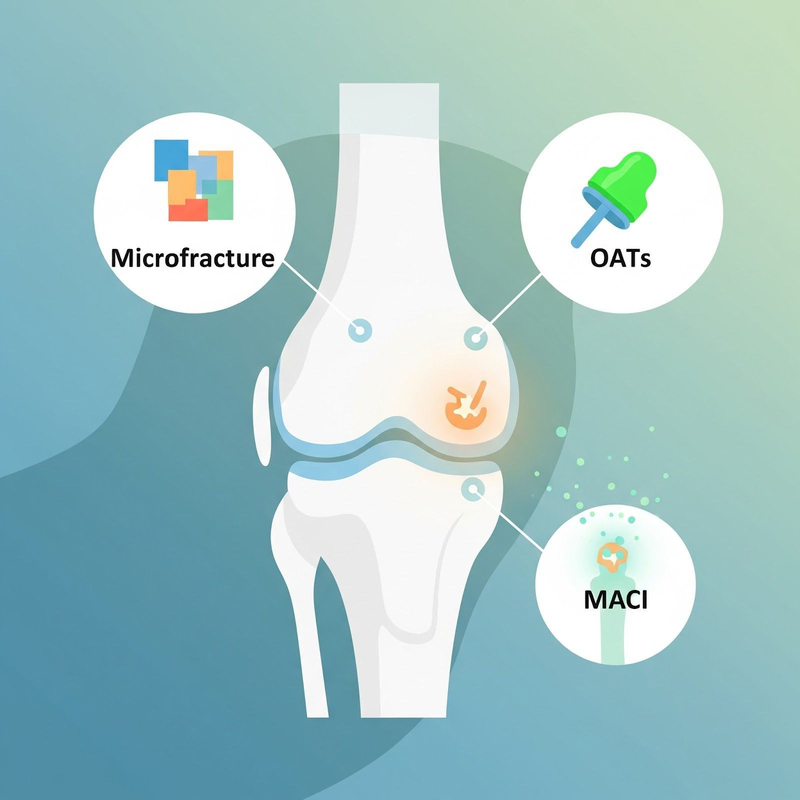
Osteochondral lesions of the knee are a common source of pain and disability, particularly among young and active individuals 1. These lesions involve damage to the articular cartilage and underlying subchondral bone, often resulting from trauma or overuse 2. Effective treatment is crucial to restore joint function, alleviate pain, and prevent the progression of osteoarthritis 3. This article provides a comprehensive evaluation of three prominent treatment options for osteochondral lesions of the knee: microfracture, osteochondral autograft transplantation (OATs), and matrix-induced autologous chondrocyte implantation (MACI). We will discuss their respective indications, surgical techniques, and clinical outcomes, drawing upon the latest medical research and patient testimonials.
Classification of Osteochondral Defects
Osteochondral defects are classified based on their severity using the Cartilage Repair Society (CRS) grading system 3. This system helps guide treatment decisions and provides a standardized way to describe the extent of cartilage damage. The CRS grades are as follows:
- Grade 0: Normal cartilage.
- Grade 1: Nearly normal cartilage with superficial defects, such as soft indentations, fissures, or cracks.
- Grade 2: Abnormal cartilage with defects extending to less than 50% of the cartilage depth.
- Grade 3: Severely abnormal cartilage with defects extending to more than 50% of the cartilage depth but not through the subchondral bone.
- Grade 4: Severely abnormal cartilage with defects penetrating through the subchondral bone.
Non-surgical Treatment
For some individuals, particularly those with less severe lesions or who are skeletally immature, non-surgical treatment may be sufficient to manage osteochondral lesions of the knee 4. Conservative management options include:
- Rest: Avoiding activities that exacerbate pain and allowing the joint to rest.
- Nonsteroidal anti-inflammatory drugs (NSAIDs): To reduce pain and inflammation.
- Activity avoidance: Modifying activities to minimize stress on the knee joint.
- Physical therapy: To improve range of motion, strength, and joint stability.
Skeletally immature patients often respond well to non-operative treatment, with over 50% recovering within 6 to 18 months 4. The most important prognostic factor for these patients is their skeletal age at the time of symptom onset 4.
Complications
Potential complications of osteochondral lesions, even with non-surgical treatment, include:
- Degenerative articular changes over time.
- Nonunion and dissociation of the bony fragment.
- Chronic pain and mechanical symptoms.
Microfracture
Microfracture is a marrow-stimulating technique that involves creating small holes in the subchondral bone to promote the formation of new cartilage 5. This procedure is typically performed arthroscopically, minimizing invasiveness and facilitating a quicker recovery 6.
Indications for Microfracture
Microfracture is generally considered suitable for the following cases 6:
- Full-thickness cartilage defects: Where the damage extends down to the bone.
- Unstable cartilage: When the cartilage is loose or detached from the underlying bone.
- Small lesions: Typically less than 2 cm² in diameter 8.
- Patients with good knee alignment: "Knock-kneed" or "bowlegged" patients may not be ideal candidates 6.
- Focal and contained lesions: Typically less than 4 cm in diameter 5.
- Lesions in weightbearing areas: With intact subchondral bone 5.
- Lesions associated with: Hip dislocation, Legg-Calve-Perthes disease, labral tears, slipped capital femoral epiphysis, developmental dysplasia of the hip, and femoroacetabular impingement (FAI) 5.
It's important to note that FAI can present as two subtypes: cam and pincer, which may occur alone or in combination 5.
Contraindications for Microfracture
Microfracture may not be appropriate for patients with the following conditions 1:
- Systemic immune-mediated diseases
- Disease-induced arthritis
- Cartilage disease
- Global degenerative osteoarthrosis with capsular contraction
- Synovitis
- Flexion contracture scarred anterior interval
Older patients may also be less suitable candidates due to potential difficulties with crutch use and the demanding rehabilitation process 1.
Outcomes of Microfracture
Microfracture has demonstrated good short-term results in terms of pain relief and improved knee function 10. Studies have shown significant improvements in patient-reported outcomes, including pain, knee function, and quality of life, at 2 years after surgery 10. However, long-term outcomes can be variable, with some patients experiencing a decline in function and the development of osteoarthritis over time 11. This decline is often attributed to the breakdown of the repair tissue due to repeated injury from weight-bearing 13. Factors influencing outcomes include lesion size, patient age, and adherence to rehabilitation protocols 14. The quality of the repair tissue after microfracture can also be affected by factors such as age, lesion size, and postoperative rehabilitation 12. Additionally, there is a potential for subchondral osseous overgrowth as a long-term concern 15.
The methodological quality of studies on microfracture has been analyzed using the modified Coleman Methodology Score (mCMS) 15. This scoring system helps assess the quality of study design and execution, providing context for the interpretation of research findings.
Rehabilitation after microfracture typically involves a period of non-weight-bearing followed by gradual weight-bearing and physical therapy 6. The use of a continuous passive motion (CPM) machine may also be incorporated to help with range of motion and prevent stiffness 6.
While microfracture is a viable option for smaller lesions, OATs offers a more durable solution for larger defects and active individuals, particularly those who wish to return to sports.
Osteochondral Autograft Transplantation (OATs)
OATs, also known as mosaicplasty, involves harvesting healthy osteochondral plugs from a non-weight-bearing area of the knee and transplanting them to the damaged site 16. This technique aims to restore the articular surface with hyaline cartilage, which is more durable than the fibrocartilage generated by microfracture 16.
Indications for OATs
OATs is typically recommended for the following 17:
- Focal osteochondral defects: Lesions that are well-contained and not widespread.
- Lesions up to 4 cm² in size: Larger lesions may require alternative techniques 18.
- Active patients: Particularly those who wish to return to sports.
- Patients with stable and aligned knees: With intact menisci and normal joint space.
- Patients with larger lesions (>300mm2): Where OATs has shown superior outcomes compared to microfracture 20.
- Strategies to address chondral defects of the patellofemoral joint secondary to instability: After addressing the causes of recurrent instability 21.
Contraindications for OATs
OATs may not be appropriate for patients with the following conditions 17:
- Obesity
- Active infection
- Bone cancer
- Osteonecrosis
- Generalized osteoarthritis
- Severe obesity
- Bipolar osteochondral lesions of the tibia and femur
- Uncorrectable mechanical alignment or meniscal deficiency
Outcomes of OATs
OATs has shown promising outcomes in terms of pain relief, improved knee function, and return to sports 16. Studies have reported high rates of patient satisfaction and successful return to pre-injury activity levels 22. One study found that 92% of patients who underwent femoral condylar OATs had good to excellent results 23. OATs may also offer long-term benefits in preventing the progression of osteoarthritis 16. The use of biologics like concentrated bone marrow aspirate can further enhance OATs outcomes by improving the local biology at the ankle joint, promoting graft integration, and accelerating recovery 16.
However, potential complications include donor-site morbidity and the technical challenge of matching graft contour to the defect site 23. Other potential risks associated with OATs surgery include bleeding, deep vein thrombosis, stiffness, numbness, and injury to vessels or nerves 24.
Rehabilitation
The rehabilitation process following OATs surgery is crucial for optimizing outcomes and restoring joint function 25. A detailed rehabilitation protocol, including weight-bearing restrictions, range of motion exercises, and strengthening exercises for different phases of recovery, is essential for successful outcomes 26.
Health Technology Assessment (HTA) for OATs
The National Institute for Health and Care Excellence (NICE) in England has conducted a Health Technology Assessment (HTA) on fresh osteochondral allograft for osteochondral lesions of the knee in adults and post-pubescent children 8. This assessment provides valuable insights into the evidence base for OATs and its potential benefits in terms of improving pain and function and delaying the need for joint replacement.
OATs provides a valuable alternative to microfracture, particularly for larger lesions or individuals with higher activity levels. However, MACI offers a different approach to cartilage repair with its own set of advantages and disadvantages.
Matrix-Induced Autologous Chondrocyte Implantation (MACI)
MACI is a two-stage procedure that involves harvesting cartilage cells from the patient's knee, culturing them in a laboratory, and implanting them back into the defect on a collagen membrane 27. This technique aims to promote the growth of hyaline-like cartilage, offering a more durable repair than microfracture 27.
Indications for MACI
MACI is generally indicated for the following 27:
- Symptomatic full-thickness cartilage defects: Particularly those larger than 2 cm².
- Defects in the femoral condyles, trochlea, patella, or tibia: Resulting from various causes, including trauma, osteochondritis dissecans, and localized osteoarthritis.
- Patients aged 18 to 55 years: Safety and efficacy outside this age range have not been established 27.
- Early diagnosis and treatment: To minimize lesion progression and the need for open ACI 28.
When determining candidacy for MACI, it's important to consider factors such as the patient's weight, activities, the type of injury, its size, how deep it is, and the condition of the rest of the knee 29.
Contraindications for MACI
MACI is contraindicated in patients with the following 28:
- Hypersensitivity to gentamicin, other aminoglycosides, or products of porcine or bovine origin.
- Severe osteoarthritis of the knee.
- Inflammatory arthritis.
- Inflammatory joint disease.
- Uncorrected congenital blood coagulation disorders.
- Advanced degenerative changes affecting multiple compartments of the knee.
- Uncorrected lower extremity malalignment.
- Ligamentous instability.
- Meniscal insufficiency.
- Prior knee surgery in the past 6 months (excluding biopsy or concomitant procedures) 28.
- Inability to cooperate with a physician-prescribed post-surgical rehabilitation program 28.
Outcomes of MACI
MACI has demonstrated superior clinical outcomes compared to microfracture in several studies 28. Patients treated with MACI have shown greater improvements in pain and function at 2 years and 5 years follow-up 31. Specifically, MACI provides clinically and statistically significant improvement over microfracture at 5 years for symptomatic cartilage defects 3 cm² or larger 31. MACI has also been associated with a low revision rate and high patient satisfaction in long-term studies 33. However, it is a more complex and expensive procedure than microfracture.
It's important to note that problems such as joint instability or misalignment may require additional procedures before or after MACI to ensure optimal outcomes 34. Additionally, ACI procedures that use periosteal cover, including MACI, may have a risk of graft hypertrophy and donor-site morbidity 35.
Long-term studies have shown that body mass index (BMI) and the number of previous knee surgeries can influence the clinical outcomes of MACI 33. These factors should be considered during patient selection and counseling.
MRI results after MACI can be evaluated using the AMADEUS (area measurement and depth and underlying structures) and MOCART (magnetic resonance observation of cartilage repair tissue) 2.0 knee score classification systems 33. These systems provide a standardized way to assess the quality of cartilage repair and monitor the progress of healing.
Rehabilitation
Full recovery from MACI can take up to a year, and patients need to be committed to an extensive rehabilitation program 34. This program typically involves the use of a knee brace for about 6 weeks and physical therapy to regain strength and stability 34.
Other Surgical Options
In addition to the three main procedures discussed above, other surgical options for treating osteochondral lesions of the knee include:
- Debridement: Smoothing the damaged cartilage surface to remove loose fragments and improve joint mechanics.
- Chondroplasty: A procedure to reshape the damaged cartilage surface.
- Particulate juvenile articular cartilage: A technique that involves transplanting small pieces of cartilage from a young donor.
- Autologous mesenchymal stem cell implantation: Implanting the patient's own stem cells into the cartilage defect to promote regeneration 12.
- PRF (Platelet Rich Fibrin) therapy: Using the patient's blood and growth factors to support tissue regeneration 11.
Patient Perspectives
Here are some insights from patients who have undergone treatment for osteochondral lesions of the knee:
-
Microfracture:
-
One patient reported a successful recovery after microfracture, regaining full mobility and returning to sports within 4 months 36.
- Another patient described experiencing excruciating pain and limited mobility 12 months after surgery, suggesting that the procedure may not be effective for all individuals 37.
- A third patient shared their experience of undergoing microfracture 10 years prior, noting that they were able to return to pre-surgery activity levels with minimal discomfort 36.
-
OATs:
-
Several patients who underwent OATs expressed satisfaction with the procedure, highlighting its ability to restore joint function and enable them to return to activities such as running, hiking, and CrossFit 38.
- One patient described a long and challenging recovery process but ultimately achieved their goal of running a marathon after receiving a meniscus transplant 38.
-
MACI:
-
One patient, a college athlete, shared their positive experience with MACI, highlighting its ability to resolve knee pain and enable them to return to running, biking, and other activities 39.
- Another patient, a runner, underwent two MACI procedures and reported significant improvement in knee function and pain relief, allowing them to return to their active lifestyle 40.
These perspectives highlight the variability in patient experiences and outcomes following different treatment options.
Cost and Availability
The cost of treatment for osteochondral lesions can vary significantly depending on the chosen procedure and healthcare setting. Microfracture is generally the least expensive option, with an average cost of around $4,000 41. OATs typically falls within the range of $5,000 to $10,000 42. MACI is the most expensive procedure, with costs potentially reaching $40,000 43. However, insurance coverage may vary, and it is essential to discuss costs with your healthcare provider and insurance company.
The availability of these treatment options may also vary depending on the expertise of the surgeon and the resources available at the healthcare facility 41.
Conclusion
The optimal treatment for osteochondral lesions of the knee depends on various factors, including the size and location of the lesion, patient age and activity level, and surgeon expertise. Microfracture is a less invasive and less expensive option suitable for smaller lesions, while OATs and MACI offer more durable repair with hyaline-like cartilage for larger or more active individuals. Shared decision-making between the patient and surgeon is crucial to select the most appropriate treatment strategy.
In general, smaller lesions (<2 cm²) are best treated with microfracture or OATs, while intermediate-size lesions (2-4 cm²) show comparable results with OATs or ACI 44. Surgeons are also increasingly augmenting microfracture with extracellular matrices or autologous matrix-induced chondrogenesis (AMIC) to improve outcomes 45.
It's important to consider the patient's individual circumstances and preferences when making treatment decisions. Patient testimonials provide valuable insights into the real-world experiences and outcomes of different procedures. While some patients achieve complete pain relief and return to their desired activity levels, others may experience ongoing discomfort or limitations.
Ultimately, the goal of treatment is to improve the patient's quality of life by reducing pain, restoring function, and preventing long-term complications such as osteoarthritis.
| Procedure | Description | Indications | Contraindications | Outcomes | Rehabilitation | Cost |
|---|---|---|---|---|---|---|
| Microfracture | Marrow stimulation technique | Small, full-thickness defects; unstable cartilage; focal lesions; lesions associated with FAI, hip dislocation, etc. | Systemic immune-mediated diseases; disease-induced arthritis; cartilage disease; older patients | Good short-term results; variable long-term outcomes; potential for subchondral osseous overgrowth | Non-weight-bearing initially; CPM use; physical therapy | Lowest (~$4,000) |
| OATs | Transplantation of osteochondral plugs | Focal defects up to 4 cm²; active patients; stable and aligned knees; larger lesions (>300mm2); patellofemoral defects secondary to instability | Obesity; active infection; uncorrectable mechanical alignment | Promising outcomes; potential donor-site morbidity; potential for bleeding, DVT, etc. | Weight-bearing restrictions; progressive exercises; physical therapy | Moderate ($5,000 - $10,000) |
| MACI | Implantation of cultured cartilage cells | Symptomatic full-thickness defects; ages 18-55; early diagnosis and treatment | Hypersensitivity to gentamicin, aminoglycosides, or products of porcine or bovine origin; severe OA; inflammatory arthritis; prior knee surgery | Superior to microfracture; expensive; potential for graft hypertrophy and donor-site morbidity; BMI and previous surgeries can influence outcomes | Brace use; physical therapy; full recovery up to a year | Highest (~$40,000) |
Works cited
1. Microfracture: Its History and Experience of the Developing Surgeon ..., accessed February 17, 2025, https://pmc.ncbi.nlm.nih.gov/articles/PMC4297044/
2. Osteochondral Lesions/Osteochondritis Dessicans - Cedars-Sinai, accessed February 17, 2025, https://www.cedars-sinai.org/health-library/diseases-and-conditions/o/osteochondral-lesionsosteochondritis-dessicans.html
3. Surgical Management of Osteochondral Defects of the Knee: An Educational Review - PMC, accessed February 17, 2025, https://pmc.ncbi.nlm.nih.gov/articles/PMC7930143/
4. Osteochondritis Dissecans of the Knee - StatPearls - NCBI Bookshelf, accessed February 17, 2025, https://www.ncbi.nlm.nih.gov/books/NBK538194/
5. Hip Microfracture: Indications, Technique, and Outcomes - PMC - PubMed Central, accessed February 17, 2025, https://pmc.ncbi.nlm.nih.gov/articles/PMC4297043/
6. Microfracture Techniques | The Steadman Clinic, accessed February 17, 2025, https://www.thesteadmanclinic.com/patient-education/knee/microfracture-technique
7. Microfracture New York | Articular Cartilage Damage NY - Andrew Feldman, MD, accessed February 17, 2025, https://www.andrewfeldmanmd.com/microfracture.html
8. Clinical Commissioning Policy Fresh osteochondral allograft for osteochondral lesions of the knee in adults and post-pubescent c - NHS England, accessed February 17, 2025, /images/press/uploads/2022/10/2007-oca-spec-comm-policy.pdf
9. Hip Microfracture Dedham, Boston MA - Dr Thomas Wuerz, accessed February 17, 2025, https://www.bostonhipcenter.com/hip-microfracture-orthopedic-surgeon-dedham-waltham-ma.html
10. Microfracture Surgery – 6 Positive Benefits backed by Scientific Evidence to Revitalise your Joints - Summit Physio, accessed February 17, 2025, https://www.summitphysio.co.uk/microfracture-surgery/
11. How successful is microfracture knee surgery? - London Cartilage Clinic, accessed February 17, 2025, https://londoncartilage.com/how-successful-is-microfracture-knee-surgery/
12. Microfracture surgery - Wikipedia, accessed February 17, 2025, https://en.wikipedia.org/wiki/Microfracture_surgery
13. Why Microfracture Fails - Knee Surgery - The Stone Clinic, accessed February 17, 2025, https://www.stoneclinic.com/blog/why-microfracture-fails
14. Clinical Outcomes following the Microfracture Procedure for Chondral Defects of the Knee: A Longitudinal Data Analysis, accessed February 17, 2025, https://pmc.ncbi.nlm.nih.gov/articles/PMC4297042/
15. Microfracture for cartilage repair in the knee: current concepts and limitations of systematic reviews - Annals of Translational Medicine, accessed February 17, 2025, https://atm.amegroups.org/article/view/25692/html
16. Osteochondral Autograft Transplantation System (OATS) of the Ankle | OATS Procedure, accessed February 17, 2025, https://www.sportsmedicinenewyork.com/osteochondral-allograft-transplantation-system-ankle-orthopedic-foot-ankle-surgeon-new-york-west-palm-beach.html
17. Arthroscopic Osteochondral Autograft Transfer System Procedure of the Lateral Femoral Condyle with Donor-Site Backfill Using Osteochondral Allograft Plug - PMC, accessed February 17, 2025, https://pmc.ncbi.nlm.nih.gov/articles/PMC8719136/
18. Osteochondral Autograft Transfer System (OATS) - Dr Kareem Sobky, accessed February 17, 2025, https://www.orthosportsandjoints.com/osteochondral-autograft-transfer-system-orthopedic-specialist-denver-co.html
19. Osteochondral Autografts (Mosaicplasty, OATS) - Medical Clinical ..., accessed February 17, 2025, https://www.aetna.com/cpb/medical/data/600_699/0637.html
20. Cartilage Repair and Biomechanical Loads - Emory School of Medicine, accessed February 17, 2025, https://med.emory.edu/departments/orthopaedics/_documents/cartilage-repair-and-biomechanical-loads-2020-1.pdf
21. Surgical Indications and Contraindications for OAT With BioCartilage Augmentation and Donor-Site Back-Fill - ResearchGate, accessed February 17, 2025, https://www.researchgate.net/figure/Surgical-Indications-and-Contraindications-for-OAT-With-BioCartilage-Augmentation-and_tbl1_348623431
22. Results of Osteochondral Autologous Transplantation in the Knee - PMC, accessed February 17, 2025, https://pmc.ncbi.nlm.nih.gov/articles/PMC2847821/
23. Osteochondral Autologous / OATS Procedure - Premier Orthopaedic & Trauma Specialists, accessed February 17, 2025, https://www.premierortho.org/services/knee/osteochondral-autologous-oats/
24. OATS Surgery Procedure Denver | Knee Arthroscopy Boulder & Aurora, Colorado, accessed February 17, 2025, https://www.rachelfrankmd.com/oats-orthopaedic-surgeon-sports-medicine-specialist-denver-co.html
25. Osteochondral Autograft Transfer Surgery (OATS) for OCD | Rothman Orthopaedics, accessed February 17, 2025, https://rothmanortho.com/specialties/treatments/osteochondral-autograft-transfer-surgery-oats-for-ocd
26. Rehabilitation Protocol for Osteochondral Autograft/Allograft Transfer System (OATS) Procedure - Massachusetts General Hospital, accessed February 17, 2025, https://www.massgeneral.org/assets/MGH/pdf/orthopaedics/sports-medicine/physical-therapy/rehabilitation-protocol-for-osteochondral-autograft-allograft-transfer-system-OATS-procedure.pdf
27. Is MACI Knee Cartilage Repair Right for Your Patients?, accessed February 17, 2025, https://www.cartilagerepairblog.com/healthcare-professionals/blog/is-knee-cartilage-repair-right-for-your-patients
28. Learn About MACI Science & Data | MACI®, accessed February 17, 2025, https://www.maci.com/healthcare-professionals/about-maci/
29. MACI Reno, Sparks, NV | Cartilage Damage Carson City, NV, accessed February 17, 2025, https://www.briangilmermd.com/matrix-induced-autologous-chondrocyte-implantation-maci-knee-sports-medicine-specialist-reno-nv/
30. Exploring MACI Knee Surgery Clinical Trials and Patient Outcomes - Cartilage Repair Blog, accessed February 17, 2025, https://www.cartilagerepairblog.com/healthcare-professionals/blog/exploring-maci-knee-surgery-clinical-trials-and-patient-outcomes/?utm_source=TW&utm_medium=CPA&utm_term=&utm_content=img_before_after&utm_campaign=May_HCP
31. Matrix-Applied Characterized Autologous Cultured Chondrocytes Versus Microfracture: Five-Year Follow-up of a Prospective Randomized Trial - PubMed, accessed February 17, 2025, https://pubmed.ncbi.nlm.nih.gov/29565642/
32. Vericel Reports Publication of Results from the Phase 3 SUMMIT Extension Study Demonstrating Sustained Clinical Benefit of MACI Out to Five Years - Investor Relations, accessed February 17, 2025, https://investors.vcel.com/news-releases/news-release-details/vericel-reports-publication-results-phase-3-summit-extension
33. Factors Influencing Long-term Outcomes After Matrix-Induced Autologous Chondrocyte Implantation: Long-term Results at 10 Years - PubMed, accessed February 17, 2025, https://pubmed.ncbi.nlm.nih.gov/39276119/
34. MACI Knee Cartilage Restoration: Is it for me? - Mayo Clinic Orthopedics & Sports Medicine, accessed February 17, 2025, https://sportsmedicine.mayoclinic.org/news/maci-knee-cartilage-restoration-is-it-for-me/
35. Autologous Chondrocyte Implantation for Focal Articular Cartilage Lesions - Bynder, accessed February 17, 2025, https://beonbrand.getbynder.com/m/add699cb4536f538/original/Autologous-Chondrocyte-Implantation-for-Focal-Articular-Cartilage-Lesions.pdf
36. Anyone ever had Micro-fracture Surgery? : r/discgolf - Reddit, accessed February 17, 2025,
https://www.reddit.com/r/discgolf/comments/adudph/anyone_ever_had_microfracture_surgery/
byu/comments indiscgolf
37. Newbie here... 12 months post micro fracture surgery | Joint Replacement Patient Forum, accessed February 17, 2025, https://bonesmart.org/forum/threads/newbie-here-12-months-post-micro-fracture-surgery.35464/
38. Patient Reviews | Cartilage Restoration, Department of Orthopedics, Chicago, IL, accessed February 17, 2025, https://www.cartilagerestoration.net/patient-survey-f11918/
39. The MACI Journey: A Patient's Experience from Diagnosis to Recovery, accessed February 17, 2025, https://drburkeortho.com/2023/07/02/the-maci-journey-a-patients-experience-from-diagnosis-to-recovery/
40. MACI Procedure Proves Best Option - Jon Gallas | Knee Problems Crystal Lake IL, accessed February 17, 2025, https://www.vanthielmd.com/jon-maci-procedure-orthopedic-surgeon-elgin-rockford-crystal-lake-il/
41. Study: Microfracture has lowest per-patient average charges for cartilage repair surgery, accessed February 17, 2025, https://www.healio.com/news/orthopedics/20150513/microfracture-has-lowest-perpatient-average-charges-for-cartilage-repair-surgery
42. Osteochondral Autograft Transfer System (OATS) - MOTUS Physical Therapy, accessed February 17, 2025, https://motusspt.com/oats/
43. Knee Cartilage Replacement: 5 Options to Consider - Healthline, accessed February 17, 2025, https://www.healthline.com/health/osteoarthritis/knee-pain-treatment/knee-cartilage-replacement
44. Knee Articular Cartilage Repair and Restoration Techniques: A Review of the Literature - Orthobullets, accessed February 17, 2025, https://upload.orthobullets.com/journalclub/pubmed_central/26502188.pdf
45. Knee Cartilage Injuries: JBJS Clinical Summary, accessed February 17, 2025, https://www.jbjs.org/summary.php?id=245
