
Patellofemoral Pain Syndrome: Diagnosis and Management
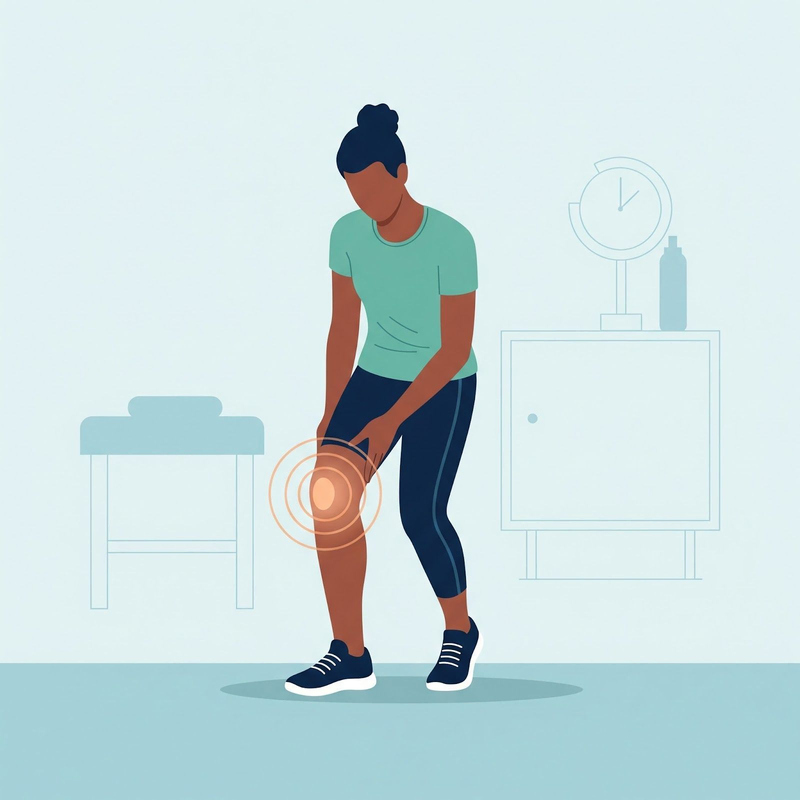
Patellofemoral pain syndrome (PFPS), also known as runner's knee, is a prevalent condition affecting approximately one-third of individuals seeking medical attention for knee pain 1. It is characterized by pain in the front of the knee, around the kneecap (patella) 1. This pain typically worsens with activities that load the knee joint in a flexed position, such as squatting, climbing stairs, and running 3. While frequently encountered in athletes, PFPS can affect individuals of all activity levels 1. Notably, PFPS may indicate underlying cartilage wear and tear, potentially leading to arthritis in the long term 4. This comprehensive review will discuss the diagnosis and management of PFPS, encompassing both conservative and surgical treatment options.
Diagnosis of Patellofemoral Pain Syndrome
Diagnosing PFPS primarily relies on a thorough history and physical examination 2. The patient's history should include details about the onset and nature of the pain, aggravating and relieving factors, and any history of knee injuries or surgeries 2. It is also crucial to inquire about any history of trauma to the knee, including previous surgeries and activities involving overuse 2. During the physical examination, the clinician should assess for tenderness around the patella, range of motion, muscle strength, and any signs of malalignment or instability 1. The clinician should also assess the patient's gait, looking for any abnormalities in patellar tracking or foot position, as these can contribute to PFPS 5.
The following criteria are used to diagnose PFPS 3:
- Presence of retropatellar or peripatellar pain
- Reproduction of pain with squatting, stair climbing, prolonged sitting, or other functional activities that load the patellofemoral joint (PFJ) in a flexed position
- Exclusion of other possible sources of anterior knee pain
Clinical tests, such as squatting, step-downs, and single-leg squats, can be used to reproduce pain and assess lower-limb movement coordination 3. Imaging studies, such as X-rays or MRI, may be ordered to rule out other conditions or to assess the severity of cartilage damage 6. To measure pain and function in patients with PFPS, clinicians can utilize validated tools such as the Anterior Knee Pain Scale (AKPS), the Knee injury and Osteoarthritis Outcome Score patellofemoral pain and osteoarthritis subscale (KOOS-PF), the visual analog scale (VAS) for activity, or the Eng and Pierrynowski Questionnaire (EPQ) 8.
It is important to note that PFPS can involve six anatomical areas: subchondral bone, synovium, retinaculum, skin, nerve, and muscle 2. Furthermore, PFPS can be classified into different subcategories based on the predominant impairments: overuse/overload, muscle performance deficits, movement coordination deficits, and mobility impairments 3. This highlights the importance of a comprehensive assessment to identify the specific factors contributing to an individual's PFPS and tailor treatment accordingly.
Conservative Treatment Options
Conservative management is the first-line treatment for PFPS and is successful in most cases 9. These non-surgical options focus on relieving pain, restoring range of motion, and improving strength and function 9. A systematic review with meta-analysis found that six different conservative treatments, including education, exercise, education and foot orthoses, education and exercise, and patellar taping/mobilization, showed positive effects at 3 months for people with PFPS 10.
Activity Modification
Modifying activities that exacerbate pain is crucial in the initial management of PFPS 9. This may involve reducing the intensity or frequency of high-impact activities, such as running and jumping, or switching to low-impact exercises like swimming or cycling 9. When using a bicycle or exercise bike, it is important to adjust the settings to minimize stress on the knee. The resistance should not be too high, and the seat should be at an appropriate height to allow the rider to spin the pedals without shifting weight from side to side and without fully extending the legs at the lowest part of the pedal stroke 13.
RICE Method
The RICE method (Rest, Ice, Compression, Elevation) is a common approach for managing pain and inflammation 9. Resting the knee, applying ice packs, using compression bandages, and elevating the leg can help reduce swelling and promote healing 9.
Medication
Over-the-counter pain relievers, such as nonsteroidal anti-inflammatory drugs (NSAIDs) like ibuprofen or naproxen, can help reduce pain and inflammation 9. However, these medications should be used judiciously and under the guidance of a healthcare professional 14.
Physical Therapy
Physical therapy plays a vital role in the conservative management of PFPS 9. A physical therapist can develop an individualized exercise program to address specific impairments, such as muscle weakness, inflexibility, and movement coordination deficits 9. Rehabilitation for PFPS typically progresses through different phases: immediate/acute (0-2 weeks), intermediate/sub-acute (2-4 weeks), and late/chronic (4-6 weeks) 15. Exercises may include:
- Strengthening exercises: Focusing on the quadriceps, hip abductors, and core muscles to improve patellar stability and lower extremity alignment 3. Core exercises, targeting the muscles in the abdomen and lower back, may also be recommended to enhance core stability and improve overall lower extremity control 9.
- Flexibility exercises: Stretching the hamstrings, quadriceps, and iliotibial band to improve range of motion and reduce tightness 9.
- Proprioceptive exercises: Enhancing balance and coordination to improve neuromuscular control of the knee joint 16.
Bracing and Orthotics
Knee braces and orthotics can provide support and improve patellar alignment 1. Braces can help stabilize the kneecap and reduce pain during activity, especially in the early stages when pain is more intense 14. Orthotics, which are shoe inserts, can correct foot and ankle alignment, reducing stress on the knee joint 1. Orthotics can be purchased over-the-counter or custom-made 14.
Surgical Interventions
Surgical intervention for PFPS is typically considered when non-surgical treatments, such as bracing, physical therapy, and activity modification, have failed to provide adequate relief 17. However, it's important to note that surgery is rarely needed and is reserved for severe cases that do not respond to conservative measures 9. Surgical options may include:
Arthroscopic Procedures
Arthroscopy is a minimally invasive procedure that allows the surgeon to visualize the inside of the knee joint and address any underlying pathology 6. During arthroscopy, the surgeon may perform:
- Debridement: Removing damaged cartilage or loose bodies from the joint 9.
- Lateral release: Releasing the tight lateral retinaculum to improve patellar tracking 9.
Realignment Procedures
In more severe cases, realignment procedures may be necessary to correct patellar tracking and reduce pressure on the cartilage 6. These procedures may involve:
- Medial patellofemoral ligament (MPFL) reconstruction: Reconstructing the MPFL, a ligament that helps stabilize the kneecap, to prevent recurrent dislocations.
- Tibial tubercle osteotomy: Repositioning the tibial tubercle, the bony prominence where the patellar tendon attaches, to improve patellar alignment.
Clinical Guidelines
The management of PFPS is guided by evidence-based clinical guidelines developed through the collaboration of patients and clinical experts with extensive experience in the field 19. These guidelines provide recommendations for diagnosis, assessment, and treatment, emphasizing a patient-centered approach.
Key recommendations from clinical guidelines include 3:
- Using clinical tests, such as squatting and step-downs, to reproduce pain and assess lower-limb movement coordination.
- Classifying PFPS into subcategories based on predominant impairments to guide treatment.
- Employing validated outcome measures, such as the AKPS and KOOS-PF, to assess pain and function.
- Prioritizing exercise therapy with combined hip- and knee-targeted exercises.
- Considering the use of patellar taping and foot orthoses as adjuncts to exercise therapy.
- Educating patients on load management, body weight management, and the importance of adherence to active treatments.
These guidelines provide a framework for clinicians to provide evidence-based care for individuals with PFPS, promoting optimal outcomes and long-term recovery.
Risks and Benefits of Treatment Options
Both conservative and surgical treatments for PFPS have potential risks and benefits. Conservative treatments are generally safe and well-tolerated, but may not be effective for all individuals 11. For example, while NSAIDs can help reduce pain and inflammation, they should be used cautiously due to the potential for gastrointestinal side effects 14. Physical therapy, while generally beneficial, may initially cause some soreness as muscles are challenged and strengthened 14. It's crucial to find a balance between rest and activity to allow for recovery and avoid overexertion 14.
Surgical interventions carry the risks associated with any surgery, such as infection, bleeding, and complications with anesthesia 5. However, surgery may be necessary for those who do not respond to conservative measures and can provide long-term pain relief and improved function 5. It's important to discuss the specific risks and benefits of each surgical procedure with a qualified surgeon to make an informed decision.
Long-Term Outcomes
The long-term outcomes for PFPS vary depending on individual factors, such as age, activity level, and severity of the condition 20. While many individuals experience significant improvement with conservative treatment, some may have persistent symptoms or recurrence of pain 20. It is important to note that PFPS has a recurrence rate of 40% after 2 years 22. Factors associated with a poorer prognosis include longer symptom duration, worse self-reported function, and greater severity of pain 21. Early and appropriate treatment, including exercise therapy and adjunct treatments like orthotics or taping, may improve long-term outcomes 21.
It is also important to consider the psychosocial factors associated with PFPS. Studies have shown that psychological factors, such as fear of movement and pain catastrophizing, can influence symptom severity and clinical outcomes 20. This highlights the need for a biopsychosocial approach to managing PFPS, addressing not only the physical impairments but also the psychological and social factors that may contribute to the condition.
Synthesis
Patellofemoral pain syndrome is a common and often challenging condition that can significantly impact an individual's quality of life. Accurate diagnosis involves a thorough history, physical examination, and assessment of biomechanical factors. Conservative management, including activity modification, physical therapy, and bracing, is the cornerstone of treatment for most individuals with PFPS. Clinical guidelines provide evidence-based recommendations to guide clinicians in providing optimal care. While conservative treatments are often successful, surgical interventions may be necessary in cases where non-surgical approaches fail to provide adequate relief. The long-term outcomes for PFPS vary, and factors such as symptom duration, functional limitations, and psychosocial factors can influence prognosis. Early and appropriate treatment, along with a comprehensive biopsychosocial approach, can improve long-term outcomes and help individuals with PFPS regain their function and quality of life.
Works cited
1. Patellofemoral Pain Syndrome (PFPS): Symptoms & Treatment - Cleveland Clinic, accessed February 17, 2025, https://my.clevelandclinic.org/health/diseases/17914-patellofemoral-pain-syndrome-pfps
2. Patellofemoral Syndrome - StatPearls - NCBI Bookshelf, accessed February 17, 2025, https://www.ncbi.nlm.nih.gov/books/NBK557657/
3. Patellofemoral Pain: Clinical Practice Guidelines Linked to the International Classification of Functioning, Disability and Health From the Academy of Orthopaedic Physical Therapy of the American Physical Therapy Association: Journal of Orthopaedic & Sports Physical Therapy: Vol 49, No 9, accessed February 17, 2025, https://www.jospt.org/doi/10.2519/jospt.2019.0302
4. Patellofemoral Pain Syndrome | Conditions - UCSF Health, accessed February 17, 2025, https://www.ucsfhealth.org/conditions/patellofemoral-pain-syndrome
5. Patellofemoral pain: an update on diagnostic and treatment options - PMC - PubMed Central, accessed February 17, 2025, https://pmc.ncbi.nlm.nih.gov/articles/PMC3702777/
6. Patellofemoral pain syndrome - Diagnosis and treatment - Mayo Clinic, accessed February 17, 2025, https://www.mayoclinic.org/diseases-conditions/patellofemoral-pain-syndrome/diagnosis-treatment/drc-20350797
7. Patellofemoral Pain Syndrome - AAFP, accessed February 17, 2025, https://www.aafp.org/pubs/afp/issues/2019/0115/p88.html
8. Patellofemoral Pain - jospt, accessed February 17, 2025, https://www.jospt.org/doi/pdf/10.2519/jospt.2019.0302
9. Patellofemoral Pain Syndrome - OrthoInfo - AAOS, accessed February 17, 2025, https://orthoinfo.aaos.org/en/diseases--conditions/patellofemoral-pain-syndrome/
10. Six Treatments Have Positive Effects at 3 Months for People With Patellofemoral Pain: A Systematic Review With Meta-analysis | Journal of Orthopaedic & Sports Physical Therapy, accessed February 17, 2025, https://www.jospt.org/doi/10.2519/jospt.2022.11359
11. Patellofemoral Pain Syndrome (Runner's Knee) - Mass General Brigham, accessed February 17, 2025, https://www.massgeneralbrigham.org/en/patient-care/services-and-specialties/sports-medicine/conditions/knee/patellofemoral-pain-syndrome
12. Patellofemoral pain syndrome (runner's knee): Treatment and more - MedicalNewsToday, accessed February 17, 2025, https://www.medicalnewstoday.com/articles/319458
13. Patellofemoral Pain Syndrome: Treatment | Stanford Health Care, accessed February 17, 2025, https://stanfordhealthcare.org/medical-conditions/bones-joints-and-muscles/patellofemoral-pain-syndrome/treatment.html
14. Patellofemoral Pain Syndrome - NHS Lanarkshire, accessed February 17, 2025, https://www.nhslanarkshire.scot.nhs.uk/services/physiotherapy-msk/patellofemoral-pain-syndrome/
15. Rehabilitation Protocol for Patellofemoral Pain Syndrome - Massachusetts General Hospital, accessed February 17, 2025, https://www.massgeneral.org/assets/MGH/pdf/orthopaedics/sports-medicine/physical-therapy/rehabilitation-protocol-for-patellofemoral-pain-syndrome.pdf
16. Surgical Options for Runner's Knee: Patellofemoral Pain Syndrome, accessed February 17, 2025, https://drjohnrmoore.com/surgical-options-for-runners-knee-patellofemoral-pain-syndrome/
17. Patellofemoral Release Surgery | Orthopedics - Mercy Health, accessed February 17, 2025, https://www.mercy.com/health-care-services/orthopedics-sports-medicine-spine/specialties/knee-leg/treatments/patellofemoral-release-surgery
18. Patellofemoral Surgery | Patient Education - UCSF Health, accessed February 17, 2025, https://www.ucsfhealth.org/education/patellofemoral-surgery
19. Best practice guide for patellofemoral pain based on synthesis of a systematic review, the patient voice and expert clinical reasoning | British Journal of Sports Medicine, accessed February 17, 2025, https://bjsm.bmj.com/content/58/24/1486
20. Patellofemoral Pain (PFP) - International Association for the Study of Pain | IASP, accessed February 17, 2025, https://www.iasp-pain.org/resources/fact-sheets/patellofemoral-pain-pfp/
21. Prognosis - - Patellofemoral Pain, accessed February 17, 2025, https://patellofemoral.trekeducation.org/understanding-patellofemoral-pain/prognosis/
22. Patellofemoral Pain Syndrome - Physiopedia, accessed February 17, 2025, https://www.physio-pedia.com/Patellofemoral_Pain_Syndrome
