
Reverse Shoulder Arthroplasty for Pseudo Paralysis: Outcomes and Influencing Factors
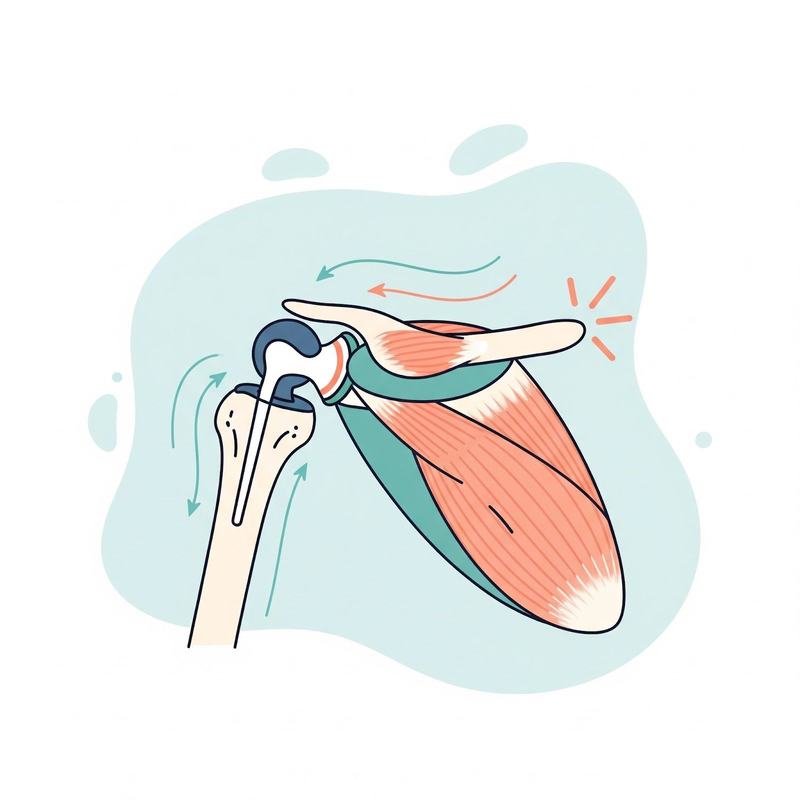
Reverse shoulder arthroplasty (RSA) is a surgical procedure used to treat various shoulder conditions, including rotator cuff tear arthropathy (CTA), proximal humerus fractures, and failed shoulder arthroplasty 1. RSA is considered when a patient has arthritis of the shoulder joint and the rotator cuff tendons are torn or gone, or when the rotator cuff tendons are torn, and the person cannot lift their arm 2. It is also an option for those who have had a previous standard shoulder replacement that was unsuccessful or for certain shoulder fractures 2. RSA involves replacing the damaged parts of the shoulder joint with artificial components. In a standard shoulder replacement, the "ball" of the joint is attached to the upper arm bone (humerus), and the "socket" is attached to the shoulder blade (scapula). In RSA, these components are reversed, with the ball attached to the scapula and the socket attached to the humerus 2. This design allows the deltoid muscle to become the primary mover of the arm, which is beneficial for patients with pseudo paralysis, a condition in which the rotator cuff muscles are no longer able to effectively lift the arm 1. This surgery was originally designed in the 1980s in Europe and was approved for use in the U.S. in 2003 3.
One of the main goals of RSA for pseudo paralysis is to improve the patient's range of motion, particularly forward elevation and internal/external rotation. Forward elevation is the ability to raise the arm in front of the body, while internal/external rotation is the ability to turn the arm inward and outward 4. These movements are essential for performing many activities of daily living, such as reaching overhead, dressing, and toileting, which become difficult or impossible for individuals with pseudo paralysis due to their limited ability to control arm position 5.
Causes of Pseudo Paralysis
Pseudo paralysis is primarily caused by rotator cuff deficiency, which can have multiple causes. The most common cause is a rotator cuff tear, where the tendons that connect the rotator cuff muscles to the bone are torn 6. Other causes include proximal humerus fractures, where the bone near the shoulder joint is broken, and previous shoulder surgeries that may have disrupted the rotator cuff function 6. In these cases, the rotator cuff muscles cannot effectively hold the head of the humerus in the socket, leading to instability and difficulty lifting the arm.
Outcomes of Forward Elevation
RSA has been shown to be effective in improving forward elevation in patients with pseudo paralysis. In one study, the mean active forward elevation increased from 70° preoperatively to 148° postoperatively 5. Another study found that 96% of patients who underwent RSA for pseudo paralysis were able to achieve an active forward elevation of greater than 90° 7. These findings suggest that RSA can reliably restore the ability to raise the arm in front of the body.
Outcomes of Internal/External Rotation
While RSA is effective in improving forward elevation, the outcomes for internal/external rotation are more variable. Some studies have reported significant improvements in internal/external rotation after RSA, while others have found that these movements remain limited 4. One study found that only 32.4% of patients achieved sufficient internal rotation at one year following surgery 4. Another study found that the average improvement in external rotation after RSA was 27° 8. These findings suggest that the degree of improvement in internal/external rotation after RSA can vary depending on a number of factors. One notable finding is that RSA combined with tendon transfer can restore both active elevation and external rotation in patients with pseudo paralysis 5.
Implant Design and Selection
The type of implant used in RSA can significantly impact the outcomes, particularly range of motion and the risk of complications. Early RSA designs, such as the Grammont prosthesis, were associated with a higher incidence of complications like scapular notching, where the edge of the implant rubs against the shoulder blade 9. Modern prosthesis designs have addressed these issues by modifying the position and shape of the implant components. For example, lateralized glenoid components and inlay humeral components have been shown to reduce the risk of scapular notching and improve range of motion 10.
Implant design has been classified into three types:
- Medial glenoid/medial humerus (MGMH): This was the original Grammont prosthesis design, which medializes the center of rotation. It has a higher risk of scapular notching 9.
- Medial glenoid/lateral humerus (MGLH): This design involves lateral positioning of the humeral component.
- Lateral glenoid/medial humerus (LGMH): This design increases the arc of rotation through lateral positioning of the glenoid component. It may have an increased risk of baseplate failure and glenoid loosening 9.
Surgeons carefully consider factors such as patient anatomy, the severity of the shoulder condition, and the desired outcome when selecting the most appropriate implant design.
Factors that Determine Outcome
Several factors have been identified that can influence the outcome of RSA for pseudo paralysis, including:
- Patient factors: Age, body mass index (BMI), and overall health can all affect the outcome of RSA. Younger patients with a lower BMI tend to have better outcomes than older patients with a higher BMI 4. This is likely because younger patients have better bone quality and muscle function, which can contribute to faster healing and improved recovery. Preoperative range of motion also plays a role, as patients with better preoperative function tend to have better postoperative function 4.
- Surgical factors: The surgical approach used and the type of implant used can also affect outcomes. For example, one study found that patients who underwent RSA with a lateralized glenoid component had better outcomes than those who underwent RSA with a medialized glenoid component 11. The surgical approach can influence the degree of soft tissue disruption and the risk of complications, while the implant design affects the biomechanics of the shoulder joint and the potential for range of motion. The surgeon may also opt to perform a tendon transfer during the surgery to provide the patient with a shoulder external rotation (ER) moment during functional activity 12. This can further improve outcomes, particularly for patients with significant external rotation deficits.
- Rehabilitation: Adherence to a postoperative rehabilitation program is essential for achieving optimal outcomes after RSA. Rehabilitation typically involves exercises to improve range of motion, strength, and stability. Patients who are compliant with their rehabilitation program tend to have better outcomes than those who are not 13. Rehabilitation helps to restore muscle function, prevent stiffness, and improve overall shoulder function.
- Decision-making complexity: It's important to recognize that decision-making for the treatment of pseudoparalytic shoulders is complex and requires a high level of experience in shoulder surgery and outcome evaluation 14. Surgeons must carefully consider various factors, including the patient's specific condition, their goals and expectations, and the potential risks and benefits of different treatment options.
Rehabilitation Process
The rehabilitation process following RSA is crucial for maximizing outcomes. It typically involves several phases:
| Phase | Timeframe | Goals | Activities |
|---|---|---|---|
| Phase I | 0-2 weeks | Protect the surgical repair, reduce pain and swelling, gradually increase passive range of motion | Wear a sling, perform pendular exercises, and gentle exercises for the hand, wrist, and elbow 15 |
| Phase II | 2-6 weeks | Discontinue sling, initiate active-assisted range of motion exercises, restore normal glenohumeral and scapulothoracic motion and function | Active-assisted range of motion exercises, scapular exercises 15 |
| Phase III | 6-12 weeks | Start deltoid strengthening exercises, continue range of motion stretches | Deltoid strengthening exercises, range of motion stretches 15 |
| Phase IV | 12+ weeks | Lift and carry objects as tolerated, progress strength and range of motion | Progressive strengthening and range of motion exercises, higher-level activities as tolerated 15 |
It is important to note that many different factors influence the post-operative reverse shoulder arthroplasty rehabilitation outcome, including surgical approach, concomitant repair of the rotator cuff, arthroplasty secondary to fracture, arthroplasty secondary to rheumatoid arthritis or osteonecrosis, revision arthroplasty, and individual patient factors 16. Therefore, rehabilitation programs should be individualized to meet the specific needs of each patient.
Joint protection is a crucial aspect of post-operative care after RSA 17. Patients should avoid certain movements and activities that could put excessive stress on the shoulder joint and increase the risk of complications, such as dislocation. Specific precautions may include:
- Avoiding shoulder AROM into abduction or flexion past 90 degrees.
- No lifting of objects.
- No internal rotation (IR) behind the back or resisted internal rotation.
- No supporting of body weight by hand on the involved side.
- No excessive stretching or sudden movements (especially into external rotation) 18
Despite the importance of rehabilitation, studies have shown that there is a lack of high-quality evidence to guide rehabilitation protocols after RSA 19. More research is needed to determine the optimal rehabilitation strategies for different patient populations and surgical techniques.
Risks and Complications
While RSA is generally a safe and effective procedure, it is important to be aware of the potential risks and complications. These can include:
- Dislocation of the artificial joint
- Infection
- Excess blood loss
- Damage to the surrounding nerves
- Break (fracture) of one of the shoulder bones 2
Surgeons take precautions to minimize these risks, but it is important for patients to be informed about the potential downsides of the procedure.
Outcome Measures and Evaluation
To assess the outcomes of RSA, surgeons use various measures to track pain relief, range of motion, and functional improvement. Some common outcome measures include:
- Pain scores: These assess the patient's level of pain before and after surgery, often using a visual analog scale (VAS) where patients rate their pain on a scale of 0 to 10.
- Range of motion: This measures the degrees of movement in different directions, such as forward elevation, external rotation, and internal rotation.
- Functional scores: These assess the patient's ability to perform activities of daily living, such as reaching, lifting, and dressing. Examples include the Constant score and the American Shoulder and Elbow Surgeons (ASES) score20.
These measures help to track the patient's progress and determine the overall success of the RSA procedure.
Preoperative Evaluation and Planning
Before undergoing RSA, patients undergo a thorough preoperative evaluation to assess their suitability for the procedure and to plan the surgery. This evaluation typically includes:
- Patient History: A detailed history, including personal, medical, and social history, is taken to identify any medical conditions or social circumstances that may affect the outcome of the surgery21.
- Clinical Assessment: A physical examination is performed to assess the shoulder's range of motion, rotator cuff function, axillary nerve function, deltoid muscle function, and overall upper limb neurovascular status21.
- Imaging Modalities: X-rays, CT scans, and MRI scans may be used to evaluate the condition of the shoulder joint, the extent of bone loss, and the quality of the surrounding tissues21.
- Medical Optimization: Patients with medical comorbidities, such as diabetes or heart disease, may require medical assessment and optimization before surgery to minimize the risk of complications21.
This comprehensive evaluation helps to ensure that patients are well-prepared for surgery and that the surgical plan is tailored to their individual needs.
Conclusion
RSA is an effective treatment option for patients with pseudo paralysis. The procedure can reliably improve forward elevation and, in many cases, internal/external rotation. Several factors can influence the outcome of RSA, including patient factors, surgical factors, and rehabilitation. Adherence to a postoperative rehabilitation program is essential for achieving optimal outcomes. While RSA can significantly improve shoulder function and quality of life, it's important to manage patient expectations and understand that full restoration of pre-injury function may not always be achievable 2. Studies have shown that despite a high arthroplasty survival rate and good long-term clinical results, RTSA outcomes showed deterioration when compared with medium-term results 22. This highlights the importance of long-term follow-up and ongoing management to maintain the benefits of RSA.
Synthesis of Research Findings
Based on the research material provided, the following key insights can be drawn:
- RSA is a viable surgical option for patients with pseudo paralysis who have lost the ability to actively elevate their arm due to rotator cuff tears 1.
- The procedure can effectively restore active forward elevation and, to a varying degree, active external rotation 5.
- Internal rotation improvement is less predictable and often remains limited after RSA 4.
- Patient factors, such as age, BMI, and preoperative range of motion, can influence outcomes 4.
- Surgical technique and implant design also play a role in determining the final range of motion achieved 11.
- Postoperative rehabilitation is crucial for maximizing outcomes and should focus on restoring strength, stability, and range of motion in a phased manner 15.
- While RSA can significantly improve shoulder function and quality of life, it's important to manage patient expectations and understand that full restoration of pre-injury function may not always be achievable 2.
This information can help guide clinical decision-making and patient counseling regarding RSA for pseudo paralysis.
Future Directions
While RSA has become an increasingly popular and successful treatment for pseudo paralysis, there are still areas where further research is needed. These include:
- Optimal rehabilitation protocols: More research is needed to determine the most effective rehabilitation strategies for different patient populations and surgical techniques. This includes investigating the role of early versus delayed mobilization, the optimal duration of immobilization, and the most effective exercises for restoring strength and range of motion.
- Long-term effects of different implant designs: While modern implant designs have shown promising results in reducing complications and improving outcomes, more long-term data is needed to assess their durability and effectiveness over time. This includes evaluating the risk of implant loosening, wear, and failure, as well as the long-term impact on shoulder function and quality of life.
- Patient-specific factors: Further research is needed to better understand how individual patient factors, such as age, comorbidities, and activity level, influence the outcomes of RSA. This will help to personalize treatment plans and optimize outcomes for each patient.
By addressing these research questions, we can continue to improve the outcomes of RSA for pseudo paralysis and provide the best possible care for patients with this condition.
Works cited
1. Reverse Shoulder Arthroplasty - Shoulder & Elbow - Orthobullets, accessed February 25, 2025, https://www.orthobullets.com/shoulder-and-elbow/3076/reverse-shoulder-arthroplasty
2. Reverse Total Shoulder Replacement | Johns Hopkins Medicine, accessed February 25, 2025, https://www.hopkinsmedicine.org/health/treatment-tests-and-therapies/reverse-total-shoulder-replacement
3. Reverse Total Shoulder Replacement - OrthoInfo - AAOS, accessed February 25, 2025, https://orthoinfo.aaos.org/en/treatment/reverse-total-shoulder-replacement/
4. Predictors of Internal Rotation after Reverse Shoulder Arthroplasty ..., accessed February 25, 2025, https://pmc.ncbi.nlm.nih.gov/articles/PMC10697196/
5. Reverse Shoulder Arthroplasty Combined with a Modified Latissimus Dorsi and Teres Major Tendon Transfer for Shoulder Pseudoparalysis Associated with Dropping Arm - PMC, accessed February 25, 2025, https://pmc.ncbi.nlm.nih.gov/articles/PMC2505202/
6. Dr. James Latshaw - Reverse Total Shoulder Arthroplasty - 5/7/16 - YouTube, accessed February 25, 2025,
7. Systematic review of reversing pseudoparalysis of the shoulder due to massive, irreparable rotator cuff tears - PubMed, accessed February 25, 2025, https://pubmed.ncbi.nlm.nih.gov/32643613/
8. Restoration of External Rotation After Reverse Shoulder Arthroplasty Without Latissimus Dorsi Transfer, accessed February 25, 2025, /images/press/uploads/presentation/Renoir-1/12092017/1030_Berglund_D.pdf
9. Reverse total shoulder arthroplasty | Radiology Reference Article | Radiopaedia.org, accessed February 25, 2025, https://radiopaedia.org/articles/reverse-total-shoulder-arthroplasty
10. The modern reverse shoulder arthroplasty and an updated systematic review for each complication: part II - PubMed Central, accessed February 25, 2025, https://pmc.ncbi.nlm.nih.gov/articles/PMC7846704/
11. Analysis of three different reverse shoulder arthroplasty designs for cuff tear arthropathy – the combination of lateralization and distalization provides best mobility - PubMed Central, accessed February 25, 2025, https://pmc.ncbi.nlm.nih.gov/articles/PMC10918945/
12. Reverse Total Shoulder Arthroplasty - Brigham and Women's Hospital, accessed February 25, 2025, https://www.brighamandwomens.org/assets/bwh/patients-and-families/rehabilitation-services/pdfs/shoulder-reverse-total-shoulder-arthroplasty-protocol.pdf
13. Optimizing Outcomes After Reverse Total Shoulder Arthroplasty: Rehabilitation, Expected Outcomes, and Maximizing Return to Activities - PMC, accessed February 25, 2025, https://pmc.ncbi.nlm.nih.gov/articles/PMC10043097/
14. Understanding shoulder pseudoparalysis. Part II: Treatment - PMC, accessed February 25, 2025, https://pmc.ncbi.nlm.nih.gov/articles/PMC8965202/
15. Rehabilitation after Reverse Total Shoulder Replacement | Arm Docs, accessed February 25, 2025, https://www.armdocs.com/rehab/postop-rehab-after-reverse-total-shoulder-replacement
16. Rehabilitation Protocol for Reverse Shoulder Arthroplasty - Massachusetts General Hospital, accessed February 25, 2025, https://www.massgeneral.org/assets/mgh/pdf/orthopaedics/sports-medicine/physical-therapy/rehabilitation-protocol-for-reverse-shoulder-arthroplasty.pdf
17. Reverse Total Shoulder Replacement Therapy Protocol - Southeast Kansas Orthopedic Clinic, accessed February 25, 2025, /images/press/uploads/2015/08/Reverse-Total-Shoulder-Replacement-Therapy-Protocol.pdf
18. Reverse Total Shoulder Arthroplasty Protocol - Orthopedic Specialists, accessed February 25, 2025, https://stlorthospecialists.com/reverse-total-shoulder-arthroplasty-protocol/
19. Rehabilitation After Anatomic and Reverse Total Shoulder Arthroplasty - The Journal of Bone and Joint Surgery, accessed February 25, 2025, https://www.jbjs.org/reader.php?rsuite_id=2337071&type=pdf&name=JBJS.RVW.19.00129.pdf
20. Reverse Total Shoulder Surgery Outcomes - Dr. Reuben Gobezie, accessed February 25, 2025, https://clevelandshoulder.com/reverse-total-shoulder-replacement-surgery/
21. Reverse Shoulder Arthroplasty - StatPearls - NCBI Bookshelf, accessed February 25, 2025, https://www.ncbi.nlm.nih.gov/books/NBK574545/
22. Long-Term Outcomes of Reverse Total Shoulder Arthroplasty - JBJS, accessed February 25, 2025, https://www.jbjs.org/reader.php?rsuite_id=1273998
