
Management of Proximal Humerus Fractures
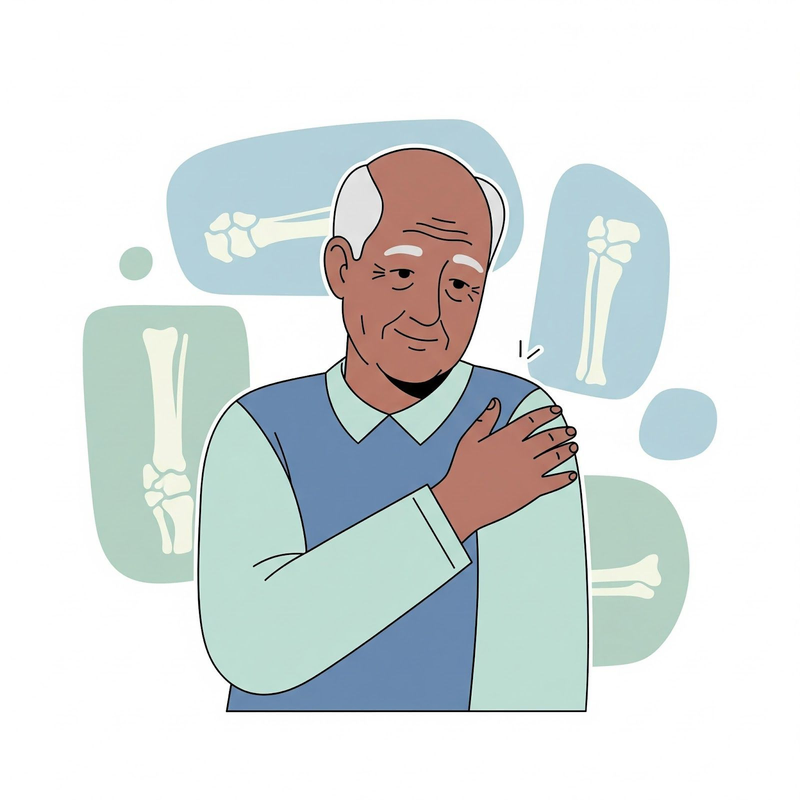
Proximal humerus fractures (PHF) are a common injury, representing the third most frequent fracture in older adults, and are often associated with osteoporosis 1. They occur in a bimodal distribution, affecting younger patients who experience high-energy trauma and older patients with low-energy falls 3. Proximal humerus fractures include fractures to the anatomical neck, surgical neck, greater tuberosity, or lesser tuberosity, either in isolation or combination 4. Apart from bone fragility, other risk factors for PHF include those related to falls, such as low levels of physical activity, impaired balance, or lower limb pain or injury 4. When evaluating a patient with a suspected PHF, it is essential to assess for neurovascular status, particularly sensation to the deltoid patch and distal perfusion of the limb, as well as the possibility of a co-occurring dislocation that may indicate injury to the surrounding soft tissue 5. Symptoms of a PHF can vary depending on the specific type of fracture but may include pain, swelling and bruising, inability to move the shoulder, a grinding sensation when the shoulder is moved, deformity, bleeding (open fracture), and loss of normal use of the arm if a nerve injury occurs 6. This article will discuss the management of PHF, including non-operative and surgical treatment, and review potential complications.
Anatomy
The proximal humerus is the uppermost portion of the upper arm bone (humerus) 6. It is a complex structure with several important bony landmarks and muscle attachments. The greater and lesser tuberosities are two prominent bony prominences on the proximal humerus. The supraspinatus, infraspinatus, and teres minor muscles insert into the greater tuberosity, while the subscapularis muscle inserts into the lesser tuberosity 7. The greater and lesser tuberosities are separated by the bicipital groove, which houses the long head of the biceps tendon 7. Lateral to the bicipital groove is the insertion point for the pectoralis major muscle, and medial to it is the insertion of the latissimus dorsi and teres major muscles 7. The deltoid muscle, a major muscle responsible for shoulder abduction, inserts into the deltoid tuberosity on the lateral aspect of the humeral shaft 7.
A common feature of proximal humerus fractures is their ability to remodel, especially in children, due to the thick periosteum and the proximity to the proximal humeral physis, which is responsible for 80% of the growth of the humerus 7.
Classification
Several classification systems are used to categorize proximal humerus fractures. Two commonly used systems are the Neer classification and the AO/OTA classification.
The Neer classification system, developed in 1970, is based on the displacement of four anatomical segments of the proximal humerus: the articular surface, greater tuberosity, lesser tuberosity, and humeral shaft 3. A segment is considered displaced if it is separated by more than 1 cm or angulated by more than 45 degrees 3. Based on the number of displaced parts, fractures are classified as one-part, two-part, three-part, or four-part fractures.
The AO/OTA classification is a more comprehensive system that divides proximal humerus fractures into three main types (A, B, C) based on the degree of articular surface involvement and the location of the fracture lines 3. These types are further subdivided based on the degree of displacement, impaction, and dislocation, resulting in a total of 27 fracture subtypes. Type A fractures are extra-articular with an intact vascular supply, type B fractures are extra-articular with possible vascular compromise, and type C fractures are articular with a high likelihood of vascular compromise 3.
While these classification systems are helpful in guiding treatment decisions, it is important to note that challenges exist in recommending treatment based on displacement and age alone 7.
Imaging
A complete orthogonal plane view X-ray series is essential for evaluating proximal humerus fractures 8. Standard radiographic views include a true anteroposterior (Grashey) view, a scapular Y view, and an axillary view 8. The axillary or scapular Y views help visualize the posterior displacement of the greater tuberosity and confirm the congruence of the glenohumeral joint, while the anteroposterior and lateral views show the medial displacement of the lesser tuberosity and shaft 8.
In cases where fracture lines are unclear or more complex fracture patterns are suspected, computed tomography (CT) imaging is recommended 8. CT scans can provide detailed information about the articular surface, the position of the tuberosities, and the presence of any associated injuries. Magnetic resonance imaging (MRI) is not routinely used for acute proximal humerus fractures but can be helpful in assessing rotator cuff injuries after fracture or diagnosing non-displaced greater tuberosity fractures 8.
Outcome Measures
Several outcome measures are used to evaluate the functional results of proximal humerus fracture treatment. Two commonly used measures are the Constant-Murley score and the Disabilities of the Arm, Shoulder, and Hand (DASH) score 4. The Constant-Murley score assesses pain, range of motion, strength, and activities of daily living, while the DASH score is a patient-reported outcome measure that evaluates upper extremity function and symptoms.
Non-Operative Treatment
Most minimally displaced proximal humerus fractures can be treated non-operatively 9. Non-operative treatment typically involves a period of immobilization followed by physiotherapy 10. Studies have shown high union rates and good functional outcomes in patients treated non-operatively, with approximately 80% of cases achieving good or excellent outcomes 9.
Immobilization
Immobilization aims to provide support and pain relief while the fracture heals 10. It is typically achieved with a sling, with or without a swath for added support 11. A collar and cuff sling may be used when gentle traction is desired to improve fracture alignment 11. For some fractures, immobilization in abduction with a cushion may be beneficial 11. The duration of immobilization should be as short as possible but long enough to allow for initial healing 11. However, it is important to note that prolonged immobilization can lead to stiffness and pain in the shoulder, with a substantial reduction in function 10.
The concept of neutral rotation sling for non-operative treatment has gained attention recently 12. Traditionally, slings have held the humeral shaft in an internally rotated position, which can potentially displace the fracture. Neutral rotation slings, which maintain the arm in a neutral position, may help to better maintain fracture alignment and reduce the risk of malunion 12.
Early Passive Mobilization
Within a week after the fracture, early passive mobilization of the shoulder is crucial 4. This involves gently moving the shoulder through its range of motion with assistance, without actively engaging the muscles. Early passive mobilization helps to prevent stiffness, maintain joint mobility, and promote healing.
Bone Health
Vitamin D supplementation is recommended for all patients with proximal humerus fractures 1. Vitamin D plays a vital role in calcium absorption and bone health, which is essential for fracture healing.
Rehabilitation
Rehabilitation after immobilization focuses on restoring function and mobility to the injured arm 10. Early mobilization has been shown to lead to faster and better outcomes with less pain and no major redisplacement or other complications in stable fractures 10. Rehabilitation protocols vary, but generally involve a phased approach with gradual progression of exercises and activities 4. Early rehabilitation is crucial to avoid the harmful effects of immobilization, such as stiffness and muscle weakness 15.
Specific rehabilitation exercises may include:
- Pendulum exercises: These involve leaning forward and gently swinging the arm in circles to promote shoulder mobility 16.
- Hand grip strengthening: Exercises like squeezing a soft ball or ball of socks help to maintain hand and wrist function 16.
- Postural awareness exercises: These exercises focus on improving posture and strengthening the muscles that support the shoulder, such as bringing the shoulders back and squeezing the shoulder blades together 16.
The following table outlines the rehabilitation phases and criteria for progression for unstable proximal humeral fractures, as described in 14:
| Phase | Timeframe | General Guidelines and Precautions | Goals | Exercises | Criteria to Progress to Next Phase |
|---|---|---|---|---|---|
| Phase 1 | 4-8 weeks | Remain in sling at all times other than for physical therapy and personal hygiene. No active motion or active use of the arm. Pain-free passive elevation to a maximum of 140 degrees; external rotation to a maximum of 40 degrees. No internal rotation. | Protect the fracture site with immobilization to optimize healing. Encourage motion in a pain-free range to prevent stiffness. | Passive forward elevation. Passive external rotation. Aquatics for basic upper extremity program with slow speed of motions. Pendulum exercises. Elbow, wrist, hand, and scapular retraction exercises. | Pain-free passive forward elevation to 140 degrees; external rotation to 40 degrees. Clearance by the physician based on evidence of early callus formation on radiographs. |
| Phase 2 | 8-12 weeks | Wean from sling gradually. Avoid lifting more than 5 lbs. Avoid weight-bearing on the affected arm. | Restore full passive range of motion. Restore functional use of the arm for activities of daily living below shoulder level. Protect the healing fracture from stress overload. | Pain-free passive range of motion without range limits for elevation, external rotation, and internal rotation. Continue aquatic program and gradually increase speed of motion. Forward elevation progression. External rotation/internal rotation active range of motion against gravity when full passive range is established. Scapular protraction and retraction. | Pain-free active range of motion in all planes. No pain with strengthening exercises. |
| Phase 3 | 12-16 weeks | Avoid lifting more than 10 lbs. | Restore full active range of motion. Increase strength. | Continue with previous exercises. Active assisted range of motion exercises with light weights. Isometric strengthening exercises for the rotator cuff muscles. | Full active range of motion with good mechanics. No pain with strengthening exercises. |
| Phase 4 | 16+ weeks | Increase rotator cuff and shoulder girdle strength. Restore full functional use of the arm. | Continue with previous exercises. Progress to more advanced strengthening exercises with heavier weights and resistance bands. |
It is important to note that these are general guidelines, and specific rehabilitation protocols may vary depending on individual patient factors and fracture characteristics.
Smoking Cessation
Medical evidence suggests that smoking prolongs fracture healing time 16. Patients who smoke should be advised to quit smoking during the healing phase of their fracture to ensure optimal recovery.
Surgical Fixation
Surgical fixation is considered for displaced or complex proximal humerus fractures where non-operative treatment may not be sufficient 9. The goals of surgical fixation are to restore articular surface congruency, alignment, and the relationship between the tuberosities and the humeral head 9.
Surgical Techniques
Several surgical techniques are available for PHF fixation, including:
- Closed reduction and percutaneous pinning: This technique involves manipulating the bone fragments into place without a large incision and then securing them with pins 8. It is suitable for fractures with good bone quality, minimal comminution, a stable closed reduction, an intact medial calcar, and a cooperative patient 8. The decision to proceed with closed reduction and percutaneous pinning versus open reduction is often made intraoperatively after assessing the stability of the reduction under anesthesia 17.
- Open reduction and internal fixation (ORIF): This is the most common surgical technique for PHF 18. It involves making an incision to access the fracture site, reducing the fracture, and fixing it with plates and screws 3. ORIF allows for direct visualization and anatomical reduction of the fracture fragments. In some cases, bone grafting, using either "off the shelf" bone substitutes or autologous bone graft, may be used to fill bony defects and augment fixation 20. The addition of a fibular allograft has been studied, but it does not appear to improve the overall results of surgical fixation 21.
- Intramedullary nailing: This technique involves inserting a nail into the medullary canal of the humerus to stabilize the fracture 1. It may be preferred for certain fracture patterns and offers advantages such as a smaller incision and less blood loss 1. Modern nails have improved locking mechanisms and a straight geometry that allows for insertion medial to the rotator cuff, reducing complications 1.
- Suture anchor fixation: This technique is used for specific fracture types, generally where a part of the humerus (greater tuberosity) has been pulled off by the rotator cuff tendons 19. It involves using suture anchors to reattach the bone fragment to its original position.
- Shoulder replacement: Shoulder replacement may be considered for severely comminuted fractures, especially in patients with poor bone quality or pre-existing shoulder conditions 19. There are two main types of shoulder replacements: hemiarthroplasty (replacement of the humeral head) and reverse shoulder arthroplasty (replacement of both the humeral head and glenoid socket) 9. Hemiarthroplasty provides reliable pain relief but may not fully restore shoulder kinematics and function 22. Reverse shoulder arthroplasty is increasingly being used for PHF, particularly in older patients with poor bone quality and tuberosity comminution, and has been shown to provide better clinical outcomes than hemiarthroplasty in some studies 19.
Implants
Various implants are used in surgical fixation of PHF, including:
- Plates and screws: These are the most commonly used implants for ORIF 19. Angular stable plates, which provide more stable fixation, are often preferred, especially in osteoporotic bone 23. Locking plates, which allow for screws to be locked into the plate, offer increased stability and may be beneficial in cases with poor bone quality.
- Intramedullary nails: Modern nails have improved locking mechanisms and a straight geometry that allows for insertion medial to the rotator cuff, reducing complications 1.
- Kirschner wires: These are thin wires used for temporary or supplemental fixation 18.
- Suture anchors: These are small implants used to reattach bone fragments to tendons or ligaments.
- Bone cement: Bone cement may be used to augment fixation, particularly in cases with poor bone quality 20.
In addition to the implants mentioned above, neutralization sutures or "Tension band suture fixation" may be used to augment plate fixation 23. These sutures are passed through the rotator cuff tendon insertions and corresponding holes in the plate, providing additional support and stability to the construct.
Potential Complications
Complications can occur with both non-operative and surgical treatment of PHF.
Non-Operative Complications
Complications of non-operative treatment include:
- Malunion: The bone heals in an unacceptable position, potentially leading to functional limitations 3.
- Nonunion: The bone fails to heal 3.
- Osteonecrosis: Loss of blood supply to the humeral head, leading to bone death and potential collapse 24.
- Secondary fracture displacement: The fracture fragments move out of their initial position during the healing process 24.
- Stiffness: Decreased range of motion in the shoulder 3.
- Rotator cuff problems: Tears or dysfunction of the rotator cuff muscles 24.
- Heterotopic ossification: Formation of bone in non-skeletal tissues, such as muscles and ligaments 4.
- Systemic complications: Although rare, complications like pneumonia and deep venous thrombosis can occur after non-operative treatment, particularly in elderly or immobile patients 24.
Surgical Complications
Complications of surgical treatment include:
- Infection: Infection of the surgical site 19.
- Nerve or vascular injury: Damage to nerves or blood vessels around the shoulder 19.
- Fixation failure: The implants fail to hold the bone fragments in place 25. This can be due to various factors, including poor bone quality, inadequate reduction, or implant loosening or breakage 26.
- Implant migration: The implants move or loosen 25.
- Avascular necrosis: Similar to non-operative treatment, but potentially exacerbated by surgical disruption of blood supply 25.
- Stiffness: Decreased range of motion in the shoulder, which can occur with both treatment approaches but may be worsened by surgical scarring 25.
- Screw perforation: Screws penetrate the humeral head and may damage the joint 19.
- Heterotopic ossification: Similar to non-operative treatment 4.
- Implant-related symptoms: Metal implants may cause irritation, soft tissue problems, or aching in cold weather 19.
- Prominent metalwork: If the fracture collapses around the screws, they may become prominent and require implant removal 19.
- Specific complications of shoulder arthroplasty: These include rotator cuff failure (hemiarthroplasty), glenoid notching (reverse shoulder arthroplasty), and periprosthetic fracture (fracture around the implant) 4.
Outcomes of Non-Operative vs. Surgical Fixation
Several studies have compared the outcomes of non-operative and surgical treatment for PHF. Many have found no significant difference in functional outcomes between the two approaches, particularly for two-part fractures 3. However, for three- and four-part fractures, especially in older adults with osteoporotic bone, non-operative treatment may lead to worse outcomes 3. It is important to note that the quality of evidence comparing surgical and non-surgical approaches is often suboptimal, with a lack of high-quality randomized controlled trials 2.
One study found that early mobilization in patients treated non-operatively resulted in better functional outcomes than late mobilization 21. Another study found that while reverse shoulder arthroplasty yielded better clinical outcomes than hemiarthroplasty for complex comminuted fractures, both procedures have their own sets of potential complications 21.
Factors Influencing Decision-Making
The decision between non-operative and surgical treatment for PHF is complex and depends on various factors, including:
- Patient factors: Age, activity level, bone quality, medical comorbidities, expectations, pain apprehension, underlying anxiety, pre-injury functional level, social support, and ability to participate in rehabilitation 17.
- Fracture factors: Fracture pattern, degree of displacement (including translation-type vs. angular displacement), number of fragments, associated injuries, and status of the medial calcar 8.
- Surgeon factors: Experience, expertise, preference, and specialty (trauma vs. shoulder) 17.
- Timing of surgery: Early versus delayed surgical intervention 22.
Shared decision-making between the patient and their healthcare provider is crucial to ensure that the treatment plan aligns with the patient's goals, values, and individual circumstances 1.
| Age | Acceptable displacement and angulation |
|---|---|
| < 8 yrs | Any degree of angulation, 100% displacement |
| 8 - 12 yrs | 40° - 70° of angulation and 50 - 100% displacement |
| > 12 yrs | 45° of angulation and 2/3rd displacement |
Conclusion
The management of proximal humerus fractures requires a comprehensive assessment of patient and fracture characteristics. Non-operative treatment with immobilization and early mobilization is often successful for minimally displaced fractures, while surgical fixation, with various techniques and implants available, is considered for more complex cases. Both treatment approaches have potential complications, and the decision-making process should involve shared decision-making between the patient and surgeon, taking into account the patient's individual needs, preferences, and circumstances.
Despite advancements in surgical techniques and implants, there is no clear evidence that surgical treatment consistently leads to superior outcomes compared to non-operative treatment, particularly for two-part fractures. This highlights the importance of careful patient selection and individualized treatment planning.
Future research should focus on conducting high-quality studies to better compare surgical and non-surgical approaches, further refine treatment algorithms, and improve outcomes for patients with proximal humerus fractures.
Works cited
1. Management of Proximal Humerus Fractures in Adults—A Scoping Review - MDPI, accessed February 17, 2025, https://www.mdpi.com/2077-0383/11/20/6140
2. A Comprehensive Review of Proximal Humerus Fractures: From Epidemiology to Treatment Strategies - PMC - PubMed Central, accessed February 17, 2025, https://pmc.ncbi.nlm.nih.gov/articles/PMC11070885/
3. Outcomes of Non-Operative and Operative Treatment of Proximal Humerus Fractures: Current Concepts | Published in SurgiColl, accessed February 17, 2025, https://surgicoll.scholasticahq.com/article/85018-outcomes-of-non-operative-and-operative-treatment-of-proximal-humerus-fractures-current-concepts
4. Proximal Humerus Fractures - Physiopedia, accessed February 17, 2025, https://www.physio-pedia.com/Proximal_Humerus_Fractures
5. proximal humeral fractures - Starship Hospital, accessed February 17, 2025, https://starship.org.nz/guidelines/fracture-clinic-proximal-humeral-fractures
6. Humerus Fracture (Upper Arm Fracture) - Johns Hopkins Medicine, accessed February 17, 2025, https://www.hopkinsmedicine.org/health/conditions-and-diseases/humerus-fracture-upper-arm-fracture
7. View of Management of Pediatric Proximal Humerus Fractures - JPOSNA.org, accessed February 17, 2025, https://www.jposna.org/index.php/jposna/article/view/580/692
8. Management of Proximal Humerus Fractures in Adults—A Scoping Review - PMC, accessed February 17, 2025, https://pmc.ncbi.nlm.nih.gov/articles/PMC9604576/
9. A Review of Management Options for Proximal Humeral Fractures - PMC, accessed February 17, 2025, https://pmc.ncbi.nlm.nih.gov/articles/PMC4110401/
10. Conservative Treatment of Proximal Humerus Fractures: When, How, and What to Expect, accessed February 17, 2025, https://pmc.ncbi.nlm.nih.gov/articles/PMC9889589/
11. Nonoperative for Extraarticular 3-part, surgical neck and tuberosity, no impaction, accessed February 17, 2025, https://surgeryreference.aofoundation.org/orthopedic-trauma/adult-trauma/proximal-humerus/extraarticular-3-part-surgical-neck-and-tuberosity-no-impaction/nonoperative
12. Concept of neutral rotation sling for non-operative treatment of proximal humerus fractures, accessed February 17, 2025, https://aoj.amegroups.org/article/view/5915/html
13. Rehabilitation Protocol for Proximal Humeral Fracture Open Reduction Internal Fixation (ORIF) - Massachusetts General Hospital, accessed February 17, 2025, https://www.massgeneral.org/assets/MGH/pdf/orthopaedics/sports-medicine/physical-therapy/rehabilitation-protocol-for-proximal-humeral-fracture-with-ORIF.pdf
14. Upper Extremity Division - Dr Christopher Klifto, accessed February 17, 2025, https://www.durhamhandtoshoulder.com/protocols/proximal-humeral-fracture-management-orif-pt.pdf
15. Proximal humerus fracture rehabilitation. - ShoulderDoc, accessed February 17, 2025, https://www.shoulderdoc.co.uk/news/view/934
16. Proximal Humerus fracture - East Sussex Healthcare NHS Trust, accessed February 17, 2025, /images/press/uploads/2017/06/0628.pdf
17. Three- or four-part proximal humeral fractures in middle-aged and active elderly group of patients: a narrative review of treatment options - Annals of Joint, accessed February 17, 2025, https://aoj.amegroups.org/article/view/8918/html
18. Proximal Humerus Fracture Fixation: Surgical Technique | Published in SurgiColl, accessed February 17, 2025, https://surgicoll.scholasticahq.com/article/67963-proximal-humerus-fracture-fixation-surgical-technique
19. Proximal Humerus Fracture Fixation - Windsor Upper Limb, accessed February 17, 2025, https://www.windsorupperlimb.com/procedures/shoulder-procedures/proximal-humerus-fracture-fixation
20. Proximal Humerus Fracture - Operative Fixation - Arm Docs, accessed February 17, 2025, https://www.armdocs.com/treatment/operative-fixation-for-proximal-humerus-fracture
21. Proximal Humeral Fractures: JBJS Clinical Summary, accessed February 17, 2025, https://www.jbjs.org/summary.php?id=158
22. A Review of Management Options for Proximal Humeral Fractures, accessed February 17, 2025, https://openorthopaedicsjournal.com/VOLUME/8/PAGE/148/FULLTEXT/
23. ORIF - Plate fixation for Extraarticular 2-part, surgical neck, impaction - AO Surgery Reference, accessed February 17, 2025, https://surgeryreference.aofoundation.org/orthopedic-trauma/adult-trauma/proximal-humerus/extraarticular-2-part-surgical-neck-impaction/orif-plate-fixation
24. Complications after non-surgical management of proximal humeral fractures: a systematic review of terms and definitions - PMC, accessed February 17, 2025, https://pmc.ncbi.nlm.nih.gov/articles/PMC6387518/
25. Arm Fracture Open Reduction and Internal Fixation | Johns Hopkins Medicine, accessed February 17, 2025, https://www.hopkinsmedicine.org/health/treatment-tests-and-therapies/arm-fracture-open-reduction-and-internal-fixation
26. Complications of proximal humeral fractures - Lo Scalpello - Journal, accessed February 17, 2025, https://www.loscalpellojournal.com/article/download/201/222
27. Surgical treatment is not superior to nonoperative treatment for displaced proximal humerus fractures: a systematic review and meta-analysis - PubMed, accessed February 17, 2025, https://pubmed.ncbi.nlm.nih.gov/36736653/
28. Operative versus non-operative treatment for 2-part proximal humerus fracture: A multicenter randomized controlled trial - PubMed, accessed February 17, 2025, https://pubmed.ncbi.nlm.nih.gov/31318863/
29. Operative versus non-operative treatment for 2-part proximal humerus fracture: A multicenter randomized controlled trial | PLOS Medicine, accessed February 17, 2025, https://journals.plos.org/plosmedicine/article?id=10.1371/journal.pmed.1002855
30. Factors influencing choice of treatment for proximal humeral fractures elaborated in a Delphi consensus process, accessed February 17, 2025, https://pmc.ncbi.nlm.nih.gov/articles/PMC10635939/
31. Proximal humerus fractures – epidemiology, comparison of mortality rates after surgical versus non, accessed February 17, 2025, https://epub.uni-regensburg.de/53478/3/2046-3758.122.BJR-2022-0275.R1.pdf
32. Factors associated with the decision for operative versus non-operative treatment of displaced proximal humerus fractures in the elderly - PubMed, accessed February 17, 2025, https://pubmed.ncbi.nlm.nih.gov/23022082/
