
Elbow Arthroscopy: A Comprehensive Review of Indications, Outcomes, and Comparison to Open Surgery
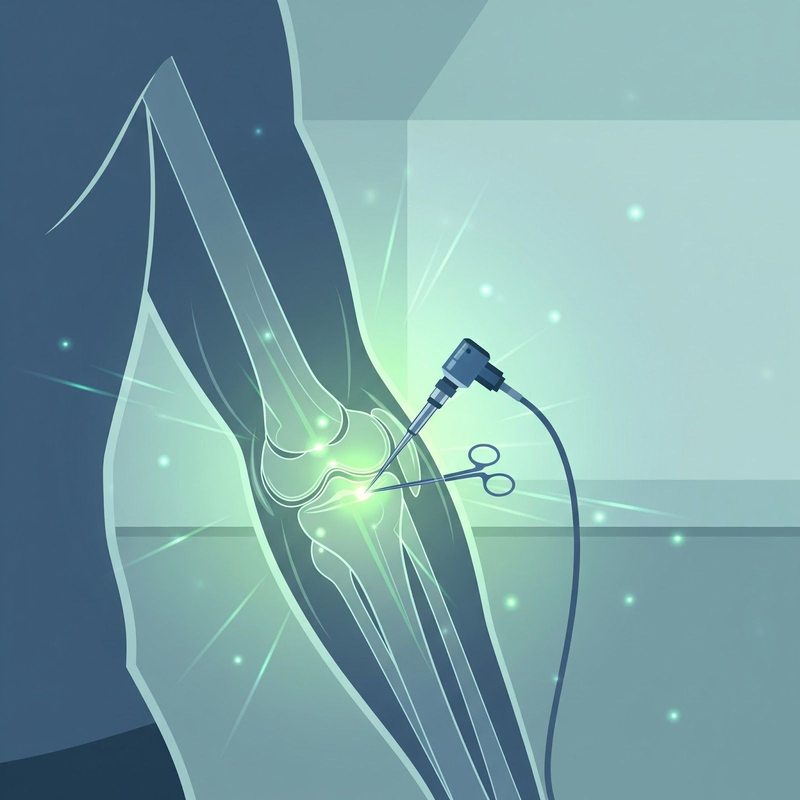
Elbow arthroscopy has undergone a remarkable transformation, evolving from a primarily diagnostic tool in the 1980s to a widely accepted method for treating a variety of elbow pathologies 1. This minimally invasive surgical technique involves inserting a small camera (arthroscope) and specialized instruments into the elbow joint through small incisions. This approach allows surgeons to visualize and address intra-articular conditions with minimal disruption to surrounding tissues. In this article, we delve into the current indications and outcomes for elbow arthroscopy, with a particular focus on the treatment of loose bodies, osteochondritis dissecans (OCD), and contractures. We also examine the advantages and limitations of arthroscopic techniques compared to open surgery for elbow procedures.
To gather the information presented in this review, a comprehensive search of medical literature was conducted using databases such as PubMed and Web of Science. Relevant research papers, review articles, and clinical studies published in reputable medical journals were analyzed to provide an up-to-date and evidence-based overview of elbow arthroscopy.
Indications for Elbow Arthroscopy
Elbow arthroscopy is currently indicated for a wide range of conditions, including:
- Loose bodies: The removal of loose bodies, often fragments of cartilage or bone, is the most common reason for performing elbow arthroscopy 2. These fragments can cause pain, clicking, catching, and locking of the joint. Elbow arthroscopy allows surgeons to effectively remove these fragments, often with minimal complications 2.
- Osteochondritis dissecans (OCD): OCD is a condition in which a piece of bone and cartilage in the elbow joint loses its blood supply. This can lead to softening, cracking, or even separation of the affected area 3. If left untreated, OCD can cause further damage to the cartilage in the joint and lead to early arthritis. Elbow arthroscopy can be used to assess the stability of the OCD lesion, remove any loose fragments, and stimulate healing through techniques like microfracture or drilling 4.
- Lateral epicondylitis (tennis elbow): While typically managed with non-operative treatments, elbow arthroscopy may be considered for persistent cases that do not respond to conservative measures 2. The procedure involves removing damaged tendon tissue and surrounding inflamed tissue.
- Synovitis: Synovitis is the inflammation of the synovium, the tissue that lines the elbow joint. Elbow arthroscopy allows for synovectomy, the removal of the inflamed synovium, which can help reduce pain and inflammation 5.
- Contractures: Elbow contractures restrict the normal range of motion of the joint. They can result from various factors, including trauma, arthritis, or prolonged immobilization. Arthroscopic release of the contracted capsule and ligaments can improve joint mobility 6.
- Fractures: Elbow arthroscopy can be used to assess and manage certain types of elbow fractures, particularly those involving the radial head or coronoid process 2. For example, small coronoid fractures can be debrided arthroscopically to prevent loose body formation and malunion. Minimally displaced radial head fractures with a single large fragment can also be addressed with this technique 2.
- Ulnar collateral ligament (UCL) injuries: Although UCL reconstruction often involves open surgical techniques, elbow arthroscopy can be valuable for diagnostic purposes and to address any associated injuries 1.
In addition to these established indications, elbow arthroscopy is increasingly being used for newer applications, such as the management of acute elbow injuries, fracture management, and assessment and management of elbow instability (both acute and chronic) 7. Less commonly, it can be used in arthroplasty cases for the evaluation and biopsy of painful total elbow replacements and as a guide during cement removal in revision total elbow replacements 7.
Outcomes of Elbow Arthroscopy
The outcomes of elbow arthroscopy are generally positive, with most patients experiencing significant pain relief and improvement in their range of motion 1. However, it's important to remember that outcomes can vary depending on the specific condition being treated and individual patient factors.
- Loose bodies: Arthroscopic removal of loose bodies has a high success rate, with studies showing significant improvement in pain and function 2. One study reported a success rate of 89% for the removal of isolated loose bodies 2.
- Osteochondritis dissecans: Arthroscopic treatment of OCD can lead to good long-term outcomes, especially for stable lesions. Studies have shown that most patients experience pain relief, improved function, and the ability to return to their previous level of sports participation 8. However, it's important to note that a subset of patients may experience residual symptoms or require revision surgery. One study reported a 13% revision rate for OCD lesions at a mean follow-up of 11 years 8.
- Contractures: Arthroscopic release of elbow contractures can significantly improve range of motion and functional outcomes. Studies have reported substantial gains in both flexion and extension, allowing patients to perform daily activities more easily 9. One study showed a mean gain in extension of 26.1 degrees and a mean gain in flexion of 15.4 degrees after arthroscopic capsular release 9.
Advantages and Limitations of Elbow Arthroscopy Compared to Open Surgery
Elbow arthroscopy offers several advantages over open surgery:
- Minimally invasive: Smaller incisions result in less pain, reduced scarring, and faster recovery 10.
- Improved visualization: The magnified view provided by the arthroscope allows for a more thorough assessment of the joint and precise treatment of the condition 2.
- Reduced risk of complications: Studies have shown lower rates of infection, nerve injury, and stiffness with arthroscopic techniques 10. Potential complications of elbow arthroscopy include infection, excessive bleeding, blood clots, and damage to blood vessels or nerves 11. Nerve injuries, when they occur, are often significant due to the proximity of nerves to the elbow joint capsule 11.
- Faster rehabilitation: Patients typically experience a quicker return to activity and sports compared to open surgery 2.
However, elbow arthroscopy also has limitations:
- Technically demanding: The complex anatomy of the elbow joint and the close proximity of neurovascular structures require specialized training and expertise 10.
- Limited access: Certain procedures, such as complex fracture fixation or extensive ligament reconstruction, may be better addressed with open techniques 10.
- Equipment and cost: Arthroscopic procedures require specialized equipment, which can increase the cost of treatment 2.
Postoperative Care and Rehabilitation
Postoperative care after elbow arthroscopy typically involves a combination of pain management, early mobilization, and a progressive strengthening program.
- Pain management: Medications, including local anesthetics and narcotic pain medication, are used to control pain 12. Ice therapy is also crucial in the initial postoperative period to reduce swelling and pain 12.
- Wound care: Keeping the surgical incisions clean and dry is essential to prevent infection 12. Patients may shower with a plastic covering over the surgical site beginning the day after surgery, but immersion of the arm in water (baths, hot tubs, pools) should be avoided 12.
- Immobilization: A sling may be used for comfort and to protect the joint in the initial postoperative period 13. However, early mobilization is encouraged to prevent stiffness.
- Early mobilization: Gentle range-of-motion exercises are often started soon after surgery to prevent stiffness 13. This may include finger flexion and extension exercises on the first postoperative day 12.
- Progressive strengthening: As pain and swelling subside, a structured rehabilitation program is implemented to restore strength and function 14. This typically involves a progression from gentle range-of-motion exercises to more demanding strengthening exercises as the elbow heals.
Rehabilitation protocols after elbow arthroscopy often follow a phased approach:
- First Post-Operative Day: Continue icing and keep the incision dry. Begin gentle range of motion exercises to tolerance, including elbow flexion/extension and supination/pronation 15.
- Day 2-4: Continue icing. If you don't have a splint or cast, you may remove the surgical bandage after showering and apply regular bandages to the wounds 15.
- Day 5-10: Continue range of motion exercises, aiming for at least 20-90 degrees of flexion/extension. Gentle overpressure into extension may be applied. Joint mobilization techniques may be used to re-establish range of motion 15.
- Day 11-14: Continue range of motion exercises, aiming for at least 10-100 degrees of flexion/extension. Continue overpressure into extension and joint mobilization. Initiate a light dumbbell program for progressive resistance exercises 15.
- Weeks 2-4: Continue full range of motion exercises and overpressure into extension. Continue the progressive resistance exercise program and initiate a shoulder program 16.
- Weeks 5-7: Continue all exercises and initiate a light upper body program 16.
- Weeks 8-12: Continue exercises and initiate an interval throwing program if appropriate for the patient's needs 16.
It's important to emphasize that these are general guidelines, and the specific rehabilitation protocol will be tailored to the individual patient's needs and the type of procedure performed.
Conclusion
Elbow arthroscopy has become an increasingly valuable tool in the management of various elbow conditions. Its minimally invasive nature, improved visualization, and reduced complication rates offer significant advantages over open surgery for many indications. However, it's crucial to carefully select patients and procedures that are appropriate for arthroscopic techniques. Not all patients are suitable candidates for elbow arthroscopy, and factors such as the stability of OCD lesions 17 need to be considered.
The success of elbow arthroscopy also depends on the surgeon's experience and expertise. The complex anatomy of the elbow joint and the proximity of neurovascular structures make this a technically demanding procedure that requires specialized training 10.
Finally, a comprehensive rehabilitation program is essential for achieving optimal outcomes after elbow arthroscopy. Postoperative care and rehabilitation play a vital role in restoring strength, range of motion, and function 18. Early mobilization and a structured exercise program are key components of successful rehabilitation.
With proper patient selection, surgical expertise, and a comprehensive rehabilitation program, elbow arthroscopy can provide excellent outcomes, allowing patients to regain function and return to their desired activities.
Works cited
1. Elbow Arthroscopy: Where are We Today? A Bibliometric Analysis ..., accessed February 17, 2025, https://cyprusjmedsci.com/articles/elbow-arthroscopy-where-are-we-today-a-bibliometric-analysis/doi/cjms.2024.2024-50
2. Elbow arthroscopy - Indications and technique - PMC, accessed February 17, 2025, https://pmc.ncbi.nlm.nih.gov/articles/PMC8167286/
3. Osteochondritis Dissecans (OCD) in the Elbow - Scottish Rite for Children, accessed February 17, 2025, https://scottishriteforchildren.org/osteochondritis-dissecans-ocd-in-the-elbow/
4. Osteochondritis Dissecans of the Elbow - Physiopedia, accessed February 17, 2025, https://www.physio-pedia.com/Osteochondritis_Dissecans_of_the_Elbow
5. Complications of Elbow Arthroscopic Surgery: A Systematic Review ..., accessed February 17, 2025, https://pmc.ncbi.nlm.nih.gov/articles/PMC9720815/
6. Elbow contracture release - Papadopoulos - Annals of Joint - AME Publishing Company, accessed February 17, 2025, https://aoj.amegroups.org/article/view/6083/html
7. Advances and future trends in elbow arthroscopy - Journal of ..., accessed February 17, 2025, https://jassm.org/advances-and-future-trends-in-elbow-arthroscopy/
8. Long-Term Patient-Reported Outcomes After Arthroscopic Debridement of Grade 3 or 4 Capitellar Osteochondritis Dissecans Lesions - PubMed, accessed February 17, 2025, https://pubmed.ncbi.nlm.nih.gov/36541470/
9. Arthroscopic treatment of post-traumatic elbow contracture - Orthobullets, accessed February 17, 2025, https://upload.orthobullets.com/journalclub/free_pdf/12469091_Ball_Arthroscopic%20treatment%20of%20elbow%20contracture_JSES_2002.pdf
10. Have Elbow Arthroscopy Hospitalizations Decreased over the Years ..., accessed February 17, 2025, https://www.mdpi.com/1660-4601/20/4/3638
11. Elbow Arthroscopy - OrthoInfo - AAOS, accessed February 17, 2025, https://orthoinfo.aaos.org/en/treatment/elbow-arthroscopy/
12. Post-Op Instructions Elbow Surgery - Nikhil Verma, MD, accessed February 17, 2025, https://www.sportssurgerychicago.com/patient-resources/post-op-instructions/elbow-surgery/
13. Elbow Arthroscopy: What to Expect at Home - MyHealth Alberta, accessed February 17, 2025, https://myhealth.alberta.ca/Health/aftercareinformation/pages/conditions.aspx?hwid=zc2412
14. REHABILITATION PROTOCOL- Elbow Arthroscopy - Dr Jonathan Watson, accessed February 17, 2025, https://www.jonwatsonmd.com/pdfs/pt-protocols/pt-elbow-scope.pdf
15. Post-Operative Instructions Elbow Arthroscopy and Synovectomy - General Home Supplies for Your Surgery, accessed February 17, 2025, https://www.newyorkortho.com/pdf/elbow-arthroscopy-synovectomy-post-op-instructions-and-rehab-14jan.pdf
16. Posterior Rehabilitation after Elbow Arthroscopy, accessed February 17, 2025, /images/press/uploads/2015/06/Lervick_posterior-decomp_eps.pdf
17. Osteochondritis Dissecans of the Elbow: A Review of Presentation, Diagnosis, Treatment and Complications | AOAO - American Osteopathic Academy of Orthopedics, accessed February 17, 2025, https://aoao.org/2024/08/22/osteochondritis-dissecans-of-the-elbow-a-review-of-presentation-diagnosis-treatment-and-complications/
18. Postoperative Elbow Arthroscopy Protocol, accessed February 17, 2025, https://www.vumc.org/sports-medicine/sites/vumc.org.sports-medicine/files/public_files/documents/Postoperative%20Elbow%20Arthroscopy%20Protocol.pdf
