
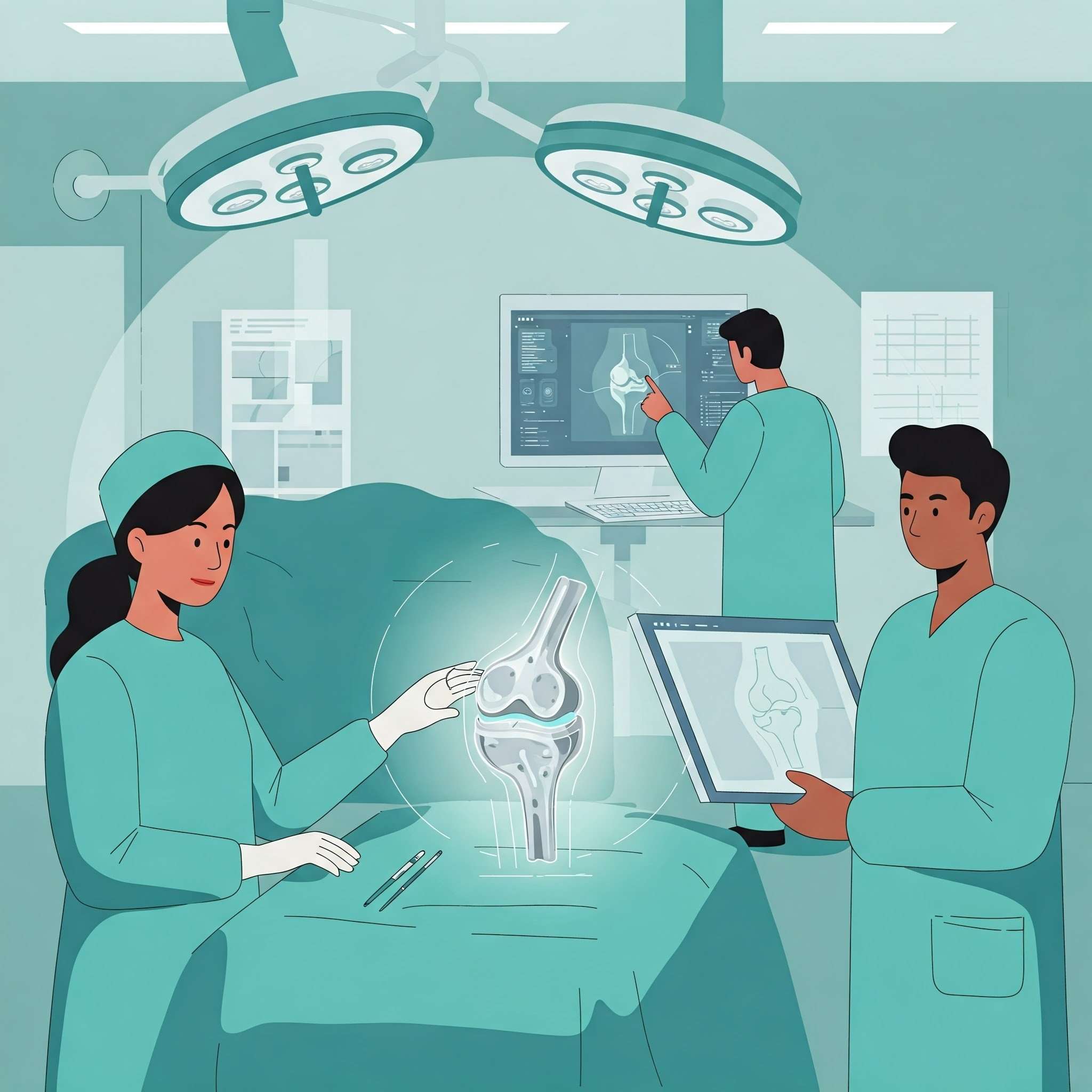
The Future of Joint Arthroplasty: Personalized Implants, 3D Printing, and Regenerative Medicine
Joint arthroplasty, or joint replacement surgery, is a common and generally successful procedure for treating patients with severe joint damage caused by conditions such as osteoarthritis. While traditional joint replacements with off-the-shelf implants have proven effective for many patients, some individuals experience persistent pain or restricted movement after surgery 1. Traditional implants may not be suitable for all patients, particularly those with unique anatomical characteristics or those who have undergone previous surgeries or have experienced trauma 2. Slightly elevated blood metal levels have been found in adults after hip and knee replacement, which may have implications for children with routine orthopedic implants 3.
To address these challenges and further improve patient outcomes, researchers are exploring new approaches to joint arthroplasty, including personalized implants, 3D printing, and regenerative medicine. These innovative technologies have the potential to transform orthopedic care by enhancing the precision, personalization, and effectiveness of joint replacements.
This review explores the potential of personalized implants, 3D printing, and regenerative medicine in joint arthroplasty by analyzing research papers, clinical trials, and expert opinions on these technologies. The research focused on identifying the current applications, limitations, benefits, and future implications of these approaches in the context of joint replacement surgery 1.
Personalized Implants
Personalized implants are designed and manufactured to precisely match the unique anatomy of each patient. This approach aims to improve the fit and function of implants, leading to better surgical outcomes and patient satisfaction. The process of creating a personalized implant typically begins with a CT scan of the patient's joint. This scan is then used to create a 3D model of the joint, which serves as the basis for the design and manufacture of a custom-made implant 4.
One of the key benefits of personalized implants is the potential for improved anatomical fit. By precisely matching the implant to the patient's anatomy, surgeons can more accurately restore the natural alignment and biomechanics of the joint, potentially leading to a more natural feel and improved function 1. Personalized implants may also reduce the need for extensive bone resection and soft tissue adjustments during surgery, minimizing trauma to the surrounding tissues 41. This is particularly important for patients with large bone defects or those who require resection 4.
Furthermore, personalized implants have the potential to address lingering issues with pain and ease of movement that some patients experience after hip replacement surgery. Factors such as the patient's size and weight, the shape and structure of the hip, and gender can influence the effectiveness of hip replacements. Personalized implants can be designed to accommodate these individual factors, potentially leading to better outcomes and higher patient satisfaction 34.
Achieving a "forgotten joint" – a joint that feels so natural that the patient forgets it has been replaced – remains the ultimate goal of arthroplasty surgery 1. Personalized implants can contribute to this goal by restoring the natural feel and function of the joint, allowing patients to return to their normal activities with minimal discomfort or limitations.
However, it is important to acknowledge the limitations of traditional "biomechanical alignment" techniques, which rely on standardized measurements and may not accurately reflect the complex 3D anatomy of each patient's joint 5. Personalized implants, combined with 3D analysis and planning, offer a more precise and individualized approach to joint replacement.
While personalized implants offer several advantages, there are also limitations to consider. One major challenge is the higher cost associated with these implants compared to traditional, off-the-shelf implants 33. The design and production of a personalized implant can also take several weeks, potentially delaying surgery 33.
3D Printing in Joint Arthroplasty
While personalized implants can be manufactured using traditional methods, 3D printing has emerged as a key technology for creating these custom-made devices. 3D printing, also known as additive manufacturing, has revolutionized various medical fields, including orthopedics. In joint arthroplasty, 3D printing is used to create patient-specific implants, surgical guides, and anatomical models.
The use of 3D printing allows for the creation of highly precise implants that can be tailored to individual anatomies 9. This can significantly improve the fit, functionality, and recovery outcomes of joint replacements. 3D printing also enables the creation of complex surface structures that replicate the characteristics of natural bone, potentially improving the integration of the implant with the surrounding bone 9. This technology has the potential to address the challenges related to the morphometry of the knee joint and the anatomical mismatch between prosthetic components and individual anatomies 6.
In addition to implants, 3D printing is used to create patient-specific surgical guides and cutting blocks. These guides help surgeons achieve precise alignment and placement of implants during surgery, potentially reducing surgical time and improving accuracy 2. 3D-printed anatomical models can also be used for preoperative planning, allowing surgeons to visualize the surgical site and practice the procedure before the actual surgery 13. The use of artificial intelligence (AI) to assist in creating 3D anatomical models is also emerging as a disruptive technology, further enhancing the precision and efficiency of the process 9.
3D printing can lead to faster time-to-market and reduced costs for orthopedic implants 9. This has significant implications for both patients and healthcare providers. For patients, it means quicker access to personalized implants and potentially lower healthcare costs. For healthcare providers, it can streamline the manufacturing process and improve the efficiency of care.
However, there are also challenges associated with 3D printing in joint arthroplasty. One concern is the risk of postoperative infection due to the porous surfaces of 3D-printed implants 36. Ensuring the structural integrity of 3D-printed implants under dynamic physiological loads is also crucial 37. Furthermore, the regulatory complexities and cost barriers associated with 3D printing can limit its widespread adoption, particularly in low-resource settings 37. Material selection is also critical in ensuring the biocompatibility and durability of 3D-printed implants 12.
Regenerative Medicine Approaches
Regenerative medicine aims to repair or replace damaged tissues and organs by harnessing the body's natural healing mechanisms. In joint arthroplasty, regenerative medicine approaches, such as cartilage repair and stem cell therapy, hold promise for delaying or even eliminating the need for joint replacement surgery. Regenerative medicine offers a less invasive alternative to traditional joint replacements, which often involve prolonged recovery times and the risk of complications 15.
Cartilage Repair
Cartilage injuries are common, especially in the knee joint, and can lead to pain, stiffness, and eventually, arthritis. Cartilage has limited ability to heal itself due to its lack of blood vessels. Therefore, various cartilage repair techniques have been developed to stimulate the growth of new cartilage and restore joint function.
| Technique | Description | Advantages | Disadvantages |
|---|---|---|---|
| Microfracture | Small holes are created in the bone beneath the damaged cartilage to stimulate the growth of new cartilage60. | Minimally invasive; can be performed arthroscopically. | May not be suitable for large or complex cartilage defects; may result in the formation of fibrocartilage, which is not as durable as hyaline cartilage. |
| Autologous Chondrocyte Implantation (ACI) | Healthy cartilage cells are harvested from the patient's own joint, grown in a lab, and then implanted back into the damaged area59. | Uses the patient's own cells, minimizing the risk of rejection; can result in the formation of hyaline-like cartilage. | Requires two separate surgical procedures; can be more expensive than other techniques. |
| Osteochondral Grafting | The damaged cartilage and underlying bone are replaced with a graft from a donor or another part of the patient's body59. | Can be used for larger or more complex cartilage defects. | May have a longer recovery time than other techniques; risk of donor tissue rejection if an allograft is used. |
In addition to these techniques, researchers are exploring the use of biomaterials and 3D printing to create bespoke implants for cartilage repair. For example, Nylon 645 polymer has been developed specifically for the fabrication of biologically inert implants using 3D printing technology 6. These advancements in cartilage repair have the potential to improve patient outcomes and delay or eliminate the need for joint replacement surgery.
Current artificial joint replacements, while effective for many patients, have limitations. They involve the removal of living bone and its replacement with metal and plastic components, which may not last a lifetime and can pose risks for younger patients 17. SMART cartilage, created from a patient's own cells and potentially programmed to fight arthritis recurrence, offers a promising alternative. This approach could lead to living joint replacements that outlast those made of metal or plastic and have a lower risk of rejection 17.
Stem Cell Therapy
Stem cell therapy is another promising regenerative medicine approach for joint arthroplasty. Stem cells have the unique ability to differentiate into various cell types, including cartilage cells. When injected into a damaged joint, stem cells can potentially regenerate cartilage, reduce inflammation, and promote healing 63.
Mesenchymal stem cells (MSCs) are a type of stem cell that has shown promising results in preclinical and clinical studies for cartilage repair 15. MSCs can be obtained from various sources, including bone marrow and adipose tissue. Studies have shown that MSCs can improve osteoarthritis, tendon injuries, and bone abnormalities 15.
It is important to note that current non-surgical treatments for osteoarthritis, such as corticosteroids and hyaluronic acid, provide only temporary pain relief and do not address the underlying cause of the condition 21. Regenerative medicine approaches, on the other hand, have the potential to not only provide pain relief but also address the root cause of joint pain by promoting long-term tissue regeneration 56. This could significantly impact the future of joint arthroplasty by delaying or eliminating the need for joint replacement surgery in many patients.
While stem cell therapy holds great potential, there are also limitations and challenges. One concern is the risk of infection associated with any injection procedure 63. The long-term safety and efficacy of stem cell therapy for joint arthroplasty are still being investigated.
Conclusion
Personalized implants, 3D printing, and regenerative medicine approaches represent significant advancements in the field of joint arthroplasty. These technologies have the potential to improve patient outcomes, reduce recovery times, and extend the lifespan of implants. While challenges remain, ongoing research and development in these areas are paving the way for a future where joint arthroplasty is more personalized, precise, and effective.
The potential synergies between these technologies are particularly exciting. For example, 3D printing can be used to create personalized implants that are perfectly matched to the patient's anatomy, while regenerative medicine approaches can be used to enhance the integration of these implants with the surrounding tissues. The integration of these technologies could lead to truly personalized joint replacements that restore natural joint function and improve patient satisfaction.
However, it is also important to consider the ethical and economic implications of these advancements. As these technologies become more sophisticated and widely available, it will be crucial to ensure equitable access to care and to address potential concerns about cost and long-term safety.
By continuing to invest in research and development and by carefully considering the ethical and economic implications of these advancements, we can ensure that personalized implants, 3D printing, and regenerative medicine approaches reach their full potential in transforming the future of joint arthroplasty.
Works cited
1. Why personalized surgery is the future of hip and knee arthroplasty, accessed February 17, 2025, https://pmc.ncbi.nlm.nih.gov/articles/PMC10714387/
2. Will Custom Implants Revolutionize Total Joint Surgery? - AORN, accessed February 17, 2025, https://www.aorn.org/outpatient-surgery/article/will-custom-implants-revolutionize-total-joint-surgery
3. Joint Replacement Clinical Trials - Mayo Foundation for Medical Education and Research, accessed February 17, 2025, https://www.mayo.edu/research/clinical-trials/tests-procedures/joint-replacement/
4. The Possibilities of Personalized 3D Printed Implants—A Case Series Study - PMC, accessed February 17, 2025, https://pmc.ncbi.nlm.nih.gov/articles/PMC9959288/
5. The use of custom implants for total knee arthroplasty - AO Foundation, accessed February 17, 2025, https://www.aofoundation.org/recon/clinical-library-and-tools/scientific-articles/15_3_preview_the-use-of-custom-implants-for-total-knee-arthroplasty
6. Development of patient-specific 3D printed implants for total knee arthroplasty, accessed February 17, 2025, https://www.explorationpub.com/Journals/em/Article/1001193
7. Custom Implants in TKA Provide No Substantial Benefit in Terms of Outcome Scores, Reoperation Risk, or Mean Alignment: A Systematic Review - PMC, accessed February 17, 2025, https://pmc.ncbi.nlm.nih.gov/articles/PMC8133244/
8. Customized implants for knee replacements - Mayo Clinic, accessed February 17, 2025, https://www.mayoclinic.org/medical-professionals/orthopedic-surgery/news/customized-implants-for-knee-replacements/mac-20439300
9. 3D Printing: A Revolutionary Approach to Bone and Joint ..., accessed February 17, 2025, https://www.nerac.com/3d-printing-a-revolutionary-approach-to-bone-and-joint-replacement/
10. Application of 3D Printing in Hip and Knee Arthroplasty: A Narrative Review - PMC, accessed February 17, 2025, https://pmc.ncbi.nlm.nih.gov/articles/PMC8149509/
11. 3D Printing for Joint Regeneration (Bioprinting) - Arthritis Society Canada, accessed February 17, 2025, https://arthritis.ca/treatment/emerging-treatment-and-research/3d-printing-to-regenerate-joints
12. Material Challenges and Opportunities in 3D Printing for Hip Implant Applications - lidsen, accessed February 17, 2025, https://www.lidsen.com/journals/rpm/rpm-04-01-004
13. A safer-than-ever joint replacement - Yale School of Medicine, accessed February 17, 2025, https://medicine.yale.edu/news/yale-medicine-magazine/article/a-saferthanever-joint-replacement/
14. The Role of 3D-Printed Patient-Specific Instrumentation in Total Knee Arthroplasty: A Literature Review, accessed February 17, 2025, https://pmc.ncbi.nlm.nih.gov/articles/PMC10493459/
15. Regenerative Medicine in Orthopaedic Surgery: Pioneering ..., accessed February 17, 2025, https://www.emjreviews.com/innovations/article/regenerative-medicine-in-orthopaedic-surgery-pioneering-advances-and-their-applications/
16. Regenerative Medicine for Orthopedics - Cedars-Sinai, accessed February 17, 2025, https://www.cedars-sinai.org/discoveries/regenerative-medicine-for-orthopedics.html
17. Lab-grown cartilage - Outlook Magazine | WashU Medicine, accessed February 17, 2025, https://outlook.washu.edu/lab-grown-cartilage/
18. Cartilage repair: past and future – lessons for regenerative medicine - PubMed Central, accessed February 17, 2025, https://pmc.ncbi.nlm.nih.gov/articles/PMC3823400/
19. Columbia Research Team Awarded $39M to Develop a Living Knee Replacement, accessed February 17, 2025, https://www.dental.columbia.edu/news/columbia-researcher-team-awarded-39m-develop-living-knee-replacement
20. Full article: Mesenchymal Stem Cell Therapy Combined with Arthroscopic Abrasion Arthroplasty Regenerates Cartilage in Patients with Severe Knee Osteoarthritis: A Case Series - Taylor & Francis Online, accessed February 17, 2025, https://www.tandfonline.com/doi/full/10.2217/rme-2020-0128
21. Regenerative Medicine for Knee Osteoarthritis – The Efficacy and Safety of Intra-Articular Platelet-Rich Plasma and Mesenchymal Stem Cells Injections: A Literature Review, accessed February 17, 2025, https://pmc.ncbi.nlm.nih.gov/articles/PMC7577352/
22. Full article: Real-world Evidence of Mesenchymal Stem Cell Therapy in Knee Osteoarthritis: A Large Prospective Two-Year Case Series, accessed February 17, 2025, https://www.tandfonline.com/doi/full/10.2217/rme-2022-0002
23. Current status of regenerative medicine in osteoarthritis: stem cells, exosomes, and genes, accessed February 17, 2025, https://pmc.ncbi.nlm.nih.gov/articles/PMC7937409/
24. Pursuing the Promise of Smart Joint Implants - Brown University Health, accessed February 17, 2025, https://www.brownhealth.org/centers-services/orthopedics-institute/research-and-clinical-trials/pursuing-promise-smart-joint
25. Personalized Joint Implants Usher in High-Tech Future of Orthopedics - Mount Sinai, accessed February 17, 2025, https://reports.mountsinai.org/article/ortho2021-04-personalized-joint-implants-usher-in-high-tech-future-of
26. Clinical Applications of “In-Hospital” 3D Printing in Hip Surgery: A Systematic Narrative Review - PubMed Central, accessed February 17, 2025, https://pmc.ncbi.nlm.nih.gov/articles/PMC10816368/
27. Advances in 3D Printing and Bioprinting May Transform Orthopaedics, accessed February 17, 2025, https://www.aaos.org/aaosnow/2024/dec/clinical/clinical08/
28. Three-Dimensional Printed Orthopedic Implants, accessed February 17, 2025, https://www.southcarolinablues.com/web/public/brands/medicalpolicy/external-policies/three-dimensional-printed-orthopedic-implants/
29. Regenerative Medicine: Helping the Body Heal Itself - Arthritis Foundation, accessed February 17, 2025, https://www.arthritis.org/health-wellness/treatment/joint-surgery/preplanning/the-future-of-joint-repair
30. Mayo Clinic offers unique regenerative medicine procedure for knee and hip joints hopes to expand to other injuries, accessed February 17, 2025, https://www.mayoclinic.org/medical-professionals/orthopedic-surgery/news/mayo-clinic-offers-unique-regenerative-medicine-procedure-for-knee-and-hip-joints-hopes-to-expand-to-other-injuries/mqc-20553557
31. 5 Things to Know about Regenerative Medicine Treatments for Arthritis - HSS, accessed February 17, 2025, https://www.hss.edu/article_regenerative-medicine-treatments.asp
32. California stem cell and gene therapy agency investing in clinical trial for knee osteoarthritis, accessed February 17, 2025, https://www.cirm.ca.gov/about-cirm/newsroom/press-releases/02272023-california-stem-cell-and-gene-therapy-agency-investing/
33. Custom Knee Implants: Are They Worth It?, accessed February 17, 2025, https://drmrinalsharma.com/blog/custom-knee-implants-are-they-worth-it/
34. The Benefits of Using Custom Personalized Implants for Your Hip Replacement, accessed February 17, 2025, https://www.popb.md/2018/06/08/the-benefits-of-using-custom-personalized-implants-for-your-hip-replacement/
35. Custom Knee Replacement Denver - Dr Kareem Sobky, accessed February 17, 2025, https://www.orthosportsandjoints.com/custom-knee-replacement-orthopedic-specialist-denver-co.html
36. Enhancing Hip Arthroplasty Outcomes: The Multifaceted Advantages, Limitations, and Future Directions of 3D Printing Technology - PubMed, accessed February 17, 2025, https://pubmed.ncbi.nlm.nih.gov/38868274/
37. Innovative 3D printing technologies and advanced materials revolutionizing orthopedic surgery: current applications and future directions - Frontiers, accessed February 17, 2025, https://www.frontiersin.org/journals/bioengineering-and-biotechnology/articles/10.3389/fbioe.2025.1542179/full
38. Three-Dimensional Printed Knee Implants: Insights into Surgeons' Points of View - PMC, accessed February 17, 2025, https://pmc.ncbi.nlm.nih.gov/articles/PMC10221839/
39. 3D Printed Joints Now Used in Joint Replacement - Avera Health, accessed February 17, 2025, https://www.avera.org/balance/orthopedics/3d-printed-joints-now-used-in-joint-replacement/
40. When stem cell therapy may work and may not work for your knee pain - - Caring Medical, accessed February 17, 2025, https://caringmedical.com/prolotherapy-news/turning-knee-degenerative-disease-environment-regenerative-healing-environment/
41. Why Custom Orthopedic Implants Are a Game Changer in Joint Replacement - Houston Physicians Hospital, accessed February 17, 2025, https://www.houstonphysicianshospital.com/why-custom-orthopedic-implants-are-a-game-changer-in-joint-replacement/
42. Dental Implants and DNA: Will Personalized Implants Be the Next Big Thing? - Chesterfield Dentistry, accessed February 17, 2025, https://www.chesterfielddentistry.com/post/dental-implants-and-dna-will-personalized-implants-be-the-next-big-thing
43. The Rising Trend of Customized Implants: Advancements in Personalized Medicine, accessed February 17, 2025, https://www.uteshiyamedicare.com/the-rising-trend-of-customized-implants-advancements-in-personalized-medicine/
44. The Advantages of Using Customized Facial Implants - Philip Miller MD, accessed February 17, 2025, https://www.drphilipmiller.com/2023/06/20/the-advantages-of-using-customized-facial-implants/
45. The Remarkable Benefits of 3D Printing in the Healthcare and Medical Sector, accessed February 17, 2025, https://bluefrogdesign.co.uk/2023/10/benefits-of-3d-printing-in-healthcare/
46. Benefits & Challenges of 3D Printing in Healthcare - Healthie, accessed February 17, 2025, https://www.gethealthie.com/glossary/3d-printing
47. 5 Benefits of 3D Printing in the Medical Field - Joel Landau, accessed February 17, 2025, https://joel-landau.com/5-benefits-of-3d-printing-in-the-medical-field/
48. Medical Applications for 3D Printing: Recent Developments - PMC, accessed February 17, 2025, https://pmc.ncbi.nlm.nih.gov/articles/PMC6139809/
49. 3D Printing in Healthcare: Applications, Benefits, and Challenges, accessed February 17, 2025, https://www.pragmamarketresearch.com/blog/3d-printing-in-healthcare
50. 5 Amazing Benefits of Regenerative Medicine - Summit Spine & Joint Centers, accessed February 17, 2025, https://summitspine.com/5-amazing-benefits-of-regenerative-medicine/
51. 3 Amazing Benefits of Regenerative Medicine, accessed February 17, 2025, https://www.jacksonvilleorthopaedicsurgeon.com/blog/3-amazing-benefits-of-regenerative-medicine
52. Top 5 Benefits of Regenerative Medicine You Might Not Know About, accessed February 17, 2025, https://orthorepair.com/blog/top-5-benefits-of-regenerative-medicine-you-might-not-know-about/
53. Regenerative medicine: Current therapies and future directions - PMC, accessed February 17, 2025, https://pmc.ncbi.nlm.nih.gov/articles/PMC4664309/
54. The Impact of Total Knee Replacement with a Customized Cruciate-Retaining Implant Design on Patient-Reported and Functional Outcomes - PMC, accessed February 17, 2025, https://pmc.ncbi.nlm.nih.gov/articles/PMC8880382/
55. Revolutionizing Surgical Interventions: The Impact of 3D-Printing Technology on Meniscus Replacement | Mr. Victory Akhimien - MSK Doctors, accessed February 17, 2025, https://mskdoctors.com/doctors/victory-akhimien/articles/revolutionizing-surgical-interventions-the-impact-of-3d-printing-technology-on-meniscus-replacement
56. How Regenerative Medicine is Reducing the Need for Joint Replacement Surgery, accessed February 17, 2025, https://www.nhregenerativecenter.com/how-regenerative-medicine-is-reducing-the-need-for-joint-replacement-surgery/
57. Is Regenerative Medicine Used in Orthopedics? - Joint Replacement Institute, accessed February 17, 2025, https://www.jointinstitutefl.com/2023/03/31/is-regenerative-medicine-used-in-orthopedics/
58. Cartilage Repair Surgery & Treatment - Aurora Health Care, accessed February 17, 2025, https://www.aurorahealthcare.org/services/orthopedics/services/orthopedic-medicine-surgery/cartilage-repair
59. Cartilage Regeneration Clinic | Johns Hopkins Division of Sports Medicine, accessed February 17, 2025, https://www.hopkinsmedicine.org/orthopaedic-surgery/specialty-areas/cartilage-regeneration
60. Cartilage Repair | Rhode Island Orthopedics Institute - Brown University Health, accessed February 17, 2025, https://www.brownhealth.org/centers-services/orthopedics-institute/cartilage-repair
61. Cartilage Repair & Transplantation Farmington Hills, MI - Dr. Christopher Cooke, accessed February 17, 2025, https://www.drchristophercooke.com/cartilage-repair-transplantation-orthopaedic-surgeon-sports-medicine-michigan.html
62. Cartilage Repair & Regeneration - Brigham and Women's Hospital, accessed February 17, 2025, https://www.brighamandwomens.org/medical-resources/cartilage-repair
63. Stem Cell Therapy for Knees: Explained (2024), accessed February 17, 2025, https://www.dvcstem.com/post/stem-cell-therapy-for-knees
64. How Stem Cell Therapy Can Speed Recovery After Joint Replacement Surgery, accessed February 17, 2025, https://drlouiskeppler.com/how-stem-cell-therapy-can-speed-recovery-after-joint-replacement-surgery/
65. Stem Cell Therapy Portland - Orthopedic & Fracture Specialists, accessed February 17, 2025, https://www.orthopedicandfracturespecialists.com/joint-replacement-stem-cell-therapy.html
66. Knee Replacement or Stem Cell Therapy: Which is the Right Choice? - Dr. Dilip Mehta, accessed February 17, 2025, https://jaipurjointsurgeon.com/blog/how-does-physiotherapy-help-in-recovering-from-post-fracture-elbow-stiffness-615f8ee19ddcba2eb912123e
67. Stem Cell Therapy for Knees | Alternative to Knee Replacement | Knee Repair | Chicago, Westchester, Hinsdale IL - Nikhil Verma, MD, accessed February 17, 2025, https://www.sportssurgerychicago.com/regenerative-medicine/alternative-knee-replacement/
