
Navigating Musculoskeletal Pain: A Guide to Common Medications
Musculoskeletal pain is a widespread issue, and effective management is crucial for improving patients' quality of life. This chapter delves into the various pharmacologic therapies commonly used in musculoskeletal medicine, providing a comprehensive overview for those seeking to understand their treatment options.
Understanding Pain and Its Management
Pain, while unpleasant, serves as an important signal to alert us to potential problems. However, when pain becomes chronic or severe, it requires appropriate intervention. This chapter explores different approaches to analgesia, ranging from opioids for acute, severe pain to nonopioid analgesics and NSAIDs for milder pain. It emphasizes the importance of tailoring pain management to each patient's individual needs and responses.
Opioids and Nonopioid Analgesics
Opioids, the oldest class of pain relievers, are highly effective for managing postoperative pain and severe acute pain. Morphine serves as the standard against which other opioids are compared. Patient-controlled analgesia (PCA) is a popular method for allowing patients to manage their own pain effectively. Nonopioid analgesics, such as acetaminophen and tramadol, offer alternatives for less severe pain. Acetaminophen is a good first-line option for mild to moderate pain, while tramadol is a synthetic opioid agonist that may have a lower risk of dependence.
Nonsteroidal Anti-Inflammatory Drugs (NSAIDs)
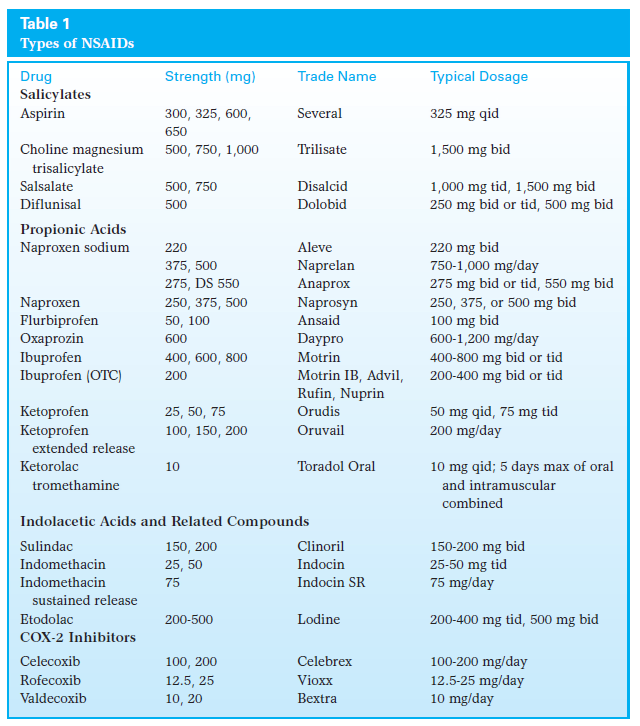
NSAIDs are among the most widely prescribed drugs globally, known for their analgesic, antipyretic, and anti-inflammatory effects. This chapter discusses the different types of NSAIDs, including COX-1 and COX-2 inhibitors, and their mechanisms of action. It also highlights the potential adverse effects of NSAIDs, such as gastrointestinal irritation and bleeding, and the importance of careful patient monitoring.
Other Pain Management Strategies
Beyond analgesics and anti-inflammatories, the chapter explores other medications used to control pain, such as antidepressants and anticonvulsants, which can be helpful for neuropathic pain. It also discusses viscosupplementation, a treatment for osteoarthritis that involves injecting hyaluronic acid into affected joints, and corticosteroid injections, which can reduce inflammation in arthritic joints and other areas.
Managing Rheumatoid Arthritis and Osteoporosis
Rheumatoid arthritis (RA) and osteoporosis are chronic conditions that require long-term management. The chapter provides an overview of the medications used to treat RA, including symptom-modifying antirheumatic drugs (SMARDs) and disease-modifying antirheumatic drugs (DMARDs). It also discusses various therapies for osteoporosis prevention and treatment, such as hormone replacement therapy, selective estrogen receptor modulators, calcitonin, and bisphosphonates.
Preventing Complications: Blood Clots and Infections
The chapter also addresses the prevention of deep venous thrombosis (DVT) and pulmonary embolism (PE) in patients undergoing orthopedic surgery, as well as the use of antibiotics for infection prophylaxis. It emphasizes the importance of careful consideration of the risks and benefits of each approach.
This chapter provides a valuable overview of the pharmacologic therapies used in musculoskeletal medicine. By understanding the different types of medications available and their potential benefits and risks, patients and healthcare providers can work together to develop effective and personalized treatment plans.
