
Beyond Tiny Adults: Understanding Unique Pediatric Musculoskeletal Issues
Children aren't just smaller versions of adults, especially when it comes to their bones and joints! Their growing bodies face unique musculoskeletal challenges that require specialized care. In this post, we'll explore some key differences and common conditions affecting pediatric patients.
Why Pediatric Orthopedics Matters
A child's body has incredible growth potential, allowing them to sometimes correct deformities that would be permanent in adults. However, long-term outcomes are crucial. We need to ensure their bones, joints, and muscles function properly and painlessly throughout their lives. The emotional and social impact of illness and disability on both the child and their family also plays a significant role in their well-being.
Common Childhood Musculoskeletal Concerns
This chapter delves into a range of topics related to childhood musculoskeletal disorders, including:
- Rotational Deformities: In-toeing and out-toeing are common, often resolving on their own. Understanding the origin of these issues (foot, leg, or thigh) is key to appropriate management.
- Angular Deformities: Bowlegs and knock-knees are often normal developmental variations. However, asymmetry, pain, or unusual progression may indicate underlying conditions like Blount's disease.
- Foot Deformities: Clubfoot is a complex condition requiring specialized treatment, while flat feet are often flexible and asymptomatic. Rigid flat feet, however, may indicate a tarsal coalition.
- Hip Disorders: Developmental dysplasia of the hip (DDH) and slipped capital femoral epiphysis (SCFE) are serious conditions requiring careful screening and intervention. Legg-Calvé-Perthes (LCP) disease, another hip disorder, is an idiopathic osteonecrosis of the femoral head.
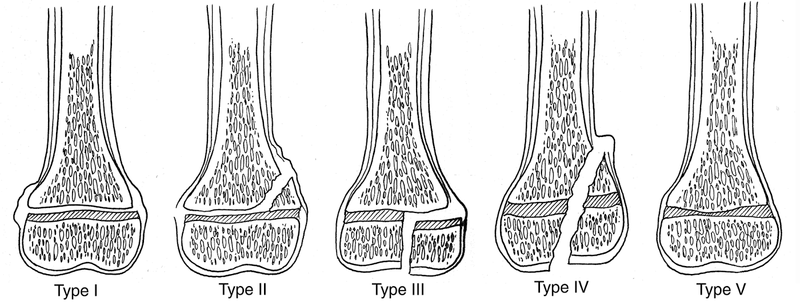
- Growth Plate Fractures: Injuries to the growth plate (physis) can have long-term consequences on bone growth. The Salter-Harris classification system helps categorize these fractures.
- Neuromuscular Disorders: Cerebral palsy and spina bifida can significantly impact musculoskeletal development and function. Scoliosis, a three-dimensional spinal curvature, can also be idiopathic, congenital, or neuromuscular.
- Other Important Issues: Child abuse, infections (osteomyelitis and septic arthritis), and their effects on the musculoskeletal system are also discussed.
Key Takeaways
- Children's musculoskeletal systems are constantly developing and have unique needs.
- Many childhood deformities are normal variations and resolve spontaneously.
- Early diagnosis and intervention are crucial for conditions like DDH, SCFE, and septic arthritis.
- Child abuse and infections must be considered in cases of fractures or joint pain.
