
This chapter delves into the complexities of inflammatory arthritis, focusing primarily on Rheumatoid Arthritis (RA) and its juvenile form, along with gout.
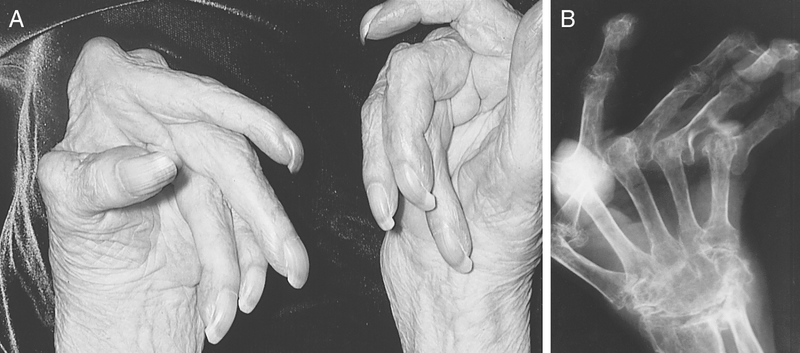
RA, a chronic autoimmune disease, is characterized by the immune system attacking the joint's synovium, leading to inflammation, pain, and eventual joint destruction. The chapter explores the pathogenesis of RA, noting the involvement of T cells, cytokines, and other immune processes. It also discusses the epidemiology, revealing that RA affects roughly 1% of the US population, with a higher prevalence in women and those between 40 and 60. The clinical presentation, diagnostic imaging, and laboratory studies are also reviewed, emphasizing the challenges in early diagnosis and the importance of differentiating RA from other conditions. Treatment options range from NSAIDs and corticosteroids to disease-modifying antirheumatic drugs (DMARDs) and surgical interventions.
Juvenile Rheumatoid Arthritis (JRA) is also discussed, highlighting its unique systemic and joint-specific presentations in children. The chapter outlines the different subtypes of JRA, its pathophysiology, diagnosis, and treatment, with a focus on managing growth abnormalities and psychosocial well-being in affected children.
Finally, the chapter addresses gout, an inflammatory arthritis caused by the deposition of urate crystals in joints. It explores the differences between acute and chronic gout, its epidemiology, pathophysiology, clinical presentation, and diagnostic imaging. Treatment and prevention strategies are also detailed, including lifestyle modifications and medications to lower urate levels.
Overall, the chapter provides a comprehensive overview of these inflammatory arthritides, emphasizing their distinct characteristics, diagnostic approaches, and management strategies.
