
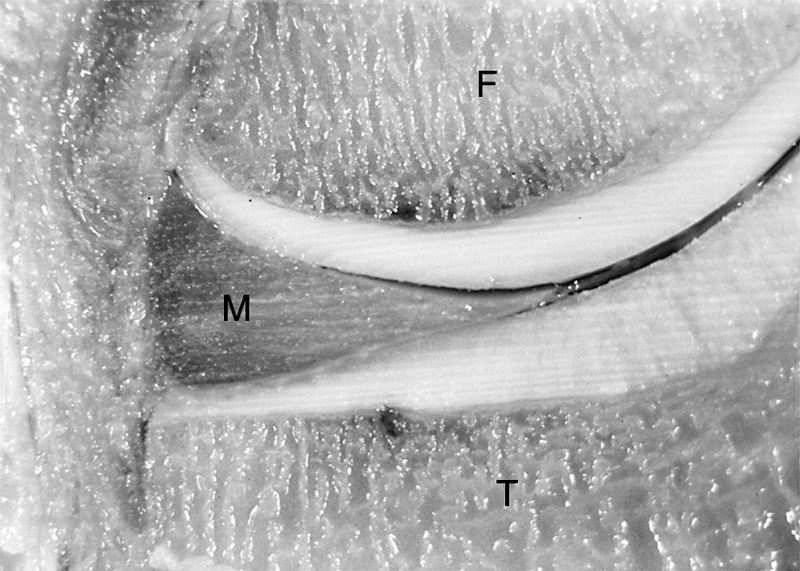
This chapter delves into the crucial roles of the meniscus and intervertebral discs in the human body, highlighting their complex anatomy, biomechanical functions, and clinical significance.
Meniscus: The meniscus is a crescent-shaped fibrocartilage in the knee that acts as a shock absorber, load distributor, and joint stabilizer. It enhances contact between bones, reducing stress and preventing anterior displacement. Injuries to the meniscus are common and can lead to osteoarthritis. The chapter discusses the meniscus's physiological functions (shock absorption, load transmission, stability, lubrication, proprioception), histology, anatomy (medial and lateral), vascular supply, development, and pathophysiology of tears. It also touches on new research directions like gene therapy to enhance healing.
Intervertebral Discs: The intervertebral discs are viscoelastic shock absorbers located between vertebrae. They stabilize the spine, allow motion, and distribute loads. The chapter details the disc's histology (anulus fibrosus and nucleus pulposus), gross anatomy, vascular supply, growth, development, and pathophysiology, including herniated discs and degenerative diseases. It emphasizes the age-related changes that affect disc integrity and function.
Key Takeaways:
- Both the meniscus and intervertebral discs are essential for joint stability, load distribution, and shock absorption.
- Their unique structures and compositions enable them to perform these vital functions.
- Injuries and age-related degeneration can significantly impact their function, leading to joint problems and pain.
- Research is ongoing to improve treatment and healing of injuries to these tissues.
The chapter provides a comprehensive overview of these two critical components of the musculoskeletal system, bridging the gap between basic science and clinical application.
