
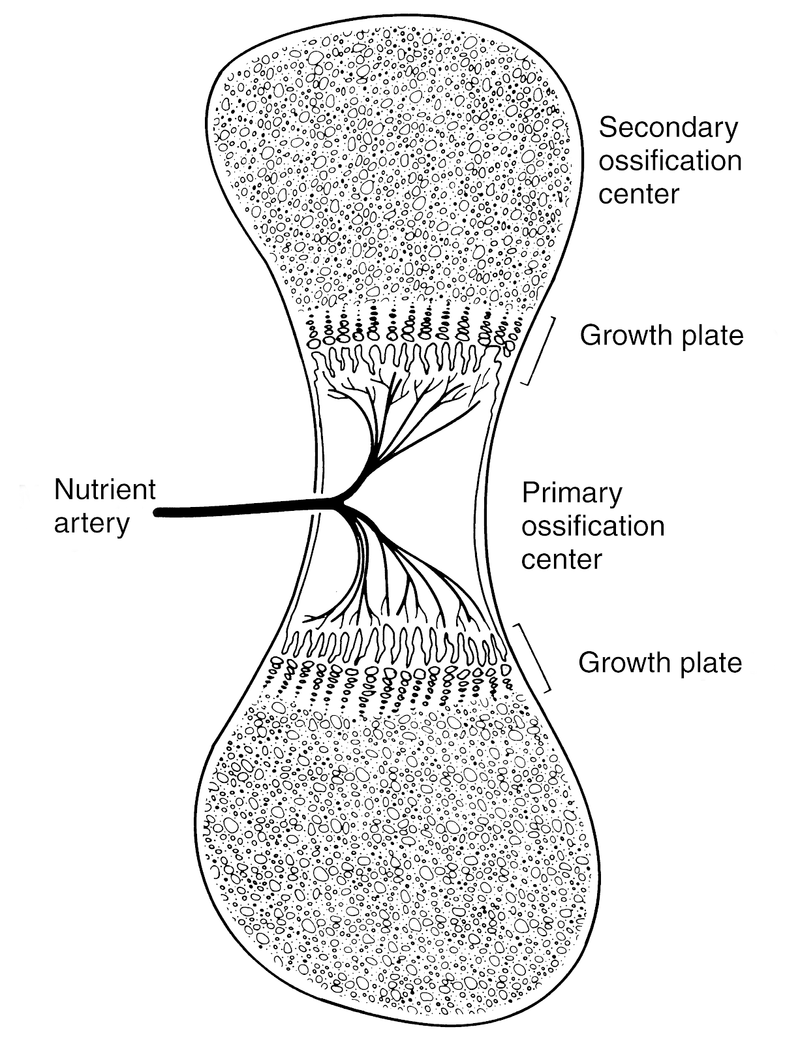
Bone is a dynamic tissue that serves three main functions: skeletal homeostasis (structure and movement), mineral homeostasis (ion storage and release), and hematopoiesis (blood cell formation). Bone formation occurs through either endochondral ossification (using a cartilage template) or intramembranous ossification (without a cartilage template). Endochondral ossification is the primary method for forming long bones and involves the transformation of a cartilage skeleton to bone. The growth plate, or physis, is a key structure in the pediatric skeleton that allows for longitudinal growth.
The chapter details the process of bone formation, highlighting the roles of osteoblasts (bone-forming cells), osteocytes (mature bone cells), and osteoclasts (bone-resorbing cells). Osteoblasts synthesize the organic component of bone (osteoid), while osteoclasts break down bone matrix to release minerals. Bone remodeling is a continuous process involving both bone formation and resorption, crucial for mineral homeostasis and repair.
The growth plate is divided into three main zones: the reserve zone, the proliferative zone, and the hypertrophic zone, each with distinct histological and metabolic activities. Hormones such as thyroid hormone, growth hormone, and parathyroid hormone regulate growth plate activity.
Bone has two structural types: cortical (dense) and trabecular (lattice-like). Cortical bone provides structural support, while trabecular bone is essential for mineral homeostasis. Bone remodeling is influenced by chemical signals (e.g., PTH, estrogen) and mechanical stresses (Wolff's law).Calcium and phosphorus are key minerals stored in bone, and their homeostasis is tightly regulated. Parathyroid hormone, vitamin D, and calcitonin are the primary mediators of mineral balance. PTH increases serum calcium levels, vitamin D promotes calcium absorption, and calcitonin decreases bone resorption.
The chapter concludes by discussing current research directions in skeletal formation, fracture healing, and the regulation of bone metabolism, aiming to better understand and treat bone-related diseases and disorders.
