

Once thought to be vestigial and functionless, the menisci are now believed to play a critical role in knee biomechanics. The meniscus cushions the proximal tibia from impact, distributes the load of weight bearing over an area of maximal size, helps stabilize the joint against anterior displacement, helps lubricate the joint, and assists with proprioception (Fig. 1).
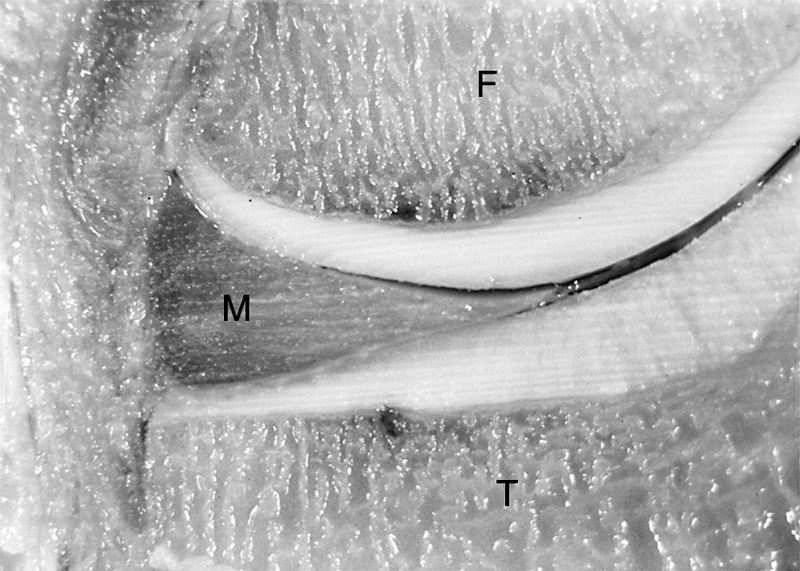
Figure 1 The medial compartment of the knee showing the articulation of the menisci (M) with the condyles of the femur (F) and tibia (T). As shown, the meniscus increases contact between the bones and therefore distributes stress.
(Reproduced with permission from Warren RF, Arnoczky SP, Wickiewicz TL: Anatomy of the knee, in Nicholas JA, Hershman EB (eds): The Lower Extremity and Spine in Sports Medicine. St. Louis, MO, CV Mosby, 1986, pp 657-694.)
Loss of the menisci through trauma, degeneration, or surgical excision has been shown to lead to articular cartilage damage and development of osteoarthritis.1,2
Meniscal injuries represent the most common intra-articular knee problems treated by physicians.3 An understanding of the gross and microscopic architecture of the menisci is integral to appreciating their biomechanical properties and function. Knowledge of the basic science of meniscal cartilage is also helpful when deciding the appropriate treatment of an injured meniscus.
Meniscus
Physiologic Function
The menisci play an important role in knee biomechanics. During walking, the knee joint experiences forces two to four times body weight; during running and high-impact activities, the forces increase dramatically. The primary function of the menisci is to distribute these loads and protect the articular cartilage. The menisci also provide passive stability, lubrication, and proprioception to the knee (Fig. 2).
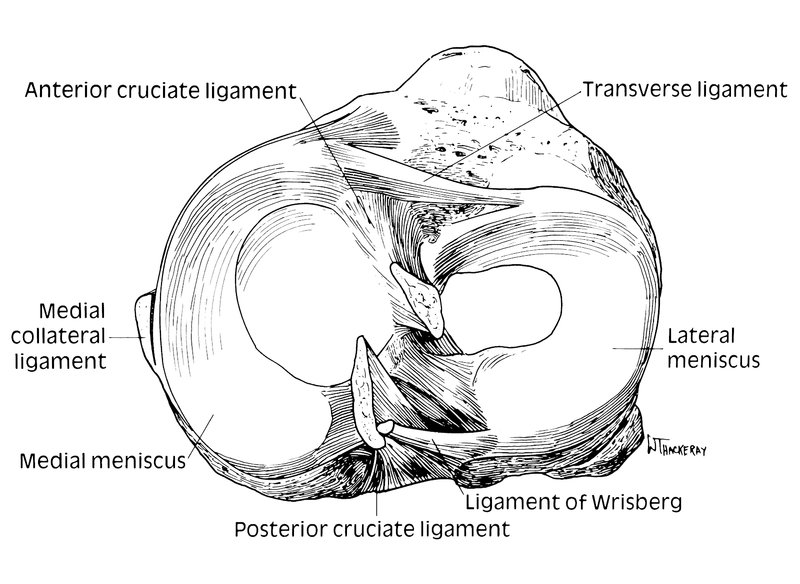
Figure 2
Cross-section of a tibial plateau showing the shape and attachments of the medial and lateral menisci.
(Reproduced with permission from Warren RF, Arnoczky SP, Wickiewcz TL: Anatomy of the knee, in Nicholas JA, Hershman EB (eds): The Lower Extremity and Spine in Sports Medicine. St. Louis, MO, CV Mosby, 1986, pp 657-694.)
Shock Absorption
Macroscopically, the meniscus has a fibrous, sponge-like structure that is filled with a gel of proteoglycans and water. This morphology allows the meniscus to function as a viscoelastic structure, dampening the load generated during weight bearing. (A viscoelastic structure is one whose mechanical properties depend on the rate of loading.) Initial loading of the meniscus results in deformation of the fibrous structure and flow of the gel through the fibers. The resistance to flow of the gel provides energy dissipation, or shock absorption, with compressive loading of the meniscus, as is seen during running or jumping. A normal knee has 20% more shock-absorbing capacity than a knee that has had its meniscus removed.
Load Transmission
The triangular cross-sectional anatomy of the meniscus allows maximal contact between the rounded end of the distal femur and the relatively flat tibial plateau. This lowers the peak stresses in the articular cartilage and subchondral bone (Fig. 3).
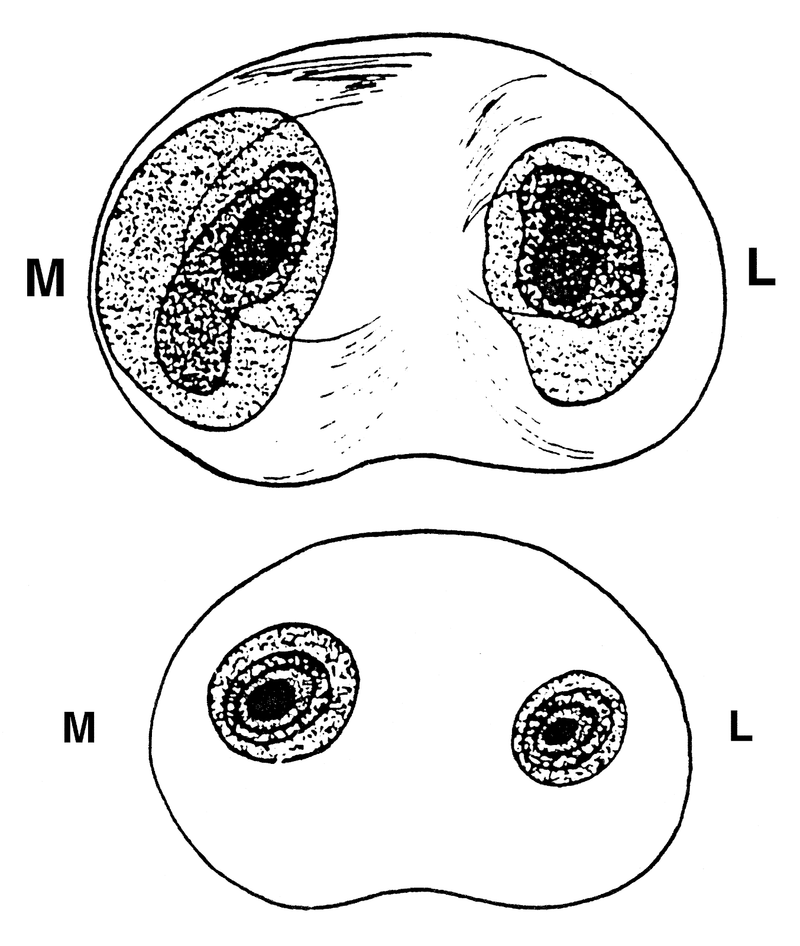
Figure 3
Schematic representation of a tibial plateau showing contact area and contact stress in the intact knee (top) and meniscectomized knee (bottom). M = medial, L = lateral.
Note the focal concentration of stress when the menisci are absent.
(Reproduced with permission from Fukubayashi T, Kurosawa H: The contact area and pressure distribution pattern of the knee: A study of normal and osteoarthrotic knee joints. Acta Orthop Scand 1980;51:871-879.)
Removal of the medial meniscus has been shown to decrease the contact area between the femoral condyle and tibial plateau by 60% and more than double the stresses imparted on the articular cartilage leading to damage and degeneration.
In full extension, the medial and lateral menisci transmit 50% and 75% of the total compartmental load across the knee joint, respectively. With 90o of knee flexion, up to 85% of the total load is transmitted through the menisci. The menisci are stiffer near the anterior and posterior attachments (or horns) and have less stiffness modulus in their midsections. The anterior and posterior horns also have the greatest degree of parallel fibers, which suggests that the tensile properties of the meniscus are influenced by the arrangement of collagen fibers.
Passive Joint Stability
The anterior cruciate ligament (ACL) of the knee is the main source of resistance to anterior tibial subluxation. When the ACL is injured, secondary restraints, such as the medial meniscus, become important. The medial meniscus provides a passive restraint to anterior tibial translation in the ACL-deficient knee by blocking the femur from gliding too far off the tibia. Also, its wedged shape helps in rotational and varus stability through its space-filling effect within the knee joint. The lateral meniscus does not offer the same passive restraint to anterior tibial translation, even in the ACL-deficient knee, because it is more mobile.
Joint Lubrication
The menisci reduce friction between the femur and tibia by increasing congruency and maintaining a constant layer of synovial fluid between their gliding articular surfaces. Fluid is mechanically pumped or squeezed into and out of the menisci and articular cartilage, providing nutrients and removal of waste for the fibrochondrocytes and chondrocytes, respectively.
Proprioception
Nerve fibers, both myelinated and unmyelinated, have been identified throughout the entire meniscus.4,5 The fibers originate from the perimeniscal and synovial tissue of the knee and radiate into the periphery of the meniscus. Many of the fibers are seen to accompany the vascular supply of the tissue. Three types of mechanoreceptors have been identified within the medial meniscus: (1) Ruffini endings, (2) Golgi tendon organs, and (3) pacinian corpuscles. Nerve endings, along with the nerve fibers, are found in the greatest concentration in the anterior and posterior horns of the menisci. The proprioceptive function of the menisci has been inferred from the finding of the three different types of mechanoreceptors. They are thought to trigger a proprioceptive reflex and contribute to the functional stability of the knee.
Normal Histology and Anatomy
Histology
The microstructure of the meniscus consists of water, cells, collagen, proteoglycans, and glycoproteins. The organization of these basic building blocks gives the menisci their biomechanical properties. Two major types of cells have been identified and classified in the meniscus. The first is a cell that is found in the peripheral meniscus and is spindle-shaped and fibroblast-like (Fig. 4).
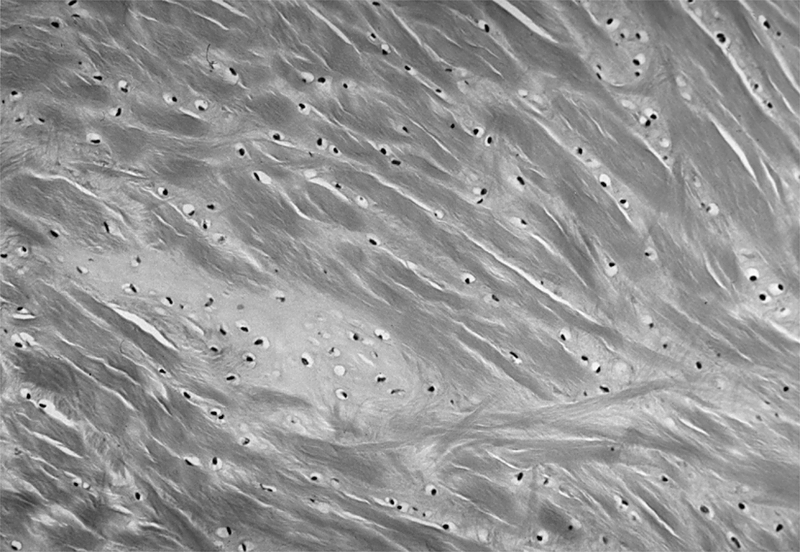
Figure 4
Photomicrograph of a longitudinal section of a human meniscus. (Hematoxylin and eosin, magnification ×100.)
(Reproduced from Arnoczky SP, McDevit CA: The meniscus: Structure, function, repair, and placement, in Buckwalter JA, Einhorn TA, Simon SR (eds): Orthopaedic Basic Science: Biology and Biomechanics of the Musculoskeletal System, ed 2. Rosemont, IL, American Academy of Orthopaedic Surgeons, 2000, pp 531-545.)
In the inner, avascular zones of the meniscus, the cells are ovoid or polygonal. These cells are called fibrochondrocytes as they are able to synthesize fibrous extracellular proteins (including type I collagen), yet have the rounded appearance of chondrocytes. Both cell types have abundant endoplasmic reticulum and Golgi complexes, with minimal mitochondria, suggesting a dependence on anaerobic metabolism. It is unclear whether these two cell types are actually distinct or whether they are the same cell type with modulation in phenotypic expression as a result of environmental influences.
Collagen represents up to 75% of the dry weight of the menisci. More than 90% of the collagen is fibrillar type I, with types II, III, V, and VI making up the remainder.6 Proteoglycans such as aggrecan, chondroitin 6-sulfate, and chondroitin 4-sulfate contribute 1% to 2% of the dry weight of the menisci. The menisci also contain elastin, fibronectin, and other glycoproteins. As much as 70% of the wet weight of the meniscus is water, which is both structurally bound to collagen and freely associated with the interfibrillar proteoglycans.
The arrangement of the collagen fibers
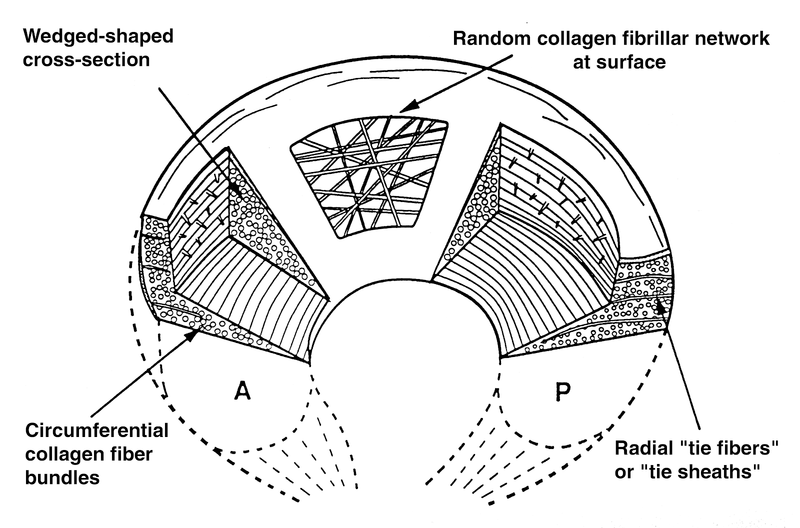
Figure 5
Collagen fiber ultrastructure of the meniscus. A = anterior. P = posterior.
(Reproduced with permission from Mow VC, Ratcliffe A, Chern KY, Kelley MA: Structure and function relationships of the menisci of the knee, in Mow VC, Arnoczky SP, Jackson DW (eds): Knee Meniscus: Basic and Clinical Foundations. New York, NY Raven Press, 1992, pp 37-57.)
within the wedge-shaped meniscus is adapted for load transmission (Fig. 5). Most of the type I collagen fibers are arranged in circles to withstand the circumferential tension (technically termed “hoop stress”), which the meniscus develops during normal loading. Without these fibers, the meniscus would be extruded from the joint space. Other fibers are oriented radially and act to tie the circumferential fibers together to resist longitudinal splitting of the meniscus. This structural design converts the axially directed load into a tensile stress, which the circumferentially oriented collagen fibers are well suited to bear.
Gross Anatomy
The knee menisci are crescent-shaped disks of fibrocartilage interposed between the femoral condyles and the tibial plateaus. The word meniscus means “little moon” in Greek—when viewed from above, the meniscus has a crescent moon shape. Triangular or wedge shaped in cross section, the menisci increase the congruency within the knee joint, filling the gap between the convex distal femur and flat proximal tibia. The menisci are broadest at their peripheral fixed margin, measuring approximately 5 mm thick, and taper to a thin, free, central edge, creating a shallow cup to hold the round condyles of the femur.
Medial Meniscus
The semicircular medial meniscus of an adult male is approximately 3.5 cm in diameter. It covers 60% of the medial tibial plateau articular cartilage and is less mobile than the lateral meniscus. The transverse intrameniscal ligament connects the anterior horns of the medial and lateral menisci. An additional point of anterior attachment to the plateau can be found in front of the ACL in the region of the intercondylar fossa. Along the entire periphery of the meniscus, the coronary ligament attaches the meniscus to the joint capsule and the tibial plateau. At the body of the medial meniscus, the attachment to the capsule is reinforced by the deep fibers of the medial collateral ligament. These fibers, called the posterior oblique ligament, tether the meniscus and allow it to function in a role similar to that of a block placed behind the tire of a car to prevent rolling. By blocking the rolling of the femoral condyle, the meniscus helps resist anterior tibial subluxation. The posterior horn is attached to the posterior intercondylar fossa between the lateral meniscus and the posterior cruciate ligament.
Lateral Meniscus
Up to 80% of the lateral tibial plateau articular cartilage is covered by the circular lateral meniscus. Anteriorly, it is attached to the tibia behind the attachment of the ACL. Along its peripheral margin the lateral meniscus is loosely attached to the joint capsule by the coronary ligament. The absence of an attachment of the meniscus to the lateral collateral ligament (LCL) allows passage of the popliteal tendon between the lateral meniscus and LCL—the popliteal hiatus. Behind the intercondylar eminence and anterior to the posterior horn of the medial meniscus the posterior horn of the lateral meniscus is attached to the tibia. In 50% of people, the posterior horn of the lateral meniscus receives extra stability from the meniscofemoral ligaments of Humphry and Wrisberg.
Knowledge of the meniscal attachments helps in understanding the differential mobility of the medial and lateral menisci. With knee flexion and extension, the menisci are able to slide relative to the articular surface of the tibial plateau. Through three-dimensional MRI, the less constrained lateral meniscus has been shown to have an average excursion of 11 mm, with the more extensively fixed medial meniscus averaging only 5 mm of excursion (Fig. 6).
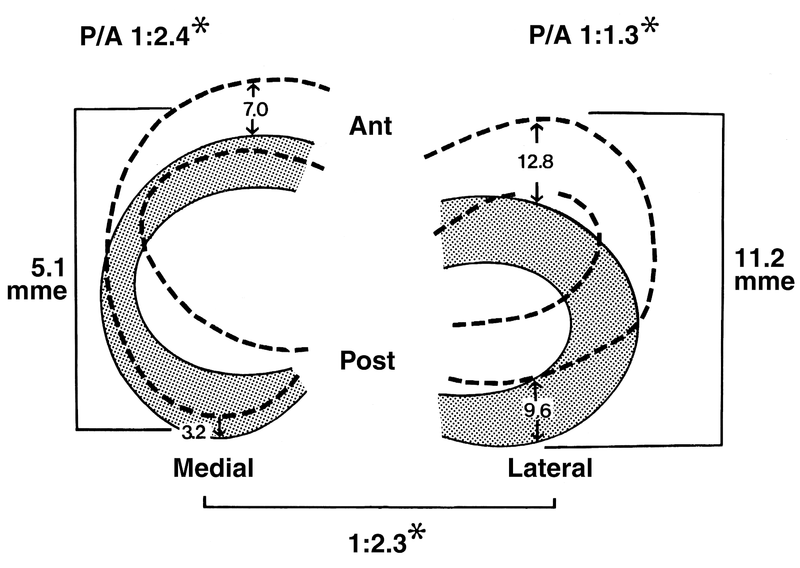
Figure 6
Schematic representation of mean meniscal excursion (mme) along the tibial plateau. The ratio of posterior to anterior translation (P/A) was significant (*P < 0.05). The medial meniscus moves less than half as much as the lateral meniscus, making it a better stabilizer but more prone to injury.
(Reproduced with permission from Thompson WO, Thaete FL, Fu FH, Dye SF: Tibial meniscal dynamics using three-dimensional reconstruction of magnetic resonance images. Am J Sports Med 1991;19:210-215.)
The more limited range of motion of the medial meniscus allows it to serve as an anterior stabilizer but also makes it more vulnerable to tearing and injury. In both menisci, the anterior horns are more mobile than the wider posterior horns, rendering the posterior horns more susceptible to injury.
Vascular Anatomy
Most of the blood supply to the menisci originates from the superior and inferior branches of the medial and lateral geniculate arteries, which are fed, in turn, by the popliteal artery. These vessels give branches that supply the capillary bed of the perimeniscal tissue. The perimeniscal vessels are oriented in a circumferential pattern with radial branches extending into the meniscus along its periphery (Fig. 7).
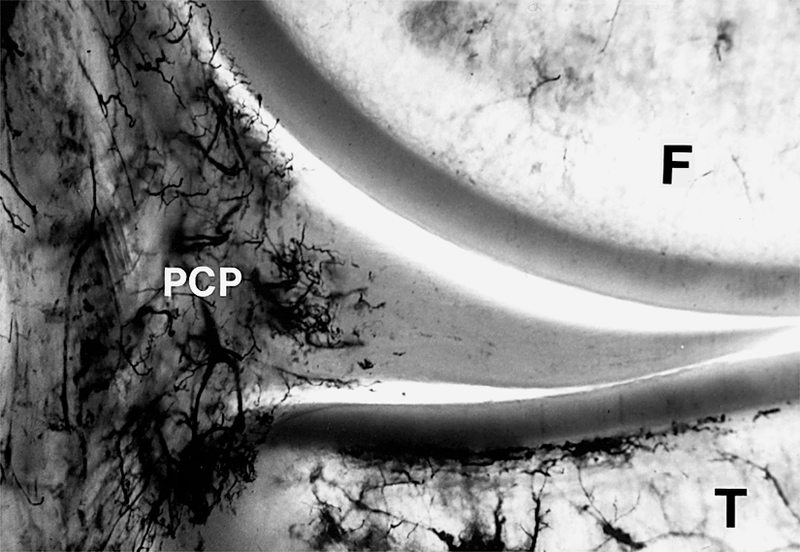
Figure 7
A 5-mm thick frontal section of the medial compartment of the knee is shown after vascular perfusion with India ink and tissue clearing. Branching radial vessels from the perimeniscal capillary plexus (PCP) can be seen penetrating the peripheral border of the medial meniscus. The central regions are avascular. F = femur, T = tibia.
(Reproduced with permission from Arnoczky SP, Warren RF: Microvasculature of the human meniscus. Am J Sports Med 1982;10:90-95.)
These vessels penetrate the outer 10% to 30% of the adult meniscus, a region referred to as the “red zone” of the meniscus. The inner 70% to 90% of the cartilage is avascular and referred to as the “white zone.” The posterolateral aspect of the lateral meniscus at the popliteal hiatus is devoid of vascular branches entering its peripheral margin.7
Synovial branches of the middle geniculate artery also supply the meniscal horns, but these have limited penetration within the meniscus and end in capillary loops. The cells in the white zone derive their nutritional supply from a combination of diffusion and fluid flow induced by joint loading and motion. These meniscal zones are crucial in predicting the success of meniscal healing and repair after injury. Repairs within the red zone, as might be expected, are more apt to heal than repairs within the inner or white region of the meniscus. Of course, a healing response can begin only if there is the potential for vascular ingrowth, so repairs within the white zone are apt to fail unless a blood supply is provided.
Development and Aging
The menisci form during the first 8 weeks of gestation as condensations and differentiation of mesenchymal cells. As the fetus develops, collagenous fibers appear and are oriented in a circumferential pattern, with the meniscus morphology and relationship to the rest of the knee being established by the 14th week of development. The organization and concentration of collagen fibers increase into early adulthood, then remains constant for the next 50 years before decreasing.
During the initial formation of the menisci, there is an abundance of cells and vascularity. With neonatal development, both the number of cells and extent of vascularity decrease. At birth, the vascular network extends from the peripheral perimeniscal capillary plexus to the free central margin of the meniscus. Over the first few months of life, the vascularity decreases such that by the ninth month the inner third of the meniscus is avascular. This process continues so that by adulthood only the peripheral 10% to 30% has a vascular supply. A similar phenomenon occurs with the cells of the meniscus. Replete with cells at birth, the meniscus becomes progressively less cellular with age. These changes are believed to be induced by the increased joint motion and weight bearing seen in early child development.
The proteoglycan content also shifts with age, with an increase in chondroitin 6-sulfate and a decrease in chondroitin 4-sulfate. The water content does not change. The percentage of noncollagenous proteins also declines from 20% at birth to 10% in individuals older than 50 years. A gradual discoloration is seen in the menisci with the normal aging process.
Pathophysiology
The location of the tear (in the vascular or avascular zone) plays a large role in the decision whether to repair or excise a torn piece of meniscus. Vascularized tears are located in the periphery of the meniscus and have a functional blood supply that can provide fibrin clot and cells to populate the scar area. In animal models, radial tears, which extend from the avascular inner edge of the meniscus to the blood-rich synovium and capsule, heal with fibrovascular scar.7 In humans, tears in this region may have potential to heal but need to be stabilized surgically first. Often, these are repaired with sutures or bioresorbable arrows to immobilize the torn area and allow healing to occur.
Tears fully within the inner edge of the meniscus are avascular and have been shown to be incapable of healing even when they are stabilized with simple repair. Therefore, these tears are typically treated with removal of the torn tissue. The tears in the middle of the meniscus are sometimes capable of healing, and therefore repair with additional techniques to stimulate healing (such as the creation of “vascular access channels” or the placement of fibrin clot into the tear before repair) is attempted, especially in young patients.
One of the goals of treatment is to preserve as much of the meniscal tissue as possible. As noted, the meniscus serves as a shock absorber of the knee. Complete excision of the meniscus results in a decrease in the load transmission area of approximately 50%; not surprisingly, the long-term results of total meniscectomy demonstrate an acceleration of osteoarthritis of the knee. However, when the torn tissue is so damaged that it can no longer function and, moreover, can create symptoms of catching or pain, meniscal resection may be the best option.
Techniques of meniscal replacement with allograft or synthetic materials are also being developed. Allograft menisci are fastened to the knee capsule with sutures. It is thought that the initially acellular allograft is repopulated with cells, at least in the superficial regions of the allograft.8 Allograft transplantation is complicated by an immune response directed against the allograft meniscus, as shown in histologic studies of biopsies of previously implanted allograft menisci.
Intervertebral Disks
Physiologic Function
The intervertebral disk stabilizes the spine, helps maintain its alignment, allows motion between vertebral levels, absorbs energy, and distributes loads applied to the spine. The intervertebral disks of the spine are similar to the menisci of the knee in that both are viscoelastic shock absorbers. Like the meniscus, the disk is composed primarily of extracellular matrix, containing only few cells within it.
Normal Histology and Anatomy
Histology
The disks have an outer ring of fibrocartilage, the anulus fibrosus, and within it, a gelatinous material called the nucleus pulposus (Fig. 8).
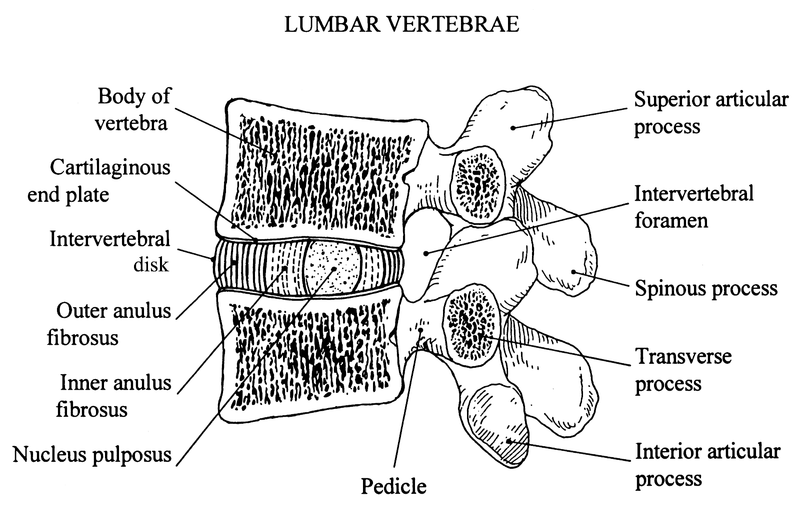
Figure 8
Sagittal section view of two vertebral bodies and an intervertebral disk. The three regions of the disk are shown: cartilaginous end plate, outer anulus fibrosus, inner anulus fibrosus, and nucleus pulposus. The posterior articular and spinous processes and the articular surface of a facet joint are also shown.
(Reproduced with permission from Ashton-Miller JA, Schultz AB: Biomechanics of the human spine, in Mow VC, Hayes WC (eds): Basic Orthopaedic Biomechanics. Philadelphia, PA, Lippincott-Raven, 1997, pp 353-393.)
The organic matrix characteristic of each zone is distinct. In the anulus fibrosus, there is an outer layer of approximately 90 concentric lamellae of type I collagen fibers; deep within that is a region of a less dense, type II collagenous matrix. This inner zone is less organized than the outer zone of the anulus fibrosus. The most superficial anterior fibers of the anulus fibrosus blend with the anterior longitudinal ligament, whereas the most superficial posterior fibers blend with the posterior anterior longitudinal ligament. Protrusion of the nucleus pulposus through tears in the anulus fibrosus is called a herniated disk. Because the anterior anulus fibrosus is thicker than its posterior counterparts, posterior herniations are more common. When this herniation compresses a spinal nerve root, pain that radiates down the leg (known as sciatica) can result.
In contrast to the collagen-rich anulus fibrosus, the nucleus pulposus is predominantly proteoglycan (Fig. 9).
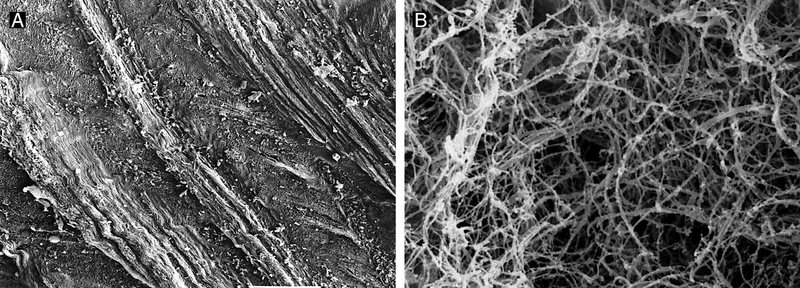
Figure 9
Micrographs showing the arrangement of the collagen fibrils in the outer anulus fibrosus (A) and the central nucleus pulposus (B). Note the tightly packed, highly oriented lamellae of collagen fibrils in the outer anulus fibrosus and the loose, almost random pattern of collagen fibrils in the nucleus pulposus.
(Reproduced with permission from Buckwalter JA: The fine structure of human intervertebral disc, in White AA III, Gordon SL (eds): American Academy of Orthopaedic Surgeons Symposium on Idiopathic Low Back Pain. St. Louis, MO, CV Mosby, 1982, pp 108-143.)
It is the interaction between large proteoglycan molecules and water that gives the nucleus pulposus its resistance to compression. The cells populating the anulus fibrosus are like fibroblasts, while those in the nucleus pulposus are more chondrocytic in appearance and have synthetic characteristics.
Gross Anatomy
The intervertebral disk is the primary articulation between the vertebral bodies of two adjacent vertebrae. The spine is composed of 23 such disks that unite the 24 vertebrae of the human spine to form four regions (cervical, thoracic, lumbar, and sacrum). The disks increase in height and diameter from the cervical to the lumbar spine (Fig. 10).
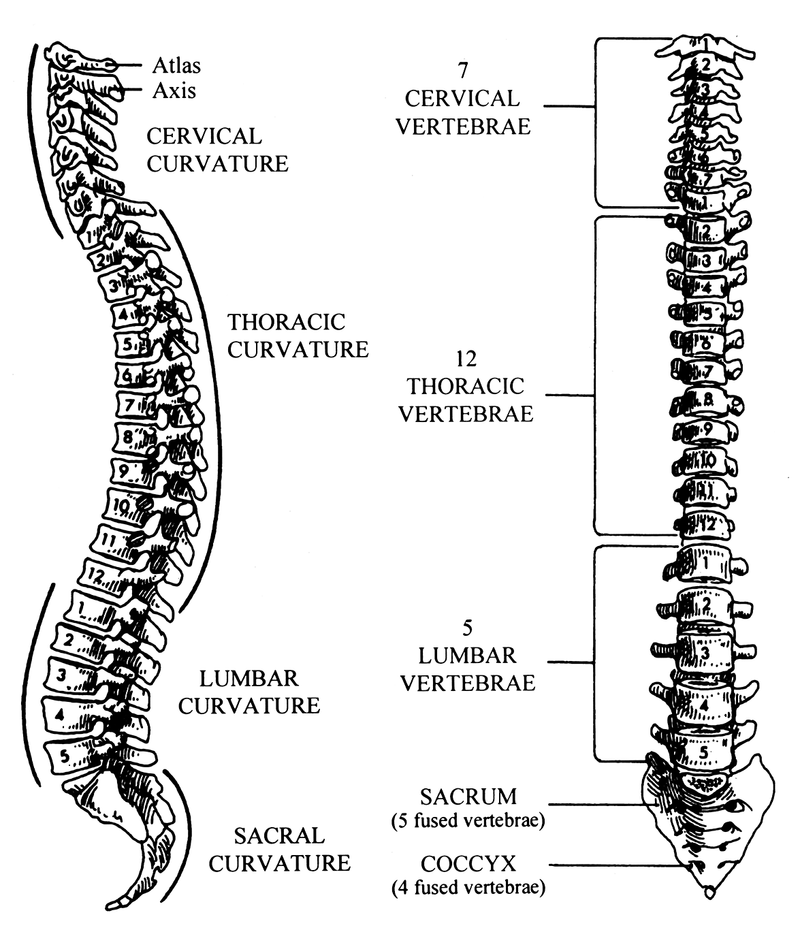
Figure 10
Drawing of the human spine illustrating the differences in the sizes of the vertebral bodies and intervertebral disks.
(Reproduced with permission from Ashton-Miller JA, Schultz AB: Biomechanics of the human spine, in Mow VC, Hayes WC (eds): Basic Orthopaedic Biomechanics. Philadelphia, PA, Lippincott-Raven, 1997, pp 353-393.)
The anterior aspects of the cervical and lumbar disks are thicker than the posterior aspects and thus produce the normal lordosis seen in those regions. By contrast, the thoracic disks are of uniform height from anterior to posterior; normal thoracic kyphosis is caused by the shape of the thoracic vertebral body itself. The thoracic disks are thinner than in the other regions of the spine, a property that may restrict mobility of this region of the spine. The outer edges of the disks are attached to the vertebral bodies by small collagen fibers called Sharpey’s fibers.
Vascular Anatomy
Like the meniscus, the disk has a relatively poor blood supply and what exists enters from the periphery. There is no direct vessel to the central disk. Small vessels penetrate the outer ring of the anulus fibrosus. Nutrition of the inner disk, thus, is by diffusion. The nerve supply to the disk comes from the sinu-vertebral nerve and the gray ramus communicans. Like the blood vessels, free nerve endings do not penetrate deeply.
Growth and Development
Changes in disk microstructure, composition, size, and vascular supply occur throughout growth and development. Even at birth, the regions of the intervertebral disk are distinct. The end plate has discrete hyaline cartilage that separates the vertebral body from the disk. The outer anulus fibrosus is composed of dense circumferential lamellae of collagen that penetrate the vertebral bodies of adjacent vertebrae. Small blood vessels may be found adjacent to the cartilaginous end plates; occasionally, blood vessels penetrate the inner anulus fibrosus. Numerous free nerve endings lie on and within the most peripheral layers of the anulus fibrosus.
During skeletal growth, disk volume and diameter increase several-fold, thus increasing the distance from the peripheral vessels and the central portions of the disk. Additionally, the three vessels of the end plate gradually disappear, leaving scars in the cartilaginous end plate, and the peripheral blood vessels of the anulus fibrosus become smaller and less numerous. As a result, the disk becomes avascular. The concentration of cells decrease as the nucleus pulposus becomes more dense and fibrous. By early adulthood, the embryonic cells have disappeared completely, leaving behind chondocyte-like cells. The high water content of the nucleus pulposus also decreases with age as the proportion of proteoglycans that do not bind water progressively increases and the size of the aggrecan molecules decreases. This change in proteoglycans occurs in all regions of the disk but is greatest in the nucleus pulposus. Throughout all regions of the disk, the diameter and the variability of collagen fibrils increases.
Pathophysiology
The spinal disk changes throughout life (beginning soon after birth), but these changes accelerate after skeletal maturity, at approximately age 20 years. Once skeletal maturity is achieved, all intervertebral disks undergo progressive alterations in volume, shape, microstructure, and composition. As such, these changes can decrease motion, adversely affect the mechanics of the spine, and lead to the two most common clinical disorders of the axial skeleton: herniated nucleus pulposus and degenerative diseases of the spine.
The most extensive changes occur in the nucleus pulposus, where there is a sharp decline in the number of viable cells and concentrations of proteoglycans that bind water. The aggregate proteoglycans also become fragmented. Accompanying these changes are increases in the concentration of collagens and noncollagen proteins as dense granular material accumulates throughout the extracellular matrix. As a result, the nucleus pulposus becomes firm and white rather than soft and translucent.
With aging, the size of the outer anulus fibrosus remains constant, while the inner anulus fibrosus increases in size. This growth comes at the expense of the nucleus pulposus, which becomes more fibrotic. Myxomatous degeneration also occurs in parts of the anulus fibrosus. Fissures and cracks appear, some extending from the periphery to the central portion of the disk.
Over time, the outer lamellae of the outer anulus fibrosus become stiff fibrocartilage. The height of the disk may decline, and prominent fissures and clefts form in the center. These changes affect mobility, alter alignment, and change the loads applied to the facet joints, paraspinous muscles, and the spinal ligaments. In sum, age-related changes following skeletal maturity decrease structural integrity and contribute to changes in disk volume and shape, which, in turn, increase the probability of mechanical failure leading to disk herniation.
Research and New Directions
Function and Physiologic Response of Various Cells
Gene Therapy
The use of recombinant adenoviral vectors to transfer genes into meniscal fibrochondrocytes has been successfully demonstrated in vitro.9 Although further understanding of the genetic basis of the healing response is still in the preliminary stage, the potential exists for future transfer of genetic material that codes for cytokines. This enhances the healing response and accelerates the repair and regeneration of the meniscus after injury.
Key Terms
Fibrochondrocytes Cells that are able to synthesize fibrous extracellular proteins and have the rounded appearance of chondrocytes
Intervertebral disk The structure located between two moving vertebrae that stabilizes the spine, helps maintain its alignment, allows motion between vertebral levels, absorbs energy, and distributes loads applied to the spine
Meniscus A crescent-shaped disk of fibrocartilage located between the femoral condyle and the tibial plateau
Sharpey’s fibers The small collagen fibers that attach tendon to bone; in the spine they connect the outer edges of intervertebral disks to the vertebral bodies
Viscoelastic structure A structure whose mechanical properties depend on the rate of loading
References
1. McNicholas MJ Rowley DI McGurty D et al: Total meniscectomy in adolescence: A thirty-year follow-up. J Bone Joint Surg Br 2000;82:217-221.
2. Cox JS Nye CE Schaefer WW et al: The degenerative effects of partial and total resection of the medial meniscus in dogs’ knees. Clin Orthop 1975;109:178-183.
3. Praemer A Furner S Rice DP: (eds): Musculoskeletal Conditions in the United States, ed 2. Rosemont, IL, American Academy of Orthopaedic Surgeons, 1999; p 170 (Appendix A: Table B).
4. Day B Mackenzie WG Shim SS et al: The vascular and nerve supply of the human meniscus. Arthroscopy 1985;1:58-62.
5. O’Connor BL McConnaughey JS: The structure and innervation of cat knee menisci, and their relation to a “sensory hypothesis” of meniscal function. Am J Anat 1978;153:431-442.
6. Aronoczky S Adams M DeHaven K et al: Meniscus, in Woo SLY, Buckwalter JA (eds): Injury and Repair of the Musculoskeletal Soft Tissues. Park Ridge, IL, American Academy of Orthopaedic Surgeons, 1988; pp 483-537.
7. Arnoczky SP Warren RF: The microvasculature of the meniscus and its response to injury: An experimental study in the dog. Am J Sports Med 1983;11:131-141.
8. Rodeo SA Seneviratne A Suzuki K et al: Histological analysis of human meniscal allografts: A preliminary report. J Bone Joint Surg Am 2000;82:1071-1082.
9. Goto H Shuler FD Niyibizi C et al: Gene therapy for meniscal injury: Enhanced synthesis of proteoglycan and collagen by meniscal cells transduced with a TGFbeta(1) gene. Osteoarthritis Cartilage 2000;8:266-271.
